

If you’ve been shopping for a school bus to convert, you’ve already seen the IC Bus name all over auction listings and Craigslist ads. They’re one of the big three school bus manufacturers alongside Blue Bird and Thomas, and depending on where you’re located, IC might actually be the most common brand you come across. I spent a lot of time digging into what makes IC buses different from the competition, which models are best for conversion, and what to watch out for before you buy one. (See our guide on Can You Convert a Double Decker Bus Into a Home? for more on this.)
IC Bus (made by Navistar International) has been one of the largest school bus manufacturers in North America since the early 2000s. Their two main models for skoolie conversions are the CE Series (Type C, conventional front-engine) and the RE Series (Type D, rear-engine flat-front). IC buses are generally well-built, widely available, and share a lot of mechanical DNA with International trucks, which means parts and mechanics are easy to find. The catch is that some model years came with engines that have known reliability issues — specifically the MaxxForce and early DT466E variants — so you need to know which years to target and which to avoid. This guide covers every IC Bus model you’ll find for sale, the engines in each, how they compare to Blue Bird and Thomas, and what to look for before handing over your money.
IC Bus Models You’ll Find for Sale
Before I get into the specifics, let me explain how IC Bus names their stuff because it confused me at first. IC Bus is a brand under Navistar International, which is the same company that made International trucks, the DT466, and the T444E engine. Before 2002, they were called AmTran (American Transportation Corporation). So if you see a bus badged as an AmTran, that’s the same company, just the older name.
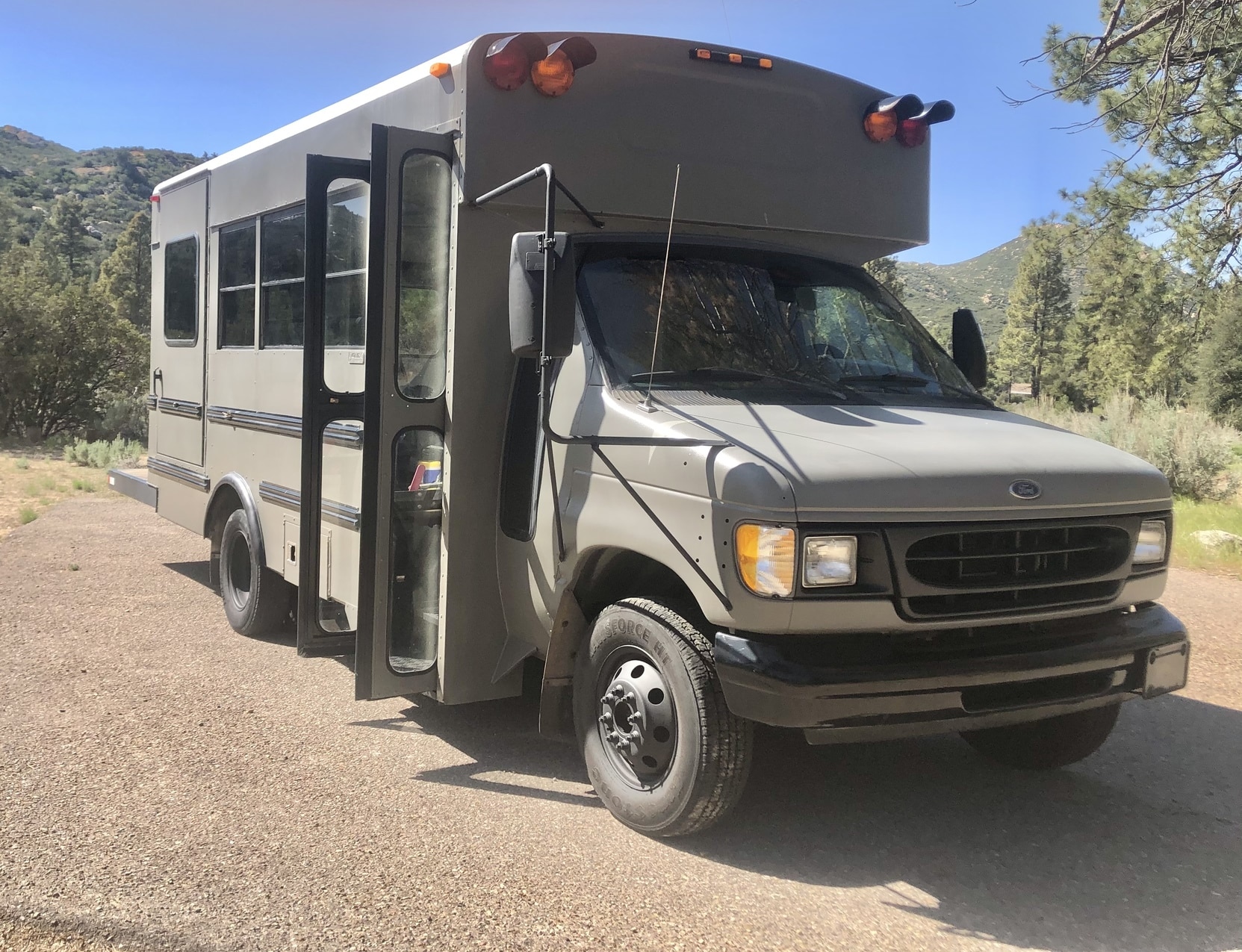
The models you’ll actually run into when shopping break down like this:
- IC CE Series — Type C conventional, front engine with the hood. This is the classic school bus shape and the most common IC Bus you’ll find.
- IC RE Series — Type D rear engine, flat-front transit style. Less common, pricier, but some people swear by them.
- IC BE Series — Type A conventional, built on a stripped chassis. Short bus with a hood.
- IC ME Series — Type B, mid-size bus on a van cutaway or stripped chassis.
The CE and RE are the ones you’ll see the most of at auctions. The BE and ME are out there but less common. I’ll cover each one in detail below.
One thing I noticed while researching is that IC Bus absolutely dominates the school bus market in certain parts of the country, especially the Midwest and the South. Navistar’s headquarters are in Illinois, and their bus plants are in Oklahoma and Alabama. If you’re buying in those regions, you might see three IC buses for every one Blue Bird. (See our guide on Blue Bird Buses: The Complete Conversion Guide for more on this.)
IC Bus CE Series (Type C)
This is the bread and butter. The IC CE is a Type C conventional school bus — hood out front, engine underneath it, flat rear wall. If you picture “school bus” in your head, this is probably what you see. The CE has been in production since 2004 when IC Bus replaced the old AmTran RE (confusingly, the old rear-engine AmTran used “RE” differently than the current IC RE) and the previous AmTran conventional models.

The CE typically runs 35 to 40 feet long for a full-size version, with about 90 inches of interior width and 6’0″ to 6’3″ of ceiling height. You can check our school bus dimensions guide for exact measurements by configuration, but the CE is right in line with a Blue Bird Vision or Thomas Saf-T-Liner C2 in terms of space.
What I like about the CE for conversions is the frame. Navistar builds these on their own chassis, and it’s a proper commercial-grade frame with full C-channel rails. It’s not a truck chassis with a bus body bolted on — it’s purpose-built. That means the frame is designed for the weight of a fully loaded school bus, which gives you a comfortable margin when you add build weight. (See our guide on Church Bus Conversions: The Complete Guide for more on this.)
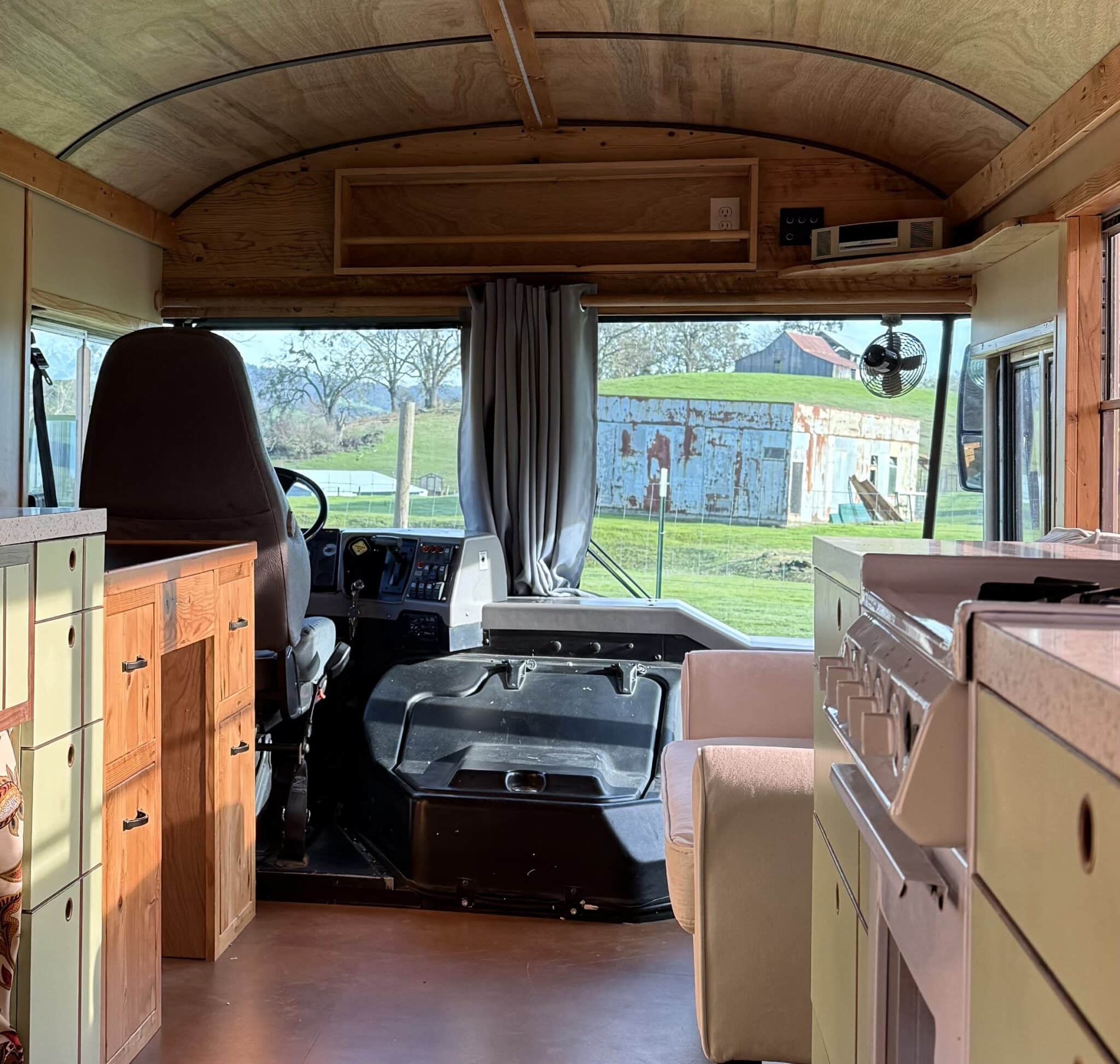
The rear wall is completely flat and open, which matters for your floor plan. No engine compartment to work around, no weird angles. I’ve seen CE builds where people put in rear French doors, huge windows, even fold-down decks off the back. You’ve got full creative freedom with that back wall.
The driver’s area is fairly standard. Big windshield, a flat dash, and the steering column comes off a commercial truck platform. The seats are typically a higher riding position than a Blue Bird, which some people love and some people find a little awkward at first. If you’re wondering about the general driving experience, I covered that in our article on how hard it is to drive a school bus.
One thing worth mentioning — the CE has a tilt hood, which means the entire front end lifts up as one piece for engine access. It’s incredibly convenient compared to buses where you have to remove panels or work through a cramped engine compartment. Oil changes, belt replacements, coolant work — all of it is right there when you pop that hood. That matters a lot when you’re living in the bus and doing your own maintenance on the road. We’ve got a whole piece on finding a mechanic for your bus that covers DIY vs shop work.
IC Bus RE Series (Type D — Rear Engine)
The IC RE is their flat-front, rear-engine transit-style bus. Type D classification. This is the one where the driver sits right up at the front of the bus, there’s no hood, and the engine is tucked in the back behind a compartment panel.

I’ll be honest, the RE is a nice bus. The driving position gives you incredible forward visibility, the ride quality is noticeably smoother because the engine weight is over the rear axle instead of cantilevered out front, and the cab is quieter since the engine is 30-plus feet behind you. I talked to a guy at a skoolie meetup who had converted an IC RE and he said the difference in road noise compared to his buddy’s front-engine Thomas was dramatic. He could listen to podcasts at normal volume while driving. That’s a legitimate quality of life thing. (See our guide on What Is the Difference Between a School Bus and a Transit Bus? for more on this.)
But here’s the trade-off, and it’s the same one I talk about in our front engine vs rear engine guide. The engine compartment in the back of an RE eats into your living space. You’re losing roughly 4 to 6 feet of usable floor compared to a CE of the same overall length. On a 40-foot bus, that’s the difference between a comfortable bedroom and a cramped one.
Maintenance access is the other big downside. The engine is accessed through a hatch or panel at the rear of the bus, and working on it is tighter and more annoying than just popping a tilt hood. Simple jobs take longer. Some jobs require pulling the engine partially out. I read a post from an RE owner who needed to replace a turbo and ended up paying $800 more in labor than the same job would’ve cost on a front-engine bus because the shop charged by the hour and everything took twice as long to reach.
The RE also tends to cost more upfront. At auction, a comparable RE will usually run $2,000 to $5,000 more than a CE of the same year and mileage. That gap widens on the private market. If budget is a factor — and for most of us, it is — the CE gives you more bus per dollar.
All that said, if you’re planning to put on serious highway miles and road noise matters to you, or if you want the wider body that some RE configurations offer (up to 102 inches exterior), the RE is a genuinely good platform. Just go in knowing the trade-offs. Our article on choosing the right school bus walks through how to weigh all these factors for your specific situation.
IC Bus BE and ME Series (Type A and B)
The BE is IC Bus’s short bus — a Type A built on a conventional stripped chassis with a hood. Think of it as the CE’s little brother. It typically runs 22 to 28 feet on a Ford or Navistar chassis, and it shares a lot of body components with the CE. Interior ceiling height is around 6 feet, interior width is about 90 inches. For a short bus, it’s well-built. (See our guide on Is a Short Bus or Full-Size Bus Better for a Conversion? for more on this.)
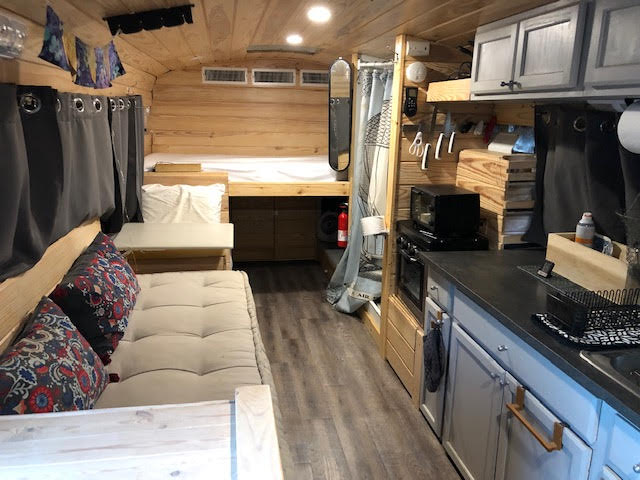
The ME is the mid-size option, a Type B bus on a van-derived or stripped chassis. These slot in between the short bus and the full-size, usually 25 to 33 feet. They’re less common than the BE but you see them pop up at auctions from time to time.
I didn’t spend as much time researching these smaller IC models because the full-size CE is where most of the conversion action happens, but here’s what I found out.
The BE on a Ford chassis usually has the Ford 6.8L V10 gas engine or occasionally a Ford diesel. The ones on a Navistar chassis might have a T444E or later a MaxxForce 7 (more on that in the engine section — it’s a mixed bag). Parts availability for the Ford-chassis BE is excellent because it shares running gear with the Ford E-Series and F-Series trucks. You can walk into any auto parts store and get what you need.
For conversion purposes, a BE or ME gives you a shorter, more maneuverable platform that fits in regular parking spots, doesn’t need a CDL in any state, and gets slightly better fuel economy. The trade-off is space — you’re working with maybe 80 to 120 square feet, which means tough choices on your floor plan. Most people either skip the bathroom or go with a super compact wet bath. If you want the full rundown on sizing, check our piece on short bus vs full-size for conversion.
Honestly, for the BE and ME models, the IC Bus brand matters less than the chassis and engine underneath it. A Ford-chassis BE is really just a Ford truck with a bus body on it, and that’s not a bad thing. Ford truck parts are the easiest things in the world to find.
Common Engines in IC Buses
This is where it gets important, because the engine is probably the single most critical factor when you’re buying a bus for conversion. IC buses have used a bunch of different engines over the years, and some are fantastic while others are, well, avoid-at-all-costs territory. Since IC Bus is owned by Navistar, which is also International, most of these are International/Navistar engines. Here’s the breakdown.
DT466 and DT466E (1994-2004ish)
This is the golden child. The DT466 is a 7.6-liter inline six that International made for decades. Mechanical fuel injection on the earlier ones, electronic on the DT466E. Both are incredibly reliable. I covered this engine extensively in our best engines in school buses article, but the short version is: the DT466 is probably the most recommended school bus engine in the entire skoolie community. Parts are dirt cheap, every diesel mechanic alive has worked on one, and they routinely go 300,000 to 500,000 miles without major work.
If you find an IC CE or an older AmTran conventional with a DT466 or DT466E, that’s a strong candidate. The mechanical DT466 is simpler but has less power. The electronic DT466E has about 195 to 250 horsepower and 520 to 620 lb-ft of torque, which is more than enough for a loaded skoolie build.
T444E (mid-1990s to early 2000s)
This is the International version of the Ford 7.3L Power Stroke. Same engine, different tune. In bus form it makes about 175 to 195 horsepower, which is a little lower than the truck version but that means less stress on the internals. You’ll find this in BE and CE models from that era.
Great engine overall. The known weak spot is the high-pressure oil pump (HPOP), which can fail and costs $500 to $1,000 to replace. Other than that, it’s a proven platform with a massive aftermarket thanks to all the Ford truck guys.
International DT530 and DT530E
Less common than the DT466 but still a solid engine. The DT530 is an 8.7-liter inline six making around 250 to 300 horsepower. You’ll find it in some of the larger IC RE buses and some heavy-duty CE configurations. Same basic architecture as the DT466, just bigger. Parts are available but slightly less common than the DT466 stuff. If you find one, don’t run away from it — it’s a good engine.
MaxxForce 7 (2007-2014ish)
Here’s where the trouble starts, and I need to be really clear about this one because it catches a lot of first-time buyers off guard. The MaxxForce 7 is a 6.4-liter V8 diesel that Navistar used to replace the T444E. It uses an advanced exhaust gas recirculation (EGR) system instead of the selective catalytic reduction (SCR) that Cummins and others were using. Navistar bet that their EGR-only approach would meet EPA emissions standards. They were wrong. The engines had chronic reliability problems.
EGR cooler failures, turbo failures, injector problems, head gasket issues. The engine would soot itself to death. Navistar eventually lost a massive lawsuit over it and had to buy out leases for thousands of school buses. That’s how bad it was.
I read a forum thread once where a school district fleet manager said they were replacing MaxxForce engines at 80,000 miles. Eighty thousand. On a commercial diesel engine. That’s absurd. That number stuck with me because a DT466 at 80,000 miles is barely broken in.
If you see an IC Bus from roughly 2007 to 2014 with a MaxxForce engine, walk away. Period. I don’t care how cheap it is, I don’t care how low the miles are. The engine is a time bomb. Some people will tell you the later MaxxForce engines (2012-2014) were better after Navistar started adding SCR systems, but the reputation is so bad that even the improved versions aren’t worth the risk when there are better options available.
MaxxForce DT (aka MaxxForce 9)
This is different from the MaxxForce 7. The MaxxForce DT is a 9.3-liter inline six and it’s actually a continuation of the DT466/DT530 family. It had some of the same EGR issues as the MaxxForce 7 but to a lesser degree because the inline six platform is fundamentally tougher. Still, it’s not in the same league as the older DT466 for reliability. If you’re looking at a bus with a MaxxForce DT, do your homework on the specific model year. Later ones with the SCR aftertreatment are better.
Cummins ISB 6.7 (2014+)
After the MaxxForce disaster, Navistar basically threw in the towel on their own medium-duty engines and started putting Cummins engines in their buses. The Cummins ISB 6.7 is a modern, proven inline six with proper SCR aftertreatment. It makes around 200 to 260 horsepower and 560 to 660 lb-ft of torque. It’s a good engine.
The catch with the newer Cummins-powered IC buses is that they’re still pretty new to the used market. A 2015 or 2016 model is only 10 to 11 years old, and school districts tend to keep buses for 12 to 15 years before selling them off. So you’ll pay more for these, and there are fewer of them available. But if you find one in your budget, the Cummins 6.7 is a known quantity with great parts support.
For a deep dive on all these engines and how they compare across brands, check out our full article on the best engines in school buses.
IC Bus vs Blue Bird vs Thomas
Alright, this is the big comparison that everybody wants to know about. The Big Three of school bus manufacturers. I spent more time than I probably should have comparing these three, and honestly the differences are smaller than most people think. But they are there.

Build quality. All three make solid buses that meet the same federal safety standards. If I had to rank construction quality based on what I’ve read from fleet mechanics and long-time bus owners, it’d be Thomas at the top by a hair, Blue Bird close behind, and IC Bus in third. That’s not a knock on IC — they build good buses. But Thomas and Blue Bird have slightly thicker body panels and better corrosion protection in some areas, according to the fleet guys I’ve read comments from. The differences are minor enough that they shouldn’t be your deciding factor.
Availability. This one depends heavily on geography. IC Bus dominates in the Midwest, parts of the South, and wherever Navistar has strong dealer networks. Blue Bird is huge in the Southeast (they’re based in Georgia). Thomas is everywhere but especially strong in the Mid-Atlantic and parts of the West. If you’re buying at a local auction, you’ll see whatever brand your school district happened to buy. Don’t get tunnel vision on one brand — buy the best bus, not the best badge.
Engine options. Here’s where IC Bus diverges the most. Blue Bird and Thomas have historically used Cummins and Caterpillar engines — both are good. IC Bus used their own Navistar/International engines for most of their history, which means you get the DT466 (great) but also the MaxxForce (terrible). Blue Bird and Thomas avoided the MaxxForce entirely. That’s a meaningful advantage when you’re shopping for buses in the 2007-2014 range. A Blue Bird or Thomas from that era almost certainly has a Cummins, which is the engine you want. An IC Bus from that era might have a MaxxForce, which is the engine you definitely don’t want. Always check.
Parts and service. IC Bus parts are readily available through Navistar’s dealer network, and since International trucks are everywhere, most truck shops can work on the mechanical components. Blue Bird has its own parts network and is well-supported by independent shops. Thomas is owned by Daimler, which means you get access to Freightliner parts channels for some components. All three are fine for parts. I wouldn’t pick one brand over another for this reason alone.
Resale in the skoolie world. Blue Bird has the strongest name recognition in the conversion community, partly because they’ve been around forever and partly because the Blue Bird All American and the TC/2000 are iconic platforms. Thomas is well-respected. IC Bus is the one that gets the least attention in skoolie groups, which actually works in your favor as a buyer — lower demand means lower prices. I’ve seen IC CE buses go for $1,000 to $2,000 less than comparable Blue Birds at the same auction.
“I know this is an IC Bus, but are Bluebird buses very different from IC Buses or are they similar?”
This is a great question and I see versions of it pop up all the time. The short answer is they’re more similar than different, but the differences that do exist matter.
Both the IC CE and the Blue Bird Vision are Type C conventional buses with front engines, flat rear walls, and similar dimensions. From 20 feet away they look basically the same. The interior layout, seating, emergency exits, and general construction are all governed by the same federal standards, so neither one is dramatically better built than the other.
Where they diverge is under the skin. The biggest difference is the engine. A Blue Bird Vision from 2010 almost certainly has a Cummins ISB 6.7. An IC CE from 2010 might have a MaxxForce 7 or a MaxxForce DT, and that’s a problem. So the brand name on the outside is less important than the engine name on the data plate.
The other difference is body construction details. Blue Bird uses a unitized body construction on some models where the body and frame are integrated. IC Bus uses a more traditional body-on-frame approach. For conversion purposes, body-on-frame can actually be easier to work with because the frame is independent and you can weld, cut, and modify the body without compromising structural integrity as easily.
Blue Bird also has a slightly different window design on some models — the latches and seals are different enough that a Blue Bird window doesn’t swap directly into an IC Bus. Not a big deal for most conversions since you’re probably removing or replacing the windows anyway, but worth knowing if you’re trying to source replacement parts.
Bottom line — don’t pick a bus based on the brand name. Check the engine, check the frame, check the body condition, check the mileage. An IC CE with a DT466 and 120,000 miles is a better buy than a Blue Bird with a Cat 3126 and 250,000 miles, every single time. Our things to check before buying a school bus guide walks through the full inspection process.
Known Issues and What to Watch For
Every bus brand has its quirks, and IC Bus is no exception. Here’s what I found comes up most often when I was researching IC-specific problems.

MaxxForce engines (2007-2014). I already beat this drum above, but it deserves repeating. This is the number one thing to watch for with IC buses. If the bus has a MaxxForce 7 or early MaxxForce DT, the engine is a liability. Check the data plate on the engine before you even look at the rest of the bus. If it says MaxxForce, move on to the next listing.
Electrical gremlins. Several IC Bus owners I’ve read about mention electrical issues, particularly with the body controller module and multiplexed wiring on 2005-2012 models. These buses use an electronic body control system that manages the lights, doors, stop signs, and other bus-specific features. When it works, it’s fine. When it doesn’t, troubleshooting is a nightmare because you’re chasing phantom codes and intermittent faults through a network of modules instead of simple point-to-point wiring. For a conversion, you’re probably ripping most of that stuff out anyway, but know that debugging the base electrical system can be frustrating if you keep any of the factory wiring.
Rust on the lower body panels. IC buses, like all school buses, are susceptible to rust along the lower body panels, around the wheel wells, and on the floor near the entrance door. This isn’t unique to IC — Blue Bird and Thomas have the same issue — but I’ve seen comments from mechanics saying IC body panels are slightly thinner gauge than Blue Bird in some spots, which means rust can punch through faster. Always get under the bus and check the frame rails, cross members, and floor from below. Poke anything that looks suspicious with a screwdriver. If it goes through, that’s your answer.
Coolant leaks at the EGR cooler. On IC buses with EGR systems (roughly 2004 and later), the EGR cooler is a common failure point. It develops internal leaks that send coolant into the exhaust or into the intake. The symptom is usually unexplained coolant loss without any visible external leaks. This is another one of those things that’s more of a problem on the MaxxForce engines, but even the DT466E can have EGR issues on later models.
Transmission considerations. Most IC CE buses come with an Allison automatic transmission — usually an Allison 2000 or 3000 series. These are excellent transmissions and rarely cause problems if the fluid has been maintained. The Allison is the same transmission used in medium-duty trucks and it’s practically bulletproof. Check the fluid color and smell. If it’s dark and burnt, that’s a rebuild in your future. If it’s pink or red and doesn’t smell scorched, you’re probably fine. I talked about this more in our how long a school bus engine lasts article, which also covers transmission longevity.
Brake system. Full-size IC CE and RE buses use air brakes, which means you might need a CDL depending on your state. Check our CDL guide for the specifics. The air brake system itself is robust but the compressor, dryer, and valves need periodic attention. Listen for the compressor cycling and check that the system holds pressure. Leaks in the air system are common on older buses and range from cheap (a fitting) to expensive (a compressor rebuild).
Best IC Bus Models for Conversion
After going through all of this, here’s where I landed on the best IC Bus models for a skoolie build.
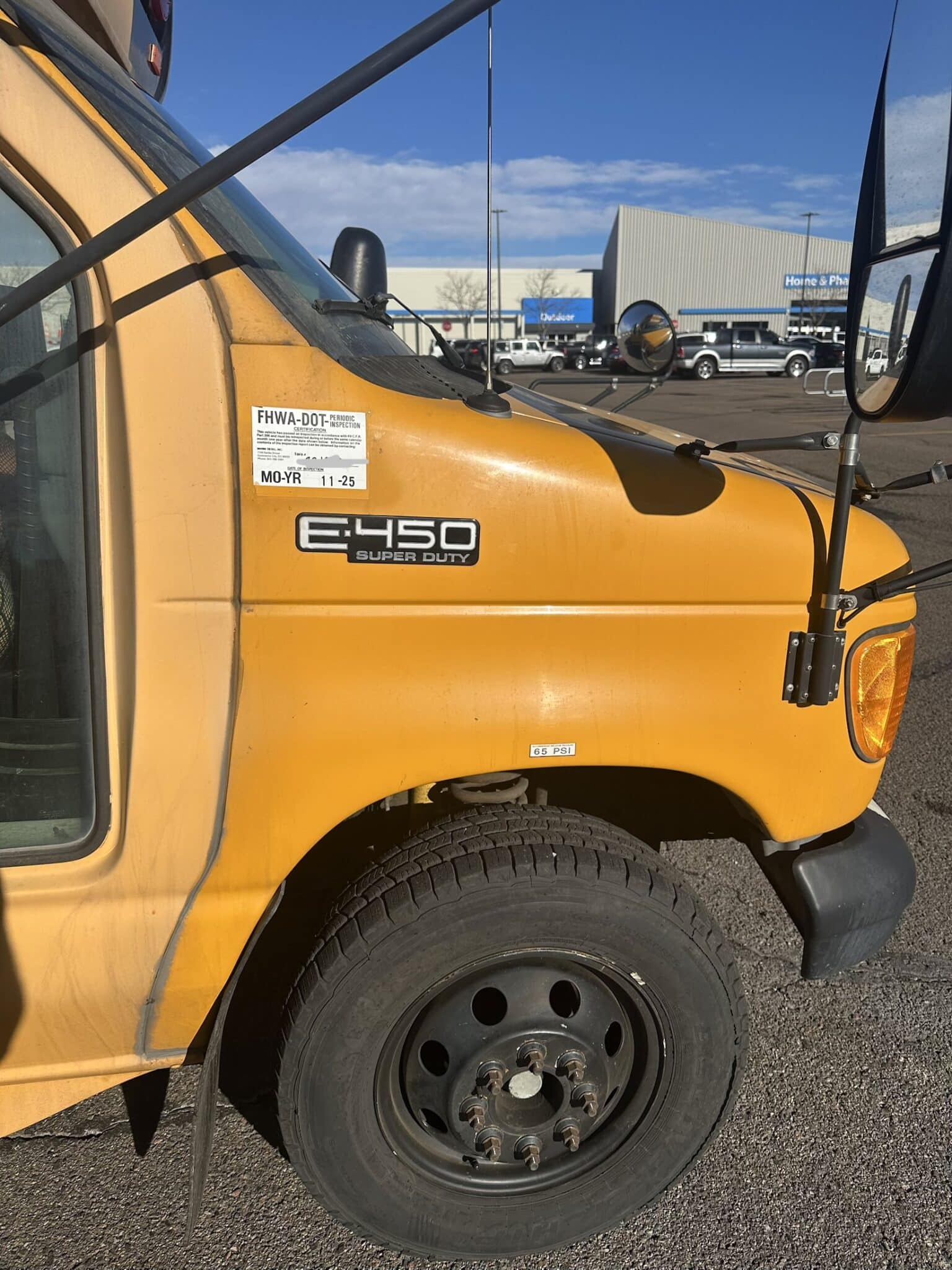
Best overall: IC CE with a DT466E, 2000-2004 model year. This is the sweet spot. You get the proven DT466E engine before the MaxxForce era, a solid body-on-frame construction, and these buses are old enough now that they’re cheap at auction. $3,000 to $7,000 for a good one. The DT466E in this era has electronic fuel injection but none of the emissions complications that came later. It’s modern enough to have decent power and fuel delivery, old enough to not have a bunch of electronics that will give you headaches.
Best budget option: Late-90s AmTran (pre-IC branding) with a DT466 or T444E. These are getting old, 25-plus years at this point, so the body might need more attention. But the mechanical DT466 is essentially indestructible and these buses sell for $1,500 to $4,000 at auction because they’re “old.” The T444E (7.3L diesel) is also a solid choice in these older buses. Just inspect the body and frame carefully because age catches up with the body faster than the drivetrain.
Best if you’ve got budget: IC CE with a Cummins ISB 6.7, 2015 or newer. These are the newer IC buses that switched to Cummins power after the MaxxForce debacle. They’re more expensive — $8,000 to $15,000 and up — but you get a modern, emissions-compliant engine with a strong support network. The DEF system and DPF filter are extra maintenance items, but the Cummins 6.7 is a proven engine with millions of miles on it across the truck and bus fleets.
For short bus builds: IC BE on a Ford chassis with the 6.8L V10. Simple, cheap to maintain, parts are at every auto parts store. It won’t get the fuel economy of a diesel and it won’t last as long, but for a part-time build or a couple doing weekend trips, the gas V10 is perfectly adequate. Gas vs diesel is a whole conversation on its own.
One I’d skip: Any IC Bus, any model, with a MaxxForce 7 engine. I feel like I’ve said this ten times already but it really is that important. The savings on the purchase price are not worth the potential repair bills. A MaxxForce engine replacement or rebuild can cost $8,000 to $15,000. That wipes out any bargain you got on the bus itself, and then some.
Where to Find IC Buses for Sale
IC buses show up in all the same places you’d find any school bus. Government surplus auctions are probably your best bet for price — sites like GovPlanet, PublicSurplus, and AuctionTime regularly have IC buses from school districts that are cycling out their older fleet units. I covered the full list of places to shop in our best websites to buy a school bus article.

A few IC-specific tips though.
Navistar has a strong dealer network for International trucks, and those same dealers often handle IC Bus parts and service. If you’re buying an IC bus, it’s worth knowing where your nearest International dealer is. They can pull service records if the bus was dealer-maintained, and they can run the VIN to tell you exactly which engine and transmission are in the bus. That’s valuable information, especially for avoiding the MaxxForce trap.
School districts in the Midwest and South tend to run IC fleets more heavily than other regions. If you’re willing to travel to buy, you’ll find more selection and potentially better prices in states like Illinois, Indiana, Oklahoma, Texas, and Alabama. Some buyers save thousands by driving a few states over to buy from a district that’s liquidating a big batch of IC buses at once.
Facebook Marketplace and Craigslist are hit or miss but worth checking. Search for “IC Bus,” “IC CE,” “International school bus,” and “AmTran” to catch all the listings. A lot of private sellers don’t know the difference between the model names and might list an IC Bus as an “International” or even just “school bus.” Cast a wide net with your search terms.
One more thing that I think is worth mentioning. Because IC buses are slightly less popular in the skoolie community than Blue Birds, you can sometimes find better deals. The same bus that a Blue Bird fanboy would pay $8,000 for might go for $5,000 or $6,000 with an IC badge on it. The engines, transmissions, frames, and body panels don’t care what name is on the front. A good bus is a good bus regardless of the brand.
Before you buy anything though, make sure you’ve read through our guides on how much a school bus costs, how many miles is too many, and what to check before buying. Those three articles together will save you from most of the common mistakes.
So here’s where I come down on IC buses after all this research. They’re solid buses. Not the flashiest brand, not the one with the biggest following in the skoolie world, but well-built, widely available, and perfectly capable platforms for a conversion. The key is knowing which engines to target and which to avoid. Get a DT466 or a Cummins-powered IC Bus and you’ll have a reliable platform that can take you anywhere. Get a MaxxForce and you’ll have a headache that follows you down every highway. The engine makes the bus. Everything else is just sheet metal.