
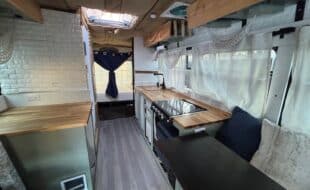
When I first started digging into bus conversions, I kept seeing the same question over and over — “what even counts as a mini bus?” And honestly, the answer isn’t as clean as you’d think. People use “mini bus” to describe everything from a Sprinter van with extra seats to a 25-foot cutaway shuttle. The lines get blurry fast, and I spent a solid week sorting through conflicting definitions before I felt like I actually understood what I was looking at.
Here’s the deal: a mini bus is generally a commercial passenger vehicle built on a cutaway van chassis — think Ford E-350, Ford E-450, Chevy Express 4500, or a Mercedes Sprinter-based platform — that seats roughly 12 to 25 passengers. In the school bus world, these are classified as Type A buses. They run 18 to 25 feet long, give you around 60 to 130 square feet of usable floor space, and offer one of the best balances of livability, driveability, and cost in the entire bus conversion world. You don’t need a CDL to drive one, they fit in regular parking spots, they get better gas mileage than a full-size bus, and a solid conversion can be done for $8,000 to $25,000. The trade-off is space — you’re working with a smaller footprint, and every inch matters. But for solo travelers, couples, and minimalist builders, a mini bus can be the perfect platform.
This guide covers everything I found out about mini bus conversions — what they are, where to find them, what they cost, how they compare to other platforms, and whether one is actually right for your situation.
Where can I get a short school bus, or shuttle bus?
This was one of the first things I had to figure out, and it took more legwork than I expected. Mini buses don’t get listed as cleanly as full-size school buses do. School districts sell their big yellow buses at well-publicized auctions. Mini buses, on the other hand, come from all over the place and the sellers don’t always know what they’ve got.
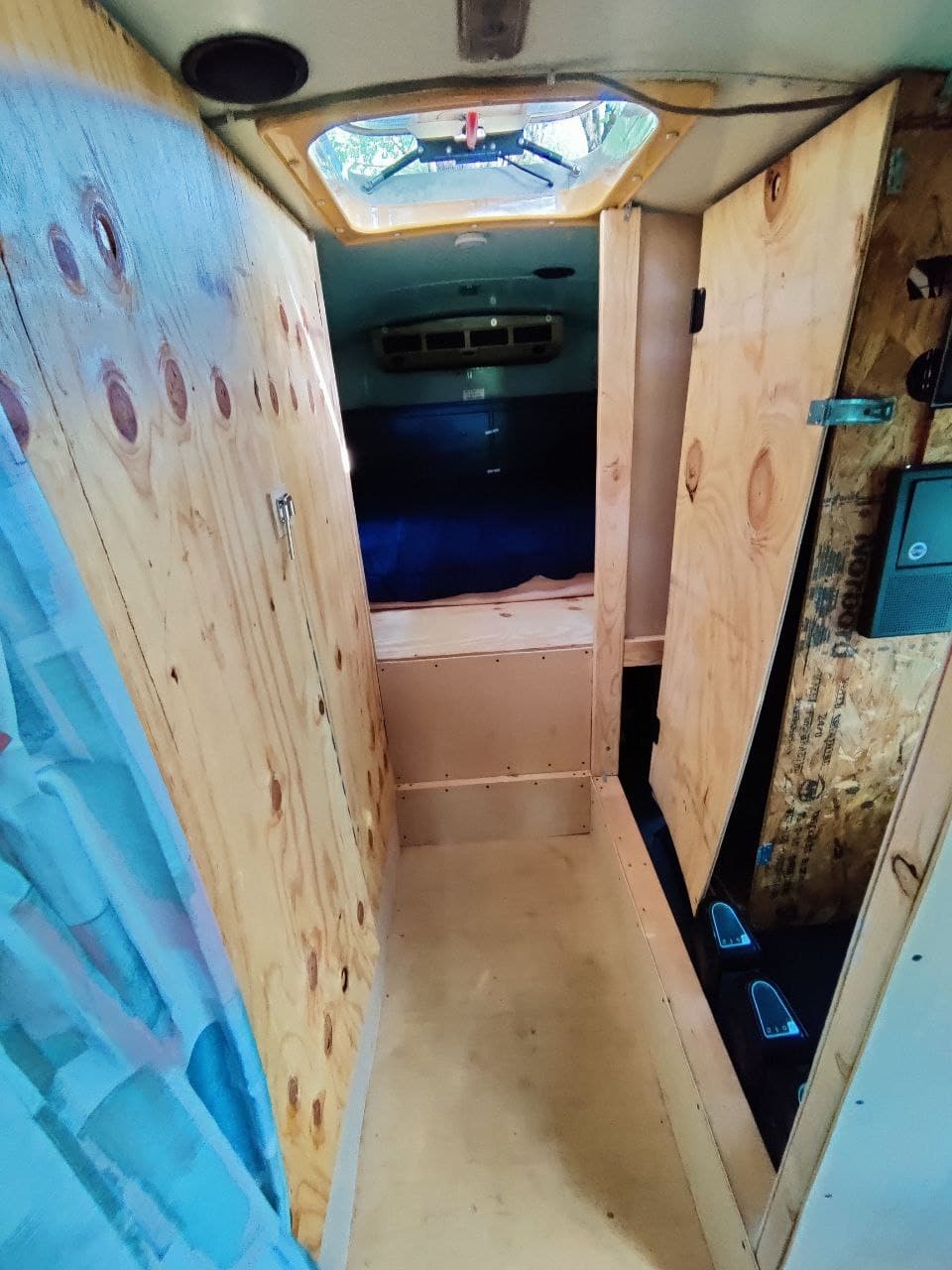
The best places I found to look are government surplus auction sites — GovPlanet, PublicSurplus, and AuctionTime are the big three. School districts retire their Type A buses through the same channels as their full-size fleet, so you’ll find them mixed in. But mini buses also come from churches, assisted living facilities, day camps, hotel shuttle fleets, airport transportation companies, and medical transport outfits. Each of those sources has a different selling process.
Churches are worth a special mention. I came across a listing once for a 2009 Ford E-450 church bus with 48,000 miles on it. Forty-eight thousand. That’s nothing for a gas V10. The church had driven it twice a week for a decade and parked it in a covered lot the rest of the time. These kinds of deals are out there, but you have to dig for them. Call churches directly, check their bulletin boards, ask around at local mechanic shops. (See our guide on Church Bus Conversions: The Complete Guide for more on this.)
For shuttle buses specifically, look at fleet liquidation companies. Hotels, airports, and car rental agencies cycle through shuttle buses every 5 to 8 years, and they often sell them in batches through fleet auction houses. The condition is usually decent because those companies maintain their vehicles — a broken-down airport shuttle is a liability they can’t afford.
Facebook Marketplace and Craigslist are always worth checking too. I’d set up alerts for “mini bus,” “shuttle bus,” “church bus,” “passenger van,” and “cutaway bus” in your area and within a 200-mile radius. Widening the search radius matters because mini buses are less common than full-size school buses, so the inventory is thinner.
Price-wise, expect to pay $3,000 to $8,000 at auction and $5,000 to $15,000 from private sellers. Lower mileage and diesel engines push the price up. Gas engines with higher miles bring it down. I saw some rough ones go for under $2,000, but at that price you’re gambling on the mechanical condition.
Would a camper van be better to start with?
I wrestled with this question for a while, and I think a lot of people do. A camper van — whether it’s a prebuilt Class B RV or a DIY cargo van conversion — seems like the easier path. Smaller, simpler, already set up for the road. So why would anyone go through the hassle of converting a mini bus when you could just buy a camper van?
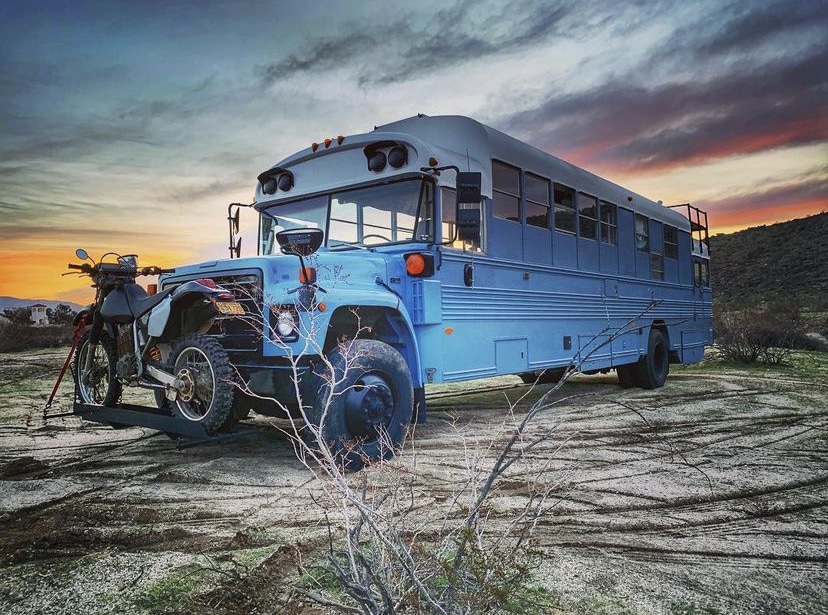
Well, it depends on what you need. And I don’t mean that in a wishy-washy way. There are real, measurable differences.
A camper van (Transit, Sprinter, ProMaster, or similar) gives you roughly 40 to 60 square feet of floor space. A mini bus gives you 60 to 130. That’s potentially double the room. In a van, you’re making hard choices — fixed bed OR a dinette that converts. Tiny kitchen OR storage space. A mini bus lets you have a real bed, a small kitchen counter, some storage, and possibly even a compact wet bath. You’re not choosing between essentials the same way. (See our guide on Can You Convert a Double Decker Bus Into a Home? for more on this.)
The ceiling height situation is interesting too. A standard cargo van has about 56 to 62 inches of interior height. A high-roof Transit or Sprinter gets you up to about 76 to 80 inches. A mini bus — depending on the model — can range from 72 inches in a standard Type A school bus up to about 78 to 80 inches in a raised-roof shuttle. So a high-roof van and a mini bus are actually pretty close on ceiling height, but the mini bus gives you more floor space to stand around in.
Where the camper van wins is driveability and stealth. A Sprinter van drives like a big car. A mini bus drives like… well, a bus. It’s not hard to drive, I’m not saying that. But it’s wider, the turning radius is bigger, and it doesn’t blend into a parking lot the same way a van does. If stealth camping is your main strategy, a van is the better tool for the job.
Cost is a wash in a lot of cases. A used cargo van suitable for conversion runs $8,000 to $20,000. A mini bus runs $3,000 to $15,000. The conversion costs are similar for basic builds. But if you’re buying a prebuilt Class B RV, you’re looking at $40,000 to $100,000+, which puts it in a completely different category from a DIY mini bus conversion.
Here’s what I tell people: if you want maximum stealth and you’re okay with tight quarters, go van. If you want more livable space and you don’t mind looking like a small bus, the mini bus is the better value.
Is it true that shuttle buses are taller because they are meant for grown ups than school buses?
Yes, and this is one of those things I didn’t fully appreciate until I actually went and stood inside both. The difference isn’t huge on paper, but it changes the feel of the space completely. (See our guide on What Is the Difference Between a School Bus and a Transit Bus? for more on this.)
School buses — including mini-sized Type A school buses — were designed to transport kids. The seats are smaller, the aisle is narrower, and the ceiling is lower because the engineers were designing for passengers who are 3 to 5 feet tall. An adult can walk down the aisle of a Type A school bus, but you might be ducking a little if you’re over 6 feet.
Shuttle buses were designed for adults carrying luggage, standing in the aisle, and moving around. Hotels, airports, medical transport — all adult passengers who need to stand upright. So the manufacturers built them taller. The roofline is raised, the aisle is wider, and the overall interior volume is greater even when the exterior footprint is similar.
I talked to a guy who had converted both — a Type A school bus and a shuttle bus of almost identical length. He said the shuttle felt like a different world inside. Not because it was longer or wider, but because he could stand up straight everywhere and the overhead space gave him room for cabinets he never could have fit in the school bus.
Now, not every shuttle bus is dramatically taller than every school bus. There’s overlap. But as a general rule, if ceiling height matters to you — and if you’re over about 5’10”, it will — a shuttle bus gives you a better starting point.
What are usually the heights?
I spent a lot of time comparing specs on this because the numbers vary depending on who you ask and how they’re measuring. Interior height is what matters for a conversion, but some listings give you exterior height, some give interior at the center, some measure to the floor and some to the top of the existing flooring. It gets confusing. Here’s what I found to be generally accurate.
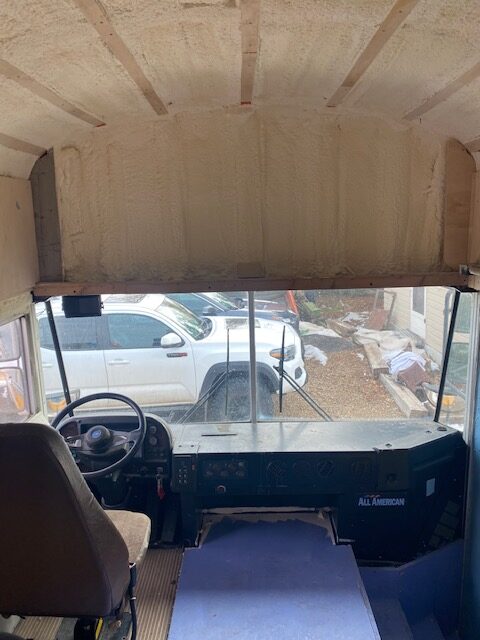
Type A School Bus (mini bus class):
- Interior ceiling height: 70 to 74 inches (about 5’10” to 6’2″)
- That’s measuring from the existing floor to the highest point of the ceiling arch
- After you add insulation and new flooring, you lose 2 to 4 inches, so finished interior height is often 66 to 72 inches
Shuttle Bus (cutaway chassis):
- Interior ceiling height: 74 to 80 inches (about 6’2″ to 6’8″)
- Raised-roof models can hit 80 to 82 inches (6’8″ to 6’10”)
- Same insulation and flooring loss applies, so finished height is typically 72 to 78 inches
Sprinter-based Mini Bus:
- Interior ceiling height: 76 to 80 inches in high-roof models (about 6’4″ to 6’8″)
- Standard roof: 65 to 70 inches (too low for most people to stand comfortably)
- The Sprinter’s advantage is the flat ceiling — no arch to deal with
Ford E-Series Cutaway (E-350/E-450):
- This is the most common platform for both Type A school buses and shuttle buses
- The body height depends entirely on the body manufacturer (Starcraft, ElDorado, Girardin, Collins, etc.)
- Same chassis can have a 72-inch or a 78-inch interior depending on who built the box on the back
For reference, a full-size school bus (Type C or Type D) has about 72 to 78 inches of interior height, with flat-top models giving you even more. So a shuttle-style mini bus can actually match or come close to a full-size school bus on ceiling height. That surprised me when I first found out.
One thing I want to mention — exterior height matters too, just for different reasons. Most mini buses sit around 9 to 10 feet tall on the outside. That’s well under the standard 13’6″ bridge clearance, and most parking garages (usually 7 to 8 feet) will still be off limits. But gas station canopies, drive-throughs, and most covered parking are fine. This is another place where mini buses beat full-size buses — you don’t have to stress about clearances nearly as much.
What Counts as a Mini Bus? Understanding Bus Classifications
Alright, let me clear this up because the terminology in this space is a mess. I’ve seen people use “mini bus,” “short bus,” “shuttle bus,” and “Type A” interchangeably, and while there’s overlap, they’re not all the same thing. (See our guide on Is a Short Bus or Full-Size Bus Better for a Conversion? for more on this.)
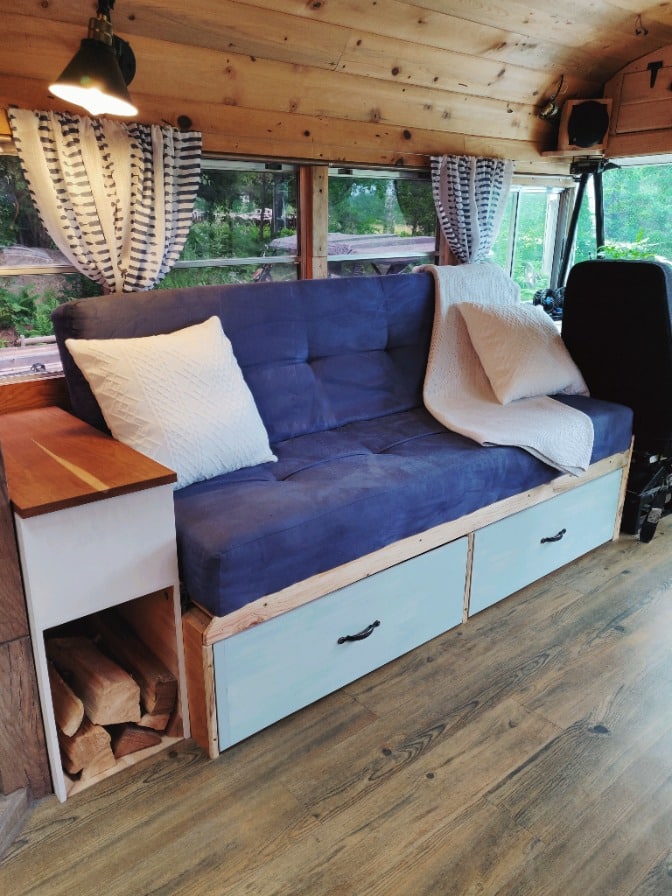
In the official Federal Motor Vehicle Safety Standards classification system, buses fall into types:
Type A — Built on a van or cutaway chassis. The front section is a factory van cab (or cutaway cab), and the rear passenger section is a separate body bolted onto the chassis frame. Type A1 is under 10,000 lbs GVWR. Type A2 is over 10,000 lbs GVWR. This is where most “mini buses” live.
Type B — Built on a stripped chassis where the body is integrated from the windshield back. Think of the classic short school buses where the body starts right behind the driver’s area with no visible van cab section.
Type C — The conventional school bus with a hood. Flat-nose or dog-nose front. This is the “big yellow bus” most people picture.
Type D — Flat-front, rear-engine or mid-engine. Transit style.
When people in the conversion community say “mini bus,” they usually mean a Type A bus or a commercial shuttle bus built on the same kind of cutaway chassis. The key identifier is the cutaway van cab up front — you can see it’s a Ford, Chevy, or Mercedes cab with a separate box body behind it.
What makes this confusing is that “short bus” can refer to either a Type A or a short Type C. A 24-foot Thomas Minotour is a Type A. A 24-foot Blue Bird with a conventional hood could be a short Type C. They’re similar in length but built completely differently. The Type A rides on a lighter van chassis. The Type C rides on a heavier dedicated bus chassis. For conversion purposes, this matters because of weight capacity, drivetrain components, and how the body attaches to the frame. (See our guide on Blue Bird Buses: The Complete Conversion Guide for more on this.)
I’m going to use “mini bus” in this guide to mean any Type A or cutaway-chassis bus in the 18 to 25 foot range. That includes school bus versions, shuttle versions, and church/activity bus versions. The underlying platform is the same even if the original purpose was different.
Common Platforms: What’s Under the Hood
The chassis is the foundation of everything in a mini bus, and there are really only a handful of common platforms you’ll run into. I went through dozens of listings before the patterns became obvious.
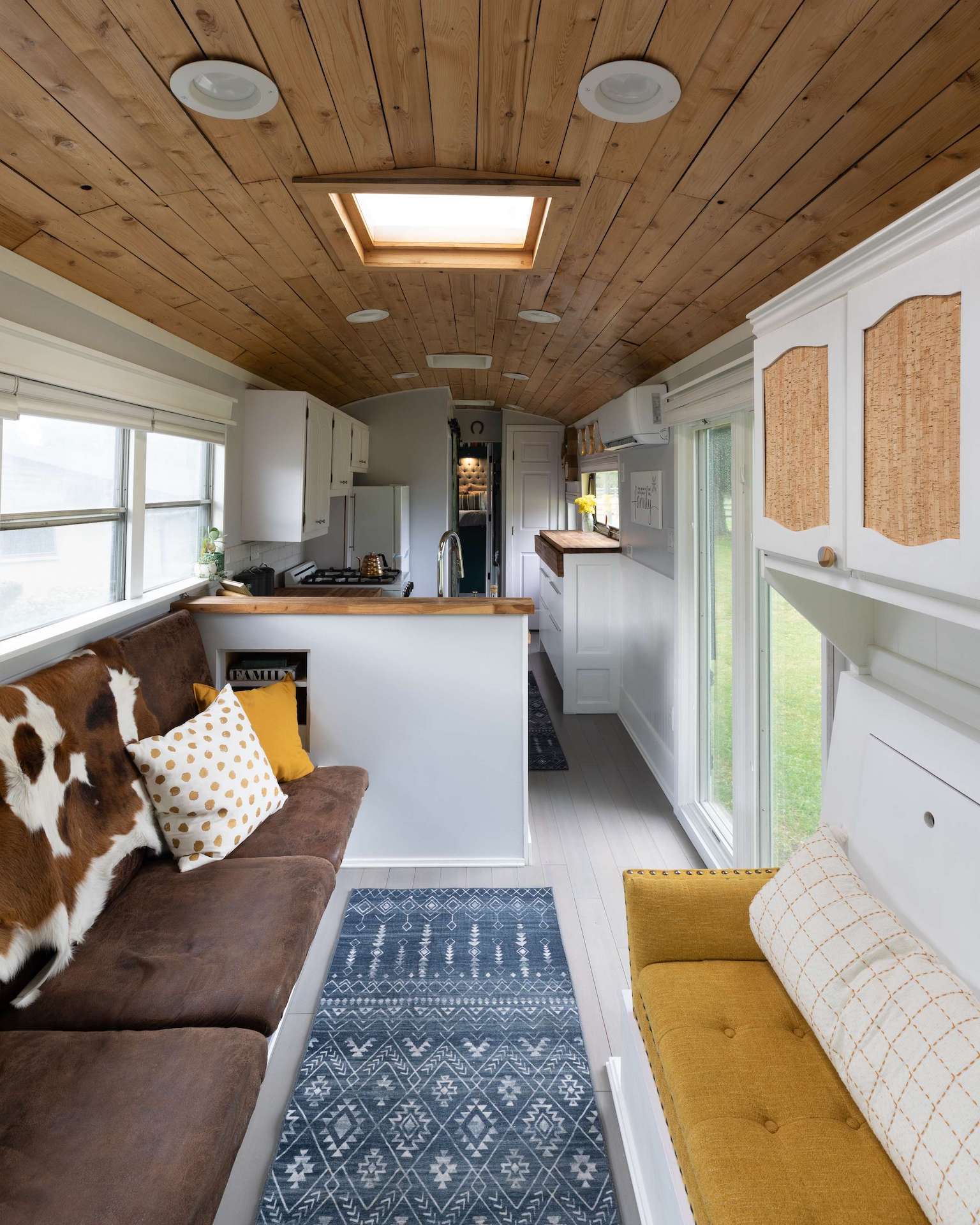
Ford E-350 and E-450
This is the king of mini bus platforms. The Ford E-Series cutaway has been the go-to for body builders since the late 1990s, and there are an enormous number of them on the used market. The E-350 is rated at 10,000 to 12,500 lbs GVWR. The E-450 bumps that up to 14,050 to 16,000 lbs GVWR.
Engine options you’ll typically find:
- 6.8L V10 Triton (gas) — The most common engine in E-450 mini buses from 1999 to 2019. Reliable, parts are everywhere, gets 8 to 12 MPG. Thirsty but nearly unkillable if maintained. I found more listings with this engine than any other.
- 7.3L Power Stroke (diesel) — Found in E-350/E-450 models from 1999 to 2003. The holy grail for a lot of builders. Known for running 300,000+ miles without major issues. Harder to find and commands a premium price.
- 6.0L Power Stroke (diesel) — 2003 to 2010. Controversial engine. Known for head gasket and EGR issues. Can be bulletproofed, but that’s $3,000 to $5,000 in work. I’d steer clear unless the work’s already been done or you’re getting a great deal and you’re handy with a wrench.
- 6.7L Power Stroke (diesel) — 2011+. Great engine, but mini buses with this motor are newer and pricier. Expect to pay $15,000+ for a decent one.
- 5.4L V8 Triton (gas) — Found in some lighter-duty E-350 models. Adequate for a light conversion but underpowered if you’re loading the bus up heavy.
The Ford E-Series is my recommendation for most first-time mini bus converters. Parts are cheap, mechanics know them, and the aftermarket support is huge. If you break down in the middle of nowhere, every auto parts store in America has Ford E-Series parts on the shelf.
Chevy Express 4500 / GMC Savana 4500
The second most common platform. GM’s cutaway offering uses the 6.6L Duramax diesel (in newer models) or the 6.0L Vortec gas V8 (in older ones). The Duramax is a solid engine — same family as what’s in the Chevy Silverado HD trucks. The 6.0 gas is reliable but thirsty, getting 7 to 10 MPG under load.
I found fewer of these on the used market than Fords, but they’re out there. One advantage of the GM platform is that the Allison automatic transmission is extremely well-regarded. Some builders specifically seek out the Chevy/GMC platform because of that transmission.
GVWR on the 4500 is typically 14,200 to 16,500 lbs, which gives you good headroom for a build.
Mercedes Sprinter-Based
Sprinter-based mini buses are a newer entrant. Companies like Battisti Customs, Grech Motors, and LA West build luxury shuttle and limo buses on the Sprinter platform. These are typically 22 to 25 feet long, seat 12 to 16 passengers in their original configuration, and ride on the Sprinter’s 3.0L V6 turbo diesel.
The Sprinter platform has some real advantages — better fuel economy (12 to 16 MPG), a more car-like driving experience, and a modern feel. But there are trade-offs. The Sprinter’s GVWR is lower (11,030 lbs for the 3500 model), which limits how much weight you can add in a conversion. Parts and service are more expensive than Ford or Chevy. And the Mercedes electronics can be finicky — when a Sprinter throws a code, it’s often not a simple fix.
I’d say the Sprinter-based mini bus is best for people who prioritize fuel economy and driving comfort over raw build capacity. If you’re planning a light, minimalist build, it’s a fantastic platform. If you want a full kitchen, heavy countertops, and a big water tank, the GVWR might hold you back.
International and Freightliner Chassis
Less common but worth mentioning. Some mini buses, particularly commercial shuttle buses, are built on International (now IC Bus) or Freightliner chassis. These are heavier-duty platforms with higher GVWRs, which is nice. But parts availability is worse than Ford or Chevy, and finding a mechanic who works on medium-duty trucks can be harder outside of major metro areas.
I wouldn’t specifically seek these out as a first-time builder unless you found one in amazing condition at a great price.
Dimensions and Interior Space: What You’re Actually Working With
Let me lay out the typical dimensions for a mini bus conversion, because I remember being frustrated trying to find this information all in one place.
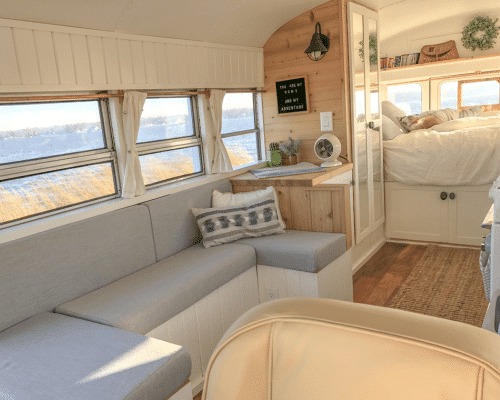
Exterior dimensions (typical range):
- Length: 18 to 25 feet overall (bus body is shorter; the cab adds 4 to 5 feet)
- Width: 7 to 7.5 feet (body width); about 8 feet at the mirrors
- Height: 8.5 to 10.5 feet (depending on roof style)
Interior dimensions (typical range):
- Usable length (behind driver’s area to rear wall): 10 to 16 feet
- Width between interior walls: 6.5 to 7 feet (narrower than a full-size bus at 7.5 feet)
- Ceiling height: 70 to 80 inches (varies widely by model — see the heights section above)
Usable floor space: 60 to 130 square feet
To put that in perspective, a king-size bed is about 42 square feet. A mini bus gives you enough room for a bed plus a kitchen area plus some storage. Maybe a compact bathroom if you design carefully. You’re not going to have a separate living room and bedroom like you might in a 40-foot full-size bus. But you can absolutely build a functional, comfortable home.
The width is actually the dimension I found most surprising. At 6.5 to 7 feet wide inside, a mini bus is notably narrower than a full-size school bus. You feel it. A queen bed (60 inches wide) leaves you about 18 to 24 inches on one side for a walkway. It works, but it’s tight. A lot of mini bus builders opt for a full-size mattress (54 inches) or even a custom-width mattress to gain back some aisle space.
One thing that’s easy to overlook — the wheel wells. On a mini bus, the rear wheel wells intrude into the interior space on both sides, typically about 8 to 12 inches deep and 24 to 30 inches long. You have to design around them. Most people incorporate them into a bed platform, a bench seat, or a storage cabinet. Shuttle buses sometimes have less wheel well intrusion than school bus models because the floor is set at a different height, but it varies.
Advantages of a Mini Bus Conversion
I’ve talked to a bunch of people who chose mini buses over full-size, and the same reasons kept coming up. Here’s what makes the mini bus platform genuinely attractive.
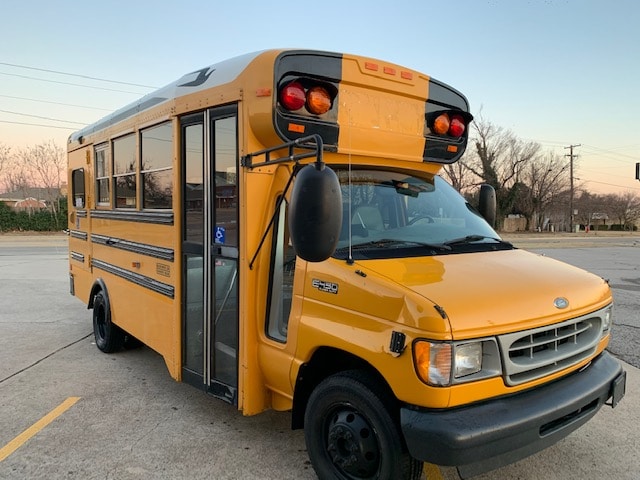
You can drive it anywhere. This is the big one. A mini bus is essentially the same size as a large work van or a small box truck. You can drive it through fast food drive-throughs, park it in regular parking lots (usually taking one and a half spaces), navigate tight city streets, and fit in most campground spots. I heard from one couple who spent six months traveling in a 22-foot mini bus and said they never once had to think about where they could take it. You just don’t have that with a 40-foot school bus.
No CDL required. Every mini bus I’ve looked at falls well under the 26,001 lb GVWR threshold that triggers a CDL requirement. Most are in the 10,000 to 16,000 lb range. You drive it on a regular license in every state. No air brake endorsement, no special testing, no hassle.
Better fuel economy. Mini buses get 8 to 14 MPG depending on the engine and how much weight you’re carrying. Compare that to 6 to 10 MPG for a full-size school bus. Over a year of full-time travel at 15,000 miles, that difference could save you $2,000 to $4,000 in fuel costs. It’s not van-level economy, but it’s meaningfully better than the big rigs.
Cheaper to buy and convert. The bus itself is cheaper ($3,000 to $15,000 versus $5,000 to $20,000 for full-size). The conversion is cheaper because there’s less square footage to insulate, panel, wire, and plumb. Less flooring to buy. Fewer windows to deal with. A complete, quality mini bus conversion can be done for $8,000 to $25,000. That’s achievable on a modest budget.
Easier to work on. The mechanical components are all standard automotive parts. Ford E-Series parts are at every auto parts store. You don’t need to find a specialty bus mechanic — any truck shop or even a lot of general mechanics can work on the drivetrain. I found this really appealing when I was comparing platforms, because the idea of breaking down somewhere rural and needing an obscure bus part made me nervous.
Insurance and registration are simpler. Because mini buses are built on standard van/truck chassis, most insurance companies treat them like large trucks or motorhomes rather than commercial vehicles. Registration is straightforward in most states, especially once you remove the seats and re-title as an RV or motorhome.
Disadvantages of a Mini Bus Conversion
I’m not going to pretend a mini bus is perfect. There are real compromises, and I want to lay them out honestly.
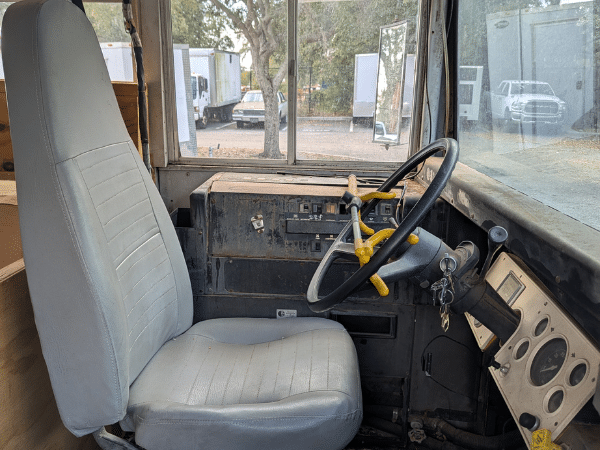
Limited space. This is the obvious one. At 60 to 130 square feet, you’re making constant trade-offs. Every item earns its place or it doesn’t come. A lot of mini bus builds skip the bathroom entirely, or use a portable toilet and a separate shower tent outside. If you want a full wet bath, a spacious kitchen, a dedicated bedroom, and a desk area, you’re going to struggle to fit it all. I looked at a lot of floor plans and the ones that tried to cram everything in felt cramped and impractical.
Most are gas engines. The majority of mini buses on the used market run gas engines — the Ford V10 or Chevy 6.0 V8 being the most common. Gas engines are fine mechanically, but they’re thirstier under load and they don’t have the longevity reputation that diesel engines do. The 7.3L Power Stroke diesels in the Ford E-Series are the exception, but they’re getting old (1999-2003 vintage) and harder to find with reasonable mileage.
Lighter-duty chassis. A mini bus on an E-450 chassis has a GVWR of about 14,000 to 16,000 lbs. That sounds like a lot, but the bus itself weighs 8,000 to 10,000 lbs empty. That leaves you 4,000 to 8,000 lbs for your build, your gear, your water, and your passengers. A full kitchen with real countertops, a 40-gallon water tank, a wood stove, full insulation, and all your possessions adds up faster than you think. Exceeding your GVWR is illegal and dangerous. I’ve seen builds where people had to make painful choices about what to leave out because they were hitting their weight limit.
Resale value is unpredictable. The mini bus conversion market is newer and less established than the skoolie market. A beautifully converted full-size school bus can sell for $40,000 to $80,000 to the right buyer. Mini bus conversions tend to sell for less because there’s less demand and buyers are comparing them to van conversions, which have a bigger resale market.
Less insulation space. Thinner walls and a lighter body mean less room for insulation. You’ll typically get 1 to 1.5 inches of insulation in the walls versus 2 to 3 inches in a full-size school bus. This makes a real difference in extreme heat or cold. Some mini bus converters compensate with spray foam, which works well but is more expensive and harder to apply.
Storage is tight. In a full-size bus, you can have under-bed storage, overhead cabinets, a gear closet, and still have room for a couch. In a mini bus, storage is a constant puzzle. You’re using every cubic inch — under the bed, inside benches, overhead, behind the cab seats. Outdoor activities like surfing, biking, or skiing get challenging because the gear has to go somewhere.
Best Layouts for Mini Bus Conversions
After looking at probably a hundred mini bus builds online, I noticed that the successful ones almost all followed one of a few basic layout patterns. You can get creative with the details, but the bones tend to fall into these categories.
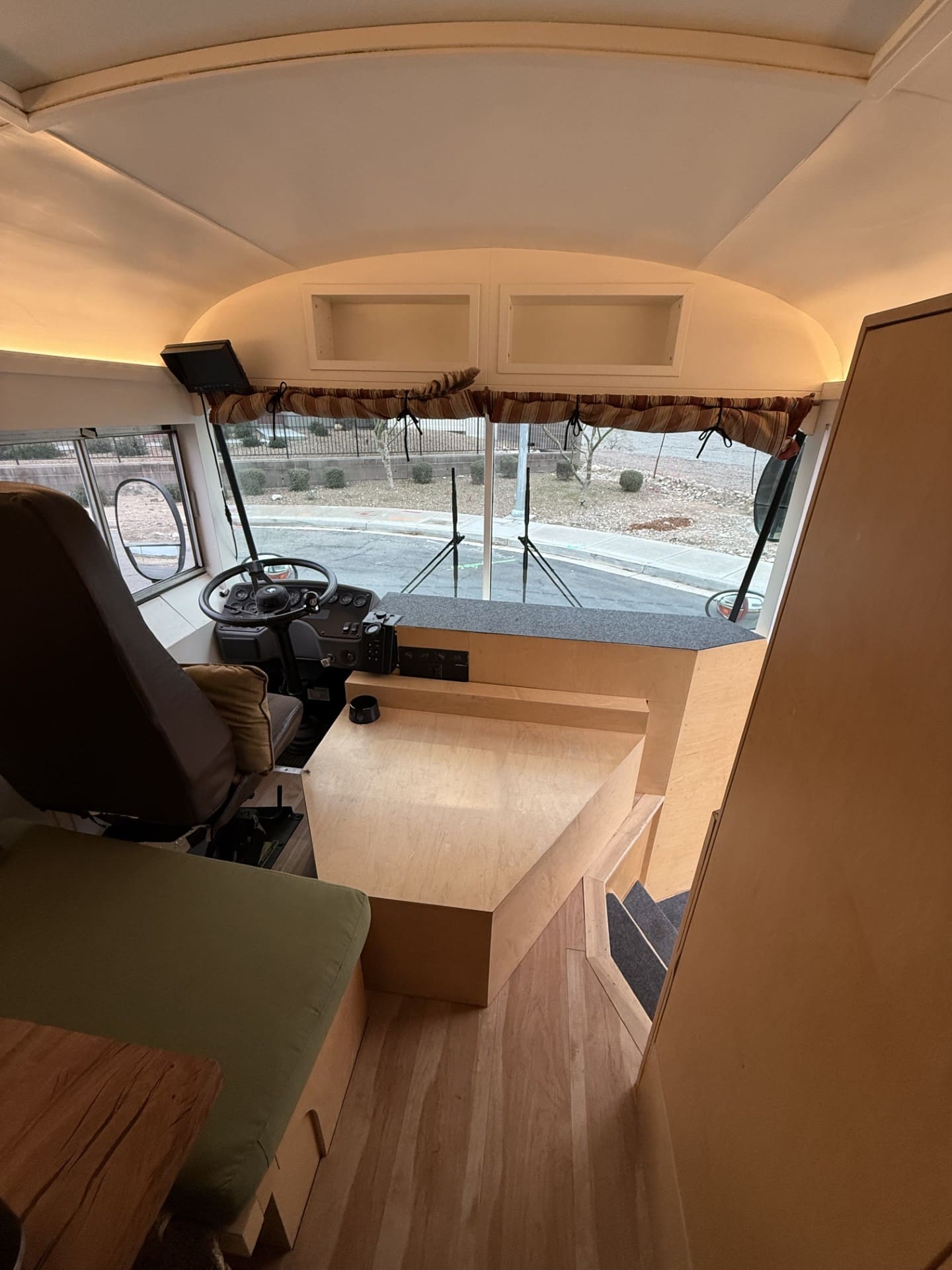
The Murphy Bed / Multi-Use Layout
This is the most popular layout I found for solo travelers and couples who want maximum daytime living space. A Murphy bed (or a convertible dinette that folds into a bed) goes at the back. During the day, the back area is a seating/working area. At night, the bed folds down. The kitchen goes on one side near the middle of the bus. No dedicated bathroom — you use a portable toilet stored in a bench seat and shower at gyms, campgrounds, or with an outdoor setup.
This layout works well in shorter mini buses (18 to 20 feet). The sacrifice is that you’re folding and unfolding your bed every day, which gets old. But you gain a space that feels genuinely open during daylight hours.
The Fixed Bed With Galley Layout
The bed goes permanently across the back of the bus, usually on a raised platform with storage underneath. The kitchen runs along one wall between the bed and the cab. A small counter with a two-burner stove, a sink, and maybe a fridge underneath. The other wall has storage cabinets or a small dinette.
This is what I’d call the “standard” mini bus layout. It works. You don’t have to make your bed every day. You sacrifice some daytime space because the bed is always there, but in a 22 to 25 foot bus, you still have enough room for a small living area near the front.
The Bathroom-Inclusive Layout
If having a bathroom is non-negotiable — and for a lot of people, it is — you can make it work in a mini bus, but it takes over the rear corner. A compact wet bath (toilet and shower in the same small room, usually about 24 by 30 inches) goes in one back corner. The bed goes adjacent to it, often shortened to a full-size or even a three-quarter width. The kitchen is mid-bus on the opposite side.
This layout only really works in mini buses that are 22 feet or longer. Under that, you’re giving up too much living space for the bathroom. But I found several builds where people pulled it off beautifully in a 24 to 25-foot bus. It’s tight, but functional. The trick is using the bathroom as a multi-purpose space — laundry area, changing room, extra storage when the toilet isn’t in use.
The Open-Concept Minimalist
I saw a few builds where the owner basically treated the mini bus like a studio apartment with wheels. No walls, no separate rooms, everything open. Bed on one side, kitchen on the other, a curtain for the toilet area. It sounds crude but some of these builds were really well done — the lack of walls makes the space feel much bigger than it is, and it maximizes airflow, which matters a lot if you’re in warm climates.
This works best for solo builders who don’t need privacy. If you’re a couple, most people want at least some separation, even if it’s just a curtain.
Cost to Buy and Convert a Mini Bus
I compiled pricing from listings, forums, and builders I talked to. These aren’t theoretical numbers — they’re based on what people actually paid.
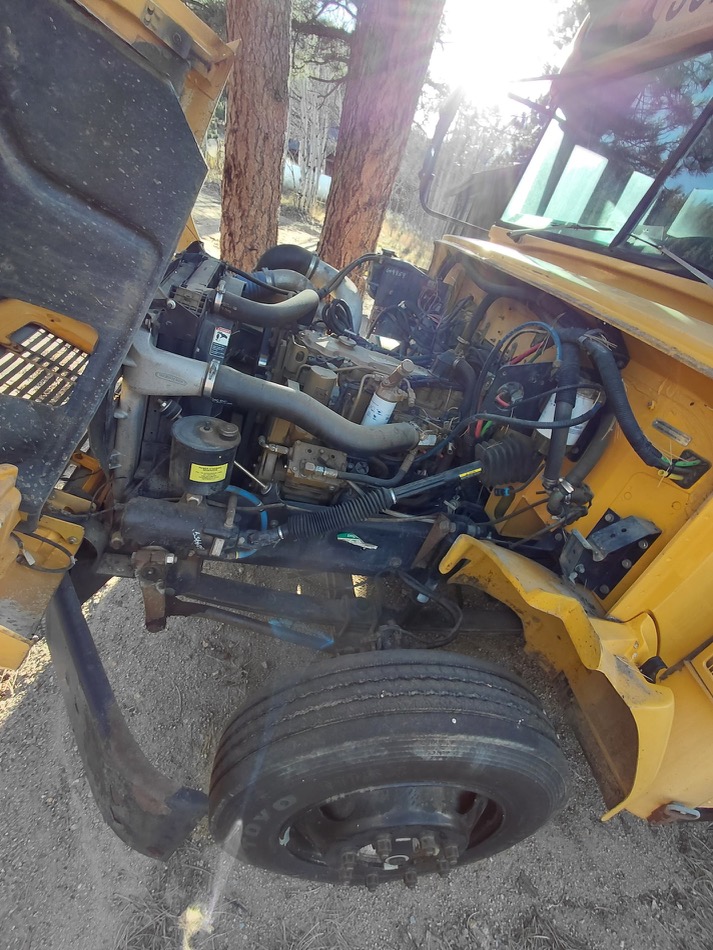
Buying the Bus
| Source | Typical Price Range |
|---|---|
| Government auction (GovPlanet, PublicSurplus) | $2,000 – $8,000 |
| School district direct sale | $2,500 – $7,000 |
| Church/organization sale | $3,000 – $10,000 |
| Private seller (Facebook, Craigslist) | $4,000 – $15,000 |
| Dealer/fleet liquidation | $6,000 – $18,000 |
The wildcard is the engine and mileage. A Ford E-450 with the 7.3L diesel and under 100,000 miles can command $10,000 to $15,000 even at auction. A gas V10 with 150,000 miles might go for $3,000. Condition of the body matters too — rust on the frame or floor is an expensive problem that’s not always visible from the outside.
Conversion Costs
| Budget Level | Total Build Cost | What You Get |
|---|---|---|
| Bare bones | $3,000 – $8,000 | Basic insulation, simple bed platform, minimal kitchen (camp stove, cooler), no bathroom, basic electrical (house battery + inverter) |
| Comfortable | $8,000 – $18,000 | Proper insulation, tongue-and-groove walls, fixed bed with storage, working kitchen (2-burner stove, sink, 12V fridge), basic solar (200-400W), portable toilet |
| Full build | $18,000 – $30,000 | Spray foam insulation, custom cabinetry, full kitchen, wet bath with shower, 400-800W solar, lithium batteries, hot water heater, finished interior throughout |
I should note that these costs assume you’re doing the work yourself. Hiring a professional conversion company for a mini bus will run $30,000 to $60,000+, which honestly starts to make less sense financially when you could buy a used Class B RV for similar money.
The areas where costs add up fastest are electrical (batteries, solar panels, inverter, charge controller) and the kitchen (fridge, stove, water system, counter materials). Those two areas alone can eat half your budget if you’re not careful. I talked to one builder who spent $4,500 just on his electrical system for a 23-foot mini bus — and that was before he bought a single piece of lumber for the interior.
Mini Bus vs Short Bus: What’s the Actual Difference?
This confused me for the longest time, so let me try to clear it up.
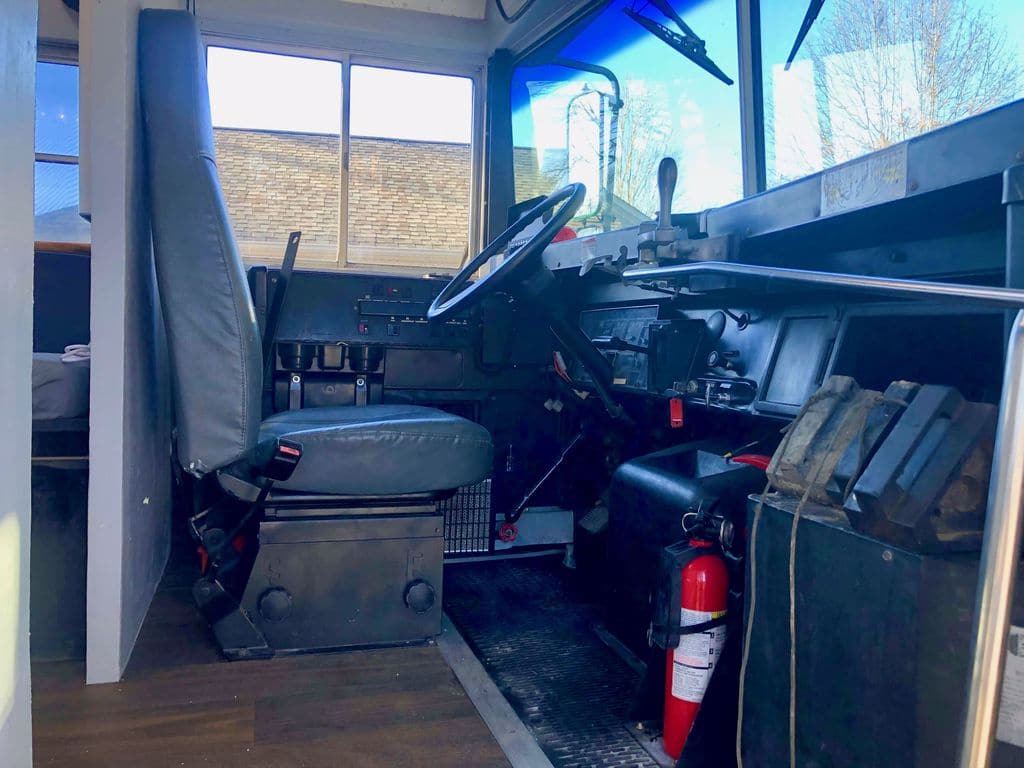
In practical terms, there’s a huge overlap. A “short bus” in conversion communities usually refers to any Type A bus — which is, by definition, what most people would also call a “mini bus.” So in a lot of cases, people are talking about the same thing with different words.
Where there’s a real distinction is when people use “short bus” to mean a short Type C school bus. A short Type C is a conventional dog-nose school bus that’s just been built in a shorter length — say 25 to 30 feet instead of 35 to 40 feet. These ride on a heavier chassis (International, Freightliner, or a heavy-duty Ford), have a more robust body, and typically have more interior width and height than a Type A mini bus.
A short Type C usually has:
- More interior space (the body is wider and often taller)
- Heavier-duty drivetrain
- Higher GVWR (more weight capacity for your build)
- Diesel engine as standard
- Better structural integrity for roof raises if you want one
A Type A mini bus usually has:
- Better fuel economy
- Easier driveability
- Lower purchase price
- Simpler maintenance (van/truck parts)
- Fits in more parking situations
If someone asks me “should I get a mini bus or a short bus?” my answer depends on how they’re planning to live. For weekend trips and part-time use, the mini bus is probably the better choice. For full-time living where you want a little more breathing room and you don’t mind the slightly bigger footprint, a short Type C gives you more to work with.
Mini Bus vs Camper Van: A Realistic Comparison
Since the van life crowd and the mini bus crowd overlap so much, here’s a side-by-side comparison I put together.
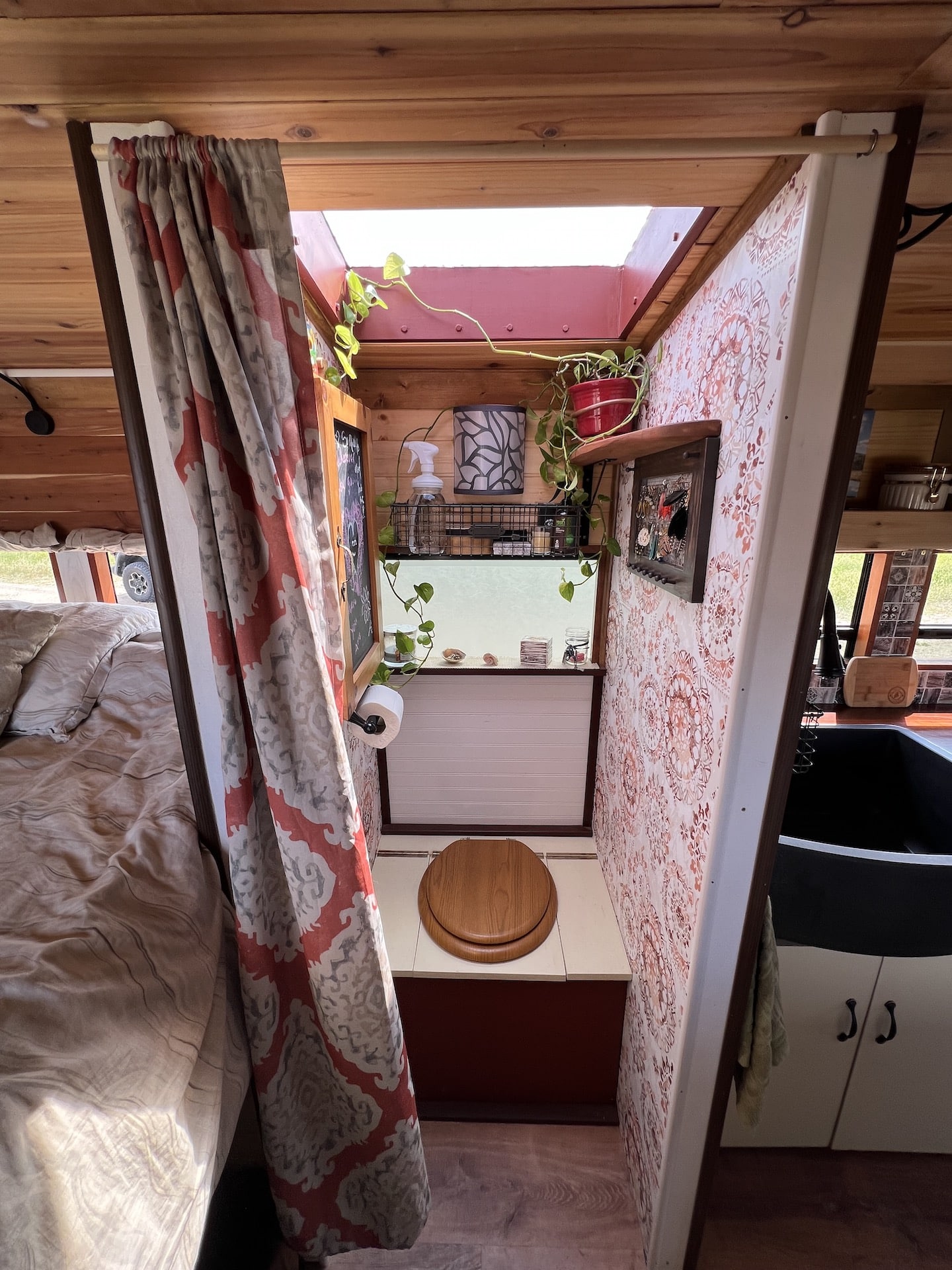
| Feature | Camper Van (Transit/Sprinter) | Mini Bus (Type A / Cutaway) |
|---|---|---|
| Floor space | 40-60 sq ft | 60-130 sq ft |
| Ceiling height | 56-80 inches (high roof) | 70-82 inches |
| Width (interior) | 60-70 inches | 78-84 inches |
| MPG | 14-20 | 8-14 |
| Purchase price | $8,000-$25,000 | $3,000-$15,000 |
| Conversion cost | $5,000-$30,000 | $8,000-$30,000 |
| Stealth factor | High | Low-medium |
| Parking ease | Excellent | Good |
| Full bathroom possible? | Barely (very tight) | Yes (compact) |
| Resale market | Strong | Growing |
The mini bus wins on space and purchase price. The van wins on fuel economy, stealth, and resale value. I think the mini bus is the better choice for anyone who wants to actually live in their vehicle — cook, sleep, work, exist — because that extra space makes daily life genuinely more comfortable. The van is the better choice for people who treat their vehicle as a base camp and spend most of their day outside.
Who Are Mini Buses Best For?
After going through all of this, I kept coming back to the question of who should actually build a mini bus. Not everyone, and that’s fine. Here’s who I think the platform serves best.
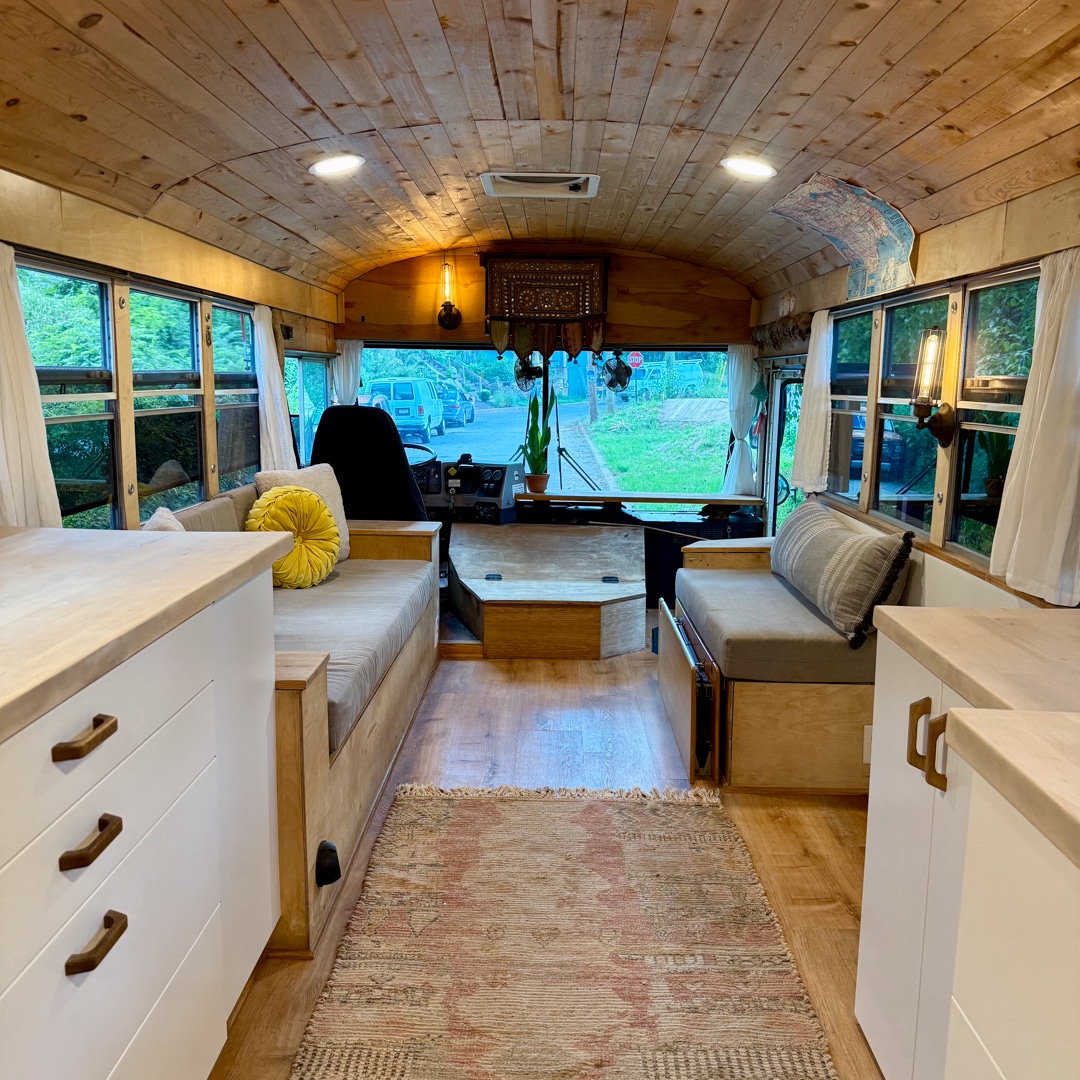
Solo travelers who want more than a van. If you’ve looked at van life and thought “that’s too small” but looked at a full-size bus and thought “that’s too much,” the mini bus is your sweet spot. You get room to stretch out, cook a real meal, and store your gear without having a vehicle that dictates your life. One solo builder I came across had a 20-foot mini bus and said he could park it anywhere a truck could and still had room for a queen bed, a kitchen, and a small workspace.
Couples without kids. Two people in a van gets tight fast. Two people in a mini bus is comfortable. You can have a real bed, a functional kitchen, some personal space, and a bathroom if you plan it right. I think this is actually the ideal use case for a mini bus — two people who want to travel without constantly being on top of each other.
Weekend warriors and part-timers. If you’re not living in it full-time, a mini bus is easy to park at home (in a driveway, usually), easy to insure as a recreational vehicle, and easy to grab and go for a weekend trip. You don’t need to rearrange your whole life around the vehicle the way you might with a full-size bus.
Budget builders. With a total project cost (bus + conversion) potentially under $15,000 for a comfortable build, the mini bus is one of the most affordable ways to get a mobile home on wheels. That’s cheaper than most used RVs and way cheaper than a van conversion from a professional shop.
People intimidated by driving a big bus. I totally get it. A 40-foot school bus is intimidating. A mini bus is not much bigger than a large SUV. If driving anxiety is a factor — and for a lot of people it is, especially people who’ve only driven sedans and small SUVs their whole lives — the mini bus removes that barrier.
Older travelers and retirees. The entry step on a mini bus is lower than a full-size bus, the driving is easier, and the maintenance is simpler. I talked to a retired couple who chose a mini bus over an RV because they wanted something they could work on themselves without climbing up on a roof or crawling under a massive chassis.
Who Mini Buses Are NOT Best For
Gotta be honest about this too.
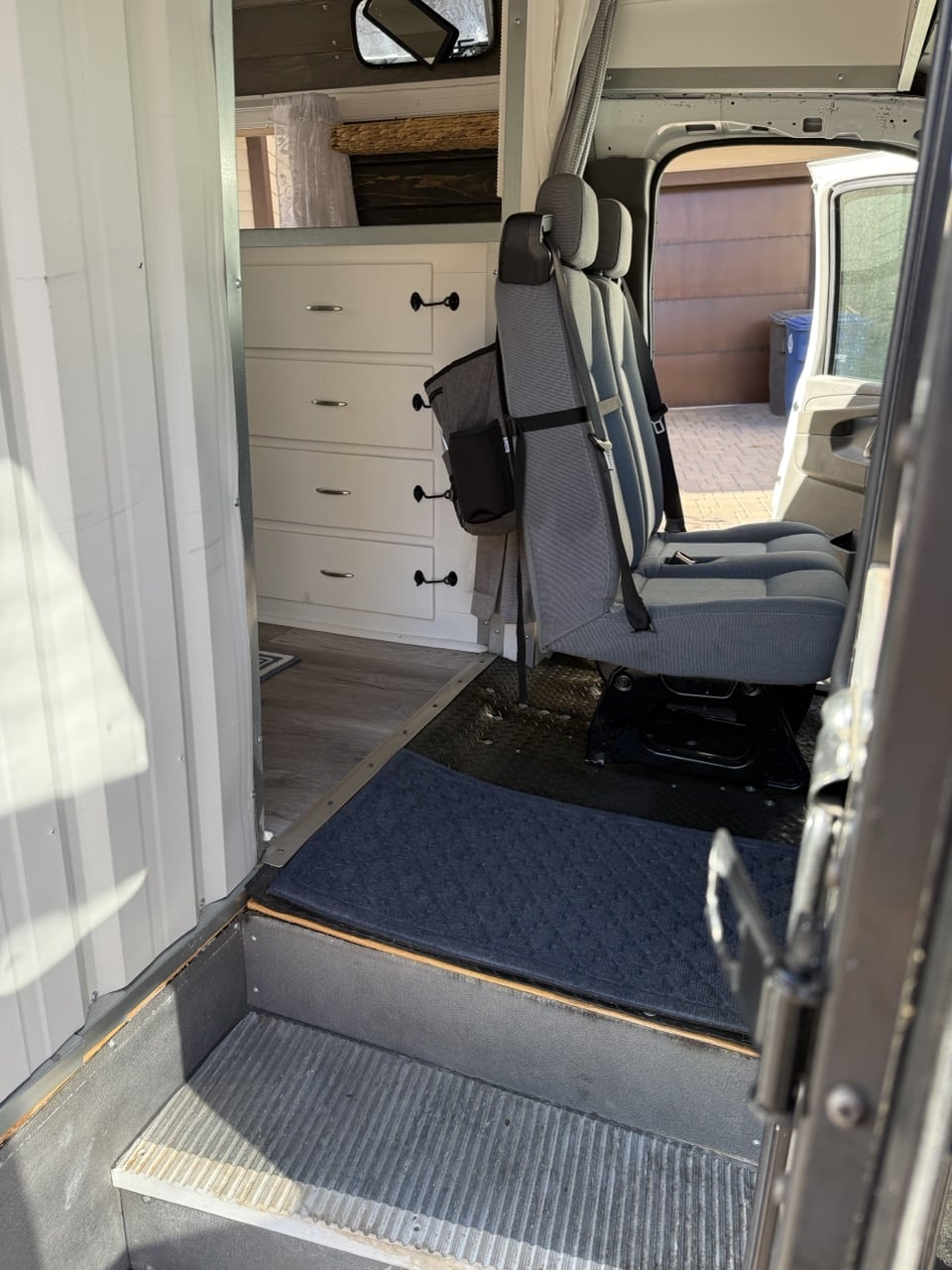
Families with kids. Two adults and one small child in a mini bus is doable but tight. Two adults and two or more kids? I wouldn’t recommend it for full-time living. You need more space than a mini bus provides, and everyone’s sanity will thank you for stepping up to at least a 30-foot bus.
People who want a full-size living space. If your vision is a spacious home on wheels with a couch, a desk, a full kitchen, a walk-in shower, and room for hobbies and gear, you need a bigger bus. The mini bus is about smart compromises, not about having it all.
Heavy builders. If you’re the type who wants stone countertops, hardwood floors, tile in the shower, a washer/dryer, and a cast iron stove, the GVWR on a mini bus chassis is going to be a serious constraint. Every pound of fancy finishing material is a pound you can’t use for water, gear, or people.
Where to Go From Here
So that’s the mini bus landscape as I understand it after doing all this research. The thing that struck me most is how capable these smaller platforms really are when you design them thoughtfully. I went into this assuming mini buses were the “settling” choice — like you pick one because you can’t afford or can’t handle a full-size. But that’s not how the builders I talked to saw it. Most of them chose the mini bus deliberately because it fit the life they actually wanted to live, not the life they saw on Instagram.
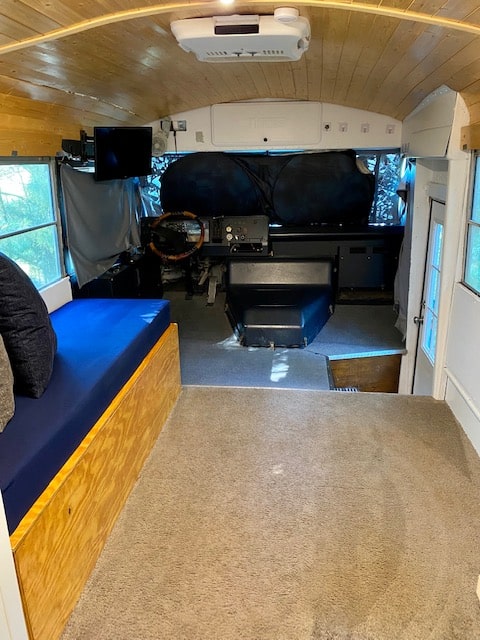
If you’re seriously considering a mini bus conversion, here’s what I’d suggest. Go look at some in person before you buy anything. Stand inside. Measure the ceiling. Sit in the driver’s seat and drive it around a parking lot if the seller lets you. Bring a tape measure and a sketch pad and actually lay out where things would go. The dimensions look abstract on paper, but once you’re standing in the space, you know pretty quickly whether it’s going to work for you or not.
And don’t get too attached to one particular layout you saw online. Every bus is a little different even when they’re the same model, and the build that looked perfect on YouTube might not account for the wheel well that’s 3 inches bigger in your bus, or the cabinet that blocks the emergency exit window. Flexibility and willingness to adapt are probably the two most valuable skills you can bring to a mini bus conversion. That and a good tape measure.