

If you’ve spent any time shopping for a school bus to convert, you’ve seen the name Blue Bird. A lot. They’re one of the three big school bus manufacturers in North America, and depending on where you live, they might be the most common bus you come across at auction. I spent a long time digging into Blue Bird specifically because the range of models they make is wider than most people realize, and the differences between those models matter a lot when you’re planning a conversion. (See our guide on Can You Convert a Double Decker Bus Into a Home? for more on this.)
Blue Bird has been building school buses since 1927 and they’re headquartered in Fort Valley, Georgia. They make three main platforms that converters care about: the All American (a full-size flat-nose rear engine bus), the Vision (a conventional front-engine bus), and the Micro Bird (a short bus built on a van chassis). Most skoolie builders end up with either an All American or a Vision, with the Vision being the more common and more beginner-friendly option. Blue Birds are known for solid body construction, widely available parts, and a straightforward layout that makes conversion work easier than some other brands. This guide covers every model, the engines you’ll find in them, known issues, where to buy, and how Blue Bird stacks up against Thomas and IC Bus.
Blue Bird Models You’ll Find for Sale
When I first started looking at Blue Birds, I kept seeing model names thrown around — Vision, All American, TC/2000, Micro Bird — and it took me a while to figure out what was what. So here’s the breakdown in plain English.
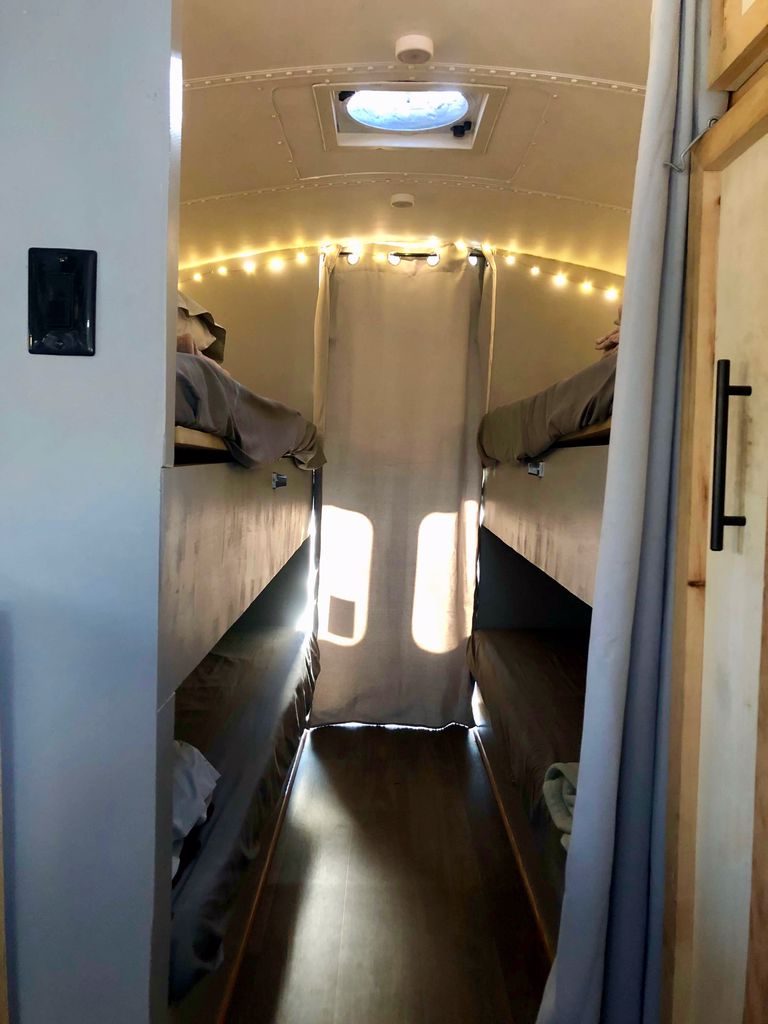
Blue Bird makes three main bus lines that matter for conversion purposes. The All American is their big flat-nose, rear-engine bus (Type D). The Vision is their conventional front-engine bus with the dog nose hood (Type C). And the Micro Bird is their short bus (Type A), built on a cutaway van chassis from either GM or Ford. (See our guide on Is a Short Bus or Full-Size Bus Better for a Conversion? for more on this.)
There are also older models you’ll run into. The TC/2000 was the predecessor to the Vision and was made from the late 80s through the early 2000s. It’s essentially the same concept — front engine, conventional layout — just an older generation. You might also see the Blue Bird CS (Commercial Series), which was their transit-style bus used for activity and commercial applications. And way back, there were the All Canadian and various specialty models, but those are rare enough that you’re unlikely to encounter them unless you’re specifically hunting.
The one thing that tripped me up early on is that Blue Bird has gone through some corporate changes over the years. They merged with Henlys Group in the late 90s, then went through bankruptcy in the 2000s, then re-emerged as Blue Bird Corporation. Through all of that, the actual buses stayed pretty consistent in terms of design and parts, so don’t let the corporate history scare you off an older model.
For conversion purposes, I’d say about 70% of the Blue Birds I see people buying are Visions or TC/2000s, maybe 20% are All Americans, and the remaining 10% are Micro Birds and oddball models. That tracks with what’s available at auctions too.
Blue Bird All American (Type D — Flat Nose, Rear Engine)
The All American is Blue Bird’s flagship. It’s their big boy — a full-size, flat-front, rear-engine bus that’s been in production since 1948, which makes it one of the longest-running bus models in American history. If you’ve ever seen a flat-nose yellow school bus and thought it looked a little more serious than the regular ones, there’s a good chance it was an All American.

These are Type D buses, meaning the engine is in the back (or sometimes under the floor toward the rear), and the driver sits right up at the windshield with no hood in front. They typically run 35 to 40 feet long and give you about 250 to 300 square feet of interior space. The floor is flat or nearly flat throughout because there’s no drivetrain tunnel running down the center like you get on a front-engine bus.
I was at a bus meetup once and got to walk through a guy’s converted All American RE. The thing that struck me immediately was how open the interior felt compared to the Type C conversions I’d been inside before. The flat floor makes a real difference — you’re not building around a transmission hump or stepping up and down over axle housings. His whole living area just flowed. (See our guide on What Is the Difference Between a School Bus and a Transit Bus? for more on this.)
The trade-off, and it’s a significant one, is that rear engine maintenance is a pain. The engine sits in a compartment at the very back of the bus, usually accessible through a rear hatch or a panel that lifts up. Simple stuff like checking oil is fine. But when you need to actually wrench on something, you’re working in a tight space with limited access. I’ve read accounts of people spending an entire weekend on a job that would’ve taken four hours on a front-engine bus.
The All American comes in a few sub-variants. The RE (Rear Engine) is the most common, with the engine mounted transversely at the very back. There’s also the FE (Front Engine) variant from older production years, and the All American D-Series which was a later designation. For conversion purposes, the RE is what you’ll most likely find and it’s what most people are talking about when they say “All American.”
One thing worth noting — the All American is wider than the Vision. Most All Americans are 96 inches (8 feet) wide on the body, and some models are 102 inches. That extra width adds up fast when you’re building cabinets, fitting a couch, or trying to squeeze in a queen bed that actually feels like a queen bed. It’s one of the reasons some experienced builders specifically seek out Type D buses despite the maintenance downsides.
Purchase prices for All Americans tend to run higher than Visions of the same year. Where you might find a 2005 Vision at auction for $4,000-$6,000, a comparable All American could be $6,000-$12,000. Part of that is because fewer were made, part of it is because districts that bought them tend to maintain them better, and part of it is just the flat-nose tax that exists in the skoolie market right now. People want the look, and sellers know it.
Blue Bird Vision (Type C — Conventional)
The Vision is Blue Bird’s bread and butter, and honestly it’s probably the bus I’d point most first-time builders toward if they’re specifically looking at Blue Bird. It’s been in production since 2001 (replacing the TC/2000), and it’s a straightforward Type C conventional school bus — engine up front under a hood, the driver sits behind the engine, and you’ve got a clear, open area from just behind the driver’s seat all the way to the rear emergency exit.

What I like about the Vision for conversions is the simplicity of the layout. The engine is right there under the hood where you can get at it. Pop the hood, and you’re looking at belts, hoses, coolant reservoir, everything. Oil changes, filter swaps, belt replacements — you can do all of that yourself in a parking lot if you had to. And the back of the bus is a flat wall with an emergency door. That means you can do a rear door conversion, put in a big window, build your bedroom back there, whatever you want. No engine compartment eating into your space. (See our guide on Church Bus Conversions: The Complete Guide for more on this.)
The Vision typically comes in lengths from about 29 feet up to 41 feet. Most of the ones I see for sale are in the 35 to 40 foot range, which gives you roughly 220 to 280 square feet of usable interior. Interior ceiling height on a flat-top Vision runs about 6 feet to 6 feet 4 inches depending on the year and configuration. That’s workable for most people, though if you’re over 6 feet tall, you’ll want to check the specific bus before you commit.
Engine options in the Vision changed over the years and I’ll cover that in detail in the engine section below, but the short version is you’ll find Cummins, International (Navistar), and some Ford gas engines depending on the year. The sweet spot for most converters is a 2004-2007 Vision with either a Cummins ISB or an International DT466, before the emissions equipment got complicated.
“I have a 2006 bluebird vision handy bus with twin air-conditioning units and rear heater. Looking for advice?”
So a 2006 Vision is right in that sweet spot I mentioned. You’re past the early production kinks, you’ve got a mature chassis design, and depending on the engine, you might be just before the worst of the emissions headaches. The “Handy Bus” designation means it was likely a wheelchair-accessible bus, which is actually great for conversions because those usually come with a wider rear door or a wheelchair lift area that gives you a big opening in the side or rear of the bus. (See our guide on Coach Bus Conversions: The Complete Guide for more on this.)
The twin AC units are interesting. Most school buses just have a single rooftop unit, so having two means this bus was probably used in a hot climate and the district invested in keeping it cool. For a conversion, you probably won’t keep both factory AC units running — they’re designed for a bus full of kids, they pull a lot of power, and they’re loud. But the existing ducting and wiring paths can be useful if you’re installing your own mini-split or rooftop RV air conditioner later.
The rear heater is standard on a lot of school buses and it’s honestly nice to have during the build phase, before you’ve installed your own heating system. Some people keep the factory heater as a backup heat source for really cold nights, running it off the bus engine’s coolant system. The downside is you have to idle the engine to use it, which burns fuel and isn’t ideal for stealth camping.
My advice on this specific bus would be to focus on the engine first. Figure out what’s under the hood — if it’s a Cummins ISB 6.7 or a Cummins ISB 5.9, you’re in great shape. If it’s an International MaxxForce, that’s a whole different conversation (more on that in the issues section). Check the mileage, get the maintenance records from the district if you can, and look hard at the frame and undercarriage for rust. A 2006 bus is 20 years old at this point, and body integrity matters more than a lot of people give it credit for.
Blue Bird Micro Bird (Type A — Short Bus)
The Micro Bird is Blue Bird’s short bus offering, and it’s actually built through a partnership with Girardin (a Canadian manufacturer) rather than being entirely Blue Bird’s own design. They’re constructed on cutaway van chassis — usually a GM/Chevy Express 4500 or a Ford E-450 — with a Blue Bird-designed body bolted on top.

These run about 20 to 30 feet depending on the configuration, and they give you roughly 70 to 130 square feet of interior space. That’s enough for a solo traveler or a couple to build a very functional tiny home on wheels. You won’t fit a full bathroom, a full kitchen, and a separate bedroom in that space, but plenty of people have built impressive conversions in Micro Birds by being creative with the layout.
The big advantage of the Micro Bird is driveability. It’s basically a large van that happens to have a bus body on it. It fits in most parking spaces (takes up two, but fits), every RV park will accept it, and you don’t need to worry about CDL requirements since they’re well under the 26,001-pound GVWR threshold. Gas mileage is better too — you’re looking at 10-14 MPG compared to 7-10 for a full-size bus.
I was actually looking at Micro Birds for a while early in my research. The idea of something nimble and easy to park really appealed to me. What eventually steered me toward considering full-size options was the ceiling height — a lot of Micro Birds have interior ceiling heights around 5’10” to 6 feet even. If you’re average height or shorter, that’s fine. If you’re 6’2″, you’re ducking all day and that gets old fast.
The mechanical side is straightforward since you’re dealing with a standard GM or Ford drivetrain. Any regular auto shop can work on the engine and transmission. Parts are cheap and everywhere. That’s genuinely the Micro Bird’s biggest strength — you’re not dealing with specialty bus components for the mechanical stuff, just regular truck and van parts.
Purchase prices for Micro Birds range from about $2,000 to $8,000 depending on age, mileage, and condition. Build costs tend to be lower too since there’s simply less space to fill — $8,000 to $20,000 for a solid conversion.
Common Engines in Blue Birds
This is the section I wish someone had just laid out for me when I was first researching, because the engine in your bus matters more than almost anything else. Blue Bird has used engines from several different manufacturers over the years, and which one you get affects everything from reliability to parts costs to how easy it is to find a mechanic.
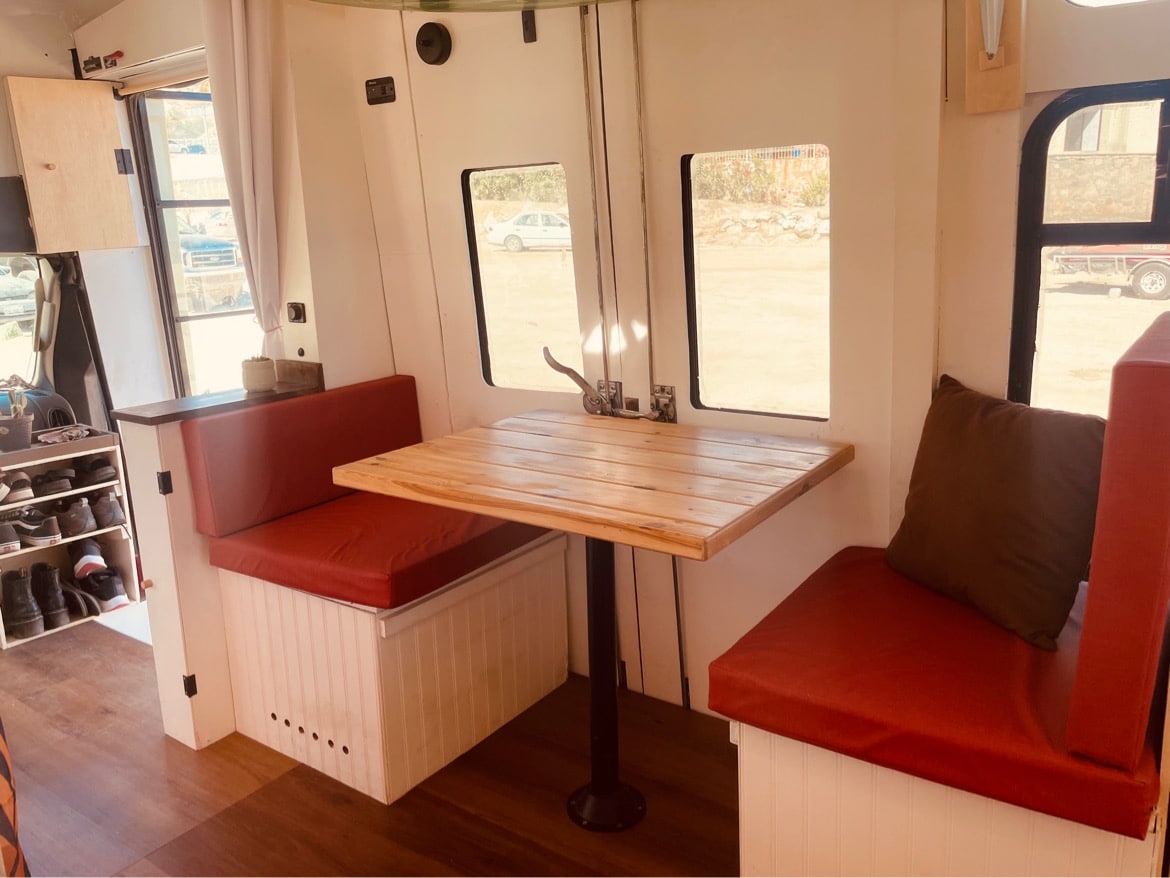
Here’s what you’ll find, broken down by era and model.
International/Navistar engines. Blue Bird used International engines heavily from the 80s through the 2000s. The T444E (which is the school bus version of the Ford 7.3L Power Stroke) was common in mid-90s to early-2000s Visions and TC/2000s. Great engine, proven platform. The DT466 showed up in larger buses and is widely considered one of the best school bus engines ever made. Then International switched to the DT530 and later the MaxxForce engines, and that’s where things got complicated. I’ll get into the MaxxForce problems in the issues section, but the short version is avoid them if you can.
Cummins engines. Blue Bird started offering Cummins options and they’ve become extremely popular with converters for good reason. The ISB 5.9 (later the 6.7) is the one you’ll see most often. Inline six, turbodiesel, somewhere around 190-230 horsepower depending on the tune. Parts are everywhere because this engine family also went into Dodge Ram trucks and a thousand other applications. The ISB is probably my top pick for a conversion engine if I’m looking at Blue Birds specifically.
Ford gas engines. In Micro Birds and some smaller Visions, you’ll find Ford V8 and V10 gas engines. The 6.8L Triton V10 is the most common and it’s a decent engine, but it’s gas, so you’re looking at higher fuel costs and lower longevity compared to the diesel options. Still workable for a short bus that isn’t going to see 200,000+ miles.
Caterpillar engines. Some Blue Birds from the 90s and early 2000s came with Cat 3116 or 3126 engines. These are good power plants but Caterpillar left the on-highway engine market years ago and parts support has been declining. I covered these in detail in our engine guide, but the quick take is they’re still viable, just be aware of rising parts costs down the road.
“Thoughts on 7.3 navistar turbo diesel (detuned power stroke) 1998 bluebird?”
This is a solid find and I’ll tell you why. The 7.3 Navistar (T444E) in a 1998 Blue Bird is the same basic engine as the Ford 7.3 Power Stroke that truck guys obsess over. In bus form, it’s dialed back to about 175-195 horsepower compared to 235 in the Ford trucks. But that detuning is actually a good thing for longevity. The engine isn’t working as hard, and it was already overbuilt for the application.
A 1998 puts you in a good era for this engine. You’ve got the improved direct-injection version, the HEUI (hydraulic electronic unit injection) fuel system is mature at that point, and you’re well past the early production issues. The known weak spot is the high-pressure oil pump — if it hasn’t been replaced, budget $500 to $1,000 for a new one at some point. It’s a when-not-if kind of part.
The thing I’d focus on with a 1998 is the bus itself, not the engine. That engine will almost certainly outlast the body. Check the frame rails for rust, poke around the rocker panels, look at the floor pans from underneath. A bus from that era has been through 27 winters at this point, and rust is what kills these things. The engine will do 400,000 miles or more with basic maintenance. The question is whether the body around it will hold up.
Also check if it’s a Vision or a TC/2000. Blue Bird transitioned between those two models right around that era, and a 1998 is most likely a TC/2000. Not a problem at all — the TC/2000 is a solid bus. Just good to know what you’ve got when you’re ordering parts or looking up specs.
I talked to a guy at a truck stop once who’d been running a 7.3 in a delivery truck for something like 380,000 miles. He said he’d replaced the injectors once and the turbo once, and that was basically it for major work. Changed the oil religiously and the engine just kept going. That’s what you’re getting with the T444E platform.
Blue Bird vs Thomas vs IC Bus
This is the comparison that comes up in every single bus-shopping conversation, and honestly the answer is less dramatic than people make it out to be. Blue Bird, Thomas Built Buses, and IC Bus (International/Navistar) are the three major school bus manufacturers in North America. Together they account for the vast majority of school buses on the road.

Here’s how I’d break down the differences that actually matter for conversion.
Blue Bird tends to have the most straightforward body construction for conversion work. Their panels are generally easier to work with, the internal framing is consistent and well-documented, and there’s a large community of converters who’ve worked on Blue Birds specifically. Blue Bird also tends to hold a slight premium in the resale market for skoolies, partly because of the name and partly because of the flat-nose All American’s popularity.
Thomas Built Buses (owned by Daimler Trucks North America) makes the Saf-T-Liner C2 and HDX. Thomas buses tend to have slightly heavier-gauge steel in some body panels, and their construction quality is generally considered very good. The Saf-T-Liner C2 uses a proprietary body design that some people find slightly harder to modify than a Blue Bird Vision, particularly around the window frames and roof structure. Thomas buses are extremely common in the eastern US.
IC Bus (owned by Navistar) makes the CE Series and the RE Series. IC Buses are probably the most common school bus overall, and parts availability is excellent. They tend to be slightly cheaper at auction than comparable Blue Birds, which makes them attractive for budget builds. The body construction is solid but not dramatically different from Blue Bird or Thomas in terms of conversion difficulty.
“I know this is an IC Bus, but are Bluebird buses very different from IC Buses or are they similar?”
This is one of those questions that seems simple but actually has a nuanced answer. On the surface, a Blue Bird Vision and an IC Bus CE look pretty similar. They’re both Type C conventional school buses, they use many of the same engines (both offered Cummins and International engines), and they’re built to the same federal safety standards. If you put them side by side with the paint stripped off, a non-bus person would have trouble telling them apart.
But there are differences, and some of them matter for conversion.
The body construction methods are different. Blue Bird uses a bolt-together body structure that some converters find easier to modify. IC Bus uses more welded construction in certain areas. Neither is objectively “better” — it’s more about which one you’re more comfortable cutting into and working with. I’ve talked to builders who swear by Blue Bird bodies and others who prefer IC Bus. A lot of it comes down to which one they learned on first.
Window frames and mounting systems are different between the two. This matters when you’re removing windows to install insulation panels or fixed windows. Blue Bird windows typically use a rubber gasket system, while IC Bus windows have a slightly different mounting approach. Neither is hard to work with, but if you’re watching YouTube tutorials for window removal, make sure you’re watching one for your specific brand.
The electrical systems are laid out differently. Blue Bird’s wiring harness routing is well-documented and generally considered clean and accessible. IC Bus electrical can sometimes be a bit more convoluted, with wiring routed in areas that are harder to access. This matters when you’re tapping into existing wiring for your 12V system or trying to figure out which circuit runs your clearance lights.
Honestly though, for a first-time builder, the differences between Blue Bird and IC Bus are small enough that I wouldn’t let brand alone drive your buying decision. The condition of the specific bus, the engine it has, the mileage, and the price matter way more than whether it says Blue Bird or IC Bus on the side. If you find a clean, low-mile IC Bus with a Cummins ISB for $2,000 less than a comparable Blue Bird, buy the IC Bus and don’t look back.
Where Blue Bird might edge ahead is in the community and resources department. There’s a massive amount of Blue Bird-specific conversion content online — build threads, wiring diagrams, parts guides, Facebook groups. That matters when you’re stuck at 11 PM trying to figure out where a specific wire goes and you need to find someone who’s done it before.
Known Issues and What to Watch For
Every bus brand has its known problems, and Blue Bird is no exception. I’ve spent a lot of time reading through forums, Facebook groups, and talking to mechanics about what goes wrong on these buses, and some patterns came up over and over.

Rust. This is the number one killer of Blue Birds, especially anything built before 2010 or so. The floor pans, rocker panels, frame rails, and wheel wells are the areas to check. Blue Bird improved their corrosion protection over the years, but early Visions and TC/2000s are particularly susceptible if they spent their service life in a salt state. I cannot overstate this — an engine can be rebuilt, but a rusted-out frame is basically a death sentence for a conversion project. Check underneath before you check anything else.
The MaxxForce engine problem. This is the big one that I wish more people knew about before buying. Blue Bird offered buses with Navistar’s MaxxForce engines starting around 2008-2010. These engines used exhaust gas recirculation (EGR) instead of urea injection (DEF) to meet emissions standards, and the EGR system was a disaster. Constant failures, clogged EGR coolers, cracked pistons from excessive soot. Navistar actually lost a class-action lawsuit over the MaxxForce. If you see a Blue Bird from roughly 2008-2013 with a MaxxForce engine, proceed with extreme caution. Some people have had fine experiences, but the failure rate on these engines is dramatically higher than the Cummins or older International options. I’d personally skip them and look for a Cummins-equipped bus from the same era.
Allison transmission issues on high-mileage buses. Blue Birds commonly use Allison automatic transmissions, which are generally excellent. But once you get past 200,000 miles, the transmission becomes a maintenance item. Fluid and filter changes get critical. I’ve read about converters picking up a bus at 180,000 miles, putting 20,000 miles on it during travel, and then the transmission starts slipping. Budget $2,000-$4,000 for a transmission rebuild if you’re buying a high-mileage bus and the trans hasn’t been serviced recently.
Electrical gremlins in older models. The TC/2000 and early Vision models (pre-2005 or so) can have wiring issues, particularly in the main harness that runs along the roofline. Corrosion in connectors, brittle insulation on wires, and grounding problems are common. Most of these are fixable but time-consuming. When you’re doing a pre-purchase inspection, turn everything on — every light, every fan, every switch. If stuff flickers or doesn’t work, you’re chasing wiring issues for weeks.
Coolant leaks. This comes up with the 7.3 T444E engines specifically. The oil cooler in the valley of the V8 can develop leaks where coolant mixes with oil or vice versa. This isn’t a Blue Bird issue per se, it’s a T444E issue, but since so many Blue Birds have this engine it’s worth mentioning. If you see milky oil or oil in the coolant overflow, walk away or budget for an oil cooler replacement. It’s about $300-$600 in parts but it’s labor-intensive.
Air brake system maintenance. Full-size Blue Birds typically have air brakes, and the entire air system — compressor, dryer, valves, lines, and chambers — needs to be in good working order. A bus that’s been sitting for a year might have dried-out seals or corroded lines in the air system. Have someone who knows air brakes look at it. This isn’t something you want to learn about on a downhill grade.
Best Blue Bird Models for Conversion
After everything I’ve dug into, here’s where I’d steer people depending on their situation.

Best overall for first-timers: 2004-2007 Blue Bird Vision with a Cummins ISB. This is the sweet spot. The Vision is easy to work on, the layout is straightforward for conversion, and the Cummins ISB from this era is about as reliable as diesel engines get. You’re past the early production issues of the Vision platform and before the emissions equipment gets really complicated. Expect to pay $4,000-$8,000 at auction, maybe $6,000-$12,000 private sale.
Best for maximum space: Blue Bird All American RE (any year with a Cummins). If you want the most interior space and you’re okay with the rear-engine maintenance trade-off, the All American is hard to beat. The flat floor and extra width make it a builder’s dream once you get inside. Just make sure you’re comfortable working in tight engine compartments or you have a good diesel shop nearby. These run $6,000-$15,000 depending on age and condition.
Best budget option: Late 90s to early 2000s Blue Bird TC/2000 or Vision with a T444E (7.3L). These buses are old enough that prices have dropped significantly, but the T444E engine is still a tank with decades of parts support from the Ford truck world. You can sometimes find these under $3,000 at auction. The risk is rust and age-related wear on body and chassis components, so inspect carefully.
Best short bus: Blue Bird Micro Bird on a GM 4500 chassis. The GM chassis gives you a reliable and well-understood drivetrain. Parts are everywhere, any mechanic can work on it, and the smaller size opens up a lot of parking and travel options that full-size builders don’t have. Budget $2,000-$6,000 for the bus and $8,000-$20,000 for the build.
Models to approach with caution: 2008-2013 Blue Birds with MaxxForce engines. I feel like I keep beating this drum but it’s that important. The MaxxForce problems are real, well-documented, and expensive to fix. If you find one with a Cummins engine from this era, great. If it’s got a MaxxForce, keep looking unless the price is so low that you could afford a full engine swap.
I talked to a mechanic friend about this once and his advice was refreshingly simple — he said if you can find a Blue Bird Vision from the mid-2000s with a Cummins and under 150,000 miles, buy it and don’t overthink it. He’d worked on enough of them to know they’re solid platforms that take to conversion well. That advice has stuck with me.
Where to Find Blue Birds for Sale
Finding a Blue Bird to buy isn’t hard. Finding the RIGHT Blue Bird takes some patience and knowing where to look.

Government surplus auctions are still the cheapest option. GovPlanet, PublicSurplus, and AuctionTime all list retired school buses regularly, and Blue Birds show up constantly because they’re one of the most widely purchased bus brands in the country. I’d say Blue Birds make up about 30-40% of what I see on these auction sites at any given time. Prices at auction range from $1,500 for a rough older bus to $10,000+ for a newer, low-mileage unit. The downside is you often can’t do a thorough inspection before bidding, and what you see in the photos is what you get.
School district direct sales are my favorite option when you can make it work. Some districts sell their retired buses directly rather than going through an auction house. This is great because you can often inspect the bus in person, talk to the maintenance staff about its history, and sometimes even get service records. Districts that run Blue Birds tend to have Blue Bird-trained mechanics, so the maintenance is usually solid. The trick is finding districts that do direct sales — call around to transportation departments in your area and ask.
Facebook Marketplace and Craigslist are hit or miss but always worth checking. Private sellers range from people who bought a bus with conversion dreams and then changed their minds (these are often the best deals) to commercial sellers who mark everything up 30-50%. Filter for your area and check daily because good Blue Birds sell fast. I’ve seen clean Visions with Cummins engines listed and gone within 48 hours.
Specialty bus dealers like National Bus Sales, Don Brown Bus Sales, and others carry used Blue Birds specifically. Prices are higher than auction but the buses are usually inspected and you can often get a basic warranty. Worth looking at if you want more peace of mind and don’t mind paying a premium.
Online bus-specific sites have gotten better over the years. Our guide to the best websites for buying a school bus covers these in detail, but BusesForSale.com and CommercialTruckTrader.com both let you filter by manufacturer, which makes hunting for Blue Birds specifically a lot easier.
One tip that’s saved me time — when you’re searching online, search for both “Blue Bird” (two words) and “Bluebird” (one word). Sellers aren’t consistent with the spelling and you’ll miss listings if you only search one way. Same goes for model names — “All American” versus “AllAmerican,” “Micro Bird” versus “MicroBird.” It’s annoying but it’s real.
Also worth knowing that Blue Bird is still in active production. That means parts availability for newer models is excellent, and it’ll stay that way for a long time. This is a genuine advantage over buying a bus from a manufacturer that’s no longer operating. You won’t have the parts drying up on you.
For related reading on the buying process itself, check out our guides on how to buy a school bus for conversion, things to check before buying a school bus, and how many miles is too many when buying a school bus. All of that applies whether you’re buying a Blue Bird, a Thomas, or an IC Bus.
—
So here’s where I land on Blue Bird buses as a whole. They’re one of the top two or three options for a conversion build, and they’ve earned that reputation through decades of consistent production and a design that works well for the things skoolie builders need. The Vision with a Cummins ISB is about as safe a pick as you can make for a first build. The All American gives you premium space if you don’t mind the rear-engine trade-offs. And even the Micro Bird is a capable little platform for the right person.
The main things to watch out for are rust on older models and the MaxxForce engine situation. Everything else is standard school bus stuff that applies across all brands. If you do your homework on the specific bus you’re looking at — check the engine, check the frame, check the mileage, and get under it with a flashlight before you hand over any money — a Blue Bird will serve you well. They’ve been hauling kids around for almost a hundred years. Hauling your tiny home down the highway is well within their capabilities.
3 thoughts on “Blue Bird Buses: The Complete Conversion Guide”