
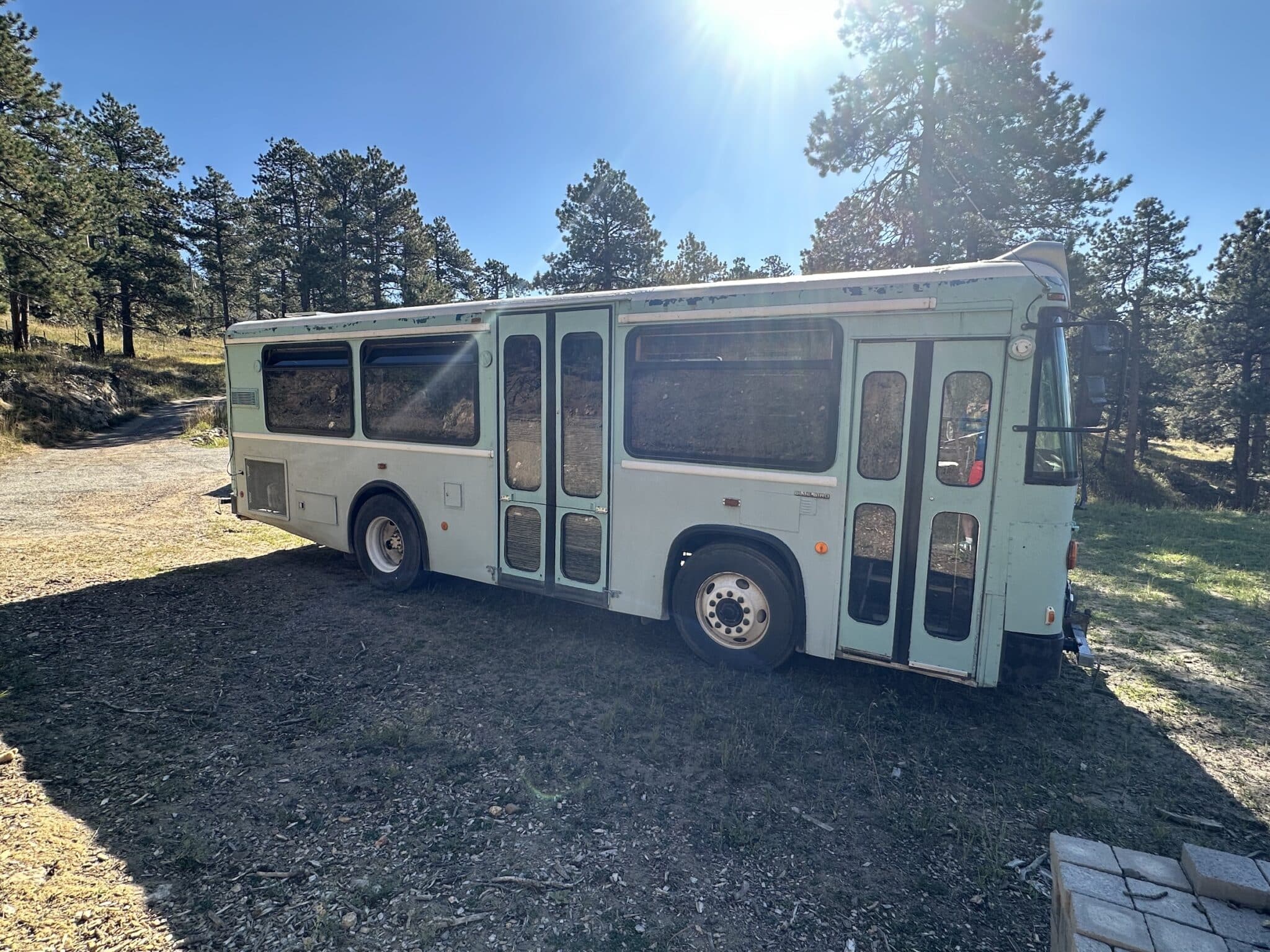
When I first started looking at bus conversions, I assumed a school bus was the only real option. Then I fell down a rabbit hole watching coach bus conversions on YouTube, and suddenly a $5,000 school bus felt like settling. Coaches are a different animal entirely — smoother ride, more storage, bigger windows, and an interior that doesn’t scream “former child transport.” But they come with trade-offs that nobody mentions in the highlight reels. (See our guide on Church Bus Conversions: The Complete Guide for more on this.)
Here’s the full picture. Coach buses — think MCI, Prevost, Van Hool, and Temsa — are the premium tier of bus conversions. They were built for long-distance highway travel, which means air ride suspension, rear-mounted diesel engines, massive under-floor luggage bays, and interiors that are wider and taller than a school bus. The ride quality alone makes them worth considering if you’re planning to put serious miles on your home. But the purchase price is higher (typically $10,000 to $60,000 depending on condition), parts are more expensive, fewer mechanics will touch them, and when something breaks it tends to break expensive. Coach conversions are incredible when everything works. The question is whether your budget can handle the times when it doesn’t.
What Is a Coach Bus? (MCI, Prevost, Van Hool, Temsa)
A coach bus is what you rode on when your school went on a field trip to DC, or what Greyhound uses for cross-country routes, or what touring bands live in for months at a time. They’re purpose-built for long-distance highway travel, and that purpose shapes every single design decision.
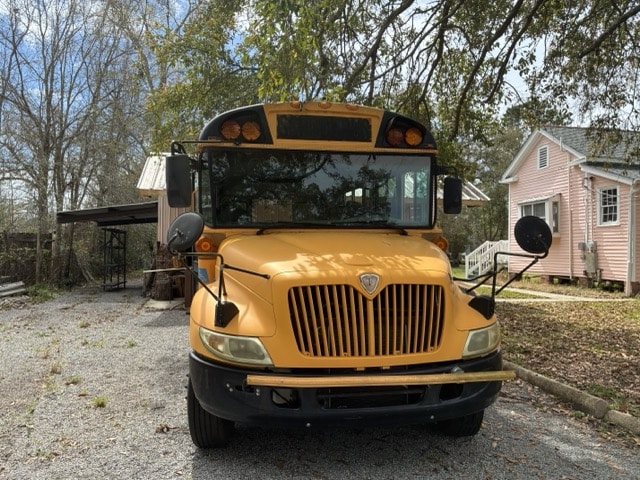
The big four manufacturers you’ll run into are MCI, Prevost, Van Hool, and Temsa. There are others, but these are the ones that show up again and again in conversion circles.
MCI (Motor Coach Industries) is probably the most common name you’ll see if you’re shopping for a coach to convert. They built the classic Greyhound buses, and models like the MCI D-series and the MC-9 are workhorses of the charter and transit industry. Parts availability is decent compared to other coach brands because there are just so many MCIs out there. I kept running into MCI D4500s when I was browsing listings, and they’re genuinely impressive machines — 45 feet long, 102 inches wide, with luggage bays that could swallow a small apartment’s worth of stuff.
Prevost is the luxury end. If you’ve ever seen a celebrity’s tour bus, it was probably a Prevost. The H-series and X-series are tanks. Beautiful to drive, incredibly well-built, and they hold their value better than any other coach brand. The downside is the price tag. Even a beat-up Prevost commands a premium. I was looking at a 2001 Prevost H3-45 once and the seller wanted $45,000 for something with 600,000 miles on it. That’s Prevost tax for you.
Van Hool is a Belgian manufacturer that’s common in the US charter market. The T-series (T2100, T2145) are solid coaches with a good reputation. Parts can be trickier to source because Van Hool doesn’t have the same dealer network as MCI or Prevost, but the buses themselves are well-regarded. I talked to a mechanic at a coach shop who said Van Hools are “overengineered in a good way,” whatever that means exactly. He seemed to like working on them.
Temsa is the newer player. Turkish manufacturer, been in the US market since the mid-2000s. You’ll see the TS 35 and TS 45 models around. They’re cheaper than the big three, which makes them attractive for conversion, but there’s less long-term data on how they hold up. Fewer people have converted them, fewer mechanics have worked on them, and the parts supply chain is thinner. Could be a great deal or could be a headache. I haven’t seen enough converted Temsas to say confidently either way.
What all these coaches have in common is the fundamental layout. Engine in the rear, luggage bays underneath, air ride suspension, highway gearing, and an interior that’s taller and wider than any school bus. Most coaches are 45 feet long and about 8.5 feet wide inside. Standing room is rarely an issue — you’re looking at 6’2″ to 6’8″ of headroom depending on the model.
Coach Bus vs School Bus: Key Differences
This comparison matters because most people coming to coach conversions are coming from the school bus world, or at least considering both. And the differences go way deeper than just price.
Size is the first thing people notice. A 40-foot school bus gives you roughly 245 to 300 square feet of floor space. A 45-foot coach gives you around 320 to 360 square feet, plus those luggage bays underneath that add another 150 to 200 cubic feet of storage that doesn’t eat into your living area. That’s not a small difference. Some people put entire workshops, water tanks, battery banks, and toolboxes down there. (See our guide on What Is the Difference Between a School Bus and a Transit Bus? for more on this.)
The width matters too. School buses are typically 7.5 feet inside. Coaches run about 8 to 8.5 feet. That extra foot sounds minor until you’re trying to fit a queen bed sideways across the bus. On a school bus, a queen mattress across the width is a tight squeeze. On a coach, it fits with room to spare. (See our guide on Blue Bird Buses: The Complete Conversion Guide for more on this.)
Ride quality is maybe the biggest practical difference for people who actually travel in their conversion. School buses have leaf spring suspension. Coaches have air ride. I watched a side-by-side comparison video once where a couple had driven both a converted school bus and a converted MCI, and the woman described the school bus ride as “being inside a paint shaker” compared to the coach. Air ride makes highway driving genuinely comfortable, and it protects everything inside your build from the constant vibration that slowly loosens screws and rattles cabinet doors on a school bus.
Then there’s the build quality of the shell itself. School buses are built to federal school bus safety standards, which is great for rollover protection. But the interior finishing is basic — sheet metal, minimal insulation, basic wiring. Coaches are built to keep paying adults comfortable for hours. They already have insulation, sometimes climate control ducting, 12V wiring runs, and in some cases even generators. You’re starting with a more finished platform.
Where school buses win, and this is important, is cost, parts availability, and simplicity. A school bus engine (DT466, Cummins 5.9, Cat 3126) can be serviced at any diesel shop in America. Coach engines are often fine (Detroit Diesel, Cummins ISM, Caterpillar C13), but the access and the ancillary systems around them are more complex. And when a school bus part costs $200, the equivalent coach part might cost $600 to $1,200.
I also want to mention weight. Coaches are heavier. A lot heavier. An empty school bus weighs around 18,000 to 24,000 pounds. An empty coach can be 30,000 to 38,000 pounds before you put a single thing inside. That matters for fuel economy, for bridge weight limits, and for the CDL question. Many coaches require a CDL or at minimum push you closer to GVWR limits that trigger licensing requirements in some states.
Why People Choose Coach Conversions
When I started digging into why people go the coach route instead of sticking with a school bus, a few reasons kept coming up over and over again.
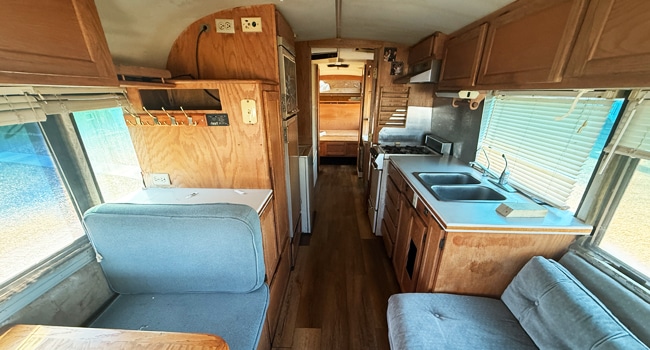
The ride. That’s the number one reason, hands down. If you’re planning to actually travel in your bus — not just park it on a piece of land and live in it — the difference between leaf springs and air ride is enormous. People who’ve driven both will tell you there’s no going back. One guy on a forum put it perfectly when he said “I built out a school bus, drove it for a year, sold it, and bought a coach. Best decision I ever made. My back thanks me every day.” I believed him. School buses are tough on your body if you’re doing 300-mile days.
The luggage bays are the second biggest draw. I think people underestimate how much this changes the conversion math. On a school bus, your water tanks, batteries, generator, and tools all compete with your living space. Every gallon of water storage means less floor space for you. On a coach, you shove all of that underneath. Your entire interior is living space. Some people build out the luggage bays with slide-out trays and organized storage systems that are genuinely impressive. One couple I found online had a full outdoor kitchen in their luggage bay that slid out at campsites. Their actual interior was all living area. (See our guide on Is a Short Bus or Full-Size Bus Better for a Conversion? for more on this.)
Stealth, or at least discretion, is another factor. A white or silver coach bus doesn’t scream “someone lives in here” the same way a converted yellow school bus does. Even a painted school bus still has that school bus shape. A coach looks like a charter bus or a band’s tour bus. It’s less likely to attract attention in a parking lot, less likely to get complaints from neighbors, and some people say it’s easier to get into RV parks that might turn away a skoolie.
Then there’s the wow factor, and I don’t think people should be embarrassed about this. Coach interiors are beautiful when they’re done right. The curved ceiling, the wider aisle, the big tinted windows — there’s a reason rock stars live in converted coaches. The finished product just looks different from a school bus conversion. More like a high-end RV, less like a DIY project.
Some people also come to coaches from the RV world. They had a Class A motorhome, liked the lifestyle but wanted something built tougher, with more storage, that could handle more miles without falling apart. A coach conversion gives you RV comfort on a commercial vehicle chassis. That’s a combination you can’t really get any other way.
The Downsides of Coach Conversions
Alright, so I’ve been pretty positive about coaches so far. Time for the other side. Because the downsides are real, and they’re the reason most conversion beginners should probably start with a school bus.

Cost is the obvious one. A running coach in decent condition costs $10,000 to $60,000 depending on age, mileage, brand, and condition. Compare that to $3,000 to $8,000 for a school bus at auction. You’re spending significantly more before you even pick up a saw.
Maintenance costs are where it really gets you. I can’t stress this enough. When something breaks on a coach, it costs more. Sometimes way more. Air ride components, tag axle systems, rear engine access, proprietary electrical systems — these are all things that a typical diesel shop either can’t or won’t work on. You need a coach-specific mechanic, and those guys charge $150 to $200 an hour because they can. I read a thread where someone needed a new air governor valve on their Prevost. Part was $800, labor was $600. On a school bus, the equivalent repair might be $300 total. That kind of math adds up fast.
Parts sourcing is a challenge. MCI parts are the most available because there are so many MCIs out there. Prevost has a decent dealer network. But Van Hool and Temsa? You might be waiting weeks for parts, sometimes shipping them from overseas. One converter I followed online documented a three-week wait for a cooling system component on his Van Hool while his bus sat at a shop in New Mexico. Three weeks. Living in a motel. That’s the kind of scenario that makes people sell their coach and buy a school bus.
The weight and size create practical limitations. At 45 feet and 35,000+ pounds, you’re excluded from a lot of places. Some state parks and national park campgrounds have length limits of 30 or 35 feet. Tight mountain roads become stressful. City driving is miserable. Parking at a grocery store means taking up multiple spots in the back of the lot and hoping nobody blocks you in. You feel every one of those 45 feet.
Complexity is the sneaky one. Coaches have more systems than a school bus. Air brakes, air suspension, tag axles, integrated generators, complex HVAC, multiple 12V and 24V circuits. When you buy a school bus, the electrical system is dead simple — headlights, taillights, stop sign arm, dome lights. A coach might have 15 separate electrical circuits before you add a single thing. I don’t say this to scare people off, but you need to be honest about your mechanical comfort level. If you’re not willing to learn air brake systems and troubleshoot complex wiring, a coach will humble you.
And honestly? The learning curve can be lonely. There are thousands of school bus conversion resources online — forums, YouTube channels, Facebook groups, Reddit communities. Coach conversion resources are thinner. Fewer people have done it, so there’s less collective knowledge to draw from. You’ll figure things out, but you’ll figure more of them out on your own.
Common Models and What to Look For
Now let me get into specifics, because “buy a coach” is vague and the model you choose matters a lot.
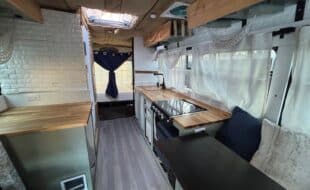
MCI MC-9 — This is the classic. Built from the late 1970s through the early 1990s, and there are still a ton of them floating around. The MC-9 is a 40-foot coach with a Detroit Diesel 8V71 or 8V92 two-stroke engine. These engines are loud, they smoke, and they’re not winning any fuel economy awards. But they’re nearly indestructible and parts are everywhere because the same engines were used in everything from buses to boats to generators. You can find MC-9s for $5,000 to $15,000. The age is the concern — we’re talking 30 to 45 year old buses. Rust, worn air bags, tired suspensions. But for a budget coach conversion, they’re hard to beat.
MCI D-series (D4000, D4500) — The next generation up. D4500s from the late 1990s and 2000s are probably the most commonly converted coach right now. They run Caterpillar or Detroit Diesel engines, the Allison B500 transmission, and they’re 45 feet of highway-eating machine. Prices range from $15,000 to $40,000 for ones with 300,000 to 600,000 miles. That mileage sounds insane if you’re coming from the car world, but coach engines are built for it. A well-maintained Detroit Diesel Series 60 will do a million miles. I’m not exaggerating.
Prevost H3-45 — The gold standard for coach conversions. This is what Marathon Coach and Liberty Coach use as the base for their $2 million motorhomes. The shell is that good. Finding one under $30,000 is tough, and they’ll have high miles when you do. But if you can find one in your budget, the build quality is noticeably better than an MCI. The frame is stiffer, the body panels are better finished, and the ride is just a little bit smoother. Volvo engines in the later models, Detroit Diesel in the earlier ones.
Van Hool T2100/T2145 — Good coaches that tend to be priced slightly below MCI and Prevost. The T2145 is 45 feet and often comes with a Cummins ISM engine, which is a solid motor. The thing to watch for with Van Hools is parts availability. Before you buy one, call a few coach parts suppliers and ask about availability for the specific model year you’re looking at. That ten minutes of research could save you weeks of frustration later.
Temsa TS 35 — The smaller coach option at 35 feet. Interesting for people who want the coach experience but are intimidated by 45-foot buses. These are newer — most on the market are 2008 to 2015. The Cummins ISB engine is the same one used in a lot of medium-duty trucks, so parts and mechanics are more accessible. Price is often $15,000 to $30,000. The trade-off is less luggage bay space and less interior square footage. But 35 feet is a lot more manageable in traffic and campgrounds.
When you’re looking at any coach, here’s what I’d check first. Air bags — look underneath and check for cracking, dry rot, or bags that are sitting lopsided. The transmission — ask about the last time the filters and fluid were changed, and whether it shifts clean through all gears. The generator — most coaches have one, and if it doesn’t run, that’s a $3,000 to $8,000 problem. Tires — coach tires are expensive, $400 to $800 each, and there are usually six to ten of them. And the roof — water intrusion is the silent killer on coaches. Get up there and walk it if you can. Any soft spots or bubbling around the AC units means moisture has been getting in.
Mechanical Considerations (Air Ride, Rear Engine, Tag Axle)
This section matters because the mechanical systems on a coach are fundamentally different from what most people have experience with, and they’re what make the ride so good — and the repairs so expensive.
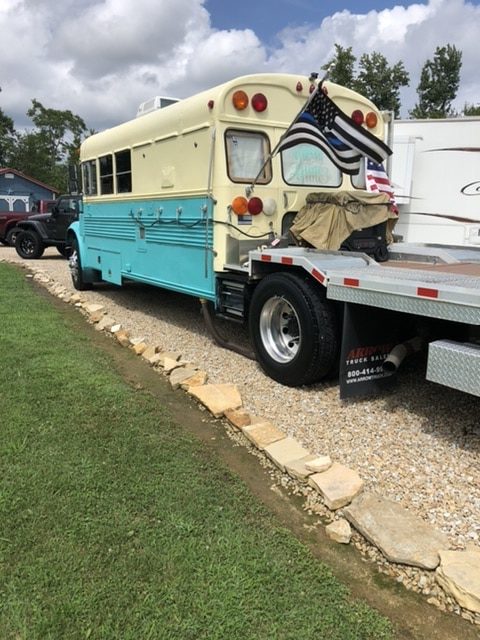
Air ride suspension is probably the single biggest mechanical difference between a coach and a school bus. Instead of leaf springs, coaches use air bags (sometimes called air springs) at each wheel position. An onboard compressor keeps the bags inflated to the right pressure, and the system self-levels so the bus stays flat even when the load shifts. It’s the same technology used on semi trucks and luxury cars.
What this means for your conversion is a dramatically smoother ride. Potholes don’t send shockwaves through your cabinets. Highway expansion joints don’t rattle your teeth. Your dishes stay on the shelves. But it also means you have an air compressor, air lines, leveling valves, and air bags that all need to be maintained. An air bag failure isn’t like a leaf spring sagging — the bus drops on that corner. I watched a video where a guy’s rear air bag blew out on the highway and his bus was suddenly sitting at an angle doing 55 mph. He handled it fine, but it was a pucker moment. Replacement air bags run $200 to $600 each plus installation.
Rear engine placement is the other big mechanical reality. Every coach bus has its engine in the rear, typically behind the rear axle. The engines themselves are familiar names — Detroit Diesel Series 60, Caterpillar C13, Cummins ISM or ISL. These are the same engines used in over-the-road semi trucks and they’re good motors. Reliable, powerful, and designed for high-mileage service.
The catch is access. On a front-engine school bus, you pop the hood and everything is right there. On a coach, the engine is accessed through exterior panels at the rear of the bus. Simple stuff like checking oil is fine — there are usually dipstick extensions and fill points at accessible locations. But anything deeper means you’re crouched behind the bus, reaching through panels, working in a cramped engine bay that was designed for a mechanic at a depot, not a bus owner in a campground. I talked to a guy who rebuilt the water pump on his MCI in a Walmart parking lot and he said it took nine hours. On a front engine bus it would’ve been three.
Tag axles are something you might not have encountered before if you’re coming from school buses. A lot of 45-foot coaches have three axles instead of two — the drive axle and then a trailing “tag” axle behind it. The tag axle helps distribute the weight of a 40,000+ pound vehicle and improves stability. Some tag axles are steerable, meaning they turn slightly to help the bus track through corners.
For your conversion, the tag axle means extra tires to maintain and replace, additional suspension components, and another set of brakes. But it also means better weight distribution, which matters when you’re loading up a bus with tile, granite countertops, water tanks, and a full battery bank. The tag axle earns its keep. Just budget for the maintenance.
One more mechanical note — air brakes. Coaches use air brakes, not hydraulic brakes like a car or most school buses under 26,000 pounds. Air brakes are powerful and reliable, but they work differently than anything you’ve probably driven. The air compressor builds pressure in tanks, and that pressure is what activates the brakes. If you lose air pressure, the brakes lock up — it’s a failsafe design. Some states require an air brake endorsement on your license to drive a vehicle with air brakes, which is a written test at the DMV. Not a big deal, but it’s one more thing to handle.
Floor Plans and Luggage Bay Storage
This is where coach conversions get really fun, and it’s probably the section that’ll have you sketching layouts on napkins before you’re done reading.

The interior of a coach is essentially a big rectangle — about 8 to 8.5 feet wide and 35 to 40 feet of usable length (minus the driver’s area and the rear engine compartment, which eats about 4 to 6 feet at the back). That gives you roughly 280 to 340 square feet of living space on the main floor, which is comparable to a studio apartment.
But here’s where it gets interesting. The luggage bays underneath add a whole second level of usable space. On an MCI D4500, the luggage bays run almost the entire length of the bus on both sides. We’re talking 150 to 200 cubic feet of storage. That’s where you put your fresh water tank, gray water tank, batteries, inverter, generator, tools, outdoor gear, and whatever else you don’t want cluttering up your living space.
Some people get really creative with the bays. I’ve seen builds where they installed slide-out trays for easy access, put in a full outdoor kitchen that extends from a bay door, set up a workshop with a workbench and tool organization, and even created a pass-through storage area where you can access items from either side of the bus. One build I saw had a dedicated bay for a motorcycle. They just rolled it in, strapped it down, and closed the door. Try doing that with a school bus.
For the interior floor plan, most coach converters follow a similar general layout, with variations. The driver’s area stays as-is, sometimes with the passenger seat removed for a dog bed or a small desk. Behind the driver you get your living area — couch, dinette, sometimes a desk or workspace. The kitchen typically goes in the middle of the bus where it’s most stable and where the plumbing runs are shortest. Bathroom behind the kitchen. And the bedroom goes at the rear, just forward of the engine compartment.
What makes coach floor plans different from school bus plans is the width. At 8.5 feet, you can comfortably fit a queen bed sideways across the bus with walking space on one side. On a school bus at 7.5 feet, a queen bed sideways is possible but cramped. That extra foot in a coach opens up layout possibilities that just aren’t practical in a narrower bus.
The other floor plan advantage is the flat floor. School buses have a raised floor over the wheel wells that creates humps you have to work around. Coaches have a flat floor throughout the passenger area because the luggage bays sit between the frame rails below. No wheel well intrusions to build around. That makes cabinet installation, flooring, and furniture placement straightforward in a way school bus builders envy.
One thing to think about is ceiling height and how it affects your upper cabinetry. Coaches have a curved ceiling that’s tallest in the center and shorter at the sides. You can use overhead bins (many coaches already have them), but custom cabinetry along the walls needs to account for that curve. Some builders embrace it and create curved cabinet fronts. Others square things off and accept the lost space in the corners. Neither approach is wrong, just different.
Cost to Buy and Convert
Let me break this down into real numbers, because I got tired of seeing vague estimates online when I was researching.
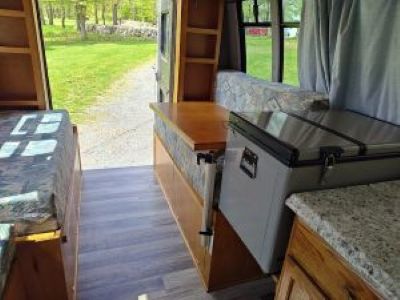
“Now my question is how much do y’all buy these tour buses for? Just to transform them?”
Great question, and the answer has a wide range depending on what you’re willing to deal with.
At the bottom end, you can find non-running or barely-running coaches for $3,000 to $8,000. These are usually older MC-9s or early D-series MCIs with mechanical issues, high miles, or both. You’re essentially buying a shell with a drivetrain that needs work. I found an MC-9 listed for $4,500 once that needed a transmission rebuild. The bus itself was straight, no rust, interior was clean. But that transmission was going to be another $5,000 to $8,000 to fix. So the “cheap” bus wasn’t actually that cheap.
The sweet spot for most converters is $10,000 to $25,000. In this range you can find running, driving coaches from the late 1990s to mid-2000s. MCI D4500s, Van Hool T-series, some older Prevosts. They’ll have 300,000 to 600,000 miles, which sounds terrifying but is middle-aged for a coach engine. These are buses that can be driven home the day you buy them and started on immediately.
Above $25,000 you’re getting into newer coaches, lower-mileage Prevosts, or coaches that have already had significant mechanical work done. A 2005+ Prevost H3-45 with under 400,000 miles is going to cost $35,000 to $60,000 typically. Is it worth it? If you can afford it, probably. You’re getting a better starting platform that’ll need less upfront mechanical work.
For the conversion itself, budget $20,000 to $50,000 for a solid build. That covers demolition of the existing interior, framing, insulation, electrical, plumbing, kitchen, bathroom, flooring, and furnishing. Some people do it for less by using salvaged materials, doing all the labor themselves, and keeping finishes simple. Some spend more because they want granite countertops, hardwood floors, and a full residential kitchen.
Here’s how the math usually shakes out for a mid-range coach conversion:
- Bus purchase: $15,000 to $25,000
- Immediate mechanical work (tires, air bags, fluids, belts): $3,000 to $6,000
- Demolition and prep: $500 to $1,000
- Insulation: $1,500 to $3,000
- Electrical (solar, batteries, inverter, wiring): $5,000 to $10,000
- Plumbing (tanks, pump, water heater, fixtures): $2,000 to $4,000
- Kitchen (counters, sink, stove, fridge): $3,000 to $6,000
- Bathroom (shower, toilet, fixtures): $1,500 to $3,000
- Flooring: $1,000 to $2,500
- Walls and ceiling finish: $1,500 to $3,000
- Furniture and fixtures: $2,000 to $5,000
- Paint exterior: $1,000 to $3,000
Total all-in: $37,000 to $75,000
Compare that to a school bus conversion where the total all-in is typically $25,000 to $60,000, and you can see why coaches are considered the premium option. The gap isn’t as massive as people think though, especially when you factor in the luggage bay storage, air ride, and wider interior that you’d be trying (and failing) to replicate in a school bus.
“Would it have been cheaper in the long run to find a used Greyhound bus and convert it?”
This question comes up constantly, and I love it because it forces you to think about total cost of ownership, not just purchase price.
The argument for goes like this: a coach costs more upfront, but you get a better starting platform. Air ride means less vibration damage to your build over time. Luggage bays mean your tanks and batteries aren’t taking up living space, so you need less total interior footage. Many coaches already have insulation, wiring, and generators. So your conversion costs might be lower, and your maintenance costs on the build itself (cabinets shaking loose, tiles cracking, plumbing rattling apart) are lower because the ride is smoother.
The argument against is that every single repair costs more on a coach. Tires cost more. Parts cost more. Mechanics cost more. And coaches have more systems to maintain — air ride, tag axle, complex HVAC, air brakes. Over five years of full-timing, those costs add up.
I think the honest answer is this: if you’re putting on 20,000+ miles a year and you plan to live in the bus for five or more years, a coach probably works out cheaper or at least comparable to a school bus in the long run. The ride quality protects your build, the storage is more efficient, and the drivetrain is built for exactly this kind of use. But if you’re mostly staying parked, only moving occasionally, and you’re on a tight budget, a school bus wins on cost by a wide margin. The ride quality advantage doesn’t matter much if you’re only driving once a month.
Where to Find Coach Buses for Sale
Finding coaches is different from finding school buses, and it’s one of the things that caught me off guard when I started looking.
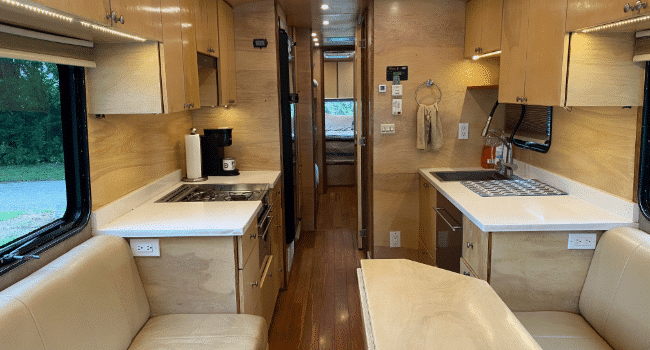
School buses are everywhere — government auctions, school district surplus sales, Craigslist. Coaches are more specialized. Here’s where to look.
Coach-specific dealers are probably your best bet if you want to see what you’re buying before you buy it. Companies like National Bus Sales, Las Vegas Bus Sales, and ABC Companies deal in used coaches and usually have 20 to 100 on their lot at any given time. Prices are higher than private sales, but you can inspect before you buy and sometimes get a limited warranty or at least a mechanical inspection report.
Online auctions are where the deals are. GovDeals, PublicSurplus, and Ritchie Bros sell retired transit authority coaches, university coaches, and charter company fleet liquidations. I’ve seen MCI D4500s go for $8,000 to $15,000 at auction when they’d be listed at $25,000 at a dealer. The risk is that you’re usually buying as-is with limited or no opportunity to inspect. Some auctions allow preview days where you can look at the bus in person. Always go if you can.
Facebook Marketplace and Craigslist have coaches listed by charter companies going out of business, churches liquidating their fleet, and individual sellers. The quality varies wildly. I spent a couple weeks scrolling through listings and saw everything from a pristine 2008 Van Hool for $35,000 to a rusted-out 1985 MC-9 for $2,000 that the seller claimed “just needs a battery.” Right.
Charter bus company liquidations are gold if you can find them. When a charter company closes or downgrades their fleet, they’ll sometimes sell 5 to 20 coaches at once, and the prices drop because they want them gone. Check local business news, bankruptcy filings, and just call charter companies in your area and ask if they have anything they’re looking to sell.
Bus conversion groups on Facebook are an underrated source. People who bought a coach, started converting it, and then life happened. Partially converted coaches show up in these groups regularly, sometimes at steep discounts because the seller just wants it out of their driveway. You might get a coach with demolition already done, some electrical work started, and new tires — for less than you’d pay for the raw bus alone.
One tip that saved me some headaches — when you find a coach you’re interested in, get the VIN and run it through the FMCSA database if it was previously used for commercial passenger service. This can tell you about the bus’s safety inspection history and any violations. It’s not a substitute for a physical inspection, but it gives you a starting point.
“What I would do is get an excursion bus and convert it to electromotive drive.”
I’ve seen this sentiment more and more, and it’s worth addressing because it’s a question about the future of coach conversions as much as anything.
The idea of converting a diesel coach to electric drive is fascinating. You’ve got a huge vehicle with plenty of space for battery banks under the floor. The luggage bays could theoretically hold a massive lithium battery pack. And electric motors produce peak torque at zero RPM, which means incredible pulling power from a stop.
But here’s the reality right now. A diesel-to-electric conversion on a vehicle this size is a six-figure project, minimum. We’re talking $100,000 to $200,000+ for the motor, controller, battery pack, cooling system, and installation. The technology exists — companies like Lightning eMotors and others are building electric buses for transit agencies. But those are purpose-built from the factory, not conversions.
Could you do it yourself or with a conversion shop? Technically yes. Practically, you’d need deep pockets and serious electrical engineering knowledge. The weight of the battery pack alone is a concern — lithium batteries powerful enough to move a 35,000-pound bus any meaningful distance would weigh thousands of pounds themselves. Range would be limited compared to diesel, probably 100 to 200 miles per charge with current battery technology.
I think this will absolutely be viable in five to ten years as battery costs continue to drop and the conversion aftermarket matures. Right now though, if someone told me they wanted to do this, I’d say keep the diesel drivetrain for propulsion and focus your electrical budget on a robust solar and battery system for your house power. That’s where electric makes financial sense today — powering your home, not moving the bus.
That said, I respect the vision. Someone’s going to do this conversion and document it on YouTube and it’ll be incredible to watch. If you’ve got the budget and the engineering chops, why not be that person?
Related: Can You Convert a Double Decker Bus Into a Home?
Wrapping It Up
So after spending way too many hours researching coaches, watching conversion videos, reading forum threads from people who’ve actually done this, and comparing the numbers every which way, here’s where I came out.
Coach conversions are the best possible bus home for people who travel a lot, have a mid-to-high budget, and are comfortable with (or willing to learn) more complex mechanical systems. The ride quality, the storage, the width, the overall feel of living in a converted coach — it’s a step above a school bus conversion in almost every livability metric.
But they’re not for everyone, and they’re definitely not for most first-timers. The cost is higher across the board. The parts and maintenance situation is less forgiving. The learning curve is steeper. And when something goes wrong at 10 PM on a Tuesday in the middle of nowhere, you’ve got fewer options for getting it fixed quickly and cheaply.
If I were giving advice to someone who’s never converted anything before but has their heart set on a coach, I’d say this: start by finding a local coach mechanic and having a conversation. Ask them what models they see the most, what breaks the most, and what they’d recommend for someone living in one full-time. That conversation will tell you more than a hundred forum threads. And it’ll tell you pretty quickly whether you’re ready for the commitment.
For people who’ve already done a school bus build and are looking to upgrade, a coach is the natural next step. You already know how to run plumbing, wire a solar system, build cabinets, and troubleshoot on the road. The coach just gives you a better platform to do all of that in. More space, smoother ride, better storage. You’ve earned it.
Whatever you decide, the important thing is going in with your eyes open. Don’t buy a coach because it looks cool on Instagram. Buy one because you’ve done the research, you know what maintenance looks like, and your budget can handle the unexpected. Because with a coach, the unexpected will come. It always does. The question is just how prepared you are when it does.