
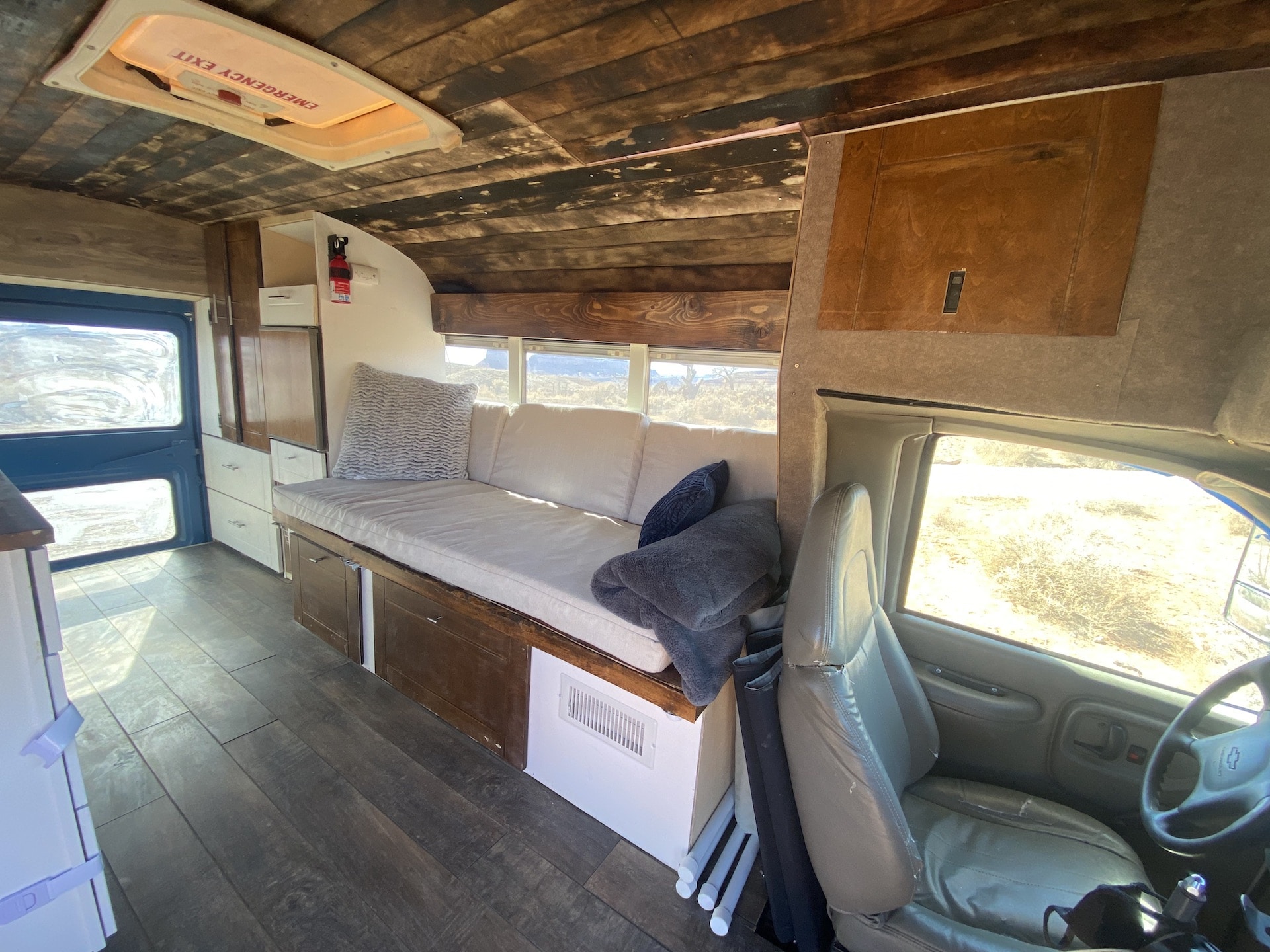
I’ve been down the rabbit hole on double decker bus conversions for a while now, and I’ll tell you, the more I learned the more I realized this is a completely different world from standard skoolie builds. It’s not just “a bus with a second floor.” The planning, the buying, the building, the driving — all of it changes when you go double decker. Some of it changes for the better. Some of it will make you question your life choices at 3 AM while you’re trying to figure out how to route plumbing between two floors. (See our guide on What Is the Difference Between a School Bus and a Transit Bus? for more on this.)
This guide covers everything you need to know about converting a double decker bus into a livable home. We’ll go through the different types of double deckers that exist, where to actually find one for sale (harder than you’d think), what makes them so appealing, and then the real stuff — height restrictions, structural concerns, floor plan ideas for two levels of living space, what it’s like to drive one, legal issues, and realistic costs. Double deckers offer something no other bus conversion can: a genuine two-story home on wheels with 200 to 300+ square feet of usable space across both floors. But they come with tradeoffs that go way beyond what a typical school bus converter deals with. The average purchase price runs $15,000 to $50,000 before you even start building, they stand 13 to 14.5 feet tall which limits where you can drive, and finding parts and mechanics can be a real adventure. I’m going to lay it all out so you can decide if this is the right path for you.
What Kinds of Double Decker Buses Exist?
When most people picture a double decker bus, they think of those iconic red London buses. And yeah, those exist and people do convert them. But there’s actually a decent range of double decker types out there, and which one you end up with shapes the entire conversion. (See our guide on Can You Convert a Double Decker Bus Into a Home? for more on this.)
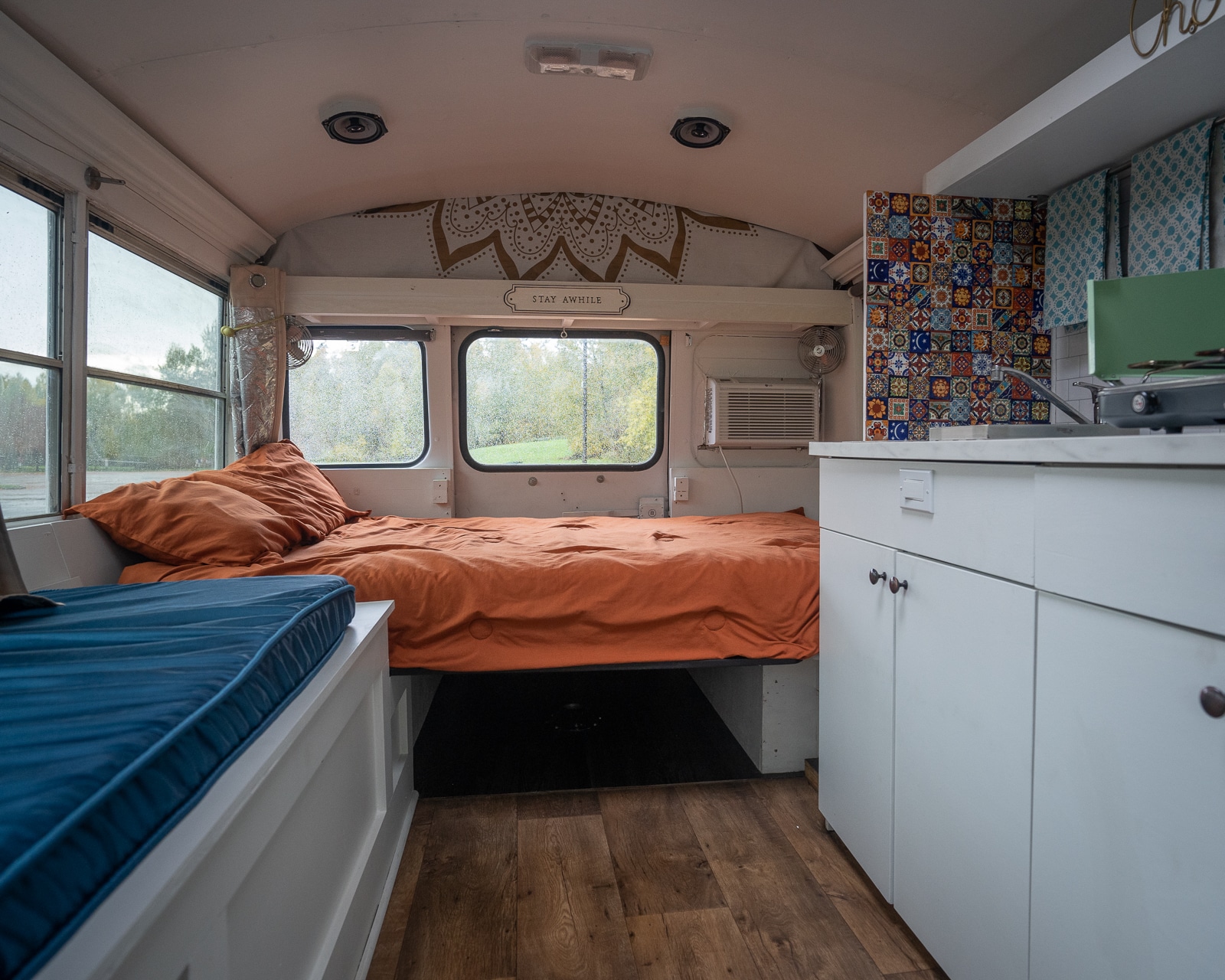
The classic British double deckers are the ones you’ll see most often in conversion builds. Models like the Leyland Olympian, the Volvo Olympian, the Alexander Dennis Enviro400, and the older AEC Routemaster. These were workhorses for UK transit systems for decades, which means there are a lot of retired ones floating around, especially in the UK market. They typically run 30 to 36 feet long, about 8 feet wide, and stand around 14 to 14.5 feet tall. Most run on diesel with engines from Cummins, Volvo, or DAF. The Routemaster is the one people romanticize the most, but I found out pretty quick that they’re also the hardest to convert because the mechanicals are ancient and parts are getting scarce.
Then you’ve got the American-market double deckers. These are less common but they do exist. Companies like MCI, Prevost, and Van Hool have made double decker coaches, and a handful of US transit agencies ran them — Las Vegas, some cities in Connecticut, a few others. Alexander Dennis also sells the Enviro500 in North America, and you’ll occasionally find retired ones from transit systems. These tend to be longer, sometimes 40 to 45 feet, and they’re built to meet US DOT standards, which means American mechanics have a slightly easier time with them.
There’s also the open-top tour bus category. Cities like New York, San Francisco, and DC have those hop-on hop-off sightseeing buses. When those get retired, they sometimes hit the market. The catch is the upper deck is usually open-air or has a removable roof, so you’d need to fabricate an entire enclosed upper level. I came across one builder who bought a retired NYC tour bus and spent almost a year just on the upper deck enclosure before he even started on the interior. Cool project, but not for the faint of heart. (See our guide on Blue Bird Buses: The Complete Conversion Guide for more on this.)
And finally, there are people who build their own second floor on top of a standard bus. I know that sounds insane, and honestly, it kind of is. But I’ve seen a handful of builds where someone took a flat-nose school bus or a transit bus and fabricated an upper deck from scratch using steel framing. It’s rare, and I wouldn’t recommend it to anyone who isn’t a professional fabricator, but it exists.
“Did you have to add extra framing to support the addition on top the bus?”
This question comes up constantly, and it’s the right question to ask because it gets at the core structural concern. I covered this in detail in our article on whether you can convert a double decker into a home, but the short version is this: if you’re starting with an actual double decker bus, the upper deck is already engineered to hold 40+ seated passengers, which is roughly 6,000 to 7,000 pounds of evenly distributed weight. So the structure can handle load. The issue is that a conversion concentrates weight differently — a 300-pound bathtub in one spot, a full water tank in another. Most builders I researched added targeted reinforcement under heavy items on the upper deck, usually welded steel cross-members. One UK builder used angle iron under his upper-deck kitchen and it took a weekend and about $200 in materials.
Now, if you’re talking about building a second floor onto a bus that didn’t originally have one, that’s a completely different conversation. You absolutely need serious structural engineering for that. You’re adding thousands of pounds of steel framing, walls, a floor, and then everything you put inside it. The original bus chassis may or may not be rated for that kind of load. I came across a guy on a forum who added a pop-top to a school bus and it worked fine, but that’s very different from a full rigid second story. If you’re going this route, don’t skip the structural engineer. Period. (See our guide on Is a Short Bus or Full-Size Bus Better for a Conversion? for more on this.)
Where to Find Double Decker Buses for Sale
This was one of the most frustrating parts of my research. With school buses, you’ve got GovDeals, government surplus auctions, local school districts selling them off, Craigslist, Facebook Marketplace — they’re everywhere. Double deckers? Not so much.
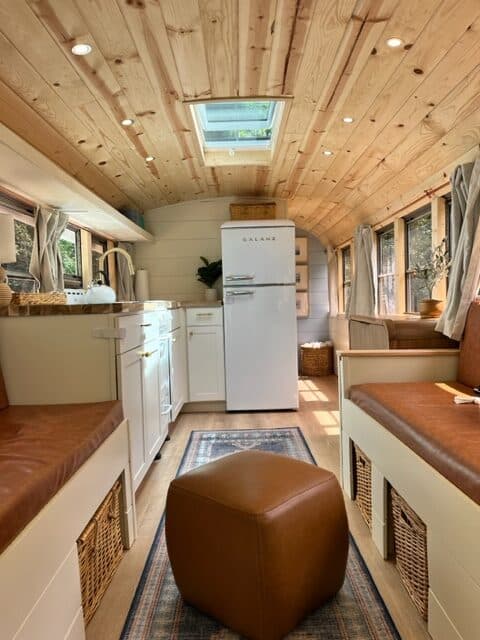
In the US, your options are limited. I found a handful on specialty commercial vehicle sites like CommercialTruckTrader.com and BusesOnline.com. eBay Motors has one pop up every now and then. Facebook groups dedicated to bus conversions occasionally have them listed. But at any given time, I could only find maybe 10 to 15 double deckers for sale in the entire country. And half of those were priced like collector items, not like conversion projects. (See our guide on Church Bus Conversions: The Complete Guide for more on this.)
The UK is a completely different story. Sites like BusAndCoachBuyer.com and Mascus.co.uk have dozens of retired double deckers at any given time. Prices are significantly lower — I saw running Volvo Olympians for 3,000 to 8,000 GBP, which at the time was roughly $4,000 to $10,000. The catch is getting one across the Atlantic. Shipping a bus from the UK to the US runs $8,000 to $15,000 depending on the port and the size of the bus. And then you’ve got import duties, emissions compliance (or exemptions for older vehicles), and the fun of converting a right-hand-drive vehicle to work on American roads. Some people leave them right-hand-drive, which is legal in the US but takes getting used to.
I talked to one builder who imported a Leyland Olympian from Scotland. He said the shipping and import process took about three months from purchase to having it in his driveway, and the total cost including the bus, shipping, and import fees came to about $18,000. He said it was still cheaper than what comparable double deckers were going for in the US market. But he also said the paperwork was the most tedious part of the entire build, and this was a guy who then spent two years converting the thing.
Auctions are another option. Some transit agencies in the US do auction off their double deckers when they retire them, but you have to watch for those opportunities because they don’t happen on a regular schedule. Setting up alerts on GovDeals for “double decker” or “double deck” is worth doing even if you’re months away from being ready to buy.
The Appeal: Why People Want Double Deckers
So why go through all this extra hassle? I kept asking myself that while I was researching, and the answers I found from actual owners were surprisingly consistent.
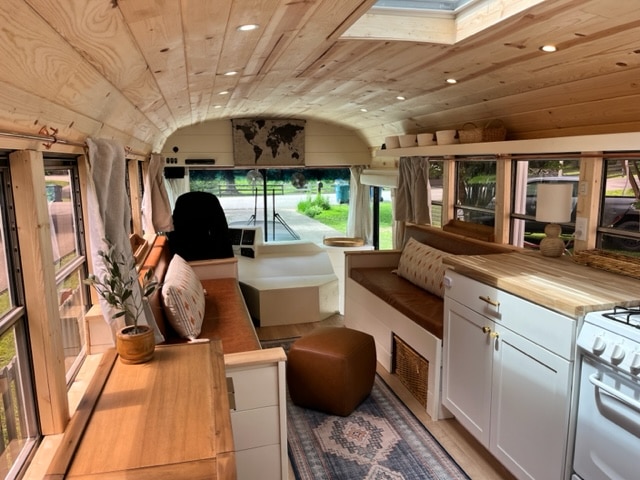
The biggest one is space. Not just square footage, though that’s part of it. It’s the separation. In a standard school bus conversion, your bedroom, kitchen, living room, and office are all in one long tube. You can use curtains or partial walls to create zones, but you’re still in one continuous space. A double decker gives you an actual second floor. Upstairs is upstairs. Downstairs is downstairs. For couples, that means one person can be sleeping while the other is cooking or working and it genuinely feels like being in a different room, not just on the other side of a curtain.
For families, the appeal is even stronger. I read about a family of five in a converted Alexander Dennis that had the kids’ bedrooms on the upper deck and the parents’ space plus the kitchen and bathroom on the lower deck. They said it was the first time their bus actually felt like a house and not like camping. The kids could go to their rooms and close the door, which apparently was a game-changer for everyone’s sanity.
There’s also the aesthetic factor, and I don’t think that should be dismissed. A converted double decker bus is a head-turner in a way that even the coolest skoolie isn’t. They draw crowds at campgrounds. People want to take tours. A few owners I came across actually make money doing Airbnb or Hipcamp rentals with their double deckers because the novelty factor is enormous. One couple in Oregon told me they book out their upper deck as a rental and live on the lower deck, and the rental income covers their entire monthly expenses.
And then there are the views. This sounds like a small thing, but multiple owners mentioned it and I think it’s legitimate. Sitting on the upper deck of a double decker that’s parked at a campsite with big windows is a fundamentally different experience from sitting at ground level. You’re 8 to 10 feet up. You can see over hedges, over other vehicles, over fences. One guy described it as having a permanent observation deck and said it completely changed how he experienced his surroundings.
Height Restrictions and Bridge Clearances
Alright, now for the stuff that keeps double decker owners awake at night. I covered this in the double decker conversion article but it’s important enough to expand on here.
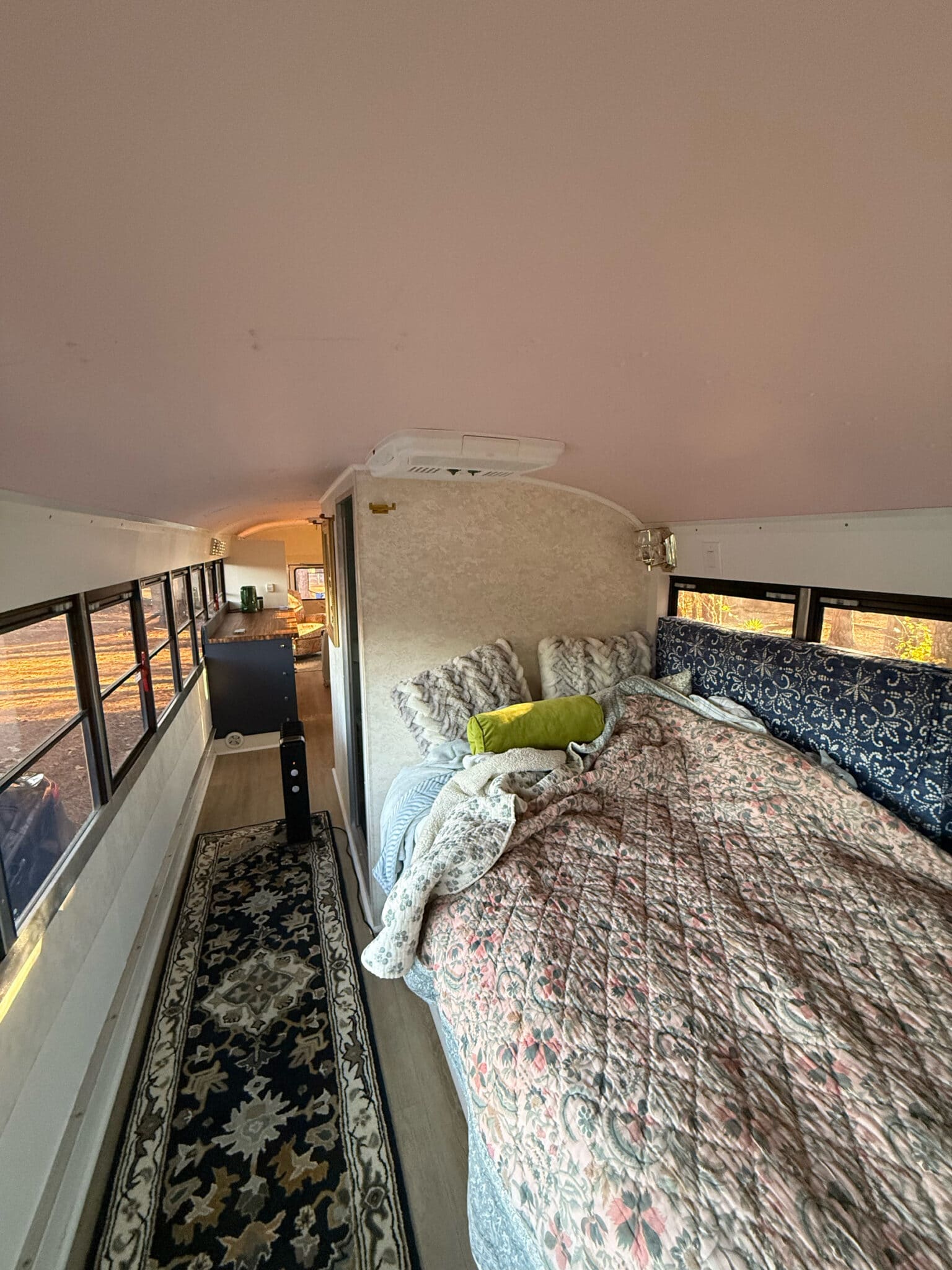
A stock double decker sits at roughly 13 feet 6 inches to 14 feet 6 inches tall. Standard US interstate overpasses are designed for a minimum of 14 feet of clearance. So on major highways, you’re technically fine with most double deckers. But here’s where it gets real. Road repaving adds inches over time and reduces that clearance. Older bridges in cities can dip below 13 feet. Railroad overpasses in small towns are often 11 or 12 feet. And parking garages are completely off the table.
“how much has it restricted yall to drive being so tall”
Every single double decker owner I found said the height changed how they travel. No exceptions. The degree varies, but the restriction is real. One couple traveling in a converted Leyland Olympian through the UK said they once had to reverse down a narrow lane for a quarter mile because they turned onto a road with a low bridge and there was nowhere to turn around. They laughed about it afterward but said it was genuinely terrifying in the moment.
In the US, your saving grace is trucker GPS apps. CoPilot and Hammer let you input your vehicle height and they route you around low bridges automatically. Some double decker owners also mount a height pole on the front of the bus — a piece of PVC pipe cut to their exact roof height. If it clips something, they stop before the roof does. Simple, cheap, and potentially saves you from a catastrophic mistake.
Gas stations are another thing people don’t think about. A lot of gas station canopies sit at 12 to 13 feet. You can’t just pull in anywhere and fuel up. You have to scout stations ahead of time or find ones without canopies, which usually means truck stops. This is one of those annoyances that sounds minor but becomes part of your daily routine.
The weight is a factor too. A stripped double decker can weigh 20,000 to 28,000 pounds before you start building. Add a full conversion with water, furniture, and belongings, and you could push 30,000+ pounds. That affects bridge weight limits, road restrictions, and fuel economy. Expect 6 to 9 MPG depending on the engine and how heavy your build is.
Structural and Weight Considerations
Beyond the framing question we already covered, there are some structural realities with double deckers that don’t apply to regular bus conversions.
Center of gravity is the big one. When you’re driving a vehicle that’s 14 feet tall with living space on the upper deck, the center of gravity is higher than any standard bus. Wind is a real concern. Several owners I talked to mentioned that crosswinds on highways or exposed bridges were genuinely unsettling. One guy with a converted Volvo Olympian said he won’t drive in winds above 35 MPH anymore after getting pushed sideways on a bridge in Oklahoma. He wasn’t exaggerating, either — double deckers have a lot of flat surface area on the sides, and that catches wind like a sail.
Weight distribution between floors matters a lot. The general rule I kept seeing was to put all your heavy stuff on the lower deck. Water tanks, battery banks, the kitchen (cast iron anything), your tool storage — keep it all low. The upper deck should be lighter things like sleeping quarters, a lounge area, clothing storage. If you load the upper deck heavy, you raise the center of gravity and the bus becomes less stable in turns and in wind.
The floor between decks is another consideration. In the original bus configuration, that floor is designed for passengers walking and sitting. Not for a bathtub full of water or a kitchen island. If you’re planning heavy installations on the upper level, reinforcing the floor structure is not optional. I found a builder who put his water tank on the upper deck because it fit better with his layout, and he ended up having to add three steel cross-members and weld support brackets to the original floor structure. He said if he did it again, he’d just redesign the layout to keep the water downstairs.
The staircase is a structural element too, one that people don’t think about until they’re in the middle of the build. You’re cutting into the floor between decks to create a staircase opening, which means you’re removing structural material. That opening needs to be properly framed and reinforced. Most builders use steel angle iron or box tube to create a frame around the staircase opening that’s as strong or stronger than what they removed.
Floor Plan Ideas (Two Floors of Living Space)
This is where double deckers get really fun, because the layout possibilities are way more interesting than a single-floor bus. You’re basically designing a tiny house with two stories, which opens up combinations you can’t do in any other mobile home.
The most common layout I found was kitchen and bathroom downstairs, bedroom and lounge upstairs. This makes sense for practical reasons. Plumbing is simpler when your wet areas are on the lower level, closer to the tanks and dump connections. The kitchen benefits from being near the entry door for hauling groceries. And keeping water weight low helps with that center of gravity issue.
Some builders flip it and put the living space upstairs for the views. I read about a family in New Zealand that has floor-to-ceiling windows on the upper deck and uses it as their daytime hangout space. Their logic was that you spend more waking hours in your living room than your bedroom, so give the better view to the space you use most. I thought that was a solid argument, even if it makes the plumbing more complex.
For families, the two-floor layout is a game-changer. Kids’ bedrooms upstairs, parents’ space downstairs. Or flip it — put the master on the upper deck for privacy and give the kids the lower level where they can spill things on a floor that’s easier to clean. One family I came across had three kids and they built bunk-style sleeping nooks on the upper deck, almost like a sleeper car on a train. Each kid had their own little enclosed space with a curtain, a reading light, and a small shelf. The kids loved it.
The staircase placement drives the whole layout. Most builders put the stairs toward the middle of the bus or slightly toward the rear. A center staircase splits each floor into two zones, which gives you natural room separation without building extra walls. A rear staircase keeps the lower floor more open but can make the upper deck feel like a dead-end hallway since there’s only one way up and down.
One layout idea I thought was really clever was a builder who put the staircase at the very front and turned the upper-deck front section into a lounge with huge forward-facing windows. He said it was like having a penthouse balcony that traveled with him. The rest of the upper deck was his bedroom and office. Downstairs was the kitchen, bathroom, and a guest sleeping area.
For the lower deck, don’t forget about the driver’s area. Most double deckers have a separated cab, and some builders extend the living space into that area or use it as a dedicated workspace. One couple turned the original driver’s partition area into a small home office nook, which was a smart use of space that would otherwise just be wasted.
If you want more general layout inspiration, check out our article on skoolie floor plan ideas. A lot of the single-floor concepts translate to either level of a double decker.
Driving a Double Decker
I’ve written about how hard it is to drive a school bus, and a double decker takes all of those challenges and dials them up. You’re dealing with a longer, heavier, taller vehicle with a higher center of gravity and more limited visibility.
The height is the constant companion. You will think about it every single time you approach an overpass, a canopy, an overhead sign, or a tree branch. It becomes second nature eventually, but the first few months of driving a double decker involve a lot of slow approaches and a lot of craning your neck to estimate clearances. Several owners said they attached a physical measurement reminder to their dashboard — a sticker or a tag that says their exact height — so they never have to guess or remember.
Turning radius is bigger than you’d expect, especially on the longer 40-foot+ models. Tight parking lots are stressful. U-turns require a lot of road. Backing up is harder because you can’t see as much behind you, and the upper deck adds a blind spot that regular buses don’t have. Most owners add a backup camera at minimum, and some add cameras on the sides as well.
Wind is probably the scariest part. I keep coming back to this because it was the single most frequently mentioned driving concern from actual owners. A double decker in a crosswind is not like a school bus in a crosswind. You can feel the bus sway. On gusty days, you grip the wheel tighter and you slow down. Some owners have a personal wind speed limit and they’ll just pull over and wait if it gets too windy. That’s not being overly cautious. That’s being smart.
The braking is different too. You’re stopping a vehicle that weighs 25,000 to 30,000+ pounds, and that takes distance. Following distances need to be generous. Downhill braking needs to be planned. Most double deckers have air brakes, which work differently from the hydraulic brakes on a car or even some school buses. If you’re not familiar with air brakes, take a CDL prep course or at the very least spend serious time learning how they work before you drive a double decker for the first time.
On the positive side, the actual driving position in many double deckers is really comfortable. You’re sitting higher than in a school bus, the cab is often enclosed and separate from the passenger area, and the steering is usually power-assisted. Highway driving on a clear day with no wind is genuinely pleasant. It’s the urban driving, the tight spaces, and the weather that test you.
Legal and Registration Issues
This is one of those areas where I found the most conflicting information, and it took me a while to sort through it. The legal landscape for double decker conversions varies dramatically by state and by whether your bus was originally sold in the US or imported.
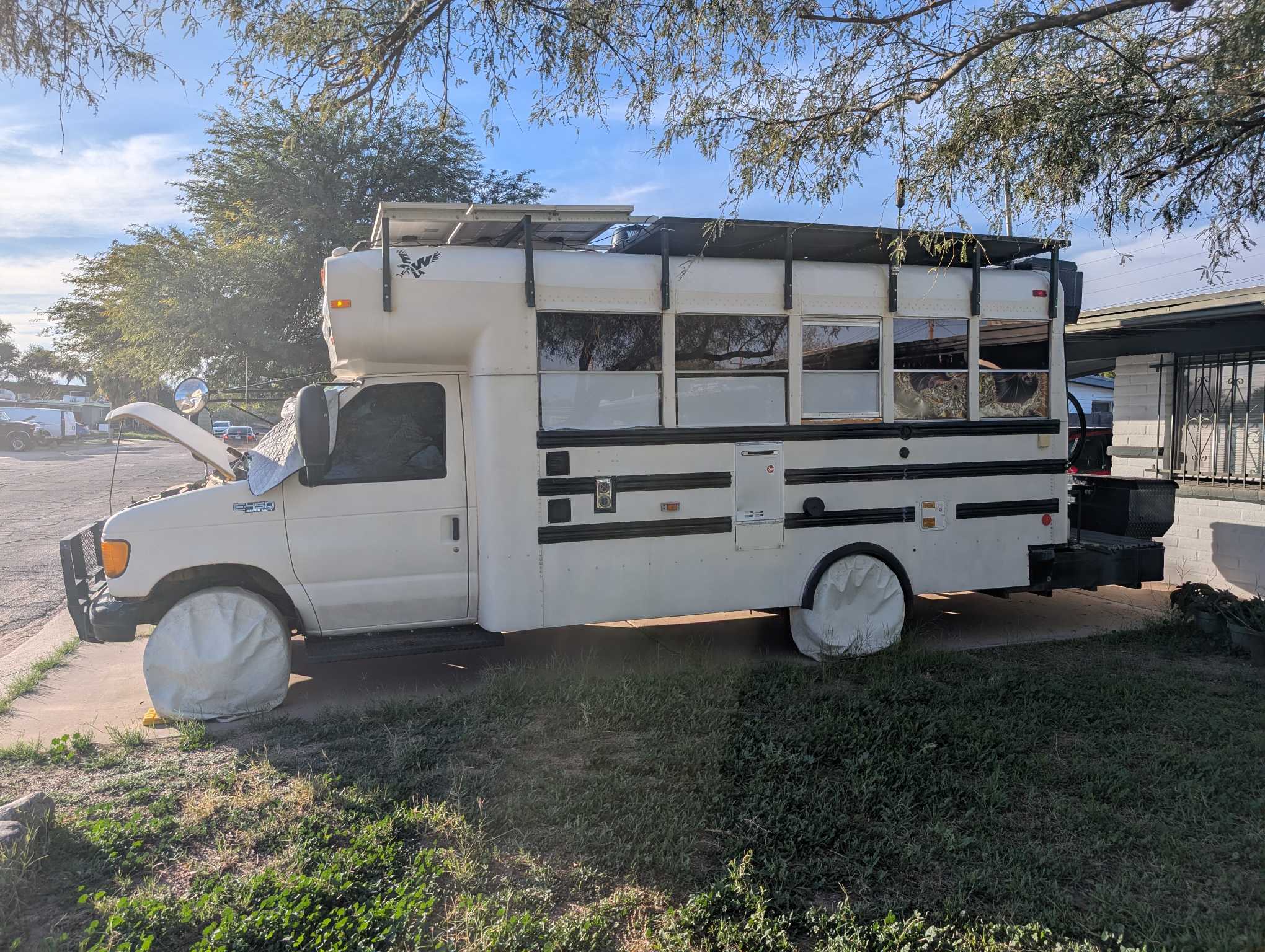
“Is it legal to make a mini bus into a double decker bus?”
I see this question come up from people thinking about adding a second story to a bus that wasn’t built as a double decker. The honest answer is that it’s a gray area at best and potentially illegal at worst. Most states require that modified vehicles pass safety inspections, and a homebuilt second story on a bus is going to raise a lot of eyebrows at the DMV. You’re fundamentally changing the vehicle’s height, weight, center of gravity, and structural integrity. Some states might let it through if you have engineering documentation proving it’s safe. Others won’t even look at it.
FMVSS (Federal Motor Vehicle Safety Standards) apply to vehicles manufactured for sale, not to personal modifications, which gives some wiggle room. But if your state has strict inspection requirements, you could end up with a bus you can’t legally register. I’d say talk to your state’s DMV before you spend a dollar on construction. Get it in writing if you can.
For actual double decker buses being converted into homes, the registration process is similar to any bus conversion. Most states allow you to re-title a commercial bus as a motorhome or RV once you’ve added living amenities — a bed, a cooking area, and a bathroom or toilet. We’ve got a whole guide to registering and titling a converted bus that covers the state-by-state variations.
The CDL question is relevant here too. Whether you need a CDL to drive your converted bus depends on the GVWR and your state’s rules. Many double deckers have a GVWR over 26,000 pounds, which is the federal threshold for requiring a CDL. Once you re-title as an RV, some states exempt you from the CDL requirement for personal use. But not all of them. Check before you buy.
“Why not start with a double decker bus?”
This is worth addressing from a legal angle too, because one reason people don’t start with double deckers is the registration headaches. Importing a right-hand-drive bus from the UK adds EPA and DOT compliance layers that domestic buses don’t have. Buses over 25 years old are generally exempt from these requirements, which is why you see a lot of people importing older models. But that means you’re working with older mechanicals, which brings its own problems.
Insurance is another legal hurdle. Finding insurance for a converted bus is already tricky. Finding insurance for a converted double decker — especially an imported one with right-hand drive — is even trickier. I found that specialty RV insurers like National General and Roamly were more willing to work with unusual conversions than mainstream insurance companies. But expect to pay more than you would for a standard skoolie policy.
Cost to Buy and Convert
Let me break this down into real numbers because I think a lot of people underestimate what a double decker conversion actually costs.

The bus itself:
- US-market double decker in running condition: $15,000 to $50,000
- UK import (including shipping and import fees): $10,000 to $25,000 total
- Non-running project bus: $3,000 to $10,000 (but mechanical rehab could easily add $5,000 to $15,000)
- Retired open-top tour bus: $8,000 to $20,000 (plus the cost of enclosing the upper deck)
The conversion: This is harder to pin down because the range is enormous. I’ve seen bare-bones double decker conversions done for $15,000 in materials, and I’ve seen luxury builds that topped $100,000. Here’s a rough breakdown of what I found to be typical for a mid-range build:
- Structural reinforcement and staircase: $1,000 to $3,000
- Insulation (both floors): $1,500 to $3,000
- Electrical and solar: $3,000 to $7,000
- Plumbing: $1,500 to $3,000
- Flooring (both levels): $1,000 to $2,500
- Kitchen (cabinets, counters, appliances): $2,000 to $5,000
- Bathroom: $1,500 to $3,000
- Walls and ceiling (both levels): $1,500 to $3,000
- Windows (if replacing or adding): $1,000 to $4,000
- Paint/exterior: $1,000 to $3,000
- Furniture and finishing: $1,000 to $3,000
That puts a mid-range total conversion at roughly $16,000 to $40,000 in materials. Add another 20-30% if you’re hiring any labor. So your all-in cost for the bus plus the conversion is realistically $30,000 to $75,000 for most builds, with outliers in both directions.
For comparison, a typical school bus conversion runs $20,000 to $40,000 all-in (see our full cost breakdown here). So you’re looking at roughly 1.5x to 2x the cost of a standard skoolie build, which makes sense when you consider you’re building out twice the space.
Time is a cost too. Most double decker conversions I tracked took 12 to 24 months to complete. A few were done in 6 to 8 months by experienced builders working full-time. And I found one couple who have been at it for three years and counting. The two-floor complexity adds time at every stage. Insulation takes twice as long. Wiring runs between floors. The staircase alone can eat up a couple weeks.
Is a Double Decker Right for You?
After all my research, I think double decker conversions come down to a few honest questions.
Are you planning to travel constantly, or are you mostly stationary? If you want to roam freely, hit back roads, pull into any gas station, and not think twice about where you’re going, a double decker is going to frustrate you. The height restrictions are real and they don’t go away. But if you’re planning to park on a piece of land, stay at long-term sites, or move only occasionally on major highways, the height matters a lot less and the extra space matters a lot more.
Do you have the budget? A double decker conversion is not a cheap project. You can do a school bus conversion on a shoestring budget. Double deckers demand more money at every stage — the bus costs more, the build is more complex, parts are harder to find, insurance is pricier. If you’re working with less than $30,000 total, a standard skoolie is probably the smarter move.
Are you comfortable with mechanical complexity? Double deckers have air brakes, complex suspension systems, and engines that may not be common at your local shop. If you’re the kind of person who wants to learn mechanics and is willing to troubleshoot unusual problems, you’ll be fine. If you want something that any diesel mechanic in any town can work on, stick with a school bus.
Do you actually need two floors? This sounds obvious but I think some people get caught up in the coolness factor without honestly asking whether they need the space. A solo person or a couple can live very comfortably in a standard full-size skoolie. The double decker really shines for families, for people who work from the bus and need a dedicated office, or for anyone who values having truly separate living zones.
I’ll be honest, when I started researching double deckers I was completely sold on the idea. Two floors! A real house on wheels! But the more I dug in, the more I appreciated why most people in the bus life community go with standard single-deck buses. They’re cheaper, easier to find, simpler to build, and they go anywhere. Double deckers are for people who want something extraordinary and are willing to put in the extraordinary effort to make it work.
If that’s you, then go for it. The double decker community is small but passionate, and the builds I’ve seen are some of the most impressive mobile homes on the planet. Just go in with your eyes open, your budget realistic, and your bridge clearance app downloaded.