

Nobody wants to talk about this stuff. I get it. You’re watching bus tour videos and dreaming about mountain views and freedom, and the last thing on your mind is what happens when you get a sinus infection in rural New Mexico or your kid spikes a fever at 2 AM in a Walmart parking lot. But here’s the thing — health doesn’t care where you live, and if anything it matters more when your home has wheels. (See our guide on Can You Legally Live in a Converted School Bus? for more on this.)
This guide covers everything related to staying healthy while living full-time in a bus — healthcare access (telehealth, insurance, finding doctors), managing prescriptions on the road, dental care, mental health and the isolation that nobody warns you about, exercising in small spaces, cooking healthy meals in a tiny kitchen, food storage without a full-size fridge, weather safety during storms and extreme temperatures, first aid essentials, air quality inside your bus, and mold prevention. I spent a long time pulling all of this together because there’s no single resource that covers the health side of bus life comprehensively. Most of what I found was scattered across forum posts and comment sections, and a lot of it was incomplete or flat out wrong.
I wrote a separate article specifically about healthcare options for bus dwellers, and another one about storm safety, so I’ll touch on those here but go deeper on the stuff those articles didn’t cover. Think of this as the hub — the one page where everything health-related lives.
“How do you handle healthcare while living in a bus?”
I covered this in detail in our article on handling healthcare while living in a bus, but let me give you the overview here because it’s the foundation everything else builds on. (See our guide on How Do You Get Internet and WiFi Living in a Bus? for more on this.)
Most full-time bus lifers handle healthcare through one of four routes: ACA marketplace plans, health sharing ministries, employer-sponsored insurance from remote jobs, or going without and paying cash. I talked to dozens of people in the community about this, and the split was roughly 40% ACA, 20% employer plans, 15% health sharing, and 25% some combination of cash pay and hoping for the best. That last group made me nervous, honestly.
ACA marketplace plans
The ACA marketplace (healthcare.gov) is what most nomads end up using. You enroll through whatever state your domicile is in — so if you’re using a South Dakota mail forwarding address, you shop South Dakota’s marketplace. The subsidies can be significant if your reported income is lower, which it often is for bus lifers who’ve structured their life to need less money. I’ve seen people getting bronze plans for $0-$50 a month after subsidies. (See our guide on How Do You Get a Mailing Address Living in a Bus? for more on this.)
The catch is network coverage. If you’ve got a narrow network HMO, good luck finding an in-network doctor in whatever random town you’re parked in. PPO plans cost more but give you out-of-network coverage, and for a nomad that flexibility is worth the extra money. I wish I’d understood the difference between HMO and PPO before I started shopping, because the premium savings on an HMO aren’t worth much when you can’t actually use it.
Health sharing ministries
These aren’t insurance — they’re member organizations where people share medical costs. Medishare, Samaritan Ministries, Christian Healthcare Ministries. Monthly costs run $150-$500 depending on plan and household size. They work great for healthy people who want catastrophic coverage at a lower price point. But they often don’t cover pre-existing conditions, mental health, or substance-related issues, and they can deny claims that traditional insurance would cover. I looked into these pretty carefully and my honest take is they’re a solid option for some people but not a universal solution.
Telehealth changed everything
I keep coming back to this because it really did change the game for nomads. Services like Teladoc, MDLive, and even your own doctor’s telehealth portal mean you can see a doctor from literally anywhere with cell service. I found one woman in a forum who manages her rheumatoid arthritis entirely through telehealth except for twice-a-year in-person visits for bloodwork. She plans her travel around those appointments and it works.
For routine stuff — sinus infections, UTIs, skin rashes, medication refills, general checkups — telehealth handles 80% of what you’d go to a doctor for. Most ACA plans cover telehealth visits fully or with a small copay. Even if you’re paying out of pocket, a telehealth visit runs $50-$75, which is cheaper than most urgent care copays.
Travel insurance as a supplement
Something that doesn’t get mentioned enough is short-term travel health insurance. Companies like SafetyWing and World Nomads offer plans designed for people who move around. They’re not meant to replace your primary insurance, but they can fill gaps — especially if your ACA plan has a narrow network. Monthly costs run $40-$80 depending on your age and coverage level. I talked to a couple who stacks an ACA bronze plan with SafetyWing, and between the two they feel covered pretty much anywhere they go.
“What will you do when you have chronic health issues?”
This question keeps coming up in comments, and it’s a fair one. Healthy people can wing it. But diabetes, autoimmune conditions, heart issues, ongoing prescriptions — that’s a different conversation.
Prescription management on the road
Prescriptions are actually easier to manage than most people think. Chain pharmacies like CVS, Walgreens, and Walmart can transfer prescriptions between locations nationally. So if you’re in Tennessee this month and New Mexico next month, you call ahead and get the transfer done before you arrive. Takes about 24 hours usually.
Mail-order pharmacy is the other option, and honestly it might be better for most bus lifers. Insurance companies often have their own mail-order programs that ship 90-day supplies. You just need to know where you’ll be when it arrives, or use your mail forwarding service. I found that most people use a combination — mail order for their regular maintenance meds, local pharmacy for anything that comes up unexpectedly.
GoodRx and Mark Cuban’s Cost Plus Drugs deserve a mention here. If you’re paying cash for generics, these can cut costs by 50-80%. I looked up a common blood pressure medication as a test — retail price was $45 for a 30-day supply, GoodRx price was $8 at the same pharmacy. That’s a massive difference when you’re on a budget.
One thing that tripped me up during research was controlled substances. If you’re prescribed something like Adderall or certain anxiety medications, transferring those between states gets complicated. Each state has different rules, and some pharmacies flat out won’t fill a controlled substance prescription from an out-of-state doctor. If this applies to you, you need to figure it out before you leave, not after. Talk to your doctor about telehealth refills and find out which pharmacy chains handle interstate controlled substance transfers in the states you plan to travel through.
Finding doctors on the road
When telehealth isn’t enough and you need to see someone in person, here’s what I found works. Urgent care clinics are everywhere and most accept walk-ins. They handle the mid-level stuff — infections, minor injuries, things that need an X-ray. Costs run $100-$200 without insurance, less with. (See our guide on 15 Things Nobody Tells You About Living in a School Bus for more on this.)
For anything more serious, look for Federally Qualified Health Centers (FQHCs). These are community health centers that operate on a sliding fee scale based on income. They exist in every state, often in rural areas where other options are scarce. You don’t need insurance to be seen, and they can’t turn you away. I didn’t know these existed until a guy at a bus meetup in Flagstaff told me about them. His family uses them for all their primary care and dental. HRSA.gov has a search tool to find them.
If you need a specialist, the reality is you’ll probably have to plan around it. Most bus lifers with ongoing specialist needs either loop back to a specific city where their doctor is, or they establish with a new specialist in a region they spend a lot of time in. It’s not impossible, it just takes more coordination than walking into an office down the street.
Dental care without a regular dentist
Dental is one of those things that falls through the cracks for bus lifers. A lot of people skip dental insurance entirely and just pay cash — cleanings twice a year run $75-$200 depending on location, and that’s cheaper than dental premiums for many people.
I found a few approaches that seem to work well. Dental schools offer discounted cleanings and procedures done by students under supervision. The work is usually excellent and the prices are 50-70% less than a regular office. You just need patience because appointments take longer.
Some bus lifers use dental discount plans instead of insurance. These aren’t insurance, they’re membership programs that get you reduced rates at participating dentists. Plans like DentalPlans.com cost $80-$200 per year and can save 15-50% on procedures. It’s not as good as real insurance for major work, but for routine stuff it’s often enough.
And then there are the people who time their dental visits for when they’re in Mexico. I’m not kidding. Dental tourism in border towns like Los Algodones (literally nicknamed “Molar City”) is a huge thing among nomads. A cleaning that costs $150 in the US might cost $25 there. Crown that’s $1,200 in the US? $200-$300 in Mexico. The quality varies, obviously, and you need to do your homework on the specific dentist. But I talked to multiple bus lifers who’ve been doing this for years and swear by it.
“How do you care for a sick child in a bunk bed where you can’t access him/her?”
This question hit me differently because it’s so specific and so real. It’s not a theoretical concern — it’s a parent lying awake at night wondering how this actually works when their kid has a stomach bug and is wedged into a bunk six feet off the ground.
Here’s what I gathered from families who’ve dealt with this.
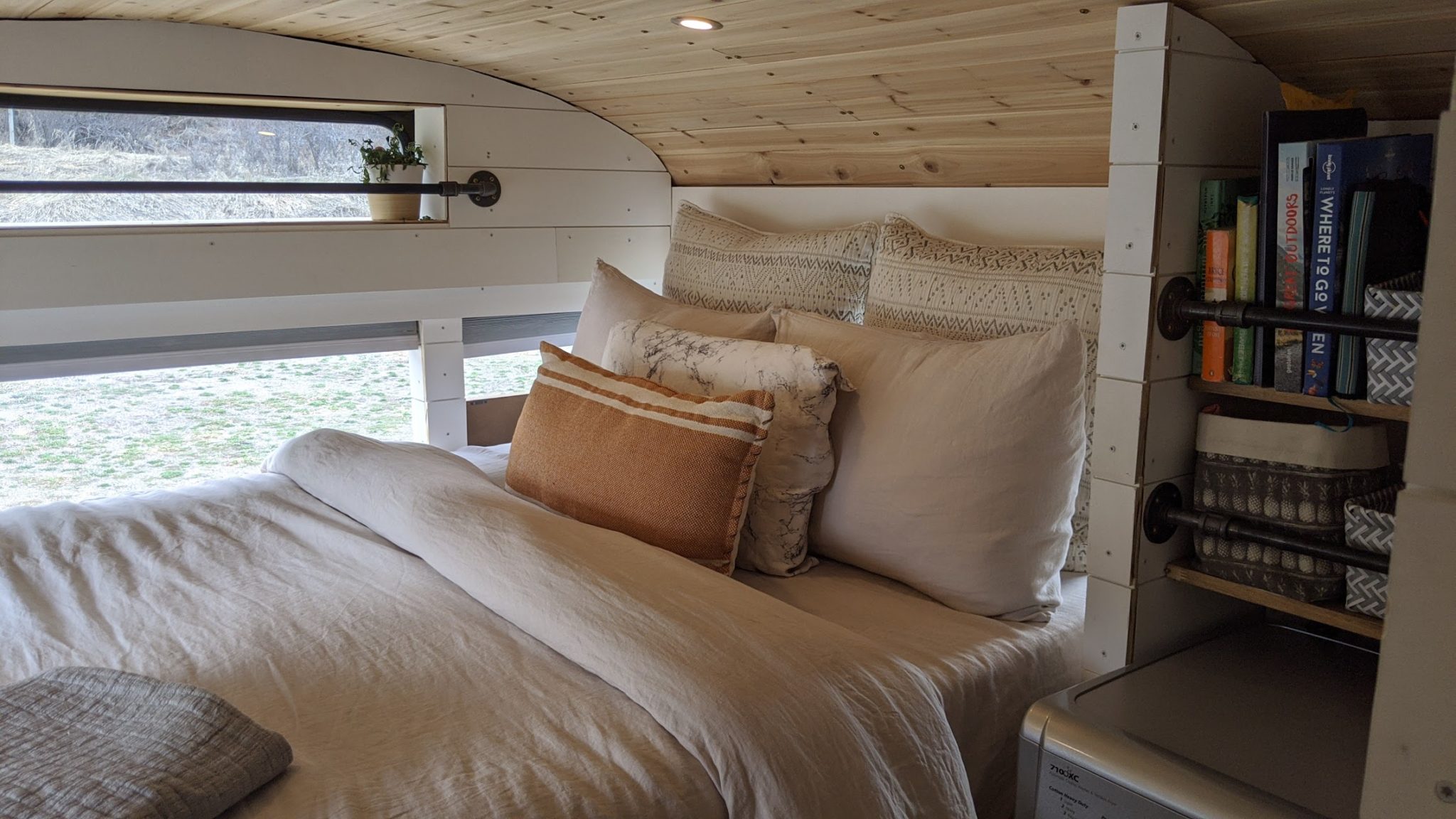
First, most bunk setups in skoolies are designed with some access in mind, but “some” isn’t always enough when your kid is throwing up at 3 AM. A lot of parents told me they pull the sick kid down to the main bed or couch area when they’re genuinely ill. It’s not ideal, and it means someone isn’t sleeping in their normal spot, but when your kid has a 102-degree fever you’re not sleeping anyway.
One family I read about has a rule — when a kid is sick enough to need constant monitoring, that kid sleeps in the dinette area which converts to a bed. The parent sleeps on the floor next to them. They said it happened maybe four or five times in two years of full-time travel. Not fun, but manageable.
The practical stuff matters more than the sleeping arrangement honestly. Having a thermometer, children’s Tylenol, children’s ibuprofen, Pedialyte or electrolyte packets, and a bucket within arm’s reach. One mom in a forum made a point that stuck with me — she keeps a “sick kit” pre-packed in a specific cabinet. Thermometer, meds (organized by kid’s age and weight), electrolytes, a small bowl, washcloths, and a waterproof mattress pad. When one of her kids gets sick, she doesn’t have to dig through cabinets in the dark. Everything’s right there.
For bunks specifically, some builders add a small shelf or net pocket at bunk level for water bottles and medicine. It sounds like a tiny detail but at 2 AM when you’re half asleep and your kid needs water, not having to climb down and rummage through the kitchen is a real quality of life thing.
The bigger concern with sick kids in a bus is containment. In a 250 square foot space, when one kid gets a stomach bug, everyone’s getting it. Most families told me they open every window they can, run fans for air circulation, and clean surfaces obsessively. A couple families mentioned keeping bleach wipes and spray specifically for illness situations. It’s not glamorous but neither is having a norovirus rip through a family of five in a 40-foot box.
And one more thing that came up repeatedly. Know where the nearest hospital or urgent care is before you need it. Not when your kid’s fever hits 104 and you’re Googling while panicking. Every time you park somewhere new, take 30 seconds to look up the closest ER. Save the address in your phone. I do this automatically now and it takes the edge off that “what if” feeling.
“Is it safe to live in a bus during a storm?”
I wrote a full article on storm safety in a bus that goes deep on wind speeds, tipping thresholds, and tornado strategies, so I won’t repeat all of that here. But the health and safety angle deserves its own coverage.
Thunderstorms, rain, and lightning
A bus is actually a great place to be during a thunderstorm. The steel body acts as a Faraday cage — lightning strikes the bus, current travels through the metal shell, you’re fine inside. I looked this up after a particularly close lightning strike in east Texas had me wondering, and the physics check out. The bus doesn’t care.
Rain and standard wind are non-issues if your build is solid and your roof doesn’t leak. A loaded skoolie weighing 20,000-30,000 pounds isn’t going anywhere in 40 mph gusts. I’ve been through sustained 45 mph winds parked and the bus barely rocked.
Tornadoes
This is where it gets serious. A bus is NOT a tornado shelter. An EF2 tornado will destroy it. Full stop. The strategy is simple: don’t be in the bus when a tornado is coming. Watch the weather. Have apps with alerts on your phone — Weather Underground, NOAA Weather. When a tornado watch goes up, know where the nearest hard structure is. A truck stop, a gas station, a community shelter.
The skoolie community has a saying I think sums it up well: you don’t ride out tornadoes in the bus. You ride out everything else.
Extreme heat
This is more of a health concern than people realize. A bus in direct sun can hit 130-140 degrees inside without ventilation. That’s not uncomfortable, that’s dangerous, especially for kids and pets.
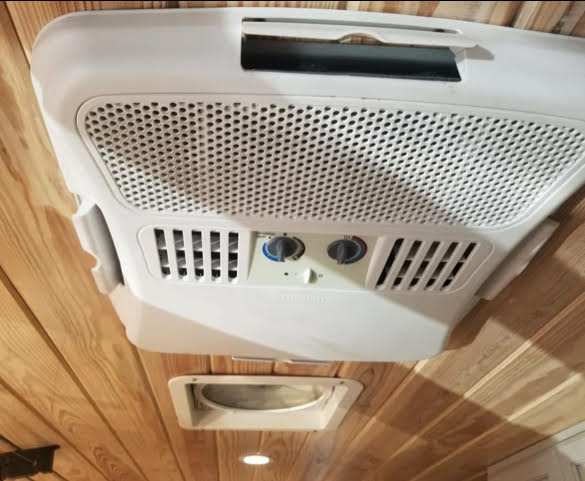
Strategies that actually work: park in shade whenever possible (obvious but worth saying), run a roof vent fan constantly, use reflective window covers or Reflectix on sun-facing windows, and if you have AC run it. If you don’t have AC and you’re in the Southwest in July, you need to think honestly about whether your setup can handle it. A lot of bus lifers chase the weather — head north or gain elevation during summer, head south during winter. It’s not just comfort, it’s health.
I talked to a guy who spent a summer in Arizona in his bus without AC. He said by August he was getting headaches every day and feeling dizzy. Those are heat exhaustion symptoms. He finally drove to Colorado and the headaches stopped within two days. Your body is telling you something when that happens, and you need to listen.
Extreme cold
Carbon monoxide is the real killer in cold weather and it doesn’t get talked about enough. When you’re running a propane or diesel heater in a sealed-up bus, CO can build up fast. You need a CO detector — not one, two. Put one near the heater and one in the sleeping area. This is non-negotiable. I’ve read forum posts from people who woke up with headaches and nausea and realized their heater was producing CO. They were lucky they woke up at all.
Beyond CO, there’s the hypothermia risk if your heating system fails. Carry backup heat — a Mr. Buddy heater, extra blankets, sleeping bags rated for cold temps. If your primary heater dies at 2 AM in January in Montana, you need a plan that doesn’t involve “drive somewhere warm” because your diesel might be gelled.
Our article on keeping a skoolie warm in winter covers the heating options in detail. For this guide, the health angle is: cold kills faster than most people think, and redundancy in your heating system isn’t optional.
“How do you exercise living in a bus?”
I’ll be honest, I expected this topic to be simpler than it turned out to be. “Just go for a run, do some pushups, done.” But when I started talking to full-time bus lifers about it, the real challenges became obvious. It’s not about finding exercises — it’s about consistency in a lifestyle where nothing is consistent.
The space problem
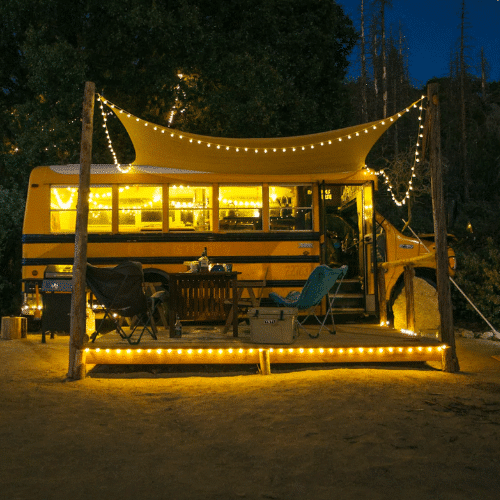
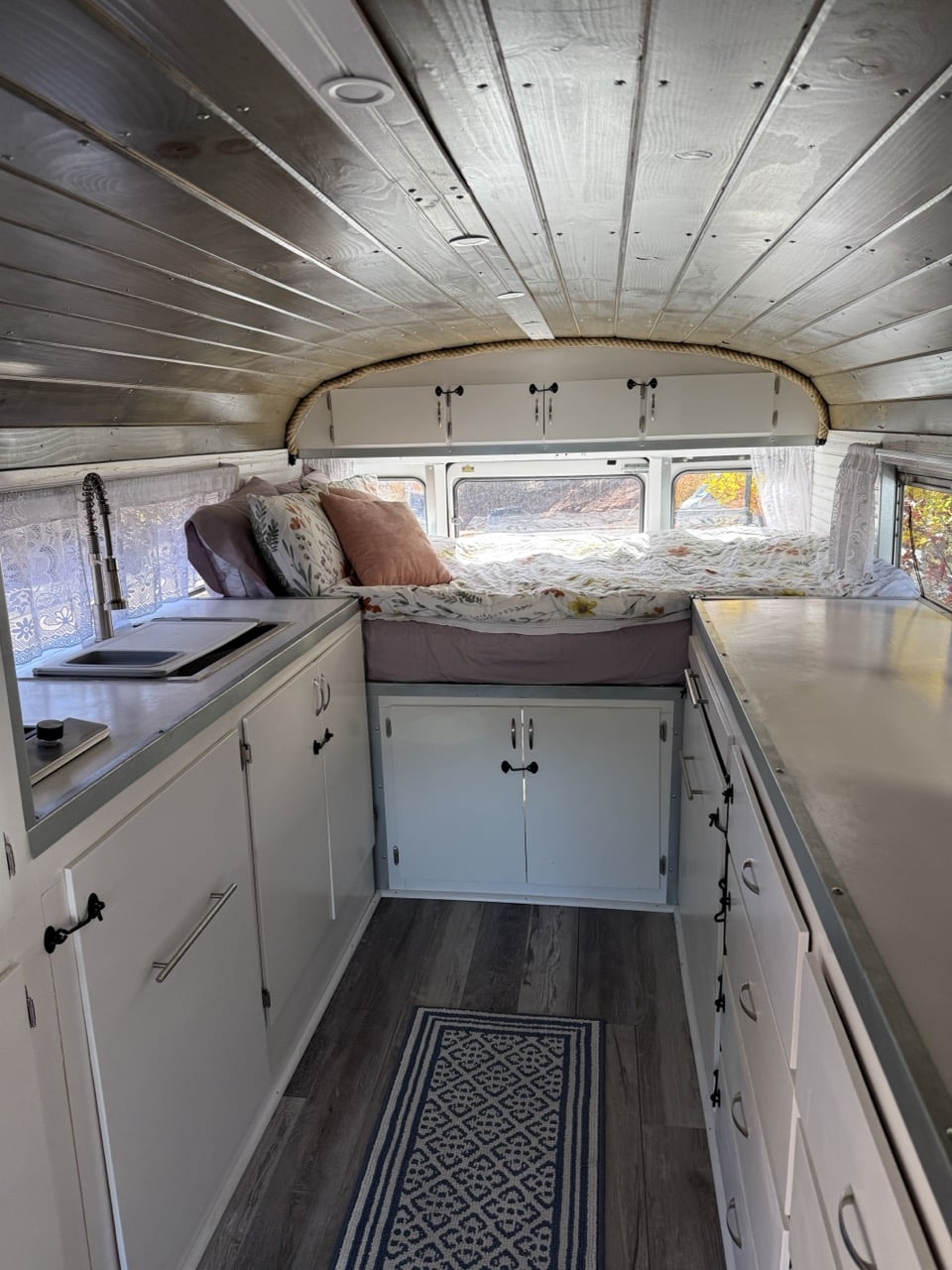
You’ve got maybe a 3×6 foot patch of open floor in most bus layouts. That’s enough for bodyweight exercises but you’re going to be creative about it. Here’s what I found people actually do inside the bus:
Yoga — this was the most common answer by far. A yoga mat fits in the aisle between the kitchen and the bed, and you can do a full practice in minimal space. Several people mentioned YouTube channels they follow for 20-30 minute routines that don’t require any equipment.
Resistance bands — these take up zero space and you can get a full-body workout with a good set. Anchor one to a door handle or window frame and you’ve got rows, presses, curls, everything. I found a couple who keeps a set of five bands in a drawer and uses them every morning. They said it replaced their gym membership and they don’t miss it.
Kettlebells — one or two kettlebells stored under the bed or in a cabinet. Swings, goblet squats, Turkish get-ups. A single 35-pound kettlebell can provide a workout that’ll wreck you in 20 minutes. The weight is a consideration for GVWR but one or two kettlebells isn’t going to break the bank weight-wise.
Pushups, planks, bodyweight squats, burpees — the basics work anywhere. The bus floor isn’t comfortable but a yoga mat fixes that.
Getting outside
Most bus lifers told me the real exercise happens outside the bus, not in it. Hiking is the obvious one — if you’re parked near trails, you’ve got a free gym with better scenery than any fitness center. Running works anywhere with a shoulder or sidewalk. Biking — a lot of buses carry bikes on a rear rack or inside a storage bay.
Swimming is a big one nobody mentions. Lakes, rivers, beaches, community pools. When you’re traveling, you have access to swimming opportunities that most people drive hours to reach.
One thing that came up that I thought was clever — a few bus lifers mentioned using the bus itself as exercise equipment. Step-ups on the entry stairs, tricep dips on the rear bumper, pullups from the luggage rack (if your build has one outside). Sounds ridiculous but I’ve seen photos and honestly it works.
The mental game of exercise on the road
Here’s where it gets real. The physical challenge is actually the easy part. The hard part is that your routine gets disrupted every time you move. You had a great running route at your last campground — now you’re in a new spot and you don’t know where to run. You were hiking every morning — now you’re parked in a city for a week and the nearest trail is 45 minutes away.
What I found from people who actually stay fit on the road is that they don’t rely on any single type of exercise. They have a default indoor routine (bands, bodyweight, yoga) that they can do regardless of where they’re parked, and then they take advantage of whatever the current location offers. Parked near a lake? Swim. Near trails? Hike. In a city? Walk. In the middle of nowhere? Run or do bands inside.
The ones who struggle are the people who were gym rats before bus life and can’t adapt. If the only exercise you know how to do requires a squat rack and a bench press, bus life is going to be a fitness challenge. Adapting your fitness to be flexible is part of the transition, same as adapting everything else.
“This is my dream but my biggest fear is how to cope with loneliness on the road alone. I have depression and I am worried driving for hours by myself would make my mental health worse.”
This comment from the market research data stopped me when I read it, because this person is asking something most people think but don’t say. The Instagram version of bus life is sunsets and freedom. The reality includes long stretches of solitude, limited social contact, and being far from your support network.
Mental health and isolation
Let me be direct about this because sugarcoating it helps nobody. Full-time bus life can be profoundly isolating, especially solo. You’re constantly in new places where you don’t know anyone. The friendships you make at campgrounds are often temporary — you connect with someone, one of you moves on, and the relationship fizzles. If you had a therapist, a support group, friends you saw regularly, a community — all of that gets disrupted. (See our guide on 11 Ways to Make Money While Living in a Bus for more on this.)
I found that the bus lifers who do well with mental health on the road tend to share a few things in common.
They maintain regular contact with people they care about, not just casual texting but actual phone calls, video chats, scheduled time to connect. One solo traveler told me she has a standing Wednesday night video call with three friends. It’s non-negotiable, same as filling up the water tank. That kind of intentional connection matters more than people realize.
They build community on the road. Bus meetups, Harvest Hosts, Thousand Trails, Escapees — these organizations and events create opportunities to connect with other nomads. Some people use apps like iOverlander or Campendium not just for finding spots but for finding other travelers in the same area.
They have telehealth therapy set up before they leave. BetterHelp, Talkspace, or just a regular therapist who does video sessions. If you have depression or anxiety, getting on the road without a mental health plan is like getting on the road without health insurance. You might be fine for a while. You might not.
When the road makes it worse
I need to be honest about something I found that’s not comfortable to talk about. For some people, bus life makes mental health worse, not better. The constant decision-making (where to park, where to eat, where to dump, what route to take), the lack of routine, the financial stress, the uncertainty — for someone whose depression is triggered by instability, this lifestyle can be actively harmful.
I read a blog post from a woman who sold everything, bought a bus, and lasted five months before she moved back into a house. She said the loneliness was crushing and the romanticized version of bus life she’d built in her head didn’t match reality. She doesn’t regret trying it, but she wished someone had told her it was okay to stop.
So here’s what I’ll say. If you have a mental health condition, don’t let it stop you from trying bus life if you want to. But go in with a plan. Have a therapist lined up. Have an exit strategy that doesn’t feel like failure. Check in with yourself honestly — not “am I having fun” but “am I healthy.” And if the answer is no, making a change isn’t quitting. It’s self-awareness.
Couples and family mental health
Isolation hits different when there are two or more of you. The challenge for couples isn’t loneliness — it’s the opposite. You’re in 200-300 square feet together 24/7. There’s nowhere to go when you need space. Arguments escalate faster because you can’t walk into another room and close the door.
Every couple I talked to about this had the same advice: you HAVE to be intentional about alone time. One person takes a walk while the other reads. One goes to a coffee shop while the other stays in the bus. Whatever it is, building solo time into the routine keeps the relationship healthy. The couples who skip this step end up in trouble, and I’ve heard more than a few stories about relationships that didn’t survive bus life.
For families with kids, the mental health load falls disproportionately on the parents. Kids are generally more adaptable than adults, but they need social contact with other kids. Homeschool co-ops, playground meetups, family campground activities — these aren’t optional extras, they’re mental health necessities for bus kids. Our article on bus life with kids goes deeper on this.
Cooking healthy in a tiny kitchen
You’d think eating healthy in a bus would be easier — no drive-throughs nearby, limited pantry space means less junk food, more cooking from scratch. And honestly there’s some truth to that. But there are real challenges too that I didn’t expect.
The equipment that matters
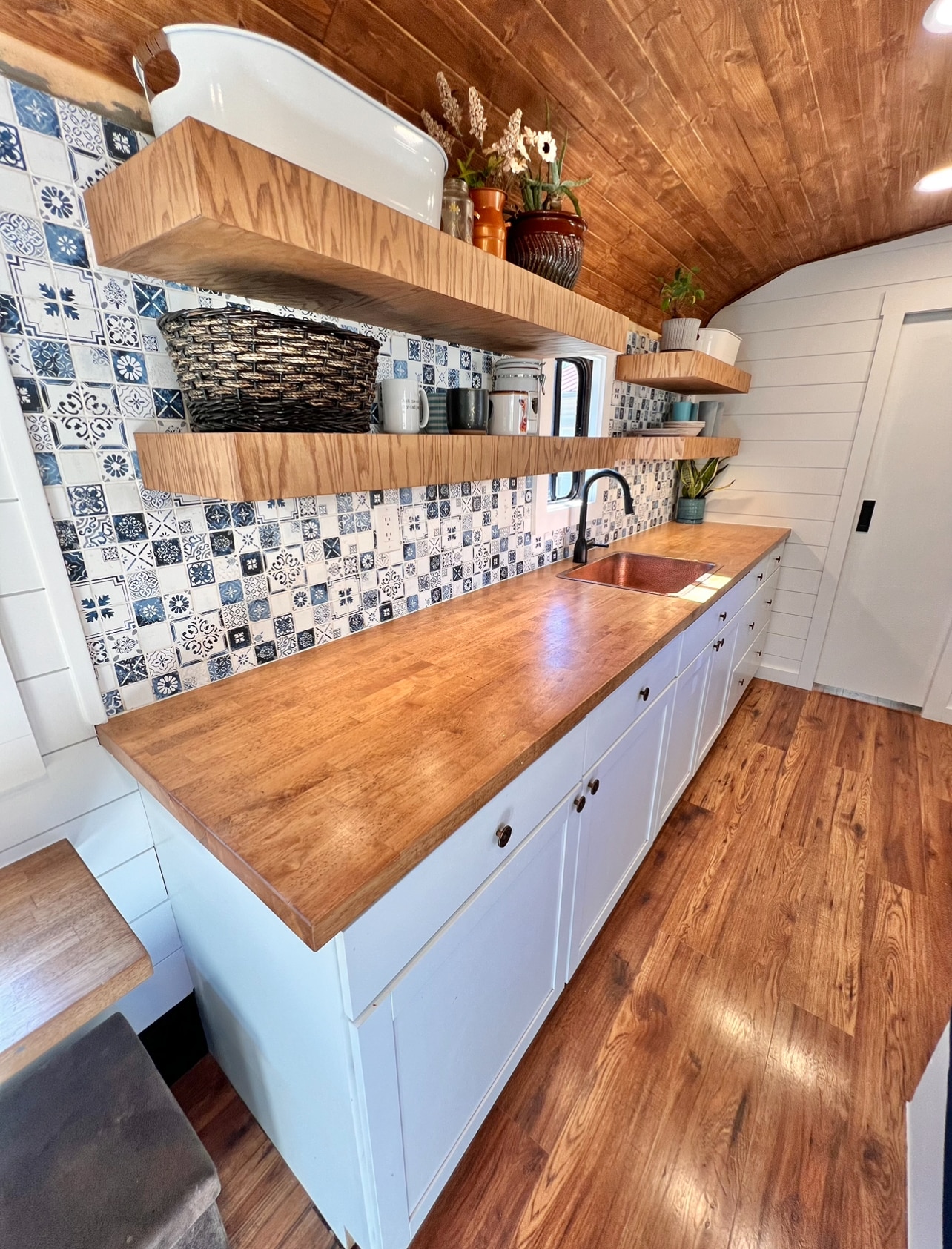
Most bus kitchens have a two-burner stove, maybe a small oven, a compact fridge, and limited counter space. That’s it. No dishwasher, no food processor taking up half the counter, no pantry closet full of specialty ingredients.
What I found from people who actually cook well in their bus is that a few key items make a huge difference. A good instant pot or pressure cooker does the work of multiple appliances — rice cooker, slow cooker, steamer, pressure cooker, all in one thing that stores in one spot. A cast iron skillet that lives on the stove permanently handles everything from eggs to stir fry to baking cornbread. A cutting board that fits over the sink creates extra counter space.
The instinct is to bring every kitchen gadget you own. Don’t. I talked to a woman who started with a blender, food processor, stand mixer, waffle maker, and an air fryer in her bus. Within three months she’d donated everything except the instant pot and the cast iron. You learn fast what you actually use.
Meal planning matters more than it did in a house
In a house, you can buy groceries for two weeks and figure it out. In a bus with a 3-4 cubic foot fridge and maybe a couple feet of pantry space, you’re shopping every 3-5 days and planning meals around what you can actually store.
The bus lifers who eat well are the ones who meal plan. Not elaborate Pinterest-board meal planning — just knowing what you’re cooking for the next three or four days and buying exactly what you need. Less waste, less fridge Tetris, less “I don’t know what to make so let’s just get fast food.”
Dried goods are your friend in a bus. Rice, beans, lentils, pasta, oats — these store forever in sealed containers, they’re cheap, and they form the base of hundreds of meals. Fresh produce is the thing you buy more frequently and in smaller quantities. Learning to shop like someone in a small European apartment rather than an American with a Costco card is the mental shift.
Food storage and safety
Without a giant fridge, food safety requires more attention. A bus sitting in direct sun can heat up the interior enough to affect anything in your pantry that’s temperature-sensitive. Chocolate, certain oils, anything with a low melting point — these need to be in the fridge or in the coolest part of the bus.
A lot of bus lifers use a 12V compressor fridge instead of a standard RV absorption fridge. They’re more efficient, they work at any angle (which matters in a vehicle), and they actually maintain consistent temperatures. The Dometic CFX and Alpicool brands came up over and over in conversations. These aren’t cheap — $300-$800 depending on size — but the temperature consistency is worth it for food safety.
A secondary cooler for overflow groceries helps too. Some people keep a small 12V cooler in the storage bay for drinks and overflow produce. This is especially useful in summer when the fridge is working harder and you don’t want to open it any more than necessary.
The one food safety thing that caught me off guard was altitude. If you’re boondocking at elevation — say 8,000 feet in Colorado — water boils at a lower temperature, which means cooking times change. Beans that cook in an hour at sea level might need an hour and a half at altitude. Pressure cookers partly solve this, but it’s worth knowing about, especially for food safety with meat.
Air quality inside a bus
This is one of those topics that almost nobody thinks about until they have a problem. You’re living in a metal tube with limited ventilation. The air quality inside your bus matters a lot more than the air quality inside a house, simply because the volume of air is so much smaller.
Ventilation basics
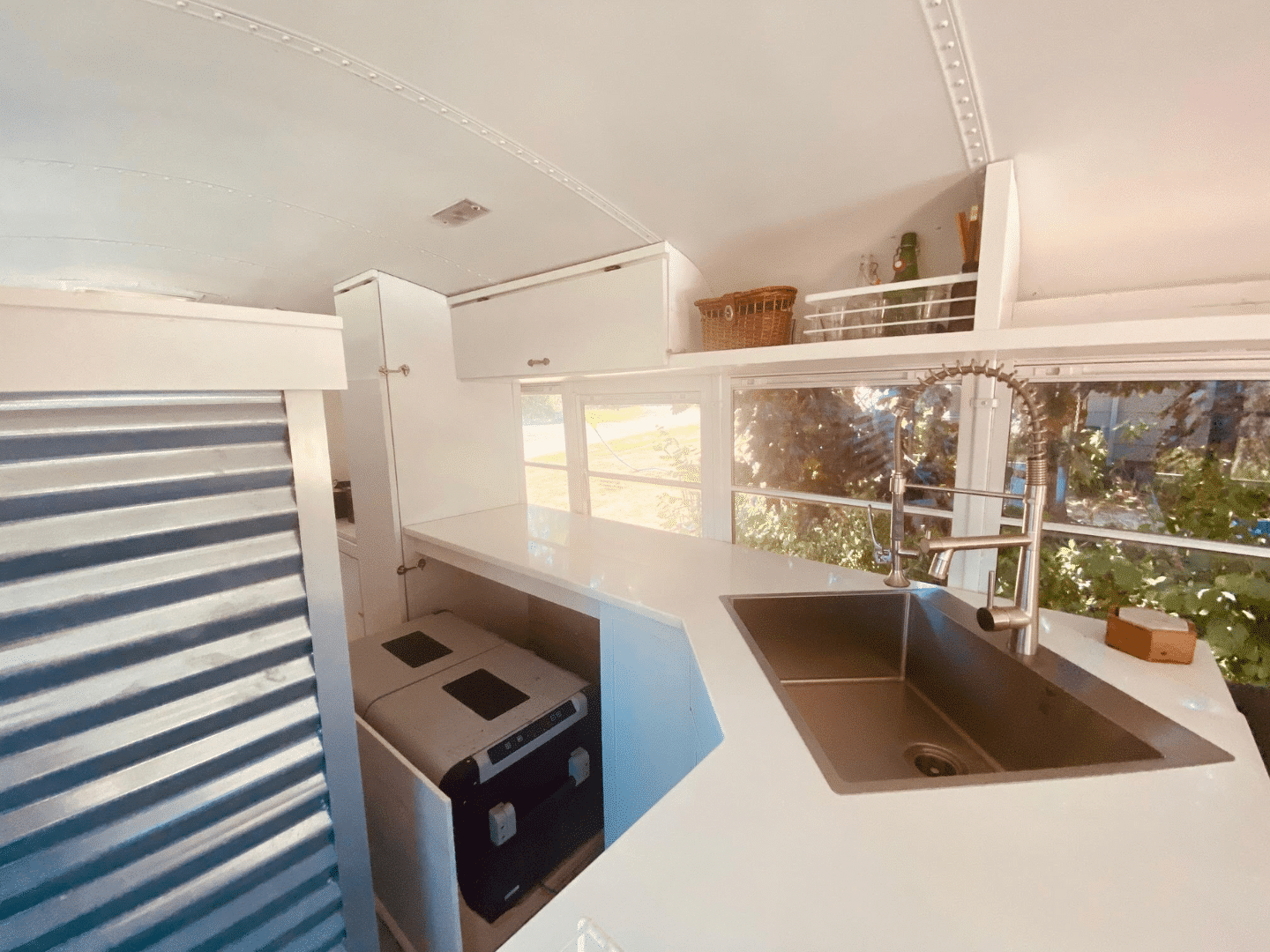
Your bus needs a way to exchange stale air for fresh air. A MaxxAir fan on the roof (or two) is the standard solution and it works well. These run off 12V, they pull hot and stale air out through the roof, and they draw fresh air in through windows or vents. I’ve seen them in probably 90% of conversions and there’s a reason for that.
The mistake I see people make is running the fan only when it’s hot. You need air circulation year-round, including winter. In cold weather, the temptation is to seal everything up to keep the heat in. But sealed-up spaces accumulate CO2, moisture, and cooking fumes. Cracking a window and running the fan on low for 15-20 minutes a few times a day makes a big difference, even when it’s cold.
If you cook with propane, ventilation isn’t optional — it’s safety. Propane combustion produces CO2 and water vapor. In a 250 square foot space, that builds up fast. Always run the vent fan while cooking with propane and for a few minutes after. Some builders install a range hood that vents directly outside. If you have one, use it.
Cooking fumes and VOCs
Speaking of cooking, grease and smoke particles in a small space are no joke for respiratory health. If you’re frying food regularly in your bus without proper ventilation, you’re breathing that in all day and all night. It builds up on surfaces too — I read about a couple who didn’t realize how bad it was until they cleaned their ceiling panels after six months and the cloth came away brown.
Beyond cooking, VOCs (volatile organic compounds) from building materials can be a concern, especially in newer builds. Adhesives, sealants, stains, paints — these off-gas for weeks or months after application. If you’re living in a bus you just finished building, keep the windows open and fans running as much as possible for the first few months. Some people install small HEPA air purifiers. There are compact ones designed for RVs and small spaces that actually work.
Mold prevention
This deserves its own section because mold in a bus can wreck your health and your build at the same time. It came up constantly in my research — people finding black mold behind wall panels, mold growing on mattresses, mold in window frames. In a small space, mold spores affect you faster and more intensely than in a house.
Why buses get moldy
The short answer is condensation. Metal sweats. When warm moist air from breathing, cooking, and showering hits the cold metal walls and ceiling of a bus, moisture condenses. That moisture gets trapped behind insulation, under mattresses, in corners where air doesn’t circulate. And mold grows.
This is why insulation matters so much — not just for temperature but for creating a thermal break between the warm interior air and the cold metal skin. Closed-cell spray foam is the gold standard because it adheres directly to the metal, eliminates air gaps, and acts as its own vapor barrier. Fiberglass batts stuffed between the ribs without a vapor barrier is asking for problems. I’ve seen pictures of builds where the fiberglass was pulled out after one winter and it was soaking wet and spotted with mold. The builder didn’t use a vapor barrier and the moisture had nowhere to go.
Our guide on insulating a school bus covers the materials and techniques in depth. For this health guide, just know that cutting corners on insulation is cutting corners on mold prevention, which is cutting corners on your health.
Mattresses and sleeping areas
This is the one that gets people. A mattress on a solid platform in a bus traps moisture between the mattress bottom and the platform. You sweat at night — everyone does — and that moisture wicks downward. Without airflow underneath, it just sits there. After a few months, you flip the mattress and find mold growing on the bottom.
The fix is air circulation under the mattress. Slatted bed frames instead of solid platforms. Or, if your platform is solid, put something like a Hypervent mattress pad (basically a mesh spacer) between the mattress and the platform. It creates an air gap that lets moisture escape. Several people I talked to learned this the hard way — found mold, replaced the mattress, then added slats or mesh to prevent it from happening again.
Bathroom and wet areas
Anywhere water regularly exists in your bus is a mold candidate. The shower area especially. After every shower, you need to ventilate. Wipe down surfaces, run the fan, open a window if weather allows. Some people use a small squeegee on shower walls. It takes 60 seconds and it prevents the moisture from sitting there for hours.
Under the sink is another spot. Check it regularly. Any slow drip, any pipe fitting that’s slightly loose, any condensation on cold water pipes — these create exactly the conditions mold loves. Dark, moist, warm, undisturbed.
First aid kit essentials for bus life
I asked around about what people carry and was surprised how much variation there was. Some people had a little $10 kit from Walmart. Others had what amounted to a field hospital. Here’s what I landed on as the right balance after talking to a bunch of full-timers, some of whom had actual medical training.
The basics: adhesive bandages (various sizes), gauze pads, medical tape, butterfly closures (for cuts that are too big for a bandaid but not quite ER-worthy), an ACE wrap, tweezers, scissors, antiseptic wipes, antibiotic ointment (Neosporin or generic), burn cream, hydrocortisone cream for bug bites and rashes.
Medications: ibuprofen, acetaminophen, diphenhydramine (Benadryl — for allergic reactions and sleep), antacids, anti-diarrheal, electrolyte packets. If you have kids, pediatric versions of everything.
The stuff most people forget: a CPR mask, an epinephrine auto-injector if anyone in your family has severe allergies (talk to your doctor about a prescription just in case), a digital thermometer, a blood pressure cuff (they’re $25 and worth every penny), a pulse oximeter ($15 on Amazon — these became popular during COVID and they’re actually useful for monitoring respiratory illness), and an emergency dental kit (temporary filling material, clove oil for tooth pain). That last one sounds weird until you’re in the middle of nowhere on a Saturday night with a lost filling. Then it’s the most important thing you own.
Trauma supplies for serious situations: a tourniquet (CAT tourniquet, learn how to use it), Israeli bandage or pressure dressing, chest seals (if you’re in truly remote areas), and a SAM splint. You probably won’t need any of this. But if you’re boondocking miles from the nearest paved road and someone has an accident, the 20-30 minutes it takes for help to arrive is a long time without proper first aid supplies.
One more — keep a paper copy of everyone’s medical information. Insurance cards, allergies, medications, blood types, emergency contacts, doctor’s phone numbers. Laminate it and keep it where someone could find it if you’re incapacitated. Phones die, get lost, get broken. Paper doesn’t need a battery.
Weather safety beyond storms
I covered storms in detail in the storm safety article, but there are weather-related health considerations that go beyond “will my bus blow over.”
Heat stroke and heat exhaustion
These are genuine risks, not just discomfort. Heat exhaustion symptoms include heavy sweating, weakness, cold or clammy skin, nausea, and dizziness. Heat stroke is more severe — high body temperature, red and dry skin, rapid pulse, confusion. Heat stroke is a medical emergency.
In a bus without adequate cooling, these can sneak up on you. The solution is partly about your bus setup (shade, fans, AC, reflective covers) and partly about behavior. Stay hydrated — more than you think you need. If you’re feeling off, get out of the bus and into shade or an air-conditioned building. Don’t wait until it’s bad. Walmart, libraries, coffee shops — use other people’s AC when yours isn’t cutting it.
Kids and elderly people are more vulnerable to heat-related illness. If you’re traveling with either, your heat safety game needs to be more aggressive. The guy I mentioned earlier who got daily headaches in Arizona? He was a healthy 30-something. Imagine how a toddler or a 70-year-old would handle that same situation.
Hypothermia and frostbite
On the other end, cold kills too. Hypothermia can set in at temperatures most people don’t consider dangerous — 50 degrees in a wet, windy bus with inadequate heating can do it. The key is dry warmth. Wet clothing, a damp sleeping bag, a bus with condensation dripping off the walls — these situations escalate faster than you’d expect.
Layer your clothing. Wool or synthetic base layers, not cotton. Cotton holds moisture and loses its insulating properties when wet — there’s a saying in outdoor recreation, “cotton kills,” and it’s not hyperbole. Keep a set of dry base layers in a sealed bag for emergencies.
If your heating fails in cold weather and you can’t drive somewhere warm, your emergency plan should involve: getting into a sleeping bag rated for the temperature, wearing dry layers, and if possible getting to an enclosed public building. A Walmart parking lot becomes a lot more appealing when it means you can walk inside and warm up.
So where does all of this leave you?
After pulling all of this together, I think the biggest takeaway is pretty simple — health on the road requires more intentionality than health in a house, but it’s completely manageable if you plan for it. The tools exist. ACA plans, telehealth, mail-order pharmacies, GoodRx, community health centers, resistance bands in a drawer, an instant pot on the counter, a MaxxAir fan on the roof, a CO detector on the wall. None of this is complicated individually.
What makes it hard is that nobody packages it all together for you. In a house, you’ve got a doctor down the street, a gym you drive to, a kitchen with full-size everything, and HVAC that runs without thinking about it. In a bus, you’re the one managing all of it. Healthcare, fitness, nutrition, air quality, weather safety, mental health — it’s all on you.
I found that the bus lifers who thrive health-wise are the ones who took it seriously from the start. They didn’t treat health as an afterthought to the build. They budgeted for insurance, packed a real first aid kit, insulated properly to prevent mold, installed good ventilation, and had a mental health plan before they needed one. The ones who struggled were the ones who figured they’d just deal with it when something came up.
So deal with it now. Before you hit the road. Before you need it. And if you’re already out there and some of this is new information, it’s not too late to get your setup right. Our healthcare article goes deeper on insurance options, and the storm safety article covers weather in more detail. Between those and this guide, you’ve got a solid foundation for staying healthy out there.