
You’re deep in your floor plan sketches and trying to figure out if there’s any way to squeeze a washer and dryer into a school bus conversion. It sounds crazy until you realize people are actually doing it.
Yes, you can install a washer and dryer in a converted school bus. Most people who go this route use a ventless washer-dryer combo unit, which runs on a standard 120V outlet and doesn’t need an external dryer vent. The tricky part isn’t the space — most combo units are about 24 inches wide and can fit in a closet-sized area. The tricky part is the power draw and the water usage. You’ll need a robust electrical system, ideally shore power or a very large solar and battery setup, plus enough fresh water to run a load without draining your tank dry. It’s doable, but it takes real planning during the build phase, not after.
“With 4 kids where is the washer/dryer??????”
This question comes up constantly, and I get it. When you’ve got a family, laundry isn’t some once-every-two-weeks thing. It’s relentless. I was looking at a family’s build tour on YouTube a while back, and someone in the comments posted almost exactly this — like six question marks and all — because they genuinely could not figure out where you’d put a laundry machine in a bus with four kids, beds, a kitchen, and a bathroom already fighting for space. (See our guide on How Do You Do Laundry Living in a Bus? for more on this.)
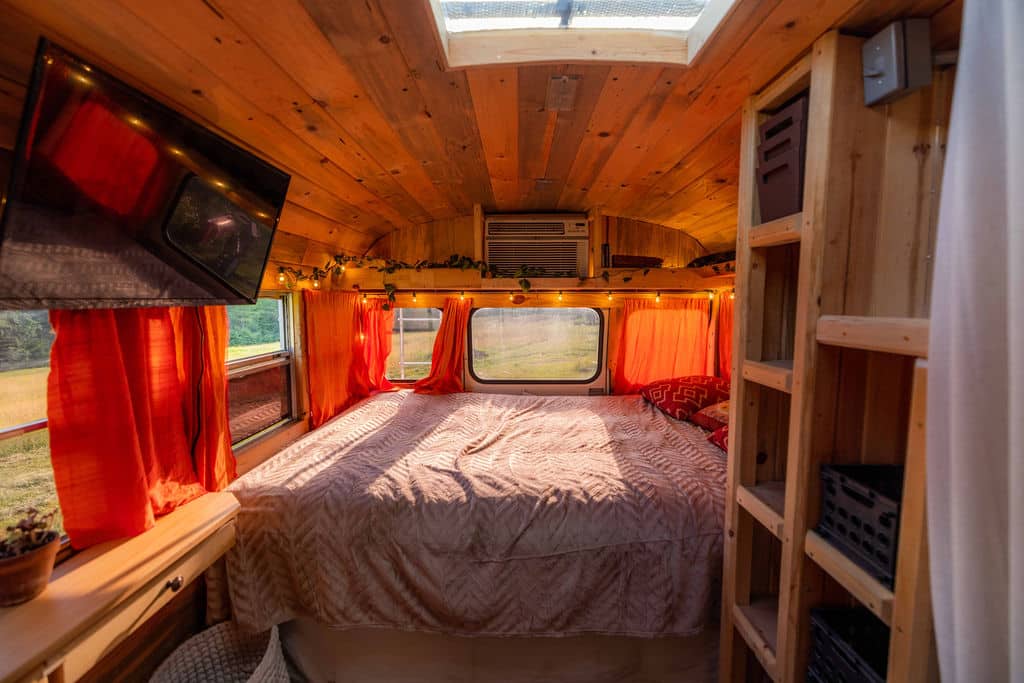
Here’s what I found when I started digging into how families actually handle this. Most of them don’t install a washer-dryer at all. They hit laundromats. But the ones who do install something, they plan for it from day one. I’m talking about building it into the floor plan before a single wall goes up. The most common spot is a small closet between the bathroom and bedroom, because that’s where your plumbing lines already run. (See our guide on Skoolie Plumbing and Water Systems: The Complete Guide for more on this.)
One family I came across had a 40-foot bus and four kids under ten. They dedicated a space that was basically 26 inches wide and about 30 inches deep, tucked between the bathroom wall and a storage cabinet. They used a compact combo unit and ran it maybe three or four times a week on shore power at their semi-permanent RV lot. They said laundry was the single biggest reason they chose to stay at a site with hookups rather than boondock full-time. And honestly, that trade-off made sense for them. If you’ve got a big family, the washer-dryer kind of dictates your parking lifestyle too. (See our guide on What Kind of Toilet Should You Use in a Skoolie? for more on this.)
For smaller families or couples, the math gets easier. Less laundry, less water, more flexibility on where to put the unit. (See our guide on How Do You Get Water in a Converted Bus? for more on this.)
“Is that one of those washer/dryer combos? I wonder how well they work”
So this was something I spent way too much time researching, because the reviews on combo units are all over the place. I’ve read everything from “life-changing” to “glorified rinse cycle” and everything in between.
The combo units most people install in skoolies are ventless condensation dryers paired with a front-loading washer, all in one machine. Brands like Equator, Splendide, and sometimes LG or Bosch make models that fit in tight spaces. They’re usually about 24 inches wide, around 33 inches tall, and weigh somewhere between 130 and 170 pounds depending on the model.
The washing side works fine. No complaints from anyone I talked to or read about. It’s the drying cycle that gets mixed reviews. Ventless dryers use a condensation process instead of blowing hot air through a vent to the outside. What that means in practice is the drying takes a long time. I’m talking two to three hours for a single load in some cases. And the clothes don’t always come out fully dry. A lot of people I found in the bus community said they run the dry cycle once and then hang stuff up to finish drying, either on a line inside the bus or outside if weather allows.
Now, here’s the thing that I think matters more than the drying performance. These units use between 10 and 20 gallons of water per load. If you’re on shore water at an RV park, that’s no big deal. If you’re running off your 50-gallon fresh water tank out in the middle of nowhere, one load of laundry just ate a significant chunk of your supply. So the real question isn’t “does it work” — it’s “does your setup support it.” (See our guide on What Size Water Tank Do You Need for a Skoolie? for more on this.)
The power draw matters too. Most combo units pull between 1,200 and 1,500 watts during the wash cycle and can spike higher during heat cycles. If you’re plugged into 30-amp shore power you’re fine, but if you’re running off solar and batteries, you need to plan your laundry around your energy budget. I talked to a guy who had a 600-watt solar array with 400 amp hours of lithium batteries, and he said he could do one load on a sunny day without stressing his system, but two loads in a row was pushing it.
“How will you get the washer and dryer in and out of the bus if ever you need to repair or replace it?”
I’ll be honest, when I first saw this question I thought it was kind of obvious. Like, you just carry it out, right? But then I started looking at finished bus builds and realized how tight some of these installations are. People build walls and cabinets right up against the unit. Some builds have the washer-dryer in a closet with a door opening that’s barely wider than the machine itself.
The smart builders leave themselves an exit strategy. That means the closet door or opening is wide enough to slide the unit out, or there’s a removable panel somewhere. A few builders I saw actually mounted their combo unit on a small rolling platform — like a washer pan with casters — so they could pull it out without having to dead-lift 150 pounds in a 6-foot-wide bus aisle.
But some people don’t plan for this at all and end up in a bad spot. There was a post in a skoolie Facebook group where somebody’s combo unit died two years into their build, and they ended up having to partially disassemble a closet wall to get it out. Took them an entire weekend. The replacement went in easier because they learned the first time and redesigned the opening.
My takeaway on this is pretty simple. When you’re designing your layout, think about the day that machine breaks. Because it will break eventually, everything does. Leave at least a couple extra inches on the sides, make sure the path from the machine to your bus door is clear enough to slide it through, and maybe don’t permanently seal it behind cabinetry. A few people use stacking washer-dryer kits in their builds instead of combos, and those are even worse to remove because you’ve got two separate machines jammed in vertically. If serviceability matters to you, the single combo unit is the easier path.
“No washing machine?”
This was the reaction I kept seeing under build tour videos where someone clearly had a high-end, well-thought-out build but no washer. And honestly, it makes sense that people ask. If you’re spending $30,000 or $40,000 on a full build-out with granite counters and a diesel heater and custom cabinetry, the lack of a washing machine feels like a weird gap.
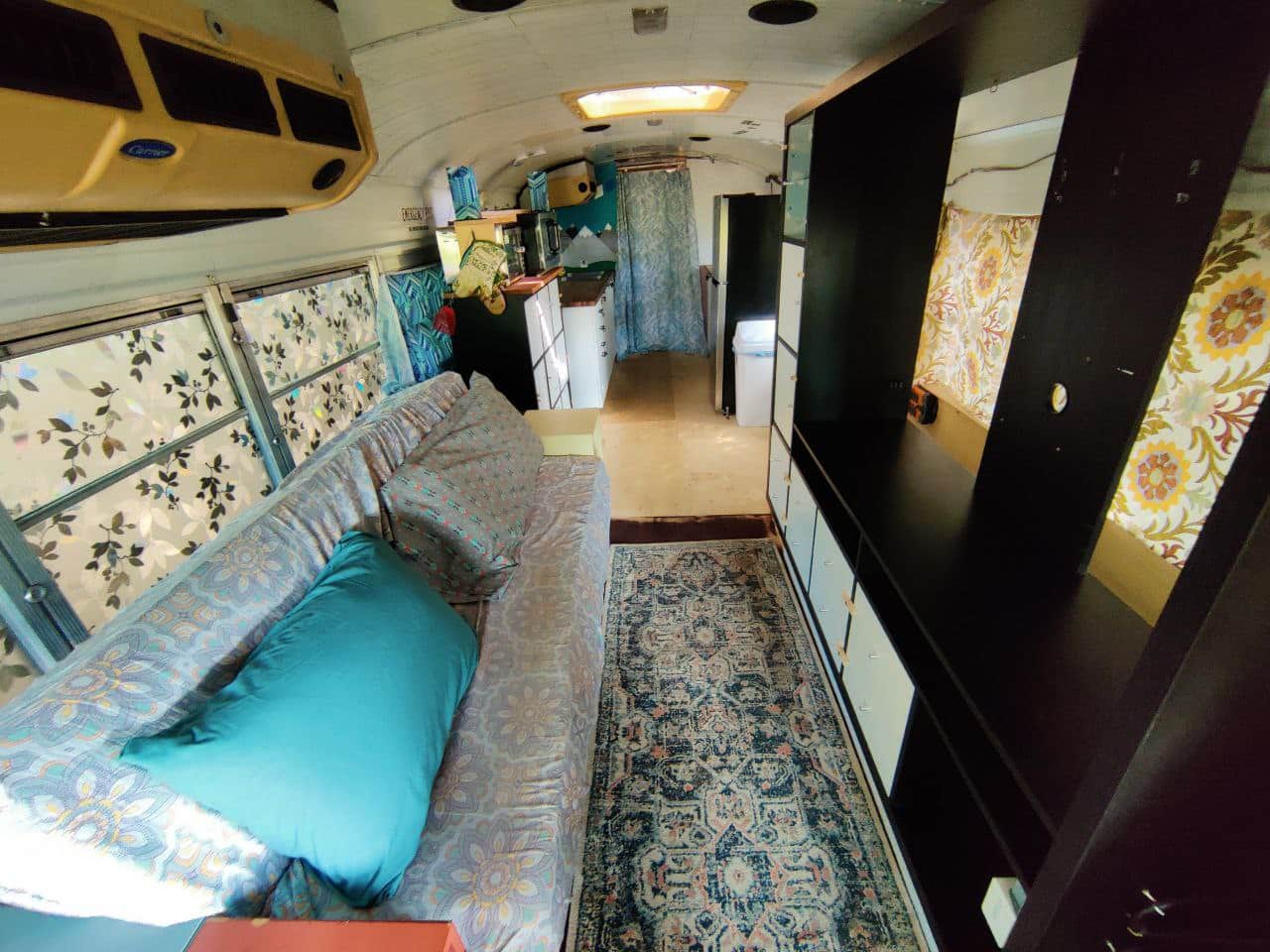
But here’s the thing most people outside the bus community don’t realize. Choosing not to install a washer is usually a deliberate decision, not an oversight. The builder weighed the trade-offs and decided the space, the water, and the power were better used elsewhere.
I read about one couple who spent weeks going back and forth on whether to include a washer in their 35-foot bus build. They eventually ditched the idea and used that space for a pantry instead. Their reasoning was that they moved every few days and were almost always within a short drive of a laundromat, but they were never close to a grocery store for long. So storage for food won out over a machine they’d use once a week. That kind of practical thinking is pretty common in the bus world once you’ve been at it for a while.
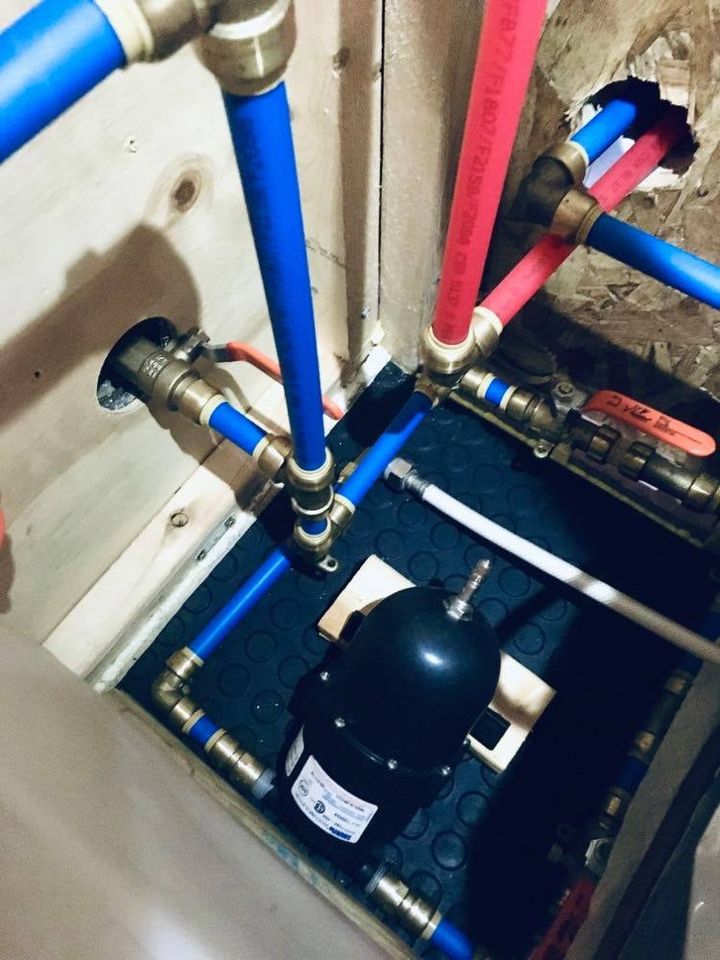
The other thing that kills the washer idea for a lot of builds is the plumbing complexity. You need a hot water line, a cold water line, and a drain line going to gray water. If your washer is anywhere near your bathroom, the plumbing is already there and it’s not a big deal. But if your layout puts the washer on the opposite end of the bus from your bathroom, now you’re running extra lines the full length of the vehicle, adding fittings, adding potential leak points. For some floor plans it just doesn’t make sense.
And then there’s weight. A combo unit weighs around 150 pounds dry. Add water during a cycle and you’re looking at close to 200 pounds. For a bus that’s already flirting with its GVWR limit after a full build, that’s not nothing. I’ve seen builders cut features for less.
So when you see a beautiful build without a washer, don’t assume they forgot. They probably thought about it more than you’d expect and decided it wasn’t worth it for their situation. We’ve got a whole piece on how people handle laundry in a bus without a machine if you want to see the alternatives, and it’s honestly less of a hassle than you’d think.
After digging into all of this, here’s where I landed. You can absolutely put a washer and dryer in a school bus, and some people are really happy they did. But it’s not a “just buy one and plug it in” situation. You need the floor plan space, which is usually a closet-sized area near your existing plumbing. You need the electrical capacity, which means either shore power access or a seriously beefy solar and battery setup. You need the water supply to support 10-20 gallons per load without leaving yourself dry. And you need to think about the day it breaks and how you’re going to get it out. If all of that lines up with your build and your lifestyle, go for it. If you’re on the fence and you know you’ll be moving a lot, the laundromat route is honestly fine and frees up space for something else. There’s no wrong answer here, it just depends on how you’re going to live in the thing.
0yjuqe