
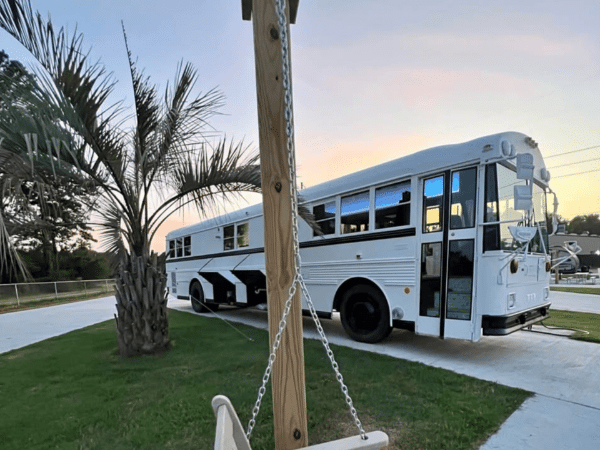
When I first started looking into bus conversions, I figured school buses were the only real option. That’s what everyone talks about in the skoolie community. But the more I dug into it, the more I kept running across people converting city transit buses — the big ones you see rolling through downtown picking up commuters — and some of those builds were genuinely impressive. Wider interiors, smoother rides, a totally different vibe. So I decided to go deep on this and figure out everything you’d need to know before buying a transit bus for a conversion. (See our guide on Church Bus Conversions: The Complete Guide for more on this.)
Here’s the full picture: transit buses give you a wider interior (8.5 feet vs 7.5 for a school bus), air suspension for a smoother highway ride, low floors that are easier to build on, and massive under-floor storage compartments. But they also come with higher purchase prices, proprietary parts that are harder to find and more expensive to replace, curved interior walls that complicate builds, and a much smaller community of people who’ve done conversions to learn from. This guide covers every angle — the models worth looking at, what they cost, how they compare to school buses, the mechanical stuff you need to watch out for, and where to actually find one. If you’re seriously considering a transit bus conversion, this is everything I wish I’d known before I started researching.
What Is a Transit Bus?
A transit bus is what most people picture when they think of a city bus. It’s the vehicle that runs fixed routes through urban areas, picks up commuters at designated stops, and racks up hundreds of thousands of miles over its service life. They’re designed from the ground up for one job: moving a high volume of passengers through city streets, all day, every day.
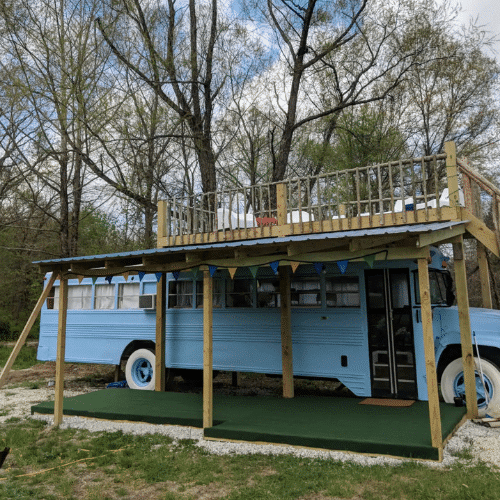
What makes them different from every other type of bus is the low-floor design. Most modern transit buses have no steps at the entrance. You walk right on at curb level, which is great for wheelchair accessibility and fast loading. That low floor also means you don’t have to deal with the high step-up you get with school buses, and it changes the whole interior layout in a conversion.
Transit buses are typically 35 to 40 feet long and about 102 inches wide (8.5 feet). For comparison, a school bus is usually around 90 inches wide (7.5 feet). That extra foot of interior width doesn’t sound like much on paper, but when you’re building a kitchen or trying to fit a queen bed sideways across the bus, it’s a big deal. I remember standing inside a retired Gillig transit bus at a salvage yard and being surprised at how spacious it felt compared to the school buses I’d been looking at. The ceiling was higher too — about 6’5″ in the main passenger area.
The big manufacturers in the transit bus world are Gillig, New Flyer, NABI (now part of New Flyer), and Orion. You’ll also see some older models from Flxible (yes, that’s how they spelled it) and GM/TMC. Each manufacturer has its quirks, and which one you end up with matters a lot more for a conversion than most people realize. I’ll break those down later in this guide.
One thing that caught me off guard when I first started looking into this is the sheer mileage these buses carry. A transit bus that’s being retired might have 400,000 to 600,000 miles on it. That sounds terrifying until you understand the context. Transit agencies run aggressive maintenance programs. These buses get inspected constantly, fluids get changed on schedule, and anything that breaks gets fixed immediately because downtime costs the agency money. So a transit bus with 500,000 miles might actually be in better mechanical shape than a school bus with 180,000 miles that sat in a field for two years after retirement.
Transit Bus vs School Bus: Key Differences
I spent a lot of time going back and forth on this comparison, and the differences run deeper than most people think. It’s not just about size and shape. The entire philosophy behind these two vehicles is different, and that affects everything about a conversion.
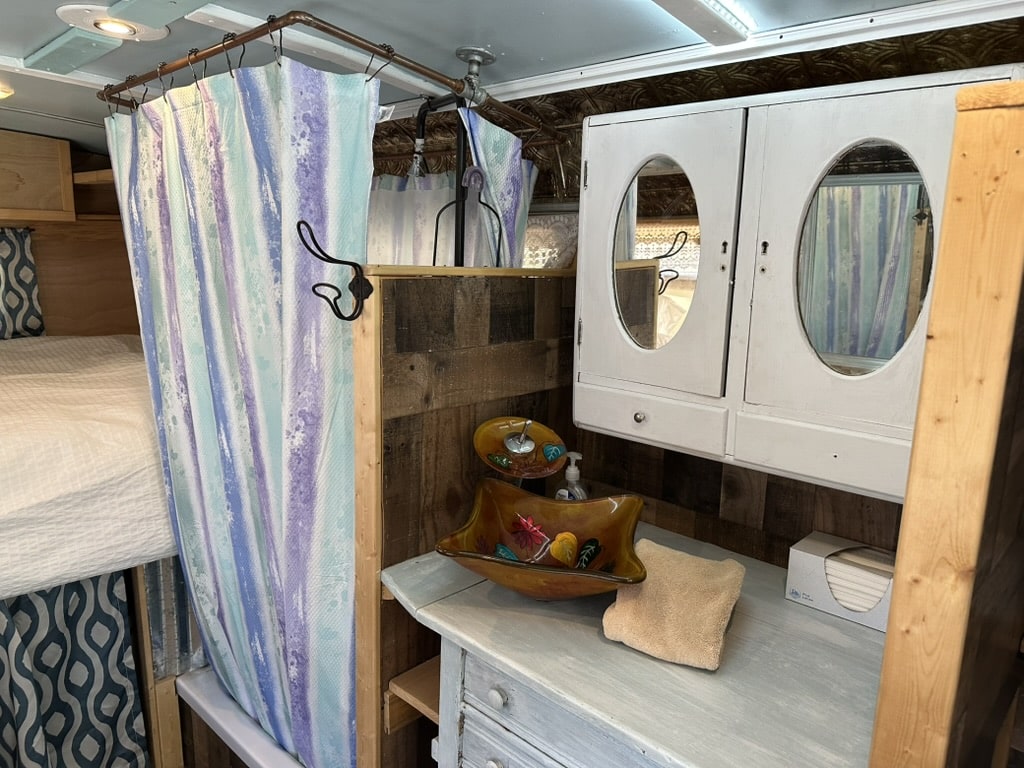
The construction is the first major split. School buses are built to FMVSS standards that include rollover protection, body joint strength testing, and specific emergency exit requirements. What that means in practice is thick steel panels and a frame that’s overbuilt by commercial vehicle standards. I talked to a welder who told me cutting into a school bus body was noticeably harder than working on transit bus panels. Transit buses, on the other hand, use aluminum or composite body panels over a steel frame. Lighter, but not as rugged. The joints where panels meet the frame are where corrosion tends to show up first on transit buses.
Interior width is the advantage everyone talks about. That extra foot makes a real difference for floor plans. In a school bus, a queen bed placed sideways basically touches both walls and blocks the aisle. In a transit bus, you can fit a queen bed sideways and still have a narrow walkway alongside it. That opens up layout options that just aren’t possible in a school bus. (See our guide on What Is the Difference Between a School Bus and a Transit Bus? for more on this.)
But here’s where school buses fight back: the walls are flat. Transit bus walls curve inward as they go up, which means your countertops, cabinets, and any furniture that sits against the wall has to account for that curve. I watched a build video where a guy converting a New Flyer spent two solid days just framing out a kitchen counter because of the curved wall situation. In a school bus, that’s an afternoon project.
The suspension systems are completely different. School buses run leaf springs, which gives that bouncy, rattly ride everyone associates with their childhood. Transit buses run air suspension, and the difference is night and day. Highway driving in a transit bus is genuinely smoother. Less road vibration, less noise, less fatigue on long drives. If you’re planning to put on serious miles, this matters more than you’d expect.
Parts availability is where the comparison gets painful for transit bus owners. School bus parts are everywhere. DT466, Cummins 5.9, Cat 3126 — any diesel shop in the country has worked on these engines. Transit bus parts often come from proprietary systems, and some can only be sourced through the manufacturer or specialty dealers. I priced out a replacement AC compressor once for a Gillig versus a Blue Bird school bus. The Gillig part was nearly triple the cost. That pattern repeats across most major components. (See our guide on Blue Bird Buses: The Complete Conversion Guide for more on this.)
Purchase price favors school buses by a wide margin. Running school buses go for $2,000 to $8,000 at government auctions pretty regularly. A comparable transit bus in running condition is more like $5,000 to $15,000, and they’re harder to find because transit agencies don’t sell off retired buses the same way school districts do. A lot of transit buses go straight to scrap or get exported overseas.
“im really thinking about buying a bus, my question is would you go school, or city bus?”
This is the question that matters most, and I’ve thought about it a lot.
For a first build, I’d go school bus. Every time. The buy-in cost is lower, the parts are cheaper and easier to find, every mechanic has seen one before, and there’s a massive community of builders who’ve documented every possible conversion challenge on YouTube and forums. You’re not figuring things out alone.
But I don’t want to write off transit buses entirely, because they genuinely do have advantages that matter for certain people. If you’re tall and ceiling height is a dealbreaker, transit buses typically give you more headroom without a roof raise. If you’re a couple who wants a queen bed sideways with a walkway, the extra width makes that possible. If you’re planning to live in the bus full-time and put on highway miles, the air suspension ride quality is significantly better. (See our guide on Is a Short Bus or Full-Size Bus Better for a Conversion? for more on this.)
The real question is your comfort level with mechanical work and parts sourcing. School bus converters can walk into any auto parts store and find what they need. Transit bus converters sometimes spend weeks tracking down a specific relay or sensor from a manufacturer’s parts catalog. If that sounds frustrating rather than fun, go school bus.
I also think the community aspect matters more than people realize early on. When you hit a problem at 2 AM and you’re searching forums for help, there are thousands of skoolie builders who’ve been through exactly what you’re dealing with. The transit bus conversion community is growing, but it’s still much smaller. You might be the first person to document a particular fix for your specific model.
“What differences are between a normal bus and a school bus?”
I found that when people ask this question, they usually mean “what’s the difference between a transit bus and a school bus” but sometimes they’re thinking of coaches too. Let me cover the transit bus comparison here since that’s what this guide is about — I’ve got a separate article on types of buses you can convert that covers the full range. (See our guide on Can You Convert a Double Decker Bus Into a Home? for more on this.)
The biggest visual difference is obvious. School buses are yellow with a flat nose or dog-nose front end. Transit buses are whatever color the transit agency painted them, with a more rounded, aerodynamic shape and usually a digital route sign on the front.
But the functional differences are what matter for conversions. School buses have higher floors with steps at the entrance. Transit buses have low floors at the front that step up to a higher platform over the rear axle. That change in floor height is something you have to plan around in a conversion. Some builders use the raised rear section as a bedroom platform, which actually works really well since you get built-in under-bed storage without having to build a platform.
School buses have emergency roof hatches and swing-out windows. Transit buses have larger fixed windows and fewer emergency exits. The window situation is actually nice for conversions — transit bus windows tend to be bigger and let in more natural light, which makes the interior feel more open.
One difference I didn’t expect is the electrical system. School buses run a pretty basic 12V system. Transit buses have complex electrical systems with multiple circuits for lighting, HVAC, fare collection equipment, destination signs, and accessibility features. Stripping out the old transit agency electronics and rewiring for residential use is a bigger job than most people anticipate. I talked to a builder who spent three weeks just doing electrical teardown and rewiring on his Gillig conversion.
Common Transit Bus Models for Conversion
Not all transit buses are created equal, and the model you pick makes a massive difference in how your conversion goes. I spent a lot of time researching which models people actually convert and which ones to avoid, and there are some clear patterns.
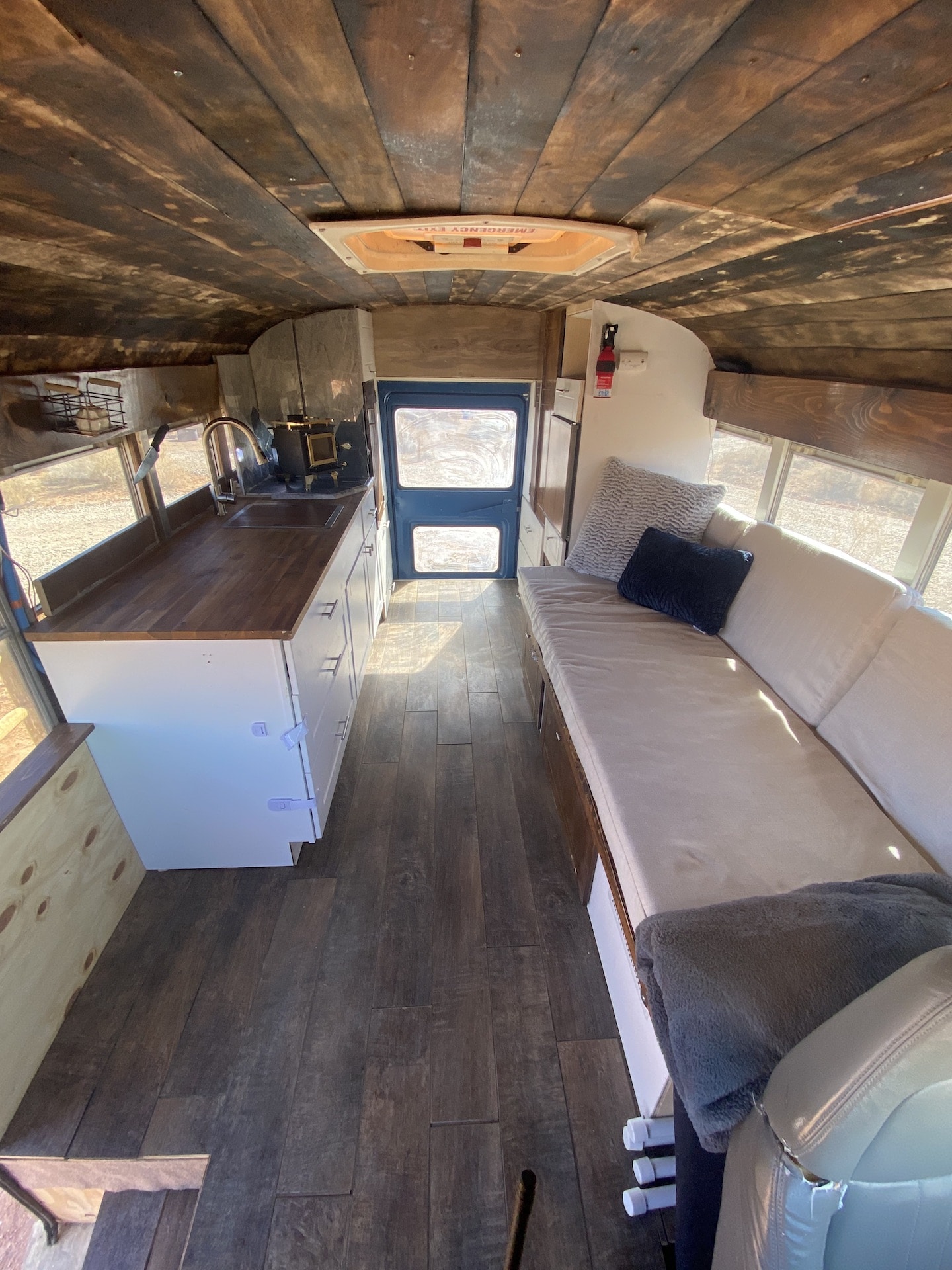
Gillig Phantom and Low Floor — Gillig is probably the most popular transit bus brand for conversions, and for good reason. They’re built in Hayward, California, and they use Cummins engines (usually the ISL or ISB) which are widely serviced. The Gillig Phantom is the older high-floor model, and the Low Floor is the newer generation. Parts are easier to source than some other transit bus brands because Gillig is still in business and actively supports their older models. The body construction is solid aluminum, and the frames hold up well. If I had to recommend one transit bus brand for a first-time transit bus converter, it’d be Gillig.
New Flyer D40LF and D60LF — New Flyer is a Canadian manufacturer that’s become one of the biggest names in North American transit. The D40LF is their 40-foot low-floor model, and the D60LF is the articulated (bendy bus) version. I wouldn’t recommend the articulated version for a conversion — the pivot joint is a mechanical nightmare — but the D40LF is a solid platform. They usually come with Cummins or Detroit Diesel engines. The one thing to watch is that New Flyer uses a lot of proprietary components in their HVAC and electrical systems, which can make sourcing replacements tricky.
NABI (North American Bus Industries) — NABI buses were built in Anniston, Alabama, and the company was eventually absorbed by New Flyer. The NABI 40-LFW is one you’ll see come up in transit bus conversion discussions. They’re built with a composite body that’s lighter than aluminum, which helps with fuel economy but can be harder to modify. The good news is the drivetrains are typically Cummins powered. The bad news is that since NABI no longer exists as a standalone company, parts specific to the body and proprietary systems are getting harder to find every year.
Orion VII — Orion buses were built in Mississauga, Ontario, and the company shut down in 2013. The Orion VII was their flagship transit bus, and you’ll still find them coming out of service at transit agencies. They’re decent buses mechanically, but the “company is gone” problem is real. Body panels, specific brackets, electronic modules — anything proprietary to Orion is getting scarce. I’d only go this route if the price is really right and you’re comfortable fabricating replacement parts.
Older Models (Flxible, GM/TMC RTS) — You’ll occasionally find these gems at salvage yards or from collectors. The GM/TMC RTS (Rapid Transit Series) is iconic looking and has a small but dedicated following. The problem is age. Most of these are from the 1980s and early 1990s, and finding parts for 30-40 year old proprietary transit systems is a real challenge. Cool projects, but not practical for most people.
The pattern here is pretty clear. Stick with manufacturers that are still in business (Gillig, New Flyer) and look for models with Cummins engines. That combination gives you the best shot at finding parts and mechanics who can work on the bus.
Pros of Transit Bus Conversions
Alright, let me lay out the genuine advantages because there are real reasons people choose transit buses over school buses, and they’re not just about looking different.
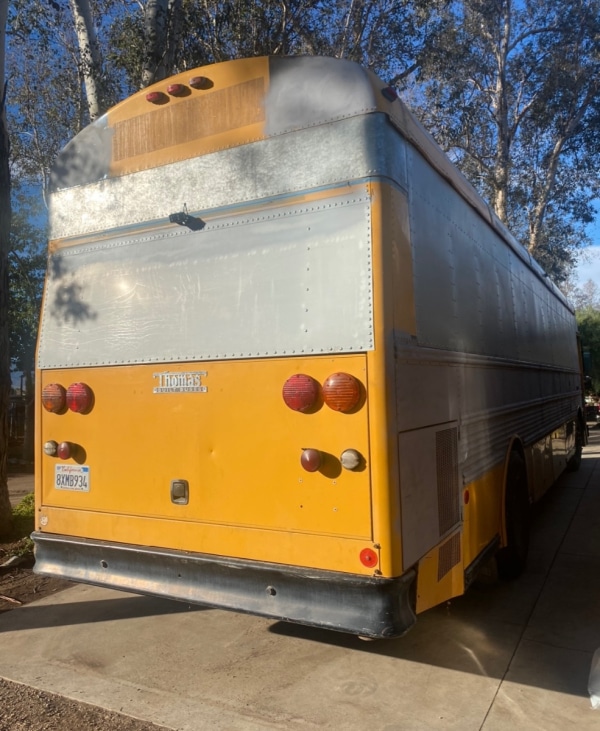
The interior width is the number one advantage and it’s not close. That extra foot of interior space (8.5 feet vs 7.5 feet) transforms what’s possible with a floor plan. I’ve seen transit bus conversions with a queen bed placed sideways that still had a walkway alongside it. Try that in a school bus and you’re climbing over the bed to get past. For couples or anyone who wants a more open-feeling interior, the width is a genuine game-changer.
Air suspension is the second biggest advantage. I rode in a converted transit bus at a meetup once, and the difference compared to the leaf-spring school buses in the group was immediately obvious. Less bounce, less vibration, less road noise. If you’re planning to be on the highway a lot — traveling full-time, following seasonal work, whatever — that ride quality adds up over thousands of miles. Less fatigue, less stuff rattling around in your cabinets, less wear on your build.
Under-floor storage compartments are something school buses just don’t have. Many transit buses have accessible bays underneath the main floor, originally designed for mechanical access or luggage on some models. These are perfect for water tanks, battery banks, propane tanks, and gear storage. You keep all of that out of your living space, which is a luxury that school bus converters have to get creative to achieve.
The low-floor entry is surprisingly convenient for daily living. No climbing steep steps every time you enter and exit your home. For anyone with mobility concerns, pets, or just the practical reality of carrying groceries in and out multiple times a day, that low entry is nice to have. Some builders put their main living area in the low-floor section and use the raised rear platform as the bedroom, which creates a natural separation of spaces.
Larger windows mean more natural light. Transit bus windows are typically bigger than school bus windows, and they’re often tinted which helps with temperature control. The overall effect is an interior that feels brighter and more open, even before you start your build.
The drivetrain quality is generally excellent. Transit buses are designed to run 12 to 16 hours a day, every day, for years. The engines, transmissions, and axles are built to handle that kind of punishment. When properly maintained — and transit agencies are religious about maintenance schedules — these components have serious longevity. A Cummins ISL in a transit bus that’s been properly maintained can run 500,000+ miles without major issues.
Cons and Unique Challenges
I’m gonna be straight about this section because transit bus conversions have some real downsides that the “this looks awesome on Instagram” crowd tends to gloss over. I don’t want anyone going in blind.
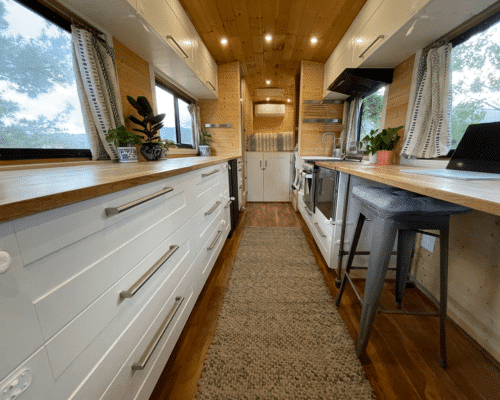
Parts cost and availability is the biggest pain point, full stop. I keep coming back to this because it affects everything. When something breaks on a school bus, you call a parts store, get the part, and a local diesel mechanic installs it. When something breaks on a transit bus, you might spend days identifying the exact part number, weeks waiting for it to ship from a specialty supplier, and significantly more money for both the part and a mechanic who’s willing to work on it. I talked to one transit bus converter who said he spent $2,400 on an air brake valve replacement that would’ve been under $600 on a school bus. That’s not an unusual story.
The curved interior walls create constant headaches during the build. Every cabinet, every countertop, every piece of trim that meets an exterior wall has to be scribed and cut to match the curve. School buses have flat walls and a flat ceiling. You can literally take a straight board, cut it to length, and screw it to the wall. Transit bus builders don’t have that luxury. Some get around it by building a flat false wall inside the curve, but then you’re giving up some of that width advantage you chose the transit bus for in the first place.
Wheel well intrusions are more pronounced in transit buses. The rear wheel wells push further into the interior space than they do on most school buses, and they’re shaped differently because of the low-floor design. You have to plan your floor plan around these intrusions, and they often end up dictating where certain features can and can’t go. I saw one build where the wheel wells essentially forced the bathroom into a specific location that the builder hadn’t originally planned for.
Weight is a real concern. Transit buses are heavy — 25,000 to 33,000 pounds empty, depending on the model. Once you start adding a conversion build (cabinets, water tanks, batteries, appliances, furniture, personal belongings), you’re pushing toward or past the GVWR. Overweight buses are harder on tires, brakes, and suspension components, and if you get pulled for a weigh station inspection, you could be looking at fines. I spent some time reading through DOT enforcement forums and found multiple cases of converted buses getting cited for being overweight.
The smaller conversion community means less documentation. When you’re building out a school bus and you hit a weird problem — like how to route plumbing around a specific frame rail, or where to tap into the existing wiring harness for shore power — there’s probably a YouTube video or forum thread from someone who already solved it. With transit buses, you might be the first person publicly documenting a specific fix for your specific model. That’s exciting for some people and terrifying for others.
Insurance and registration can be trickier. Some insurance companies don’t know what to do with a converted transit bus. They’re used to seeing converted school buses and RVs, but a city bus converted into a home doesn’t fit neatly into their categories. I’ve heard from builders who had to call 15-20 insurance companies before finding one willing to write a policy. Registration varies by state, but some states have specific rules about commercial vehicles being re-titled as RVs that can create extra hurdles for transit buses.
Rust is a different animal on transit buses than on school buses. School bus steel panels rust in predictable ways and welding repairs are straightforward. Transit bus aluminum panels corrode at the joints where dissimilar metals meet, and the repairs often require specialized welding skills. You can’t just slap a patch on with a basic MIG welder the way you can on a school bus panel.
Floor Plans and Layout Considerations
The floor plan is where transit bus conversions get really interesting, because that extra width and the two-level floor design open up layout possibilities that school buses just can’t match.
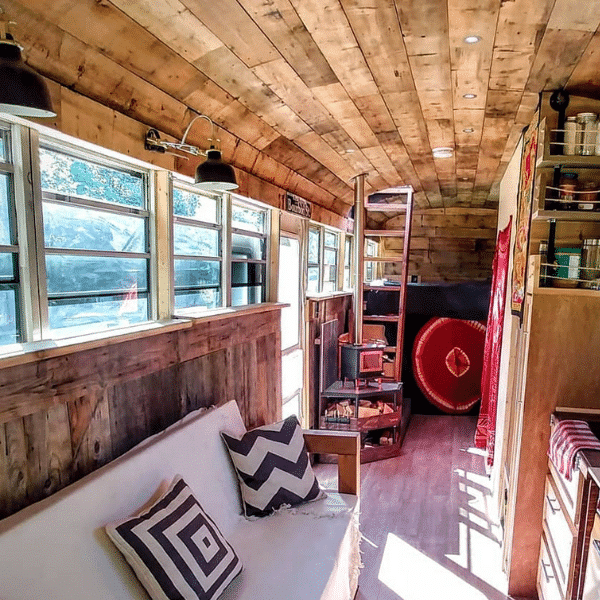
The biggest opportunity is the raised rear platform. In most low-floor transit buses, the floor sits at street level from the front entrance to roughly the midpoint of the bus, then steps up about 12 to 18 inches over the rear axle and stays elevated to the back. This is a natural bedroom platform. You don’t have to build a raised bed — it’s already there. And underneath that raised section, you’ve got built-in storage that’s accessible from inside or through exterior access panels.
I looked at probably 30 different transit bus floor plans that people had shared online, and the most common layout puts the living area and kitchen in the low-floor front section, with the bathroom at the transition point where the floor steps up, and the bedroom on the raised rear platform. This layout makes logical sense because it puts the most-used spaces (kitchen, living area) where you have the easiest entry and exit, and puts the bedroom in the back where it’s quieter and more private.
The width advantage really shows up in the kitchen and bathroom. In a school bus, you’re typically limited to a single-counter kitchen along one wall. In a transit bus, some builders do an L-shaped or even a galley kitchen with counters on both sides. You’ve got room for a full-size sink, a two-burner stove, and a reasonable amount of counter space without feeling like you’re cooking in a closet.
Bathrooms in transit bus conversions can be legitimately comfortable. Instead of the phone-booth-sized wet baths you see in school bus builds, transit bus builders sometimes have room for a separate shower stall and a proper toilet area. Not always — it depends on the overall floor plan — but the option exists in a way it doesn’t with a narrower bus.
One thing I kept noticing in transit bus builds is how people handle the driver’s area. Transit buses have that big, open driver’s cockpit with a full dash, a fare box mount, and usually a driver’s barrier or partition. Some builders leave the driver’s area mostly stock and start the living space behind it. Others rip everything out and integrate the cab into the living space. There’s no right answer, but I’ll say that keeping the driver’s area somewhat separate creates a nice psychological boundary between “driving mode” and “home mode.”
Windows are another floor plan consideration. Transit buses have big windows, but they’re not all the same size, and some are designed to open while others are sealed. Before you finalize a floor plan, map out every window and decide which ones you want to keep, which ones you want to seal up (for wall space where you’re putting cabinets or a bed), and whether you want to replace any with custom-sized windows. Some builders replace the large transit windows with RV-style windows that open for ventilation.
Don’t forget about the doors. Transit buses typically have two or three sets of double doors. The front door stays as your main entrance. The rear doors, most builders either seal shut or convert one set into their main entrance and seal the others. Some creative builders have turned a rear door into a fold-out patio door or a cargo loading door, which is honestly pretty clever.
Mechanical Considerations
This is where I want people to pay the most attention, because the mechanical side of transit bus ownership is the area with the biggest surprises.
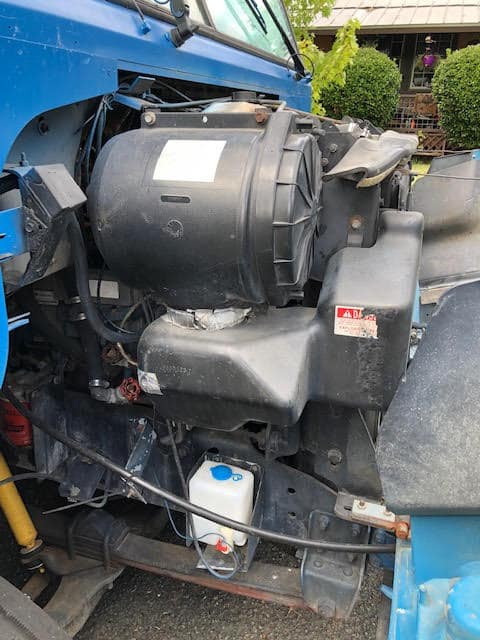
The engines in transit buses are generally excellent. Most commonly you’ll find Cummins ISL (8.9 liter inline six) or Cummins ISB (6.7 liter) engines. Both are proven powerplants that diesel mechanics know well. Some older transit buses have Detroit Diesel Series 50 or Series 60 engines, and a handful use Caterpillar C7 or C9 engines. The Cummins options are your best bet for long-term parts availability and finding mechanics who’ll work on them. I talked to a diesel mechanic in Phoenix who said he’d happily work on any Cummins-powered transit bus but would turn away anything with a proprietary engine setup because the diagnostic tools alone cost more than most shops want to invest.
Transmissions in transit buses are mostly Allison automatics — the B300, B400, and B500 series are common. Allison is the gold standard for heavy-duty automatic transmissions, and parts are widely available. This is one area where transit buses actually match school buses in terms of ease of maintenance.
The air brake system is where things get interesting for people coming from a school bus background. School buses can have either air brakes or hydraulic brakes (the smaller ones usually have hydraulic). Transit buses always have air brakes. Air brakes require more maintenance — you’ve got to watch for air leaks, maintain the compressor, drain the air tanks regularly, and keep the brake chambers in good shape. But they’re also incredibly powerful and reliable when properly maintained. In some states, driving a vehicle with air brakes requires a CDL with an air brake endorsement, even if the vehicle weight doesn’t otherwise require a CDL. Check your state’s requirements before you buy.
The air suspension system is a double-edged sword. It rides amazing. Way smoother than leaf springs. But it’s more complex and more expensive to repair when something goes wrong. Air bags can develop leaks, the leveling valves can fail, and the compressor that feeds the whole system has to be maintained. I found a forum thread from a transit bus converter who said his air suspension repair cost $1,800 — not catastrophic, but not cheap either, and it wasn’t something he could DIY easily.
Cooling systems on transit buses are beefy, which is good since these buses were designed to idle in city traffic all day in summer heat. Most have auxiliary cooling systems for the transmission, and some have separate cooling loops for the air conditioning. When you’re converting the bus, you need to understand what’s connected to what before you start disconnecting things. I read about a builder who pulled what he thought was an unused coolant line and drained his transmission cooler onto the ground. That’s the kind of mistake you only make once.
The electrical system deserves its own discussion. Transit buses have incredibly complex wiring harnesses designed for fare collection, destination signs, stop request systems, accessibility ramps, multiple lighting circuits, and onboard cameras. When you rip all that out for a conversion, you’re pulling hundreds of feet of wire and dozens of relays and control modules. The temptation is to just yank everything and start fresh, but some of those circuits also control things you want to keep — like the headlights, turn signals, and brake lights. Take your time with the electrical teardown. Label everything. Take photos before you disconnect anything. I can’t stress this enough.
Fuel tanks on transit buses are large — typically 100 to 150 gallons. That’s actually a nice feature for full-time travel because you get serious range, but it also means a fill-up can cost $400 to $600 at current diesel prices. Something to factor into your monthly budget.
Cost to Buy and Convert
Let me break down the real numbers, because I found a lot of vague estimates out there and wanted to nail down something more concrete.
The purchase price for a transit bus varies a lot more than school buses do. A retired transit bus at auction can go for as little as $2,000 if it’s a non-running unit that the agency is trying to get rid of. Running transit buses in decent condition typically go for $5,000 to $15,000. If you find a low-mileage unit (by transit bus standards, that’s under 300,000 miles) in good mechanical shape, expect to pay $10,000 to $20,000. I’ve seen a few really clean Gilligs go for $18,000-$22,000 to buyers who were willing to pay a premium for a good starting platform.
For comparison, running school buses at auction go for $2,000 to $8,000, and nice ones top out around $12,000-$15,000 private sale. So you’re paying more for the transit bus from the start.
Conversion costs are where things get interesting. A mid-range transit bus conversion — full kitchen, bathroom with shower, bedroom, solar power, water system — runs about $25,000 to $50,000 in materials and labor if you’re doing it yourself. Some people go bare-bones and pull it off for $15,000 to $20,000. Others go all-out with custom cabinetry, high-end appliances, and professional installations and spend $60,000 to $80,000 or more.
Here’s the thing that surprised me when I was putting these numbers together. The conversion cost for a transit bus isn’t dramatically higher than a school bus. Most of the major expenses — appliances, solar panels, batteries, plumbing fixtures, lumber, insulation — cost the same regardless of what bus they go into. Where transit buses cost more is in the detail work. More complicated framing because of curved walls. More electrical work because of the complex existing wiring. More time (and therefore more labor if you’re hiring help) because of the unfamiliar platform.
I tracked down cost breakdowns from five transit bus converters who shared their numbers publicly, and here’s what the averages looked like:
Bus purchase: $8,000-$12,000. Mechanical repairs before starting the build: $1,500-$4,000. Insulation and framing: $1,500-$3,000. Electrical (solar, batteries, wiring, inverter): $3,000-$8,000. Plumbing (water tank, pump, water heater, fixtures): $1,500-$3,000. Kitchen (countertops, stove, fridge, sink): $2,000-$5,000. Bathroom (shower, toilet, vent fan): $1,000-$2,500. Flooring: $500-$1,500. Windows and sealing: $500-$2,000. Paint and exterior: $500-$2,000. Miscellaneous (hardware, tools, unexpected stuff): $2,000-$4,000.
That puts a realistic all-in budget for a solid transit bus conversion at $25,000 to $50,000, with the bus purchase included. Not cheap, but not dramatically more than a school bus conversion once you factor in the higher purchase price.
The ongoing costs are where transit buses really start to diverge from school buses. Budget more for repairs and maintenance. I’d say 20-30% more annually compared to a school bus, based on the higher parts costs and the specialist labor rates you’ll sometimes encounter. Fuel costs are roughly comparable since both types get similar mileage in the 6-10 MPG range, though the larger fuel tank on a transit bus means bigger individual fill-ups.
Where to Find Transit Buses for Sale
Finding a transit bus is harder than finding a school bus, and I want to be upfront about that. School districts sell off retired buses constantly through public auctions, surplus sites, and private sales. Transit agencies are less predictable about how they dispose of retired vehicles, and the process varies by agency.
Government surplus auction sites are your best starting point. GovPlanet, PublicSurplus, and GovDeals all list retired transit buses from time to time. The listings aren’t as frequent as school buses, but they pop up regularly enough that if you’re patient and check weekly, you’ll find options. I set up alerts on all three sites for “transit bus” and “city bus” and was getting notifications every couple weeks for buses within reasonable driving distance.
Direct contact with transit agencies is an underrated strategy. Many transit agencies have a fleet management department, and some will sell retired buses directly to the public before they go to auction. Call the local transit agency in any mid-size or large city and ask if they sell retired vehicles. Some have a formal process, some keep a waiting list, and some will just tell you when the next batch is going to auction. I called about a dozen transit agencies while researching this article and about half of them had some process for selling directly.
Craigslist and Facebook Marketplace are hit or miss but worth checking. Search for “transit bus,” “city bus,” “Gillig,” “New Flyer,” or the specific model you’re looking for. Private sellers who bought from transit agencies and decided not to convert sometimes flip them on these platforms. The prices are usually higher than auction, but the convenience of seeing the bus and driving it home the same day has value.
Specialty dealers exist for commercial buses, though they’re not as common as school bus dealers. Companies that deal in used commercial vehicles sometimes have transit buses in their inventory. The prices tend to be higher because these dealers have done some basic reconditioning, but you’re also more likely to get a bus that starts and drives without immediate repairs.
Scrapyards and salvage yards are a last resort but occasionally produce gems. Transit agencies sometimes send retired buses to scrap, and if you get there before they’re crushed, you might find a mechanically sound bus for scrap metal prices. I heard about a guy who got a running Gillig Low Floor from a salvage yard for $1,500 because the agency had sent it to scrap over a cosmetic issue — a cracked windshield and some body damage that didn’t affect the drivetrain at all.
One tip I picked up that I wish I’d known earlier: watch for transit agency fleet transitions. When a city replaces its bus fleet — switching to electric buses, for example, or upgrading to a new model — they retire entire batches at once. That’s when you get the best selection and the best prices. These transitions are usually public knowledge reported in local news, so a Google News search for “[city name] transit bus replacement” or “new bus fleet” can tip you off to upcoming opportunities.
Whatever route you go, inspect the bus thoroughly before you buy or factor in the cost of unexpected repairs. Transit buses are complex machines and a pre-purchase inspection by a diesel mechanic who’s familiar with heavy-duty commercial vehicles is worth every penny. I’d budget $200-$400 for a proper inspection and consider it the best insurance you can buy.
—
So here’s where I landed after all this research. Transit buses are a legitimate conversion platform with real advantages over school buses — the width, the ride quality, the under-floor storage, the larger windows. They’re not just a novelty or a hipster alternative. For certain people and certain lifestyles, a transit bus is genuinely the better choice.
But they’re not the right choice for most first-time builders. The higher cost, the parts challenges, the smaller community, and the added complexity of working with curved walls and proprietary systems all add up. If you’re experienced with fabrication, comfortable sourcing specialty parts, and you specifically need the features a transit bus offers, go for it. You’ll end up with a unique, spacious home that turns heads everywhere you park.
If you’re on the fence and this is your first build, I’d still recommend starting with a school bus. Learn the basics of bus conversion on a more forgiving platform. Build your skills. Then if you want to level up to a transit bus for your second build, you’ll know exactly what you’re getting into and you’ll have the experience to handle the challenges. There’s no wrong answer here, just different paths to the same destination — a home on wheels that you built yourself.