This is one of those questions that kept coming up every single time I was reading through bus life forums and watching build tours. You’ve got this big beautiful bus that gets you from place to place, but once you’re parked somewhere, you’re kind of stuck unless you want to fire up a 40-foot school bus to go grab groceries.
Yes, you can tow a car behind a skoolie, and a lot of full-timers do exactly that. The most common setup is a flat tow (also called a dinghy tow or four-down tow) where the car rolls on all four wheels behind the bus connected by a tow bar. Not every vehicle can be flat towed though, and you need to check your bus’s towing capacity, get the right hitch and tow bar setup, and make sure the car you’re towing is rated for it. The whole rig adds complexity, but for most people who travel regularly, having a smaller vehicle for daily driving is worth it.
How do you tow a 4×4 Jeep Wrangler? Don’t you need to disconnect the driveshaft when towing a 4×4?
This was the question that actually got me to really dig into the mechanics of flat towing, because the driveshaft thing confused me for a while. I kept seeing conflicting information about it online and it took a bit to sort out what was actually true.
So here’s the deal. Jeep Wranglers are one of the most popular vehicles to flat tow behind any kind of RV or motorhome, and there’s a specific reason for that. Wranglers with a manual transfer case can be put into neutral in the transfer case, which disconnects the drivetrain from the transmission. When you do that, the wheels spin freely without turning the transmission internals. No driveshaft disconnection needed. You shift the transfer case to neutral, put the transmission in neutral (or park for automatics, depending on the year), and you’re good to go.
Now where the driveshaft confusion comes from is older 4×4 trucks and SUVs that don’t have a transfer case that goes into a true neutral. On those vehicles, if you flat tow them, the driveshaft is still spinning the transmission internals even though the engine is off. That means no oil pump running, no lubrication, and you cook the transmission. That’s when you’d either need to disconnect the driveshaft or use a transmission lube pump.
But Wranglers specifically? They’re basically designed for this. Jeep even markets the Wrangler as flat-tow friendly. I talked to a guy at a campground once who had a JK Wrangler behind his bus and he told me he’d towed it over 40,000 miles with zero issues. Said the whole process of hooking up takes about 10 minutes once you’ve done it a few times. His setup was a Blue Ox tow bar with a baseplate kit on the Jeep, and he swore by it.
Other vehicles that are commonly flat towed include the Jeep Gladiator, Ford Bronco (manual transfer case models), Chevy Colorado with the right drivetrain, and some Honda CR-Vs and Fits with manual transmissions. But you absolutely have to check the owner’s manual for whatever specific vehicle you’re looking at. The flat tow compatibility changes year to year and even trim to trim. Don’t assume because one model year works that the next one does too.
When you travel, does one of you drive a car behind the bus?
I saw this question asked to a couple who were traveling full-time, and it gets at something practical that I don’t think enough people plan for before they hit the road. The logistics of actually moving a bus plus a car from point A to point B.
Most couples I’ve come across do exactly what the question describes. One person drives the bus with the car flat towed behind, and that’s it. Nobody drives the car separately. That’s the whole point of flat towing. You don’t need two drivers, you don’t need to coordinate through walkie-talkies or figure out how to caravan through highway traffic. The car just rolls along behind the bus like a trailer would.
Some people do drive the car separately though, and I found that it tends to be for one of two reasons. Either the car can’t be flat towed (front-wheel drive automatic without a transmission lube pump, for example), or they’re hauling enough stuff in the car that they want the extra cargo space. I read one post from a family that drove the car separately because they loaded it with bikes, outdoor gear, and the dog. But they admitted it was annoying and they were looking into getting a different tow vehicle so they wouldn’t have to split up every time they moved.
The tow bar setup is really the way to go if you can swing it. A decent tow bar system runs between $800 and $2,500 depending on the brand and whether you need a custom baseplate for your car. Blue Ox and Roadmaster are the two big names. You also need supplemental braking for the towed vehicle in most states, which is another $300 to $1,200 depending on whether you go with a portable unit or a permanent install. I know that sounds like a lot, but compared to the cost of fuel for driving two vehicles separately or the hassle of coordinating two drivers on every move, it pays for itself pretty quick.
One thing I didn’t think about until I started researching this is the added length. A full-size bus is already 35 to 40 feet. Add a car on a tow bar and you’re pushing 55 feet or more. That changes everything about where you can park, how you navigate tight turns, and which campground sites you can fit into. Some RV parks have length limits that include your towed vehicle. So you have to factor that in when you’re calling ahead to reserve spots.
I love your home! You guys did an awesome job! I have to ask. Is there room on the back deck to store a scooter, Vespa so you can still zip around?
Alright, so this is actually a really interesting alternative to towing a car, and I found a surprising number of people going this route instead.
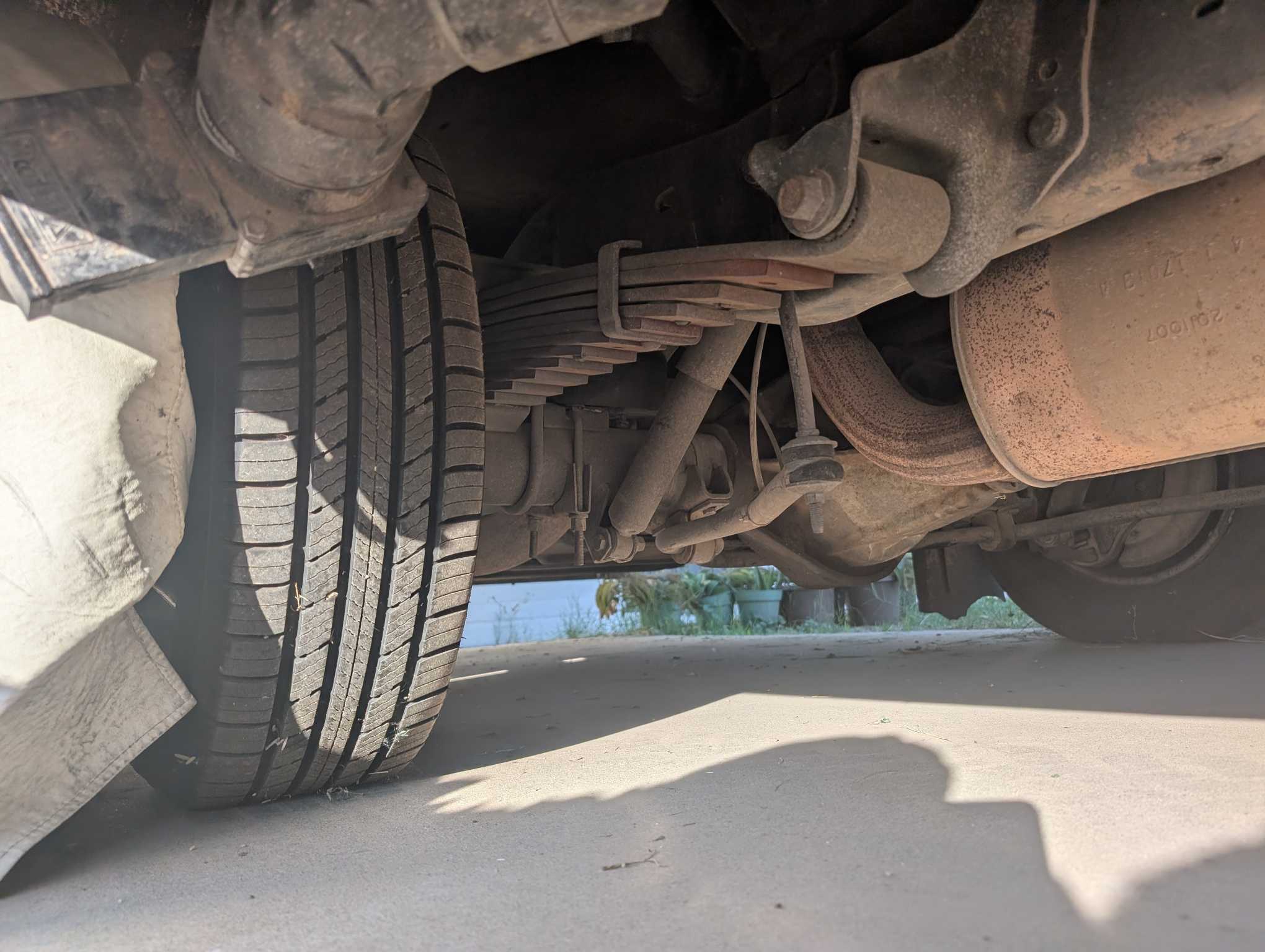
A scooter or Vespa on the back deck, in the rear bumper area, or on a motorcycle carrier hitch mount is way simpler than flat towing a full car. You don’t need a tow bar. You don’t need supplemental braking. You don’t add 15 feet to your total length. And for running quick errands, grabbing groceries, or exploring a town once you’re parked, a scooter honestly does the job.
I saw a build where the couple had welded a small platform onto the rear bumper of their flat nose bus and strapped a Honda Ruckus to it. The Ruckus weighs like 190 pounds, gets 100+ MPG, and fits on a platform barely bigger than a doormat. They said it was the best decision they made in their whole build. They could unhook it in under a minute and zip around town without ever moving the bus.
Now the question is really about weight capacity and mounting. Your bus’s rear bumper or frame needs to support whatever you’re putting back there. A scooter at 150 to 300 pounds is usually no problem. A full Vespa might push 250 to 350 pounds depending on the model. Add a steel rack or platform and you’re looking at maybe 400 to 500 pounds total. Most school bus frames can handle that without issue, but you want to make sure whatever you weld or bolt on is attached to the frame, not just the bumper skin.
There’s also the hitch-mounted motorcycle carrier option. These slide into a standard 2-inch receiver hitch and can hold up to 400 or 600 pounds depending on the carrier. They’re removable, which is nice if you don’t always want the scooter taking up space back there. Prices range from $100 to $400 for a decent one. I found a few bus owners who use these and like that they can take the carrier off when they’re stationary for a while and don’t need it.
The downside compared to a car is obvious. You can’t haul much on a scooter. You can’t take the whole family. You can’t drive it on the highway comfortably. And if you’re somewhere with bad weather or you need to make a longer trip for supplies, a scooter isn’t going to cut it. But if you’re mostly parked in mild climates and your errands are within a few miles, it’s honestly the smarter and cheaper option. Way less complexity than a full tow setup.
Some people split the difference and carry a small motorcycle instead. A Honda Grom or a Kawasaki Z125 is still small enough for a rear platform but gives you highway capability up to about 55 to 60 MPH. Weighs under 250 pounds. I thought that was a pretty clever middle ground when I came across it.
And then there’s the electric bike crowd. E-bikes have gotten so good that some bus livers just carry one or two e-bikes and skip the motor vehicle thing entirely. No insurance, no registration, no gas, charges off your solar, and you can carry them inside the bus or strap them to the back. For short trips and errands, they work great. The range on a decent e-bike is 20 to 50 miles per charge, which covers most daily needs when you’re parked somewhere.
So after looking into all of this, here’s where I ended up. If you travel a lot and need a vehicle for longer day trips, errands in spread-out areas, or hauling stuff, tow a car. A Jeep Wrangler or something else that’s flat-tow compatible is the gold standard and there’s a reason so many bus people go that route. If you’re more stationary or you mostly need something for quick runs around town, a scooter on the back deck or a hitch-mounted motorcycle carrier is simpler, cheaper, and honestly less stressful. And if your needs are really minimal, a couple of e-bikes might be all you need. There’s no single right answer here, it just depends on how you travel and what your daily life actually looks like once you’re parked somewhere.
3tzb68
nkcbta