You’ve got the bus built and you’re ready to go full-time. But the question that keeps people up at night is, where do you actually put this thing? You can’t just park a 35-foot bus on any random street and call it home.
Most full-time skoolie owners park at RV parks ($400-$800/month), on private land ($200-$500/month), or on free public land (BLM and national forests with a 14-day limit). Where you park depends on whether you want hookups, how long you’re staying, and your budget. RV parks are the easiest option, with full hookups and no legal gray areas. Private land is the cheapest long-term play. Boondocking on public land is free but requires moving every two weeks.
Where on earth do you park this thing to live in it?
More places than you’d think. I spent a lot of time talking to full-timers about this before we hit the road, and honestly, the options surprised me. Here’s what’s out there:
Full-time RV parks. These exist specifically for people living in their rigs year-round. Monthly rates run $400-$800 depending on location. You get water, electric (30 or 50 amp), and sewer hookups. Some include WiFi, laundry, and a pool. If you’re wondering whether they’ll even let a converted bus in, I’ve got a whole article on parking a skoolie at an RV park. Short answer: most will, especially if you’ve got it registered as an RV.
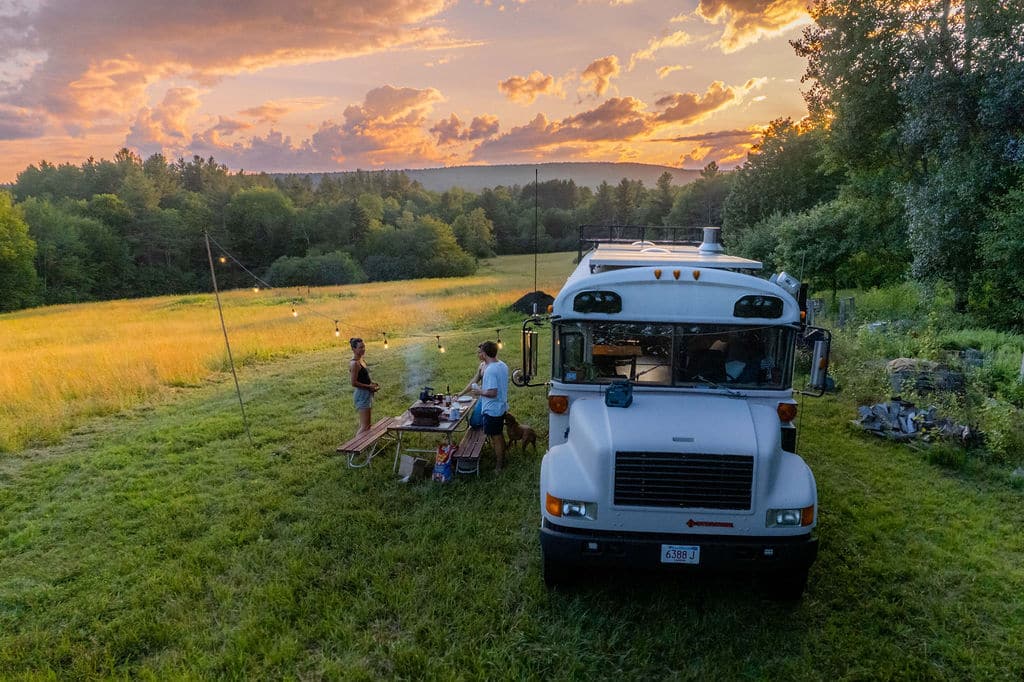
Private land. Lease a spot from a landowner, maybe a farmer, rancher, or just someone with extra acreage. This is really common in rural areas. $200-$500/month, sometimes less. You might need to bring your own hookups (generator or solar for power, water jugs, composting toilet). I talked to one couple who found a rancher in New Mexico through Craigslist. They pay $250 a month, park next to a barn, and the rancher lets them tap into his well for water. He told them, “I don’t care what you do out here as long as my cows don’t care.” That’s basically the ideal setup.
BLM land and national forests. Free camping on public land with a 14-day stay limit. Move to a new spot every two weeks. This is huge in the Western states, with millions of acres available. No hookups, no services. We’ve got a full guide to finding free and cheap camping if you want to go deep on this one.
Harvest Hosts ($99/year). Overnight parking at farms, wineries, and breweries. One-night stays, great for traveling between longer stops. I think of it as the “fun” option. You’re not going to live at a winery, but you’ll have some good stories.
Walmart, Cracker Barrel, truck stops. Free overnight parking at many locations. Not a long-term solution, but great for travel days when you just need a flat spot for the night.
I bought a school bus and now I don’t know where to park it. My HOA won’t let me park it in my driveway and storage fees are super expensive.
Yeah, HOAs and bus life don’t mix. No way around that. Most HOA neighborhoods prohibit commercial vehicles, RVs, or anything over a certain size from being parked in driveways or on the street. And local zoning laws can make this even trickier depending on your municipality.
For the build phase, you’ve got a few realistic options. Industrial storage lots run $50-$150/month. A friend or family member’s property outside an HOA works great if you can swing it. You can also rent a spot on someone’s rural land through Craigslist or Facebook, or look into a commercial RV storage facility at $75-$200/month.
Some people rent a workshop or garage bay for their build. You get a covered workspace and a place to park the bus. Monthly rates for a garage bay run $300-$600 in most areas. I’ve seen some builders get really creative here, splitting a shop space with another converter to cut costs.
Long-term, once the build is done, you won’t need your HOA neighborhood anymore. That’s kind of the whole point of bus life, right?
How difficult was it to find places to stay overnight?
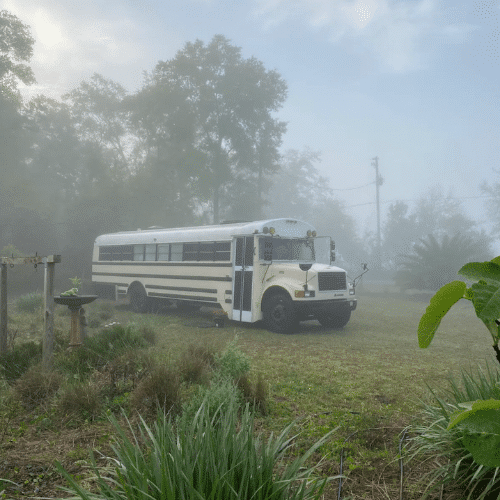
Overnight parking while traveling is actually pretty easy once you know the system. I was nervous about this at first, but it turns out there’s a whole infrastructure of apps and knowledge that makes it pretty straightforward.
The iOverlander app is the bible for finding free and cheap overnight parking. It’s a crowdsourced database of parking spots, covering Walmart lots, rest areas, scenic pull-offs, BLM land, churches, and more. Every spot has reviews and recent reports from other travelers. I check it every single time we’re looking for a place to stop.
Campendium is another good one. It focuses more on campgrounds and RV parks with pricing and reviews.
For spontaneous overnight stops, any Walmart with an RV in the parking lot is probably fine. Rest areas in most states allow overnight parking. Truck stops like Pilot and Love’s always allow it. If you want to know more about parking a skoolie in regular parking lots, we’ve covered the do’s and don’ts in detail.
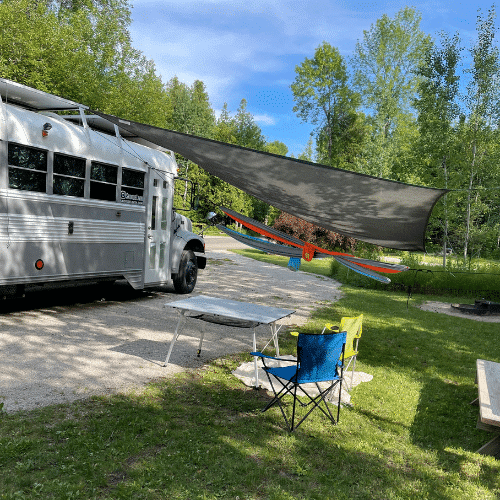
The golden rule: park quietly, leave no trace, don’t set up camp (no chairs, awnings, or grills in a parking lot), and leave in the morning. Nobody bothers you.
Where can you park without getting kicked out?
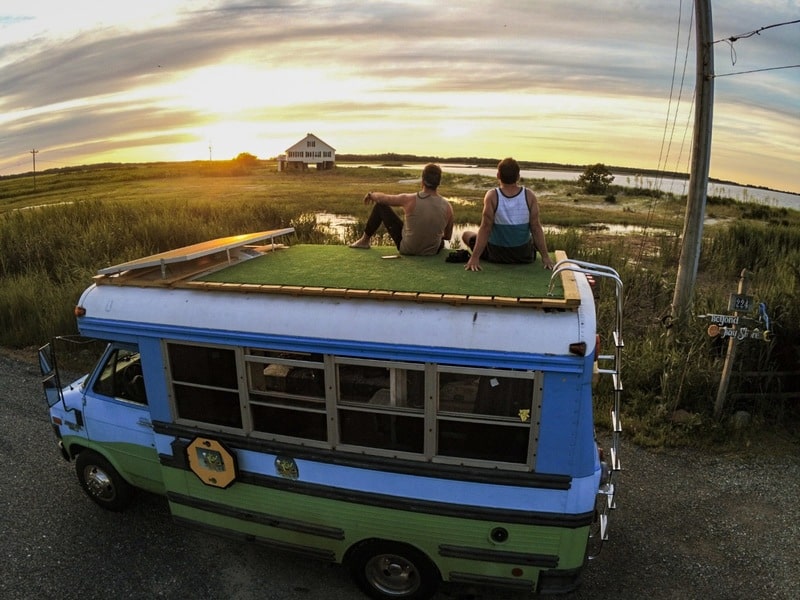
The key is not looking like you’re “living” when you’re parked in non-residential spots. Keep your curtains closed, don’t set up furniture outside, don’t run a generator late at night, and don’t stay multiple nights in the same commercial parking lot.
Stealth is way easier in a painted bus than a yellow one. A bus painted charcoal gray or white doesn’t attract attention the way a school bus does. I’d honestly say painting your bus is one of the best investments you can make for parking peace of mind. A matte black bus parked at a truck stop? Nobody looks twice. A bright yellow school bus with curtains in the windows? Someone’s calling somebody.
Places where you’re least likely to be hassled: Walmart (corporate policy generally allows overnight RV parking), Cracker Barrel, casino parking lots, rest areas, truck stops, and any business with a large parking lot that’s empty at night.
Places to avoid: residential streets (neighbors will call the police), small retail parking lots, bank parking lots, and anywhere with “no overnight parking” signs. Respect the signs and move on. It’s not worth the knock on the door at 2 AM.
Does anyone know where to park while I convert it?
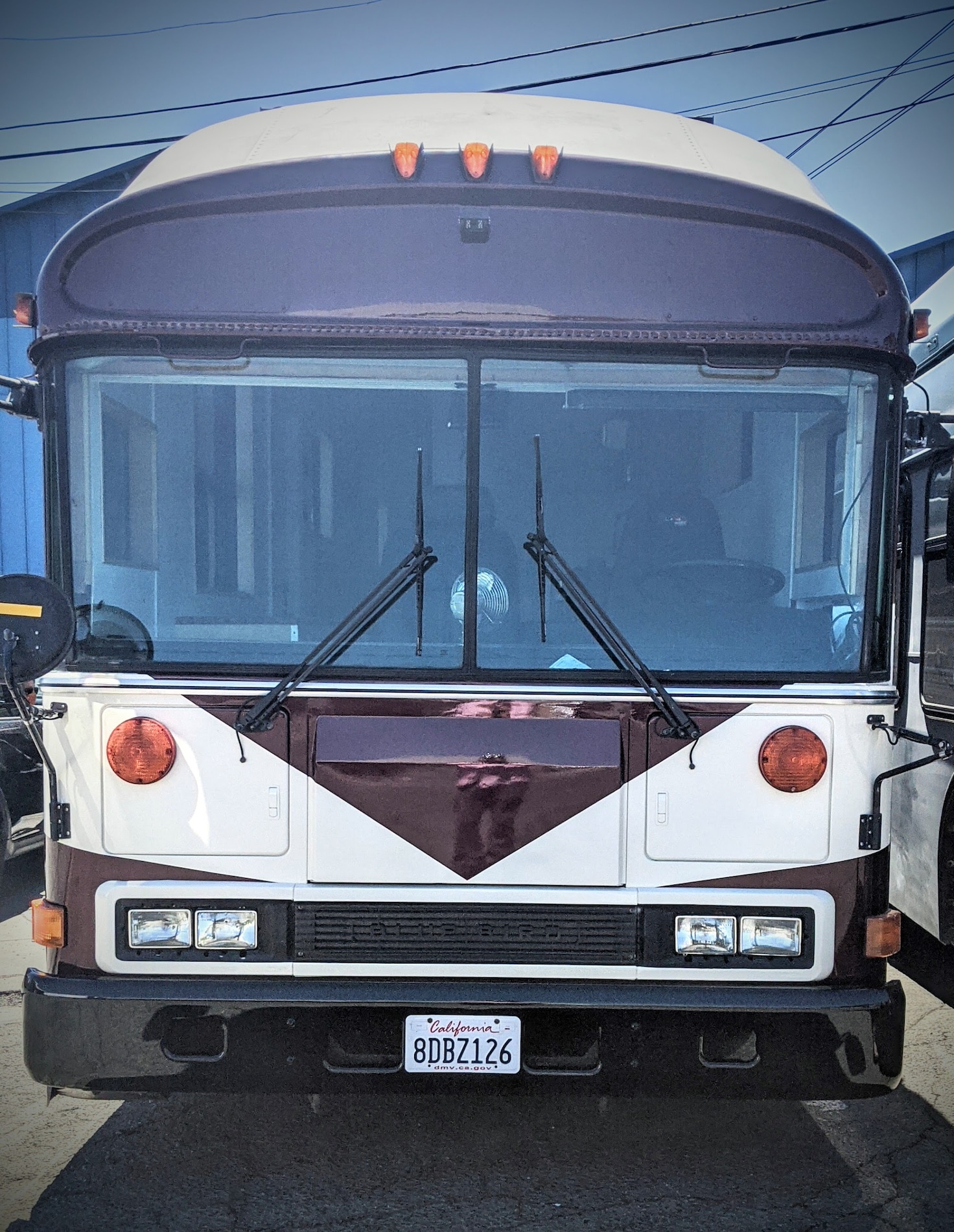
The build phase is totally different from living in it. You need a spot where you can park for months, make noise, create sawdust, and run tools. Nobody wants to hear an angle grinder at 7 AM, so location matters.
Best options for build parking: your own property (if you have land or a rural home), a friend or family member’s property, renting space at a farm or industrial lot, a self-storage facility that allows vehicle work (some do, many don’t), or a makerspace/workshop that rents bays.
Some skoolie builders have had success posting on local Facebook groups: “Looking for a spot to park and convert a school bus, willing to pay rent.” Farmers and rural property owners often have space and could use the extra income. I’ve seen people land amazing spots this way, places where the landowner gets curious about the build and ends up helping out on weekends.
Budget $100-$500/month for build parking unless you have free access to someone’s land.
The Bottom Line
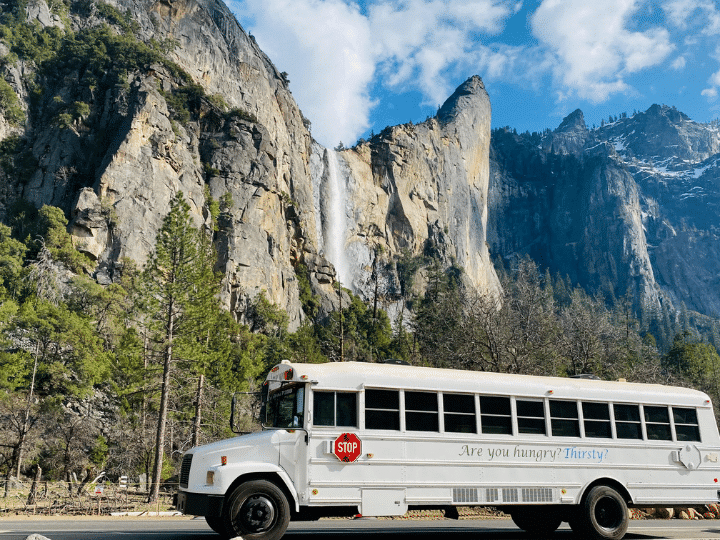
Parking is one of those things that seems like a massive problem before you start, and then once you’re out there, you realize it’s pretty manageable. You’ve got RV parks if you want the easy route, private land if you want to save money and stay put, and millions of acres of public land out West if you want to roam for free. The apps make overnight stops simple, and painting your bus goes a long way toward avoiding hassle.
If you’re still in the planning stage, I’d recommend sorting out the legal side of living in a bus and figuring out your domicile and mailing address situation before you worry too much about parking. Once those pieces are in place, the parking question mostly answers itself. You’ll figure out what works, and you’ll wonder why you stressed about it so much.
a0jcmh