
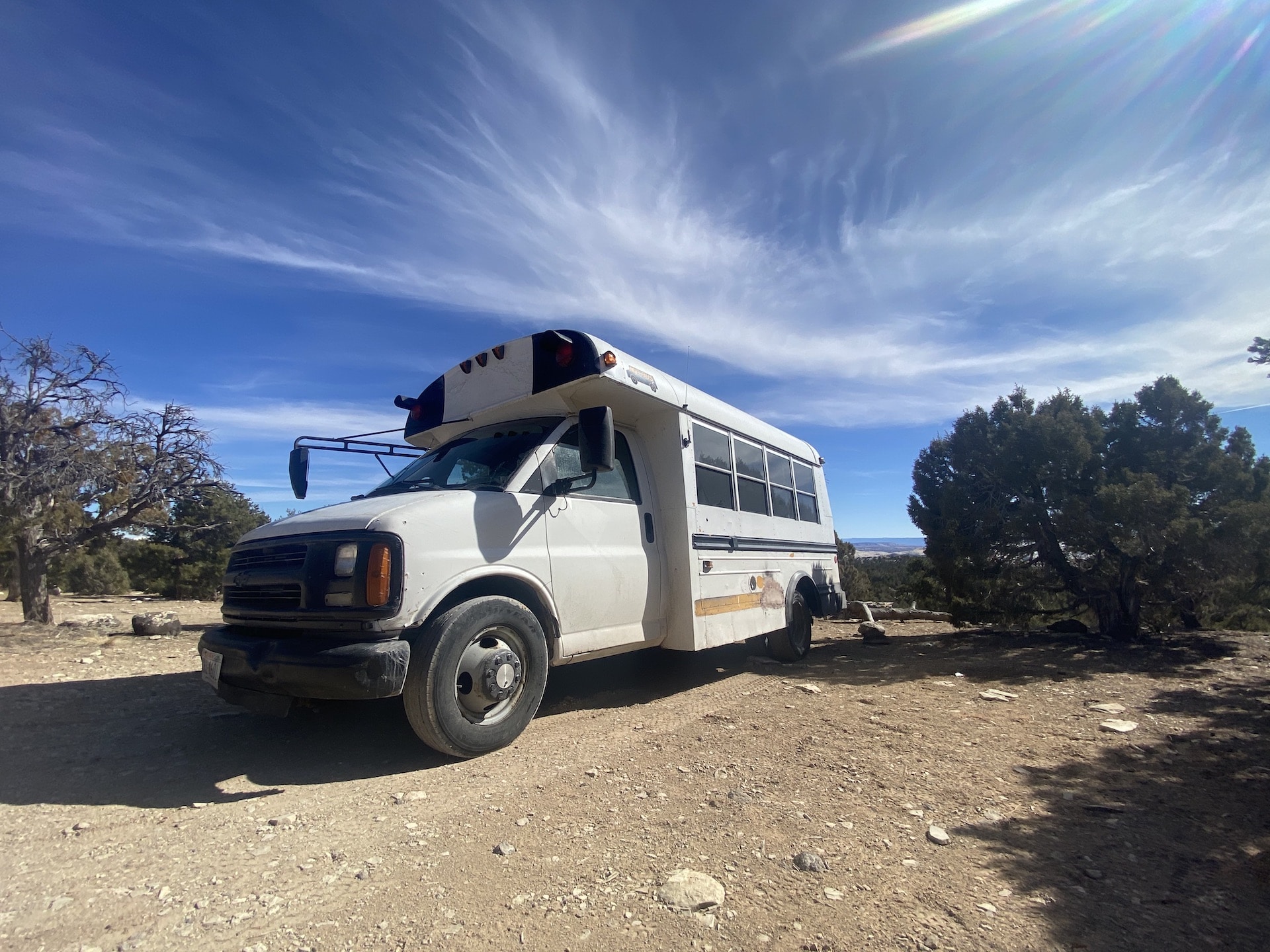
So you’ve got this big beautiful bus, and now you need groceries. Or you want to catch a movie. Or you just need to run into a store for five minutes. The question that hits everybody at some point is whether you can actually park this thing in a normal parking lot like a regular person. (See our guide on Can You Park a Skoolie at an RV Park? for more on this.)
Yes, you can park a skoolie in most regular parking lots. Nobody’s going to stop you. There’s no law against parking a bus-sized vehicle in a commercial parking lot as long as you fit within the lines — or close enough — and you’re not blocking anything. The trick is where you park and how you approach it. Most skoolie owners head straight for the back of the lot, find a pull-through spot or an end row with extra room, and park without any issues. It takes more thought than pulling into a compact car space, but it’s honestly not a big deal once you’ve done it a few times.
How do they park at regular places like the grocery store, movie theater, ect?
I remember the first time I pulled into a grocery store parking lot with a full-size bus. I drove past every single row, all the way to the back, and found a stretch of empty spaces along the far edge of the lot. Pulled in, took up about two and a half spaces, and walked inside. Nobody said a word. Nobody even looked twice, honestly.
That’s pretty much the standard approach and it works almost everywhere. You park in the back, you take up extra space where it doesn’t bother anyone, and you go about your business. Most commercial parking lots are way bigger than they need to be, especially during off-peak hours. A Tuesday morning at the grocery store? The back third of that lot is a ghost town. Your bus fits fine. (See our guide on Where Do You Park a Skoolie Long-Term? for more on this.)
Here’s what I found most skoolie owners do at specific places:
Grocery stores. Park in the back row or along the perimeter. Some stores have oversized vehicle spots near the edges. If the lot is small, park on a side street nearby and walk. Most grocery runs are 30-45 minutes, nobody’s towing you in that time.
Movie theaters. Same deal, back of the lot. Theaters have massive parking lots designed for Friday night capacity, so a Tuesday evening showing means you’ve got acres of empty asphalt.
Restaurants. This one depends. Small restaurant parking lots can be tight. I’ve found it’s often easier to park on the street or in a nearby lot and walk a block. Not a huge deal.
Big box stores. Walmart, Home Depot, Lowe’s, Target — these lots are built for semis making deliveries. Your bus is smaller than a semi. Park in the back or along the side and you’re golden. Walmart in particular is skoolie-friendly since many locations already allow overnight RV parking.
The one place you’re going to have consistent trouble is parking garages. Don’t even try. Your bus is too tall, too long, and the turns inside are too tight. If you’re going somewhere with only garage parking, find street parking nearby or use a rideshare.
How easy is it to find a place to park that thing?
Easier than most people assume, but it does require thinking ahead. And that’s really the shift — you can’t just pull into the first available spot the way you would in a car. You’ve gotta have a plan, even if it’s just a quick mental scan of the lot as you’re driving in.
I started noticing things about parking lots that I never paid attention to before. Like which lots have pull-through spots at the ends of rows. Which stores have side lots that are never full. Where the delivery truck areas are, and whether you can use them on weekends when no deliveries are happening. After a while it just becomes instinct. You drive in, your eyes go right to the spots that work, and you head there. (See our guide on Where to Park a Skoolie: The Complete Guide for more on this.)
What genuinely surprised me was how rarely it’s actually a problem. I expected it to be this constant headache, like every errand would turn into a 20-minute parking adventure. But most of the time you find a spot in under two minutes. The exceptions are downtown areas in cities, which, yeah, those can be rough. Dense urban cores with narrow streets and small lots aren’t bus-friendly. But suburban shopping centers, strip malls, standalone stores — all easy.
A few things that make it easier. First, if you have a tow vehicle or a car you tow behind the bus, use that for errands in tight areas. A lot of full-time skoolie people keep a small car, a motorcycle, or even bicycles specifically for this. Second, go during off-peak hours when you can. Shopping at 9 AM on a weekday versus 5 PM on a Saturday is a completely different parking experience. Third, just accept that you’re going to walk a little farther from your parking spot to the door. That’s the trade-off and it’s really not a big deal.
Is it hard taking corners?
This one connects directly to parking because half the challenge of parking lots isn’t the parking itself, it’s navigating the lot to get to your spot.
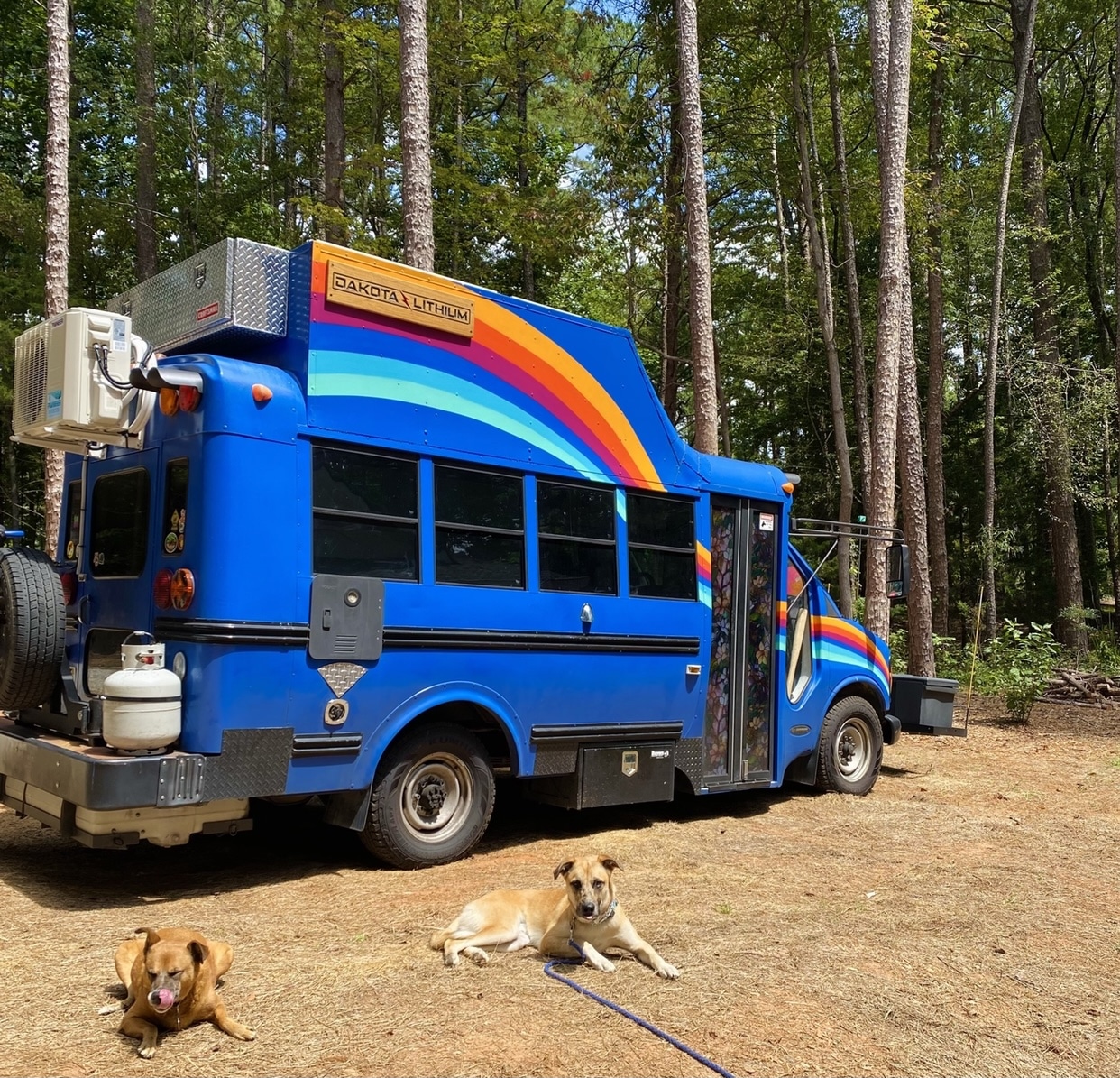
The short answer is yes, corners take some getting used to. The back wheels on a bus don’t follow the same path as the front wheels. On a right turn, your rear end cuts the corner tighter than the front. So if you turn your steering wheel right at the point where a car would, your back tires are going to hop the curb or clip whatever’s on the inside of that turn.
What I had to train myself to do was pull forward past the turn point before cutting the wheel. You basically drive straight a little longer than feels natural, then turn. It feels wrong at first, like you’re going to miss the turn entirely, but the back end swings around and you nail it. The longer the bus, the more you need to overshoot.
In parking lots specifically, the tight corners between rows are the issue. A lot of parking lots have those little islands with trees or lamp posts at the end of each row. In a car you whip around them without thinking. In a bus you’ve gotta swing wide, sometimes using most of the driving lane to make the turn without clipping the island.
I watched my right mirror religiously for the first few weeks. That’s the trick everybody recommends and it’s completely right. Your right mirror shows you exactly where your rear wheels are tracking in real time. Once you get comfortable checking that mirror during every right turn, you stop hitting curbs pretty quick.
Left turns are generally fine. You’ve got more room because you’re turning toward the wider part of the road or the aisle. It’s the right turns and U-turns that get people. And honestly, U-turns in a full-size bus? Just don’t. Go around the block. It’s not worth it.
Related: Best Apps and Tools for Full-Time Skoolie Travel
Related: How to Find Free and Cheap Camping for Your Skoolie
How have you found the driving part of a full size schoolie? Have you been restricted in places you’ve wanted to go due to length?
So this is the real question underneath the parking question. Can you actually live a normal life in a vehicle this big, or are you constantly limited by the size?
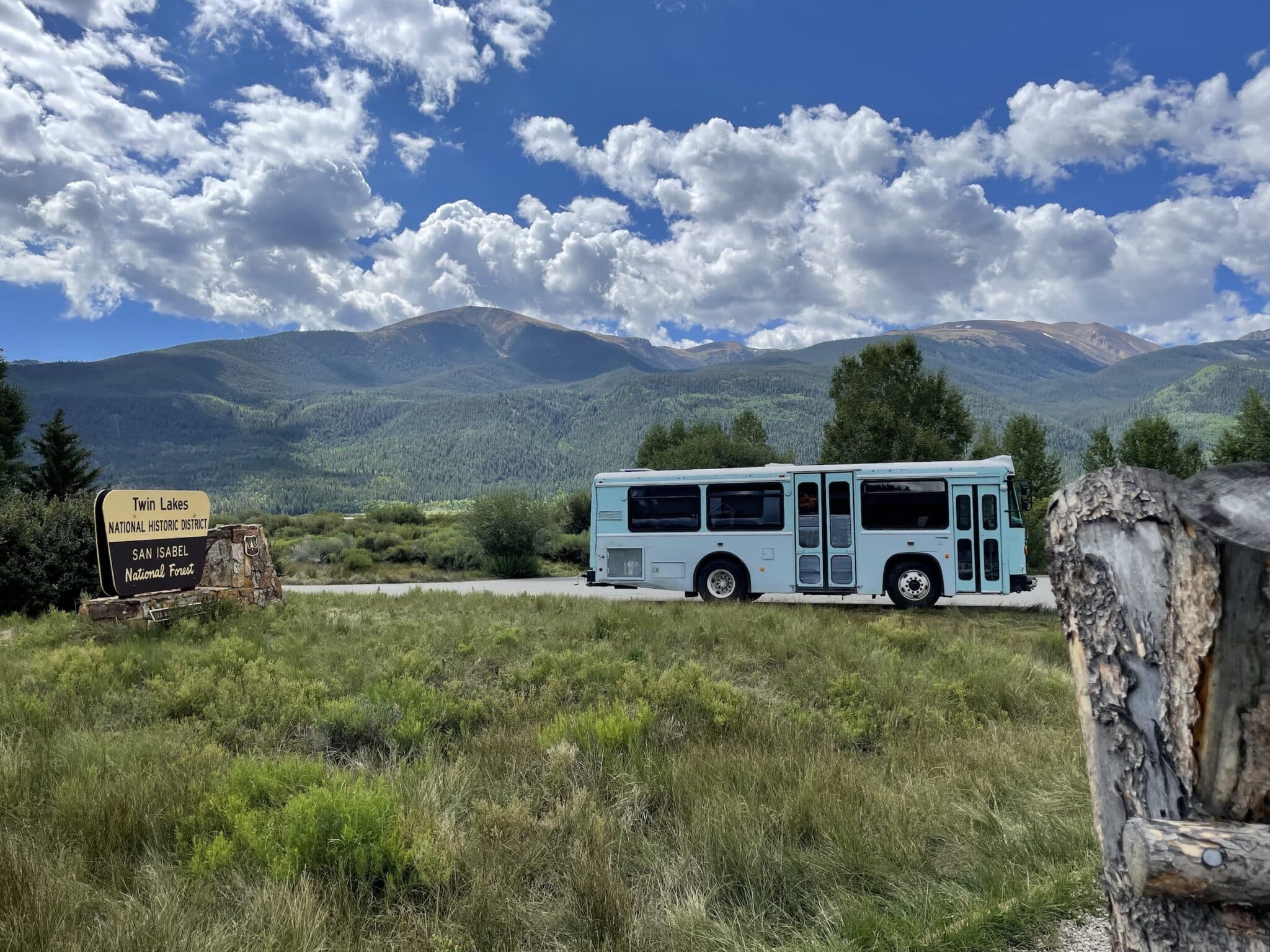
I’ll be honest, there are limitations. A 35-40 foot bus is a big vehicle and pretending otherwise doesn’t help anyone. But the limitations are mostly predictable, and once you know what they are, you plan around them without much thought.
Places where length actually restricted me: downtown areas of older cities with narrow streets and tight intersections. Some national park roads, particularly the ones with steep switchbacks that weren’t designed for anything bigger than a pickup truck. Drive-throughs at fast food places — the turn radius inside most drive-throughs is way too tight for a full-size bus. And certain gas stations where the canopy is low or the pumps are arranged in a tight U-shape.
But here’s the thing. Those restrictions sound like a big list until you realize how much of your life doesn’t involve any of them. Highway driving is fine. Suburban areas are fine. Most state parks and campgrounds accommodate buses no problem since they’re designed for RVs. Shopping centers, strip malls, truck stops — all good. You’re really only restricted in dense urban cores and on certain mountain roads.
I talked to a couple who’d been full-timing in a 40-foot skoolie for almost two years. They told me the first month felt claustrophobic in terms of where they could go, but by month three they had their system down. They used Google Maps satellite view to scout parking lots before arriving. They’d zoom in on the overhead view and check the lot layout, look for pull-through spots, check the street parking nearby. Took them about 30 seconds per stop and basically eliminated the guesswork.
One thing they mentioned that I thought was smart — they kept a running list on their phone of businesses and lots in each city that worked well for their bus. So when they came back through a town, they already knew exactly where to park. That kind of institutional knowledge builds up fast and makes the whole thing feel routine.
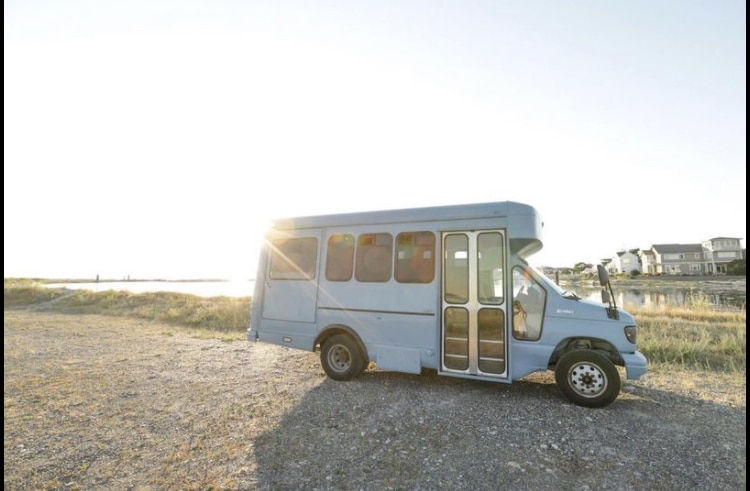
For people on the fence about bus length because of parking concerns, here’s what I found. Short buses under 25 feet can park almost anywhere a large truck can park. They fit in standard parking spaces, make normal turns, and don’t attract much attention. Full-size buses over 35 feet require more planning, but they’re not the nightmare people imagine. You lose some convenience and gain a lot more living space. That’s the trade-off, and most people I talked to said they’d make the same choice again.
After digging into this whole topic, here’s where I ended up. Parking a skoolie in a regular lot is less of a problem than it is a minor lifestyle adjustment. You park in the back, you walk a little farther, you think about turns a bit more, and you learn which spots work and which don’t. It becomes second nature surprisingly fast. The people who stress about it the most are always the ones who haven’t done it yet. Once you’re actually behind the wheel running your errands and living your life, you realize the bus fits into the world a lot better than you expected. It’s not seamless, but it’s not the obstacle people build it up to be in their heads either. You figure it out and you move on.