
I’m going to be upfront about something. Insurance was the topic that almost made me quit researching bus conversions entirely. Not because it’s impossible, but because every answer I found contradicted the last one. One person says State Farm covered them no problem. The next person says State Farm laughed them off the phone. One guy on a forum says he’s paying $90 a month, and a woman in the same thread says she can’t get coverage at any price. I’ve spent weeks sorting through all of this, talking to people who’ve actually gone through the process, and I think I can finally lay it out in a way that makes sense. (See our guide on Can You Get Insurance for a Converted School Bus? for more on this.)
Insuring a converted school bus is absolutely possible, but you won’t get it from your regular auto insurance company. You need specialty RV insurance through companies like National General, Roamly, Good Sam, or certain State Farm agents who know how to classify conversions. The process requires re-titling your bus as an RV first, which solves the chicken-and-egg problem most people run into. Expect to pay $800-$2,000 per year for full coverage on a typical conversion, with rates varying based on your declared build value, your state, and whether you’re living in it full-time. The whole thing is more annoying than it is difficult, and every single person living in a skoolie right now has figured it out.
For a quicker overview of the basics, check out our article on whether you can get insurance for a converted school bus. This guide goes deeper into the process, the companies, and all the edge cases that make people want to pull their hair out.
—
How is the insurance on a schoolie conversion?
Let me just get the core truth out of the way. Regular auto insurance doesn’t work for a converted bus. It’s not that they don’t want your money. It’s that their systems literally cannot process what you have. You call Geico and tell them you have a 2004 International 3800 that you’ve turned into a house, and their dropdown menus do not have a box for that. The agent on the phone can be the nicest person in the world and they still can’t help you because the software won’t let them. (See our guide on The Complete Guide to Registering and Titling a Converted School Bus for more on this.)
So the insurance on a skoolie conversion comes from companies that specialize in RVs, or more specifically, companies that understand that not every RV rolled off a factory floor. The experience varies from person to person, but the general consensus from people I’ve talked to is this: it’s annoying to set up, the process takes longer than it should, but once you’re covered, it works like any other insurance. You pay a monthly or annual premium, you’ve got liability and optionally collision and comprehensive, and if something happens, you file a claim.
The cost range I keep seeing is $800-$2,000 per year for full coverage. Some people pay less, some pay more. It depends on your build value, where you’re registered, your driving history, and how the company classifies your vehicle. Liability only is cheaper, sometimes $400-$800 per year.
What do y’all do about insurance? My insurance company will not do bus conversion. Please help
Yeah, join the club. I’ve seen this exact question asked in probably fifty different forums and Facebook groups, and the frustration is always the same. You call your insurance company, the one you’ve been with for years, and they either flat out say no or they transfer you between departments until you give up.
Here’s the step-by-step process that actually works. I’m going to lay this out in order because the order matters.
Step 1: Re-title your bus as an RV. This is the single most important thing you can do, and it needs to happen before you start shopping for insurance. Every state has a process for converting a vehicle’s title from “school bus” or “commercial vehicle” to “motorhome” or “RV.” Some states require an inspection, some just require photos showing it has living amenities (bed, cooking, toilet). We’ve got a whole article on the registration process at how to register a converted school bus as an RV.
Why does this matter so much? Because most insurance companies that cover bus conversions require the RV title. They won’t insure a vehicle titled as a school bus. The title is what tells their system “this is an RV” instead of “this is a commercial vehicle,” and it opens up the RV insurance category for you.
Step 2: Gather your documentation. Photos of the interior and exterior, receipts for materials and labor, a list of installed amenities, and your RV title. Some companies want a lot of detail, some are more relaxed, but having all of this ready speeds everything up.
Step 3: Call the specialty companies. I’ll list them below. Get at least three quotes. Do not accept the first quote you receive.
Step 4: Be patient and persistent. Some agents at these companies will still be confused by your vehicle. If one agent says no, call back and get a different one. I’ve heard multiple stories of people being denied on a Monday and approved on a Wednesday by a different agent at the same company.
How do you insure such huge bus?
The size of the bus actually matters less than most people think. What matters is the GVWR and how the vehicle is classified. Insurance companies care about the title, the declared value, and the use — not whether your bus is 24 feet or 40 feet.
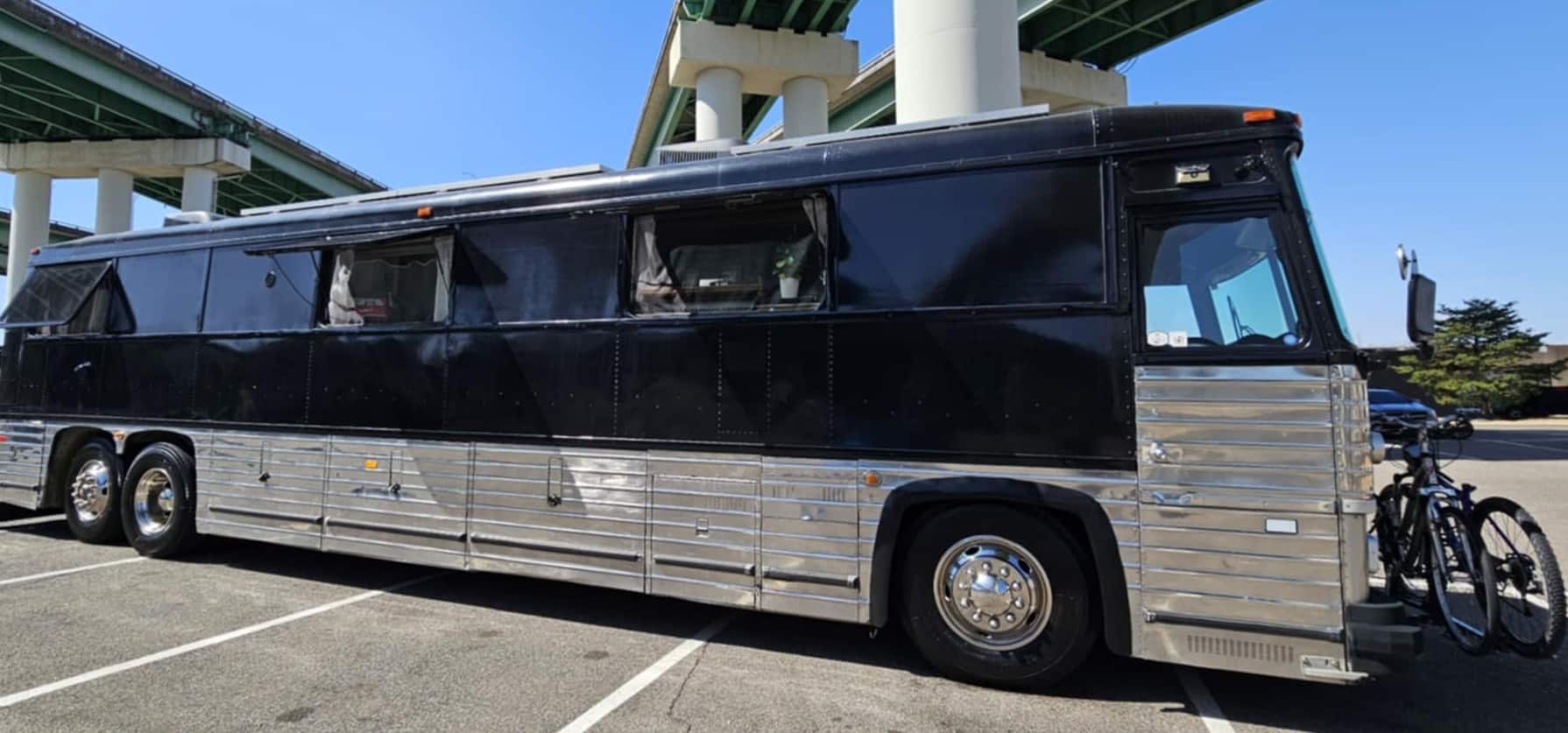
That said, larger buses can sometimes be trickier with certain companies. A few carriers have weight limits or length restrictions in their underwriting guidelines. I know of at least one company that won’t cover anything over 40 feet, and another that gets weird about anything over 26,000 lbs GVWR. But these are edge cases. Most of the specialty RV insurers cover the full range of bus sizes.
The real factor that changes your rates isn’t size, it’s value. A 40-foot coach conversion with $80,000 in build costs is going to have a much higher premium than a short bus with a $15,000 build, and that makes sense because the insurer’s liability is proportional to the declared value. Size just happens to correlate with value because bigger builds tend to cost more.
What company insured your bus?
Here’s the list. I’ve cross-referenced this with dozens of forum threads, Facebook group discussions, and conversations with actual skoolie owners. These are the companies that actually write policies on converted buses, not the ones that say “maybe” and then ghost you.
National General (now Allstate subsidiary). This is probably the most commonly cited insurer in the skoolie community. They’ve been writing policies on converted vehicles for years and their agents generally understand what a bus conversion is. The process is fairly straightforward once you have your RV title. Expect them to ask for photos and a declared value.
Roamly. This company was literally built for the van life and bus life community. Their entire business model is insuring DIY conversions that nobody else will touch. You can get a quote online without playing phone tag, which is refreshing after dealing with traditional insurers. They tend to be a bit pricier than National General but the process is easier and they understand modifications that other companies don’t.
Good Sam Insurance (through Camping World). Good Sam has been insuring RVs forever and they do cover conversions. A Good Sam membership gets you a discount on the premium. Their agents vary in knowledge level, some are great, some have never heard of a skoolie. If you get one who doesn’t know what you’re talking about, hang up and call back.
State Farm. This one is weird. State Farm as a company does not have a standard policy for bus conversions. But individual agents have the ability to write custom policies, and some agents have figured out how to classify conversions in their system. The experience is wildly inconsistent. I talked to one guy who said his State Farm agent covered his skoolie in 20 minutes, full coverage, no hassle. And I’ve seen at least a dozen posts from people saying State Farm refused them. It depends entirely on your local agent.
USAA. If you’re military or a military family member, USAA is worth a call. They’ve covered bus conversions for some members, though it’s not a standard product and the experience varies by state.
Progressive. They’ve recently started covering some converted vehicles through their RV division. Worth getting a quote, though I’ve heard mixed reports about their willingness to cover amateur builds specifically.
Call at least three of these. Prices can vary by hundreds of dollars for the same vehicle and the same coverage level.
What rv insurance does everyone have and what are you paying for?
A couple weeks back I was scrolling through a pretty active skoolie Facebook group and someone asked exactly this question. The thread got something like 200 replies, and I sat there reading all of them because I’m apparently that kind of person now.
The range was wild. People reporting everything from $65 a month to $280 a month. But when you dug into the details, the variation made sense. The people paying $65 a month had liability only on older buses with low declared values. The people paying $250+ had full coverage on high-value builds with full-time living endorsements.
Here’s what I’d call “typical” based on everything I’ve gathered.
Liability only: $400-$800 per year ($33-$67/month). This covers damage you cause to other people and their property. It does NOT cover damage to your bus.
Full coverage (liability + collision + comprehensive): $800-$2,000 per year ($67-$167/month). This covers damage to your bus as well. Collision covers accidents. Comprehensive covers theft, fire, weather, falling trees, vandalism.
Full-time living endorsement: add $100-$400 per year. If you’re living in the bus full-time, most insurers want to know that, and some require a specific endorsement for full-time use. Not all companies offer this, and some that do charge extra for it.
The factors that drive your rate up: higher declared build value, full-time use, younger driver, less driving history, wood stove or other high-risk modifications, states with higher insurance costs generally (Michigan, Florida, Louisiana).
The factors that bring it down: liability only instead of full coverage, higher deductible, clean driving record, membership discounts (Good Sam), bundling with other policies.
Who is your ins company? Geico telling me no
Geico telling you no is normal. Don’t feel bad about it and do not keep calling them hoping for a different answer. Their system does not accommodate converted buses. Period. I’ve seen people call Geico five or six times thinking they’ll get a more knowledgeable agent and it’s just not going to happen.
Same story with most of the big mainstream insurers. Allstate (their regular auto side, not National General), Liberty Mutual, Nationwide, Farmers — these companies handle standard vehicles. A school bus that someone turned into a house is not a standard vehicle and they don’t have a product for it.
The reason Geico and similar companies say no isn’t because your bus is dangerous or uninsurable. It’s because they don’t have the underwriting category for it. They literally cannot create a policy for a vehicle type that doesn’t exist in their system. It’s not personal.
So skip the mainstream companies. Go straight to the specialty list I mentioned above. You’ll save yourself hours of frustration.
Would love to know how you got insurance with a wood stove.
Ok so this is where things get genuinely tricky, and I’ll be honest, this one stumped me for a while when I was looking into it.
Wood stoves in converted vehicles represent one of the highest fire risks an insurer can imagine. Open flame, combustible materials inches away in every direction, a moving vehicle, no fire suppression system. From an underwriter’s perspective, it’s a nightmare scenario. So most companies either explicitly exclude wood stoves from coverage or they’ll deny your application if you mention one.
And here’s the thing you absolutely cannot do: lie about it. If you have a wood stove and you don’t disclose it on your application, and then your bus catches fire, your claim will be denied. They’ll investigate, find the wood stove, and you’ll get nothing. Worse than nothing actually, because you’ll have been paying premiums for coverage that was void from the start.
Roamly is the company that comes up most often in wood stove discussions. They actually understand the alternative living community and they’ve underwritten policies with wood stoves included. Your premium will be higher, sometimes significantly. But at least you’re actually covered.
Some people have also had success with Good Sam policies that include wood stoves, though it depends on the specific agent and how the policy is written.
The alternative that a lot of people end up going with is ditching the wood stove for a diesel heater (Webasto, Espar, Chinese diesel heaters). These pull from your bus’s fuel tank, they’re thermostatically controlled, and insurance companies have no issue with them because they’re a standard RV heating solution. I know that’s not what the wood stove romantics want to hear. There’s something genuinely appealing about a little stove with a window in a bus on a cold night. But the insurance reality is what it is. If you want the easiest path to full coverage, a diesel heater is it.
Is insurance a real problem with amateur built RVs?
It’s a problem in the sense that it takes more effort than insuring a normal vehicle. It is not a problem in the sense that it’s impossible or that you should reconsider your build because of it.
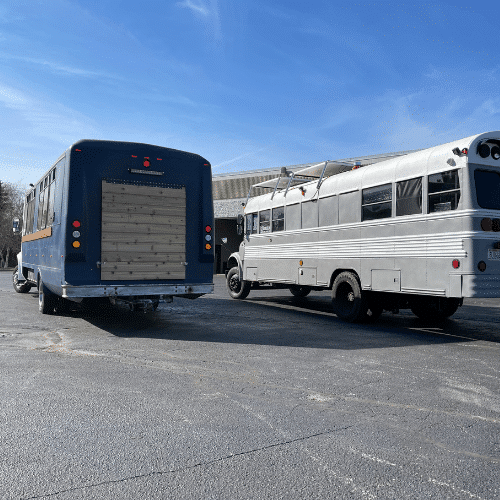
Here’s what I mean by that. Every person currently living in a converted bus has insurance. They all went through the same annoying process. They all heard “no” from a couple companies before hearing “yes.” And then they got on with their lives. The insurance part took a few phone calls and maybe a week or two of back and forth. In the context of a build that takes 6-12 months, that’s nothing.
The “amateur built” part is actually less of an issue than people expect. In the US, there’s no national certification requirement for DIY RV conversions. You don’t need a licensed contractor to sign off on your build. You don’t need an engineer’s stamp (that’s an Australian thing, not a US thing). The insurance company wants photos, receipts, and a declared value. They are not sending an inspector to check your wiring. (See our guide on Do You Need a CDL to Drive a Skoolie? for more on this.)
Now, that said, the quality of your build matters if you ever file a claim. If your bus burns down because of faulty wiring you did yourself, the claims adjuster is going to look at that. If your plumbing floods the interior because you used the wrong fittings, same thing. Build it right not just for insurance but because you live in it.
The real problem isn’t getting coverage, it’s getting coverage that accurately reflects your investment. And that brings us to declared value, which matters more than most people realize.
Very nice work. I bought a 2009 Ford F750 with a camper style bed. I am hoping to convert it into a nice RV. Problem that I have run into is that I can’t register it without proof of insurance. I CAN NOT find anyone to insure it.
This is the chicken-and-egg problem and I hear about it constantly. The state says you need insurance to register the vehicle. Insurance companies say they need it registered (preferably as an RV) before they’ll insure it. So you’re stuck in a loop. (See our guide on How Do You Register a Converted School Bus as an RV? for more on this.)
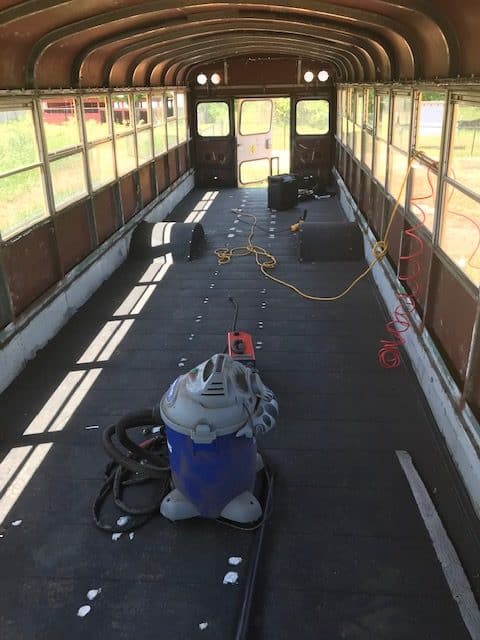
Here’s how people actually solve this.
Option 1: Get basic liability insurance as a commercial vehicle first. Some mainstream insurers will write a basic liability policy on the vehicle in its current title classification (commercial vehicle, truck, whatever the F750 is titled as). This gives you proof of insurance for registration purposes. Then you register it, convert it, re-title it as an RV, and switch to a proper RV insurance policy. The initial liability policy might cost more per month than you want, but it’s temporary.
Option 2: Find a state that doesn’t require insurance to register. Some states (New Hampshire, Virginia with a fee, Mississippi) don’t mandate insurance for vehicle registration. If you can register in one of those states, you break the loop. Then insure it afterward.
Option 3: Contact Roamly or National General and explain the situation upfront. Some specialty insurers understand this chicken-and-egg problem because they deal with it all the time. They may be able to write a policy based on the VIN before the vehicle is re-titled, specifically to get you past the registration hurdle. It doesn’t always work but it’s worth asking.
Option 4: Work with a specialty insurance broker. Not a company, a broker. Someone who shops multiple carriers on your behalf. They’ve seen this situation before and they know which companies are flexible on the title requirement. A broker costs you nothing extra because they’re paid by the insurer.
The F750 specifically might add a layer of complexity because of its GVWR (usually 25,500-33,000 lbs depending on configuration). Some carriers have upper weight limits on what they’ll insure as an RV. But it’s absolutely insurable, it just might take a few more calls.
Whom or what carriers are insuring these vehicles?.. haven’t seen any videos referencing this as part of a budget plan
This is a great point and it drives me a little crazy. You watch these skoolie build videos and they go through everything, the floor, the walls, the electrical, the plumbing, and they never once mention insurance. They’ll tell you how much they spent on cabinet hardware but not what they’re paying monthly to legally drive the thing. (See our guide on Can You Legally Live in a Converted School Bus? for more on this.)
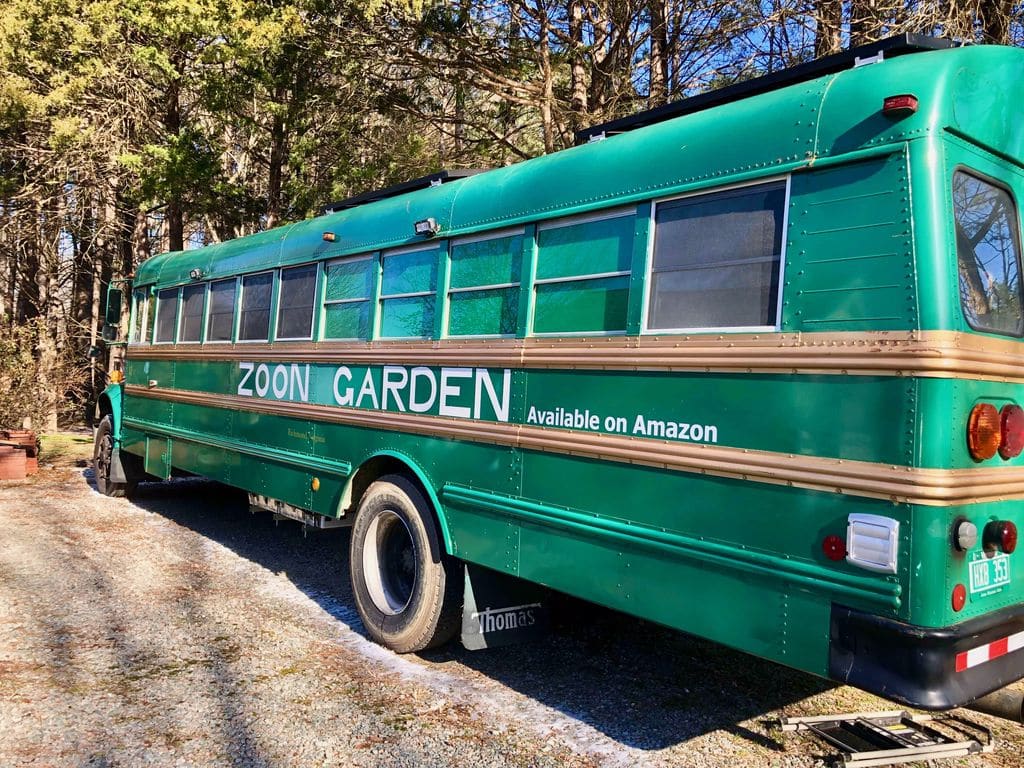
Insurance should be in your budget from day one. Here’s how I’d plan for it.
Pre-build phase: Budget $50-$100/month for basic liability coverage on the vehicle as-is, so you can register it and legally have it on the road (or in your driveway without risk).
Post-build phase: Budget $80-$170/month for full coverage RV insurance once the build is done and the vehicle is re-titled.
Annual budget: $1,000-$2,000/year is a reasonable number to plan around for full coverage on a typical conversion valued between $20,000 and $60,000.
And build a documentation habit from the start. Every receipt, every photo, every upgrade, saved and organized. When it comes time to declare your build value, you want real numbers, not guesses. And if you ever file a claim, that documentation is the difference between getting paid and getting argued with.
The carriers are National General, Roamly, Good Sam, State Farm (agent dependent), USAA (military), and Progressive (sometimes). I listed them all in detail above but I’m repeating them here because this question deserves its own answer and the person asking it deserves to not have to scroll back up.
—
What Actually Affects Your Rate
I want to break this down because understanding what moves the needle helps you make smarter decisions.
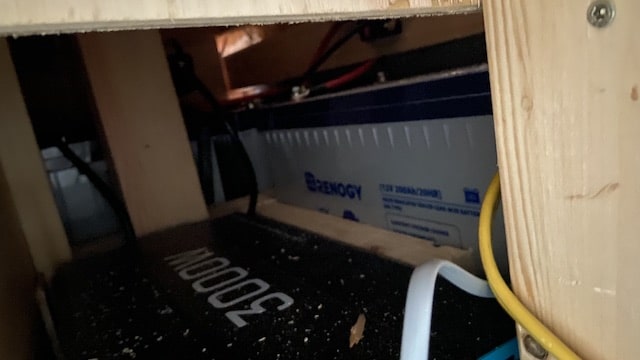
Declared build value. This is the big one. You tell the insurer what your conversion is worth, and they insure it for that amount. Higher value means higher premium. But under-declaring to save money is a trap. If your bus with a $50,000 build burns down and you only declared $25,000, you’re getting $25,000. Declare honestly.
Your state. Insurance is regulated at the state level, so rates vary significantly depending on where you’re domiciled. Michigan is notoriously expensive for all vehicle insurance. South Dakota and Florida, which are popular domicile states for full-timers, tend to be more reasonable. Texas is middle of the road.
Full-time vs recreational. Living in the bus full-time means more exposure and higher risk in the insurer’s eyes. Not all companies even offer full-time coverage. The ones that do charge more for it.
Your driving record. Same as any other vehicle insurance. Clean record, lower rate.
The vehicle itself. Year, make, GVWR, mileage. A 1998 bus is viewed differently than a 2015 bus.
Modifications. Wood stoves, propane systems, solar installations, custom electrical. Some modifications raise your rate, some are neutral. Be upfront about everything.
—
Insurance is the least fun part of bus life. I’m not going to pretend otherwise. Nobody gets excited about calling insurance companies and explaining for the fifth time what a skoolie is. But it’s a solvable problem and it’s a problem that literally every bus owner has solved. The process is annoying. The cost is reasonable. And once it’s done, you don’t think about it again until the renewal comes.
Get your RV title first. That’s the key that unlocks everything. Call National General, Roamly, and Good Sam. Get three quotes. Pick the one that covers what you need at a price you can afford. Budget $1,000-$2,000 a year and move on with your life. You’ve got a bus to build.
kz7y1k