
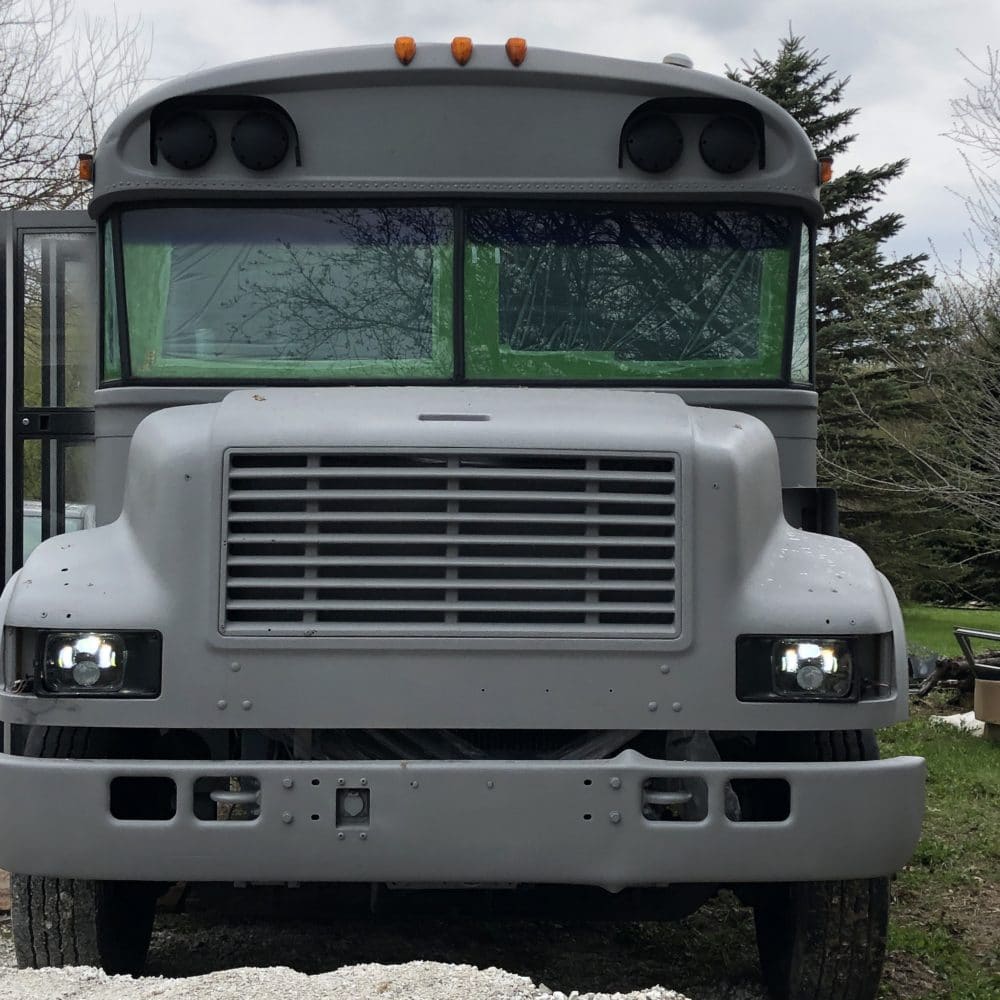
When I first started digging into CDL requirements for bus conversions, I thought it’d be straightforward. One federal rule, 50 states, done. I was wrong. I spent weeks going through DMV websites, reading forum threads from people who’d actually dealt with this in different states, and calling a few DMV offices myself. And what I found is that while the federal framework is pretty clear, individual states have layered on their own rules that can trip you up if you’re not paying attention.
The federal CDL threshold is 26,001 pounds GVWR — if your converted bus is under that weight and you’re using it for personal use (not hauling passengers for money), you don’t need a CDL in most states. But “most states” isn’t “all states,” and the details around air brakes, RV exemptions, and how your bus is titled can change everything. This guide breaks down what I found state by state, so you can figure out exactly where you stand before you buy a bus or try to drive one across state lines.
The Federal Rule That Governs Everything: 26,001 Pounds GVWR
Before we get into individual states, you need to understand the baseline. The Federal Motor Carrier Safety Administration (FMCSA) sets the floor for CDL requirements nationwide. The magic number is 26,001 pounds GVWR. (See our guide on Do You Need a CDL to Drive a Skoolie? for more on this.)

GVWR stands for Gross Vehicle Weight Rating. I’ll get into why this number matters more than your actual weight later, but the short version is this: if the manufacturer’s rating on your bus says 26,000 pounds or less, you’re under the federal CDL threshold. If it says 26,001 or more, you’ve crossed the line.
Now here’s the part that confused me initially. The FMCSA rule applies to commercial motor vehicles. A converted school bus that you live in and drive for personal use isn’t a commercial vehicle. So you’d think the CDL question just goes away entirely, right? Not exactly. States adopt the federal threshold but apply it differently. Some states require a non-commercial Class B license for heavy personal vehicles. Some states have RV exemptions that override the weight threshold entirely. And a couple of states have their own weight cutoffs that don’t match the federal number at all. (See our guide on The Complete Guide to Insuring a Converted School Bus for more on this.)
That’s why a state-by-state approach is the only way to actually answer this question.
“If it has air brakes, will he need a Class B CDL? I’d weigh that thing for gross weight, so are the tires sufficient?”
This was a comment I saw that actually combines two separate issues, and I think a lot of people conflate them the same way. So let me untangle it.

Air brakes and CDL requirements are related but not the same thing. Most full-size school buses have air brakes. Most short buses (Type A, the ones on a van chassis) have hydraulic brakes. If your bus has air brakes and you’re in a state that requires a CDL or special license for your weight class, you’ll also need an air brake endorsement on top of that. But air brakes alone don’t trigger a CDL requirement in most states — it’s the weight that does it.
Now the tire question is actually a weight question in disguise, and it’s a smart one. Every tire has a load rating stamped on the sidewall. If your bus’s actual loaded weight exceeds what the tires are rated for, you’ve got a safety problem regardless of what your license says. I talked to a guy at a truck tire shop about this once, and he told me the number of people running overloaded tires on converted buses would horrify me. His advice was simple: look at your GVWR, look at your tire load ratings, and make sure the tires can handle the GVWR divided across however many tires you’ve got. If they can’t, you need different tires before you need a different license.
The air brake endorsement itself is usually just a written knowledge test at the DMV. You study the air brake section of the CDL manual for a couple hours, go take the test, and you’re done. Some states roll it into a non-commercial Class B license. Others treat it as a standalone endorsement you can add to your regular license. I found no consistency at all on this point, which is why I started tracking it state by state.
GVWR vs Actual Weight: Why the Sticker Matters More Than the Scale
This trips people up constantly and I want to clear it up before we go any further. Your GVWR is what determines your license requirement. Not your actual weight. Not what the scale says at the truck stop. The GVWR.

Here’s why that matters. Say your bus has a GVWR of 29,000 pounds but it actually weighs 19,000 pounds with your full build, water tanks, and everything loaded up. You’re still in CDL territory because the GVWR is over 26,000. The law doesn’t care that you’re 10,000 pounds under your max. It cares about what the manufacturer said the vehicle is rated for.
I thought this was kind of unfair when I first learned it. Why should the rating matter if the actual weight is fine? But when I thought about it more, it makes sense from a regulatory standpoint. The GVWR tells the state what kind of vehicle you’re operating — its braking capacity, its tire requirements, its frame capability. A 29,000 GVWR bus has different suspension and stopping characteristics than a 16,000 GVWR van, even if they happen to weigh the same on a given day.
The flip side is good news for most skoolie owners. A typical Type C school bus (the kind with the dog-nose hood, which is what most people convert) has a GVWR between 19,500 and 25,500 pounds. That means most of them fall under the 26,001 threshold. Full-size flat-front buses (Type D) are the ones that tend to go over, along with coach buses and some transit buses.
Check the sticker inside the driver’s door jamb or on the VIN plate. That number is your answer to half the CDL questions you’ll ever have.
“Do you have a bus licence?”
I get asked this one constantly, and the answer might surprise people coming from outside the US. In most of America, no, you don’t need any special bus license to drive a converted school bus. As long as it’s re-titled as an RV or motorhome and it’s under 26,001 pounds GVWR, your regular driver’s license covers it.

The confusion comes from a few places. First, people see a big vehicle and assume big vehicle equals special license. Second, in countries like the UK, Australia, and most of Europe, vehicle size and type determine your license class regardless of whether it’s personal or commercial use. The US system is different. Here, it’s based on weight and commercial purpose, not on what the vehicle looks like or what it used to be.
Third, and this is the one that really muddied the waters for me when I was researching, some people confuse a CDL (Commercial Driver’s License) with a non-commercial Class B license. These are not the same thing. A CDL requires medical exams, drug testing, and affects your driving record differently. A non-commercial Class B in states that have them is basically just your regular license with permission to drive heavier vehicles. Way less hassle.
So when someone asks “do you have a bus license,” what they’re really asking is whether the US requires special licensing for big personal vehicles. And the answer for most converted buses is no.
The RV Exemption: How Re-Titling Your Bus Changes Everything
This is the single most important thing I learned in my entire deep-dive into CDL requirements. In most states, recreational vehicles are exempt from CDL requirements regardless of weight. Let me say that again because it’s that important. Regardless of weight.

Think about it this way. A brand new 45-foot Class A diesel pusher motorhome can have a GVWR of 44,000 pounds. That’s way over the 26,001 CDL threshold. But nobody is asking the retired couple driving it to Yellowstone for a CDL. Why? Because it’s classified as a recreational vehicle for personal use, and most states exempt RVs from commercial licensing requirements.
When you convert a school bus and re-title it as an RV or motorhome, you step into that same exemption. Your bus is now legally the same category as that $400,000 Prevost coach the retirees are driving. Same license requirements, which in most states means your regular Class C or Class D license. (See our guide on Can You Legally Live in a Converted School Bus? for more on this.)
Now I should be clear, not every state’s RV exemption is created equal. Some states explicitly say “RVs of any weight are exempt from CDL.” Others are vaguer and you have to read between the lines. And a small handful of states have their own weight thresholds for RVs that are different from the commercial threshold. I’ll cover the specific states below.
But the takeaway is this: re-titling your bus as an RV isn’t just about registration and insurance. It’s the key that unlocks the “no CDL needed” door in most of the country. (See our guide on Can You Get Insurance for a Converted School Bus? for more on this.)
“Can you legally drive that on the road?”
Short answer, yes. Longer answer, it depends on whether you’ve done your paperwork.
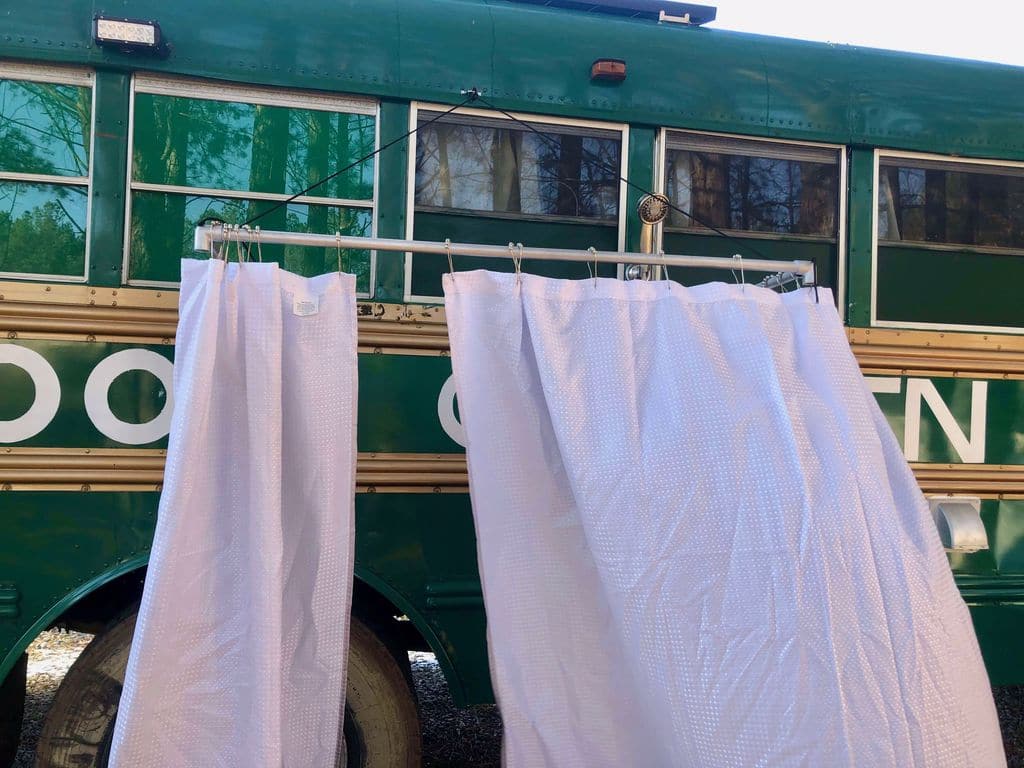
A converted school bus that has been re-titled as an RV, properly registered, and insured is 100% legal to drive on public roads. There is nothing illegal about converting a bus into a home and driving it around the country. I kept seeing this question pop up in YouTube comments and forums, and I think people assume there’s some hidden regulation that makes it illegal or quasi-legal. There isn’t.
What CAN get you in trouble is driving a bus that’s still titled as a commercial vehicle on a regular license. Or driving a bus that’s over your license class’s weight limit. Or driving without proper insurance. Those are legal issues. The conversion itself, the driving itself, is perfectly legal once you handle the paperwork.
I will say this though. I read a thread from a guy who got pulled over in Georgia driving his half-converted bus that was still painted yellow and still titled as a school bus. The officer wasn’t sure what to do with him. He ended up getting a warning, not a ticket, but it was a hassle. The lesson? Get your bus re-titled, re-painted, and properly insured before you start road-tripping. It saves you from exactly that kind of gray area.
Class A vs Class B vs Class C Licenses: What’s the Actual Difference?
I found that a lot of the CDL confusion comes from people not understanding what these license classes actually mean. So here’s the breakdown, as simply as I can put it.

Class C (sometimes called Class D in some states) is your standard driver’s license. The one you already have. It covers vehicles under 26,001 pounds GVWR for personal use. This is what most skoolie owners use.
Class B covers single vehicles with a GVWR of 26,001 pounds or more. There’s a commercial Class B (the CDL) and in some states a non-commercial Class B. The non-commercial version is for people driving heavy personal vehicles — like a really big RV or, in theory, a heavy converted bus. But again, the RV exemption in most states means you won’t need even a non-commercial Class B for a re-titled bus.
Class A covers combination vehicles — basically a heavy vehicle towing a heavy trailer where the combined weight exceeds 26,001 pounds and the trailer alone is over 10,000 pounds. If you’re towing a car on a flatbed behind your bus and the combined GVWR goes over the threshold, this is technically where you’d land. In practice, most people towing cars behind skoolies use a lightweight tow dolly or flat-tow setup that keeps them in Class C territory.
The comment I saw was “I have a CDL class A. I’m wondering how much does the bus like that cost?” And honestly, if you already have a Class A CDL, you’re set. You can drive anything. Any weight, any configuration. The CDL question is completely irrelevant to you. Lucky.
“I have a CDL class A. I’m wondering how much does the bus like that cost?”
Since this person already has the license angle covered, the real question here is about bus pricing, and I think it’s worth addressing because it comes up alongside CDL questions constantly. People with CDLs tend to look at bigger buses — full-size flat-fronts, transit buses, coach buses — because the CDL removes the weight barrier.
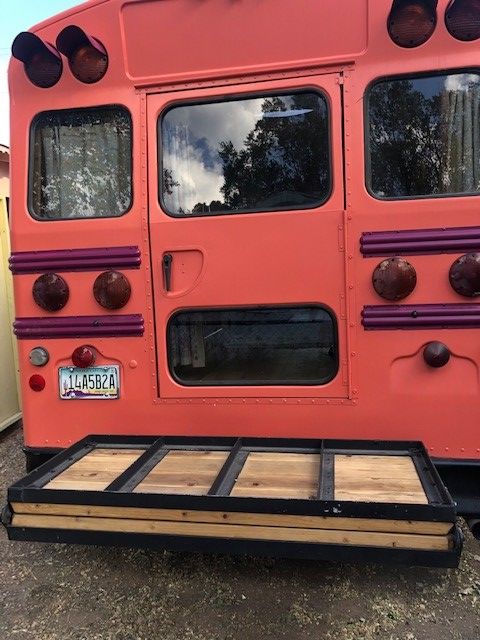
A full-size school bus (Type D, flat front) runs $3,000-$8,000 for a retired one in decent mechanical shape. Type C school buses (dog-nose) are usually $2,500-$6,000. Short buses can be as cheap as $1,500-$4,000. Coach buses are a whole different world, $10,000-$50,000+ depending on age and condition and whether they already have onboard systems.
If you’ve got a Class A CDL, my honest advice would be to look at the full-size flat-fronts or even a coach bus. You can drive anything, so why limit yourself to a bus that fits under 26,000 pounds? The bigger buses give you more space, and the CDL you already have means there’s no licensing headache. Just make sure you factor in the higher fuel costs, the wider turning radius, and the fact that some campgrounds won’t accommodate anything over 40 feet.
States with Clear RV Exemptions (The Easy Ones)
After going through all 50 states, I found that the majority — roughly 35-40 states — have straightforward RV exemptions that work the same basic way. If your vehicle is titled and registered as an RV or motorhome, and you’re using it for personal recreational purposes, you don’t need a CDL regardless of GVWR.

These states follow the logic that if you bought a $500,000 diesel pusher motorhome you wouldn’t need a CDL, so your converted bus titled as an RV shouldn’t need one either. The states where I found this to be clearest include:
Texas — Super skoolie-friendly. RV exemption applies to all motorhomes regardless of weight for personal use. Texas is also one of the easier states to re-title a bus as an RV, which is why a lot of full-timers register there.
Florida — Similar to Texas. RVs for personal use are exempt from CDL requirements. Florida is another popular registration state for full-timers because of the no-income-tax situation and relatively simple titling process.
South Dakota — This is the state a ton of full-time RVers and bus lifers use as their domicile state. Easy RV exemption, no income tax, straightforward mail forwarding services, and the registration process is well-documented for converted vehicles.
Montana — Popular for LLC registration to avoid sales tax on expensive vehicles, and they have a clear RV exemption as well. I should note that the LLC registration thing is a gray area ethically and some states are cracking down on it, but the RV exemption for personal use is legitimate.
Indiana — Explicitly exempts motorhomes from CDL requirements. The titling process for bus-to-RV conversion is also relatively simple here.
Arizona, Nevada, Wyoming, Tennessee, Georgia, Alabama, Mississippi, Louisiana, Oklahoma, Kansas, Nebraska, Iowa, Missouri, Kentucky, West Virginia, Virginia, North Carolina, South Carolina — all have RV exemptions that I found to be clear and well-documented.
The common thread? If the state sees your vehicle as a motorhome rather than a commercial vehicle, the CDL question goes away. Re-titling is the key step.
States with Quirks, Complications, or Stricter Rules
Now here’s where it gets interesting. And by interesting I mean frustrating, because these are the states where the general “re-title as an RV and you’re fine” advice doesn’t fully apply. Or where there are extra hoops.
California
California is its own universe when it comes to vehicle regulations. I spent more time researching California than any other state, and I’m still not 100% confident I’ve got every nuance right.
The big thing: California requires a non-commercial Class B license for any vehicle with a GVWR over 26,000 pounds, even if it’s a personal RV. So if you’ve got a big flat-front school bus or a coach bus that’s over 26,000 GVWR, you need a Class B even after re-titling as an RV. The good news is that the non-commercial Class B isn’t a CDL — you don’t need medical cards, drug testing, or any of the commercial requirements. You just need to pass a knowledge test and a driving test at the DMV.
California also has specific rules about air brakes. If your vehicle has air brakes, you need to pass the air brake knowledge test to get the restriction removed from your license. Without it, you’d technically have an air brake restriction that prevents you from driving vehicles with air brakes.
I talked to someone who went through this process in California and they said the actual testing wasn’t hard, just annoying to schedule. The behind-the-wheel test for a Class B requires you to bring the vehicle you’re testing in, which means you need to somehow get your bus to the DMV. Kind of a catch-22 if you can’t legally drive it there yet. Most people either have it towed to a nearby lot or find a friend who can legally drive it.
New York
New York has its own weight thresholds that don’t perfectly mirror the federal system. Vehicles over 26,000 pounds require a Class B license, and New York’s RV exemption isn’t as clear-cut as Texas or Florida. I found conflicting information about whether the RV exemption in New York actually covers vehicles over 26,000 GVWR or just vehicles between certain weights.
What I’d recommend for New York: if your bus is under 26,000 GVWR, you’re almost certainly fine with a regular license. If it’s over, call the NY DMV directly and get a definitive answer in writing before you assume anything. And then call them again because the first person might give you different information than the second person, which is unfortunately how DMVs work.
Pennsylvania
Pennsylvania is another state that came up in my research as potentially problematic. PA has a non-commercial Class B requirement for vehicles over 26,001 GVWR, and their RV exemption language is somewhat ambiguous. Some people report getting their converted bus registered as a motorhome in PA with no CDL issues. Others report being told they need a Class B.
The inconsistency seems to come from individual DMV offices interpreting the rules differently. My suggestion would be the same as New York, if you’re over 26,000 GVWR and registering in Pennsylvania, get clarity from the DMV before you invest.
Connecticut, New Jersey, and Maryland
These three states popped up in my research as having stricter or more complicated rules for heavy personal vehicles. Connecticut in particular has weight thresholds for non-commercial licenses that some people have found to be lower than the federal standard.
I wasn’t able to nail down the exact specifics for each of these with confidence, so I’ll just say this: if you’re in the Northeast, do your homework more carefully than if you’re in Texas. The Northeastern states tend to have more complex vehicle regulations in general, and the DMV staff may not be familiar with the bus-to-RV conversion situation since it’s less common there.
Hawaii and Alaska
Neither of these states came up as having unusual CDL rules for converted buses, but both have practical considerations that matter. Hawaii limits vehicle sizes on certain roads and bridges. Alaska has fewer restrictions but also fewer DMV offices, so getting anything unusual handled can take longer. If you’re planning to ship a bus to either state, confirm the licensing situation before you commit to the shipping cost.
How Re-Titling as an RV Affects Your CDL Requirement
I already touched on this above, but it’s important enough to get its own section because this is the mechanism that makes the whole thing work.

When your bus is titled as a school bus or commercial vehicle, it’s subject to commercial vehicle regulations. That means the 26,001 GVWR threshold applies as a CDL trigger, and you may need a commercial license to drive it even for personal use in some states.
When you re-title it as an RV or motorhome, the vehicle classification changes. It’s now a recreational vehicle, and recreational vehicles in most states are exempt from CDL requirements. The weight might not change, the vehicle doesn’t physically change, but the legal classification changes and that’s what matters.
The re-titling process varies by state but generally involves removing the seats, making some form of living accommodations (bed, cooking, bathroom facilities), passing an inspection in some states, and filing paperwork with the DMV to change the title from commercial/school bus to RV/motorhome.
I wrote a whole separate article on the re-titling process, so I won’t rehash it all here. But the key point for CDL purposes is this: re-titling is not just a paperwork convenience. In many states, it’s literally the difference between needing a CDL and not needing one.
Some people ask if they should re-title before or after the conversion. For CDL purposes, sooner is better, because until you re-title, you’re technically driving a commercial vehicle. Some states will let you re-title based on a partial conversion — they just want to see that it’s no longer configured as a school bus (seats removed, some living features present). Others want to see a more complete conversion. Check your state’s requirements.
The Passenger Endorsement Question (You Probably Don’t Need It)
This comes up a lot and the answer is almost always no. A passenger endorsement (P endorsement) on a CDL is required for driving vehicles designed to carry 16 or more passengers for commercial purposes. Key words: designed to carry, and commercial purposes.
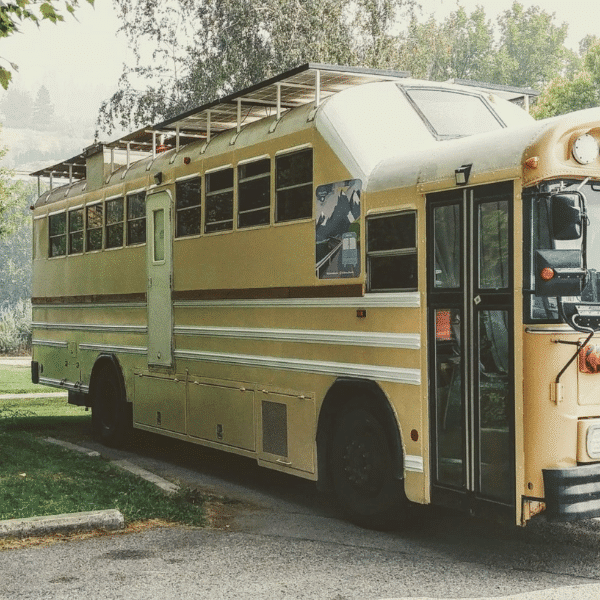
Once you rip out the bus seats and convert the interior to living space, your vehicle is no longer designed to carry 16+ passengers. And you’re not carrying passengers commercially. So even if you somehow needed a CDL for your bus (because of weight), you wouldn’t need the passenger endorsement on top of it.
The only scenario where a P endorsement might come into play is if you left most of the seats in and were charging people for rides. At that point you’re basically running an unlicensed bus service and you’ve got bigger problems than the endorsement.
For personal use with a converted interior? Forget the passenger endorsement. It’s not relevant.
Getting a CDL Voluntarily: Why Some Bus Lifers Do It Anyway
So here’s something that changed my perspective on the whole CDL question. Some people in the bus life community get a CDL not because they need one for their bus, but because it opens up income opportunities on the road.

Think about it. You’re traveling full-time, you need income, and you’ve already proven you can handle a big vehicle. A CDL qualifies you for all kinds of driving jobs: delivery trucks, charter buses, dump trucks, seasonal agricultural work, even Amazon delivery routes in some areas. The pay is usually solid, $20-$30+ per hour depending on the gig and location, and the work is available basically everywhere.
CDL school costs $3,000-$7,000 and takes 3-7 weeks. Some community colleges offer programs for less, which I didn’t know until I started really looking into it. A few states even have programs where the training is partially subsidized if you commit to working for a carrier for a certain period.
If you’re planning to live in your bus full-time and you need flexible income, I’d honestly say a CDL is one of the better investments you can make. Not for the bus itself, but for the job market it opens up. I know a couple of people doing seasonal CDL work — driving for a trucking company for 3-4 months, then traveling for the rest of the year. It’s a legitimate lifestyle strategy and the math works out pretty well.
But if you just want to drive your converted bus to campgrounds on weekends? Probably not worth the time and money. Save that $3,000-$7,000 for your solar setup.
Common Misconceptions I Kept Running Into
After reading hundreds of forum posts and comments about CDL requirements, I started keeping a list of the things people get wrong most often. Here are the big ones.
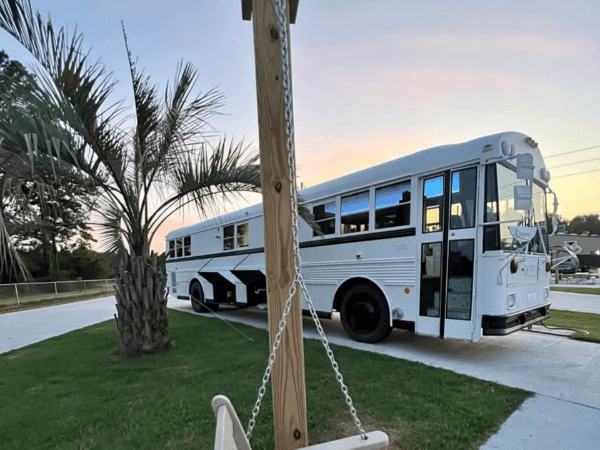
“Any bus requires a CDL.” Nope. It depends on weight and use. A 20,000-pound school bus titled as an RV is legally the same as a 20,000-pound Class A motorhome, and nobody asks those owners for a CDL.
“Removing the seats changes the CDL requirement.” Not directly. Removing seats is a step toward re-titling, and re-titling changes the CDL requirement. The seats themselves aren’t the legal trigger.
“Air brakes automatically mean you need a CDL.” In most states, no. Air brakes might require an endorsement or a restriction removal, but they don’t trigger a full CDL requirement on their own.
“GVWR and actual weight are the same thing.” They’re not, and this is the one that catches people. Your bus could weigh 18,000 pounds but have a GVWR of 29,000 pounds. It’s the 29,000 that the DMV cares about.
“If I get pulled over in a converted bus, I’ll need to show a CDL.” If your bus is properly titled as an RV and you have your regular license, registration, and insurance, you’re fine. Cops may be curious about your bus — I’ve heard plenty of stories about friendly conversations at traffic stops — but curiosity isn’t a legal issue.
“I need a passenger endorsement because it used to be a bus.” Nope. It used to be a bus. Now it’s an RV. The passenger endorsement is for vehicles currently configured and used to carry 16+ passengers commercially.
What Actually Happens If You Get Pulled Over
I spent some time reading accounts from people who’ve been pulled over in their converted buses, because I think this is what really worries people. Not the legal technicality, but the practical reality of a cop seeing a bus and deciding you need a CDL.

Here’s what I found. Most of the time, the officer is just curious. They’ve never seen a converted bus before and they want to know what it is. You show your license, registration, and insurance. The registration says RV or motorhome. The insurance says the same. And that’s the end of it.
In cases where the bus was still titled as a commercial vehicle or school bus, things got more complicated. One guy I read about was driving a bus that was still technically registered as a commercial vehicle (he hadn’t re-titled yet) and the officer told him he needed a CDL for it. He got a ticket. Another person got pulled over because the bus was still painted yellow and the officer thought it was an active school bus — that’s a whole separate issue involving impersonating a school vehicle, which some states take very seriously.
The common thread in every negative story was that the paperwork wasn’t in order. Title still said school bus. Registration still said commercial vehicle. Insurance was wrong or missing. When the paperwork is right — title says RV, registration matches, insurance is current — I couldn’t find a single story of someone getting a CDL-related citation.
So get your paperwork right. It’s boring but it protects you.
One practical tip I picked up: keep copies of your title and registration in the bus, not just the registration card. If an officer questions what kind of vehicle you’re driving, being able to show the title that says “motorhome” or “RV” settles the question immediately. Some people even keep a copy of their state’s RV exemption statute printed out, though I think that’s probably overkill. The title should be enough.
The Driving-It-Home Problem
Here’s a scenario that comes up all the time. You find the perfect bus in another state. It’s still titled as a school bus. You want to buy it and drive it home. But you don’t have a CDL and the bus is over 26,000 GVWR. What do you do?

Option one: have it delivered. Transport companies charge $1-$3 per mile depending on the distance and the size of the vehicle. For a 500-mile trip, that’s $500-$1,500. Not cheap but way less than CDL school.
Option two: find a friend with a CDL to drive it for you. This actually works. As long as the person driving has the appropriate license, you’re fine. Buy them dinner and gas money and call it a deal.
Option three: pick a bus that’s under 26,000 GVWR. This is honestly what most people should do. There are tons of great buses for conversion under that threshold. You don’t need a 36,000 GVWR flat-front bus for a first build.
Option four: buy the bus and re-title it in the seller’s state before driving it home. This is more complex and depends on the state, but some people have done it. You’d need to check whether the selling state allows out-of-state buyers to re-title there.
Option five: get a CDL. If you’re buying a big bus and you also want the job flexibility, this could make sense. But for a one-time drive home? The other options are probably better.
The last thing I’d say here is that technically, driving an improperly licensed vehicle is a risk. Lots of people do drive buses home on regular licenses before re-titling, and most of them don’t have issues. But if you get pulled over and the bus is still titled as a commercial vehicle and you’re driving it on a regular license and it’s over 26,000 GVWR, that’s a legitimate legal exposure. How much of a risk you want to take is up to you. I just want to make sure you know what the risk actually is.
Quick State Reference: What I Found for All 50 States
This is the part where I tried to catalog what each state requires. A few caveats before we get into it. First, DMV rules change. What I found may not be current by the time you read this. Second, some state DMV websites are genuinely terrible and the information is buried or contradictory. Third, individual DMV offices sometimes interpret rules differently within the same state. Always verify with your specific state before making decisions.
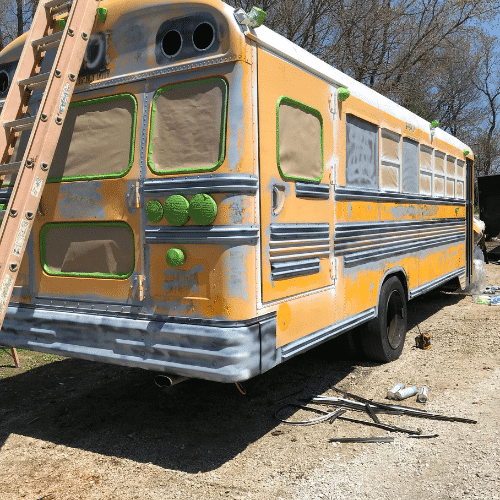
I’m grouping states rather than listing all 50 individually because many of them follow the same basic pattern.
States where re-titled RVs are clearly exempt from CDL regardless of weight: Texas, Florida, South Dakota, Montana, Arizona, Nevada, Wyoming, Tennessee, Georgia, Alabama, Mississippi, Louisiana, Oklahoma, Kansas, Nebraska, Iowa, Missouri, Kentucky, Indiana, West Virginia, Virginia, North Carolina, South Carolina, Arkansas, New Mexico, Colorado, Utah, Idaho, Oregon, Washington, Minnesota, Wisconsin, Michigan, Ohio, Illinois.
That’s roughly 35 states. In all of these, if your bus is titled as an RV and used for personal purposes, your regular driver’s license should cover it regardless of GVWR. Some may require an air brake knowledge test if your vehicle has air brakes, but that’s a minor add-on, not a full CDL.
States where you may need a non-commercial Class B for RVs over 26,000 GVWR: California (definitely), New York (possibly), Pennsylvania (some conflicting reports).
States with additional complexity or unclear rules: Connecticut, New Jersey, Maryland, Massachusetts, Rhode Island, Vermont, New Hampshire, Maine, Delaware, Hawaii, Alaska, North Dakota.
For this last group, I either found the information to be unclear, contradictory, or I couldn’t locate the specific RV exemption language in their statutes. If your state is in this list, I’d strongly recommend calling your DMV and asking specifically: “I have a converted school bus that is titled as a motorhome. The GVWR is [your number]. What license do I need to drive it for personal use?”
Write down the answer and the name of the person you talked to. That way if someone at the DMV later tells you something different, you have documentation.
How This All Fits Together: A Decision Flowchart in Words
I like to think of the CDL decision as a series of questions, and the order matters.
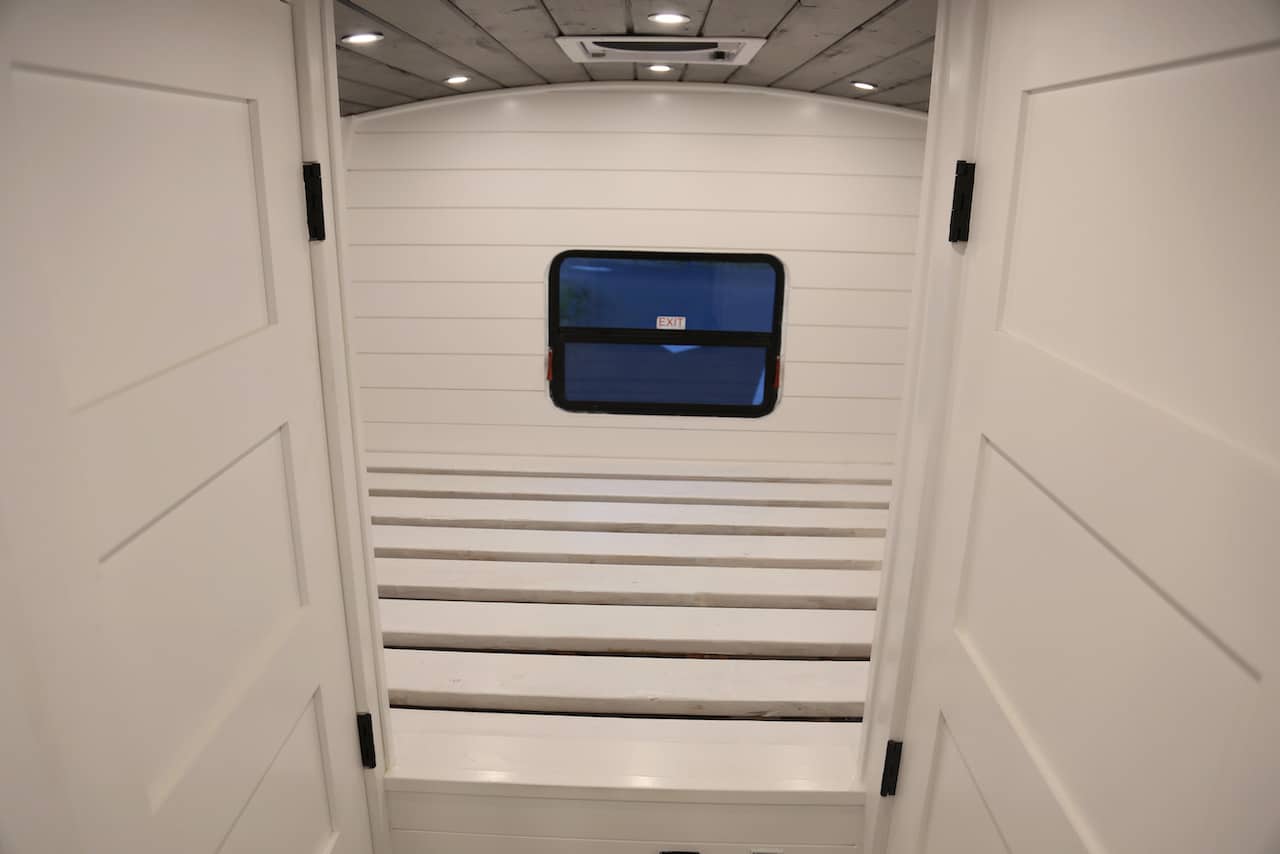
First, what’s your bus’s GVWR? If it’s under 26,001 pounds, you almost certainly don’t need a CDL in any state, period. Re-title it as an RV to be safe and drive on your regular license.
Second, if it’s over 26,001 pounds GVWR, is it titled as an RV? If yes, check your state’s RV exemption. In most states, the exemption covers you regardless of weight. In California and possibly a few others, you may need a non-commercial Class B.
Third, if it’s over 26,001 and NOT yet titled as an RV, you’re in CDL territory in most states. Get it re-titled, get it delivered, or get a friend with a CDL to drive it.
Fourth, does it have air brakes? If yes and your state requires it, get the air brake knowledge test done. It’s a minor inconvenience, not a major obstacle.
Fifth, are you considering a CDL for income purposes independent of the bus? If yes, it might be worth the investment. If no, focus on getting your bus under the weight threshold or using the RV exemption.
That’s basically the whole decision tree. It looks complicated written out like this but in practice, for about 80% of skoolie owners, the answer is simply “re-title as RV, drive on regular license, done.”
So Where Did I Land on All This?
After all the research, the phone calls, the forum threads, and the state-by-state digging, here’s what I think. The CDL question is a lot scarier than it needs to be for most people. The vast majority of school buses that people convert fall under 26,001 pounds GVWR. And even the ones that don’t, once you re-title as an RV, you’re covered in most states without a CDL.
The people who actually need to worry about CDL requirements are the ones buying full-size Type D buses or coach buses that are over 26,000 GVWR and plan to register in California, New York, or one of the handful of other states with stricter rules. If that’s you, you’ve got options — non-commercial Class B (which is easier than a CDL), delivery services, or registering in a more friendly state like Texas, Florida, or South Dakota. (See our guide on How Do You Register a Converted School Bus as an RV? for more on this.)
And honestly, after going through all of this, I think the most valuable piece of advice is the simplest. Check your bus’s GVWR before you buy it. If it’s under 26,001 pounds, the CDL question is essentially irrelevant. If it’s over, you’ve got some homework to do, but it’s manageable homework. Nobody should be scared away from bus life by the CDL question. It’s a paperwork problem, and paperwork problems have solutions.
Your state might have some specific wrinkle I didn’t capture here. DMV rules change, websites get updated, and individual offices can interpret things differently. So treat this as a starting point for your own research, not the final word. Call your state DMV, ask your specific questions, and get answers before you write a check for a bus. That’s what I’d do, and it’s what I’d tell anybody getting into this.