
You’re planning your skoolie layout and wondering if you really can fit a full bathroom in a bus. It seems tight, but people do it all the time — and having your own bathroom is a game-changer for full-time living.
Yes, you can absolutely put a bathroom in a converted school bus. Most skoolie bathrooms include a toilet (composting or cassette), a shower, and a small sink — all in about 15-25 square feet of space. You don’t need a black water tank if you go with a composting toilet, which is why most builders choose one. The plumbing is simpler than a house because you’re working with a small freshwater tank, a 12V water pump, and gravity-fed gray water drainage.
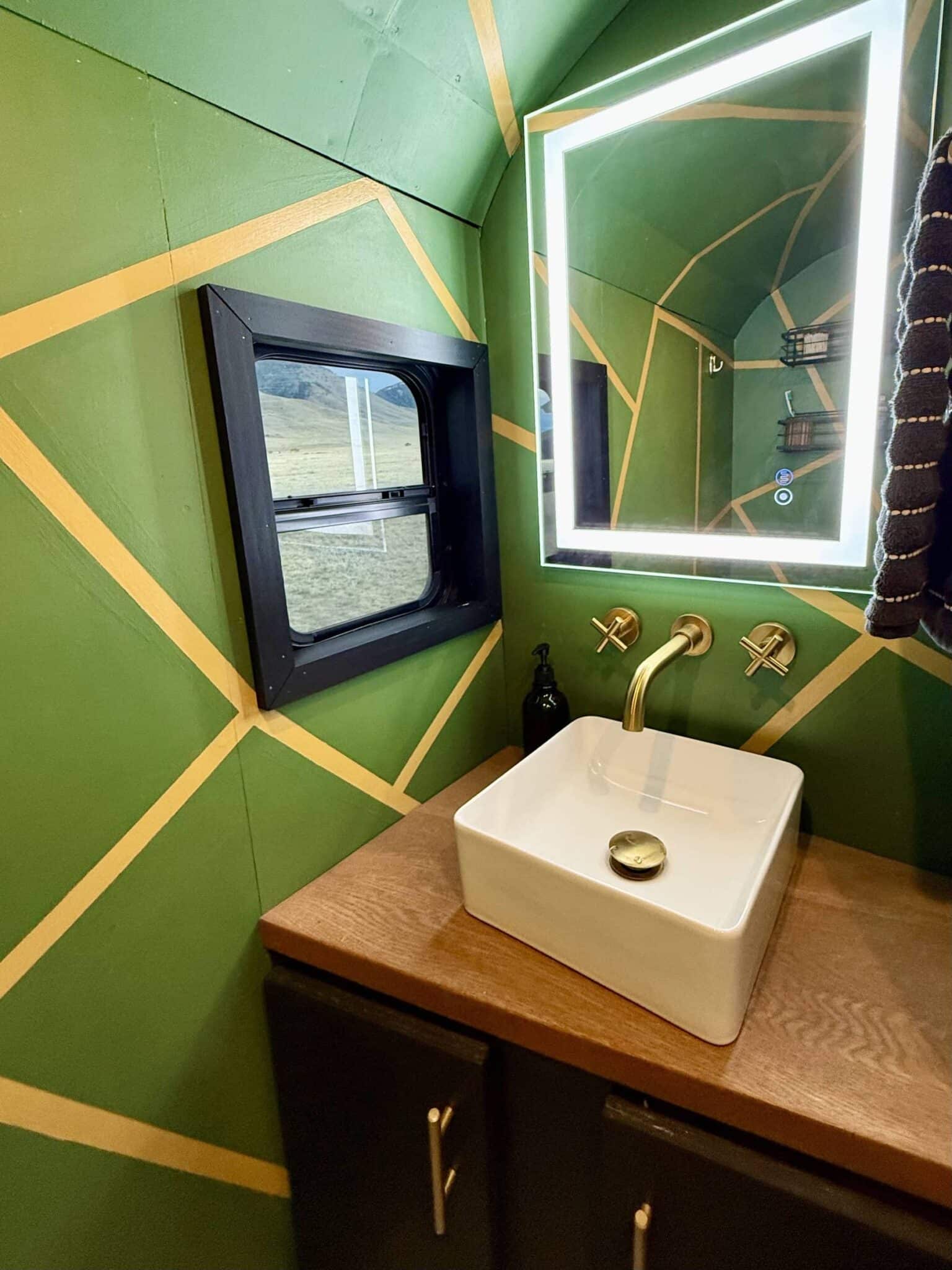
How will the bathroom plumbing work?
It’s simpler than you’d think. Here’s the basic setup most skoolie builders use.
A freshwater tank (30-100 gallons) feeds a 12V water pump. When you turn on a faucet or shower, the pump pressurizes the line and pushes water through PEX tubing to your fixtures. Hot water comes from either a tankless propane water heater or a small electric tank heater. (See our guide on Is a Propane or Electric Stove Better for a Skoolie? for more on this.)
Water that goes down the sink and shower drains is gray water. It flows by gravity into a gray water tank mounted under the bus. You dump the gray water tank at an RV dump station, or in some areas you can disperse it on the ground (check local rules).
For the toilet, most builders skip the traditional black water tank entirely and use a composting toilet. No plumbing needed — it just sits there. More on that below.
What kind of toilet do you use? Does the composting toilet stink?
The three main options are composting toilets, cassette toilets, and traditional flush toilets with a black water tank. (See our guide on 6 Best Flooring Options for a School Bus Conversion for more on this.)
Composting toilets are the most popular in skoolies. The big names are Nature’s Head ($960) and Airhead ($1,100). They separate liquids from solids. The solids mix with peat moss or coconut coir and decompose. The liquids drain into a separate container you dump every few days.
Does it stink? No — if you’re using it right. The separation of liquids and solids is what prevents odor. A small fan vents any smell outside. Most people say their composting toilet smells less than a regular flush toilet.
Cassette toilets are the second option — a small portable toilet with a removable waste tank. Cheaper upfront ($100-$300) but you’re dumping it more often.
Traditional flush toilets with a black water tank work fine but add weight, complexity, and the need for regular dump station visits. Most builders skip this route.
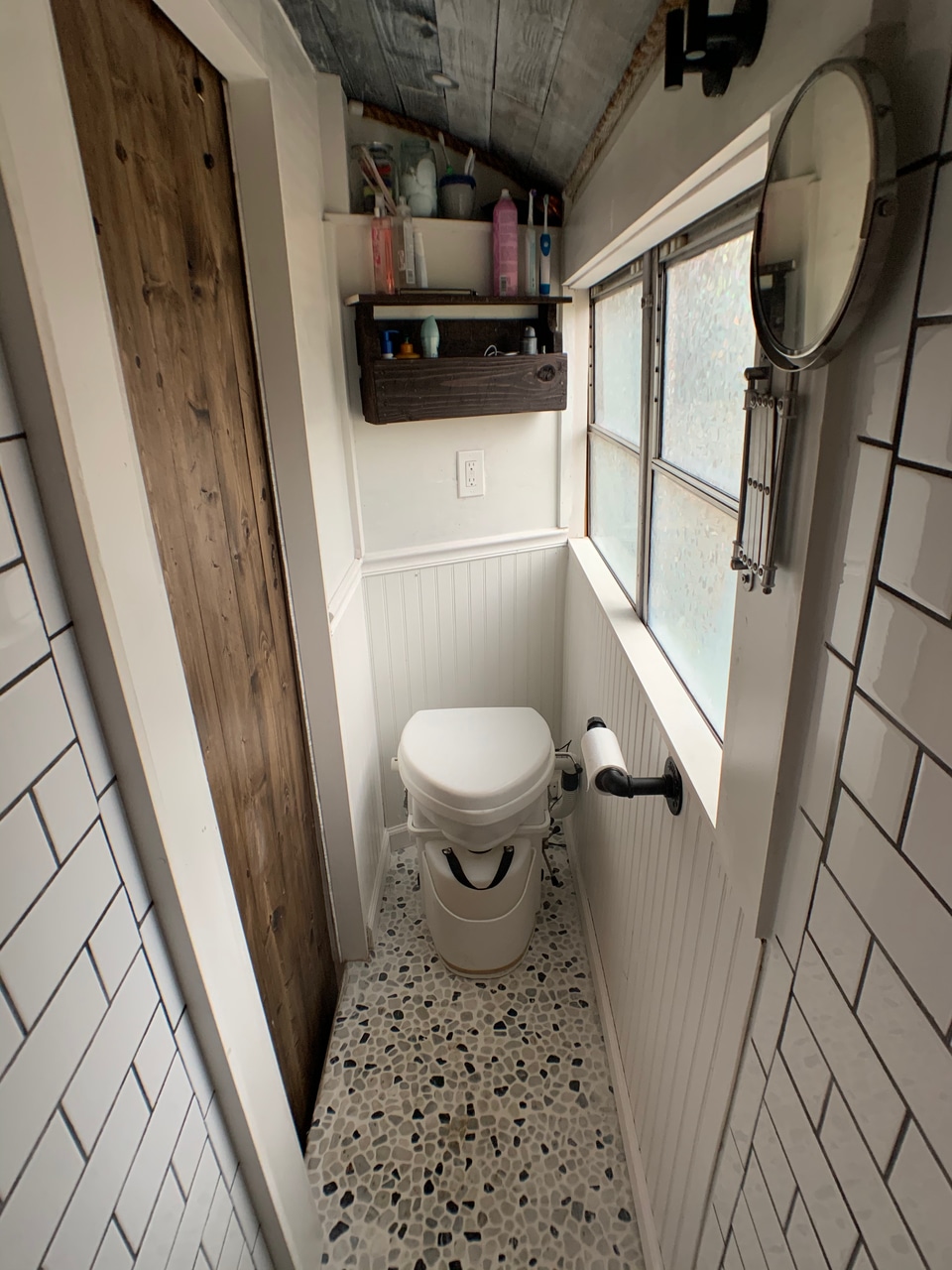
Why do you guys always start with the bathroom and not something else?
Because the bathroom determines your plumbing runs, which determines your layout. If you build your kitchen and bedroom first, you might end up running plumbing lines through or around everything. (See our guide on How to Build a Skoolie Bathroom (Shower, Toilet, and Plumbing) for more on this.)
Starting with the bathroom means you know exactly where your drains go, where your water lines run, and where your gray water tank connects underneath. Everything else in the build can work around those fixed points. (See our guide on How to Build a Skoolie Kitchen That Actually Works for more on this.)
Plus, the bathroom needs proper waterproofing and ventilation. It’s easier to do that right on bare bus walls than to retrofit it after you’ve already insulated and paneled everything around it.
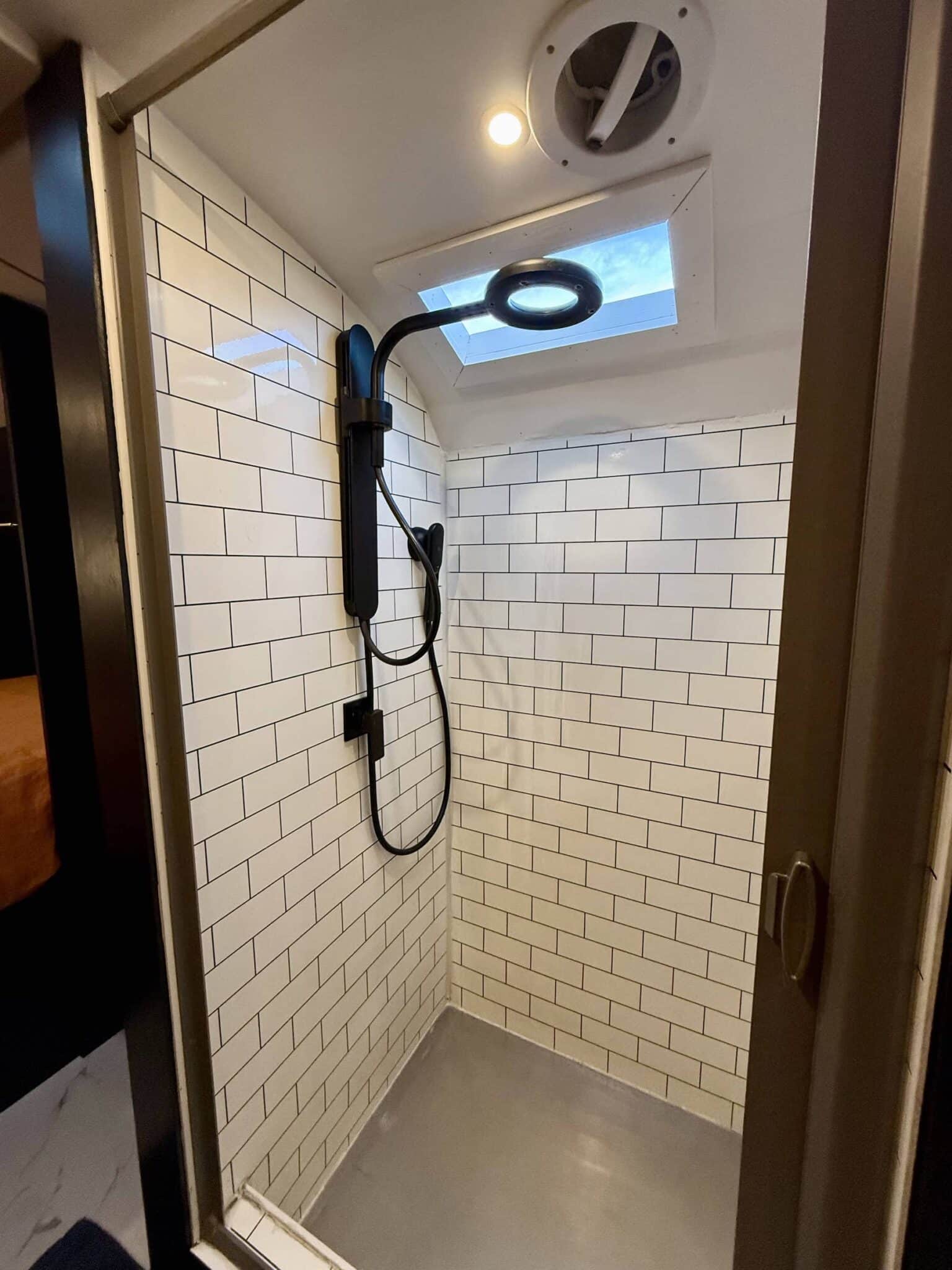
Such a big space but no shower? Where do you shower?
Some smaller builds — especially short buses and vans — skip the shower to save space. Those folks use gym memberships (Planet Fitness is $25/month with any-location access), truck stop showers ($12-$15 each), campground shower facilities, or an outdoor portable shower hung off the back of the bus.
But if you’re in a full-size skoolie, you’ve got room for a shower. Most bus showers are about 24″x32″ — tight, but it works. Some builders use a wet bath design where the entire bathroom floor is the shower and everything is waterproofed. That’s the most space-efficient approach. (See our guide on 7 Skoolie Floor Plan Ideas for Every Bus Size for more on this.)
How does the shower tile not crack when you drive and hit bumps?
This is a legit concern. The bus flexes when you drive, and rigid materials like ceramic tile can crack.
Most experienced builders use one of these approaches: vinyl plank or sheet vinyl on the walls and floor (waterproof and flexible), FRP (fiberglass reinforced panels) which are what commercial bathrooms use, or if they really want tile, they use a flexible thinset mortar with small-format tiles and flexible grout.
Large format tiles on bus walls are asking for trouble. The bigger the tile, the more likely it cracks from bus movement. If you want the tile look, go small — subway tiles or mosaic sheets — with flexible adhesive.
The Bottom Line
- Yes, you can fit a full bathroom in most skoolies — even short buses with creative layout.
- Composting toilets dominate the skoolie world. No black water tank, no smell, simple setup.
- PEX plumbing with a 12V pump — that’s your whole water system.
- Build the bathroom first — it determines your plumbing layout for the whole bus.
- Skip rigid tile. Use vinyl, FRP, or small-format tile with flexible adhesive.
- No shower? Get a gym membership. Planet Fitness at $25/month gets you showers nationwide.
2 thoughts on “Can You Put a Bathroom in a School Bus?”