
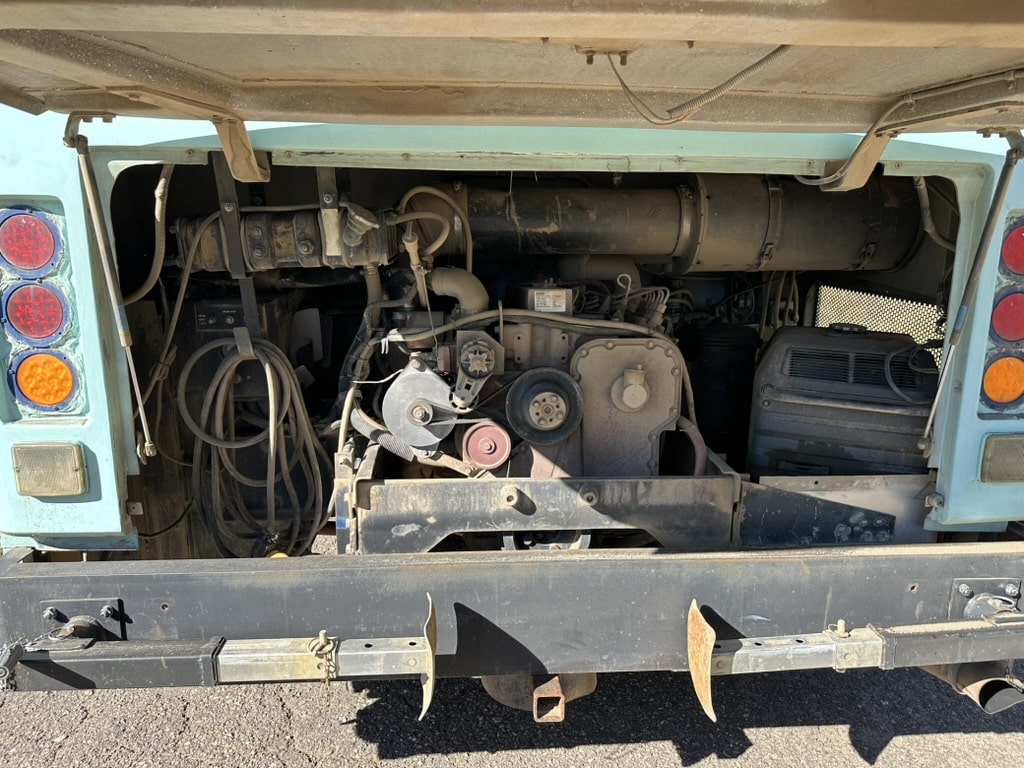
When I first started researching bus conversions, I assumed “skoolie” meant school bus and that was pretty much the only option. Turns out there’s a whole world of buses out there that people are converting into homes, and each one comes with a totally different set of trade-offs. Some are cheap and easy to find. Some ride like a luxury car. Some will bankrupt you in parts costs before you even finish the build.
Here’s the overview: full-size school buses are the most popular and practical choice for most first-time converters because they’re cheap, easy to find, and have widely available parts. Short buses are perfect for solo travelers and couples who want something nimble. Transit buses give you more width but more headaches. Coach buses are the premium option if you’ve got the budget. Double deckers, shuttles, church buses, and mini buses all have their own niche advantages depending on your situation. The “best” bus is the one that fits your lifestyle, your budget, and your mechanical comfort level.
Full-Size School Buses (The Classic Skoolie)
This is where most people start, and honestly, where most people should start. A full-size school bus — typically 35 to 40 feet long — gives you somewhere around 245 to 300 square feet of floor space to work with. That’s enough for a full kitchen, a real bathroom with a shower, a bedroom, and a living area. Some people even manage a washer/dryer combo in a full-size build.

School buses dominate conversions for three reasons. They’re dirt cheap — $3,000 to $8,000 at government auctions, $5,000 to $15,000 private. They’re built like tanks with federal rollover and body joint standards that other bus types don’t have to meet. And parts are everywhere. A DT466, a Cummins 5.9, a Cat 3126 — any diesel mechanic in the country can work on these.
The downsides? 7 to 10 MPG, tough to park in cities, and a full conversion runs $20,000 to $60,000. But for families or full-timers, the full-size school bus is the go-to for a reason. Blue Bird, Thomas, and IC Bus are the big three manufacturers you’ll see.
Short Buses (Mini Skoolies / Type A)
Where can I get a short school bus, or shuttle bus? Is it true that shuttle buses are taller?
Short buses — Type A in bus classification terms — are built on a van chassis like a Ford E-450 or Chevy Express 4500. They run about 22 to 25 feet and give you roughly 80 to 120 square feet of floor space. That sounds small until you actually stand inside one and realize it’s more room than a lot of cargo van conversions.

I was looking at short buses for a while before I really understood the appeal. They fit in standard parking spots (maybe taking up two), every RV park will take them, and they’re not much harder to drive than a large truck. Gas mileage sits around 10 to 14 MPG, which isn’t amazing but it’s noticeably better than a full-size. And the purchase price is lower too — $2,000 to $6,000 at auction, $4,000 to $10,000 private.
Now, to answer the question about shuttle buses being taller — yes, many shuttle buses do have more interior headroom than a standard short school bus. A typical Type A school bus has an interior ceiling height around 6 feet, sometimes a little less. Some shuttle buses, especially those built on commercial van chassis with raised roofs, can give you 6’3″ to 6’6″ inside. That matters if you’re tall. I’ll cover shuttles more in their own section below.
Where to find short buses? Same places you find full-size ones. Government surplus auctions (GovPlanet, PublicSurplus, AuctionTime), school district sales, church liquidations, and private sellers on Facebook Marketplace or Craigslist. Short buses are also commonly retired from assisted living facilities, day camps, and charter services, so those are good leads too.
Build costs for a short bus run $10,000 to $25,000 for a solid conversion. The biggest compromise is space. You’re picking and choosing what you can fit. Most short bus builds either skip the bathroom entirely or go with a very compact wet bath setup. It’s totally livable for one or two people, but a family of four would feel it fast.
Transit Buses (City Buses)
“im really thinking about buying a bus, my question is would you go school, or city bus?”
I get why people are drawn to transit buses. They look cool. They’re wider — about 8.5 feet inside compared to 7.5 for a school bus. They have low floors, big windows, and that industrial urban vibe. A few years ago I went down a rabbit hole watching transit bus conversions on YouTube and some of them looked incredible.

But here’s the thing. Transit buses are harder to convert, harder to maintain, and harder to find at a reasonable price than school buses.
The drivetrains are usually solid — big engines, beefy transmissions, air suspension that rides genuinely smoother than a school bus. The problem is everything else. Body panels are typically aluminum or composite instead of heavy-gauge steel. They corrode differently and they’re harder to weld to. Parts are the real killer — transit buses use proprietary systems from New Flyer, Gillig, or NABI, and some parts can only be sourced from the manufacturer. I compared prices once on a replacement AC compressor for a Gillig versus a Blue Bird school bus. The transit bus part was nearly triple.
The interior shape is tricky too. Curved walls, wheel well intrusions, structural ribs you have to work around. I watched a build video where a guy spent two full days framing a kitchen counter because of the curved wall situation. In a school bus, that’s an afternoon.
So would I go school or city bus? School bus for a first build, no question. But if you want that extra width and smoother ride and don’t mind the added cost, a transit bus can be a great home.
Coach Buses (Greyhound, MCI, Prevost)
“Would it have been cheaper in the long run to find a used Greyhound bus and convert it?”
Coach buses are the luxury tier of bus conversions. We’re talking MCI, Prevost, Van Hool, and yes, old Greyhound coaches. These are highway machines — built for long-distance passenger travel with rear-mounted diesel engines, air ride suspension, massive under-floor luggage bays, and interiors that are wider and taller than a school bus.

That’s a really good question, and the answer depends on what you mean by “long run.”
A used coach in decent running condition typically costs $15,000 to $40,000. Big jump from a $5,000 school bus. But the bones are better. The ride quality is night-and-day. Under-floor luggage bays give you enormous storage for water tanks, batteries, and gear without eating into your living space. Many coaches already have insulation, HVAC systems, 12V wiring, and generators.
The argument goes like this: spend $30,000 on a coach, but your conversion costs are lower because you’re starting with a more finished platform. Maybe $15,000 to $30,000 on the build instead of $30,000 to $60,000 for a school bus.
Where that falls apart is maintenance. When something breaks on a Prevost, you’re not going to your local diesel shop — you’re going to a specialty coach mechanic. A transmission issue that costs $2,000 on a school bus could run $5,000 to $8,000 on a coach.
I talked to a couple who converted an old MCI coach. They told me the bus was the best decision they ever made — comfortable, smooth, tons of space. But the first major repair bill nearly wiped out their travel fund. When everything’s working, nothing beats a coach. When something breaks, it hits different.
If you’ve got the budget and you’re planning to put on serious highway miles, a coach is worth considering. For a first-timer on a tight budget, stick with a school bus.
Double Decker Buses
“Why not start with a double decker bus?”
I love this question because it’s exactly what I thought too when I first saw a double decker conversion online. Two floors! So much space! You could have the bedroom upstairs and the kitchen downstairs. It seems like the obvious choice if you want maximum living area.

So why doesn’t everyone do it? A few reasons, and they’re all pretty significant.
First, they’re hard to find in the US. Much more common in the UK and Europe. The ones you find stateside are usually retired sightseeing buses, and many were open-top models — meaning you’d be building an entire enclosed second floor from scratch.
Second, height. A double decker is typically 13 to 14 feet tall. Plenty of older bridges, gas station canopies, and parking garages are lower than that. Every road trip involves checking clearances.
Third, weight and center of gravity. I read about a builder who took his double decker through Texas and said crosswinds on the highway were genuinely scary. You’re fighting physics when you’re that tall and heavy.
Fourth, the upper floor ceiling is usually only 5’8″ to 6 feet. That upstairs bedroom everyone imagines? You might not stand up straight in it.
All that said, people do convert double deckers and some are stunning. If you’re planning to stay mostly parked on a piece of land, a double decker gives you more square footage per footprint than anything else. Just know it’s a harder platform to find, build, and travel in.
Shuttle Buses
Shuttle buses are kind of the middle child of the bus conversion world. They don’t get talked about as much as school buses or coaches, but they’ve got some genuine advantages that I think are underrated.

A typical shuttle bus runs 20 to 30 feet, built on a commercial chassis (Ford F-550, International, Freightliner), and was originally used for airport transfers, hotel shuttles, or medical transport. The big differences from a short school bus are the flat floors — no wheel well humps intruding into the cabin — and taller ceilings, sometimes 6’3″ to 6’8″ inside. They were built for adults standing in the aisle, not kids sitting in seats, and that extra headroom makes a real difference.
They’re also generally lighter than a school bus of equivalent length, which means better fuel economy but a less robust body. Finding them takes more looking around — fleet liquidations, airport companies, hotels, medical transport outfits. Prices range from $4,000 to $15,000.
Build cost is similar to a short bus — $10,000 to $25,000. One thing to watch for is rust. Lighter-gauge body panels mean corrosion can be a bigger issue, especially around the lower seams and floor edges. Always crawl underneath before you buy.
Church / Activity Buses
Church buses and activity buses are essentially the same vehicle as a shuttle bus or short school bus, just with a different history. And that different history actually works in your favor in some interesting ways.

Church buses were typically driven once or twice a week, parked in a covered lot the rest of the time, and maintained by a local shop that treated the church like a VIP customer. The result? Low mileage. Some come to market with 40,000 to 80,000 miles, which is nothing for a diesel or gas engine.
I found this out poking around local listings. Noticed a 2008 Ford E-450 church bus with 52,000 miles for $7,500. A school bus with the same chassis would typically have three or four times that mileage. This one had been garaged its whole life with a complete maintenance folder in the glovebox. That kind of find is more common with church buses than any other category.
The downside? Church buses are often gas, not diesel. Not a dealbreaker, but it means slightly worse fuel economy under load. They’re also sometimes on lighter-duty chassis than you’d want for a heavy build. Check the GVWR before loading it up with tile and granite.
Activity buses — day camps, senior centers, after-school programs — have similar advantages. Lower mileage, well-maintained, competitively priced. The conversion process is identical to a short bus or shuttle. The bus doesn’t care what logo used to be on the side.
Mini Buses
Mini buses blur the line between a bus conversion and a large van conversion. We’re talking 14 to 20 feet — Ford Transit cutaways, Mercedes Sprinters with bus bodies, older Dodge B-Series with shuttle bodies.

The appeal is straightforward. Easiest to drive, easiest to park, cheapest to fuel. Some get 12 to 16 MPG. You can park one in a regular spot. No special license needed. They fit through every drive-through and under every bridge.
The trade-off is space — maybe 60 to 100 square feet. Enough for a bed, a compact kitchen, and a portable toilet, but you’re not fitting a walk-in shower. Every inch matters.
When I was comparing mini buses to short school buses early in my research, I almost dismissed them. But then I watched builds from people who had done both, and a lot of them said the mini bus was their favorite to live in day to day. Less stuff, less maintenance, more freedom to go anywhere on a whim. There’s something to that.
Prices run $3,000 for a tired older model up to $15,000 for something newer with low miles. Conversion cost is the lowest of any bus type at $5,000 to $15,000. If your priority is mobility and simplicity over square footage, a mini bus deserves a serious look.
—
So that’s the landscape. Eight types of buses, eight different sets of trade-offs. There’s no single best answer here because it all depends on your situation — how many people are living in it, how much you plan to travel, what your budget looks like, and how comfortable you are turning wrenches.
What I keep coming back to after all my research is this: most people overthink the bus selection. They spend months agonizing over the perfect platform when the reality is that any of these can become a great home if you build it right. The school bus is the safe, proven choice for a reason. But some of the most impressive conversions I’ve seen have been on platforms nobody expected — a retired city bus, a church bus somebody found for $4,000, a double decker that became a permanent homestead.
Pick the one that fits your life. Then go build it.
fc9cig
Volwassen entertainment is toegankelijk via veilige en betrouwbare websites.
Ontdek veilige adult sites voor kwaliteitsinhoud.
Also visit my web blog best free porn videos