
This is one of those questions that comes up the second someone mentions living full-time in a vehicle. Your family asks it first, and then strangers on the internet ask it in a way that sounds a lot more like a warning. (See our guide on How Do You Get a Mailing Address Living in a Bus? for more on this.)
A converted school bus is surprisingly safe during most storms, but it’s not invincible. The steel frame, low center of gravity, and sheer weight of a loaded skoolie (often 20,000 to 30,000 pounds) make it far more stable than most RVs and travel trailers in high winds. Thunderstorms, heavy rain, and even moderate wind events are a non-issue if your build is solid and your roof doesn’t leak. The situations where it gets genuinely dangerous are tornadoes and sustained winds above 60-70 mph, and at that point, you need to be somewhere else entirely — just like anyone in a mobile structure.
“Lovely home sir…how do you deal with bad storms with heavy wind or tornadoes?”
I got asked something like this at a gas station in Oklahoma of all places. Guy saw the bus, complimented it, and then immediately wanted to know what happens when the sky turns green. Fair question for tornado alley. (See our guide on What Happens If Your Skoolie Breaks Down? for more on this.)
Here’s how I think about it. There are two categories of storm that matter for bus life. The first is your standard bad weather — heavy rain, lightning, 30-40 mph gusts, maybe some hail. This is normal life on the road. You park, you wait it out, you listen to the rain hammer the roof, and honestly it’s one of the coziest feelings in the world. The bus handles this stuff without breaking a sweat.
The second category is severe weather. Tornadoes, derechos, hurricanes, stuff where the National Weather Service is telling everyone to seek shelter. And this is where you have to be honest with yourself. A school bus is not a storm shelter. It doesn’t matter how heavy it is or how well you built it. An EF2 tornado will ruin your day and your bus.
So what do you actually do? You watch the weather. Not casually, not “oh I’ll check the forecast tomorrow.” I’m talking about having weather apps on your phone that send you alerts. I use a combination of Weather Underground and the NOAA Weather app. When I’m parked somewhere and severe weather is in the forecast, I’m checking radar every hour. And if a tornado watch goes up, I’m already figuring out where the nearest hard structure is. A truck stop, a gas station, a Walmart. Somewhere with a real roof and real walls.
The skoolie community has a saying that I think sums it up pretty well. You don’t ride out tornadoes in the bus. You ride out everything else.
Most of the full-timers I’ve talked to who live in tornado-prone areas have the same strategy. They know where the storm shelters are within a few miles of wherever they’re parked. Some RV parks actually have designated storm shelters. And if there’s nothing nearby, they drive. You’ve got a vehicle. Use it. Get ahead of the weather or get out of the path. (See our guide on Can You Legally Live in a Converted School Bus? for more on this.)
One thing I want to mention because nobody talks about it. Lightning is actually not a big concern inside a school bus. The steel body acts like a Faraday cage, same as a car. Lightning hits the bus, the current travels through the metal shell and into the ground. You’re fine inside. I looked this up after a particularly loud thunderstorm in east Texas where lightning hit close enough that I could feel the static in the air. The bus didn’t care at all.
“Have you been in 40+ mph wind yet? Be careful, man. Information on the web says a 30 mph wind can knock a school bus over.”
Alright, so this one gets thrown around a lot in the comments sections and I wanted to actually dig into the numbers because that 30 mph claim had me nervous when I first read it too.
Here’s what I found. That figure comes from studies and calculations about empty, unloaded school buses with flat sides catching wind broadside. And even then, 30 mph is on the extreme low end of the estimates. Most engineering analyses I came across put the tipping threshold for an empty school bus at around 40-50 mph of sustained broadside wind. But here’s the thing that changes everything — an empty school bus and a fully converted, loaded skoolie are completely different animals.
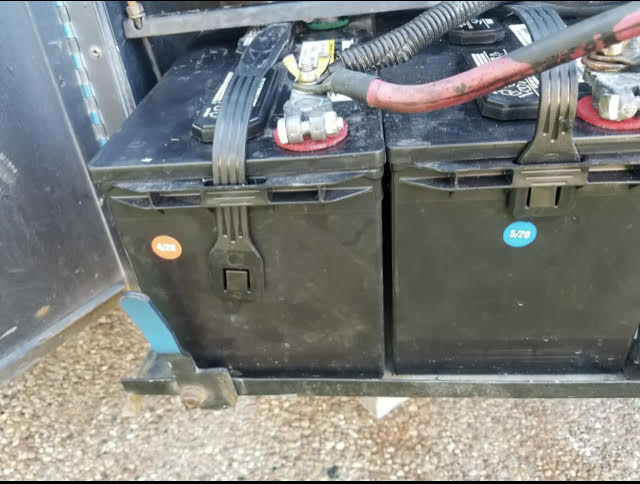
A stock empty school bus weighs somewhere around 10,000 to 17,000 pounds depending on the model. Once you’ve done a full conversion — framing, insulation, subfloor, cabinets, water tanks, batteries, appliances, furniture, all your stuff — you’re adding 3,000 to 10,000 pounds easy. I’ve seen fully loaded skoolies tip the scales at 26,000 to 30,000 pounds. That’s a massive difference in terms of wind resistance.
Weight isn’t the only factor though. Center of gravity matters a lot. When you add water tanks low in the bus, batteries under the floor or in the bays, and heavy items in the lower cabinets, you’re actually lowering the center of gravity compared to a stock bus. That makes it harder to tip.
So can 30 mph wind knock over your converted skoolie? No. Not unless you’ve done something very unusual with your build, like putting all your heavy items on the roof. I’ve been in sustained 45 mph winds and honest to God the bus barely noticed. It rocks a little. You hear the wind. But it’s nothing like what people on the internet make it sound like. (See our guide on How Do You Get Internet and WiFi Living in a Bus? for more on this.)
Now, that doesn’t mean wind isn’t a factor at all. Here’s where it gets real.
Driving in high wind is a completely different story from being parked in high wind. A school bus has a huge flat side profile. It’s basically a sail on wheels. I won’t drive in sustained winds above 35-40 mph if I can help it, and crosswinds on the highway are no joke. You feel the bus get pushed, and it takes constant steering correction. This is the scenario where things actually get sketchy, not sitting parked in a campground.
My rule is pretty simple. If the wind advisory says 40+ mph, I’m not driving. I’ll park somewhere sheltered — next to a building, in a tree line, on the lee side of a hill — and wait it out. It’s never been more than a day.
“Who did the studies of tire, axle, frame loading? Who verified stability of turns with a raised roof?”
I respect this question because it’s asking what most people don’t. The engineering side. And I’ll be straight with you — the answer is a little uncomfortable for the skoolie community.
Nobody, really. Not in any formal, certified way.
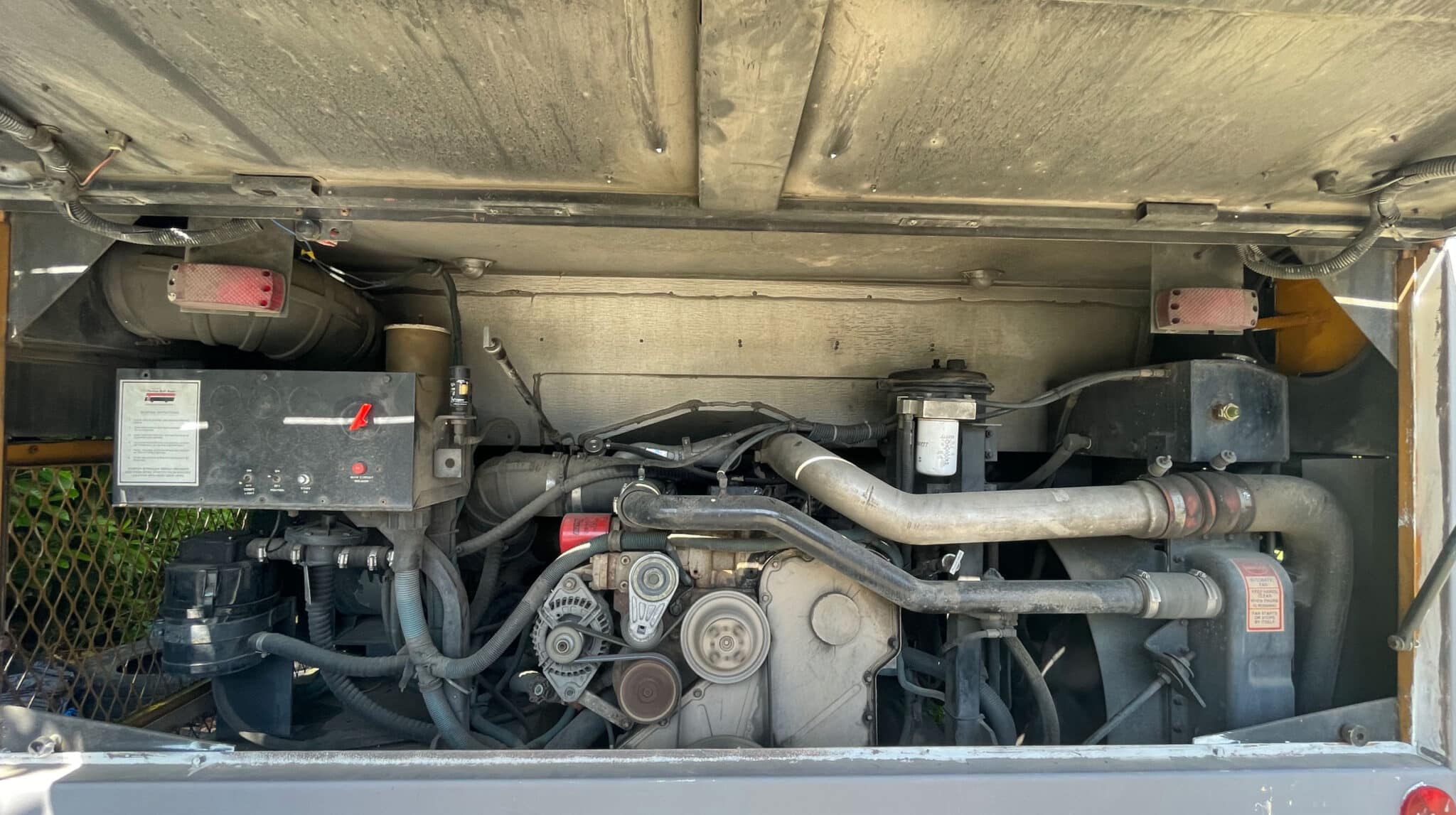
School buses are engineered and tested to federal standards (FMVSS — Federal Motor Vehicle Safety Standards) as passenger vehicles. Those standards cover things like rollover resistance, roof crush strength, braking, and frame integrity. But all that testing was done on the bus as it was manufactured. The second you start ripping out seats, adding 5,000 pounds of build materials, raising the roof, or changing the weight distribution, those original certifications don’t apply anymore.
When I started looking into this, I expected to find some organization or authority that skoolie builders could submit their builds to for review. There isn’t one. There’s no skoolie building code, no inspection standard, no certification process. You’re essentially self-certifying your own vehicle modification, and the only oversight is whatever your state requires for registration and inspection.
Now, does that mean every skoolie on the road is a ticking time bomb? No. Here’s why.
School buses are massively overbuilt to begin with. The frame on a full-size bus is designed to carry 72 kids plus a driver in a vehicle rated for a gross vehicle weight of 33,000 to 36,000 pounds. When you convert it and load it up to 25,000 or 28,000 pounds, you’re actually under the rated capacity of the chassis. The tires, axles, and brakes were speced for more weight than most conversions put on them.
The raised roof question is where it gets more interesting. I talked to a welder who’s done about a dozen roof raises on skoolies, and he told me the structural integrity depends entirely on how the raise is done. If you’re welding in new vertical supports that tie into the existing frame members and maintaining the structural ribs, you’re fine. The original roof structure is just a series of bowed steel ribs welded to the side walls. Extending those ribs with proper steel and proper welds doesn’t fundamentally change the physics. What it does change is the wind profile and the center of gravity.
A bus with an 18-inch roof raise has a higher center of gravity and catches more wind. How much more? Enough to notice on a windy highway, but not enough to make it dangerous in normal conditions. The guys who’ve done raised roofs and driven through serious wind told me the difference is subtle. You feel it, but it’s manageable.
Where builders get into trouble is when they do a roof raise without proper structural support, use thin gauge steel, skip the crossbracing, or — and this is the worst one — do the raise with rivets or bolts instead of proper welds. I read about a build where the roof raise separated at the seam going over railroad tracks. The vibration worked the bolts loose over time. Nobody was hurt, but the bus was done.
So my take on it is this. The engineering wasn’t done by a certified lab, but the original engineering of the bus provides a massive safety margin that covers most reasonable conversions. The key word is reasonable. If you’re staying within the GVWR of the chassis, using proper materials and techniques, and not doing anything crazy with weight distribution, the bus is safe. If you’re over GVWR, have an amateur roof raise, and your water tanks are mounted on the roof, maybe reconsider some things.
What about hail?
This one’s quick but worth mentioning. A school bus roof is 14 to 16 gauge steel. That’s thick. Your car is made of much thinner metal and hail dents the heck out of it. I’ve driven through two hailstorms in the bus and checked the roof after both. Not a single dent either time. The hail sounded absolutely terrifying inside — like someone was dumping a bucket of golf balls on us — but the bus shrugged it off.
If you’ve added a roof raise with thinner material or installed skylights, that’s where hail becomes a concern. I’ve seen pictures of RV skylights shattered by hail, and if you’ve got one in your bus, you might want to keep a piece of plywood cut to size that you can slap over it when things get dicey. (See our guide on How Do You Keep Kids Safe While Driving a Skoolie? for more on this.)
So where does that leave you?
Honestly, living in a bus during a storm is safer than most people assume and less safe than some builders want to admit. The truth is somewhere in the middle.
For 95% of the weather you’ll encounter on the road, the bus is a tank. Rain, wind, thunder, hail — you’re sitting in a steel box that weighs as much as a dump truck. You’re fine. The other 5% is the severe stuff, and for that, you need a plan that doesn’t involve staying in the bus.
I keep a mental checklist every time I park somewhere new. Where’s the nearest hard structure? What’s the forecast for the next 48 hours? Is there cell service for weather alerts? It takes about five minutes and it’s become second nature.
The people who get into trouble are the ones who either panic at every thunderstorm (you’ll never sleep if that’s you) or the ones who think the bus is indestructible and refuse to leave during a tornado warning. Don’t be either of those people. Respect the weather, know your bus’s limits, and you’ll be fine.
0f3yh3