
You’re looking at buses online, trying to figure out if you’ll actually be able to stand up inside one. Maybe you’re tall, maybe your partner is, and the last thing you want is to buy a bus and spend six months converting it only to bonk your head every time you walk to the kitchen.
The ceiling height inside a standard school bus is right around 6 feet to 6 feet 3 inches, measured from the floor to the lowest point of the ceiling ribs. Most full-size flat-nose buses (Type C and Type D) land in that 72 to 76 inch range before any conversion work. Once you add flooring, insulation on the ceiling, and any subfloor framing, you’re going to lose 3 to 6 inches of that. So your actual livable headroom in a finished build is usually somewhere between 5 foot 8 and 6 feet even, unless you go with a raised roof.
How tall is the ceiling? I’m guessing around 6’1?
That’s actually a really solid guess, and it’s close to what I found when I started measuring buses myself. The raw interior height on most full-size school buses sits between 6 foot and 6 foot 3 from the metal floor to the ceiling ribs. But here’s the thing that tripped me up at first, that number is kind of misleading. (See our guide on Can You Use Drywall on a Bus Ceiling? for more on this.)
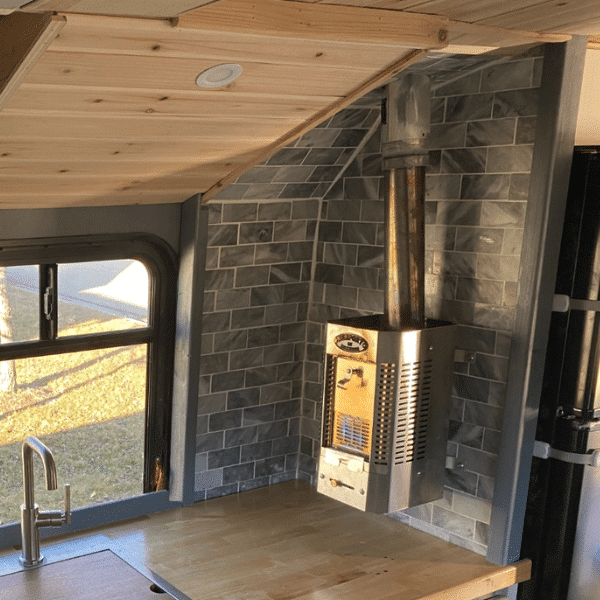
When I was looking into this, I kept seeing people throw out numbers like 6’1 or 6’2, and I thought great, I’ll be fine. But nobody was talking about what happens after you build. You’re going to put down a subfloor. That’s usually 3/4 inch plywood at minimum, sometimes with rigid foam insulation underneath it adding another inch or two. Then you’ve got your finished flooring on top of that, whether it’s vinyl plank or laminate or whatever. On the ceiling side, a lot of people fur out the ribs and add thin paneling or tongue and groove wood.
So I started doing the math. If you lose 2 inches on the floor and 1.5 inches on the ceiling, that 6’1 raw height just became about 5 foot 9 and a half. For someone who’s 5’8, that’s totally fine. For someone who’s 6 foot? You’re ducking. That realization changed how I thought about the whole bus selection process.
The buses on the taller end of stock height are the Type D (transit style) buses. Those tend to have a bit more headroom built in because of how the body is designed. I’ll get into that more below, but if ceiling height is a dealbreaker for you, it’s worth knowing that not all buses are created equal here.
Is this a raised roof bus or are you very short?
I see this question come up all the time in the skoolie groups, usually under a photo where someone’s standing up perfectly straight with clearance to spare. And honestly, it’s a fair question because the difference between stock height and a raised roof is dramatic.
A raised roof is exactly what it sounds like. Someone cuts the bus body along the window line and welds in additional steel to raise the entire roof anywhere from 6 to 18 inches. The most common raise I’ve seen people do is about 8 to 12 inches. That takes your finished interior height from “barely clearing 6 feet” to “comfortably standing at 6’6 or taller.” If you’re a tall person and bus life is the goal, a roof raise might be the move.
Now here’s the thing I didn’t realize early on. Some buses come from the factory with a higher roof option. Blue Bird and Thomas both made models with optional raised roofs for wheelchair accessibility. These are sometimes called “high top” buses, and they’re gold if you can find one because the work is already done, it’s factory quality, and you don’t have to pay someone $3,000 to $7,000 to cut your bus apart and weld it back together.
I talked to a builder once who was 6’4 and he said finding a factory high-top bus saved his entire project. He’d been looking at standard buses for months, dreading the roof raise, and then one popped up at a school district auction already sitting at about 6’8 interior. He grabbed it for $4,500 which, all things considered, was cheaper than buying a standard bus and paying for the raise separately. So if you’re over 6 feet tall, I’d say don’t just settle for whatever bus you find first. Specifically hunt for the high-top models. They exist, they just take patience.
How can you tell the difference between a van style or commercial style?
So this one confused me for a while because different people use different names for the same things. When I finally sorted it out, the main distinction people are asking about comes down to Type A, Type C, and Type D school buses. Let me break it down the way it finally clicked for me.
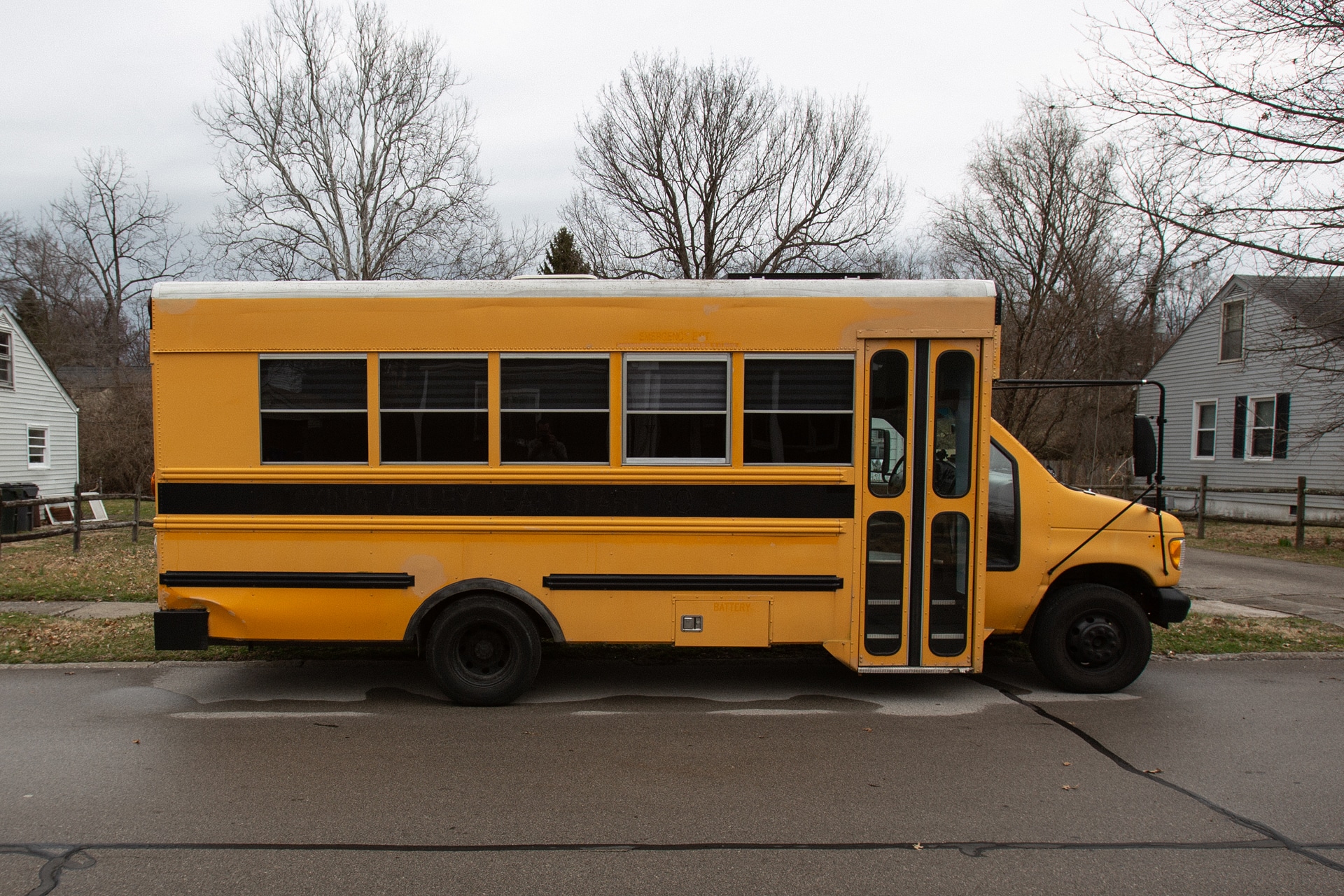
A van-style bus, which is technically a Type A, is built on a van chassis. Think of a Ford E-450 or a Chevy Express cutaway with a bus body bolted on. These are your short buses, typically 20 to 25 feet long. The ceiling height in these is the lowest of the bunch, usually around 5’10 to 6 feet stock. Some of the smaller ones are even less. They’re great for solo travelers or couples who don’t mind being cozy, but headroom is tight.
A conventional style bus, the Type C, is what most people picture when they think “school bus.” It’s got the dog-nose hood sticking out front with the engine underneath it. These are the most common buses you’ll find for sale, they run 35 to 40 feet, and the interior ceiling sits in that 6 foot to 6’2 range I mentioned earlier.
Then there’s the commercial or transit style, the Type D. This is the flat-front bus where the driver sits basically right above the front axle. These buses tend to have the most interior height because the body design allows for it. I’ve seen Type D buses with stock interior heights pushing 6’4 or even 6’5. They’re also wider than Type C buses in some cases, which gives you more floor space to work with.
Well, here’s the practical takeaway. If ceiling height matters to you, and you don’t want to do a roof raise, a Type D flat-front bus is your best bet for maximum stock headroom. The tradeoff is they can be harder to find and sometimes cost more, but for tall people, it’s worth the search.
Related: The Complete Guide to Insulating a School Bus Conversion
Related: The Complete Guide to Skoolie Framing and Wall Construction
What is the interior living length?
Alright, so this is a different measurement than ceiling height, but it comes up in the same conversations because people are trying to figure out how much actual space they have to work with. I found this one tricky because the advertised length of a bus and the actual usable interior length are two very different numbers.
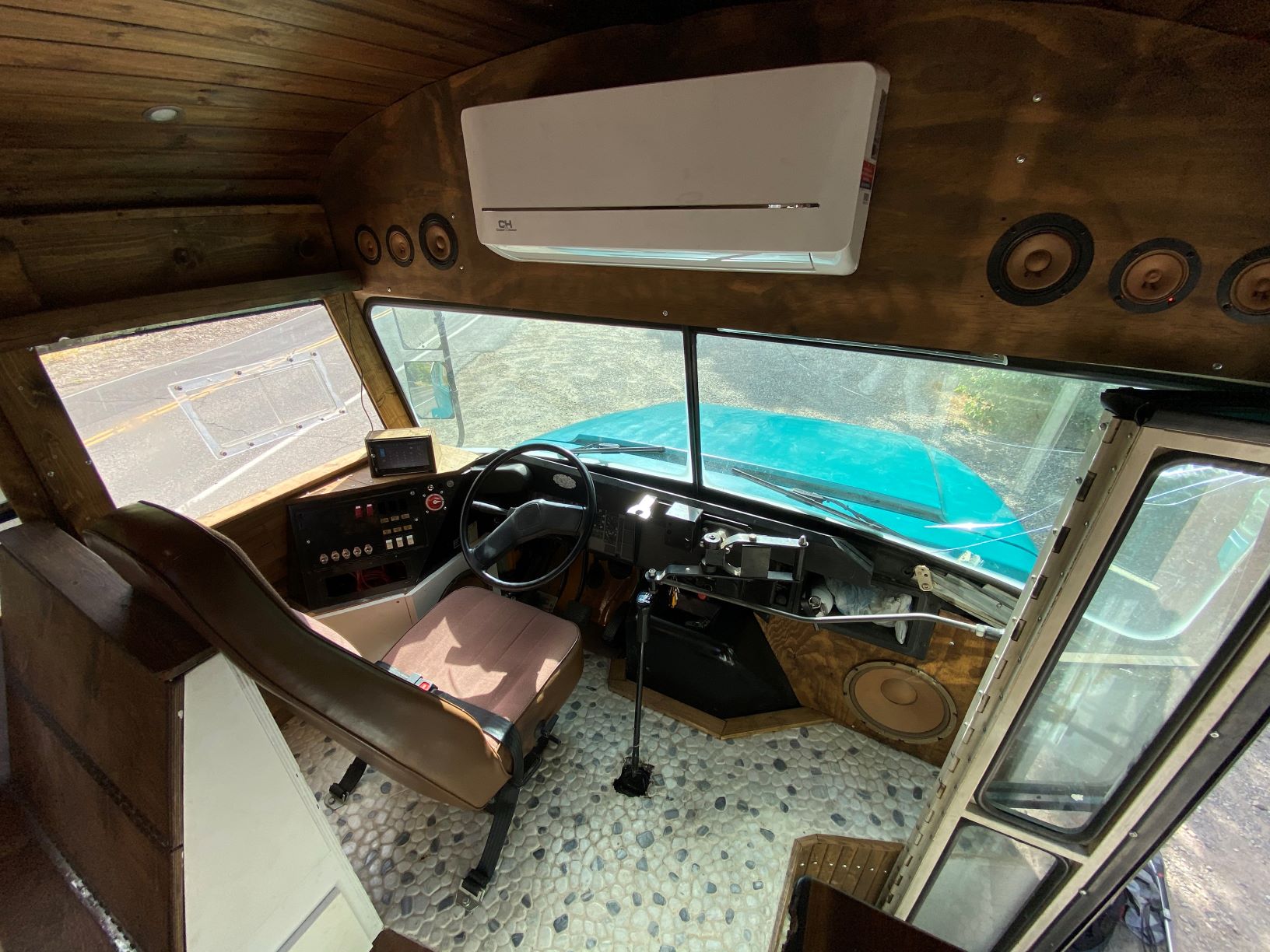
When a bus is listed as 40 feet, that’s bumper to bumper. You lose the engine compartment on a Type C (about 4 to 5 feet), the driver’s area (another 3 to 4 feet typically), and the rear emergency exit area (1 to 2 feet depending on layout). On a 40-foot Type C conventional bus, I found that most people end up with somewhere around 28 to 32 feet of actual living space behind the driver’s seat.
For a Type D flat-front, you get a little more because there’s no dog nose eating up length. A 40-foot Type D might give you 30 to 35 feet of living space. And for the short buses, a 24-foot Type A usually works out to about 12 to 15 feet of living area. That’s enough for a bed, a small kitchen, and maybe a wet bath, but you’re making choices about what fits and what doesn’t.
When I was sketching out floor plans, I kept running into this frustrating thing where my layout worked perfectly on paper at 30 feet but the bus I was looking at only had 27 feet of actual usable space. The wheel wells eat into your floor plan too. They stick out about 8 to 10 inches on each side near the rear axle, so that section of the bus is narrower than the rest. You gotta account for that when you’re planning your bed or your bathroom placement.
One thing that helped me was going to actually stand inside a few buses before buying. I know that sounds obvious, but I spent weeks staring at measurements online and none of it really clicked until I physically walked through a couple buses at a lot. I could feel the ceiling height, I could pace out the living length, and I immediately understood what would and wouldn’t work. If you can do that before you commit, I’d recommend it. Numbers on a screen are helpful but they don’t replace standing in the actual space.
Here’s the other thing nobody mentions. The interior width of a standard school bus is about 7.5 feet, and that’s actually pretty generous. A queen bed is 5 feet wide, so you’ve got room for a bed going sideways across the bus with space left over on one side for a hallway. Ceiling height gets all the attention in these conversations, but the width and length together determine whether your floor plan actually works.
So if you’re out there shopping for a bus right now, don’t just ask about ceiling height in isolation. Get the interior living length, know your finished floor and ceiling thickness, and if you can, go stand inside one. That’s what finally gave me confidence that I was picking the right bus for the build I had in mind. And if you’re over 6 feet tall, seriously, look into the factory high-top models or budget for a roof raise. Your back will thank you every single day you live in that bus.