
When I first started looking into bus conversions, I assumed a bus was a bus. Yellow, rectangular, done. Then I started seeing terms like Type A, Type C, transit bus, pusher, coach, shuttle, and I realized the world of buses is way bigger and more confusing than I expected. The vehicle you pick determines everything else about your build, your budget, and your life on the road.
This guide covers every type of bus people actually convert into homes. Not just school buses, but transit buses, coaches, shuttles, double deckers, and church buses. If it’s got wheels and someone has tried to live in it, we’re talking about it here.
This is the complete breakdown of every bus type used for conversions. We’re covering Type A through Type D school buses, shuttle buses, transit (city) buses, coach buses like MCI and Prevost, double deckers, and church/activity buses. For each type, I’ll go into what makes it different, what it costs, how hard it is to convert, and whether it actually makes sense for what you’re trying to do. By the end, you’ll know exactly which platform fits your life, your budget, and your skill level.
—
Type A Buses (Short Buses / Mini Skoolies)
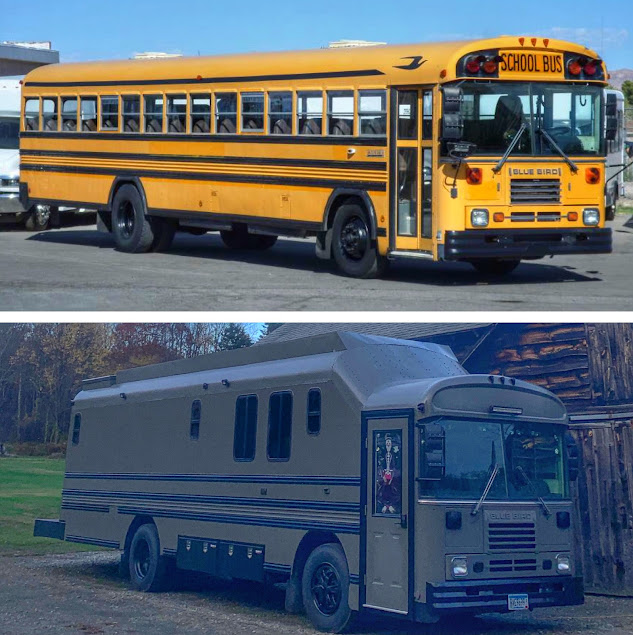
Type A buses are the little guys. They’re built on a van cutaway chassis — usually a Ford E-450 or Chevy Express 4500 — with a box body bolted onto the back. Think of them as an oversized van with a school bus body. They typically run 20 to 25 feet long and were originally designed to carry 10 to 25 students on short routes.
For conversions, Type A buses are the most approachable entry point. You can drive one with a regular driver’s license everywhere in the country, they fit in standard parking spots (or close to it), and they get decent gas mileage compared to their bigger siblings. We’re talking 10 to 14 MPG depending on the engine and load. That’s not great by car standards, but it’s practically a hybrid compared to a full-size bus.
The most popular Type A buses in the skoolie world run on either the Ford 7.3L diesel (basically the same engine as a Super Duty truck) or the Ford 6.8L V10 gas engine. Both are proven, parts are everywhere, and any mechanic who’s worked on a Ford truck can work on your bus. I kept seeing the 7.3L come up over and over in forums when I was researching, and for good reason. It’s mechanical, not electronic, and people have put 400,000 miles on them.
The downsides are real though. You’re working with maybe 80 to 120 square feet of floor space. That’s enough for a bed, a small kitchen, and maybe a compact bathroom if you get creative. But it’s tight. If you’ve got a partner and a dog, you’ll be bumping elbows. And the ceiling height on a standard Type A is usually around 6 feet, so if you’re tall, you might be ducking.
“Where can I get a short school bus, or shuttle bus? Is it true that shuttle buses are taller?”
I’ll tackle the shuttle bus part of this question in its own section below, but let me hit the short bus part first.
Short school buses (Type A) show up everywhere. Government auctions on sites like GovPlanet, PublicSurplus, and Municibid are your best bet for a deal — I’ve seen running Type A buses go for $2,000 to $5,000 at auction pretty regularly. Facebook Marketplace and Craigslist always have some listed too, usually in the $4,000 to $10,000 range from private sellers. School districts also sell them directly sometimes. Just call the transportation department and ask. You’d be surprised how many will work with you.
As for the height question, yes, shuttle buses are generally taller than Type A school buses. A standard Type A school bus has about 6 feet of interior ceiling height. Most shuttle buses (which we’ll cover below) come with a raised roof from the factory, giving you 6’3″ to 6’8″ inside. That extra headroom is one of the main reasons people choose shuttle buses over short school buses for conversions. When you’re standing in your kitchen cooking dinner every night, those extra inches matter more than you’d think.
We’ve got a full breakdown on where to buy a school bus and the best websites for finding buses if you want to dig deeper into sourcing.
—
Type B Buses (The Uncommon Middle Ground)
Alright, so Type B buses are the weird ones. I’m just going to say that upfront. When I was trying to figure out what a Type B even was, I got confused because they don’t really look like what most people imagine when they think “school bus.”
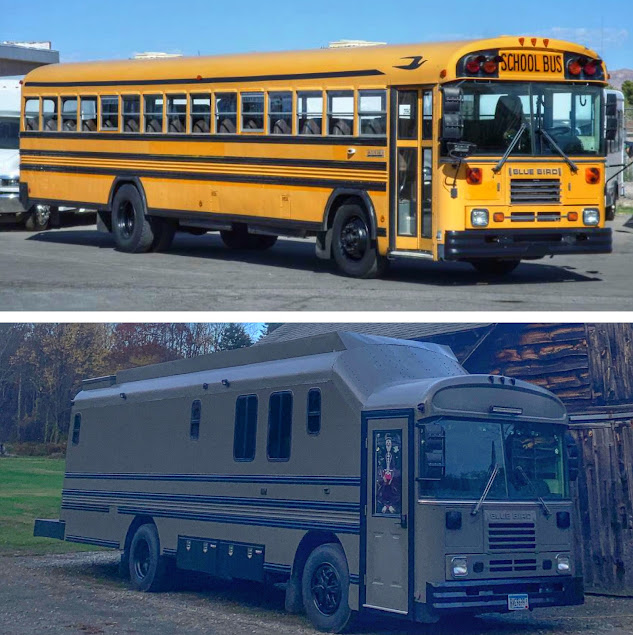
A Type B is built on a stripped commercial truck chassis — the original body is completely removed and replaced with a purpose-built bus body. Unlike a Type A where the van cab stays intact and a box gets bolted onto the back, a Type B has a single integrated body from front to rear. They’re wider than Type A buses (usually 7 to 7.5 feet inside) but shorter than Type C buses, sitting in that 22 to 30 foot range.
Here’s the thing about Type B buses though. They’re genuinely uncommon. When I went looking for them, I found that most manufacturers phased them out or merged them into their Type A lineups years ago. The ones you do find are often older, and parts can be trickier to source because less of them were made. Thomas Built, Blue Bird, and a few other manufacturers produced them, but they never caught on the way Type A and Type C buses did.
For conversion purposes, the Type B gives you a bit more width to work with compared to a Type A, and the integrated body means fewer seams and potential leak points. But honestly, most people either go smaller (Type A) or bigger (Type C) and skip the Type B entirely. If you happen to find one in good shape at a good price, it can work. But I wouldn’t spend months hunting for one when there are thousands of Type A and Type C buses available right now.
The one scenario where a Type B makes sense is if you want something wider than a van conversion but still short enough to park easily. That 7 to 7.5 foot interior width means you can do a bed sideways across the bus without it being a total squeeze, which is really hard to pull off in a Type A.
—
Type C Buses (The Classic Skoolie — Conventional and Flat Nose)
This is the one. When somebody says “skoolie,” this is what they’re talking about 90% of the time. The Type C is the classic American school bus with the hood sticking out front and the engine underneath it. If you grew up in the United States, you rode one of these to school.
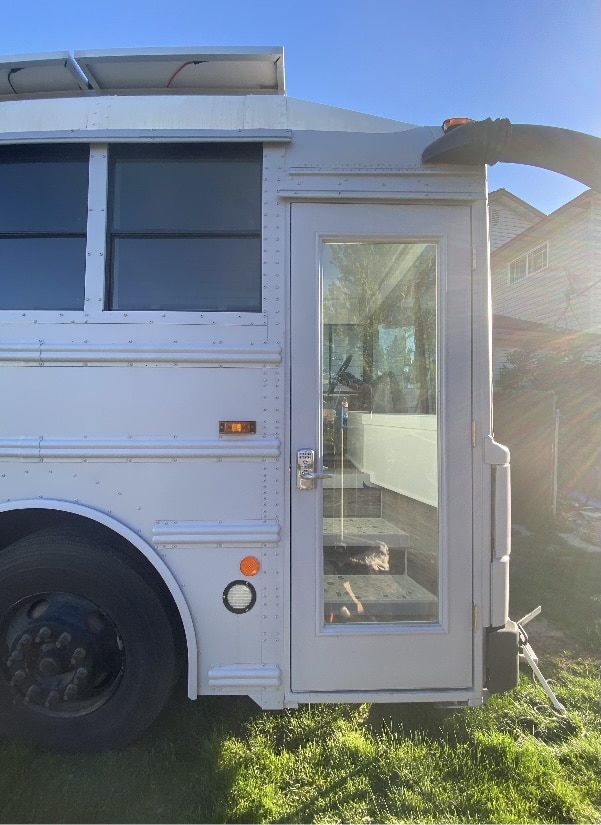
Type C buses come in a massive range of sizes, from about 24 feet all the way up to 42 feet. The most popular range for conversions is 30 to 38 feet, which gives you enough space for a full kitchen, bathroom, bedroom, and living area without being so long that every parking lot becomes a puzzle.
I spent a ridiculous amount of time digging into the Type C market when I first started researching conversions. And what I kept coming back to is that they’re popular for a reason. They’re everywhere. School districts across the country retire them constantly, which means there’s always stock available at auctions. Parts are cheap because they share engines, transmissions, and drivetrain components with commercial trucks. The DT466, Cummins 5.9, Cummins 8.3, Cat 3126 — these are all workhorses that any diesel shop can handle. And the interior is basically a rectangular box with flat walls and a flat ceiling, which is about the easiest thing you can build out.
The “conventional” Type C has the hood out front, the engine underneath the hood, and a driver’s area that sits behind the engine. You pop the hood, and everything is right there. Oil changes, belt replacements, coolant checks — all accessible without crawling under anything. That’s huge when you’re on the road and something goes wrong.
Now, there’s also a “flat nose” variation of the Type C, sometimes called a flat front or forward control. On these, the engine is still in the front, but it’s tucked under the floor ahead of the driver instead of under a hood. The front of the bus is flat. You don’t see these as often, but they exist, and they give you slightly more interior length on the same overall bus length because there’s no hood eating into the space.
I was talking to a guy at a diesel shop once, and he made a point that stuck with me. He said the Type C conventional is the Honda Civic of the bus world. Not glamorous, not exciting, but it starts every time, parts are at every auto store, and when something breaks, a thousand YouTube videos show you how to fix it. That’s worth a lot when your home is also your vehicle.
For a deep dive on the front engine vs rear engine question, check out our full comparison.
“International school bus….what is that exactly? Is it a converted coach?”
This one comes up a lot and I totally understand why. “International” sounds like it could mean anything, imported from overseas, some kind of special designation, a converted coach from another country. But it’s way simpler than that.
International is a brand name. International Harvester, which became Navistar, which makes IC Bus — one of the biggest school bus manufacturers in North America. So when someone says they have an “International school bus,” they mean a school bus built on an International chassis, usually with an International engine. The DT466 and T444E are the two you’ll see most often, and both are among the most desirable engines in the skoolie community.
It’s definitely not a coach. A coach bus is a completely different vehicle — think Greyhound, MCI, Prevost. Highway cruisers with luggage compartments underneath, air ride suspension, and usually a price tag three to five times higher than a school bus. An International school bus is just a regular old school bus, usually a Type C, built by a very reputable manufacturer.
If anything, an International school bus is one of the safer buys you can make. The DT466 engine in particular is a legend. Mechanical injection, no computer nonsense, and I’ve seen them running strong past 300,000 miles. When you see “International” on a listing, don’t overthink it. It’s just the brand, and it’s a good one.
—
Type D Buses (The Big Dogs — Transit-Style)
Type D buses are the flat-front, no-hood, transit-style school buses. They’re the biggest school buses on the road, usually running 35 to 45 feet, and they look like a city bus that got painted yellow. The engine is either mounted under the floor in the front (called a front engine transit) or pushed all the way to the rear (called a pusher or rear engine).
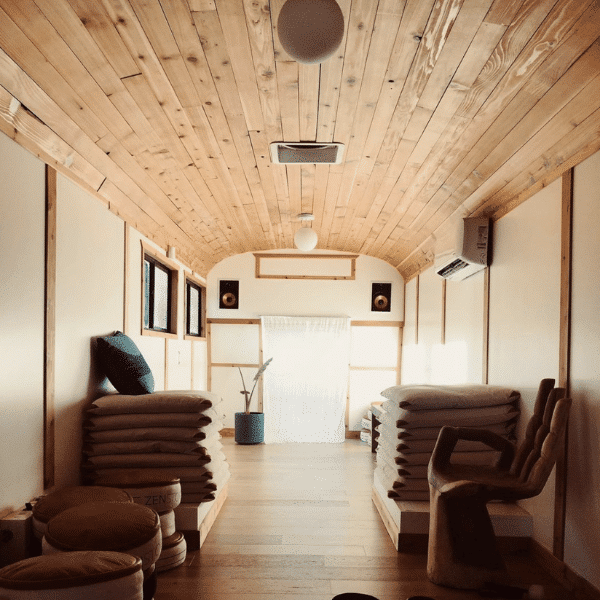
These are the buses that make your jaw drop when you see a finished conversion. That flat front means the cab area flows seamlessly into the living space. No doghouse bump in the middle of the floor from the engine cover. No hood blocking your view. You sit right up at the windshield with a panoramic view of the road, and the interior feels open and spacious in a way that a Type C just can’t match.
I remember scrolling through a build page on Instagram one night, completely falling down the rabbit hole, and this couple had converted a Type D Blue Bird All American into basically a studio apartment. The flat front gave them this huge windshield that looked out onto whatever landscape they were parked in, and with no engine hump in the floor, they’d done a continuous living space from front to back. It looked incredible.
But here’s the reality check. Type D buses are heavier, more expensive to buy, and harder to maintain. The rear engine models especially — when something goes wrong, you’re accessing the engine through panels and hatches instead of just popping a hood. Simple jobs take twice as long. I read about one owner who needed a water pump replaced on his rear engine Cummins and it turned into a two-day ordeal that would’ve been done in half a day on a front engine Type C.
They’re also thirstier. You’re looking at 6 to 9 MPG fully loaded, compared to 8 to 12 on a mid-size Type C. And the GVWR situation is something you really need to pay attention to. Some Type D buses push past 36,000 pounds GVWR, which means you might need to think about CDL requirements in your state.
For most first-time builders, a Type D is more bus than they need. But if you’re building for a family, you want maximum interior space, and you don’t mind the extra cost and complexity, the Type D is the premium school bus platform.
“What differences are between a normal bus and a school bus?”
When people ask this, they usually mean “what’s different about a city bus or a Greyhound compared to a school bus?” And the answer is, honestly, quite a lot.
School buses are built to federal safety standards specifically designed for transporting kids. That means heavy-gauge steel construction, rollover protection, reinforced body joints, and specific emergency exit requirements. They’re tanks. I talked to a welder once who told me cutting into a school bus body panel was noticeably harder than cutting into a transit bus panel, and that’s by design.
Transit buses and coaches are built for different jobs. City buses are designed to load and unload passengers quickly, run 12 to 16 hours a day, and put on serious mileage. They have low floors, wide doors, air suspension, and wider bodies (about 8.5 feet inside vs 7.5 on a school bus). Coach buses are built for highway comfort with under-floor luggage bays, high-back reclining seats, and smooth rides at highway speed.
The practical differences for conversions come down to cost, parts, and workability. School buses are cheap ($3,000 to $10,000), parts are everywhere, mechanics know them, and the flat walls make building easy. Transit and coach buses cost more to buy, have proprietary parts that can be expensive and hard to find, and often have curved walls and weird interior shapes that complicate the build. We go deep on the school bus vs transit bus comparison in a separate article.
The flip side is that transit and coach buses offer things school buses can’t. Wider interiors, smoother rides, under-floor storage for tanks and gear, and sometimes better insulation. It’s a trade-off. For 90% of people, school buses are the smarter entry point. But the other 10% know what they want and they’re willing to pay for it.
—
Shuttle Buses
Shuttle buses are interesting because they kind of fly under the radar in the conversion world, and I think more people should be looking at them. A shuttle bus is basically a commercial passenger vehicle built on a van or light truck chassis — similar to a Type A school bus in size and construction, but designed for airport shuttles, hotel transport, church groups, and that sort of thing.
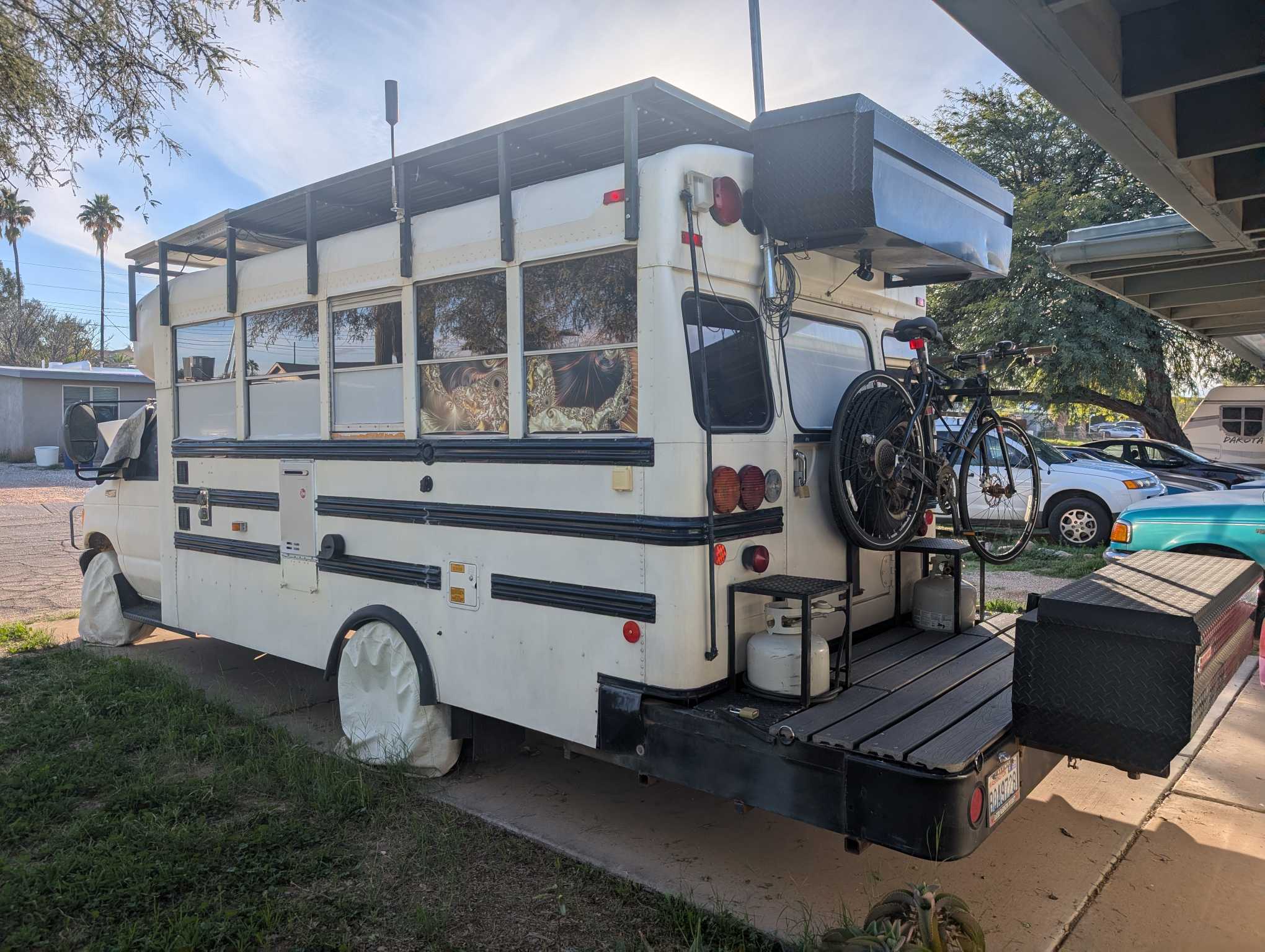
Most shuttle buses are 20 to 30 feet long, built on Ford E-450, Chevy Express 4500, or Freightliner M2 chassis. The big difference between a shuttle bus and a short school bus is the body. Shuttle buses almost always come with a raised roof from the factory. We’re talking 6’3″ to 6’8″ of interior ceiling height compared to about 6 feet in a Type A school bus. For a lot of people, that extra headroom is the entire reason they choose a shuttle over a short bus.
There’s another advantage I didn’t expect when I first started looking into shuttles. Many of them come with luggage compartments or under-floor storage that school buses don’t have. That space underneath is perfect for water tanks, batteries, propane tanks, and gear you don’t want taking up floor space inside. One builder I came across had stashed his entire electrical system in the under-floor compartment and it freed up a ton of interior space.
Shuttle buses are also usually white, which matters more than you’d think. A white shuttle bus parked at Walmart or in a neighborhood doesn’t draw nearly as much attention as a yellow school bus. If stealth is important to you, and it is for a lot of people who do overnight parking, a shuttle bus blends in way better.
The downsides? They’re a bit harder to find than school buses. They don’t get auctioned off by school districts in the same volume, so you’re usually buying from commercial fleet sales, private sellers, or specialty dealers. Prices tend to be a bit higher too, typically $5,000 to $15,000 for a used shuttle in decent shape.
I’ll be honest, if I were doing a solo build or a couples build and didn’t need a ton of space, a shuttle bus would be near the top of my list. The raised roof alone makes it worth the slight premium over a short school bus.
“Where can I get a short school bus, or shuttle bus? Is it true that shuttle buses are taller?”
We touched on the school bus part of this up in the Type A section, so let me focus on the shuttle bus side here.
Shuttle buses don’t go through the same auction pipeline as school buses. School districts have a predictable cycle of retiring buses and selling them through government surplus sites. Shuttle buses come from private companies — hotels, airports, car rental agencies, churches, senior living facilities. When they retire them, they usually sell through commercial vehicle dealers, fleet liquidation companies, or online marketplaces.
Your best bets for finding shuttle buses are CommercialTruckTrader.com, BusesForSale.com, Facebook Marketplace, and Craigslist. Some pop up on GovPlanet and PublicSurplus too, especially ones retired from municipal transit systems or VA hospitals.
And yes, shuttle buses are almost always taller inside. A standard Type A school bus gives you about 72 inches (6 feet) of ceiling height. Most shuttle buses have raised roofs that give you 76 to 80 inches (6’4″ to 6’8″). Some even have flat, higher roofs that hit 82 inches or more. That’s a genuine game changer when you’re building out the interior, because once you add flooring and ceiling insulation, every inch counts.
—
Transit Buses (City Buses)
City transit buses are the ones you see picking up commuters on every corner in major cities. They’re big — usually 30 to 40 feet — wide, and built to run all day, every day. Names like New Flyer, Gillig, NABI, and NovaBus dominate this segment.

When I first started seeing transit bus conversions on YouTube, I was fascinated. The interiors are noticeably wider than school buses, about 8.5 feet compared to 7.5, and that extra foot of width changes everything. You can do a queen bed sideways across the bus. Your kitchen counter can be deeper. The aisle feels less like a hallway and more like an actual room.
Transit buses also ride smoother than school buses. They run on air suspension instead of leaf springs, which means highway driving is significantly more comfortable. And most of them have massive under-floor storage compartments designed for wheelchair lifts and equipment that convert beautifully into space for water tanks, batteries, and tools.
“im really thinking about buying a bus, my question is would you go school, or city bus?”
OK so this is the big question and I’ve spent way too many hours thinking about it. Here’s where I came down.
For most people, especially first-time builders, a school bus is the better choice. And it’s not because transit buses are bad. It’s because the total cost of ownership and the conversion difficulty level are just higher with a transit bus, sometimes significantly.
Let me walk through the specific reasons.
Parts availability is the big one. School bus engines like the DT466, Cummins 5.9, and Cat 3126 are shared with the trucking industry. Any diesel shop can work on them, and parts are at every truck parts store. Transit buses use proprietary systems from their manufacturers. New Flyer and Gillig have their own specific air systems, electrical setups, and body components. I spent an afternoon once trying to price out an AC compressor for a Gillig transit bus versus a Blue Bird school bus. The transit bus part was almost triple the price, and it had a three-week lead time.
Body shape is the other major factor. School buses have flat walls and a flat ceiling. You frame out your interior like you’re building a room. Transit buses have curved walls, wheel well intrusions that eat into your floor space, and structural ribs running along the interior that you have to work around or box out. I watched a build video where a guy spent two solid days just trying to deal with the curved wall situation in his transit bus kitchen. In a school bus, that same job would’ve taken an afternoon.
Then there’s purchase price. A running school bus goes for $3,000 to $10,000 at auction. A transit bus in comparable condition is more like $8,000 to $20,000, and they’re harder to find because transit agencies don’t auction them off in the same volume. Some agencies scrap their retired fleet rather than sell to private buyers.
Now, all that said, if you specifically want a wider interior, a smoother ride, and you’ve got the budget and patience for a more complex build, a transit bus is genuinely impressive as a conversion platform. The width alone makes the interior feel like an actual living space instead of a hallway. I’ve walked through finished transit bus conversions that felt more like a real apartment than any school bus conversion I’ve seen.
My honest recommendation? Start with a school bus for your first build. Learn the process, figure out what you like and don’t like about bus life, and if you decide you want to upgrade later, a transit bus is a fantastic second bus. Going the other direction — starting with a transit bus and wishing you’d started simpler — is a much more expensive lesson.
—
Coach Buses (MCI, Prevost, Greyhound)
Coach buses are the rock stars of the conversion world. MCI, Prevost, Van Hool, Setra — these are the highway cruisers that Greyhound, tour companies, and rock bands use. They’re purpose-built for long distance travel, and when you convert one into a home, the result can be genuinely stunning.
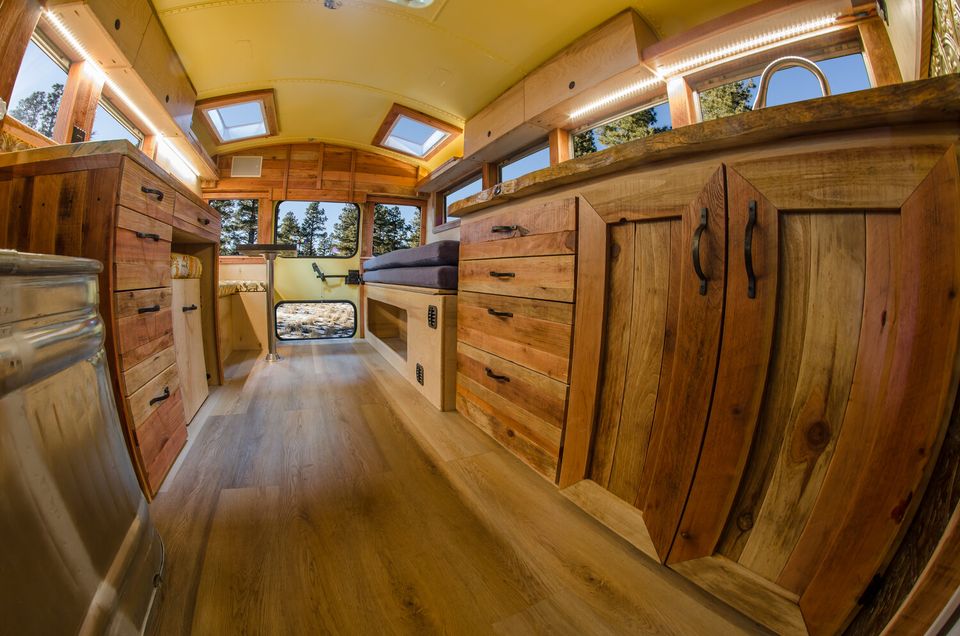
A coach is fundamentally different from a school bus in almost every way. The engine is in the rear (always), usually a big diesel like a Detroit 60 Series, Cummins ISM, or Caterpillar C13. The entire undercarriage is designed for luggage storage, with massive compartments called bays running along both sides. Air ride suspension. Highway gearing. Tinted windows. Onboard climate control. Some even come with an onboard generator.
I fell down a serious rabbit hole one weekend watching coach bus conversion videos. There’s this whole community of people converting retired Greyhound MC-9s and MCI D-series coaches into these incredible mobile homes, and the builds look like they belong in an architecture magazine. The luggage bays underneath become utility rooms — one bay for plumbing and water tanks, one for electrical and batteries, one for tools and outdoor gear. The passenger area becomes this wide-open living space with tinted windows and curved ceilings that actually look elegant instead of industrial.
But I need to be realistic here. Coaches are expensive and complex, and they’re not for everyone.
“Would it have been cheaper in the long run to find a used Greyhound bus and convert it?”
I see this question pop up a lot, usually from someone who’s deep into a school bus build and starting to wonder if they chose wrong. And the honest answer is, probably not cheaper, but possibly worth it depending on your situation.
A used Greyhound bus or retired MCI coach in running condition goes for $15,000 to $50,000. Some real project buses sell for less, but “project” in coach bus language can mean $10,000 to $30,000 in mechanical work before it’s reliably roadworthy. Compare that to a school bus at $3,000 to $10,000 that might need $1,000 to $3,000 in work to be road ready.
Where coaches potentially save money is in what’s already built in. The luggage bays are already insulated, weather-sealed storage. The windows are already tinted and double-paned. The air ride suspension already works. The HVAC system might already function. In a school bus, you’re building all of that from scratch. So the total conversion cost on a coach can sometimes be lower because you’re starting with a more finished platform.
But maintenance is where coaches get expensive in a hurry. These are commercial vehicles with commercial-grade systems. Air brakes, tag axles, hydraulic leveling, complex electrical systems — when something breaks, you’re not watching a YouTube tutorial and fixing it in the driveway. You’re calling a specialty shop and writing a big check. A couple I was reading about on a forum bought a retired MCI D4500 and estimated they spent $12,000 in the first year just on mechanical maintenance, not even counting the conversion. The bus was mechanically sound when they bought it. That’s just what it costs to keep a coach running.
For the right person, a coach conversion is the ultimate build. You get a smooth, quiet, highway-capable vehicle with massive storage, excellent insulation, and the kind of road presence that turns heads at every campground. But that person needs a healthy budget, some mechanical aptitude (or a good relationship with a coach specialist), and realistic expectations about ongoing costs.
If you’re on a tight budget and just want to get into bus life, a school bus will get you there for a fraction of the cost. If you’ve got $50,000 to $100,000 for the total project and you want the nicest thing on wheels, a coach is hard to beat.
—
Double Decker Buses
Double deckers are the show-stoppers. Two floors, massive square footage, and a look that absolutely nobody can ignore. I get why people are drawn to them. The idea of having an upstairs and a downstairs in a vehicle is just cool. There’s no getting around it.
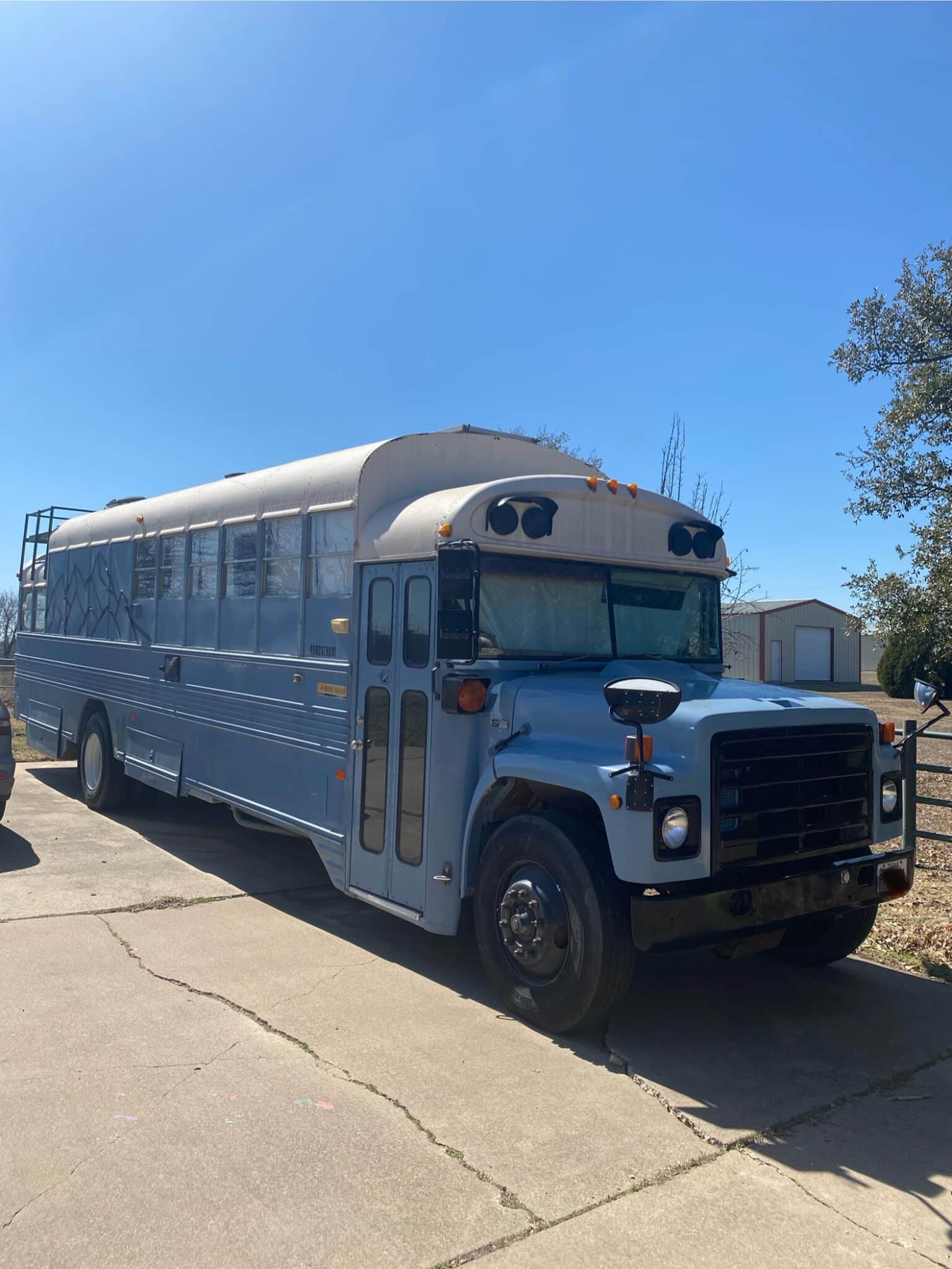
A stock double decker gives you two separate levels, each about 6 feet of headroom (sometimes a bit less on the upper deck). The total usable floor space can hit 300 to 400 square feet, which is genuinely apartment-sized. You can have a real separation between living space and sleeping space that no single-story bus can offer — bedroom and lounge upstairs, kitchen and bathroom downstairs. Or flip it, put the living space upstairs for the views.
We’ve got a full deep-dive on double decker conversions if you want the complete picture, but let me cover the highlights and the reality check here.
“Why not start with a double decker bus?”
I love this question because it usually comes from someone who’s looking at a standard skoolie build and thinking, why would anyone settle for one floor when you could have two? On the surface it seems so obvious.
Well, here’s why most people don’t.
Availability is the first wall you hit. Double decker buses are genuinely rare in the US. They’re common in the UK and parts of Europe, but American transit systems barely use them. Most of the ones you’ll find stateside are retired tour buses, a handful of decommissioned city transit buses, or imports. I spent a while searching and at any given time there were maybe a dozen for sale in the entire country, compared to hundreds of school buses.
Cost is the second wall. We’re talking $15,000 to $50,000 for a double decker in decent mechanical condition. Some go higher. And the engines are often different from what American mechanics are used to working on, especially UK imports with right-hand drive configurations and powertrains that aren’t common here.
Then there’s the height situation. A stock double decker sits at 13.5 to 14.5 feet tall. Standard highway overpasses are designed for 14 feet of clearance minimum, so you’re theoretically fine on interstates. But road repaving reduces clearance over time, older bridges in towns dip below 13 feet, railroad overpasses in rural areas can be 11 or 12 feet. You need a trucker GPS that routes around low bridges, and you basically can’t use drive-throughs, gas station canopies, or parking garages ever again.
A couple I was reading about who traveled in a converted Leyland Olympian through the UK said height became the single biggest factor in their route planning. They once accidentally turned onto a road with a low bridge and had to reverse the entire double decker down a narrow lane for a quarter mile because there was nowhere to turn around. They laughed about it later, but they also said it was genuinely terrifying.
For the right person though — someone with a bigger budget who plans to be mostly stationary or at least very intentional about where they travel — a double decker is an incredible platform. The two-floor layout gives you design options that nothing else on wheels can match. Just go in with your eyes open about the trade-offs.
—
Church and Activity Buses
Here’s one that doesn’t get talked about enough. Church buses, activity buses, and organizational buses are basically commercial passenger vehicles that churches, nursing homes, youth groups, and community organizations used to transport people. And they can be fantastic conversion platforms.
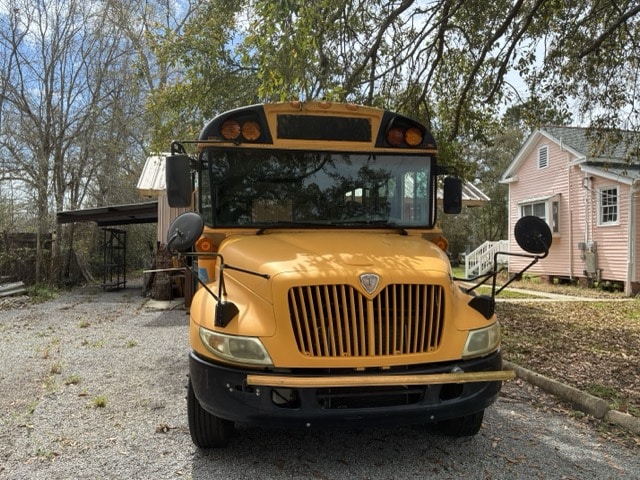
Most church buses are built on the same chassis as shuttle buses or short school buses — Ford E-450, Chevy Express, or Freightliner chassis. They come in 20 to 35 foot lengths and often have higher roofs than school buses because they were designed for adults, not kids. Some of them have overhead luggage racks, reading lights, and nicer interior trim. A few even have rear luggage compartments.
The reason I think church buses are worth looking at is the condition. A church bus that was used for Sunday morning pickup and the occasional trip to a retreat might have 50,000 miles on it after 15 years of service. Compare that to a school bus that runs twice a day, five days a week, nine months a year. The church bus has just been sitting in a parking lot most of its life. Low miles, minimal wear, and often well-maintained because the church had a volunteer who actually cared about keeping it running.
I talked to a guy a few months back who bought a church bus from a Baptist congregation in Alabama for $3,500. It was a 2004 Ford E-450 with a 6.0L diesel, 62,000 miles, raised roof, and the interior was in great shape. The church had upgraded to a newer vehicle and just wanted to get rid of it. He said finding it was pure luck — he happened to call around to churches in his area asking if anyone had a bus they wanted to sell, and this one popped up on his third call.
That’s actually my best advice for finding church buses. Don’t just search online listings. Call churches directly. A lot of small and mid-size congregations have buses sitting in their parking lots that they’d love to get rid of, but they’ve never bothered to list them for sale. Some will sell for way under market value just because they want the parking space back.
Activity buses from retirement homes, VFW halls, and community centers are similar. Low miles, adult-height interiors, and owners who just want them gone. They might not show up on the big auction sites, but they’re out there if you put in the legwork.
The main thing to watch out with church buses is the 6.0L Powerstroke engine, which is common in Ford E-450 chassis from 2003 to 2007. That engine has well-documented reliability issues with the injectors and EGR system. It’s fixable — “bulletproofing” a 6.0 runs about $3,000 to $5,000 — but factor that into your budget if you’re looking at one. Or better yet, find one with the 7.3L diesel or the V10 gas engine and sidestep the issue entirely.
—
Picking the Right Platform for You
So after going through all of this, where does that leave you? Here’s the honest truth. There’s no single best bus for conversions. If there were, everyone would buy the same thing and there’d be nothing to argue about on the forums.
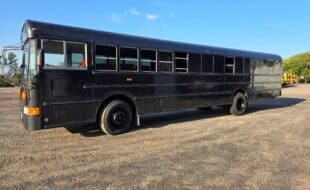
What I found after digging through all of these categories is that the “right” bus almost always comes down to three things: your budget, how many people are living in it, and whether you’re traveling constantly or staying mostly in one place.
If you’re on a tight budget and this is your first build, a Type C school bus or a shuttle bus is the smart move. They’re cheap, they’re everywhere, parts are easy to find, and there’s a massive community of people who’ve already done exactly what you’re trying to do. You won’t be reinventing the wheel.
If you’ve got more money and you want something that rides like a dream, a coach is hard to beat. But go in knowing that the ongoing costs are higher and the mechanical work is more specialized.
If you’re a couple who wants to travel light and park easy, a Type A short bus or a shuttle bus gives you everything you need without the bulk of a full-size rig. The shuttle bus especially, with that raised roof, is an underrated option.
If you want a serious amount of space and you’re realistic about the challenges, a Type D school bus or a transit bus gets you the biggest interior on a non-coach platform.
And if you want the show-stopper, the thing that makes everyone stop and stare and ask questions at the campground, a double decker or a coach is your move. Just don’t go into it blind.
I’ll be honest, the more research I did for this guide, the more respect I gained for people who convert anything other than a standard Type C school bus. Those builds take more creativity, more patience, and usually more money. But the results can be absolutely incredible when someone commits to a less conventional platform and does it right.
Whatever you pick, go look at it in person before you buy. Sit in the driver’s seat. Walk through the interior. Get under it and look at the frame. No amount of online research replaces actually standing inside the bus and getting a feel for the space. You’ll know pretty quick which one feels right for what you’re trying to build.
That’s what I found after going through all of this. Your situation is gonna be different from mine, and from the next person’s, so take what’s useful here and go find your bus. And if you’re still stuck on which direction to go, start with our guide on how to choose the right school bus — it walks through engines, transmissions, gearing, and all the specifics once you’ve narrowed down the type.