
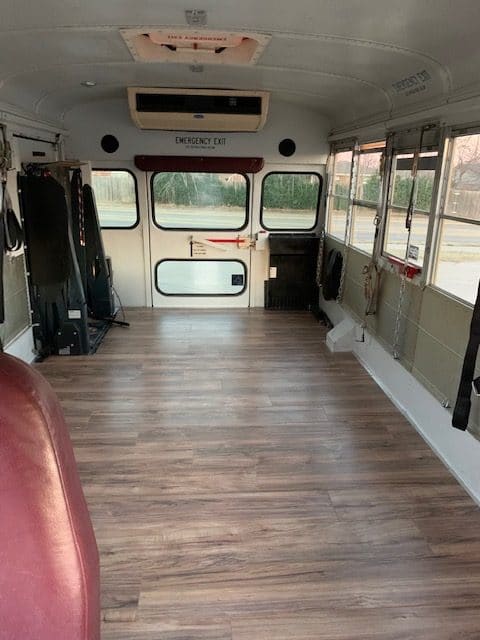
Everybody’s got an opinion on bus life. The problem is most of those opinions come from people who’ve either never done it or who are trying to sell you something. So I figured I’d just lay it all out — the good stuff and the bad stuff, no filter, no spin.
Living full-time in a converted bus is one of those things that’s simultaneously better and worse than people expect. Your housing costs can drop to almost nothing, you learn skills you never imagined needing, and you get to wake up in a new place whenever you feel like it. But you also deal with breakdowns that feel like your whole life is on hold, parking headaches that never fully go away, and a level of privacy that would make a college dorm room feel spacious. The people who thrive at this aren’t the ones who romanticize it — they’re the ones who went in with their eyes open.
Pro: Your Housing Cost Drops Dramatically
Someone asked me once what the biggest difference is between living in a conventional house and living in a bus. And honestly, the first thing that comes to mind isn’t freedom or adventure or any of that — it’s money. The math just hits different when you don’t have a mortgage or a $1,800 rent payment every month. (See our guide on How Do You Get Internet and WiFi Living in a Bus? for more on this.)
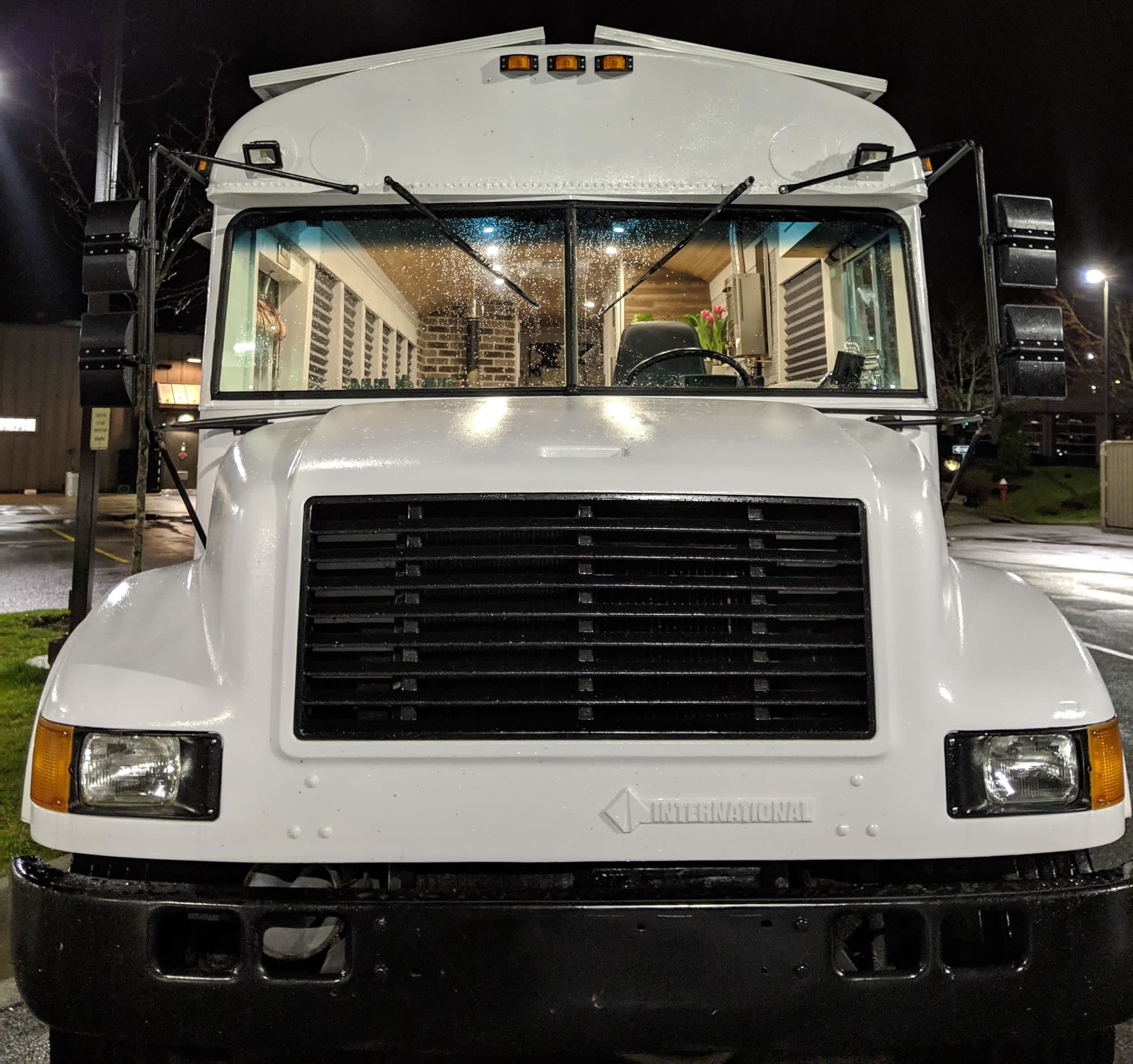
I was looking at numbers from people in the community, and the range is pretty wild but it all trends the same direction. Most full-time bus dwellers spend somewhere between $500 and $1,200 a month on everything — parking, fuel, food, insurance, the whole deal. Compare that to the national average rent, which is over $1,700 a month for an apartment, and you start to see why people make this jump. (See our guide on 11 Ways to Make Money While Living in a Bus for more on this.)
Now I’m not going to tell you it’s free. You’ve got fuel, maintenance, campground fees if you go that route. But even on the high end, you’re spending a fraction of what a traditional housing setup costs. And there’s no landlord raising your rent 8% every year because the market is “hot.”
The thing that really surprised me when I was researching this is how many people use the savings to pay off debt. Like, they’re not just living cheap for the sake of it. They’re knocking out student loans or credit cards or saving for land. The bus becomes a financial tool, not just a home. That reframe changed how I think about the whole lifestyle.
Con: Mechanical Breakdowns Are a Bigger Deal
“Never understood bus homes. When it breaks down, what do you do? You don’t just lose your vehicle, you lose your home.”
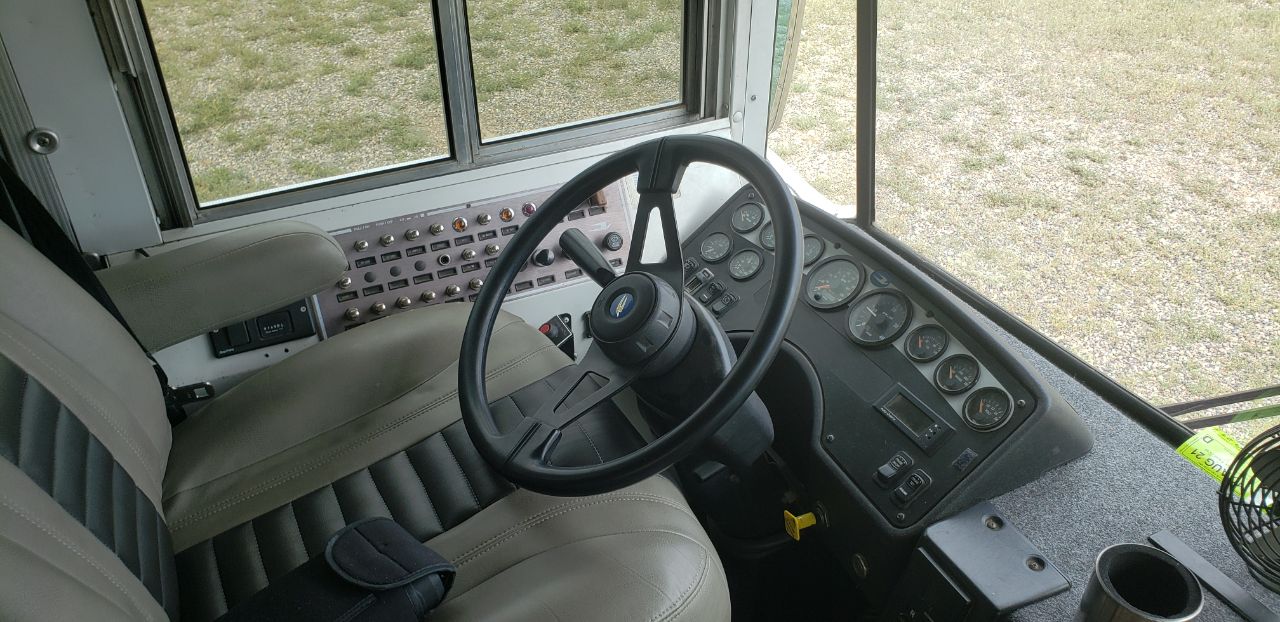
I see this question constantly, and I get it. It sounds terrifying on paper. Your engine won’t start and suddenly you’re homeless? Not exactly, but the fear is real and I’m not going to pretend the stress isn’t there.
Here’s what actually happens though. Your bus breaks down and you’re still living in it. The kitchen still works. The bed is still there. You’re not suddenly sleeping on the street — you’re parked somewhere waiting for a mechanic. It’s inconvenient, not catastrophic.
But the part nobody talks about is the mental weight of it. When your car breaks down, you call a buddy, get a ride, deal with it. When your bus breaks down, there’s this layer of anxiety because everything you own is sitting in a diesel shop parking lot. I talked to a couple at a campground once who had their transmission go out in rural New Mexico. They were stuck for eleven days waiting on parts. They said the repair itself wasn’t the hard part — it was the feeling of being trapped. Couldn’t move, couldn’t plan, couldn’t do anything but wait.
Breakdowns happen to every vehicle. But when your vehicle is also your entire life, the stakes feel higher even when the situation is manageable. Budget for repairs, learn some basic diesel maintenance, and keep an emergency fund specifically for this.
Pro: You Can Change Your Backyard Anytime
This is the one that gets people dreaming, and for good reason. Monday you’re parked in a national forest in Colorado. Thursday you’re next to a river in Utah. Next month you’re on the coast. Your “backyard” is literally whatever you want it to be.

I’ll be honest, when I first started looking into bus life, I figured this was mostly marketing. Like, sure, you CAN move whenever you want, but do people actually do it? Turns out, yeah. A lot of them do. Not every day, and not even every week necessarily, but the freedom to just go is real in a way that’s hard to appreciate until you don’t have a lease tying you somewhere.
What’s interesting is how differently people use this freedom. Some are constant movers — they follow the weather, new spot every few days. Others find a place they love and stay for months. There’s no right way to do it.
The part that doesn’t get talked about enough is what this does for your mental state. Bad neighbors? Leave. Town’s too expensive? Leave. You just feel stuck and restless? Leave. In a house, those feelings fester because moving is a massive ordeal. In a bus, you turn the key. There’s something about having that option — even if you don’t use it often — that changes how you experience daily life.
Con: Finding Parking Is a Constant Challenge
Alright, so the flip side of all that freedom is that you need somewhere to put a 35-foot vehicle every single night. And finding that spot is harder than most people realize going in.

“How easy is it to find a place to park that thing?” The honest answer is that it depends on where you are, but it’s rarely easy. Big cities? Forget it. Suburban neighborhoods? You’ll get a knock on the window from a cop within hours. Even some campgrounds and RV parks won’t take a converted school bus because of age restrictions or policies against “homemade” RVs. (See our guide on Can You Legally Live in a Converted School Bus? for more on this.)
You learn the routine fast. Call ahead to every RV park. Have backup plans for the backup plan. Know which Walmart locations are cool with overnight parking. Download apps like iOverlander and Campendium. Join every Facebook group where people share spots.
But here’s the thing — it never fully goes away. Even people who’ve been doing this for years still spend time every week thinking about where they’re parking next. It becomes background noise, like checking the weather. You get better at it, but it’s always there. And if you’ve got a full-size bus, not a shorty, the difficulty goes up because you just plain don’t fit in a lot of places.
I think this is the one thing that makes or breaks people in the first six months. The ones who can handle the parking puzzle stick around. The ones who expected it to be like pulling into a hotel parking lot? They sell the bus.
Pro: You Simplify Your Life Whether You Want To or Not
“What’s the difference between living in a conventional house alone and living in a bus alone?”
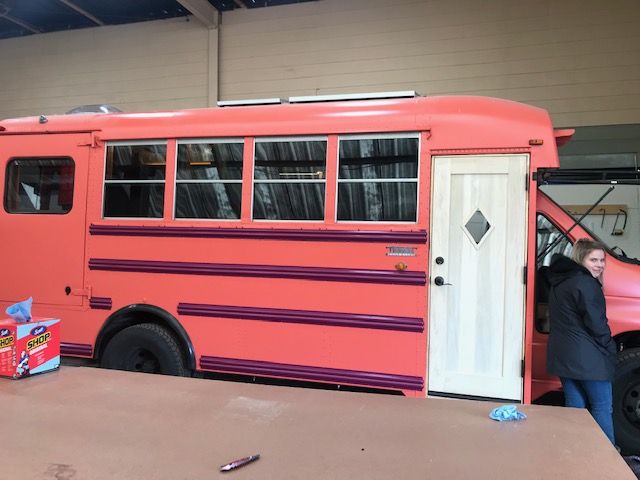
A bunch of things, but the simplification is what I keep coming back to. When I was researching this, person after person told me some version of the same thing — living in a bus forced them to get rid of stuff and habits they didn’t even realize were weighing them down. (See our guide on 15 Things Nobody Tells You About Living in a School Bus for more on this.)
You can’t bring a closet full of clothes you never wear. You can’t keep three junk drawers full of random stuff. You can’t accumulate, because there’s physically nowhere to put it. So you pare down, and then you pare down again, and then one day you realize everything you own fits in 250 square feet and you don’t miss any of it.
It goes beyond stuff too. Your routines simplify. Your relationship with money shifts because you see exactly where every dollar goes. A couple people I talked to said bus life basically cured their impulse buying, because where would they even put whatever they bought?
Now, the “whether you want to or not” part matters. Some people resist this, try to cram a house-sized life into a bus-sized space and it makes them miserable. The ones who lean into it — who actually embrace having less — they’re the ones who seem genuinely happy out there. For the people it clicks with, they describe it like taking off a backpack they didn’t know they were wearing.
Con: Privacy Is Basically Gone (Especially with Kids)
“What do yall do for privacy?”
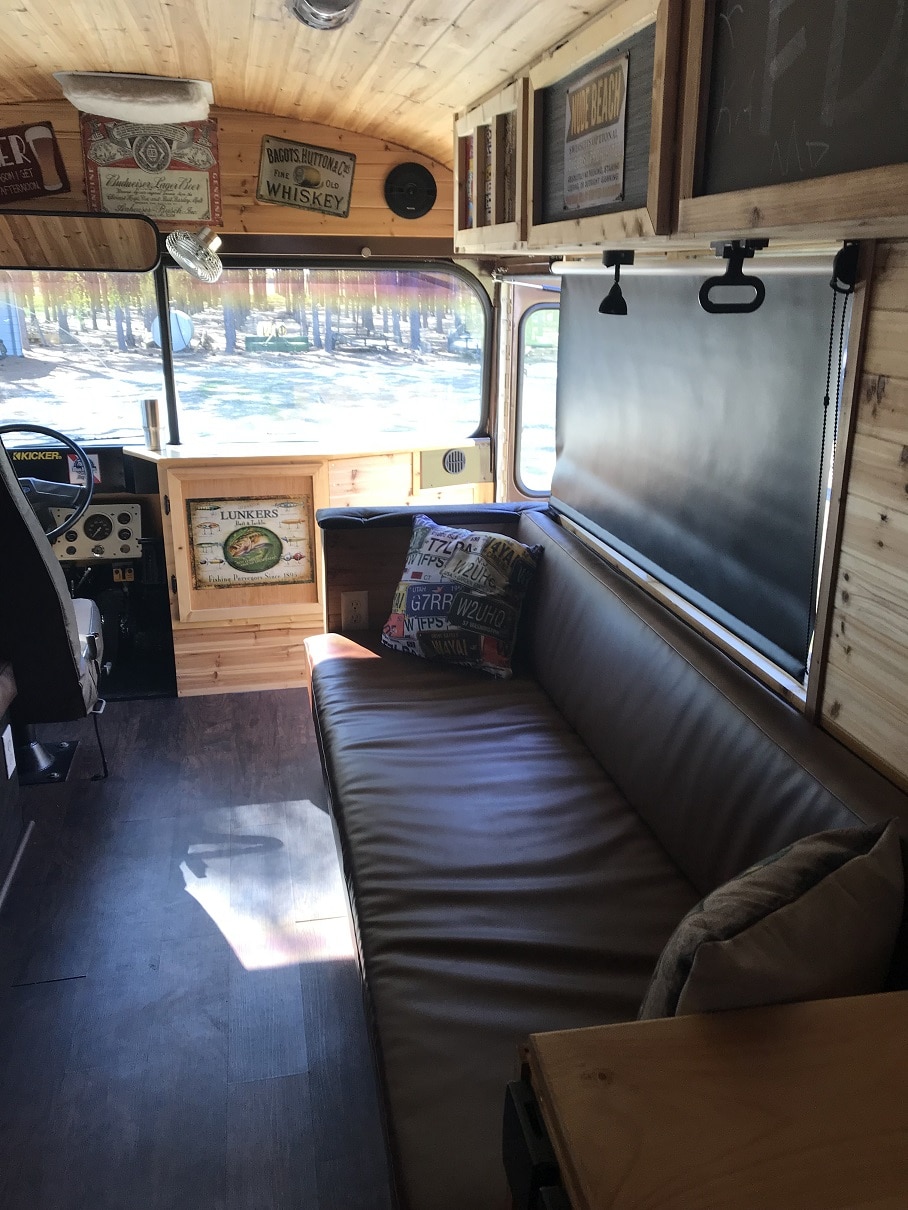
I already know this is the section some people are going to scroll straight to, so let’s get into it. In a bus, you’re living in what amounts to a hallway with furniture. Even with curtain dividers or a partial wall, there’s no real separation between spaces. You hear everything. And I mean everything.
For solo travelers or couples without kids, it’s manageable. Close the curtains on the windows, and the inside is your space. But the moment you add kids to the equation, things get complicated fast. There’s no sending them to their room. There’s no shutting a door for a phone call. There’s no having a conversation your kids can’t hear.
Someone posted in a forum I was reading, “my kids know more about our finances than most adults because they can literally hear every conversation we have about money.” And that kind of sums it up. Your life becomes a shared experience in every possible way. Couples have to get creative about alone time — some people wait until the kids are asleep and sit outside, some coordinate with other bus families to do kid swaps for an afternoon. But it takes real effort.
The bathroom situation is its own thing too. Most bus bathrooms are tiny, sometimes just a curtain between you and the rest of the bus. Getting changed, using the toilet, taking a shower — all of it requires coordination you never think about in a house. You adapt, but some people never get fully comfortable with it.
Pro: You Build Skills You Never Knew You Needed
This one snuck up on me when I was talking to people about their bus life experience. I expected to hear about plumbing and electrical work and basic diesel maintenance. And sure, that’s all there. But the skill list goes way beyond that.
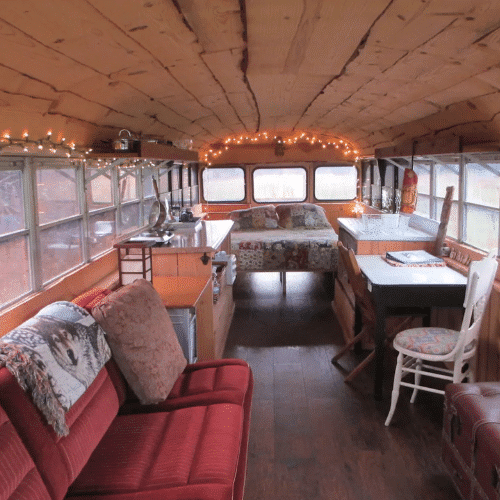
People told me about learning to back a 40-foot vehicle into a tight campsite. Learning to read topographic maps for boondocking spots. Learning basic welding because the nearest shop was 90 miles away. One guy said he learned to sew because his cushion covers kept wearing out and he got tired of paying someone to redo them.
There’s this thing that happens when you can’t just call a professional for every little problem. You start figuring stuff out yourself. YouTube becomes your trade school. And after a year or two, you look back and realize you’ve become genuinely handy in a way you never were before. I find that compelling — the lifestyle itself teaches you things.
And it’s not just mechanical stuff either. People talk about getting better at budgeting, planning, communicating with a partner because you literally can’t avoid each other. One woman told me bus life made her a better problem solver at her remote job because she’d gotten so used to troubleshooting on the fly. I thought that was a stretch at first but the more I sat with it, the more it made sense.
Con: Healthcare and Mail and Domicile Are Annoying
I’m grouping these together because they’re all the same flavor of annoying. They’re not hard, exactly. They’re just tedious in a way that makes you miss having a fixed address about once a month.
Healthcare first. You need a state of domicile to get an ACA marketplace plan. That means picking a state, establishing an address there (usually through a mail forwarding service), and hoping the plan you picked has a network that covers wherever you happen to be when you get sick. I dug into this pretty deep and the workarounds are all doable but none of them are elegant. Some people use telehealth for everything they can. Some schedule all their appointments during planned stops in their domicile state. Some just use urgent care clinics and pay out of pocket for the small stuff.
Mail is its own circus. You sign up for a service like Traveling Mailbox or Escapees, they scan your mail, you view it online. It works, but there’s always something — certified mail that needs a physical signature, a package that can’t be forwarded, a government form that insists on a “residential” address.
And domicile. This is where you pick a state to be your “home” for taxes, voter registration, vehicle registration, insurance, everything. Texas, Florida, and South Dakota are the popular picks because of no state income tax and friendly vehicle laws. But setting it all up — getting an address, registering to vote, switching your license, re-registering the bus — it’s a whole project. I talked to people who said it took them weeks, calling different agencies, mailing forms, getting the runaround. (See our guide on How Do You Get a Mailing Address Living in a Bus? for more on this.)
None of this is a dealbreaker. But it grinds on you because it shouldn’t be this hard and yet it is. Every bus dweller I talked to mentioned the admin stuff as one of the most underrated annoyances. Not the hardest part, not the scariest, just relentlessly annoying.
So Where Does That Leave You?
“Hi! My parents were thinking about getting one and us living in it. What are some bad and good things about living in one?”
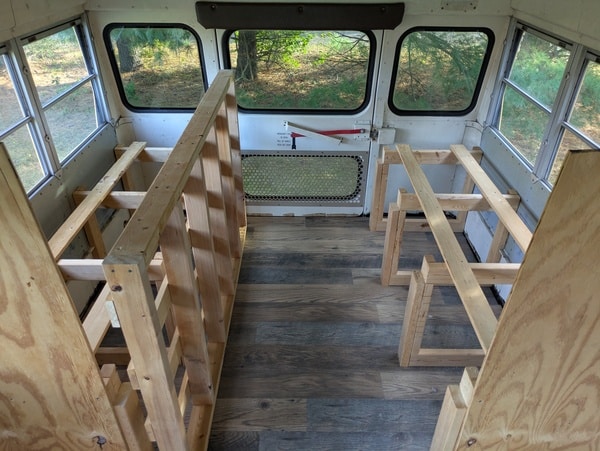
If I’m being straight about it, this lifestyle is a trade. You’re trading predictability for flexibility. You’re trading space for freedom. You’re trading convenience for savings. And whether that trade is worth it depends entirely on what you value.
After digging into all of this — talking to people, reading forums, crunching numbers — here’s where I landed. The pros are real. Saving hundreds or thousands a month on housing is life-changing. The ability to just move when you want to is something you can’t put a price on. And the skills you build along the way, that’s real too.
But the cons don’t go away. Parking is always a thing. Privacy is always a thing. The admin stuff never becomes fun, you just get better at handling it. And breakdowns will always carry that extra weight because your home is what’s sitting in the shop.
The people who love this life aren’t the ones who pretend the downsides don’t exist. They’re the ones who looked at the full picture, decided the trade was worth it, and built systems to handle the hard parts. Go in with your eyes open and you’ll know pretty quick whether it’s for you.
pgf65d