This was one of the first things I had to figure out when I started seriously looking at bus life. I’d been browsing RV listings for months, and the prices were making my eyes water. Then someone in a forum mentioned skoolies and I went down the rabbit hole. But I wanted to actually do the math, not just take someone’s word for it.In most cases, yes, a skoolie is significantly cheaper than a comparable factory RV. A solid bus conversion runs $20,000-$50,000 total (bus + build) and gives you more interior space than an RV at twice the price. A new Class A motorhome with similar square footage costs $100,000-$300,000. Even used RVs with the same living space run $30,000-$80,000. Where the RV wins is time, it’s move-in ready. A skoolie takes 3-12 months to build. You’re trading money for time.Skoolie on top, RV on the bottom — the cost difference might surprise you.
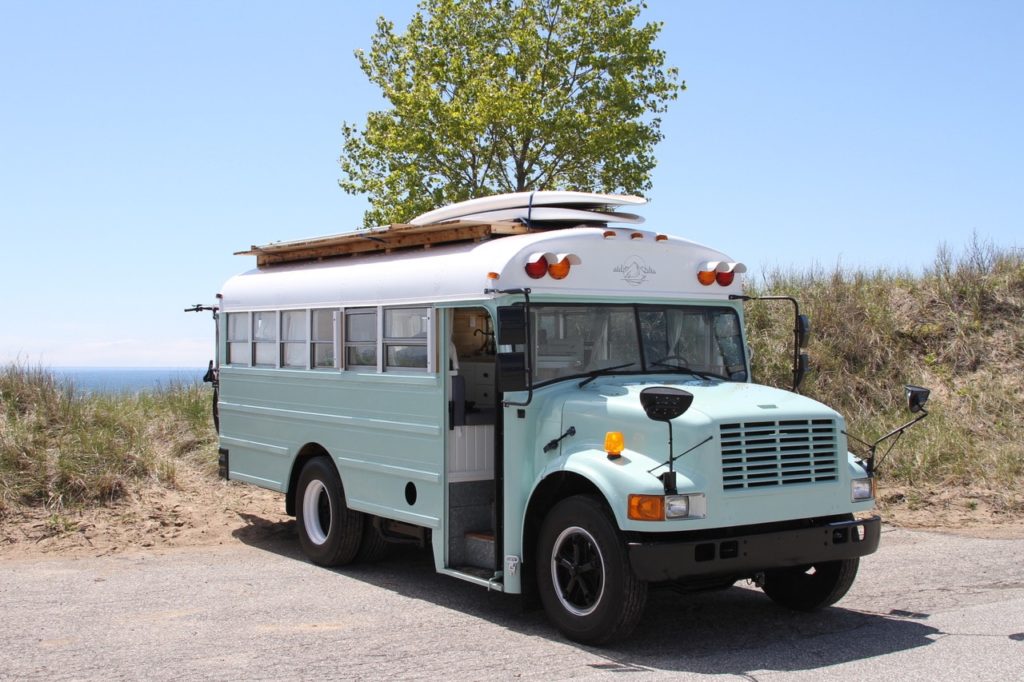
It’s cool, I’ll admit that. But wouldn’t it have been way cheaper to just buy a used RV?
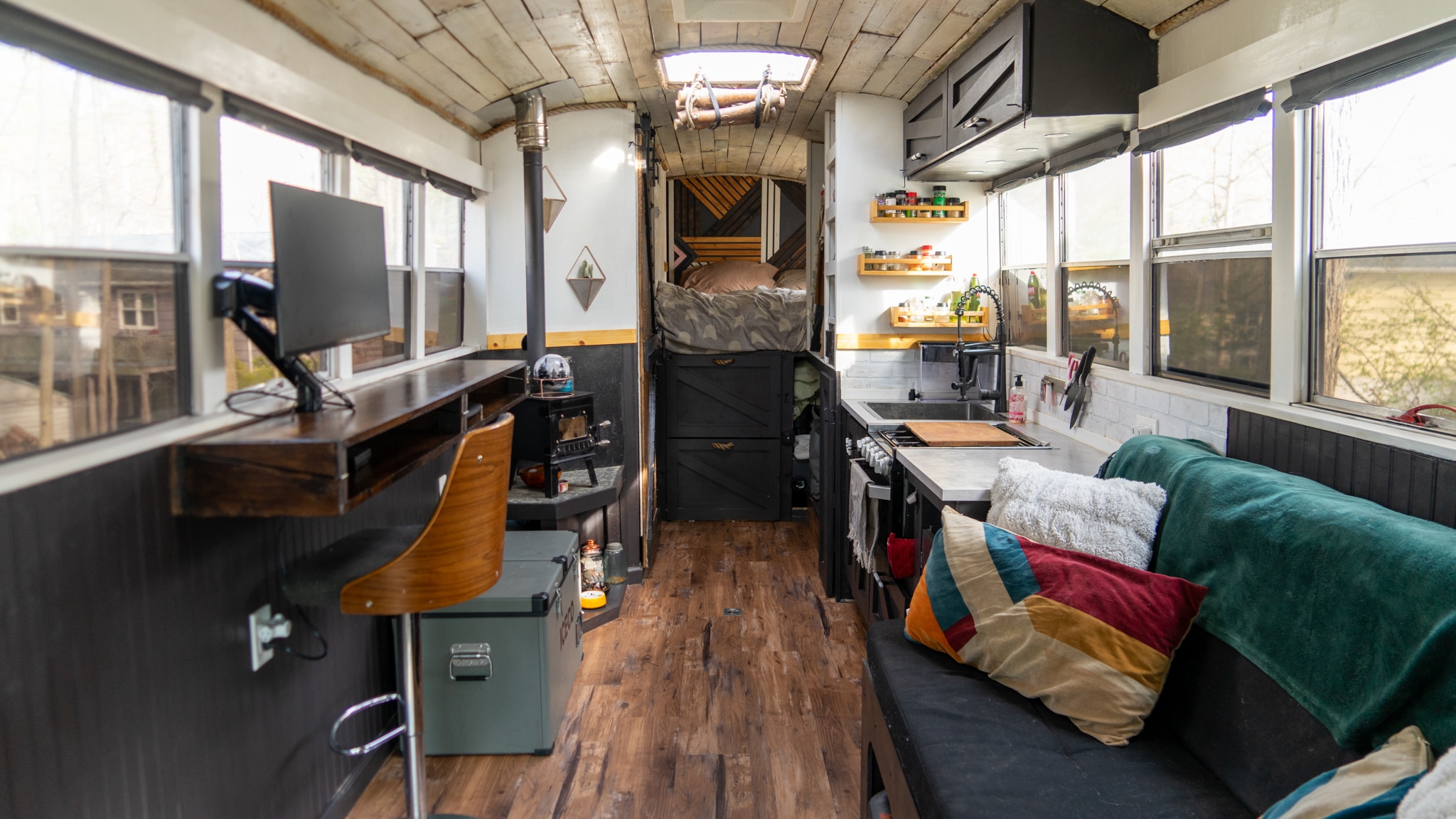
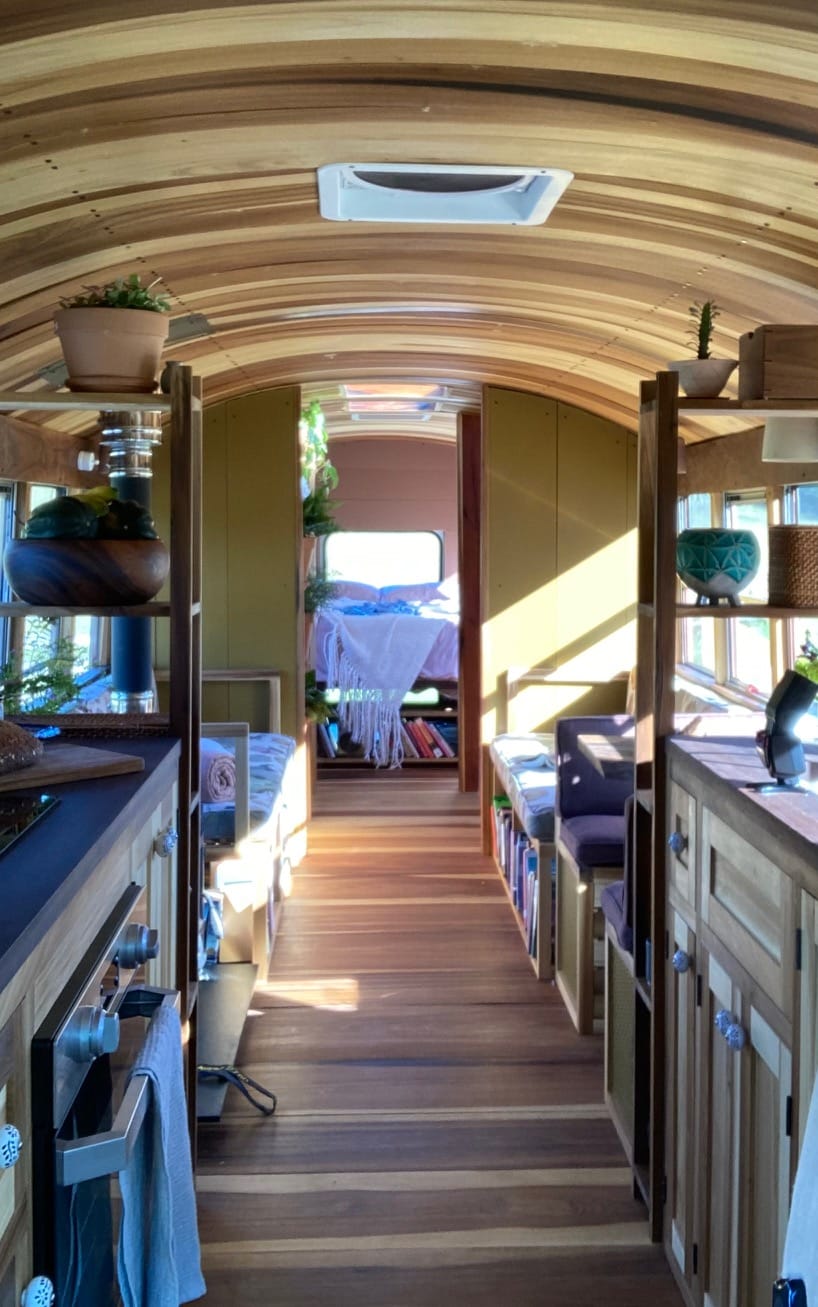
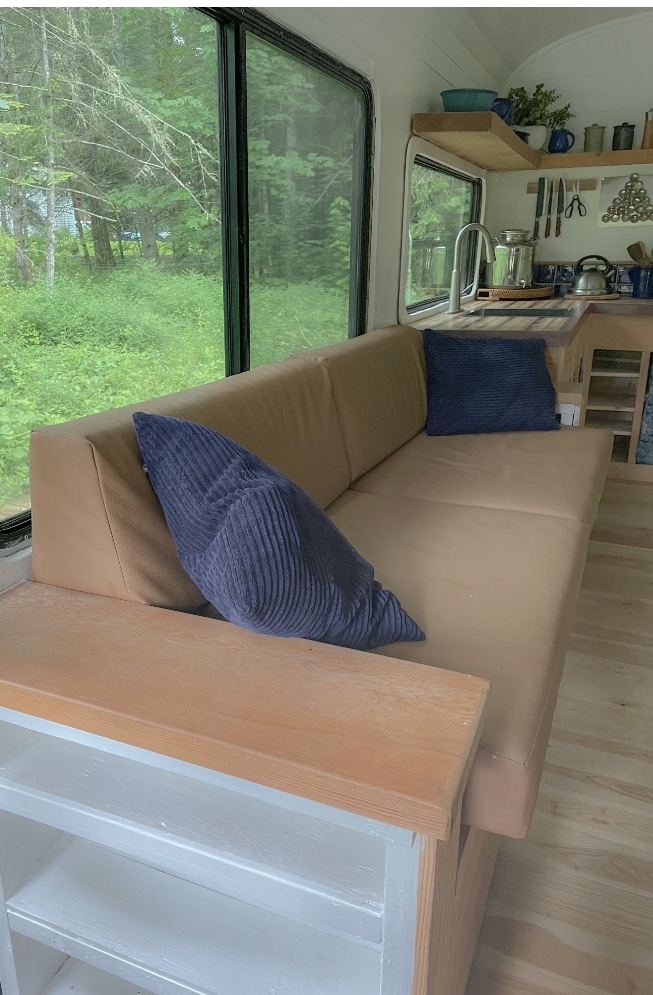
This is the kind of space you get in a skoolie — try fitting all this into a used Class C.
So this is the question I kept going back and forth on. I’d look at a used Class C motorhome for $35,000 and think, well, that’s ready to go right now. No weekends with a saw and insulation in my hair. But then I’d actually climb inside one at a dealer and realize how cramped it felt.
A used Class C (25-32 feet) in decent shape costs $20,000-$50,000. A used Class A (32-40 feet) runs $30,000-$80,000. A 35-foot skoolie with a full custom build can be done for $25,000-$45,000 total. So the raw numbers are close on the used market, and that’s where people get tripped up.
But square footage isn’t equal. A school bus is 7.5-8 feet wide inside. A Class C motorhome is typically 7-7.5 feet wide, and a lot of that width gets eaten by the cab-over bed and chassis design. The bus just gives you more usable floor space at every length. I didn’t fully appreciate this until I actually measured both side by side.
And here’s the thing nobody mentions in the RV vs skoolie debate. A new RV loses 20-30% of its value the moment you drive it off the lot. I talked to a guy who bought a 2019 Class A for $180,000 and couldn’t get $120,000 for it three years later. A well-built skoolie conversion typically holds value or even appreciates. People sell finished builds for more than they spent all the time.
Really though, how much money are we saving versus buying a new motorhome?
A build like this runs $40,000-$70,000 total. A factory motorhome with this kind of finish? Easily three times that.
I’ll be honest, this is where the numbers get kind of absurd. A new Class A diesel pusher motorhome (35-40 feet) with similar living space to a full-size skoolie costs $150,000-$400,000. That’s not a typo.
A skoolie with a full custom build, lithium batteries, big solar array, full bathroom, nice kitchen, runs $40,000-$70,000 total. That’s a savings of $80,000-$330,000 compared to the factory equivalent. When I first saw those numbers I thought someone was exaggerating, but I’ve checked them from multiple sources and they hold up.
Even at the budget level it’s dramatic. A basic livable skoolie ($15,000-$25,000) versus the cheapest new Class C motorhome ($60,000-$80,000). You’re saving $35,000-$55,000 minimum. If you want to dig deeper into exactly where every dollar goes in a conversion, I put together a full cost breakdown with real numbers.
The catch is your time. A factory RV is ready tomorrow. A skoolie takes months of weekends, or weeks of full-time building, to finish. If you value your time at $50/hour and spend 500 hours building, that’s $25,000 in “sweat equity.” I think most people who go the skoolie route actually enjoy the build process though. It becomes part of the adventure, not just a means to an end.
Why not just build a tiny house instead of converting a bus?
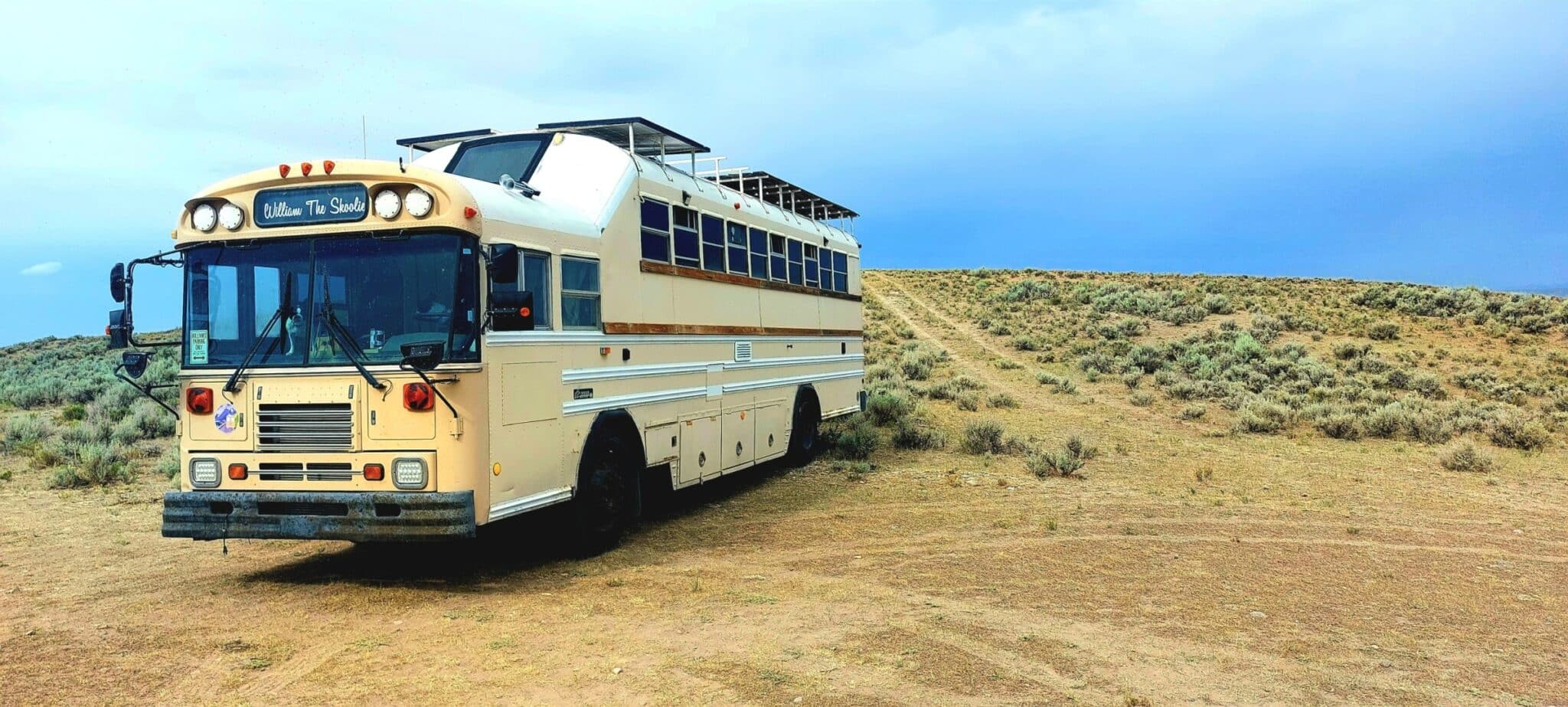
Good luck getting a tiny house to a spot like this. A skoolie just drives there.
I looked into this too, and it’s a fair comparison. Tiny houses and skoolies solve similar problems but in really different ways.
A tiny house on a trailer gives you more design freedom, higher ceilings, wider layout, real residential framing. But it can’t drive itself. You need a truck to tow it, a dedicated parking spot, and most places have way tighter zoning restrictions on tiny houses than on registered RVs. I wrote a whole article about skoolie vs tiny house if you want the deep dive.
A skoolie is self-contained and self-propelled. Park it, drive it, park it somewhere new. No tow vehicle needed. It’s registered as an RV, which gives you more legal parking options than a tiny house in most states.
Cost-wise they’re surprisingly similar for equivalent quality. A tiny house on a trailer runs $25,000-$60,000 DIY. A skoolie runs $20,000-$50,000. The tiny house probably gives you a nicer living space per dollar, but the skoolie gives you mobility. For me, the mobility was the whole point.
This is my goal — 5th wheel or bus? Which is better for families?
Plenty of room for the family to spread out — and you don’t need a $60,000 truck to get here.
Fifth wheels have some real advantages and I’m not going to pretend otherwise. Dedicated bedroom, slide-outs for extra space, residential-style features. A good 5th wheel gives you 300-400 square feet with slides extended.
But you need a $40,000-$80,000 truck to pull it. Factor that into the cost and the math changes fast. And once you’re parked, the truck is your daily driver, you’re unhooking and rehooking every time you need groceries. I watched a family at a campground spend 45 minutes trying to rehitch their fifth wheel in a rainstorm and thought, yeah, I don’t want that to be my life.
A skoolie towing a small car is cheaper overall. Bus + build + used Honda Civic versus 5th wheel + heavy-duty truck. The bus setup wins on price almost every time. The 5th wheel setup wins on living space if you’re using slide-outs, no question.
For families, the deciding factor is usually how often you move. If you’re staying in one spot for months, a 5th wheel’s extra space is worth it. If you’re moving weekly or monthly, the skoolie’s simplicity, just drive, wins. We’ve got more on bus life with big families if that’s your situation.
The Bottom Line
So here’s where I landed after running all these numbers. A skoolie saves you somewhere between $50,000 and $300,000 compared to a factory RV with equivalent space, and that range is so wide because it depends entirely on whether you’re comparing to a used Class C or a new diesel pusher. Either way, the bus wins on price.
The trade-off is real though. You’re looking at 3-12 months of building, and that’s not for everybody. But skoolies hold their value in a way that factory RVs just don’t, so even if you decide to sell down the road, you’re not taking the kind of hit that RV owners do. And you get more interior space per dollar than any factory option at the same length.
If mobility doesn’t matter to you, a tiny house might actually give you more bang for your buck. And if you’ve got the budget for a 5th wheel plus the truck to pull it, that’s a legitimate option too. But for most of us working with a real-world budget who want to travel? The skoolie math just works.
5 thoughts on “Is a Skoolie Cheaper Than Buying an RV?”

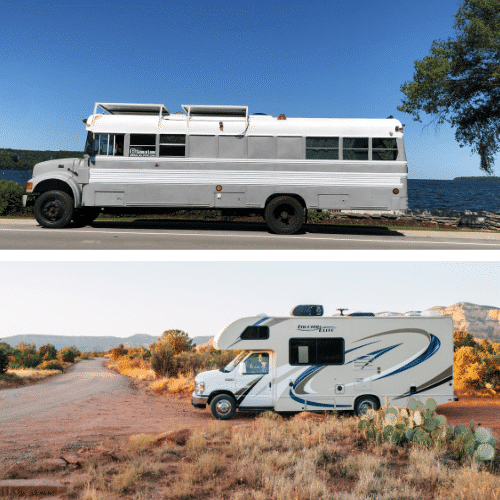 This was one of the first things I had to figure out when I started seriously looking at bus life. I’d been browsing RV listings for months, and the prices were making my eyes water. Then someone in a forum mentioned skoolies and I went down the rabbit hole. But I wanted to actually do the math, not just take someone’s word for it.
In most cases, yes, a skoolie is significantly cheaper than a comparable factory RV. A solid bus conversion runs $20,000-$50,000 total (bus + build) and gives you more interior space than an RV at twice the price. A new Class A motorhome with similar square footage costs $100,000-$300,000. Even used RVs with the same living space run $30,000-$80,000. Where the RV wins is time, it’s move-in ready. A skoolie takes 3-12 months to build. You’re trading money for time.
This was one of the first things I had to figure out when I started seriously looking at bus life. I’d been browsing RV listings for months, and the prices were making my eyes water. Then someone in a forum mentioned skoolies and I went down the rabbit hole. But I wanted to actually do the math, not just take someone’s word for it.
In most cases, yes, a skoolie is significantly cheaper than a comparable factory RV. A solid bus conversion runs $20,000-$50,000 total (bus + build) and gives you more interior space than an RV at twice the price. A new Class A motorhome with similar square footage costs $100,000-$300,000. Even used RVs with the same living space run $30,000-$80,000. Where the RV wins is time, it’s move-in ready. A skoolie takes 3-12 months to build. You’re trading money for time.
xzshng
1x49d9