
This is a question I kept running into while researching the bus life world, and honestly it took me a while to sort through it. Both options attract the same kind of person — someone who wants to simplify, own their space outright, and stop throwing money at a mortgage or landlord. But once you start digging into the details, these two paths split apart in ways that actually matter.
A skoolie and a tiny house solve the same problem — wanting a small, affordable, custom-built home — but they solve it in very different ways. A skoolie gives you mobility, lower upfront costs, and freedom from land ownership, but you’re living in a vehicle with all the maintenance that comes with it. A tiny house gives you more conventional living space and a more “normal” feel, but you need land, utility hookups, and you’re dealing with some of the worst zoning headaches in the country. Neither is objectively better. It comes down to whether you want to move or stay put.
Cost Comparison (Build and Ongoing)
So let’s start with money because that’s where most people start.
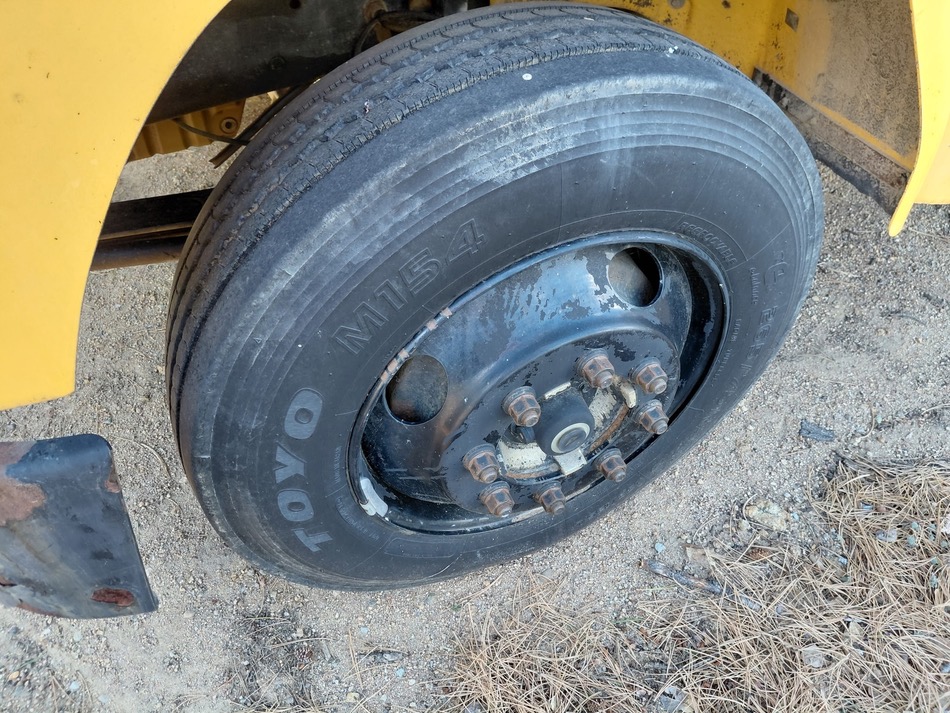
A school bus costs $3,000 to $8,000. A solid DIY conversion runs $15,000 to $30,000 in materials. So you’re looking at roughly $20,000 to $35,000 all-in for a skoolie that’s ready to live in. Some people do it cheaper, some spend more on fancy finishes, but that’s the range most builders land in.
A tiny house on a trailer, DIY-built, runs $25,000 to $50,000 for most people. You can go cheaper if you’re scrappy with reclaimed materials, and you can easily hit $80,000 or more if you hire a builder or want high-end finishes. The average I kept seeing in forums and build blogs was around $35,000 to $45,000 for something nice.
Already the skoolie is cheaper on the front end, but here’s where the tiny house starts racking up hidden costs. You need somewhere to put it. If you buy land, that’s $10,000 to $50,000+ depending on where you are. If you rent a spot, you’re paying $300 to $800 a month, which adds up fast. Then you’ve got utility hookups — water, sewer, electric. Running utilities to a rural lot can cost $5,000 to $15,000 easily if you’re any distance from existing infrastructure. (See our guide on Skoolie vs RV: Which One Should You Buy? for more on this.)
A skoolie doesn’t have any of that. You park it, you move it, you boondock for free on BLM land. Your ongoing costs are fuel, insurance ($100-200/month), maintenance, and the occasional campground fee. I was talking to a guy on a forum who tracked every dollar he spent in his first year of full-time bus life. His total monthly expenses averaged $1,100. He said his apartment in Phoenix had been costing him $2,300 when he added everything up. (See our guide on Is a Short Bus or Full-Size Bus Better for a Conversion? for more on this.)
Now, the tiny house has lower ongoing costs if you own your land outright and you’ve got well water and septic. At that point you’re looking at maybe $200-400 a month in property taxes, insurance, and basic maintenance. But getting to that point requires a significant upfront investment that most people don’t talk about when they quote you $35,000 for a tiny house build.
Mobility vs Permanence
This is the big one. The one that really separates these two lifestyles.
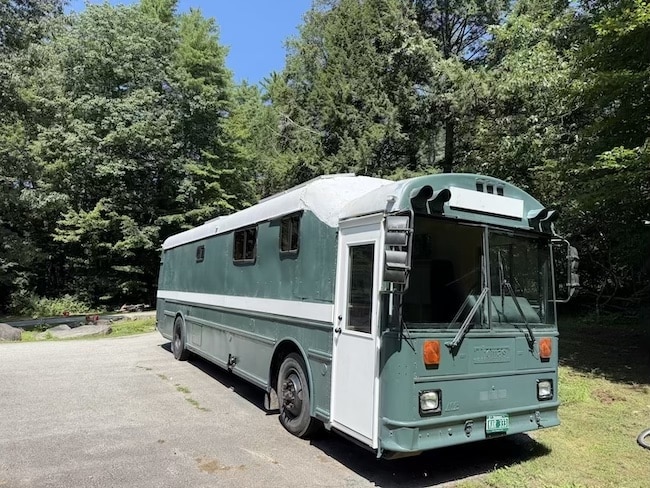
A skoolie has an engine. You turn the key and you go. Want to spend winter in Arizona and summer in Colorado? Done. Don’t like your neighbors at the campground? Leave tomorrow. Got a job offer in another state? Drive there. (See our guide on What’s the Difference Between Front Engine and Rear Engine Buses? for more on this.)
A tiny house on a trailer technically has wheels, and people love to bring that up. “It’s on wheels, you can move it!” Sure, you CAN move it. But I looked into what that actually involves and it’s not the casual road trip people imagine.
Most tiny houses weigh 10,000 to 15,000 pounds. You need a heavy-duty truck to tow that. You’re driving 55 mph max on the highway, probably slower. The house wasn’t designed to flex and bounce down the road — things shift, things crack, things come loose. I read a blog post from a couple who moved their tiny house 400 miles and spent two weeks afterward fixing everything that had rattled apart during the trip. Cabinet doors popped off. Tile cracked. A window seal broke. They said they’d never move it again.
A skoolie, on the other hand, was literally built to drive. The chassis, the suspension, the frame — all designed for daily road use. Yeah, you still need to secure your stuff and build with movement in mind, but the platform itself was made for this. That’s a fundamental difference that gets glossed over in most comparisons. (See our guide on What Is the Difference Between a School Bus and a Transit Bus? for more on this.)
If your plan is to travel, even occasionally, the skoolie wins this one and it’s not close. If your plan is to find a piece of land and stay there for years, the tiny house makes more sense. But be honest with yourself about which one you actually want, because I’ve seen people build tiny houses thinking they’d move around, and they never do.
Space and Layout Differences
Here’s something that surprised me when I started measuring things out. A 40-foot school bus gives you roughly 245 square feet of living space. A typical tiny house on a trailer is 150 to 400 square feet, with most falling in the 200 to 300 range. So the square footage is actually pretty comparable.
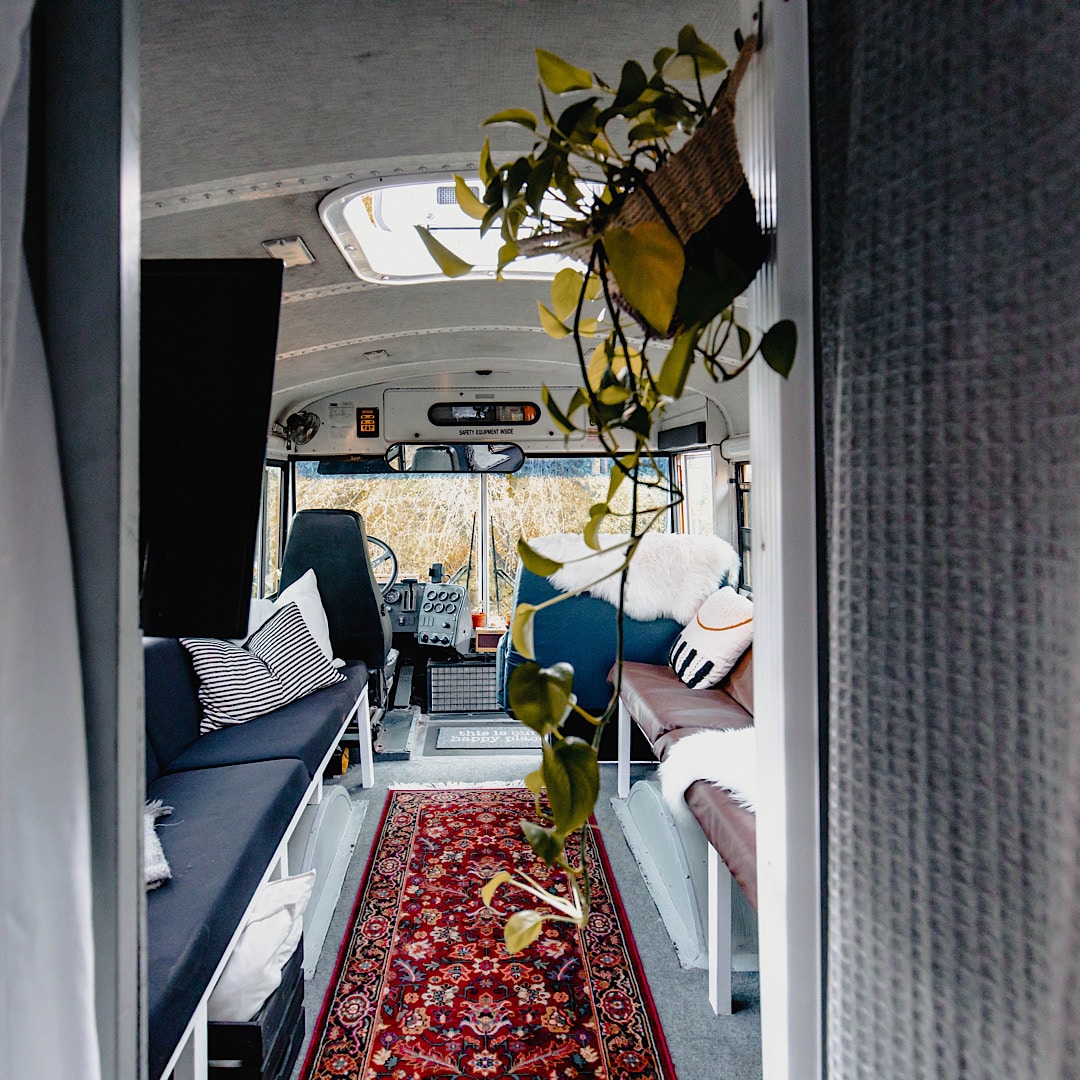
But the SHAPE of that space is totally different, and that matters more than people think.
A bus is long and narrow. You’re working with about 7.5 feet of width on a full-size bus. That means your layout is essentially a hallway with rooms. Kitchen on one side, seating on the other. Bed in the back. Bathroom tucked in somewhere. Everything is linear.
A tiny house can be wider — 8.5 feet is the max for road-legal on a trailer, but some people build wider on permanent foundations. You can also build vertically in a way that’s harder on a bus. Lofted bedrooms are standard in tiny houses because you’ve got the ceiling height. On a bus, the ceiling is typically 6 to 6.5 feet, so lofts don’t really work unless you raise the roof, which is a whole other project.
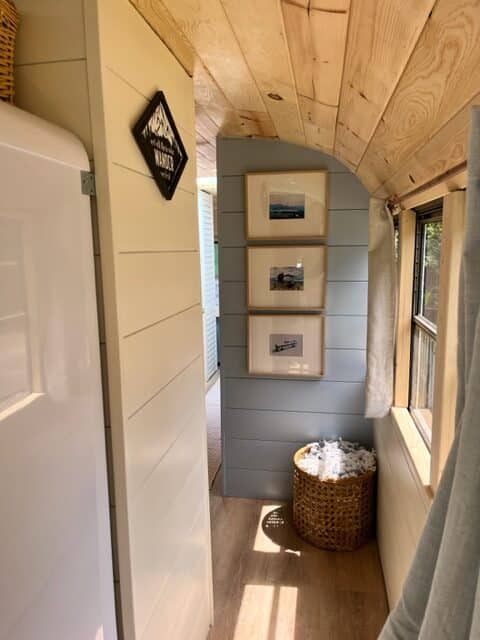
I’ll be honest, the tiny house layout feels more like a “real” house. You’ve got defined rooms, proper doors, actual walls between spaces. In a bus, the open floor plan is kind of forced on you by the shape. Some people love that — it feels cozy and connected. Other people want a door they can close, and a bus makes that harder.
Where the bus wins on layout is in the kitchen and bathroom. Because buses are so long, you can fit a surprisingly full kitchen — real countertop space, a full-size sink, a proper stove. Tiny houses often sacrifice kitchen space for the sleeping loft above. Same with bathrooms. I’ve seen skoolie bathrooms with full-size showers that you’d never fit in a tiny house without eating into your main living area. (See our guide on Is a Propane or Electric Stove Better for a Skoolie? for more on this.)
So it’s a tradeoff. The tiny house gives you a more conventional feeling home. The bus gives you more usable floor space in the areas where you actually spend your time.
Zoning and Legal Issues
Alright, this is where things get really interesting, and honestly kind of frustrating no matter which path you choose.
Tiny houses have a massive zoning problem. Most municipalities have minimum square footage requirements for a dwelling — typically 600 to 1,000 square feet. A 250-square-foot tiny house doesn’t meet that. So in most places, you can’t legally use a tiny house as a primary residence on its own lot. Some cities have started creating exceptions, but they’re still the minority.
When I was digging into this, I found story after story of people who built beautiful tiny houses and then couldn’t find a legal place to put them. They’d buy land, go to the county for permits, and get told their house didn’t meet code. Or they’d park in someone’s backyard and get a complaint from a neighbor. One guy I read about had his tiny house built and ready to go for eight months before he found a place that would let him put it.
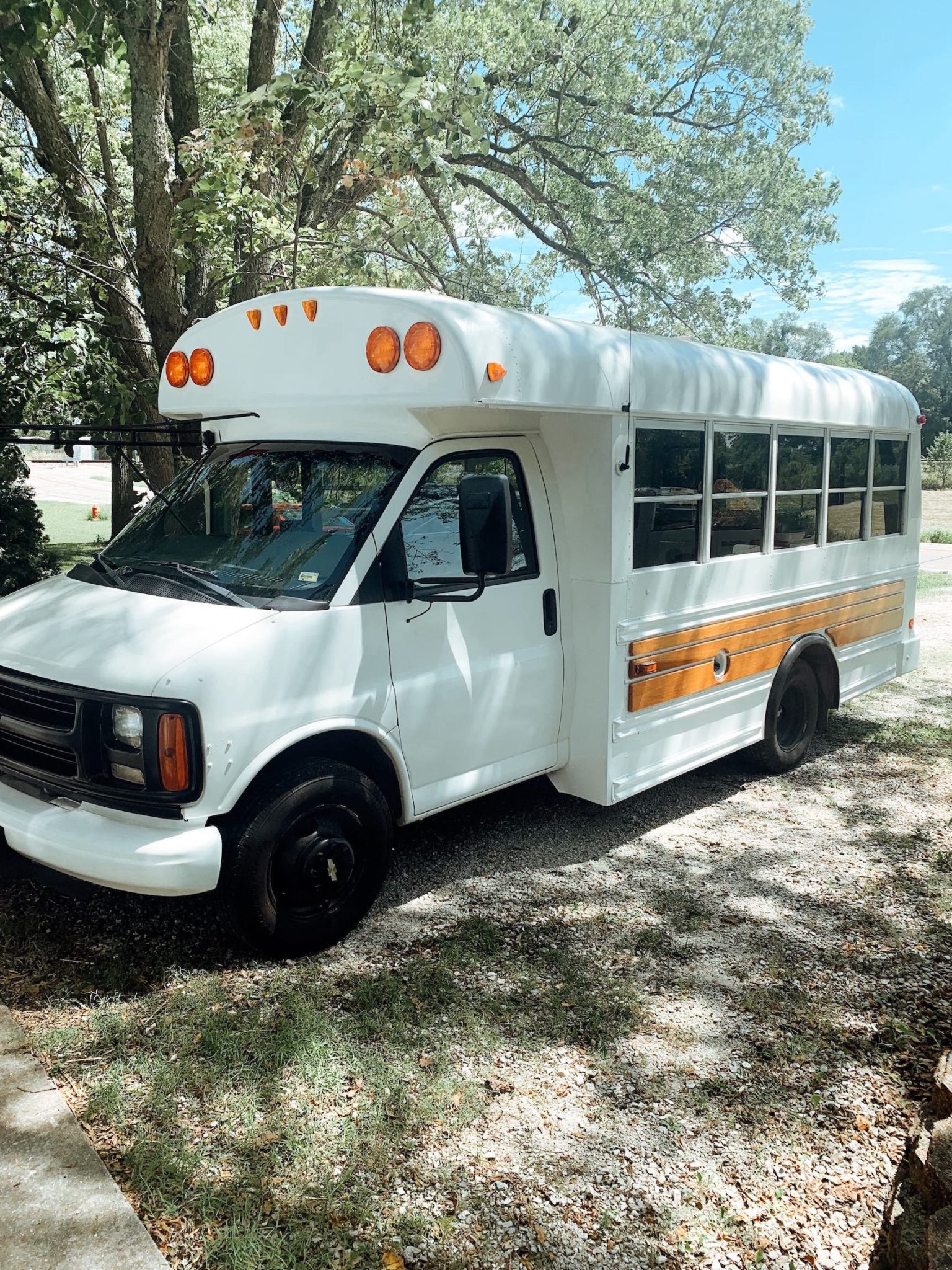
Skoolies have their own legal headaches, but they’re different. Once you re-register a converted bus as a recreational vehicle (which most states allow), you can park it anywhere RVs are allowed. That includes RV parks, campgrounds, some private land, and public land for boondocking. The process varies by state but it’s generally straightforward — remove the seats, do a safety inspection, fill out some paperwork.
The catch with a skoolie is that some cities have ordinances against living in a vehicle full-time. And some RV parks won’t accept converted buses. But the workarounds are easier. You move. That’s the beauty of having wheels and an engine. If one town gives you grief, you drive to the next one.
With a tiny house, if your land doesn’t work out, you’re looking at hiring a truck, finding new land, moving the whole structure, and potentially starting the permitting process all over again. It’s not the same kind of flexibility.
Now, there are places where tiny houses are explicitly welcome — tiny house communities, certain progressive cities like Portland or Austin, and some rural counties that don’t enforce zoning much. But you have to research this BEFORE you build, not after. I can’t stress that enough.
Resale Value
This one is tricky because neither skoolies nor tiny houses have a straightforward resale market like traditional homes or even regular vehicles.
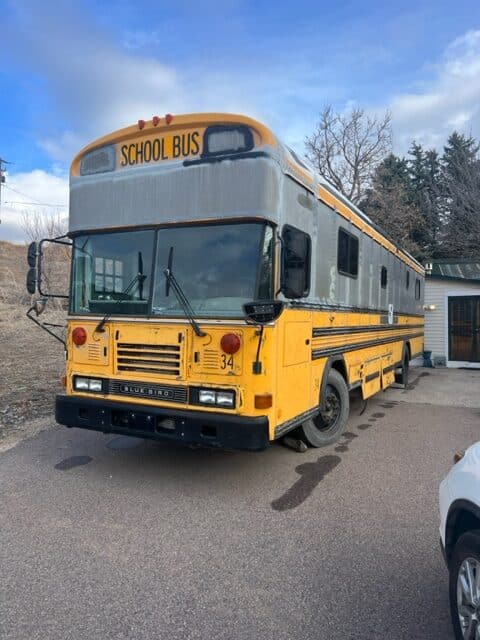
Skoolies hold their value surprisingly well relative to what people put into them. A well-built conversion that cost $25,000 to $30,000 total can often sell for $20,000 to $35,000, sometimes more if the build is exceptional or the bus is a desirable model. The market is small but passionate. People in the bus life community actively seek out completed builds because they want to skip the conversion process. I’ve seen some really nice skoolies sell within a week or two of being listed.
The downside is that the bus itself depreciates as a vehicle. A 15-year-old diesel bus with 150,000 miles is what it is. You’re not going to get more for the vehicle portion over time. What holds value is the build quality, the layout, and the story behind it.
Tiny houses are harder to sell, and this surprised me. You’d think a house would be easier to sell than a converted bus, but the zoning issues create a real problem. Your buyer needs to have somewhere to put the thing, which immediately shrinks your pool of potential buyers. And because every tiny house is custom, finding someone who wants YOUR specific layout at YOUR price point takes time.
I found a discussion on a tiny house forum where multiple owners talked about taking months to sell, eventually dropping their price by 30-40% just to move the thing. One woman had her tiny house listed for over a year. The demand is there in theory, but the practical obstacles — where do you put it, how do you move it, will it meet code in the buyer’s area — create friction that skoolies don’t have to the same degree.
That said, tiny houses on permanent foundations in areas with favorable zoning can actually appreciate in value like real property. That’s something a skoolie will never do. If you own the land and the house is on a proper foundation, you’re building equity in a way that a vehicle on wheels simply can’t match.
Which One Fits Your Lifestyle?
So after all of this, where do you land? Here’s how I’d think about it.
Choose a skoolie if you want to travel, if you don’t want to be tied to one piece of land, if you enjoy the idea of building inside a vehicle, and if keeping costs as low as possible matters to you. The bus life works best for people who see home as something that goes WITH them, not something they go back to.
Choose a tiny house if you’ve got a piece of land you love, if you want something that feels more like a traditional home, if you plan to stay in one place for years, and if you’re willing to navigate the zoning maze to get there. A tiny house works best for people who want the simplicity of small living without the transient part.
And look, I know some people ask “why not just build a tiny house?” as if it’s obviously the simpler choice. But when you factor in land costs, utility hookups, zoning battles, and the fact that you can’t easily move the thing — it’s not automatically simpler. It’s just a different set of complications.
Someone asked me once, “Are tiny homes being normalized because young couples can’t afford starter homes anymore?” And honestly, yeah, partly. But skoolies are part of that same trend. Both are responses to the same problem — housing is too expensive and too inflexible for a lot of people. The difference is just in how you solve it.
I keep coming back to something a builder told me once. He said he’d originally planned to build a tiny house, spent six months trying to find land and deal with permits, and eventually gave up and bought a bus instead. He had it converted and on the road in four months. He said he wished he’d started with the bus from the beginning, not because tiny houses are bad, but because he realized what he actually wanted was freedom, not just a small house. And those aren’t the same thing.
That’s what it really comes down to. A tiny house is a small house. A skoolie is a lifestyle. They overlap, sure. But the core of what they offer is different, and being clear about which one you’re actually after will save you a lot of time and money figuring it out the hard way.