
You’ve got the bus, you’ve started your build, and now you’re wondering if some state inspector is going to take one look at your DIY conversion and shut the whole thing down. It’s a legit fear, and it comes up constantly in the skoolie community.
The hardest states to pass vehicle inspection with a skoolie conversion are California, Pennsylvania, New York, New Jersey, Massachusetts, and Maryland. These states have strict annual or biennial safety inspection programs that go well beyond just checking your brakes and lights. California adds emissions testing on top of everything else, and their smog requirements for older diesel engines can be a dealbreaker. Pennsylvania inspectors are known for being thorough to the point of painful. On the flip side, many states don’t have any regular vehicle inspection at all, and even among states that do, most inspectors are checking safety items — not judging the quality of your kitchen cabinets.
What about motor vehicle inspection? What states are more difficult to get homemade vehicles passed?
So when I first started looking into this, I expected there to be some kind of master list that ranked states from easy to nightmare. There isn’t one. What I found instead is that it breaks down into a few categories, and once you understand those categories, the whole thing makes a lot more sense.
First, there are states with no regular vehicle inspection at all. We’re talking Alaska, Arkansas, Florida, Idaho, Iowa, Kansas, Michigan, Minnesota, Montana, Nebraska, North Dakota, Oklahoma, South Dakota, Wyoming, and a handful of others. If you’re registered in one of these states, there’s no annual inspection to worry about. You register it, you insure it, you drive it. Nobody’s climbing underneath your bus once a year to check your work. (See our guide on How Do You Register a Converted School Bus as an RV? for more on this.)
Then there are states with safety-only inspections. Texas, Maine, Vermont, Virginia, West Virginia — these states check your brakes, lights, tires, windshield, horn, that kind of thing. They’re looking at whether the vehicle is safe to drive, not whether your plumbing meets code. For a skoolie, this usually isn’t a big deal as long as the bus itself is mechanically sound. The conversion part doesn’t really come into play.
Then you get to the states that make people nervous. Pennsylvania does annual safety inspections and they’re notoriously picky. I talked to a guy at a meetup once who had his bus failed in PA for a rust spot on his frame that was smaller than a quarter. He said the inspector told him it was “structural concern” and he had to get it repaired and come back. Whether that inspector was being overly cautious or just having a bad day, who knows. But that’s the kind of thing you hear about with PA.
New York has annual inspections too, and depending on the county, emissions testing as well. New Jersey is similar. Massachusetts has one of the more thorough inspection programs in the country, and Maryland requires inspections at the time of sale or transfer, which means if you’re buying a bus and re-titling it in Maryland, that inspection is a gate you have to get through.
And then there’s California. Which honestly deserves its own section.
Will this pass an inspection?
This is the question I see people asking in forums all the time, and here’s the thing that took me a while to understand — they’re usually worried about the wrong stuff.
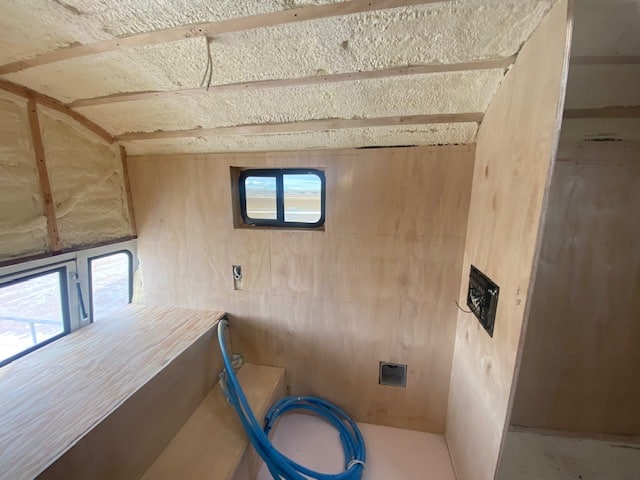
When people ask “will this pass inspection,” they’re typically thinking about their build. The wood paneling, the propane setup, the homemade electrical panel. And I get it, because if you’ve never been through a vehicle inspection before, you might picture some guy going through your entire bus with a clipboard checking every wire and every joint.
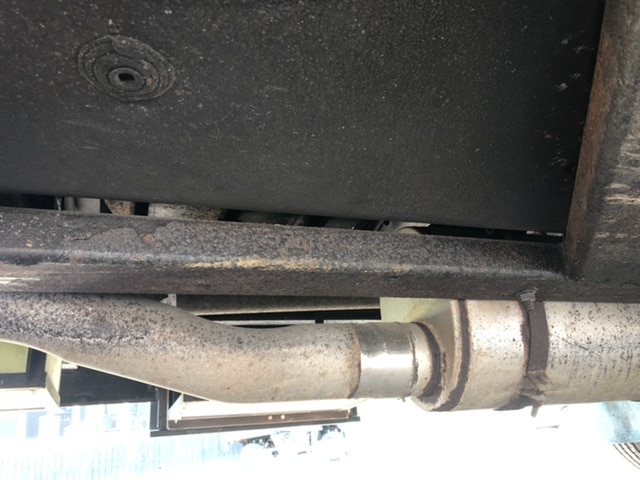
That’s not how vehicle inspections work in any state I’ve found. Vehicle safety inspections check the vehicle. The chassis, the brakes, the steering, the suspension, the lights, the tires, the windshield wipers, the exhaust system, the horn. They’re making sure the thing can safely operate on public roads. They don’t care about your countertops.
Now, there’s a separate thing that some people confuse with vehicle inspection, and that’s the RV inspection for re-titling. Some states require an inspection when you convert the title from a bus to an RV, and that inspection IS looking at your conversion — but it’s checking for the minimum RV requirements like a bed, cooking facility, and water storage. It’s not a quality inspection. It’s a “does this qualify as an RV” inspection.
So when someone posts a photo of their half-finished build and asks “will this pass inspection,” the answer depends entirely on what inspection they’re talking about. If it’s the annual vehicle safety inspection, as long as the bus is mechanically sound, probably yes. If it’s the RV re-titling inspection, they just need to meet the minimums. (See our guide on Do You Need a CDL to Drive a Skoolie? for more on this.)
The one area where your build CAN affect a vehicle inspection is the exhaust and emissions side. If you’ve modified the exhaust system, removed a catalytic converter, or done anything that affects emissions, that can absolutely get you failed in states with emissions testing. California is extremely strict on this, especially for diesel vehicles.
Related: The Complete Guide to Insuring a Converted School Bus
Is insurance a real problem with amateur built RVs? In Australia we have regulations that we have to meet. An engineer will inspect and then certify the build as compliant.
This question comes up from international folks pretty often, and it highlights something that surprises a lot of people about the US system. We don’t really have a build quality inspection for DIY RV conversions. Not in the way Australia, the UK, or most of Europe does.
In Australia, as this person mentioned, you need an engineer to sign off on your build. There are actual regulations about structural integrity, electrical systems, gas fittings, all of it. You can’t just bolt some stuff together and call it an RV. Someone qualified has to say “yes, this is safe and compliant.”
In the US, it’s basically the honor system. You build your bus, you take it to the DMV, you show them it has a bed and a stove and some water storage, and they hand you an RV title. Nobody checks whether your electrical is up to code. Nobody checks if your propane lines are properly rated. Nobody checks if your structural modifications compromised the integrity of the chassis.
I’ll be honest, when I first realized this, I had mixed feelings about it. On one hand, it makes the whole process way easier and cheaper for people who want to do a bus conversion. No engineering fees, no mandatory inspections of your build quality, no waiting for a certifier to have an opening in their schedule. On the other hand, it means there are buses rolling down the highway with some genuinely sketchy DIY work happening.
The insurance angle here is interesting too. You might think insurance companies would care about the quality of your build, and to some extent they do, but it’s not through inspections. They ask for photos, they ask for a declared value, and they write the policy. If something goes wrong because of bad wiring or a propane leak, that’s going to come up during the claims process, not during the application. (See our guide on Can You Get Insurance for a Converted School Bus? for more on this.)
What I’ve found is that the people most likely to run into problems aren’t the ones in strict inspection states. It’s the ones who skip the fundamentals — using the wrong gauge wire, not installing a proper propane shutoff, running plumbing without P-traps. No state inspector is going to catch those things. That’s on you.
And that’s actually why I think the Australian approach, as annoying as it probably is for builders over there, has some merit. Having a qualified set of eyes on your build before you drive it across the country isn’t the worst idea. But in the US, that’s just not how it works. You’re your own quality control department.
One thing I will say though — even without mandatory build inspections, there are resources. RVIA standards exist for recreational vehicles, and while they’re not legally required for DIY builds, they’re a good benchmark. The NFPA has standards for electrical and propane systems in RVs. Some builders voluntarily get their propane and electrical inspected by licensed professionals, and honestly, I think that’s smart even if nobody’s making you do it. (See our guide on Can You Legally Live in a Converted School Bus? for more on this.)
The states where all of this matters most are the ones where you’re already dealing with strict vehicle inspections on top of everything. If you’re in California, you’ve got smog testing, annual registration that’s weight-based and expensive, and a bureaucracy that moves at its own pace. If you’re in Pennsylvania or New York, you’ve got annual safety inspections where an overzealous inspector can make your life difficult over minor stuff that would fly in Texas or Florida without a second glance.
The play that a lot of full-timers use — and I’ve seen this come up over and over in every forum, every Facebook group, every YouTube comment section — is to register in a state that doesn’t have inspections or has minimal requirements. South Dakota, Florida, and Texas are the big three. South Dakota especially, because you can establish residency with a mail forwarding service and one night at a campground. Your bus is registered in South Dakota, inspected nowhere, and you’re free to travel the country. Is it a loophole? Kind of. Is everyone doing it? Pretty much.
So here’s where I ended up after digging into all of this. The states that’ll give you the most grief for inspections are California, Pennsylvania, New York, New Jersey, Massachusetts, and Maryland. California is the worst if you have an older diesel because of emissions alone. PA is the worst for nitpicky safety stuff. And the rest of the strict states are somewhere in between. But honestly, unless you’re set on domiciling in one of those states for personal reasons, you don’t have to deal with any of it. Pick a domicile state that works in your favor, keep your bus mechanically sound, and don’t cut corners on the stuff that matters even if nobody’s checking — because the road checks your work whether an inspector does or not.