
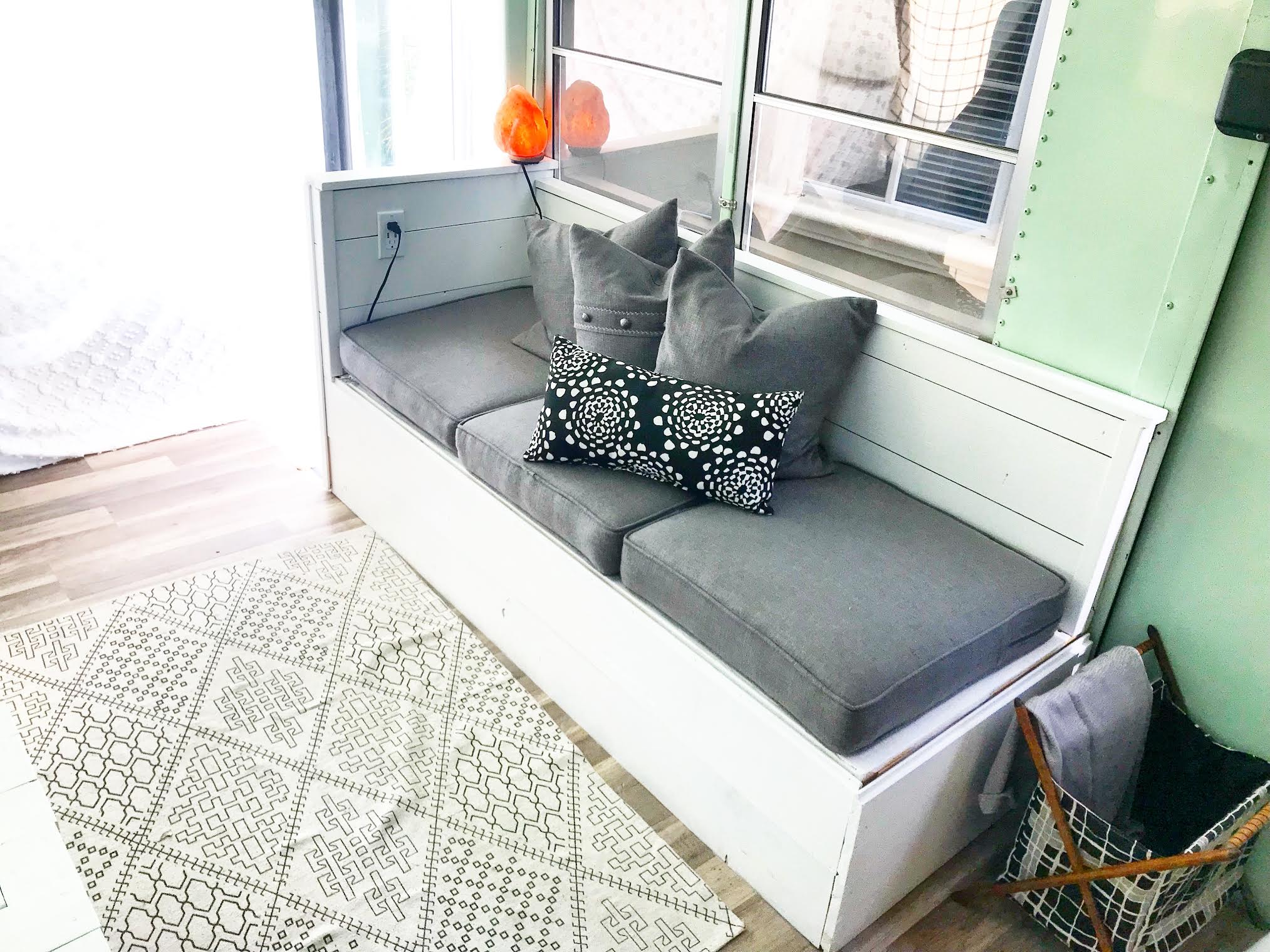
If you’re thinking about doing the bus thing by yourself, you’ve probably noticed that most of the content out there is aimed at couples and families. The build tours, the floor plans, the budgets — almost all of it assumes there’s at least two people involved. I spent a lot of time digging into what solo bus life actually looks like, and what I found is that it’s not just a smaller version of the couples experience. It’s a completely different animal, with its own advantages, its own challenges, and honestly, its own kind of freedom that’s hard to explain until you’ve lived it.
Living alone in a converted school bus is one of the most practical and affordable ways to live a mobile lifestyle. Solo dwellers have major advantages in bus life — lower build costs, simpler systems, more layout flexibility, and the total freedom to go wherever you want whenever you want. The real challenges are safety, loneliness, handling every repair and driving decision alone, and the mental health side of extended solitude. This guide covers all of it — bus sizing, layout ideas, security, building community, budgeting for one, work-life balance, and the stuff nobody warns you about when you’re doing this solo.
“As a single person, that bus is more than spacious as a camper. How does one get into converting a school bus into a home with no experience?”
This was a real comment that stuck with me because it captures the two biggest realizations solo people have at the same time. First, that a bus is way more space than you actually need when it’s just you. And second, that the idea of building one from scratch with zero experience feels completely overwhelming.
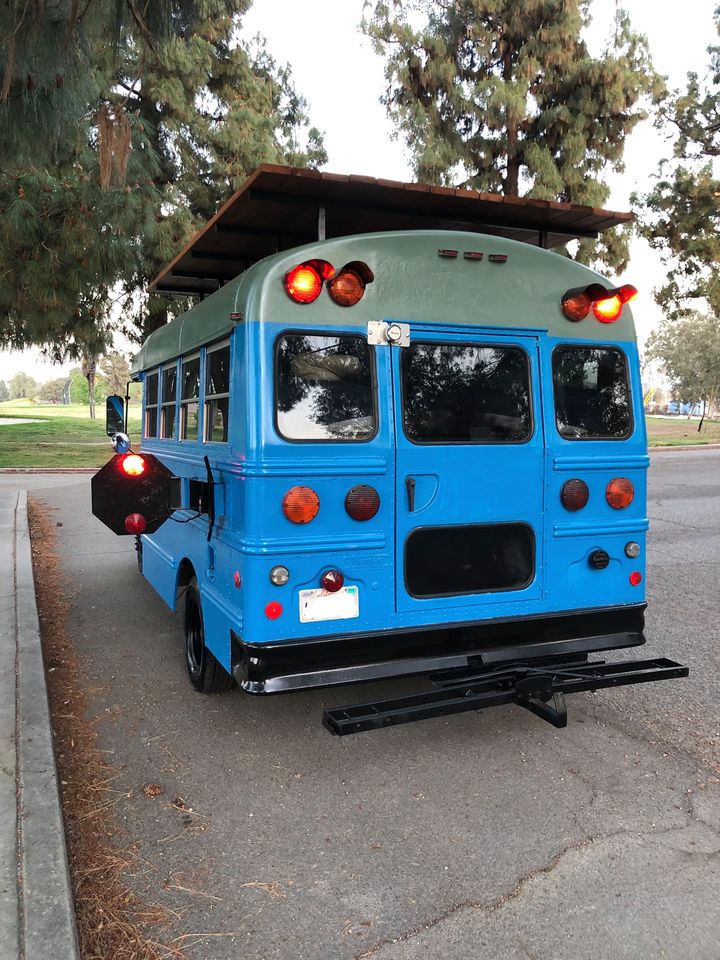
Let me tackle the space part first. A school bus that would feel tight for a family of four is genuinely roomy for one person. You don’t need bunk beds. You don’t need a separate kids area. You don’t need a massive kitchen with counter space for two people cooking simultaneously. What you need is a comfortable bed, a functional kitchen, a workspace, a bathroom, and storage. That’s it. And you can fit all of that into a short bus with room left over for hobbies, gear, or just open floor space to move around.
Now the experience part. I won’t sugarcoat this — building a bus conversion with no experience is hard. But it’s not impossible, and thousands of people have done it. The key is understanding that you don’t need to know everything before you start. You need to know the next step.
YouTube is genuinely the best free education available for bus conversions. Channels dedicated to skoolie builds walk through every phase, from demolition to final trim. I found that the most helpful ones aren’t the polished cinematic builds — they’re the ones where someone films themselves making mistakes and figuring it out in real time. That’s actually how you learn.
Local makerspaces are another resource that doesn’t get mentioned enough. A lot of them have members who know welding, basic electrical, woodworking — the exact skills you need for a bus build. Some even have the tools you’d need, which saves you from buying a welder you’ll use three times.
And here’s something I think people overlook. As a solo builder, you can take your time. There’s no partner getting frustrated that the build is taking too long. There’s no kids who need the bus finished by September for the school year. You can spend a weekend just figuring out how to run one electrical circuit, and that’s fine. The bus isn’t going anywhere.
Breaking the build into phases
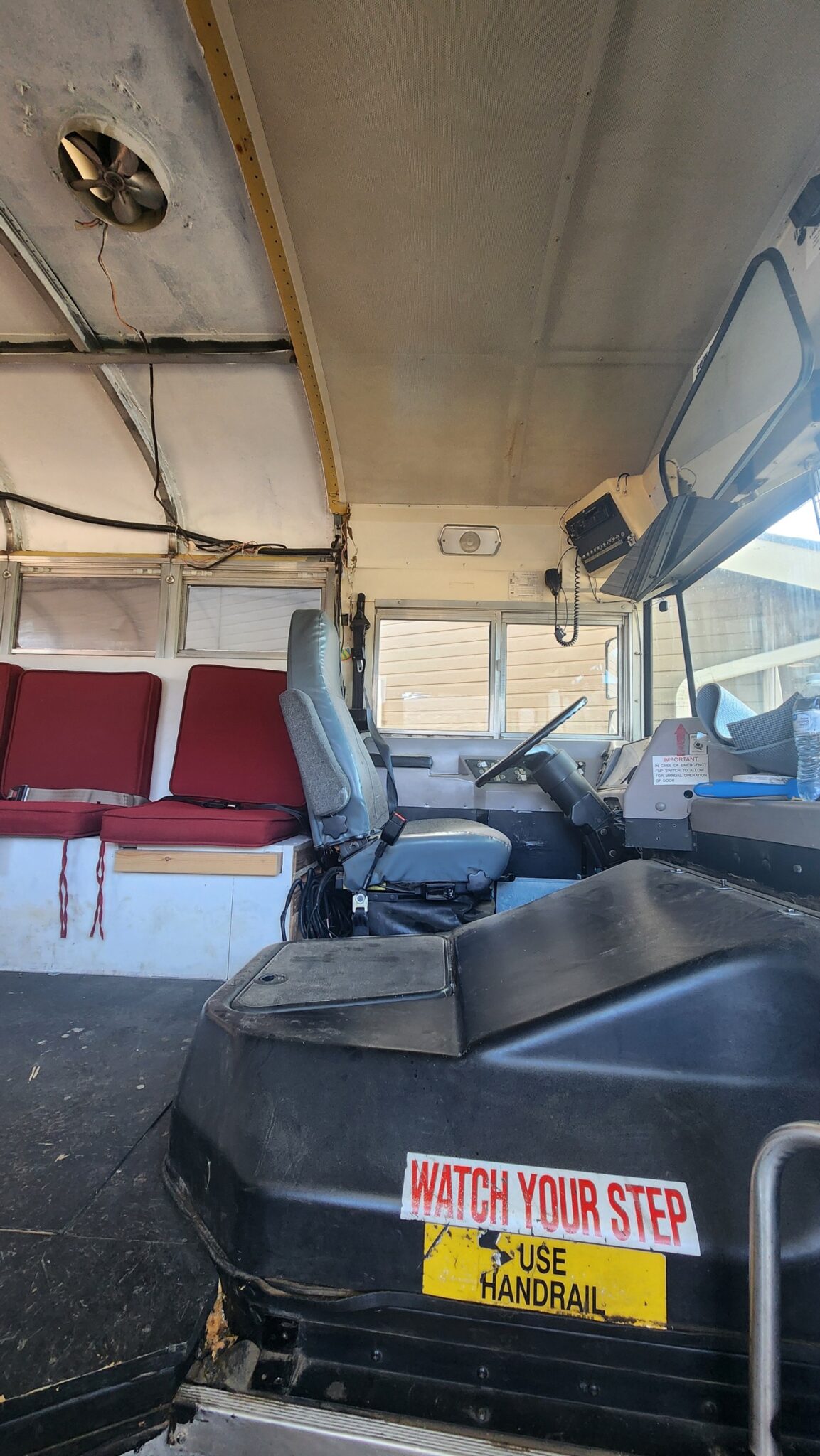
The approach I kept seeing from successful solo builders was phasing the work. Phase one is demolition and rust treatment — stripping seats, removing the ceiling, treating any rust on the frame and floor. This is the part almost anyone can do with basic tools and YouTube guidance. Phase two is the structural stuff — subfloor, insulation, framing for walls. Phase three is systems — electrical, plumbing, propane if you’re using it. Phase four is the finish work — cabinets, countertops, trim.
You don’t need to know how to do phase three while you’re still in phase one. By the time you get there, you’ll have weeks or months of building experience under your belt, and the learning curve flattens out fast.
Some solo builders hire out specific parts. Electrical and propane are the two most common ones to outsource, because mistakes in those areas can literally kill you. There’s no shame in paying a professional for the critical systems and doing everything else yourself. I’d actually recommend it for a first build.
Why Solo Bus Life Has Advantages Most People Don’t Talk About
The conversation around solo bus life tends to focus on the challenges. How do you handle breakdowns alone? Aren’t you scared? Don’t you get lonely? And those are fair questions that we’ll get to. But I think the advantages deserve their own space because they’re significant.
The financial advantage is probably the biggest one. Every system on a bus scales to the number of people using it. Water tank? A couple might need 50-75 gallons. Solo, you can get by on 30-40 and refill less often. Solar and electrical? Two people need more power for more devices, more charging, more appliance use. One person can run a comfortable setup on a 200-watt solar array and a single lithium battery that would leave a couple constantly watching their power budget.
I ran numbers on this once and the difference was striking. A couple’s bus build budget was averaging $15,000 to $30,000 based on what I was seeing in forums and build breakdowns. Solo builds were coming in at $8,000 to $18,000 for a comparable quality of life. Some of that is the smaller bus, some is simpler systems, and some is just needing less of everything.
Monthly expenses tell the same story. Fuel is the same whether there’s one or two of you, but food, water consumption, campground fees for a smaller rig, propane usage — all lower for one person. I’ve seen solo bus dwellers report total monthly costs between $600 and $1,100. That includes everything. Fuel, food, campsite fees, phone, insurance. Find me an apartment anywhere desirable in this country for that price. You can’t.
Then there’s the freedom angle, which is harder to put a number on but might matter more. When you’re solo, every decision is instant. Want to stay an extra week at a spot you love? Done. Want to leave at 5 AM because you couldn’t sleep and might as well drive? Go for it. Want to skip the national park and spend three days at a random lake you spotted on a map? Nobody’s going to argue with you.
I talked to a guy online who’d done both — two years of bus life with a partner, then three years solo after they split up. He said the relationship years were great, but the solo years were when he actually figured out what he wanted from the lifestyle. Without another person’s preferences in the mix, he ended up in places he never would have gone and stayed longer than he ever would have been allowed to.
“What size bus is best for one person?”
This is one of those questions where the answer is genuinely “it depends,” but I can narrow it down pretty well based on what I’ve seen work.
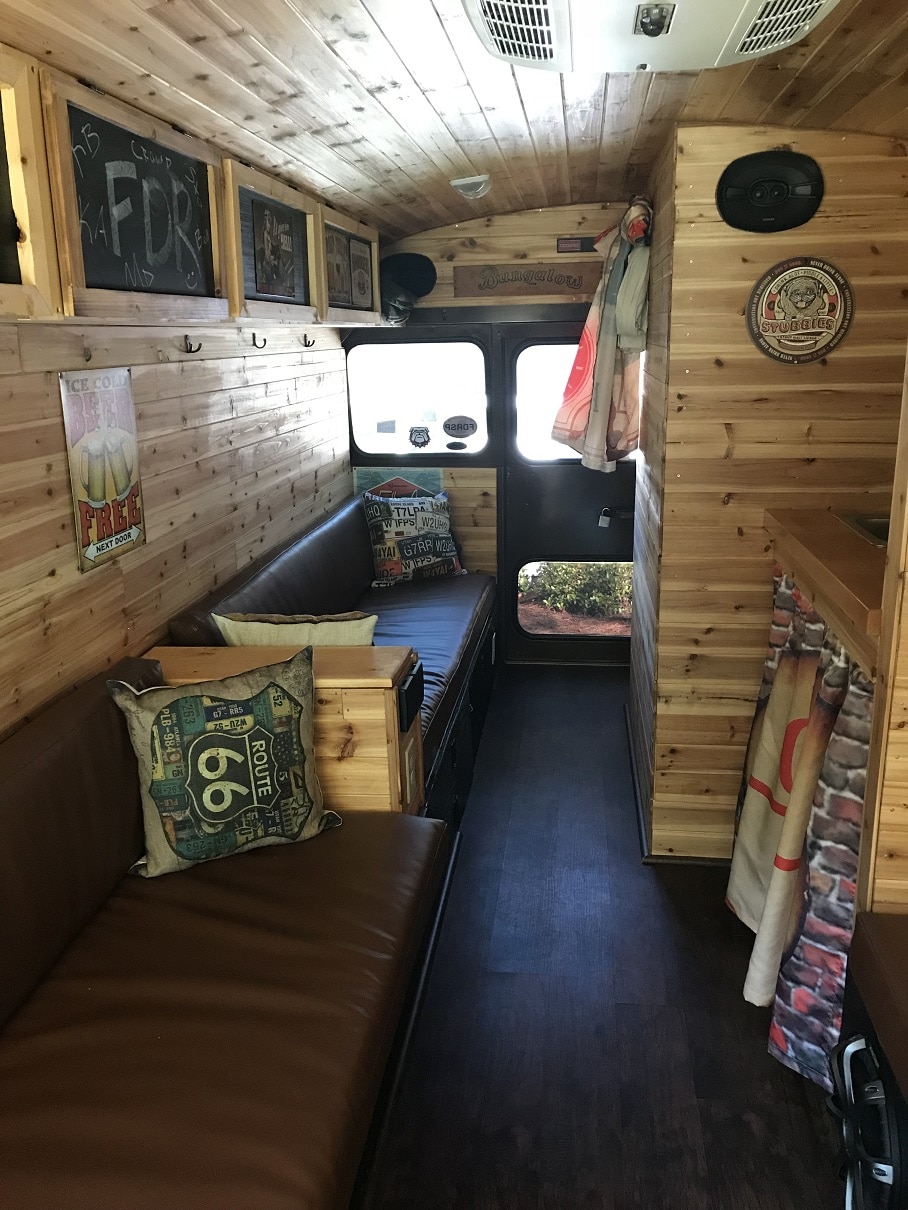
The sweet spot for most solo dwellers is a short bus in the 20 to 28 foot range. That gives you roughly 90 to 150 square feet of usable living space after the cab and wheel wells. For one person, that’s more than enough for a full build with bedroom, kitchen, bathroom, living area, and storage.
Short buses in this range have real practical advantages too. Better fuel economy — usually 10-14 mpg compared to 6-10 for a full-size. Easier to park in regular spots. Easier to drive, especially if you’ve never driven anything bigger than an SUV. More campgrounds will accept you because length limits are common, and a 24-foot bus fits where a 40-footer doesn’t. Insurance is cheaper. Tires are cheaper. Everything is just more manageable.
But some solo builders go full-size on purpose
Here’s where it gets interesting. Not everyone wants compact. Some solo builders specifically choose a full-size 35 to 40 foot bus because they want the extra space for something specific.
I came across a woodworker who built out the front two-thirds of a 38-foot bus as living space and turned the back third into a fully equipped workshop. Table saw, drill press, storage for lumber, a fold-down workbench. He makes custom furniture and sells it at markets as he travels. The bus isn’t just his home — it’s his shop.
Another person converted a full-size into a mobile photography studio. Backdrop area, lighting rigs, a small editing desk with dual monitors. Living space up front, studio in back.
So if you have a hobby or business that benefits from square footage, a bigger bus might make sense even for one person. The tradeoff is fuel cost, parking difficulty, and a higher build budget. But if the extra space is actually functional, it can be worth it. (See our guide on 11 Ways to Make Money While Living in a Bus for more on this.)
The quick size breakdown for solo
Here’s roughly how it shakes out:
Short bus (20-25 feet): Best for minimalists, people who move frequently, and first-time builders. Enough room for everything you need, not much room for extras. Easiest to drive and park.
Mid-size (25-32 feet): The goldilocks zone for most solo dwellers. Enough space for a comfortable build plus a dedicated workspace or hobby area. Still manageable to drive and park in most campgrounds.
Full-size (33-40+ feet): Best for solo dwellers who need the space for work, hobbies, or just want more room. Higher costs across the board but gives you layout options that smaller buses can’t match.
Layout Ideas When It’s Just You
This is where solo bus life gets genuinely fun, because you have design freedom that couples and families don’t. Every square foot serves you and only you, so the layout can be optimized around your actual life instead of compromising between multiple people’s needs.
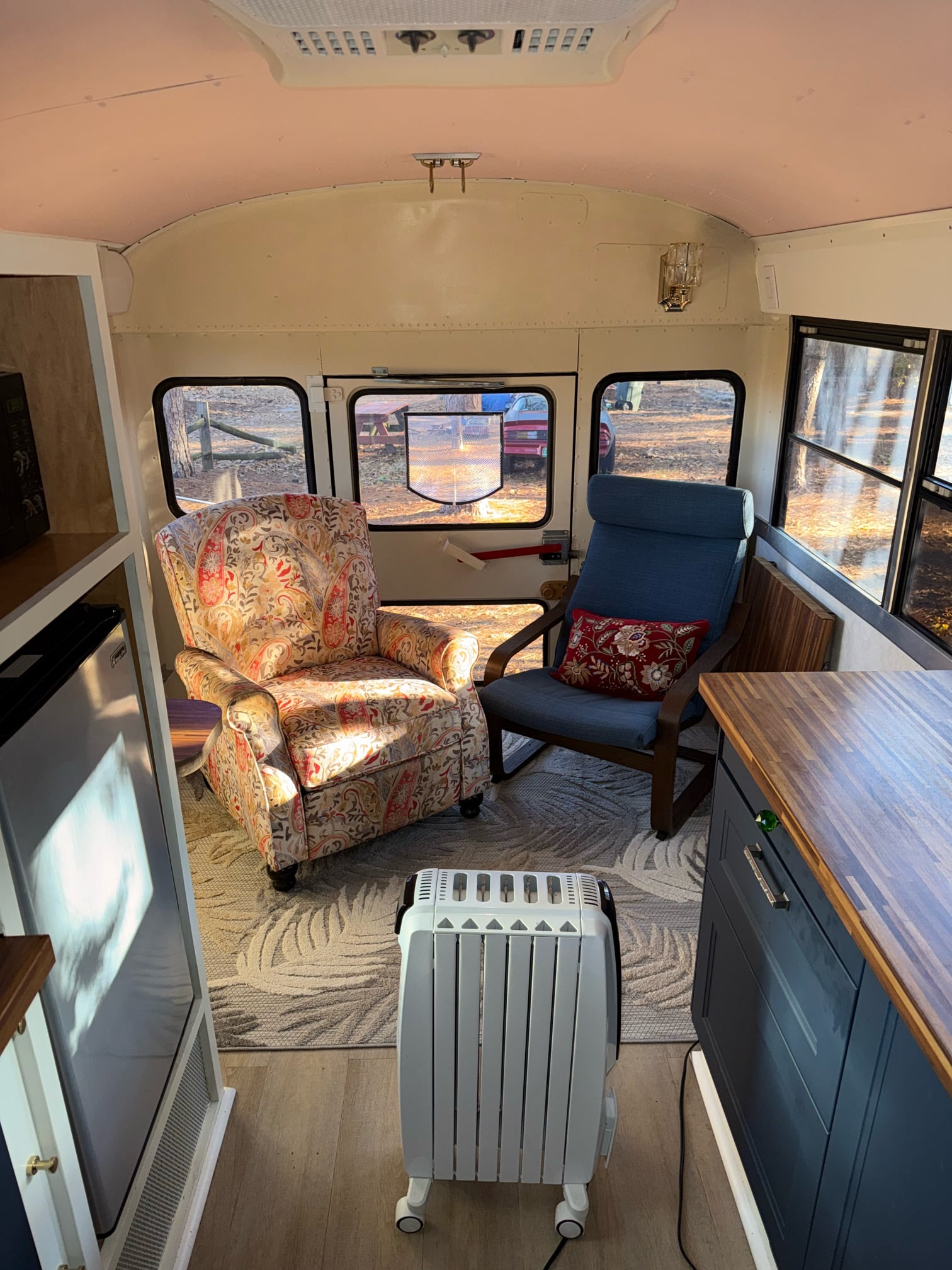
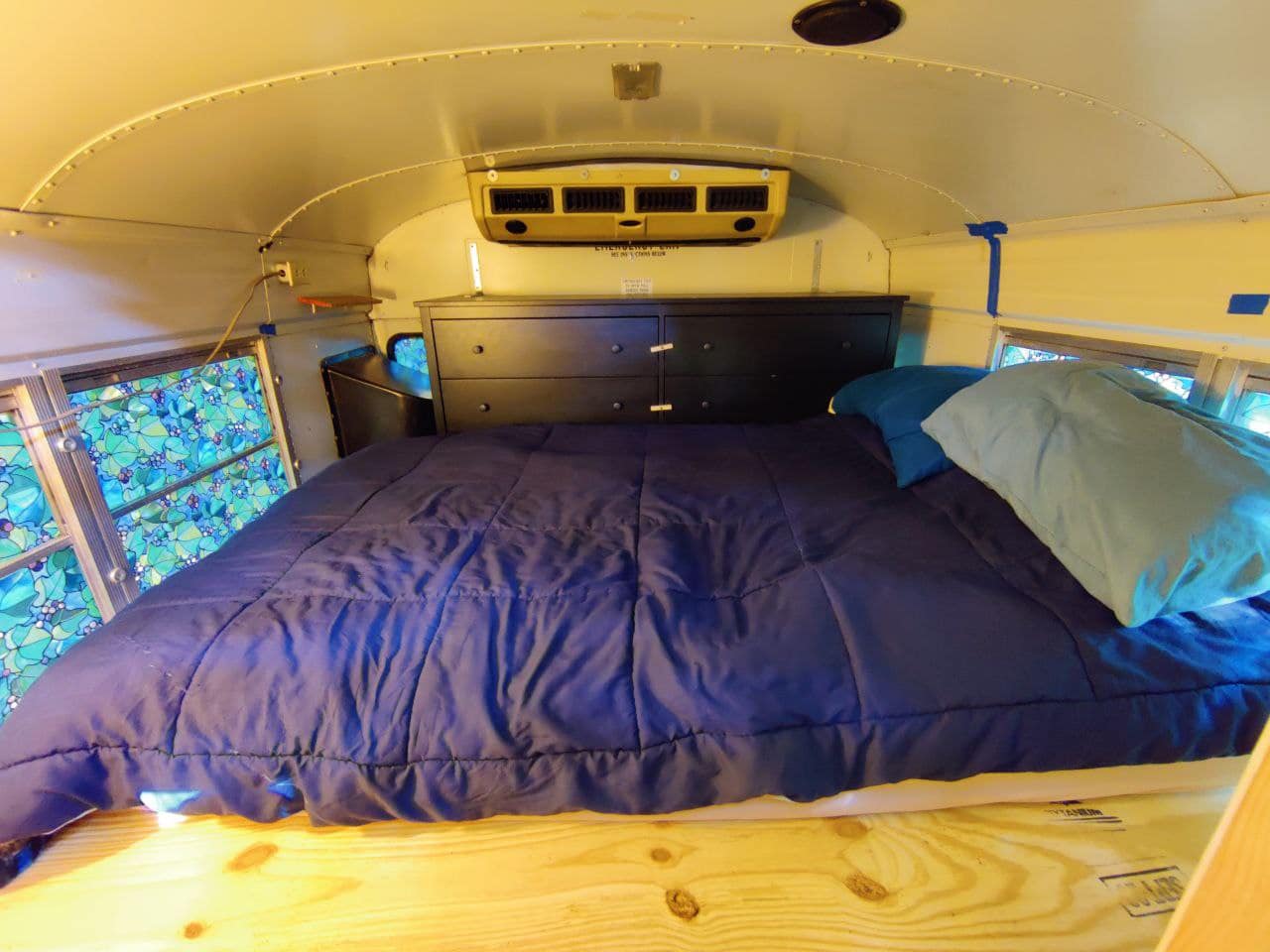
The most common solo layout runs front to back: cab, living/workspace, kitchen, bathroom, bedroom in the rear. Putting the bedroom in the back makes sense for a few reasons. It’s the farthest point from the entry door, which is better for security. It gives you a private space that feels separate from the rest of the bus. And the rear of the bus tends to have the least window area after you board some up, which makes it darker and better for sleeping.
But I’ve seen some creative alternatives that work really well for solo builds.
The workshop-in-the-back layout
Instead of a rear bedroom, some solo builders put the bed in the middle of the bus, often over the wheel wells, and use the entire rear section as a workshop or garage. The back of the bus gets a set of barn doors or a large hatch, and you’ve got direct access to your workspace from outside. Perfect for people who carry bikes, kayaks, surfboards, tools, or any kind of gear that’s awkward to store inside living space.
One person I read about built their bed as a murphy bed that folded up against the wall during the day, which freed up the entire center section as additional living space. At night, pull it down and you’ve got a queen bed. During the day, that same area is an open lounge. Clever use of the space.
The dedicated office layout
Remote workers doing solo bus life often prioritize a permanent desk setup. Not a fold-down table or a laptop on the bed. An actual desk with a monitor, good lighting, and an ergonomic chair. When your bus is also your office, and you’re spending 6-8 hours a day working, that workspace matters more than almost anything else in the build.
I saw a build where the person put their office area right behind the cab, facing the windshield. They had a standing desk setup with a view out the front window, and they said it was the best office they’d ever had. Every day a different view. That’s pretty hard to beat.
Storage for hobbies and gear
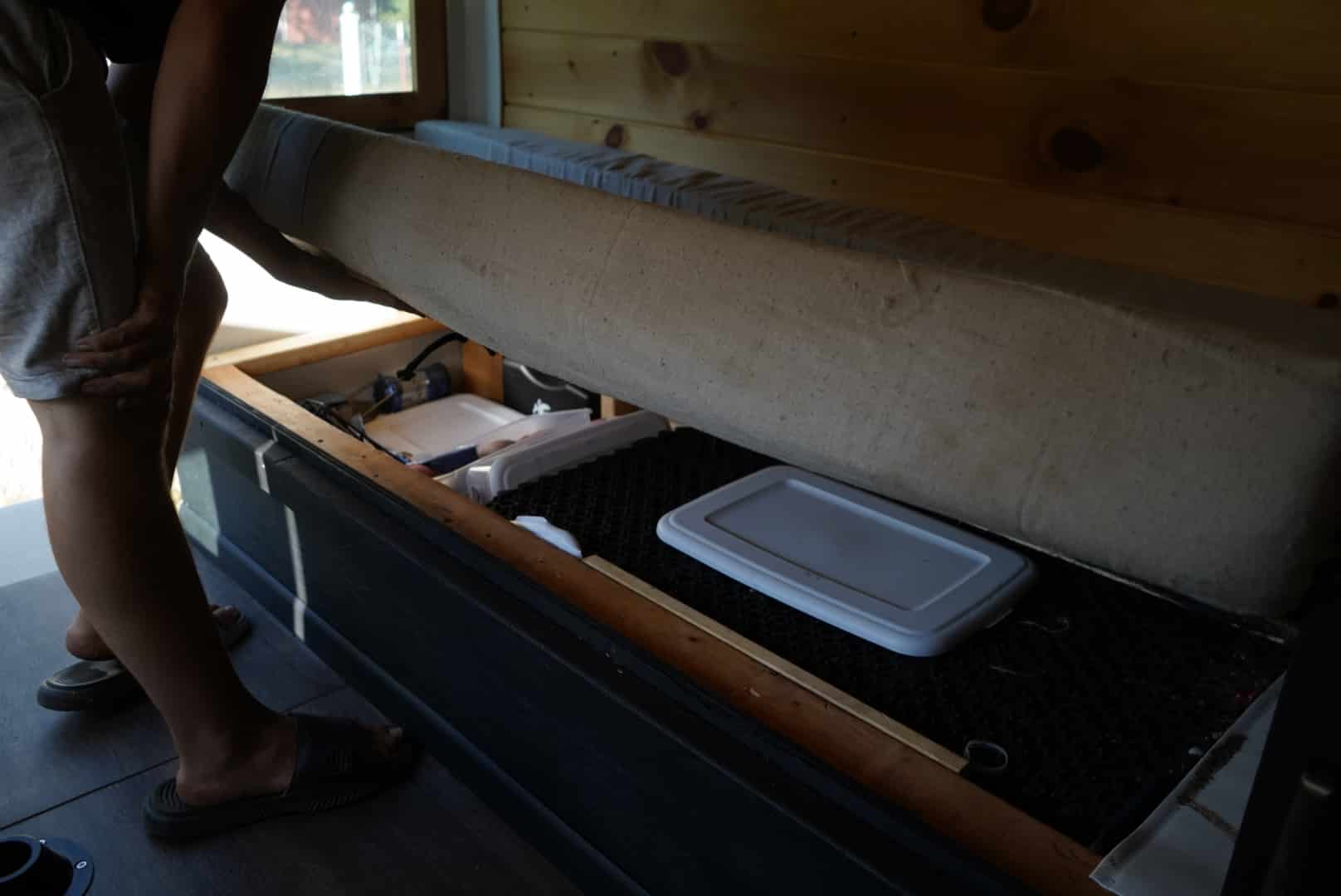
Solo builders tend to have more storage per person than anyone else in the bus life world, simply because there’s fewer people’s stuff to accommodate. But the smart ones design that storage around specific activities rather than just creating generic cabinets.
A rock climber I found online built custom rope and gear storage into the walls, with specific slots for cams, carabiners, and a crash pad that slid under the bed platform. A musician built a padded guitar rack and a small recording setup into one wall of the bus. A photographer had a custom cabinet with foam inserts for camera bodies and lenses, plus a charging station for batteries.
The point is that when you’re solo, the bus becomes an extension of your life in a way that’s harder to achieve when you’re sharing the space. Your hobbies get built into the architecture instead of being crammed into whatever corner is left over.
“Is it safe to live alone in a bus?”
Let me be direct about this. Yes, it can be safe. But safety when you’re solo requires more intentionality than when you’ve got someone else around. You can’t take it for granted.
The biggest vulnerability for solo bus dwellers is the entry door. Stock school bus doors are a security joke — that folding lever handle can be forced open in seconds. This is the first upgrade you should make, and it’s not optional if you’re living alone. Most people either replace the bus door with a solid residential-style door with a deadbolt, or they weld the stock door shut and cut a new entry point on the side of the bus. Either way, you want a real lock between you and the outside.
Windows are the second consideration. Standard school bus windows are designed to pop out for emergency egress, which unfortunately means they can be popped in from outside too. Fixed windows, RV-style replacements, or security film on the existing glass all help. Privacy film that prevents people from seeing inside is cheap and effective — if nobody can tell what’s in there, there’s less motivation to try getting in.
Practical security measures that actually work
After looking at dozens of solo bus dwellers’ security setups, I noticed the same things kept coming up: (See our guide on 15 Things Nobody Tells You About Living in a School Bus for more on this.)
Cameras and alerts. A simple wireless camera above your door that sends motion alerts to your phone is probably the highest-value security investment you can make. You don’t need a full surveillance system. Just something that tells you when someone’s poking around your bus when you’re away or sleeping.
Park near people. Isolation makes you a target. Visibility keeps you safe. RV parks, busy campgrounds, even well-lit rest stops are all better than that beautiful remote spot two miles down a dirt road. You can enjoy remote camping, but be more deliberate about it — scope it out during daylight, trust your gut, and have a backup plan.
Tell someone where you are. This is so basic it feels obvious, but a surprising number of solo travelers skip it. A family member, a friend, a check-in app — someone should know your approximate location at all times. Set a routine. Text your location to your sister every morning. It takes five seconds and could save your life.
Get a dog. I know I know, this sounds like a throwaway tip. But I keep hearing it from solo dwellers and they’re not joking. A dog that barks when someone approaches the bus is a deterrent, an alarm system, and a companion all in one. Multiple women doing solo bus life told me their dog was the single best security decision they made.
Women and solo bus life
I want to address this specifically because it came up constantly in my research. Women considering solo bus life face additional safety considerations that men generally don’t think about. That’s reality, and pretending otherwise doesn’t help anyone. (See our guide on How Do You Get a Mailing Address Living in a Bus? for more on this.)
The good news is that there are large, active communities specifically for women doing solo travel in buses and vans. Facebook groups with thousands of members share parking spots, routes, safety strategies, and real-time information about areas to avoid. Some women travel in loose caravans — not technically together, but coordinating to park near each other at campgrounds. Safety in numbers without giving up independence.
The women I talked to or read about who were thriving solo on the road all had a few things in common. They trusted their instincts over convenience. They didn’t push through tired to make one more stop. They had multiple communication devices in case one failed. And they were willing to leave a spot immediately if something felt off, even if they couldn’t articulate why. That last one is probably the most important piece of safety advice for anyone, regardless of gender.
“How do you handle loneliness on the road?”
I saved this section for deeper into the guide because I think it deserves real space, not a quick mention. Loneliness is the thing people are most afraid of when they think about solo bus life, and it’s also the thing nobody wants to admit they’re struggling with once they’re doing it.
“My biggest fear is how to cope with loneliness on the road alone. I have depression and I am worried driving for hours by myself would make my mental health worse.”
This was a comment I came across during my research and it stopped me in my tracks because it’s so honest. Most people feel some version of this and just don’t say it.
Here’s what I’ll tell you. Bus life doesn’t fix depression. It doesn’t fix loneliness. If anything, extended solitude can amplify what’s already there. When you’re driving across west Texas for seven hours with nothing but scrubland and your own thoughts, whatever you’ve been avoiding is going to show up. That’s not a reason to not do it. But it is a reason to go in with your eyes open and a plan in place.
The people I found who handle solo bus life well long-term tend to do specific things.
They limit solo driving time. Instead of grinding out 8-10 hour drives, they break it into chunks. Drive three hours, stop at a small town, walk around, eat lunch somewhere local, maybe check out a museum or a trailhead. Then drive another two hours. The driving isn’t the point. The stops are.
They maintain real connections. Not just social media scrolling. Actual connection. Video calls with friends, standing weekly phone dates, group chats that feel like a community. One guy I read about had a weekly Thursday night video call with three buddies, no matter where he was parked. He called it the anchor of his week. I think that framing is exactly right — you need anchors when everything else is constantly changing.
They build routine into their days. This one surprised me until I thought about it. Structure fights depression. A morning routine — coffee, a walk, an hour of work or reading — gives the day shape. Without it, days blur together, and that’s when the dark stuff creeps in. You don’t need a rigid schedule. You need enough structure that each day has a beginning, a middle, and an end.
They know when to seek out people. Introverts are drawn to solo bus life for obvious reasons, but even introverts need human contact. The trick is being intentional about it rather than waiting until you’re desperate. Schedule a week at a campground where you know there’ll be other bus dwellers. Attend a meetup. Park at a co-working space for a few days. You’re not failing at solo life by seeking company — you’re being smart.
The flip side — solitude as medicine
I don’t want to make this section entirely about the risks of loneliness, because for a lot of people, solitude is the whole point.
The noise of conventional life — social obligations, coworkers, family dynamics, keeping up appearances — all of that goes quiet when you’re alone in a bus parked next to a mountain lake. For people who’ve spent years feeling overwhelmed by all that noise, the silence isn’t scary. It’s the first real peace they’ve had in a decade.
I talked to a retired teacher who told me she’d spent 30 years surrounded by people every single day, and when she got into her bus for the first time and closed the door, she cried. Not from sadness. From relief. She’d been solo in her bus for four years when we talked, and she said the loneliness thing people warn about has never once been a problem. “I was lonely in a house full of people,” she said. “I’ve never been lonely in my bus.”
You have to know yourself well enough to predict which camp you’re in. If you’re not sure, do a trial run. Rent a van or camper for two weeks. Go alone. See how you feel on day 10. That’ll tell you more than reading ever will.
Building Community on the Road
Here’s something that caught me off guard. Solo bus life is way more social than I expected.
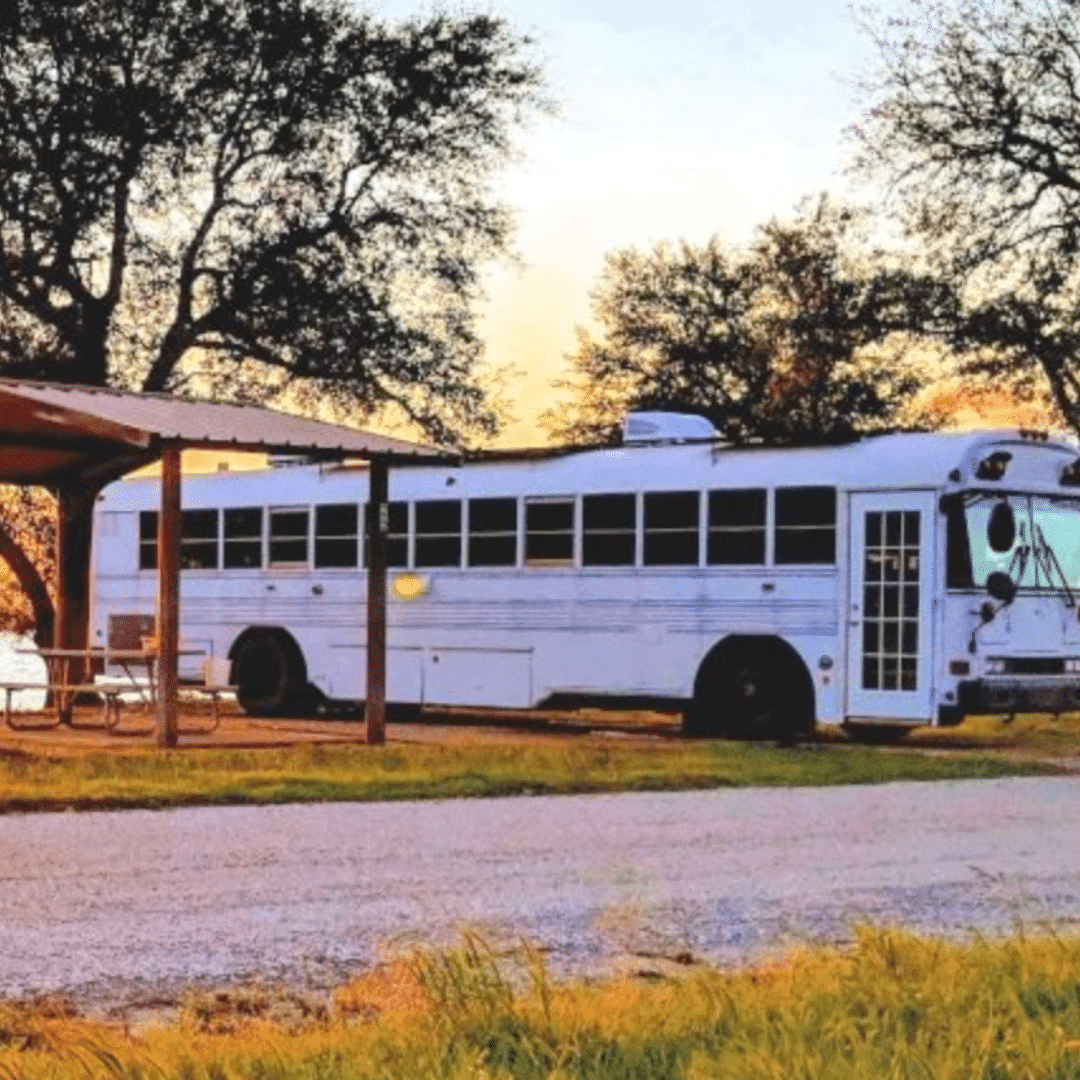
The bus and van life communities are surprisingly tight-knit. There are meetups, rallies, and informal gatherings happening all over the country throughout the year. The Skoolie Swarm, Descend on Bend, Rubber Tramp Rendezvous — some of these events draw hundreds of rigs. You show up alone and leave with friends.
But even outside organized events, the day-to-day social aspect of bus life is real. A converted school bus is a conversation magnet. When you’re parked at a campground, people walk up and ask about it. At gas stations. At grocery stores. Everywhere. I’ve heard solo dwellers say they have more spontaneous meaningful conversations in a month of bus life than they had in a year living in an apartment. Partly because the bus itself is interesting, and partly because the lifestyle attracts a certain kind of person who’s genuinely open to connecting.
Online communities fill in the rest. Facebook groups, Reddit, Instagram — they’re active and genuinely supportive. People post their locations, invite others to park nearby, share route information and warnings about specific areas. It’s not the same as having someone physically present, but it’s a community that understands your life in a way that your old coworkers probably don’t.
The pattern I kept seeing is that solo doesn’t have to mean alone. It means you choose when you’re social and when you’re not. That’s a kind of freedom most people never experience.
Budget Advantages of Solo Bus Life
I touched on this earlier, but the financial side deserves its own section because for a lot of people, money is the reason they’re considering bus life in the first place.
The build budget
A solo build is cheaper than a couple’s build, full stop. You can go with a smaller bus, which means a lower purchase price. A decent short bus runs $3,000 to $8,000 depending on age, mileage, and condition. A full-size will cost more. The build itself scales down too. Smaller water tank, smaller electrical system, smaller kitchen, fewer materials for walls and insulation.
Here’s a rough budget breakdown for a comfortable solo build on a short bus:
Bus purchase: $3,000-$6,000. Insulation and walls: $500-$1,000. Electrical and solar: $1,500-$3,000. Plumbing: $300-$800. Kitchen: $500-$1,500. Bathroom: $300-$800. Bed and furniture: $300-$1,000. Flooring: $200-$500. Paint and exterior: $300-$800. Miscellaneous and tools: $500-$1,500.
Total range: roughly $7,000-$17,000 depending on your choices. I’ve seen people do it for less by scrounging materials and keeping it simple. I’ve seen others spend more by going with lithium batteries, a composting toilet, and nice finishes. But that range covers most solo builds.
Compare that to the average couple’s build budget of $15,000-$30,000, and you can see the advantage.
Monthly living costs
This is where solo really shines. Based on what I’ve gathered from people actually doing it:
Food: $200-$400 per month. You’re cooking for one, which is efficient. Fuel: $200-$500 depending on how much you move. Campsite fees: $0-$400 depending on whether you’re boondocking or using RV parks. Phone and internet: $50-$120. Insurance: $50-$150. Maintenance fund: $100-$200 set aside monthly. Miscellaneous: $100-$200. (See our guide on How Do You Get Internet and WiFi Living in a Bus? for more on this.)
That puts total monthly costs somewhere between $700 and $1,600 for most solo bus dwellers. The low end represents someone who boondocks most of the time, cooks almost every meal, and moves infrequently. The high end is someone using RV parks regularly, eating out occasionally, and traveling more often.
Even at the high end, $1,600 a month for housing, transportation, food, and utilities is remarkable. That’s less than rent alone in most American cities.
Work-Life Balance When Your Home Is Your Office
This section gets overlooked in a lot of bus life content, but for solo dwellers who work remotely, it’s genuinely one of the biggest adjustments.
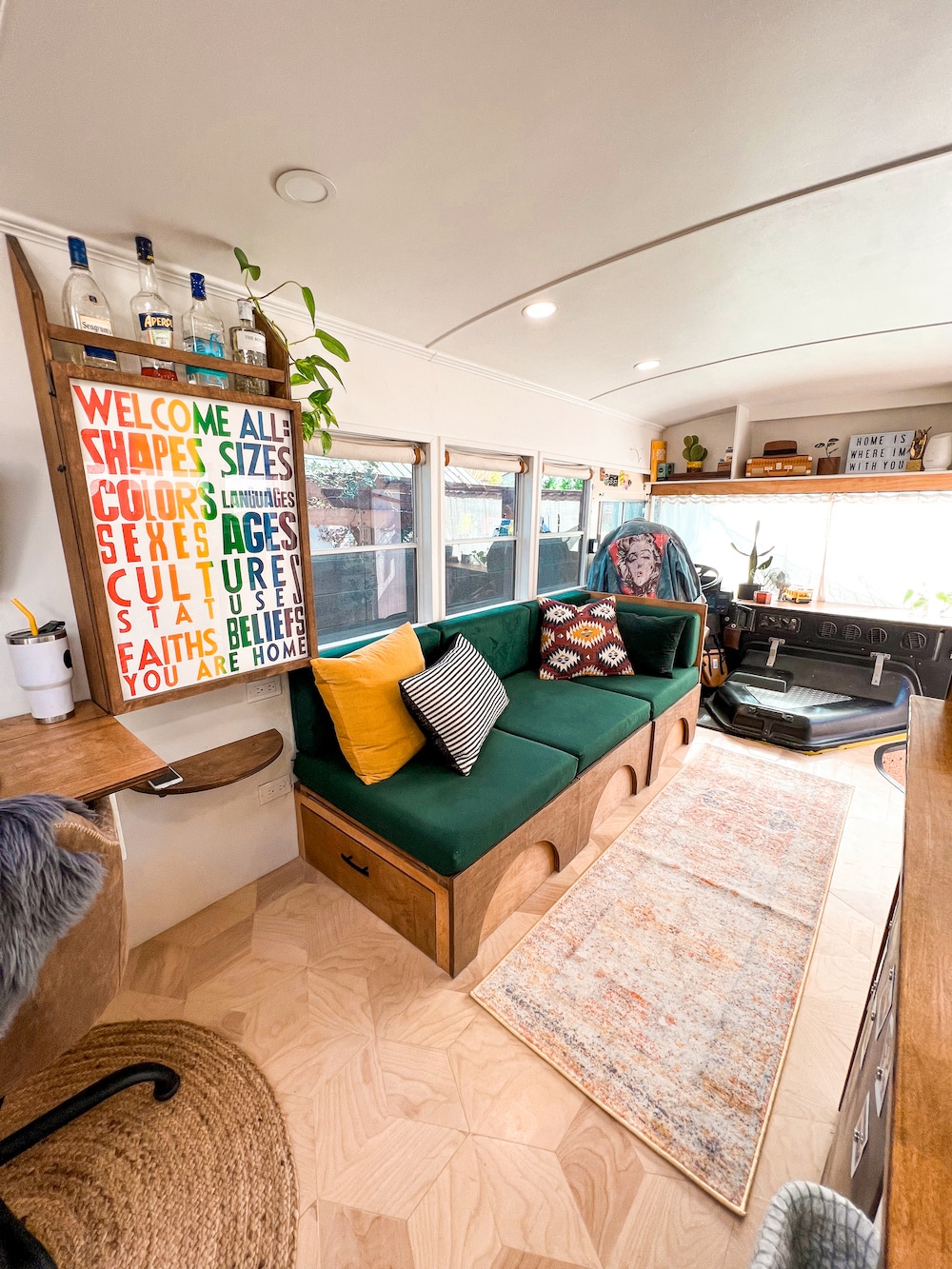
When you live alone in a bus and you work from that bus, your home and your office are literally the same 150 square feet. There’s no commute to create separation. There’s no office to leave at 5 PM. Your desk is three feet from your bed, and it’s easy for work to bleed into everything. (See our guide on Can You Legally Live in a Converted School Bus? for more on this.)
I found that the solo bus dwellers who maintained healthy work-life balance did a few things differently.
First, they created physical separation even in a tiny space. A dedicated desk that they only sit at when working. A rule about closing the laptop by a certain time. Some people even had a ritual of “leaving the office” — they’d close their laptop, step outside, walk around the bus once, and come back in. Sounds silly. They said it worked.
Second, they used location as a tool. Work from a coffee shop two days a week. Drive to a park and work from a picnic table. Use a co-working space in whatever town you’re near. Getting out of the bus to work keeps the bus feeling like home instead of an office you sleep in.
Third, they set boundaries with themselves. This is the hard one, because when you’re solo there’s nobody to tell you it’s time to stop working. A couple has that built in — “hey, close the laptop, dinner’s ready.” Solo, you have to be your own brake pedal. Set work hours. Use a timer. Have a hard stop. Whatever system works for you, use it consistently.
“What do people do for money?”
This is a question I see in every bus life forum and comment section, and it’s fair. The answer for solo bus dwellers specifically tends to fall into a few categories.
Remote work is the most common. Web development, graphic design, writing, virtual assistance, customer service, consulting — anything you can do on a laptop with an internet connection. Solo bus dwellers have an advantage here because they only need to support one income. A remote job that pays $3,000 a month is tight for a couple. For a solo bus dweller spending $900 a month, that’s genuinely comfortable.
Seasonal work is another popular option. National parks, ski resorts, Amazon warehouses, farm work — there are employers all over the country that hire temporary workers and sometimes provide parking for RVs and buses. You work for a season, save up, then travel for a few months.
Some people run their own thing from the bus. Photography, content creation, online teaching, selling crafts at markets. The bus itself becomes part of the brand sometimes.
And a few people live on savings, disability, retirement, or other passive income. If your monthly expenses are under $1,000 and you’ve got a solid financial cushion, you don’t need to earn much.
Build Considerations When It’s Just You
Building a bus alone has some specific challenges and advantages that don’t get talked about enough.
The biggest practical challenge is the heavy work. Lifting a subfloor into place. Holding a piece of framing while you screw it in. Moving a water heater. When you’re building with a partner, these two-person jobs happen naturally. Solo, you need to either get creative with clamps and supports, or you need to occasionally recruit help. Most solo builders say they had a friend or family member come help for a day or two during the heaviest phases, and handled everything else alone.
Another consideration is pacing. Solo builds tend to take longer, and that’s okay. The average conversion takes 6-12 months for a couple working weekends. Solo builders doing the same scope of work should plan for 9-18 months. Rushing a solo build leads to mistakes, and when you’re the only one catching errors, there’s nobody to say “hey, that’s not level.”
The advantage of building solo is that every decision is yours. No debates about layout. No compromises on finishes. No arguments about whether you really need that second window. Your vision, start to finish. I’ve talked to people who built with a partner and people who built alone, and the solo builders consistently said they were happier with the final product because it was exactly what they wanted.
Don’t skip the critical systems
I mentioned this earlier but it bears repeating. Electrical work and propane systems are the two areas where mistakes can be fatal. As a solo builder, you’re your own quality control. If you wire something wrong, nobody’s going to catch it. If you have a propane leak, nobody else is in the bus to smell it.
For these two systems specifically, either learn them thoroughly before you start, or hire a professional. A lot of solo builders do a hybrid approach — they hire an electrician to design the system and wire the main panel, then do the finish wiring themselves. Same with propane. Have a certified tech install the lines and connections, then you handle the cosmetic stuff around it.
The Mental Health Side Nobody Warns You About
I want to come back to this because I don’t think one section covers it adequately. There’s the loneliness angle, which we talked about. But there are other mental health considerations for solo bus life that caught me by surprise during my research.
Decision fatigue is real. When every single decision falls on you — where to park, when to move, what to eat, how to fix the thing that’s broken, whether to spend money on this repair or that upgrade — it adds up. Couples split this load naturally. Solo, it’s all yours, every day, forever. Some people handle it fine. Others find it exhausting after a while.
Then there’s the identity thing. When you leave behind a traditional lifestyle for bus life, you also leave behind a lot of social identity markers. Your address, your neighborhood, your local friends, your routine. For couples, you at least have each other as a constant. Solo, you’re rebuilding your entire sense of self from scratch. That can be incredibly liberating or deeply disorienting, depending on the day.
The people who navigate this well tend to have something they’re building toward. A creative project, a business, a fitness goal, a travel mission. Something that gives meaning to the lifestyle beyond just “I live in a bus.” Without that, the novelty wears off after a few months and you’re left asking “okay, but what am I actually doing?”
I don’t say this to discourage anyone. I say it because nobody else seems to, and I think honest information is more useful than cheerleading.
Managing Everything Yourself
When the alternator dies at 9 PM in rural Arkansas, there’s no partner calling roadside assistance while you’re under the hood. When you’re sick with food poisoning, nobody’s making you soup or driving to a pharmacy. When the bus is stuck in mud, you’re the only one digging.
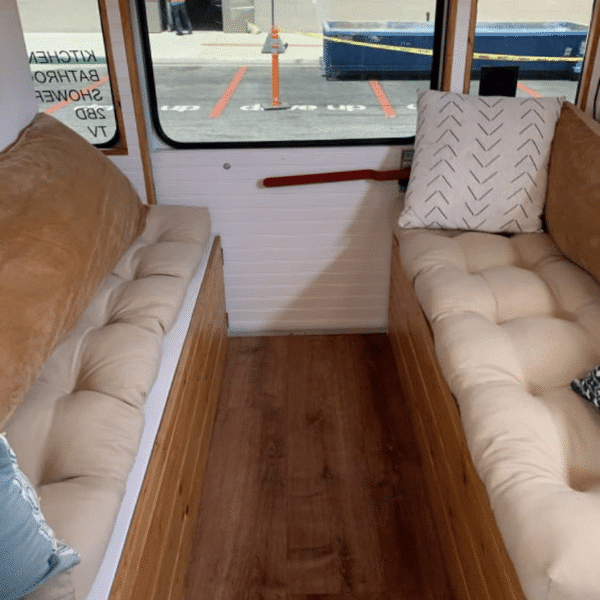
This is the daily reality of solo bus life, and it requires a certain kind of self-reliance that you might not have yet. That’s fine. You build it.
The practical approach I found among long-term solo bus dwellers is having systems in place before you need them. A good roadside assistance membership. A well-stocked first aid kit and basic medication supply. A toolkit with the essentials for your specific bus. The phone number of a good mobile mechanic saved in your contacts. A basic troubleshooting guide for your engine.
One woman I read about kept a binder in her cab with flowcharts for common mechanical issues. Engine won’t start? Follow the chart. Weird noise from underneath? Follow the chart. She said it saved her multiple times in her first year — either fixing things herself or describing the problem accurately enough that a mechanic could diagnose it over the phone.
Driving solo deserves mention here too. You’re the only one watching blind spots, reading the GPS, and deciding whether you’re too tired to keep going. Solo drivers I talked to had a universal rule: if you’re questioning whether you should stop, stop. There’s no copilot to trade off with. Fatigue doesn’t announce itself politely.
Making the Decision
So here’s where I landed after all my research. Solo bus life isn’t the watered-down version of bus life. For the right person, it’s actually the best version. The freedom is real. The financial advantages are real. The ability to build exactly what you want and go exactly where you want is real.
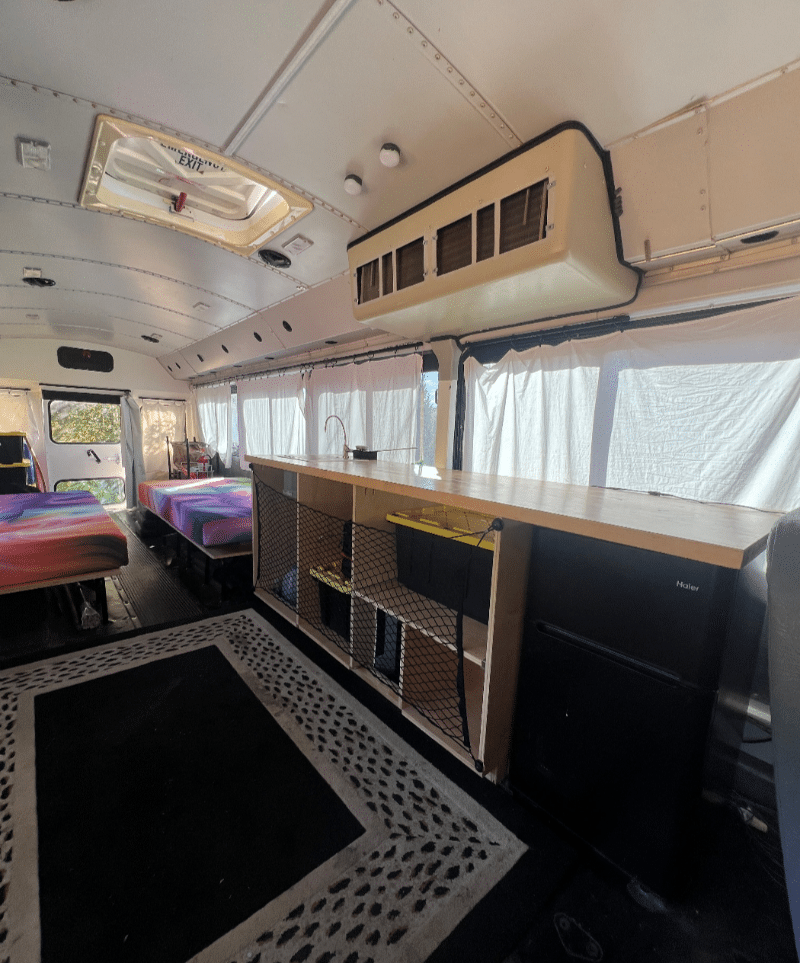
The challenges are also real. Safety requires more attention. Loneliness can sneak up on you. Handling everything alone gets tiring sometimes. And the mental health side needs honest consideration before you commit.
But every solo bus dweller I talked to, every comment I read, every story I came across — the overwhelming consensus was the same. The hard parts are real, but the freedom is worth it. Not because the challenges are small. Because the freedom is that big.
If you’re on the fence, start small. Go to a meetup. Rent a camper van for two weeks. Watch some solo build tours. Talk to people who are actually doing it. The solo bus life community is one of the most welcoming groups I’ve come across in all my research, and they love helping new people figure it out.
You don’t need to have it all figured out before you start. You just need to start.