
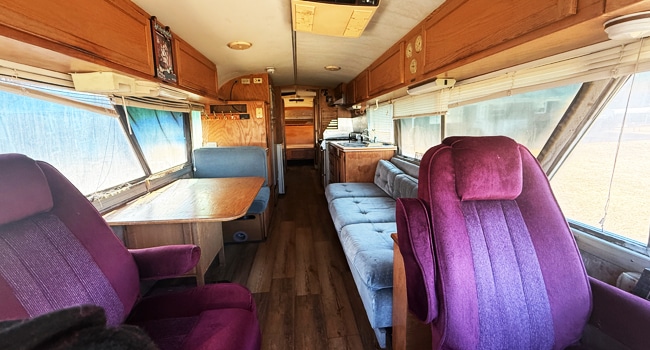
When I first started researching bus life, I assumed it was mostly a young person’s game. Twenty-somethings with remote jobs and matching flannels living in buses they painted matte black and named something like “The Rolling Stone.” And yeah, that crowd exists. But the more I dug into this world, the more I realized that retirees and seniors might actually be the group that benefits the most from bus life. Not because it’s trendy, but because the math just works in ways it doesn’t for almost any other housing option on a fixed income. (See our guide on 11 Ways to Make Money While Living in a Bus for more on this.)
This guide covers everything a retiree or older adult needs to know about living in a converted bus — from whether it’s financially realistic on Social Security, to handling Medicare on the road, to building a bus that actually works for aging bodies. Bus life isn’t just possible for seniors, it’s arguably one of the smartest housing decisions a retiree can make. When you eliminate a mortgage or rent payment and most utilities, your monthly expenses can drop to $800-$1,500. That puts comfortable living within reach of nearly anyone receiving Social Security. The upfront cost is real but finite, the lifestyle is flexible enough to adapt as your needs change, and the community is way more welcoming to older adults than most people expect.
Why Are So Many Retirees Drawn to Bus Life?
I kept seeing this pattern in forums and YouTube comments. Retirees showing up and saying basically the same thing — they’re tired of paying rent or a mortgage that eats most of their check, they want to travel but can’t afford hotels and flights, and they’re looking for something different than sitting in the same house for the next twenty years.

One comment that really stuck with me was from a woman who said she’d spent her whole adult life making house payments, and now that she was finally retired, the house needed a new roof. She couldn’t afford it. And she just thought, what am I even doing here?
That’s the pull. It’s not about being adventurous or alternative or whatever label people slap on it. For most retirees, it’s practical. You sell the house, you buy a bus, you convert it into something comfortable, and suddenly you own your home outright. No landlord, no mortgage company, no HOA. The money you were spending on housing goes back in your pocket.
There’s also the freedom piece, which is huge for people who spent 30 or 40 years locked into a work schedule. When you live in a bus, you can be in Montana in June and Arizona in January. You can visit your grandkids in Ohio for a month and then head to the coast. I think a lot of retirees discover that the years they have left feel more valuable than the ones they’ve already spent, and they don’t want to waste them sitting still. (See our guide on Can You Legally Live in a Converted School Bus? for more on this.)
“Can you live in a bus on a fixed income or social security?”
I wrote a whole article on this one because it comes up constantly, and the short answer is yes. If you want the full deep dive, check out our breakdown on living in a bus on a fixed income. But here’s the summary version.

The average Social Security check in 2026 is around $1,900 a month. A couple both receiving benefits could be looking at $3,000 to $4,000 combined. Monthly bus life expenses for someone who isn’t driving cross-country every week land somewhere between $800 and $1,500. Even on the low end of Social Security, that math works out.
The expenses break down roughly like this. If you’re staying at RV parks long-term, you’re paying $400 to $800 a month. But you don’t have to. BLM land is free. National forest dispersed camping is free. Campground hosting gigs give you a free site and sometimes a small paycheck on top. Most retirees I’ve talked to or read about mix it up — a few months at a park with hookups, a stretch of boondocking, maybe a campground host gig in the summer.
Insurance on a bus registered as an RV runs $100 to $200 a month. Cell phone and internet, $50 to $100. Food is whatever you’d spend anyway. Fuel is the wildcard, but if you’re not moving every week, you might only spend $50 to $100 a month on diesel. (See our guide on How Do You Get Internet and WiFi Living in a Bus? for more on this.)
I sat down and ran the numbers for a worst-case scenario — someone receiving the minimum Social Security benefit of around $1,000 a month. Even there, if you’re boondocking on free land, cooking your own meals, and not driving much, it’s tight but doable. And the thing is, that same $1,000 a month can’t touch rent in most American cities right now. A bus gives you a home you own for a one-time cost. That changes everything.
“Is bus life practical for older adults?”
This is the question that I think really matters, because affordable and practical aren’t the same thing. You can save a fortune living in a bus, but if your knees are shot and you can’t climb the steps or if you need to be near a hospital twice a week, it doesn’t matter how cheap it is.

So I spent a lot of time looking into this one specifically. And what I found is that it depends entirely on how you plan the build and how honest you are about your needs.
The biggest practical concerns for older adults are mobility inside the bus, getting in and out, access to healthcare, and having a support system when things go wrong. Every single one of these is solvable, but you have to actually think about them before you start building. I’ll cover each one in detail below. (See our guide on 15 Things Nobody Tells You About Living in a School Bus for more on this.)
The retirees who struggle are the ones who build a bus the way a 25-year-old would — loft bed with a ladder, narrow aisles, high cabinets, no grab bars. Your body at 70 is not your body at 30. That’s not a limitation, it’s just a design requirement. The retirees who love it are the ones who built around their actual bodies and actual needs, not around what looks good on Instagram.
I read about a couple in their mid-70s who did a short bus conversion specifically designed for accessibility. Wide center aisle, everything at counter height, grab handles everywhere, a powered step assist to get in and out. They said it was easier to move around in than their last apartment. That’s the goal.
“What about accessibility in a bus conversion?”
This one deserves its own section because it’s the thing that separates a bus that works for a senior from one that doesn’t. And honestly, a lot of these modifications are good ideas for anyone regardless of age.
Entry and Exit
The steps on a school bus are steep. That’s just the reality. For a young person it’s nothing, but for someone with bad knees or hip issues it’s a real barrier to daily life. The most common solutions I found are powered step assists that fold out from under the entry door, adding an extra step to break the height into smaller increments, installing solid handrails on both sides of the entry, and in some cases building a small fold-out platform.
I talked to a builder who specializes in conversions for older clients and he said the entry system is the single most important thing to get right. His recommendation was a three-step entry with sturdy railings and non-slip surfaces instead of the factory two-step setup. He also mentioned that some people install the fold-down RV steps that you see on motorhomes, which are lower to the ground and wider.
Some folks even go the route of a hydraulic wheelchair lift, especially if mobility is a current issue rather than a future concern. These can be installed where the emergency rear door is. They’re not cheap, maybe $2,000 to $4,000 installed, but for someone who genuinely needs one, it makes the difference between bus life being possible or not.
Interior Layout
This is where thinking ahead really pays off. The recommendations I kept seeing from people who’ve actually lived this:
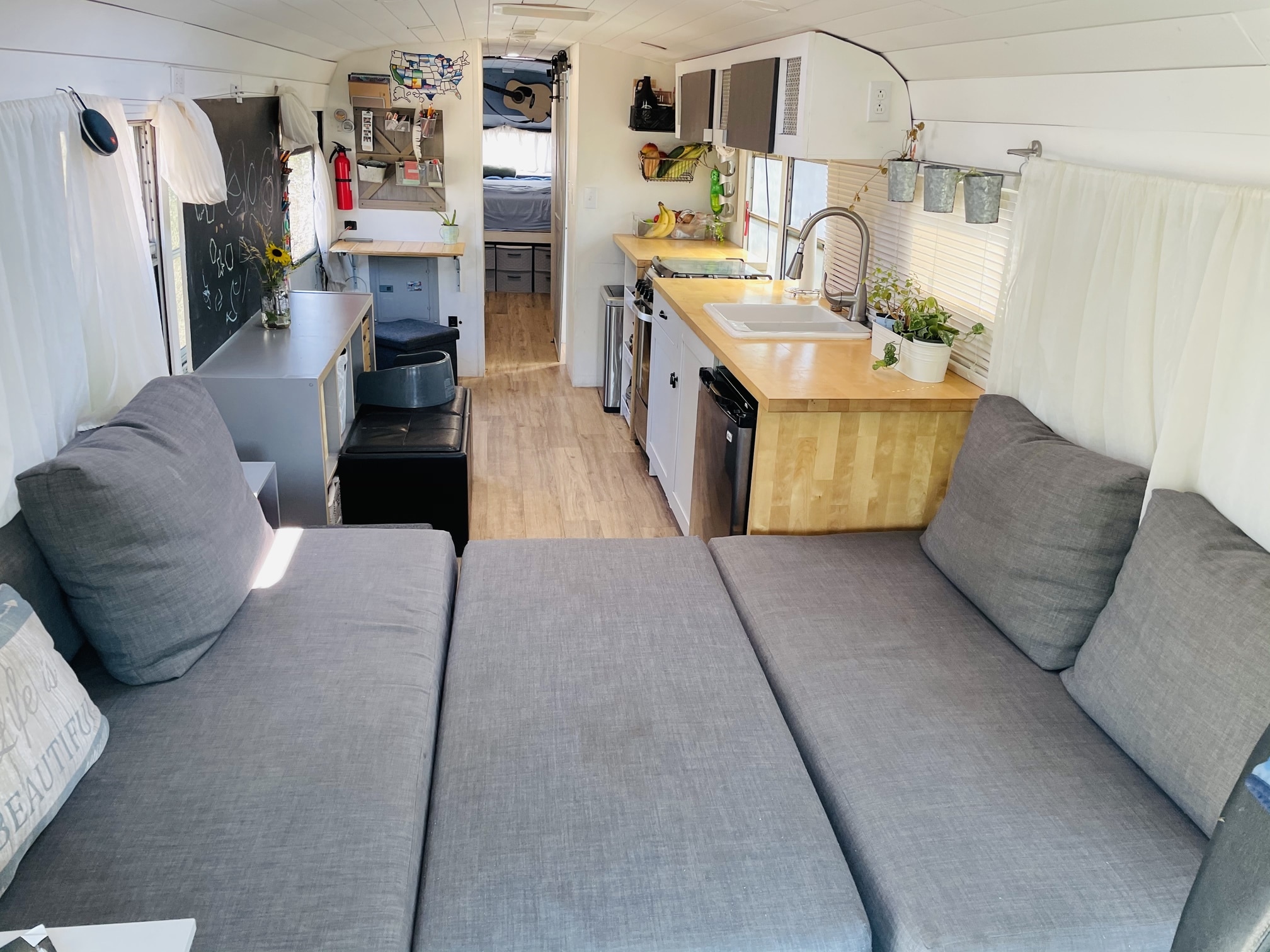
Wide aisles. At minimum 24 inches, ideally 30. This means your bus probably needs to be a full-size, not a short bus, unless you’re a single person. A 40-foot bus gives you the room to have real walkways.
Grab bars everywhere. Not just in the bathroom. Along the kitchen counter, near the bed, by the entry, anywhere you might need to steady yourself. Marine supply stores sell stainless steel grab bars that bolt through the wall and they’re rated for serious weight. I found these run about $20-$40 each and installing a half dozen throughout the bus is one of the cheapest and most impactful things you can do.
Lower cabinets. Standard kitchen cabinet height is designed for someone standing upright reaching up. If your shoulders don’t have the range they used to, that’s a problem. A lot of senior-focused builds put upper cabinets about 6-8 inches lower than standard, or skip overhead cabinets entirely in favor of pull-out drawers and shelving at waist to chest height.
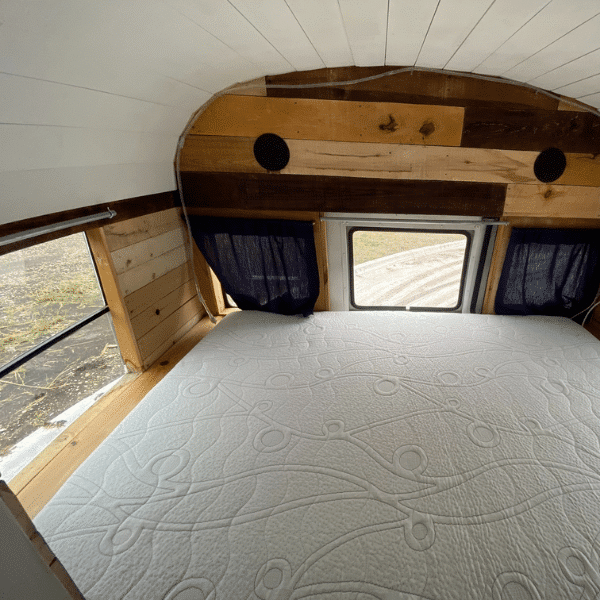
Bed height matters. I’ve seen builds where the bed is on a platform three feet off the ground because they wanted storage underneath. Great if you’re 28. Not great if getting up and down from bed height is already a process. A bed at normal height — maybe 20 to 24 inches — with a sturdy frame you can push off from is way more practical. You can still get storage underneath, just not quite as much.
Bathroom Accessibility
The bathroom in a bus is small no matter what. But small doesn’t have to mean inaccessible. Walk-in shower designs where the entire bathroom floor is the shower pan are popular in bus conversions anyway, and they happen to be great for seniors because there’s no lip to step over. A fold-down teak bench in the shower, a handheld shower head on a sliding bar, and a grab rail next to the toilet are modifications that cost almost nothing but make daily life dramatically easier.
I’d also think seriously about a composting toilet versus a cassette toilet. A composting toilet like a Nature’s Head sits at a comfortable height, doesn’t require you to haul a heavy cassette to a dump station, and the solid waste container only needs emptying every few weeks. Way less physical effort.
Best Bus Types for Retirees and Seniors
Not all buses are created equal, and what works best for a retiree is different from what works best for a family of five.

Here’s where I landed after looking at this from a senior’s perspective specifically.
Full-size flat nose (Type C or D). For a couple, this is probably the sweet spot. You get enough room for wide aisles, a real bathroom, a comfortable bed, and a living area that doesn’t feel cramped. A 35 to 40 foot bus gives you roughly 250 to 300 square feet of living space after conversion. That’s a studio apartment on wheels. The downside is that driving and parking are harder with a bigger bus, but the trade-off in livability is worth it for most people.
Short bus (Type A). For a single person or a couple who really doesn’t need much space, a short bus can work. They’re easier to drive, easier to park, and cheaper to buy. But the interior space is tight, and it’s hard to fit wide aisles and accessibility features into a 20-foot footprint. I’ve seen it done well, but it requires serious compromise on storage and layout.
Transit bus or coach bus. These are the dark horses for retirees. Coach buses in particular often come with air ride suspension, which means a smoother ride and less physical stress. They’re wider than school buses, which means more room for accessible layouts. The ceiling height is usually better too. The downside is they cost more upfront and parts can be harder to source. But if comfort and accessibility are top priorities, they’re worth considering. We’ve got a full breakdown of all the types of buses you can convert if you want to compare.
One thing I want to flag specifically for seniors. Whatever bus you choose, pay attention to the suspension and the driver’s seat. A bus with worn-out shocks is going to beat you up on every trip. And the factory school bus driver’s seat is designed for a bus driver doing 8-hour shifts, which actually means it’s not bad, but it’s worth upgrading to an air ride seat if the bus doesn’t already have one. Your back will thank you.
Also — and this is a digression but it’s important — I spent an afternoon reading through a thread where retirees were arguing about automatic versus manual transmission. The consensus was overwhelming. Get an automatic. A school bus with a manual transmission requires more physical effort to drive, especially in stop-and-go traffic or hilly terrain. For an older adult, that physical effort adds up fast. Almost all school buses from the mid-2000s onward are automatic, so this mostly just means avoiding the older manual buses that you find at really low prices. The cheap price isn’t worth the hassle.
“How do you handle healthcare on the road as a senior?”
This is the big one. And for seniors specifically, it’s different than for younger bus lifers because most retirees have Medicare, which changes the equation entirely. We’ve got a full article on healthcare while living in a bus that covers the general topic, but let me focus on the Medicare-specific stuff here.
Medicare on the Road
Original Medicare (Parts A and B) works anywhere in the country that accepts Medicare. And nearly every hospital and most doctors do. This is a massive advantage over ACA marketplace plans, which often have narrow networks that don’t work across state lines. With Original Medicare, you can see a doctor in Florida one month and Montana the next and it just works. That’s kind of perfect for bus life.
Medicare Advantage plans (Part C) are different. These are the plans offered by private insurers, and they typically have regional networks. If you sign up for a Medicare Advantage plan in Texas, it might not cover you well in Oregon. For a bus lifer who travels, Original Medicare plus a Medigap supplement is usually the better choice. The Medigap supplement (also called Medigap or Medicare Supplement Insurance) covers the gaps that Original Medicare doesn’t — the 20% coinsurance, deductibles, that kind of thing. Together, they give you close to full coverage anywhere in the country.
I found that the monthly cost breakdown looks roughly like this. Medicare Part B premium is about $185 per month in 2026. A Medigap Plan G supplement runs about $100 to $250 per month depending on your age and location. Part D for prescriptions adds another $30 to $80. So total, you’re looking at $315 to $515 per month for comprehensive healthcare that works nationally. That’s comparable to or less than what most working-age people pay through employer plans, and the coverage is actually better for traveling.
Prescriptions on the Road
Part D prescription plans have their own networks of pharmacies, but the major chains are usually covered. CVS, Walgreens, and Walmart pharmacies are everywhere, so filling prescriptions on the road is usually straightforward. Mail-order pharmacy through your Part D plan is another option — they’ll ship a 90-day supply to whatever address you give them. (See our guide on How Do You Get a Mailing Address Living in a Bus? for more on this.)
One thing I hadn’t thought about until someone on a forum brought it up. If you take medications that need refrigeration, you need a reliable fridge in your bus that runs 24/7. This matters for your solar and battery setup. Make sure your electrical system can handle keeping a fridge cold at all times, not just when you’re plugged in. We cover that in detail in our solar and electrical guide.
Emergency Care
Here’s something that does keep me up at night when I think about seniors living in buses in remote areas. If you’re boondocking on BLM land 45 minutes from the nearest town and you have a medical emergency, that’s a serious problem. Response times for ambulances in rural areas can be 30 minutes to an hour, and that’s if you can even get cell service to call.
The practical answer is awareness. Know where the nearest hospital is wherever you park. Keep a satellite communicator like a Garmin inReach for areas without cell service. Don’t boondock alone in truly remote areas if you have heart conditions or other high-risk health issues. And honestly, this might be a reason to stick closer to RV parks that are near towns rather than going deep into the backcountry.
A couple I read about handles this by always parking within 20 minutes of a hospital. They said it doesn’t actually limit them that much — most RV parks and campgrounds are near towns anyway. It just means they skip the really remote dispersed camping spots, which is a trade-off they’re comfortable with.
Social Life and Community on the Road
I think the loneliness question doesn’t get asked enough. When you leave a house and a neighborhood and a town where you know people, you’re leaving your social network. For retirees especially, that can be a real loss.

But here’s what I didn’t expect. The bus life community is incredibly social. Way more so than I would have guessed. RV parks are like small neighborhoods where people actually talk to each other. There are caravan groups where multiple rigs travel together. Skoolie meetups happen all over the country. And because retirees tend to move slower and stay longer in one place, they often build deeper connections than the younger crowd who’s always chasing the next destination.
Specific things I found that retirees do for community:
RV parks with long-term residents. These are basically small towns. People have potlucks, card games, happy hours. I read about one park in Arizona that has a full social calendar — movie nights, craft groups, group hikes, book clubs. And these aren’t planned by management, they’re organized by the residents. You show up, you participate, you make friends.
Escapees RV Club and similar organizations. Escapees has been around since 1978 and they specifically cater to full-time RVers. They have meetups called Escapades, mail forwarding services, and local chapters called BoF groups (Birds of a Feather) organized around shared interests. A lot of their members are retirees. This was one of the resources that impressed me most when I was researching because it solves multiple problems at once — community, mail forwarding, domicile help, even insurance referrals.
Caravan groups. These are groups of bus lifers (or broader RV groups) who travel together. You caravan from one location to the next, park together, and basically have built-in neighbors wherever you go. Some are loosely organized, some have schedules planned months in advance. For a retiree who worries about being alone on the road, this is probably the best answer.
Campground hosting. I keep bringing this up because it solves so many problems at once. Free campsite, a small income, a built-in role and community, and you’re in one place long enough to actually get to know people. Many campground hosts are retirees, so you’re immediately in a peer group.
Budgeting on a Fixed Income
I’m not going to rehash everything from our fixed income article because that goes deep on the numbers. But there are a few budget items specific to retirees that I want to call out.
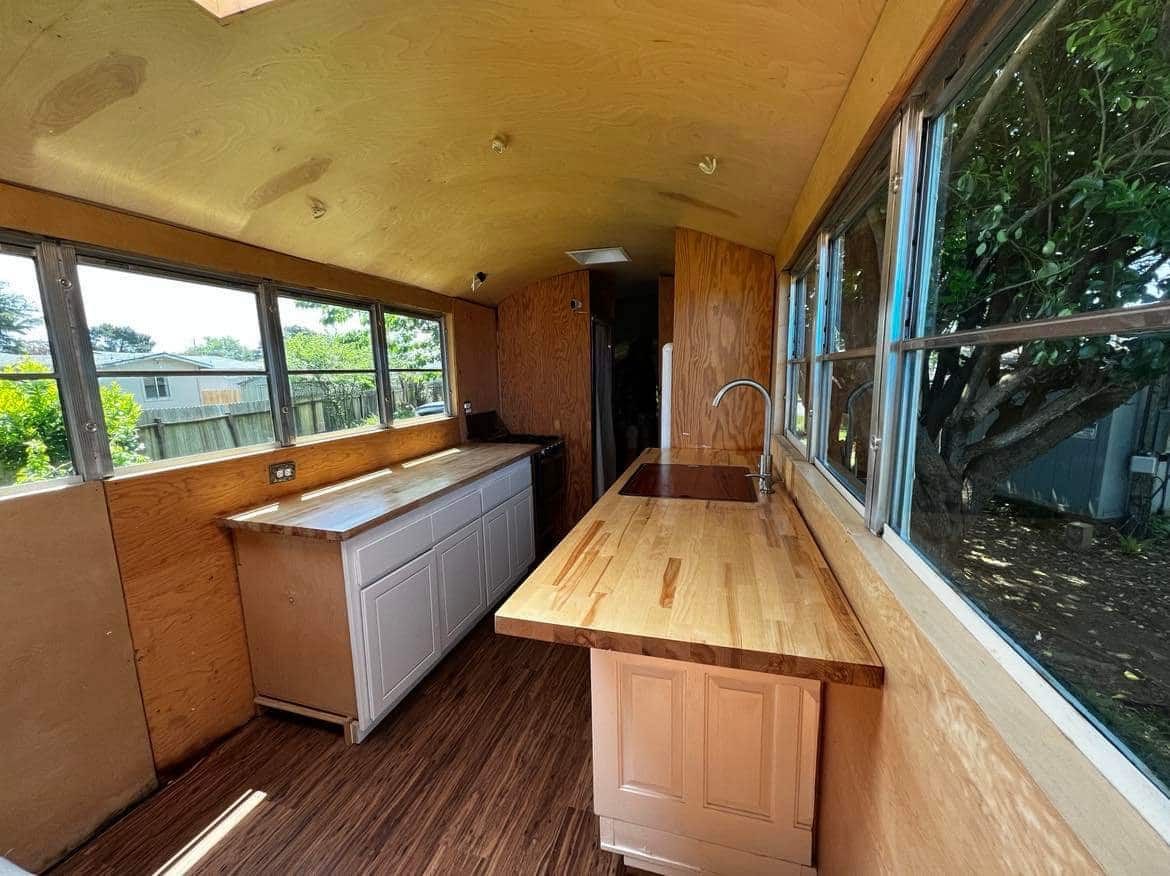
The upfront cost. A used school bus runs $3,000 to $8,000. A basic but comfortable conversion, not Pinterest-worthy but solid and livable, runs $5,000 to $15,000. So total buy-in is roughly $8,000 to $23,000. If you’re selling a house, this comes out of the proceeds with plenty left over. If you’re renting, selling furniture and belongings can cover a significant chunk. Our cost breakdown article has the full numbers.
Monthly budget for a retired couple. Based on everything I’ve gathered:
- Campsite/RV park: $0-$800 (varies wildly based on approach)
- Food: $400-$600
- Fuel: $50-$300 (depends on how much you travel)
- Insurance (bus): $100-$200
- Healthcare (Medicare + supplement): $315-$515 per person
- Cell/internet: $50-$100
- Maintenance fund: $150-$250
- Miscellaneous: $100-$200
That puts a couple’s monthly total somewhere between $1,165 and $2,965. The lower end assumes mostly boondocking and minimal driving. The upper end assumes RV park living and moderate travel. Either way, it’s well within reach of most retired couples’ combined Social Security.
The thing nobody talks about. When you sell a house and move into a bus, you usually end up with savings you’ve never had before. I found one couple who sold their modest house for $180,000, paid off debts, bought and converted a bus for about $20,000, and banked the rest. Their Social Security covers monthly expenses and they haven’t touched the savings in years. That’s a safety net they never had when they were making mortgage payments. For more on how people make the money side work, check out our article on ways to make money living in a bus.
Downsizing: The Emotional Part Nobody Prepares For
I want to be honest about this because I think it gets glossed over. Moving into a bus means getting rid of most of what you own. And when you’re 65 or 70, what you own includes 40 years of accumulated memories. Your kids’ report cards. The dining table you bought for your first house. Photos in frames. Holiday decorations.

Every retiree I’ve read about who made this transition says the same thing — the downsizing was harder emotionally than anything else about bus life. Harder than learning to drive a bus, harder than the build, harder than adjusting to a small space.
The advice I kept seeing was to start early and go slow. Give yourself three to six months minimum. Digitize photos and documents. Give meaningful items to family members who’ll actually want them. Sell things that have value. And accept that you’ll probably have a moment, maybe several moments, where you sit on the floor of your half-empty house and wonder what you’re doing.
But the same people also said that once it was done, the relief was overwhelming. Like putting down a weight they didn’t realize they’d been carrying. One guy described it as “the most liberating month of my life followed by the biggest exhale I’ve ever taken.”
The practical tip that I found most useful: rent a small storage unit for six months after you move into the bus. Put the stuff you can’t decide about in there. If you don’t go back for it in six months, you didn’t need it. This apparently saves a lot of people from decision paralysis and regret.
Climate Chasing: The Secret Health Benefit
This one surprised me when I first encountered it, but it makes so much sense. A lot of retirees with arthritis, respiratory issues, or seasonal depression use bus life to follow the weather. Cold makes arthritis worse? Go south in October and come back north in April. Humidity triggers your COPD? Stay in the dry southwest. Seasonal affective disorder? Chase the sun.
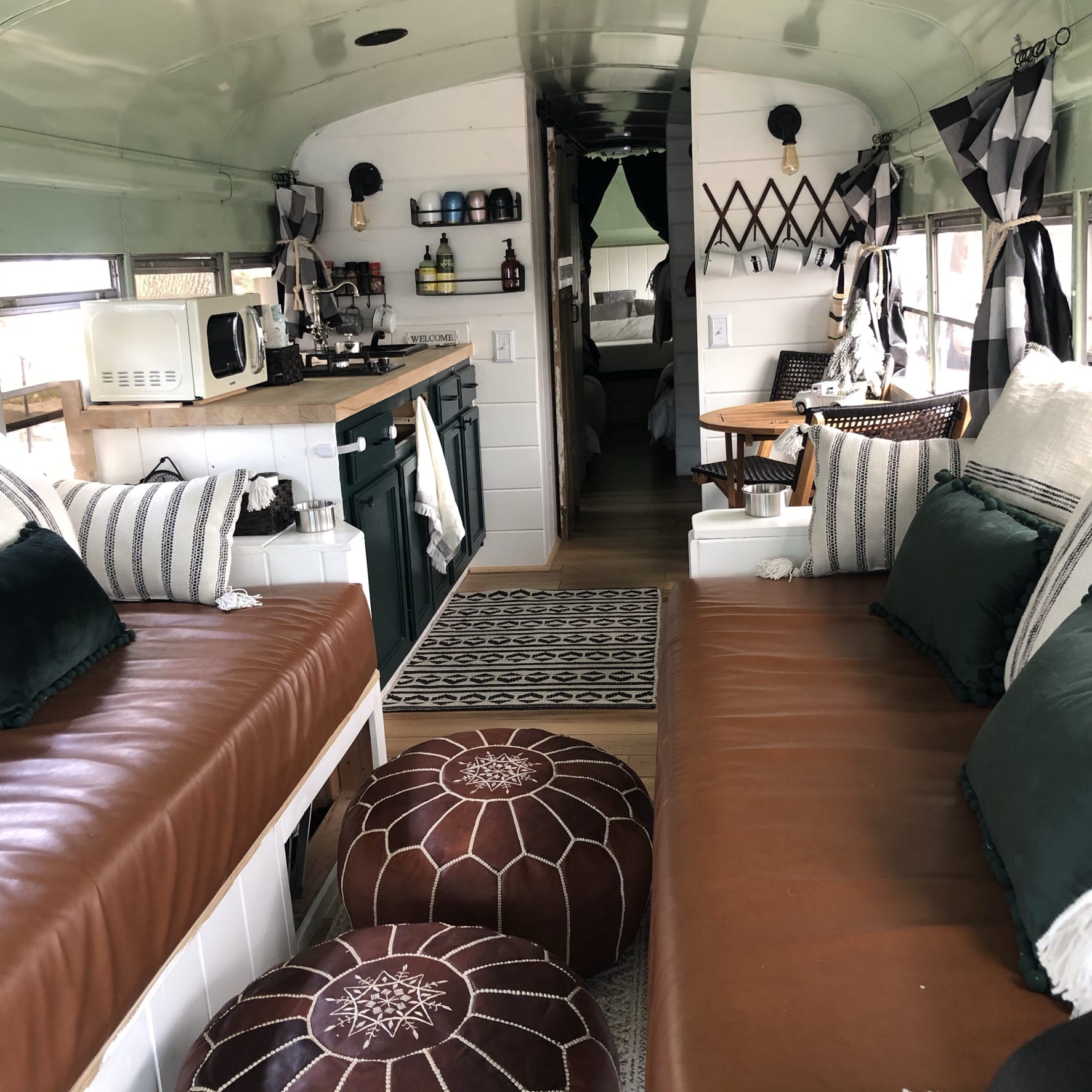
I read about a woman with severe rheumatoid arthritis who said her pain levels dropped noticeably when she started spending winters in Arizona instead of Michigan. Same medications, same treatment plan, but less cold and damp. Her rheumatologist actually encouraged the lifestyle change.
This is something that traditional housing just doesn’t let you do. If you own a house in Minnesota, you’re stuck in Minnesota winters unless you can afford a second home in Arizona. Bus life gives you that second-home flexibility on a Social Security budget.
The practical pattern I see most often is what people call snowbirding. Summer in the northern states where it’s cool, winter in the southern states where it’s warm. The migration routes are pretty well established — down through New Mexico and Arizona in the fall, back up through Colorado and Montana in the spring. RV parks along these routes are full of retirees doing exactly this.
Safety Considerations for Seniors
I don’t want to scare anyone, but I’d be doing a disservice if I didn’t talk about safety. We have a full guide on skoolie safety and security that covers the general topic, but there are senior-specific concerns worth addressing.

Driving. A bus is a big vehicle. If you’ve been driving a sedan your whole life, the transition takes practice. I’ve talked to people who say it took them a few weeks to get fully comfortable. The good news is that most school buses are automatic, power steering is standard, and the visibility from the driver’s seat is actually excellent. If driving a large vehicle feels genuinely unsafe, having one partner be the primary driver and sticking to routes you’ve planned in advance helps a lot. For more on this, check out our article on how hard it is to drive a school bus.
Falls. This is the biggest physical risk in a bus. The space is small, there are steps, and the floor can be uneven. Grab bars, non-slip surfaces, good lighting, and keeping the aisle clear are the basics. One person mentioned adding motion-activated LED strips along the floor path from the bed to the bathroom for nighttime trips, which is such a simple and brilliant idea.
Isolation in emergencies. I covered this in the healthcare section, but it bears repeating. Have a plan for medical emergencies. Keep a satellite communicator. Tell someone your general location. Don’t park alone in truly remote areas if you have serious health conditions.
Weather. Buses can handle a lot, but they’re not houses. High winds are a real concern with a flat-sided vehicle. We’ve got an article about staying safe in a bus during storms, and I’d strongly recommend reading it. The short version is: monitor weather, don’t drive in high winds, and have a plan for severe weather wherever you’re parked.
What Your Family Is Going to Say
I’m including this because it came up in almost every retiree’s story I read. Your kids, your siblings, your friends — they’re going to have opinions. And most of those opinions are going to be some version of “are you crazy?”
The concerns usually fall into a few categories. They think you’re too old for this. They worry about you being far away if something happens. They think you’re making an impulsive decision. They might be worried about inheritance, though nobody says that part out loud.
Here’s what seemed to work for the retirees who navigated this well. First, they didn’t spring it on people. They talked about it for months before doing it, so it didn’t feel sudden. Second, they addressed safety concerns head-on — showed their family the satellite communicator, explained their healthcare plan, made sure someone always knew their general location. Third, they invited family to visit and see the bus. Almost everyone said that once their kids actually spent time in the bus, the worry dropped significantly because they could see it was a real home, not a crisis.
And some retirees said the honest truth is that their adult children were more upset about losing the family house than about the bus. The childhood home being sold triggered more grief than the bus triggered worry. That’s worth being sensitive to even if it’s not really about you.
Getting Started: What I’d Do If I Were a Retiree Considering This
So here’s where I landed after all this research. If I were retired and seriously considering bus life, here’s the order I’d approach things.

First, go stay in an RV or bus for a few weeks. Rent one. Borrow one. Stay at an RV park. See if the lifestyle fits before you invest money. Some people love it immediately. Some realize it’s not for them, and that’s fine. Better to know before you sell the house.
Second, figure out your healthcare situation. If you’re on Medicare, this is actually pretty straightforward. If you’re between 62 and 65 and not yet Medicare eligible, it’s more complicated and you need to sort it out before you leave.
Third, do the math. Take your actual income, subtract realistic bus life expenses, and see what the margin looks like. If it’s tight, spend more time on the budget. If there’s room, you’ve got flexibility.
Fourth, choose your bus. For seniors, I’d lean toward a full-size bus with an automatic transmission, air brakes, and preferably air ride suspension. Buy the best bus you can afford. The bus is your home and your vehicle — this isn’t the place to cut corners.
Fifth, plan the build around accessibility from day one. Wide aisles, grab bars, lower cabinets, a good entry system. It’s ten times easier to build these in from the start than to retrofit later. If you want layout ideas, our floor plan article has a bunch.
Sixth, start downsizing now, not when the bus is ready. This takes longer than you think and it’s emotionally harder than you expect.
And then go. Seriously. The retirees who are living in buses right now aren’t special or unusually adventurous. They’re just regular people who did the math, made a plan, and decided that freedom was worth more than a fixed address.
I’ll be honest, when I started digging into this topic I expected to find a lot of reasons why bus life wouldn’t work for seniors. What I found instead was a community of older adults who are more financially relaxed, more socially connected, and more genuinely happy than they were in traditional housing. Not all of them. Some tried it and went back. But the ones who made it work aren’t just surviving — they’re having the time of their lives. And most of them say the same thing. They just wish they’d done it sooner.