
I went back and forth on this for weeks and almost drove myself crazy. Every time I’d watch a tour of a full-size build on YouTube I’d think “yeah, that’s what I need, all that space.” Then I’d try to parallel park my friend’s truck downtown and remember that a school bus is literally twice that long. The decision between short and full-size touches everything, your budget, where you can park, how much fuel you burn, and honestly how much stress you deal with on a daily basis.
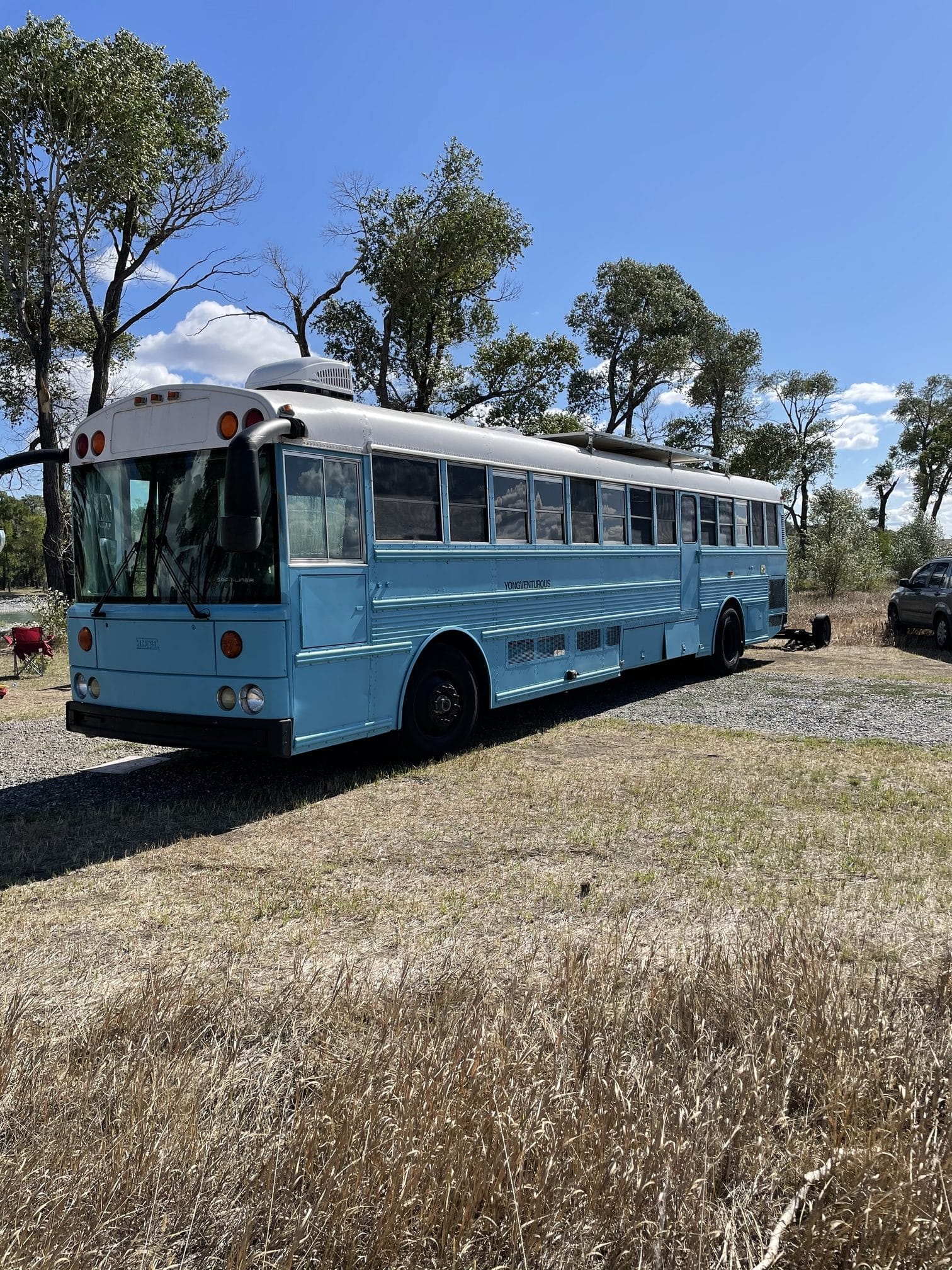
It depends on how you plan to live. A short bus (22-25 feet) is better for solo travelers, couples without kids, and people who want easy parking and better gas mileage. A full-size bus (35-40 feet) is better for families, full-time living with lots of gear, and people who want a spacious home and don’t mind the driving challenges. Most first-time builders underestimate how much space they’ll actually use — a short bus gives you more room than you’d think, and a full-size bus is harder to manage than most people expect.
I’m torn between wanting a short bus or a van. Do you have any issues with overnight parking?
If you’re comparing a short bus to a van, the short bus wins on livable space every time. A typical short bus gives you about 80-120 square feet of floor space compared to 40-60 in a van. That’s enough for a real bed, a small kitchen, and even a compact bathroom. I was surprised how much you can fit into a short bus once I started looking at actual builds instead of just imagining it.
Parking is where the short bus really shines compared to full-size. At 22-25 feet, you can fit in most standard parking spots, maybe taking up two spaces, and every RV park and campground will accommodate you. Walmart lots, street parking, driveways, all doable. A 40-foot bus? That draws attention everywhere you go and finding parking becomes a daily puzzle.
Overnight parking in a short bus is essentially the same as parking a large truck or van. Nobody looks twice. I talked to a couple who’d been living in their short bus for two years and they said they’d never once been asked to move from an overnight spot.
What kind of bus is that? That seems like a perfect size for me.
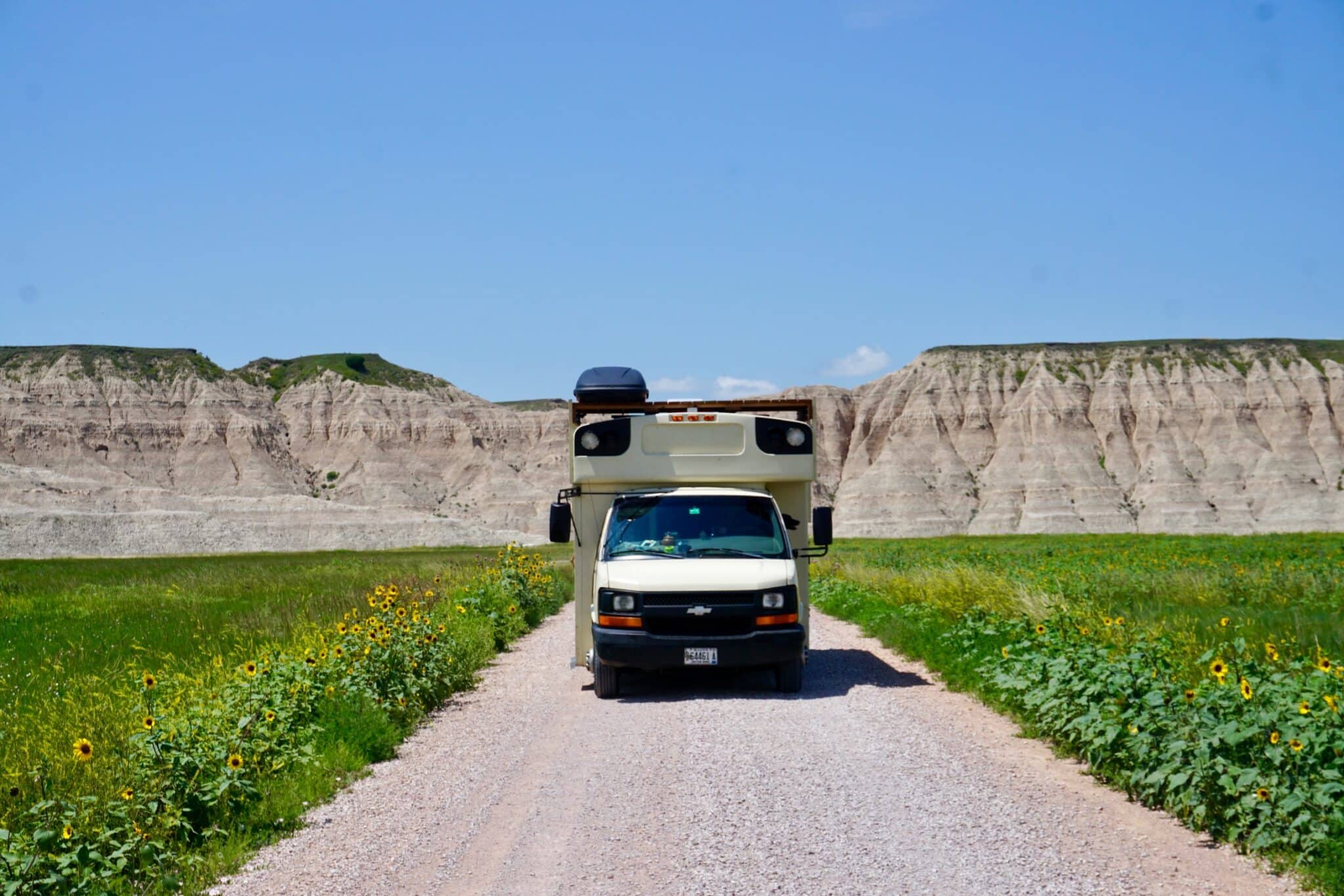
Most short buses are Type A buses, built on a van chassis (Ford E-450, Chevy Express 4500, or similar). They look like an oversized van with a box on the back. The most common ones in the skoolie world are the Ford E-450 with the 7.3L diesel or 6.8L V10 gas engine. If you can find the diesel version, grab it, they’re more fuel efficient and the 7.3 is one of the most reliable engines ever made.
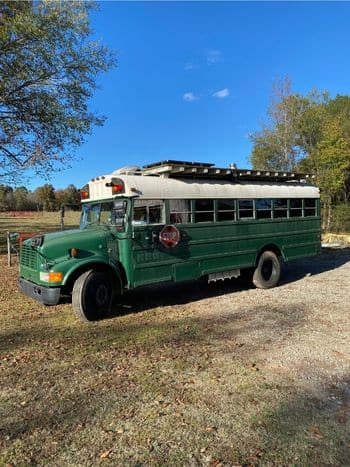
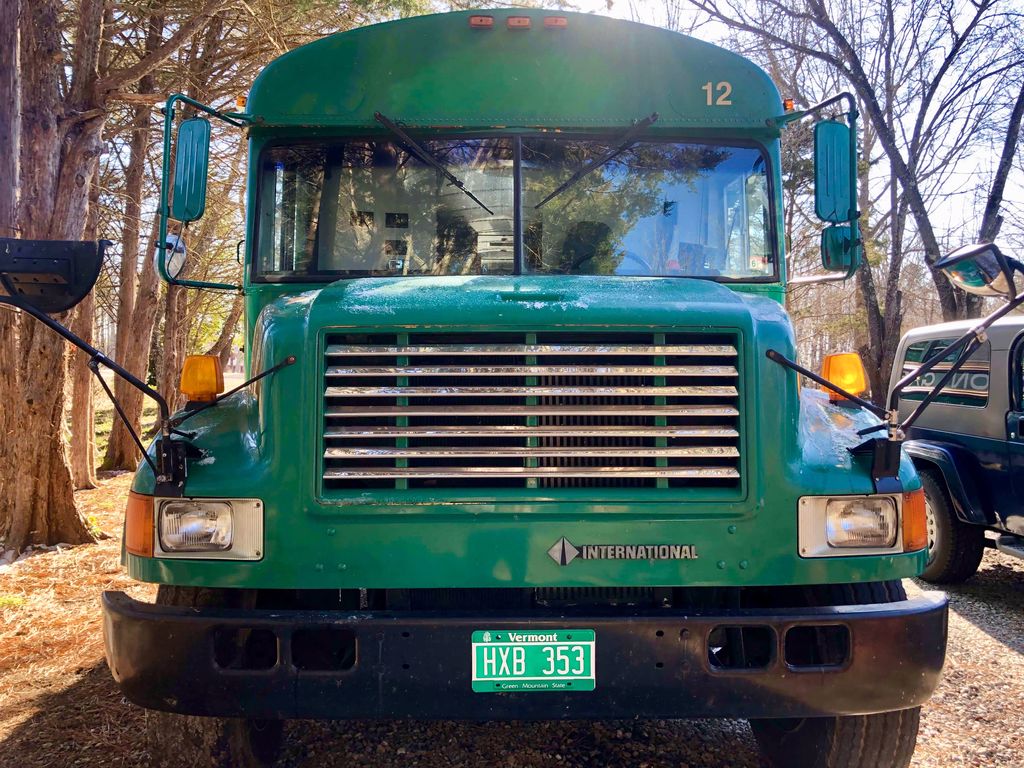
Full-size buses are Type C (the classic “dog nose” school bus with a hood) or Type D (flat-front transit style). Type C buses run 30-40 feet and are what most people picture when they think “skoolie.” Blue Bird, Thomas, and IC Bus are the big three manufacturers. If you want a deeper look at the engine options in these buses, I’ve got a whole breakdown on that.
For a first build, a lot of people recommend a Type C bus in the 30-35 foot range. It’s a good middle ground, enough space for a full kitchen, bathroom, and bedroom, but not so long that every gas station and parking lot becomes a strategic operation.
I want lots of room and drive to mountains — so I want a pusher with a big motor, right?
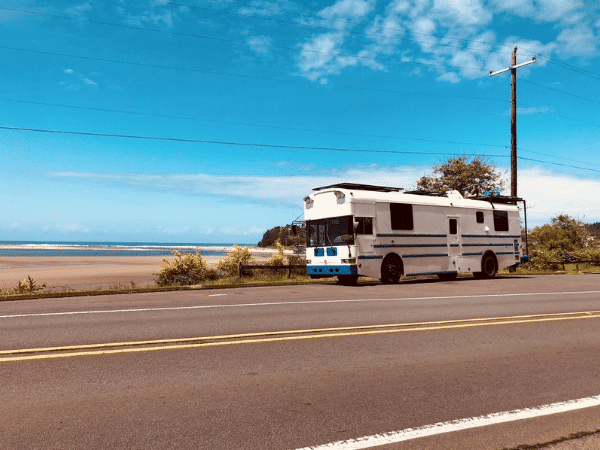
Not necessarily, and this is one of those things that seems intuitive but isn’t quite right. A rear-engine pusher (Type D) is great for power and a quiet cab, but they’re harder to work on, parts can be more expensive, and they’re almost always full-size at 35-40 feet.
For mountain driving, gearing matters more than engine size. This is something I didn’t understand until I talked to a guy who builds buses professionally. A bus with mountain gears (higher ratio like 5.29 or 5.57) will climb better but top out at 55-60 MPH on the highway. Highway gears (lower ratio like 4.10 or 4.33) give you 65-70 MPH on flat road but struggle on steep grades.
If mountains are a regular part of your life, a shorter, lighter bus with decent gearing will outperform a heavy 40-footer in the hills. Less weight means less strain on everything, engine, transmission, brakes. And you’ll actually enjoy the drive instead of white-knuckling it up every pass.
How much did you spend on the bus? What’s a good price range?
Short buses typically run $2,000-$6,000 at government auctions and $4,000-$10,000 from private sellers. Full-size buses run $3,000-$8,000 at auction and $5,000-$15,000 private. We’ve got a full guide on where to buy a school bus if you’re still looking.
The build cost is where the real difference shows up. A short bus conversion can be done well for $10,000-$25,000. A full-size bus conversion typically runs $20,000-$60,000+ because there’s more floor space to insulate, more walls to panel, more windows to deal with, and usually a bigger electrical and plumbing system. For a detailed look at where every dollar goes, check out the full cost breakdown.
Fuel costs also scale with size and this adds up faster than people realize. Short buses get 10-14 MPG. Full-size buses get 7-10 MPG. Over a year of traveling, that difference can be thousands of dollars. I did the math once assuming 15,000 miles per year at $4/gallon, and the full-size bus cost about $2,500 more in fuel per year than the short bus. That’s not nothing.
I also want easy maneuvering along with something that can haul a car. How do I get the best of both worlds?
You really can’t have everything, and I think accepting that is the first step. A bus short enough to be nimble (under 30 feet) won’t have as much living space. A bus big enough for a full home (35+ feet) is going to be a pain in parking lots and tight turns.
For towing a car, you need a bus with enough engine and braking power to handle the extra weight. Most full-size diesels can tow a small car on a dolly or flat-tow a front-wheel-drive vehicle no problem. Short buses can tow too, but you’re closer to the GVWR limit and it eats into your fuel economy even more.
The compromise most people land on: a 30-35 foot Type C bus. It’s maneuverable enough for most situations, has plenty of living space, and can tow a small vehicle. That’s what I’d call the sweet spot, and after talking to a bunch of people who’ve owned different sizes, I think that range is where most builders end up happiest.
The Bottom Line
After going through all of this research, here’s honestly what I’d tell someone who’s stuck on this decision. If you’re solo or a couple and you value easy parking and lower costs, go short bus. You’ll be surprised how livable 80-120 square feet feels once it’s set up the way you want it. If you’ve got a family or you know you need room to spread out, go full-size but stay in the 35-foot range if you can, because every extra foot adds complexity.
And if you’re a first-time builder who genuinely can’t decide, start smaller than you think you need. I’ve heard way more people say “I’m glad I went shorter” than “I wish I’d bought the 40-footer.” You can always upgrade to a bigger bus later once you know what you actually need. But going the other direction, selling a half-finished 40-footer because you realized it’s too much bus, that’s a harder spot to be in.