
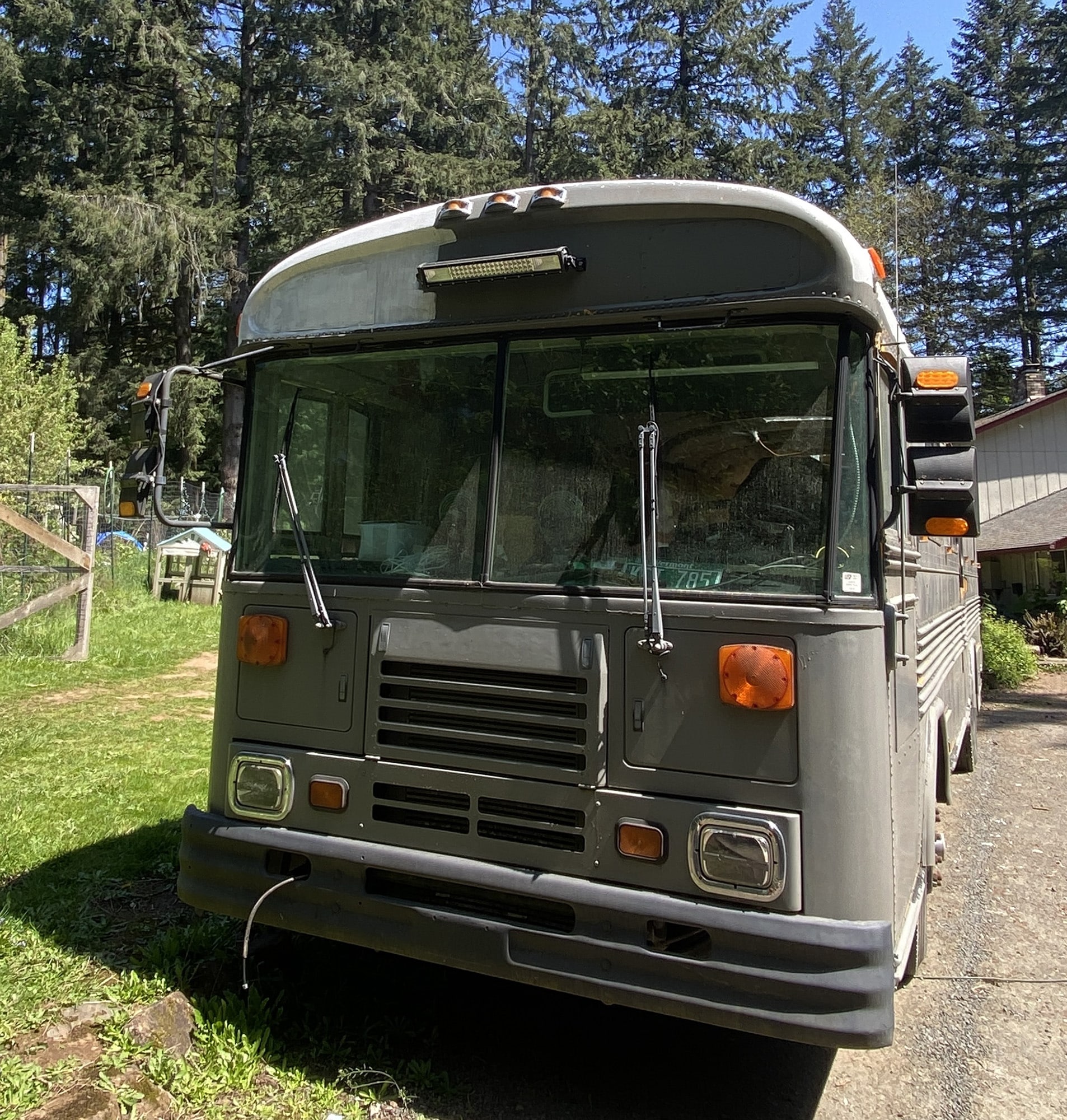
You’ve got the bus, you’ve got the build plan, maybe you’ve even started ripping out seats. But at some point you’re going to sit down and realize you have no idea where you legally “live” once you’re on the road. This is the part of bus life that nobody puts in their YouTube thumbnail, and it trips up more people than you’d think. (See our guide on Can You Legally Live in a Converted School Bus? for more on this.)
Setting up a domicile means choosing a state to call your legal home base, even though your actual home has wheels. Most full-timers establish domicile in South Dakota, Texas, or Florida because all three have no state income tax and make it easy to set up residency. You pair that with a mail forwarding service that gives you a real street address — not a PO Box — and that address becomes what you put on your driver’s license, insurance, voter registration, and tax returns. The whole process can be done in a week if you plan the trip right, and it costs roughly $100-$300 per year for the mail service.
What Is a Domicile and Why Do You Need One?
I’ll be honest, when I first started digging into full-time bus life, I thought an address was just an address. Like, I figured I’d keep using my old one or maybe get a PO Box somewhere and that would be that. Turns out it’s way more complicated than that, but also, once you understand how it works, it’s not actually hard.

Your domicile is your legal state of residence. It’s the state that claims you for taxes, voting, jury duty, vehicle registration, and insurance. Every person in the U.S. has one, and only one, at any given time. When you live in a house, it’s obvious — your domicile is wherever that house is. When your house rolls down the highway at 55 mph, things get interesting. (See our guide on Setting Up Domicile for Full-Time Bus Life: The Complete Guide for more on this.)
Here’s why it matters. Without a domicile state, you can’t get a driver’s license. You can’t register your bus. You can’t get insurance. You can’t vote. You can’t file taxes in any coherent way. And if you ever end up in a legal dispute or need to go to court, the question of “where do you live” has real consequences. (See our guide on Do You Need a CDL to Drive a Skoolie? for more on this.)
So the question someone asked — “why do ALL of you builders of busses neglect a very important part of living full time in a buss, i.e. A RESIDENTIAL ADDRESS” — is honestly a great one. I think the reason it gets neglected is that it’s boring. Nobody wants to make a video about picking a domicile state. Solar panels are sexy. Paperwork is not. But this paperwork is what makes everything else legal.
Best States for Full-Time Nomad Domicile (South Dakota, Texas, Florida)
There’s a reason you see the same three states come up over and over when you research this. South Dakota, Texas, and Florida. They’re not the only options, but they’re the big three, and each one has specific reasons people choose it.

South Dakota is probably the most popular, especially among the RV and bus crowd. I talked to a guy at a campground once who had his domicile set up in South Dakota and he’d never spent more than 48 hours in the state. Here’s why it works — no state income tax, no inheritance tax, very low vehicle registration fees, and the easiest residency requirements of the three. You literally need to spend one night in the state. One night at a campground, and you can walk into the DMV the next morning. The mail forwarding services there have this whole process dialed in, they’ll even tell you which campground to stay at.
Texas is the second most popular. No state income tax, straightforward registration, but you do need to physically be in Texas to get your license. Higher vehicle registration costs than South Dakota, but some people prefer it because it’s a bigger state with more services, more mechanics, more everything. If you’re planning to spend time in the southern U.S., Texas makes geographic sense.
Florida rounds out the top three. No state income tax, decent insurance rates, and it’s a great home base if you stay on the East Coast. The residency process is more involved than South Dakota’s, and registration can be pricier depending on bus weight. But Florida has one thing the others don’t — it’s where a huge chunk of the RV and bus community congregates in winter.
I spent way too long going back and forth on this when I was researching. Here’s what it comes down to. Pick South Dakota if you want the easiest, cheapest process. Pick Texas if you want to be domiciled somewhere you’ll actually spend time. Pick Florida if you plan to winter in the Southeast.
One thing that surprised me — some people pick their domicile state based on insurance rates. Your auto insurance is tied to your domicile, and rates vary a lot. I’ve seen people save $400-$600 a year just by picking one state over another. (See our guide on Can You Get Insurance for a Converted School Bus? for more on this.)
Setting Up a Legal Mailing Address
So here’s the question that comes up constantly — “my question is when your house is a moving bus how do you have an address to go to the dmv?” It’s one of those things that seems like a chicken-and-egg problem but really isn’t.

The answer is a mail forwarding service. You sign up with a company in your chosen domicile state, they give you a real physical street address, and that becomes your legal address. Not a PO Box. A real street address with a suite number, something like “123 Main Street, Suite 456, Rapid City, SD 57701.” To the DMV, your insurance company, your employer, the IRS — it’s just a regular address.
And this is where things clicked for me. The address is real. Mail actually goes there. Real people receive it, scan it, and send it to you digitally or forward it wherever you’re parked. It’s not a workaround — it’s a legitimate service the USPS recognizes.
For the person who said “I would love to do that… My problem is I can’t use a PO Box as an address and still keep my job” — this is your solution. These addresses pass employment verification. They pass background checks. They work with banks, with the IRS, with state agencies. Your employer puts it on your W-2 and nobody blinks.
The process goes like this. Sign up with a mail forwarding service. They send you a USPS Form 1583, which you get notarized — this authorizes them to receive mail on your behalf. Once that’s processed, your address is active. Then you physically visit the state, bring your forwarding address documentation, and go to the DMV for your new driver’s license.
One thing I wish I’d known earlier — the notarization can be done at any UPS Store, bank, or notary public. You don’t have to be in your domicile state for that part. Get it notarized wherever you are, mail it in, and they handle the rest.
Mail Forwarding Services (Escapees, Americas Mailbox, Traveling Mailbox)
There are three services that pretty much dominate the full-time nomad space, and I’ve spent a lot of time comparing them because the details actually matter more than you’d think.
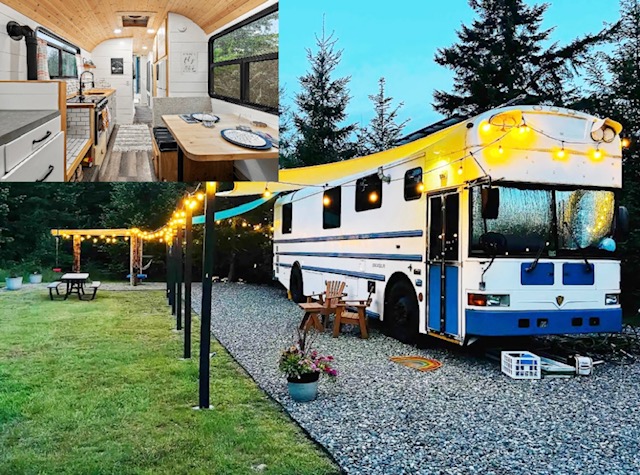
Escapees Mail Service is based in Livingston, Texas. Run by the Escapees RV Club, which has been around since the 1970s. Their forwarding service runs about $130-$180 per year. You get a Texas street address. They scan your mail envelopes so you can see what arrived, then you tell them what to forward, open and scan, shred, or hold. Forwarding costs extra per shipment, usually $5-$10 depending on weight. The Escapees community is huge — forums, rallies, campground discounts. So you’re not just getting a mail service, you’re getting plugged into a network.
Americas Mailbox is in Box Elder, South Dakota, right outside Rapid City. This is the one most South Dakota domicilers use. Plans start around $200/year and go up depending on scanning and forwarding volume. What sets them apart is how tightly integrated they are with the South Dakota residency process. They walk you through every step — which campground to stay at, where the DMV is, what documents to bring. I’ve heard from multiple people that the whole thing took less than two days from arrival to having a South Dakota driver’s license in hand. They also do full content scanning, meaning they open your mail and scan the actual documents, not just the envelope.
Traveling Mailbox is different from the other two. It’s a general virtual mailbox service with addresses in multiple cities, not specifically geared toward nomads. Plans start around $150/year. The advantage is flexibility — if you don’t want a South Dakota or Texas address, they have locations in dozens of states. The interface is slick, very app-friendly. The downside is they don’t hold your hand through the domicile process the way Americas Mailbox or Escapees do.
There are other services too — St. Brendan’s Isle in Florida, Earth Class Mail, Anytime Mailbox. But those three are where the vast majority of full-timers end up.
One more thing. I was reading a thread where a guy signed up for some cheap virtual mailbox he found online, and when he went to register his vehicle, the DMV flagged the address as a known commercial mail receiving agency. The three services above don’t have this problem — the DMVs in their states know them. Don’t cheap out on this one. (See our guide on How Do You Register a Converted School Bus as an RV? for more on this.)
How Domicile Affects Your Taxes, Insurance, and Voting
This is where the domicile decision stops being abstract and starts hitting your wallet. When I was sorting through all of this, I realized the financial implications are actually pretty significant — we’re not talking about saving $50 here and there.

Taxes. You file state taxes in your domicile state. Period. If you’re domiciled in South Dakota, Texas, or Florida, you pay zero state income tax. If you kept your old address in California or New York, you’re paying 9-13% on everything you earn. For someone making $60,000 a year, that’s $5,400-$7,800 that you’d owe in California but wouldn’t owe at all in South Dakota. I kept running those numbers when I was researching and it honestly felt like I was reading them wrong.
There is a catch though. If you earn income physically in another state — like picking up a contract job in Oregon for three months — that state might require you to file there regardless of your domicile. Remote workers generally only owe taxes to their domicile state.
Insurance. Your auto and health insurance are both tied to your domicile. Bus insurance rates are calculated based on where your vehicle is “garaged,” which is your domicile address. South Dakota and Texas tend to have reasonable rates. Florida can be hit or miss.
Health insurance gets trickier. You’re shopping on your domicile state’s marketplace exchange, and South Dakota’s options are limited compared to Florida. This is something most people don’t think about when picking a domicile state. One family I was chatting with at a campground had picked South Dakota for everything else but ended up with way fewer health plan options than they’d had before. Worth researching before you commit.
Voting. You vote in your domicile state. You register to vote at your forwarding address, and you request an absentee ballot for every election. It gets mailed to your forwarding service, they scan it or forward it to you, and you mail it back. Some states also let you vote by fax or online portal for overseas and traveling voters. It works, but you have to be proactive about requesting those ballots — they don’t just show up automatically.
Common Mistakes People Make
After spending a lot of time in forums and talking to people who’ve been through this, I started noticing the same mistakes showing up over and over. Some of them are minor annoyances, but a couple can actually cause real problems.

Keeping your old state address “just in case.” This is the big one. People establish domicile in South Dakota but keep their California driver’s license or don’t update their bank address. The problem is you can legally only have one domicile. If California decides you’re still a resident — and they’re aggressive about this — you could owe back taxes. When you switch, switch everything. Driver’s license, registration, insurance, bank, voter registration, everything. Don’t leave breadcrumbs in your old state.
Using a family member’s address instead of a forwarding service. I get why people do this. It’s free, it feels simpler, your mom is happy to grab your mail. But you’re domiciled wherever that address is. If your parents live in a high-tax state, congratulations, you’re paying those taxes. And if you ever have to prove residency for something, “my mom’s house” gets complicated fast. A forwarding service in a no-income-tax state is worth the $150-$200 a year.
Not visiting the state in person. You can’t establish domicile entirely by mail. You need to go to the DMV in person. Some people try to skip this and it creates problems down the line with registration and insurance. Plan a trip. South Dakota takes most people a day or two. Just build it into your travel route.
Forgetting to update everything. I’m talking about the random stuff. Amazon. PayPal. Your cell phone bill. Costco. Medical providers. You’d be surprised how many accounts have your old address on file, and all it takes is one of them sending something important to an address you no longer check. I made a list when I was going through this and it ended up being 30+ accounts. Do them all in one sitting with a cup of coffee and power through it.
Not understanding the difference between domicile and residency. In most states these are the same thing. But some states have weird rules where you can be a “resident” for certain purposes without being “domiciled” there. For full-timers, domicile is what matters — that’s the legal term for “this is where I live, this is where I vote, this is where I pay taxes.”
So after going through all of this, here’s where I landed. The domicile and mailing address setup is probably the least exciting part of going full-time in a bus, but it’s one of the most important. Get it wrong and you’re dealing with tax headaches, insurance gaps, and that panicky feeling of not being able to answer “what’s your address?” Get it right and it just hums along in the background while you focus on the stuff that actually matters. The whole thing took me about a week from start to finish including the trip, and honestly most of that was driving. Pick your state, pick your mail service, make the trip, knock out the DMV, and then go live your life. That’s really all there is to it.
1 thought on “How to Set Up a Domicile and Mailing Address for Full-Time Bus Life”