

This is one of those questions that comes up in every single bus conversion group, and I spent a ridiculous amount of time going back and forth on it myself. The answer seems obvious at first — just build it yourself and save money, right? But it’s really not that simple once you start looking at the actual numbers, the timeline, and what you’re realistically capable of.
If you’re handy, have time, and want to save $30,000 to $80,000, a DIY build is the way to go for most people. But if your time is limited, your skills are minimal, or you just want to be on the road sooner, hiring a professional builder can be worth every dollar. There’s also a middle ground that a lot of people don’t talk about — doing some of the work yourself and farming out the hard stuff. That hybrid approach might honestly be the smartest move for most first-time builders.
The Real Cost Difference (It’s Bigger Than You Think)
I was talking to a guy on a bus life forum a while back who had just gotten quotes from three different conversion companies. The cheapest one came back at $65,000 for a mid-range build on a full-size bus he already owned. That’s just labor and materials for the conversion itself, not including the bus. He about fell out of his chair. (See our guide on Is a Short Bus or Full-Size Bus Better for a Conversion? for more on this.)
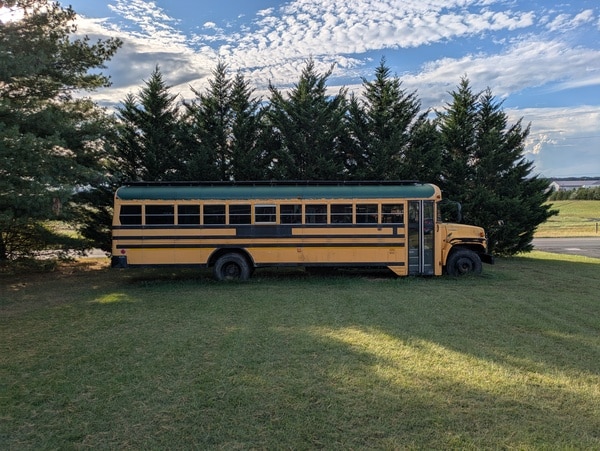
Here’s what I found when I started digging into the numbers. A full DIY conversion on a standard school bus typically runs $15,000 to $40,000 in materials, depending on how nice you want to go. That’s everything — insulation, electrical, plumbing, walls, flooring, kitchen, bathroom, the works. A professional conversion of the same bus, same general spec, runs $50,000 to $120,000. Some of the higher-end builders charge $150,000 or more for a premium build with custom cabinetry and residential-quality finishes.
So the gap is massive. On a mid-range build you’re looking at saving somewhere between $30,000 and $80,000 by doing it yourself. That’s not pocket change. That’s a year or two of living expenses on the road. (See our guide on What Is the Difference Between a School Bus and a Transit Bus? for more on this.)
But here’s the part people leave out. When you DIY, you also need tools. If you’re starting from scratch, budget $500 to $1,500 for a basic tool kit. You’ll make mistakes and waste materials, probably another $1,000 to $3,000 over the course of a build. And if you mess something up badly enough — like botching your electrical or getting your plumbing wrong — you might end up hiring someone to fix it anyway, which costs more than having them do it right the first time. (See our guide on Skoolie vs RV: Which One Should You Buy? for more on this.)
I still think DIY comes out way ahead on cost. But the real savings isn’t $80,000. It’s probably more like $25,000 to $60,000 once you factor in the hidden stuff. Still huge, but worth being honest about.
One more thing on cost that I think gets overlooked. When you hire a builder, you’re paying for their mistakes too, you just don’t see it. They’ve already made those mistakes on previous builds and they’ve baked the cost of that learning curve into their pricing. With DIY, YOU are the one eating those learning costs directly. That’s the tradeoff.
How Long Each Option Takes
A professional conversion shop can typically turn around a full build in 8 to 16 weeks. Some of the really organized ones can do it faster. I’ve seen a few that quote 6 weeks for a straightforward layout. They’ve got a team, they’ve got the space, they’ve got the workflow figured out. It’s their day job.
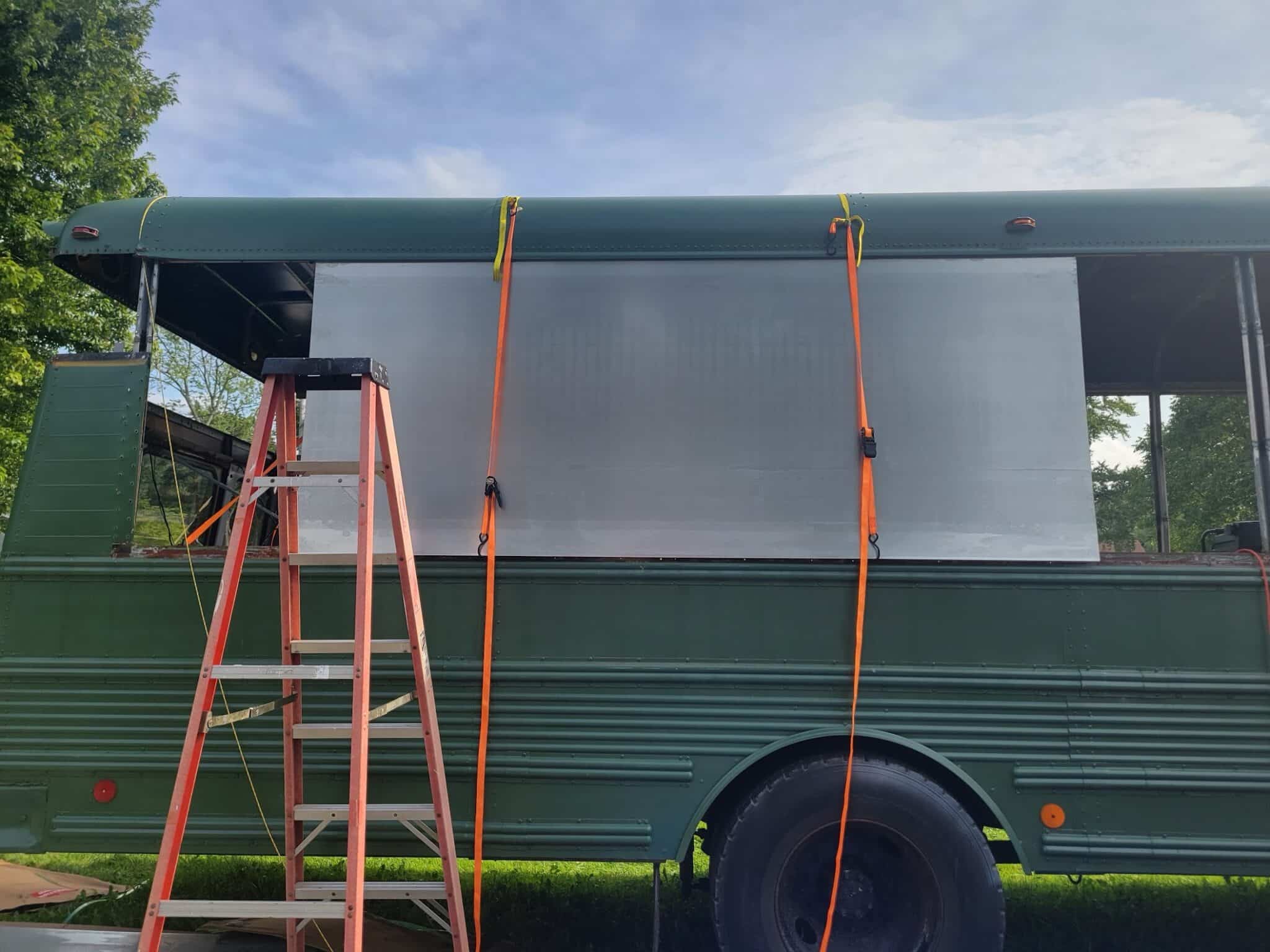
DIY? Totally different story.
The average first-time DIY builder takes somewhere between 6 months and 2 years to finish. And that’s if they actually finish — I’ve read that something like 40% of DIY bus builds never get completed. People underestimate how long everything takes, they run out of money halfway through, or life just gets in the way. When I was researching this I kept seeing the same pattern in forums: someone posts excited photos of their demolition day, then updates every few weeks for a couple months, and then just goes quiet.
Now some people finish fast. If you’ve got construction experience, or you can work on it full time, or you have a partner helping, 3 to 6 months is totally doable. I found one couple who did a really clean full-size build in about 14 weeks, but both of them were working on it 40+ hours a week and one of them was a carpenter.
What nobody warns you about is the decision fatigue. Every single thing in a bus build requires a decision, and as a first-timer you don’t have the experience to make those decisions quickly. What insulation do I use? Where does the bathroom go? PEX or copper? Composting or flush? Lithium or AGM? You spend hours researching each one. A professional builder already knows the answers because they’ve done it dozens of times.
So when someone asks “how long does it take” — it depends on whether you’re measuring calendar time or working time. A pro does maybe 400-600 hours of actual work on a build. A DIYer does about the same amount of work, but spread over way more calendar months because you’re learning as you go and you’ve got other stuff in your life.
Skills You Need for a DIY Build
This is the section I wish someone had laid out for me honestly when I first started looking into conversions. Because the YouTube videos make it look way more approachable than it actually is.

Here’s what you actually need to be able to do, or learn to do:
- Basic carpentry — framing walls, building cabinets, cutting and fitting trim. You don’t need to be a finish carpenter but you need to be comfortable with a circular saw and a drill.
- Electrical wiring — this is the one that scares people the most, and honestly it should get your respect. You’re building a 12V and potentially a 120V system from scratch. Bad wiring causes fires. Period.
- Plumbing — PEX connections, water pump installation, drain lines, tank mounting. It’s not rocket science but it does require precision.
- Metalwork — cutting steel for window modifications, welding if you’re raising the roof or adding a skirt, grinding and rust treatment.
- Problem solving — and this is the big one. Nothing in a bus is square, level, or standard. Every single installation requires adapting and improvising.
Someone in a Facebook group asked “As a single person… How does one get into converting a school bus into a home with no experience in woodworking?” and it’s such a good question. The honest answer is: YouTube, patience, and accepting that your first attempts at things will look rough.
I watched a woman document her entire solo build on YouTube and what struck me was how much she figured out just by doing. Her first cabinet looked like a middle school shop project — her words not mine — and by the end of the build her work was genuinely impressive. The learning curve is steep at the beginning and then it flattens out fast.
If you can’t or don’t want to learn electrical, that’s the one thing I’d say hire out no matter what. A bad plumbing joint leaks water. Bad electrical starts fires. The stakes are different.
Finding a Reputable Bus Conversion Builder
So let’s say you’ve decided to hire someone. The next question, and I see this one constantly, is “how do you even find a bus conversion builder?” It’s not like you can look in the yellow pages under “school bus to house converters.”

When I started looking into this, I was honestly surprised at how scattered the industry is. There are maybe 20 to 30 established bus conversion companies in the US that do this full-time. Then there are hundreds of smaller shops, individual contractors, and handymen who do it on the side. The quality range is enormous.
Here’s what I’d recommend based on everything I’ve found:
Start with the bus life community. Facebook groups, Reddit’s r/skoolies, Instagram. Ask people who built their rigs where they got the work done. When someone posts a beautiful build and says they hired it out, ask them directly. People in this community are usually pretty open about sharing.
Check for a portfolio. Any builder worth hiring should be able to show you 5+ completed builds with photos. Walk-through videos are even better. If they can’t show you previous work, that’s a red flag you don’t want to ignore.
Get references and actually call them. Not just the references the builder gives you, but try to find people independently through forums and groups who’ve used that builder. The references a company provides are obviously going to be their happiest customers.
Visit their shop if you can. I read a post from someone who drove 400 miles to visit a builder’s shop before committing, and they said it was the best decision they made. You can learn more in 30 minutes walking through a shop than in weeks of email exchanges. Look at their current work, their tools, how organized they are.
Someone asked “Where in NC did you do your build? Can you provide the business name that did it?” and this is exactly the right approach. Get specific names, specific locations. The bus life community is small enough that word gets around, both good and bad.
A few things to watch out for. Builders who want full payment upfront. Builders who won’t give you a written contract with a detailed scope of work. Builders who quote a suspiciously low price — they’re either going to cut corners or hit you with change orders later. And builders with no online presence whatsoever, because in 2026 that’s just weird.
Expect to pay a deposit of 25-40% upfront, with the rest tied to milestones. Get the timeline in writing. Get the materials spec in writing. And make sure there’s a clause about what happens if they go over budget or over time, because delays happen and you want to know who’s eating that cost.
The Hybrid Approach (DIY Some, Hire Some)
This is honestly where I landed after all my research, and I think it’s the option more people should be considering.
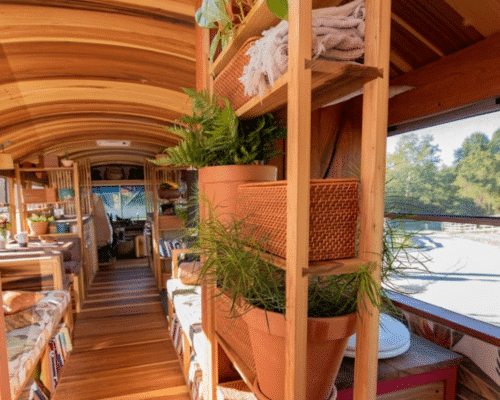
The idea is simple. You do the stuff that’s within your skill set and hire professionals for the stuff that isn’t. It saves a huge chunk of money compared to a full professional build, but you don’t end up in over your head on the critical systems.
Here’s how most people break it down:
What to DIY — demolition and seat removal (almost everyone does this themselves, it’s basically just grunt work), insulation, wall and ceiling paneling, flooring, painting, basic cabinetry, and finish work like trim and decorating. These are all things where the worst case scenario of a mistake is that it looks bad or you waste some materials. Nobody’s getting hurt.
What to hire out — electrical system design and installation, propane system installation and certification, welding and structural modifications like roof raises, and anything involving the mechanical systems of the bus itself. These are the things where mistakes have real consequences.
A hybrid build might cost you $25,000 to $50,000 total — maybe $8,000 to $15,000 in professional labor for the specialized work, and $15,000 to $30,000 in materials for the parts you do yourself. That’s a big savings over a $70,000+ full professional build, and you still get to say you built your bus. Because you did. You just had help with the scary parts.
I talked to a builder once who said about 30% of their business was these partial builds. People bring the bus to them for electrical and plumbing, pick it up, and do all the finish work themselves. He said those customers were usually his happiest ones because they felt ownership of the build without the anxiety of screwing up the critical systems.
One thing to be aware of with the hybrid approach, you need good communication with your contractors. They need to know your full plan so they can plan their work accordingly. For example, your electrician needs to know where every outlet, light, and switch is going before they run wire. That means your floor plan needs to be locked in before professional work begins. Changing your mind after the wiring is done is expensive.
Related: Is a Propane or Electric Stove Better for a Skoolie?
Related: What’s the Difference Between Front Engine and Rear Engine Buses?
Which Option Is Right for You?
I’m not going to give you a flowchart or a decision matrix because I don’t think it works that way. But after spending a lot of time looking at this from every angle, I think it comes down to a few honest questions.

How much time do you have? If you need to be on the road in three months, DIY isn’t realistic unless you’re doing a very minimal build. If you’ve got a year or more and you enjoy hands-on projects, DIY makes total sense.
What’s your budget look like? If you’re working with $20,000 total including the bus, you basically have to DIY because that’s not enough to hire a builder. If you’ve got $80,000 or more and you value your weekends, a professional build is absolutely reasonable.
Are you doing this alone? I won’t sugarcoat this one. Solo builds are harder. They take longer. Some tasks genuinely require two people — like lifting a water tank into place or holding a ceiling panel up while you screw it in. It’s doable alone, people do it all the time, but it adds difficulty and time. If you’re a single person with limited building experience, the hybrid approach makes a lot of sense.
And then there’s the question nobody asks but should: do you actually WANT to build it? Some people watch skoolie build videos and think “I want to do that.” Other people watch those same videos and think “I want to HAVE that.” Those are two very different things and both are completely fine. If the building process itself doesn’t excite you, paying someone else to do it doesn’t make you less of a bus lifer. It just means you know yourself.
After digging into all of this, here’s where I net out. For most people with average handyman skills and a reasonable timeline, the hybrid approach is probably the sweet spot. You save a ton of money, you learn a lot, you get to customize everything, and you don’t risk burning your bus down because you wired something wrong. But if you’re the type who builds furniture in your garage on weekends just for fun, go full DIY. And if you’d rather spend your time planning routes and stocking the pantry than learning how to sweat a PEX fitting, hire a builder and don’t feel an ounce of guilt about it. There’s no wrong answer here as long as you’re being honest with yourself about what you’re signing up for.