
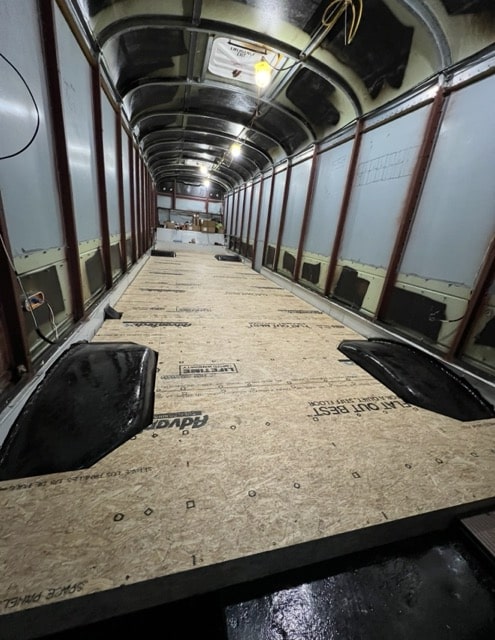
I’ll be honest, when I first started digging into bus conversions, I was focused entirely on the residential side of things. Living in a bus, traveling, all that. But I kept running into people who weren’t just living in their buses — they were working out of them. Running actual businesses. And the more I looked into it, the more I realized that a converted bus might actually be one of the best platforms for a mobile business that exists right now.
A converted bus can absolutely be used as a mobile business. People are running everything from coffee shops and food trucks to hair salons, airbrush studios, photography setups, mobile workshops, and pop-up retail stores out of converted buses. The key differences between a commercial bus conversion and a residential one come down to permits, electrical capacity, layout priorities, and insurance. A commercial conversion typically costs more than a residential build — anywhere from $20,000 to $80,000+ depending on the business type — but the earning potential can be significant, especially for seasonal or event-based businesses.
This guide covers everything I found out about turning a bus into a mobile business. The types of businesses that actually work, the permits and legal stuff nobody talks about until it’s too late, how to plan your layout, what kind of power you need, insurance headaches, and how to actually make money with the thing once it’s built.
“Can you run a business out of a converted bus?”
Yes. Full stop. People are doing it right now, and some of them are doing really well.

The concept isn’t even new. Food trucks have been around for decades, and what is a food truck if not a commercial vehicle conversion? A bus just gives you more space to work with. I talked to one guy who runs a mobile barber shop out of a short bus and he told me he makes more than he did renting a chair at a traditional shop, mostly because his overhead dropped to almost nothing once the build was paid off.
Now, there are some important distinctions to understand. Running a business out of a bus is legal in most places, but the specific regulations depend heavily on your city, county, and state. Some jurisdictions are very friendly to mobile businesses. Others will bury you in permits and zoning restrictions. I found that the legality question is less about “can you” and more about “what hoops do you have to jump through.”
The IRS doesn’t care if your business operates from a bus, a brick building, or a cardboard box. If you’re generating income, you’re a business. You’ll need a business license, an EIN, and you’ll need to collect sales tax in most states if you’re selling goods. The vehicle itself is just your place of business — it doesn’t change the fundamental requirements of running a legal operation.
One thing I didn’t expect to learn is that some cities actually prefer mobile businesses because they bring services to underserved areas. A mobile dental clinic, a pet grooming bus, a tutoring center — these fill gaps that traditional brick-and-mortar businesses can’t always reach.
Types of Mobile Businesses That Work in a Bus
Not every business translates well to a bus. I spent a lot of time looking at what’s actually working out there, and some categories clearly perform better than others.

Food and Beverage
This is the most proven model. Coffee buses, taco buses, pizza buses, smoothie bars — if you can cook it or pour it, you can serve it from a bus. The advantage over a traditional food truck is space. A full-size bus gives you a legitimate kitchen with room to prep, cook, serve, and store ingredients. Some food bus operators I’ve seen have walk-up service windows cut into the side, just like a food truck, but with twice the counter space inside.
The downside is that food businesses come with the most regulatory burden. Health department inspections, food handler permits, commissary kitchen requirements in some jurisdictions, grease trap regulations. I’ll get into all of that in the permits section.
Coffee Shops
I’m breaking this out separately from food because coffee buses have become their own thing. The startup costs are lower than a full food operation because you don’t need a full kitchen — just espresso machines, grinders, a water system, and refrigeration for milk. I’ve seen coffee bus builds come in around $15,000 to $30,000 for the conversion, plus another $5,000 to $15,000 for commercial-grade espresso equipment.
Coffee buses do especially well at farmers markets, sporting events, college campuses, and office parks. The margins on coffee are excellent — a latte that costs you $0.80 to make sells for $5 or $6. If you’re pulling 100 to 150 drinks a day at events, the math works out fast.
Hair and Beauty Salons
Mobile salons are booming. I found several bus conversions set up as full-service hair salons, complete with styling chairs, shampoo bowls, mirrors, and all the electrical outlets you’d find in a regular salon. One woman I read about converted a 30-foot bus into a two-chair salon and books appointments in different neighborhoods throughout the week.
The water requirements are significant here. You need hot water on demand, adequate drainage, and enough tank capacity to handle multiple shampoo sessions in a day. Most mobile salon operators I came across use 50 to 80 gallon fresh water tanks and either a tankless propane water heater or a small electric unit.
“What would you recommend for someone that is wanting to turn one into an airbrush face painting bus for festivals?”
This question came from someone in the community, and I love it because it represents a whole category of event-based creative businesses that work perfectly in a bus.
For an airbrush face painting bus specifically, here’s what I’d recommend based on everything I’ve researched. First, a short bus is probably your best bet. You don’t need 40 feet of space for face painting — a 20 to 25 foot bus gives you plenty of room for a few chairs, your compressor setup, and storage for supplies. The shorter length also makes it way easier to get into festival grounds and park in vendor areas.
Ventilation is critical for airbrush work. You’ll want an exhaust fan system that moves air out of the bus while you’re spraying, even if you’re using water-based paints. I’d plan for at least one high-CFM exhaust fan near the painting area plus intake vents to create airflow.
Lighting matters too. Festival lighting is terrible for detail work, so you’ll need bright, color-accurate LED panels over your work area. Think 5000K daylight bulbs — the kind that let you see true colors.
For power, an airbrush compressor draws anywhere from 500 to 1,500 watts depending on the model. Add in lighting, a fan, maybe a small fridge for drinks, and you’re looking at needing about 2,000 to 3,000 watts of available power. A decent inverter and battery bank can handle this, or you could run a small generator for events. Solar would work for day events but gets tricky once the sun goes down.
The cool factor of an airbrush bus at a festival is honestly half the marketing. People will line up just because the bus itself is interesting. Paint the exterior with your best work, make it eye-catching, and the bus becomes your biggest advertisement.
“Has anyone converted a bus into a mobile workshop?”
Yep. And it’s actually one of the more practical commercial conversions I’ve come across.
Mobile workshops take a lot of forms. I’ve seen woodworking shops, metalworking setups, bike repair stations, small engine repair buses, and even a mobile knife sharpening operation. The common thread is that these builds prioritize heavy-duty electrical, ventilation, and durable flooring over comfort and aesthetics.
For a woodworking workshop, you’re going to need serious power. A table saw alone can pull 15 amps on a 120V circuit, and if you’re running a dust collection system on top of that, you’re getting into 30 to 50 amp territory pretty quickly. Most mobile workshop operators I found either run a generator, wire the bus for shore power hookup, or both.
Dust collection is non-negotiable in an enclosed space like a bus. A bus is basically a sealed metal tube, and filling that tube with sawdust is a fire hazard and a health hazard. Budget for a proper dust collection system — not just a shop vac, but an actual dust collector with fine filtration.
The floor needs to handle weight and abuse. Forget vinyl plank or carpet. You want diamond plate steel, rubber matting, or sealed concrete-look epoxy. Something you can drop tools on, spill on, and sweep clean.
Storage in a mobile workshop needs to be bulletproof. Everything has to be secured for transit, which means locking cabinets, French cleats for wall-mounted tools, and drawer latches that actually hold. I covered securing things for travel in another article, but it’s ten times more important when you’re hauling heavy tools and sharp objects.
Retail and Pop-Up Shops
Mobile retail is having a moment. Boutique clothing stores, vintage shops, record stores, plant shops, bookstores — I’ve seen all of these operating out of converted buses. The bus itself creates an experience that a standard retail store can’t match, and that novelty factor drives foot traffic.
The build is relatively simple compared to food or salon conversions. You need display shelving, good lighting, a point-of-sale system, and maybe a small fitting room if you’re selling clothing. The electrical demands are low — mostly just lighting and a tablet or phone for processing payments.
What makes retail buses interesting from a business perspective is flexibility. You can chase the market. Farmers market on Saturday, brewery district on Thursday evening, festival next weekend. You go where the customers are instead of hoping they come to you.
Photography Studios
This one surprised me when I first encountered it, but it makes perfect sense. A bus with the seats removed and the interior painted white or black is essentially a mobile studio with controlled lighting. Portrait photographers, product photographers, and even small video production outfits are using buses as mobile studios.
The build focuses on lighting rigs, backdrop systems, and power for strobes and continuous lights. Some photographers I found have built buses with removable wall panels so they can change the background color. Others installed track lighting on the ceiling for adjustable studio setups.
Event and Entertainment Buses
Photo booth buses, mobile DJ setups, party buses, mobile gaming lounges — this category is all about entertainment. These buses typically work events like weddings, corporate parties, and festivals. The builds vary wildly depending on the specific business, but they all share a need for solid electrical systems and eye-catching exteriors.
“What permits do you need for a mobile business bus?”
This is where things get complicated, and honestly, this is where I spent the most time researching because the answer changes depending on where you are and what you’re doing.

Business Licensing
At minimum, you need a general business license from whatever municipality you’re operating in. Some cities require a separate mobile vendor license on top of that. And here’s the part that trips people up — if you’re operating in multiple cities, you might need a license in each one. Some states offer a statewide business license that covers you everywhere within state lines, but not all do.
I found that most mobile business operators handle this by getting licensed in their home base city and then applying for temporary vendor permits in other locations as needed. It’s more paperwork, but it keeps you legal.
Health Department Requirements
If you’re serving food or beverages of any kind, the health department is going to be involved. Requirements vary by state, but here’s what I found to be pretty universal:
A food handler’s permit or food manager certification for everyone who handles food. This usually involves taking a course and passing a test. It’s not hard, but you can’t skip it.
Health department inspection of your bus. They’ll want to see proper handwashing stations, food storage at correct temperatures, clean water supply, wastewater disposal, and pest prevention measures. Your bus will need to pass this inspection before you can serve a single customer.
In many jurisdictions, you’ll also need access to a commissary kitchen — a licensed commercial kitchen where you do your food prep, store ingredients, and dump wastewater. Some cities require this even if your bus has a fully equipped kitchen. It seems redundant, I know, but that’s how the regulations work in a lot of places.
Grease trap requirements if you’re doing any frying or cooking with oils. This is one people forget about and then get fined for.
Fire Department Permits
If you have any open flame equipment (propane stoves, fryers, etc.), many jurisdictions require a fire department inspection and permit. They’ll check your fire suppression system, extinguisher placement, propane line safety, and ventilation.
I learned that a lot of food bus operators install commercial hood systems with built-in fire suppression — the same type you’d see in a restaurant kitchen. It’s expensive (usually $3,000 to $8,000 installed), but it’s often required and it protects your investment.
Zoning and Parking Permits
This is the one that catches most people off guard. You can have every business license and health permit in the world, but if you park your bus somewhere that doesn’t allow mobile vending, you’re getting a ticket or getting towed.
Most cities have specific zones where mobile vendors are allowed to operate. Some require you to be a certain distance from brick-and-mortar restaurants. Others restrict mobile vending to certain hours or certain days. And some cities — I found this particularly frustrating — require you to move your vehicle every 30 minutes to 2 hours, which basically makes it impossible to run a business.
The best approach I found is to contact the city’s business licensing department and ask specifically about mobile vendor regulations before you invest a dime in a commercial conversion. Get it in writing if you can.
Vending Permits for Events and Festivals
Events and festivals usually have their own vendor application process separate from city permits. You’ll apply to the event organizer, pay a vendor fee (anywhere from $50 to $2,000+ depending on the event size), and agree to their specific rules about setup, teardown, and operations.
I found that getting into the good events often requires applying 6 to 12 months in advance. The popular festivals fill their vendor spots early, and many give priority to returning vendors. So your first year might be spent at smaller events building your reputation and your application history.
State-Specific Licenses
Some businesses require state-level licensing regardless of the vehicle they operate from. Cosmetology and barber licenses for mobile salons, contractor licenses for mobile repair shops, and various professional certifications depending on your industry. These don’t go away just because you’re working from a bus instead of a building.
Electrical Needs for Commercial Equipment
This is one of the biggest differences between a residential bus conversion and a commercial one. A residential build might get away with a 200 to 400 amp-hour battery bank and a few hundred watts of solar. A commercial build usually needs significantly more.

Calculating Your Power Requirements
I recommend making a detailed list of every piece of equipment you’ll run and its wattage. Here’s what I found for common mobile business equipment:
Commercial espresso machine: 1,500 to 2,500 watts. Commercial refrigerator: 300 to 800 watts. Hair dryer (salon): 1,000 to 1,875 watts. Airbrush compressor: 500 to 1,500 watts. Table saw: 1,500 to 3,000 watts. Commercial blender: 1,000 to 1,500 watts. POS system and lighting: 200 to 500 watts. Commercial ice maker: 400 to 800 watts.
Add up everything you’ll run simultaneously, then add 20% as a buffer. That’s your minimum inverter size.
Shore Power vs Battery vs Generator
Most commercial bus operators I researched use a combination approach. Shore power (plugging into a 30 or 50 amp outlet) when available. Battery bank and inverter for lighter loads and short events. Generator as a backup or primary power source for heavy electrical demands.
If you’re running commercial kitchen equipment or power tools, you’ll likely need at least a 5,000 to 7,000 watt generator or a 50-amp shore power connection. A pure battery and solar setup can work for lower-demand businesses like retail or photography, but it’s tough to sustain high-draw equipment all day on batteries alone unless you invest heavily — we’re talking $10,000 to $20,000 in lithium batteries.
Wiring for Commercial Use
Here’s something I didn’t realize until I dug into it. Residential bus electrical and commercial bus electrical are held to different standards in many jurisdictions. If your bus is inspected as a commercial vehicle or place of business, the electrical work may need to meet commercial building codes, not just RV standards.
This means dedicated circuits for high-draw equipment, GFCI protection near water sources, proper grounding, and in some cases, work done by a licensed electrician. The NEC (National Electrical Code) applies differently to commercial spaces, and an inspector who’s checking your food bus isn’t going to apply RV standards.
Layout Considerations: Customers vs Living Space
This is where commercial bus conversions get really interesting — and really tricky.

Customer-Facing Design
If customers are going to interact with your bus (ordering food, sitting in a salon chair, browsing merchandise), you need to think about the experience from their perspective. This means considering things like:
A service window or entrance that feels welcoming and professional. Most food buses cut a large service window into one side with a fold-down counter. Retail and salon buses often use the regular bus door as the customer entrance.
ADA accessibility is something a lot of mobile business owners forget about. Depending on your jurisdiction and business type, you may need to provide wheelchair access. This could mean a ramp, a lift, or designing your service so it can happen at ground level through a window.
Traffic flow matters in a bus because the space is narrow. If customers are coming inside, you need a clear path that doesn’t create bottlenecks. I saw one mobile boutique that solved this by putting all the merchandise on one side and keeping a clear walkway down the other.
Combo Live/Work Builds
Now this is the dream for a lot of people — a bus where you live in the back and run your business in the front. I found several builds like this, and they’re possible, but there are some real challenges.
The biggest issue is space allocation. A 40-foot bus sounds huge until you’re trying to fit a commercial kitchen AND a bedroom AND a bathroom AND a living area into it. Something has to give. Most combo builds I’ve seen dedicate 60 to 70 percent of the bus to the business and squeeze the living quarters into the remaining space.
Privacy is another concern. If customers are in the front of your bus, you probably don’t want them seeing your unmade bed in the back. A solid partition wall — not just a curtain — is essential for separating your business space from your living space.
Plumbing gets complicated in a combo build because you may need separate systems. A commercial kitchen sink has different requirements than a residential kitchen sink, and in some jurisdictions, they need to be on separate plumbing systems with different drainage.
I found that the most successful combo builds are ones where the business doesn’t require customers to come inside. A food bus with a service window, for example, keeps all the customer interaction outside while the operator works inside. The back half becomes the living quarters, completely separate from the business operation.
Pure Commercial vs Living Space Layouts
If you’re not planning to live in the bus, the layout gets much simpler. You can dedicate the entire interior to your business, which gives you more room for equipment, inventory, or workspace.
But here’s what I’d recommend thinking about even in a pure commercial build: include at minimum a small seating area, a mini fridge, and some storage for personal items. You’re going to be spending long days in this bus, especially during events and festivals. Having a spot to sit down, eat a sandwich, and take a break without leaving the bus makes a huge difference.
Insurance for a Mobile Business Bus
Insurance for a commercial bus conversion is a whole different animal than insuring a residential skoolie. I found this out the hard way during my research — the same companies that happily insure a converted bus as an RV will often decline coverage when they hear the word “commercial.”

What You Need
At minimum, you’ll likely need:
Commercial auto insurance for the vehicle itself. This is different from personal auto insurance and covers the bus while it’s being used for business purposes. Expect to pay $2,000 to $5,000 per year depending on the bus size, your driving record, and your state.
General liability insurance for the business. This covers you if a customer slips and falls, gets food poisoning, has an allergic reaction to a product, or claims you damaged their property. Most landlords, event organizers, and municipalities will require proof of general liability coverage before they’ll let you operate. Standard policies start around $500 to $1,500 per year.
Product liability if you’re selling food, beverages, or products. This is sometimes bundled with general liability but not always.
Workers’ compensation if you have any employees, even part-time. This is required by law in most states.
Equipment and inventory coverage. Your commercial espresso machine, your salon chairs, your inventory — none of this is covered by a standard auto policy. You’ll need inland marine insurance or a business personal property policy to cover your equipment.
Finding Coverage
I found that the best approach is to work with an insurance broker who specializes in mobile businesses or food trucks. They know which carriers will write these policies and which ones won’t. Trying to get commercial bus insurance through a regular insurance agent often leads to dead ends and frustration.
Some carriers that came up repeatedly in my research as being mobile-business friendly include Flip, FLIP Food Liability Insurance Program, Insure My Food Truck, and some of the specialty RV insurers like National General. But policies change and availability varies by state, so always get multiple quotes.
Cost of Commercial Conversion vs Residential
A residential bus conversion might cost you $10,000 to $30,000 in materials for a solid, livable build. A commercial conversion is almost always more expensive, and sometimes significantly so.

Here’s a rough breakdown of what I found for different business types:
Mobile coffee shop: $20,000 to $45,000. The espresso equipment alone can run $5,000 to $15,000 for commercial-grade machines, plus plumbing, electrical upgrades, and the service window cutout.
Food bus (full kitchen): $30,000 to $80,000+. Commercial kitchen equipment is expensive, hood systems with fire suppression add thousands, and the health department requirements often mean higher-quality materials than you’d use in a residential build.
Mobile salon: $15,000 to $40,000. Salon chairs, shampoo bowls, plumbing for hot water on demand, mirrors, and upgraded electrical for dryers and styling tools.
Mobile retail/boutique: $8,000 to $20,000. This is the most affordable commercial conversion because the requirements are simpler — mainly display fixtures, lighting, and cosmetic finishes.
Mobile workshop: $15,000 to $50,000. Heavy-duty electrical, dust collection, reinforced flooring, and tool storage systems add up.
Event/photo booth bus: $10,000 to $35,000. Depends heavily on the equipment and the level of interior finish.
These numbers don’t include the cost of the bus itself, which typically runs $3,000 to $10,000 for a used school bus in decent mechanical shape.
Parking and Vending Locations
Finding good spots to set up is arguably the most important business skill for a mobile operation. The best product in the world doesn’t matter if nobody can find you.

Regular Spots
Many successful mobile businesses establish regular locations — the same parking lot on Tuesdays, the same street corner on Fridays. This builds a customer base that knows where to find you. I found that the key to securing regular spots is building relationships with property owners.
Approach businesses with complementary customer bases. A coffee bus parked outside a yoga studio every morning. A food bus in a brewery’s parking lot on weekends. A mobile boutique at a gym during evening hours. These partnerships work because you bring extra foot traffic to their business while they give you access to their customers.
Most property owners will want to see your insurance certificate and may charge rent or take a percentage of sales. Typical arrangements I found range from $50 to $200 per day, or 10 to 15 percent of gross sales.
Events and Festivals
Events are where mobile businesses really shine. I mentioned the vendor application process earlier, but let me add some practical advice I picked up.
Apply to everything, even events you think might be too big or too small. You never know which ones will accept you, and building a track record of events helps you get into bigger ones later.
Show up early and set up professionally. Event organizers notice which vendors are easy to work with, and that reputation gets you invited back.
Bring more inventory or supplies than you think you’ll need. Running out on a busy day is lost revenue and a disappointed customer base.
Commissary Parking
If you’re running a food business, you’ll likely need a commissary kitchen arrangement. Many commissary kitchens also offer parking for food trucks and mobile food units. This solves two problems at once — you have a place to prep and a place to park overnight.
Seasonal Business Strategies
One of the biggest advantages of a mobile business is that you can follow the seasons instead of suffering through them. I found this to be one of the most underappreciated aspects of the mobile business model.

Chasing the Weather
A shaved ice bus in Phoenix in July isn’t going to do much business. But that same bus in Phoenix in October? Different story. And a coffee bus that spends summers at mountain festivals and winters in southern cities has year-round income potential.
I talked to one mobile business owner who runs a hot cocoa and cider bus from October through March in the Southeast, then switches to iced drinks and smoothies for festival season from April through September. Same bus, same basic equipment, completely different menu. Smart.
Event Season Planning
The festival and event circuit has a clear seasonal rhythm. Spring and fall are peak season for most of the country. Summer is huge in northern states and mountain areas. Winter is slower almost everywhere except the deep South and Southwest.
Planning your year around the event calendar is essential. I’d recommend building a master calendar of every event in your target region, their application deadlines, vendor fees, and historical attendance numbers. This becomes your business plan.
Off-Season Revenue
Even in the off-season, a mobile business bus can generate income. Catering private events, setting up at office parks during lunch hours, partnering with local businesses for pop-up appearances — these strategies keep revenue flowing when the big events aren’t happening.
Some mobile business operators use the off-season for maintenance, upgrades, and menu development. This is also when you should be applying for next year’s event circuit.
Marketing a Mobile Business
Marketing a mobile business is different from marketing a brick-and-mortar, and in a lot of ways it’s actually easier.
The Bus Is Your Billboard
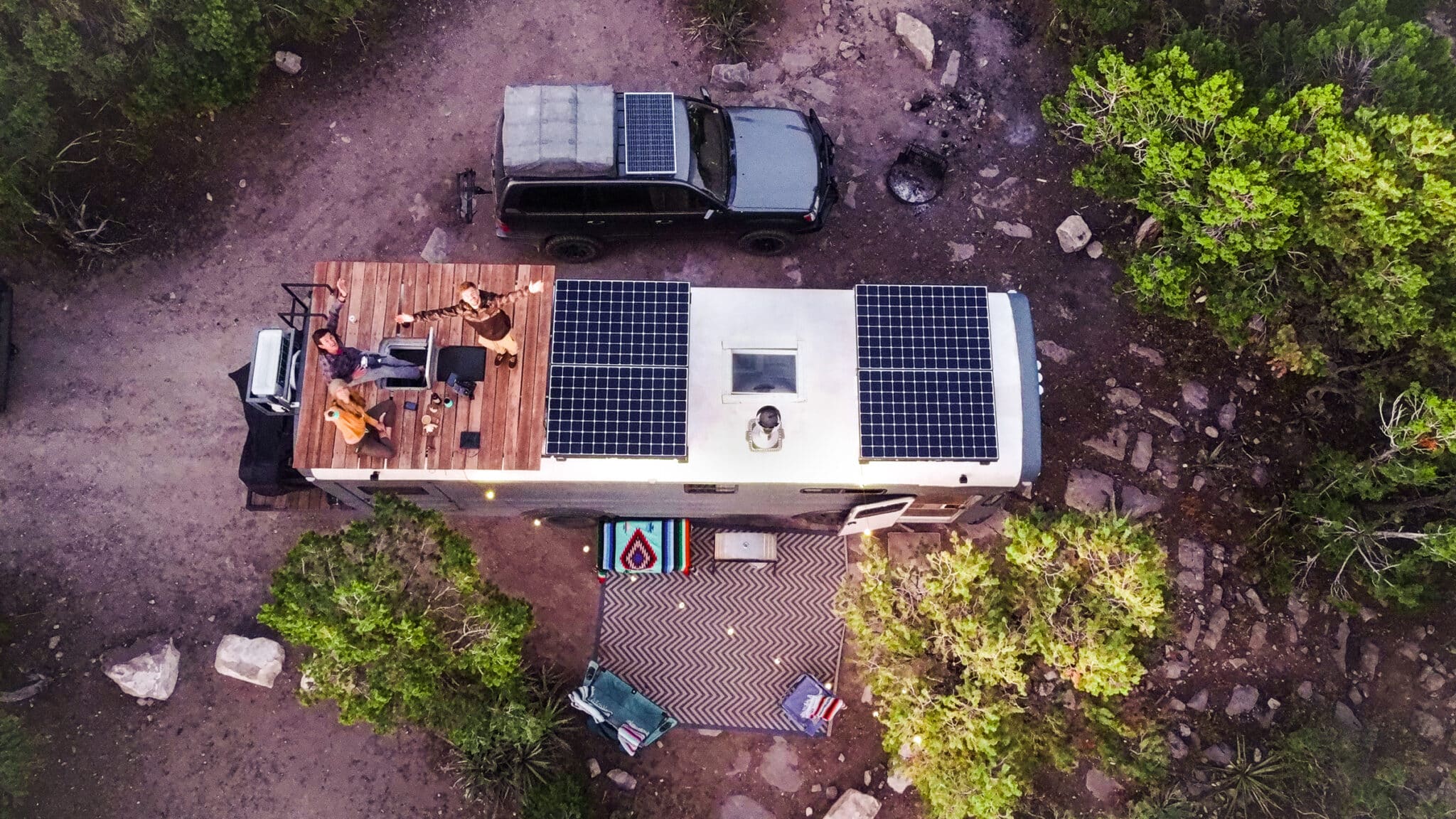
I can’t overstate this. Your bus is a rolling advertisement. The exterior design, the paint job, the signage — all of it is marketing that works 24/7, whether you’re serving customers or just driving to your next location.
Invest in professional-looking signage. Get your bus wrapped or painted by someone who knows what they’re doing. Include your social media handles and website on the exterior so people can find you online when they see you on the road.
Social Media Is Everything
For mobile businesses, social media isn’t optional — it’s your primary communication channel with customers. You need to post your location every day you’re open. Instagram, Facebook, TikTok — wherever your customers are, that’s where you need to be.
I found that the most successful mobile business operators post their daily location by 8 or 9 AM, share stories throughout the day showing the product and the vibe, and engage with customer comments and reviews consistently.
The visual appeal of a bus is a built-in advantage here. A cool-looking bus with great product photos practically markets itself. Customers will share photos of your bus on their own social media without you even asking.
Building a Following
The challenge with a mobile business is that your location changes. You can’t rely on walk-by traffic from the same street every day. So you need a following that will seek you out.
Email lists, text alerts, and social media followers are your lifeline. Offer a discount for signing up for location alerts. Reward repeat customers. Create a loyalty program. Make it easy for people to find you wherever you go.
Getting Started: A Practical Roadmap
If you’ve made it this far and you’re serious about converting a bus for a mobile business, here’s the order of operations I’d recommend based on everything I’ve researched.
First, nail down your business concept and validate it. Don’t build a bus until you know the business works. If you want to run a coffee bus, start by selling coffee at a farmers market from a table. If it works on a small scale, it’ll work on a bus.
Second, research the regulations in your target operating area thoroughly. Talk to the health department, the city licensing office, and the fire department before you spend a dime on the build. I can’t stress this enough — the regulations will shape your entire build, from plumbing requirements to electrical standards to exhaust systems.
Third, write a real business plan. Include your build costs, operating expenses, revenue projections, insurance costs, and a timeline. A bus conversion is exciting, but it’s also a significant financial investment, and treating it like a business from day one dramatically improves your odds of success.
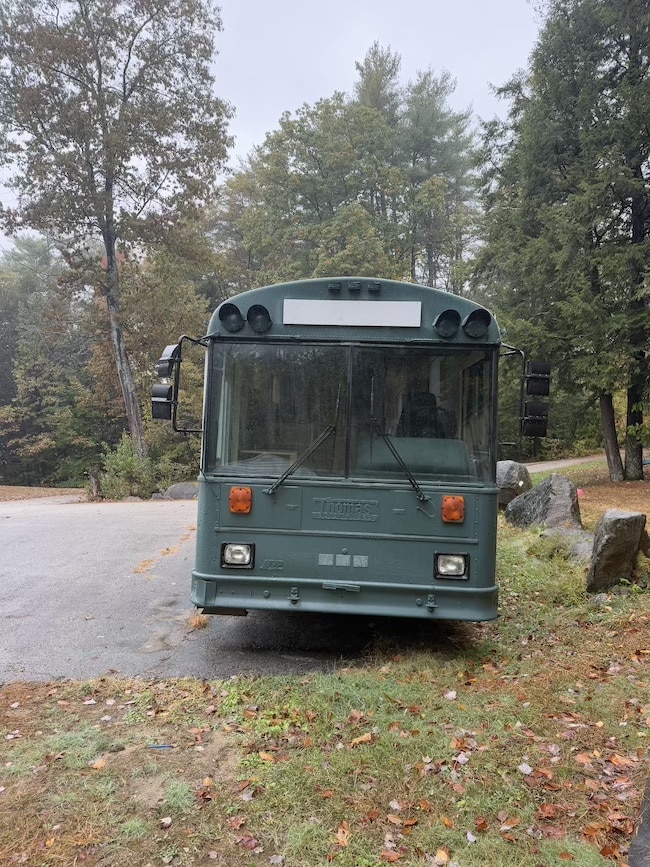
Fourth, buy the right bus. For most mobile businesses, a 30 to 35 foot bus hits the sweet spot between having enough space and being able to park in most locations. Shorter is fine for lower-space-demand businesses. Longer can work but limits where you can set up.
Fifth, build it to code. Everything I said about permits, health department requirements, and commercial electrical standards — build to those specs from the start. Retrofitting later is always more expensive and more painful than doing it right the first time.
And sixth, start small. Your first event doesn’t need to be a 50,000-person festival. Start at local farmers markets, small community events, and private gigs. Build your systems, work out the kinks, and grow from there.
So there it is. I went into this research expecting to write a quick overview and ended up down a rabbit hole that took weeks to fully explore. The mobile business bus conversion world is way deeper than I initially thought, and the people doing it are some of the most creative, resourceful entrepreneurs I’ve come across in the bus conversion community. The bus isn’t just a vehicle or a home — for some people, it’s a whole livelihood. And honestly, after everything I’ve learned, I can see why. The overhead is low, the flexibility is unmatched, and there’s something undeniably cool about pulling up to an event in a bus that IS your business. If you’re thinking about it, do the research, run the numbers, and talk to your local regulators before you pick up a saw. But don’t let the paperwork scare you off. People with less planning than you are out there right now making it work.