

This question kept coming up in every forum I browsed and every comment section I scrolled through while researching bus conversions. People are genuinely torn between the two, and I get it. Both lifestyles promise freedom, adventure, and a way out of the rent trap, but they get there in very different ways.
A skoolie gives you more space, more off-grid capability, and more room to build exactly what you want — but it’s harder to drive, harder to park, and harder to hide. A van gives you stealth, mobility, and simplicity — but you’re working with a fraction of the square footage and you’ll feel the walls closing in faster than you’d expect. The right choice depends on how you plan to live, where you plan to go, and honestly how much stuff you’re willing to give up.
Space: How Much Room Do You Actually Need?
This is the one that changes the whole conversation, so let’s start here.
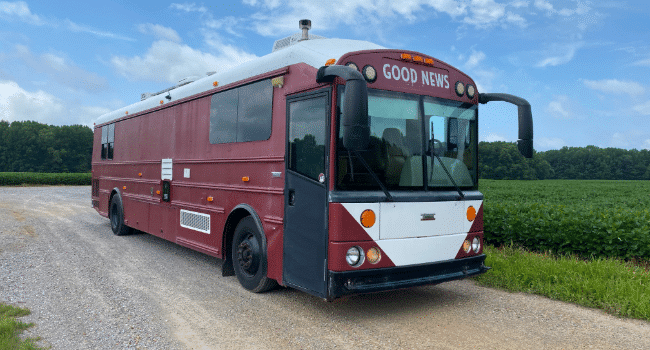
A full-size school bus (the 40-footers) gives you roughly 245 square feet of usable interior space. A short bus, the kind a lot of first-timers go for, is more like 80 to 120 square feet. A cargo van — your Sprinters, Transits, ProMasters — tops out at about 60 to 75 square feet of floor space. Some high-top models push that a little further, but not by much. (See our guide on Is a Short Bus or Full-Size Bus Better for a Conversion? for more on this.)
So right away you’re looking at a pretty massive difference. I was watching a couple’s van tour on YouTube a while back and the woman said something that stuck with me. She said they loved van life for the first four months, and then one rainy week in Oregon almost ended their relationship. They couldn’t both stand up and move around at the same time without bumping into each other. There was nowhere to go that wasn’t the bed or the driver’s seat.
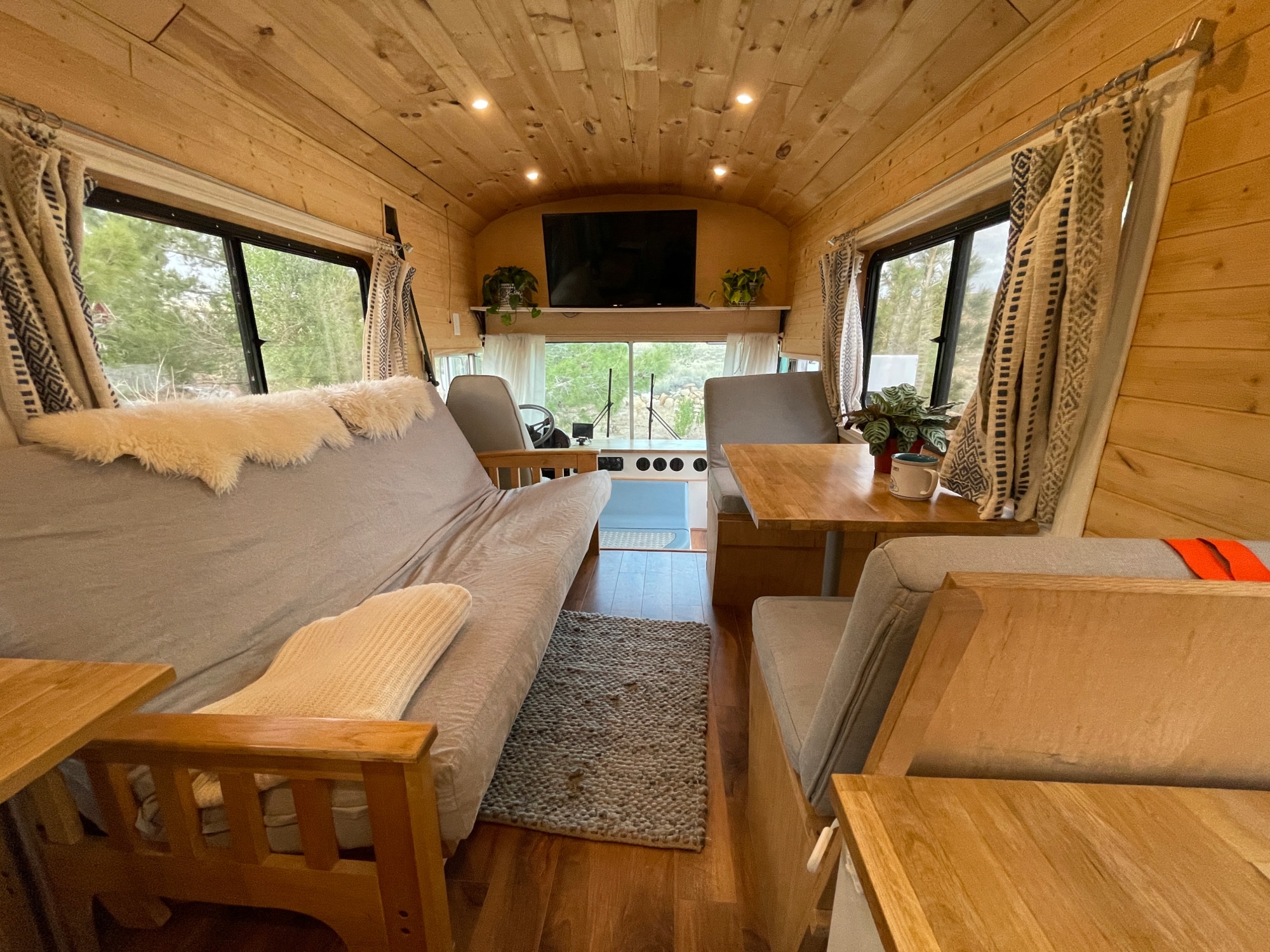
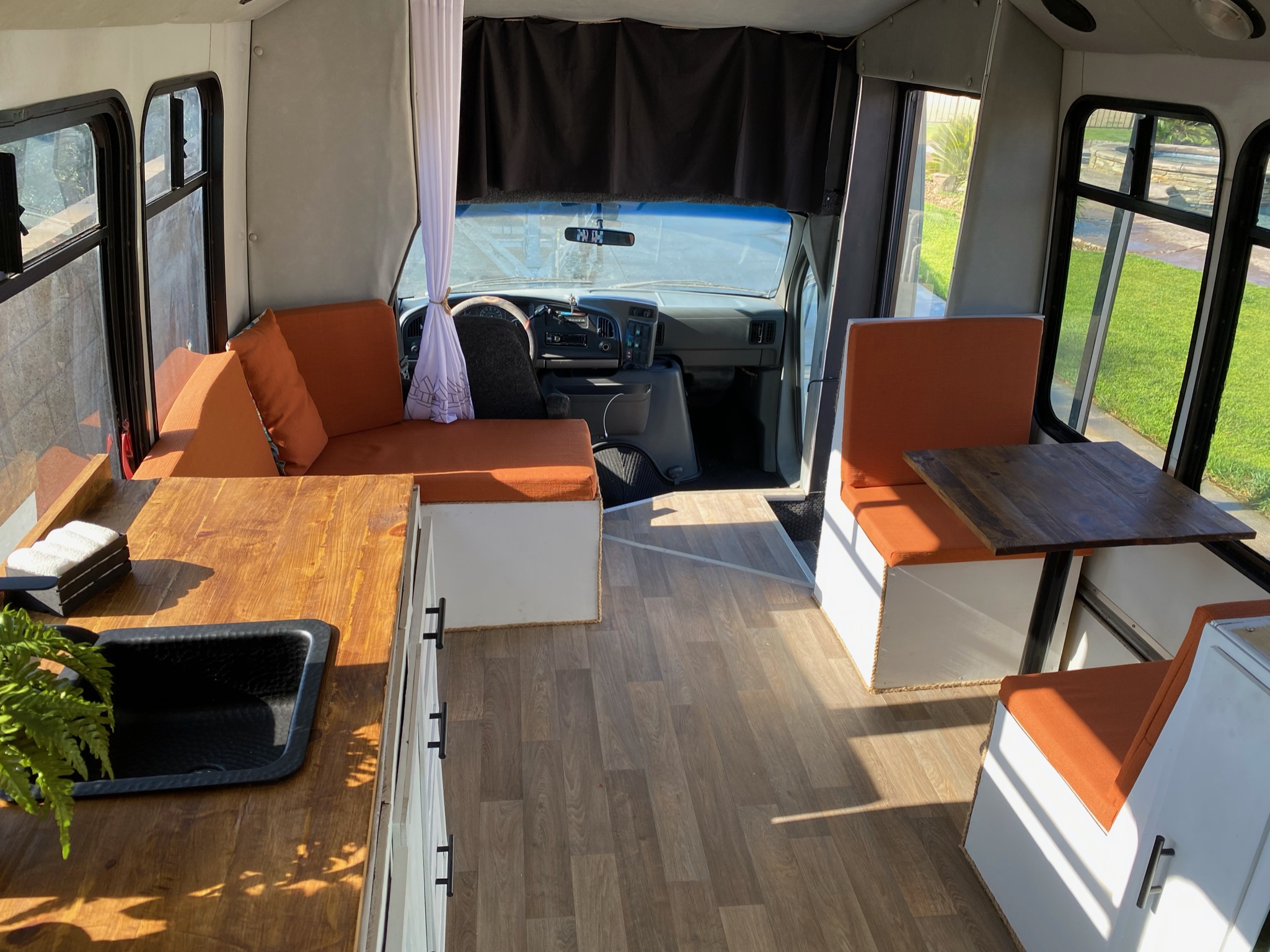
Now compare that to even a short bus. You’ve got room for a real kitchen counter, a bathroom you don’t have to fold out of the wall, maybe a dinette area. In a full-size bus you can have separate zones — a living area, a bedroom, a workspace. It starts to feel less like camping and more like a small apartment. (See our guide on How Do You Get a Mailing Address Living in a Bus? for more on this.)
But here’s the thing people don’t talk about enough. More space means more weight, more fuel, more stuff to maintain. And it means you need more materials for the build, more insulation, more flooring, more everything. Space isn’t free, it just looks that way when you’re scrolling through bus tours online.
For a solo traveler or a couple without kids who plans to spend most of their time outdoors, a van is honestly plenty. I’ve talked to van lifers who say they barely spend time inside anyway — the van is just where they sleep and cook. But for families, remote workers who need a dedicated desk, or anyone who wants to spread out a little, the bus wins this one and it’s not even close.
Cost to Buy and Convert
Someone in a Facebook group asked, “I’m really curious how much u paid for the starter build… I’m torn between wanting a short bus or a van.” And that’s the right question to be asking early on.
Let’s break it down. A used cargo van suitable for conversion — a Sprinter, Transit, or ProMaster — runs anywhere from $15,000 to $35,000 depending on year, mileage, and condition. High-top, long wheelbase models are on the pricier end. You can find older ones for $8,000 to $12,000 but at that point you’re probably inheriting someone else’s mechanical problems.
A school bus? $3,000 to $8,000 for a full-size. Short buses can be even cheaper, sometimes $2,000 to $5,000. The bus itself is almost always less expensive than the van.
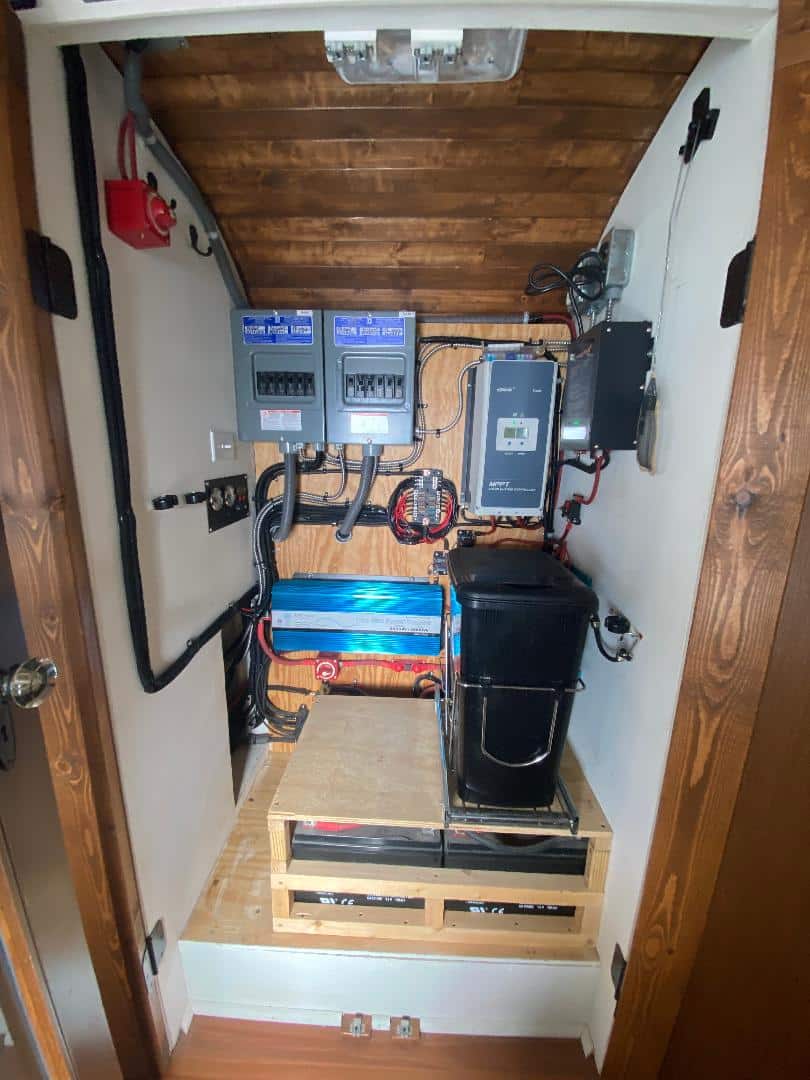
Now for the conversion. Van builds tend to run cheaper in total materials because there’s less square footage to cover. A solid DIY van conversion is somewhere in the $5,000 to $15,000 range for most people. You can go cheaper if you keep it simple, or way more if you start adding lithium batteries and custom cabinetry.
A skoolie conversion runs $15,000 to $30,000 for a mid-range DIY build. I’ve seen people do it for less — like $8,000 with a lot of reclaimed materials and sweat equity — but $15K to $25K is more realistic if you want proper insulation, electrical, plumbing, and decent finishes.
So when you add it all up:
- Van all-in: $20,000 to $45,000
- Short bus all-in: $10,000 to $30,000
- Full-size bus all-in: $18,000 to $38,000
The bus gives you more space per dollar almost every time. But the van has one financial advantage people overlook. Resale. A Sprinter van holds its value incredibly well even with 200,000 miles on it because the demand is insane. A converted school bus, while it can sell well in the skoolie community, has a much smaller buyer pool. Something to keep in mind if you’re not planning to live in it forever. (See our guide on Can You Legally Live in a Converted School Bus? for more on this.)
Driving and Parking Differences
Alright, this one’s where the van starts pulling ahead in a big way.
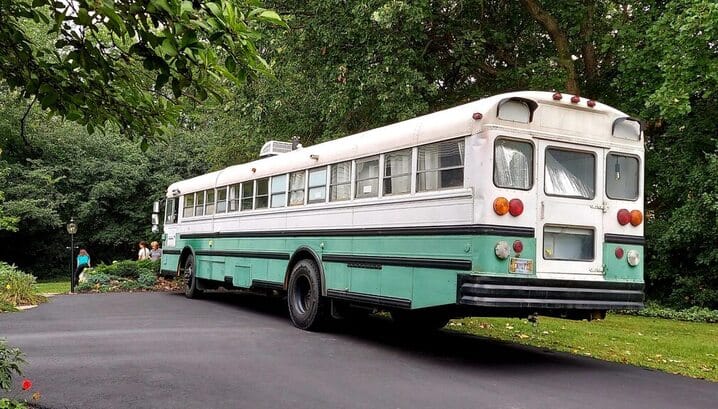
I remember the first time I drove behind a skoolie on a two-lane mountain road. The thing was crawling up the grade, maybe 25 mph, and there was a line of cars behind it. The driver couldn’t pull over because there was no shoulder wide enough. That’s just the reality of a 35 to 40 foot vehicle with a diesel engine that’s geared for torque, not speed.
Driving a van feels like driving a big SUV. You can take it through drive-throughs. You can park at a grocery store. You can navigate downtown streets and parking garages (well, most parking garages — check the height). Highway merging, lane changes, all of it feels normal after a day or two behind the wheel.
A school bus is a different animal. Turns are wider. Braking distance is longer. Backing up requires a spotter or a really good camera setup. Highway driving is fine once you’re up to speed, but city driving? I talked to a full-timer once who said he plans his entire route to avoid left turns across traffic whenever possible. That’s not a joke.
Short buses split the difference nicely. They drive more like a large van or a box truck. You won’t fit in a standard parking spot, but you’re not taking up the whole lane either. For people who asked “would a camper van be better to start with since they’re smaller and easier to move around” — yeah, from a pure driveability standpoint, the van wins. No question. But driveability isn’t the only factor, and I think a lot of people overweight it because driving stress is the most immediate and visceral concern. Once you’re parked and living in the thing, you stop thinking about how it drives and start thinking about how it lives. (See our guide on How Do You Get Internet and WiFi Living in a Bus? for more on this.)
The parking issue is real though. Vans fit in normal parking spots. Buses don’t. Vans can parallel park on city streets. Buses can’t. Vans can go to most campgrounds and fit in a standard site. Full-size buses sometimes can’t, and you’re stuck calling ahead to every single place to ask about length limits. This was something that surprised me when I was researching — how much time bus dwellers spend just figuring out where they can physically fit.
Stealth Factor (Can You Blend In?)
Someone asked “why did you get a van instead of a bus?” and honestly, for a lot of people, the answer comes down to this section right here.
A plain white or gray cargo van parked on a residential street looks like a plumber’s work vehicle. Nobody calls the cops on a Sprinter van. It blends in. You can park overnight at a Walmart, in a neighborhood, next to a trailhead, and most of the time nobody gives you a second glance. That’s the stealth advantage, and for people who want to do a lot of urban camping or free parking, it’s a huge deal. (See our guide on 15 Things Nobody Tells You About Living in a School Bus for more on this.)
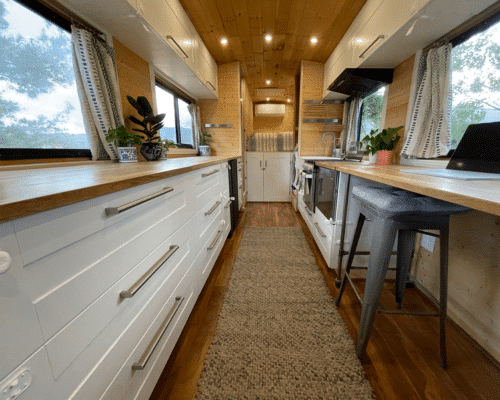
A school bus — even a beautifully painted, fully converted one — screams “someone lives in here.” You can paint it, you can put curtains up, you can do everything right, and it still looks like a converted school bus. Because that’s what it is. There’s no disguising it. Some towns have ordinances specifically about oversized vehicles parking on residential streets. You will get knocks on your window. You will get asked to move.
Now, I don’t want to overstate this. Plenty of skoolie people park just fine. They use RV parks, campgrounds, BLM land, friends’ properties, and they never worry about stealth because they’re not trying to hide. If your plan involves bouncing between campgrounds and public land, stealth doesn’t matter much. But if your plan involves spending time in cities, parking near the coast in California, or overnighting in urban areas between destinations, the van’s invisibility is a genuine tactical advantage.
I was reading a thread where a guy described his strategy. He had a plain white Transit with no windows on the cargo area, no exterior solar panels, no visible modifications. He’d park in hospital parking lots, hotel parking lots, quiet neighborhoods. He lived like that for two years and said he was never once asked to leave. Try doing that in a 35-foot yellow bus, even if you’ve painted it matte black.
Off-Grid Capability
This is where the skoolie takes back the lead and then some.
More roof space means more solar panels. A full-size bus roof can fit 1,500 to 2,000 watts of solar pretty comfortably. A van roof? Maybe 400 to 600 watts, and you’re squeezing panels in around vent fans and AC units. That difference matters a lot if you’re trying to run a residential fridge, charge laptops, power tools, or keep an AC unit going.
Water storage is the other big one. I dug into this when I was researching off-grid setups and the numbers really opened my eyes. A van can realistically carry a 20 to 30 gallon fresh water tank. Maybe 40 if you sacrifice storage space for it. A bus can carry 50 to 100 gallons without breaking a sweat, and some people go even bigger. More water means more time between fills, which means more time off-grid before you need to find a hookup or a water spigot.
Battery banks follow the same pattern. A van build might have 200 to 400 amp hours of lithium. A bus? People routinely install 600 to 800 amp hours. The bus has the space, it has the payload capacity, and it has the roof real estate for the solar to keep everything topped off.
The practical result is that a well-built skoolie can stay off-grid for two to three weeks pretty easily. Some people push it to a month or more with careful water management. A van? Most people report needing to resupply water every 3 to 5 days, and electrical can get tight after a week of cloudy weather.
If your dream involves boondocking on BLM land in the desert for weeks at a time, or parking on someone’s rural property without hookups, the bus is the clear winner here. If you’re more of a “stay a few nights then move to a campground with hookups” type, the van’s smaller systems are totally adequate and you’ll barely notice the difference.
Who Should Pick a Van vs Who Should Pick a Bus
I’ve spent a lot of time with this question and I don’t think there’s a single right answer, but I do think there are pretty clear profiles for each.
The van makes sense if you’re solo or a couple with no kids. If you value mobility and stealth over living space. If you plan to spend a lot of time in cities or near the coast where parking is tight. If you want something you can build out in a few weekends rather than a few months. If you’re not sure this lifestyle is for you and want to test it without committing $25K and a year of your life. That last one’s important, and it gets at what people are really asking when they say “would a camper van be better to start with?” Yes, probably, if you’re just dipping your toes in.
The bus makes sense if you have a family, especially with kids. If you work remotely and need dedicated workspace that isn’t also your bed. If you want a full kitchen, a real bathroom, and room to stand up and stretch. If you plan to park long-term or semi-permanently rather than moving every few days. If off-grid capability matters to you. And honestly, if the building process itself appeals to you — because a skoolie build is a project in a way that a van build usually isn’t. When someone says “Van vs Skoolie Pros & Cons??” what they’re really asking is which set of tradeoffs they can live with.
I talked to a couple at a campground once who’d done both. Started in a van, lived in it for eight months, then bought a short bus and converted it. I asked what made them switch and the guy said, “The van was like dating. The bus is like marriage.” Meaning the van was fun and spontaneous but he never fully settled into it. The bus felt like home in a way the van never did.
Here’s what it comes down to after all my research. If you’re drawn to the van, go try it. You can build one out for under $10K and see if the lifestyle fits. Worst case you sell the van and barely lose any money. If you’re drawn to the bus, know that you’re signing up for a bigger commitment — more time, more money, more logistics — but you’re also getting a genuinely different living experience. The van is a vehicle you can sleep in. The bus is a home you can drive.
Neither one is wrong. I know that’s not the decisive answer people want, but the honest truth is that the best choice depends on you — your family size, your travel style, your budget, your tolerance for tight spaces, and whether you care more about going places easily or feeling at home when you get there. Figure out which of those matters most, and the decision kind of makes itself.