
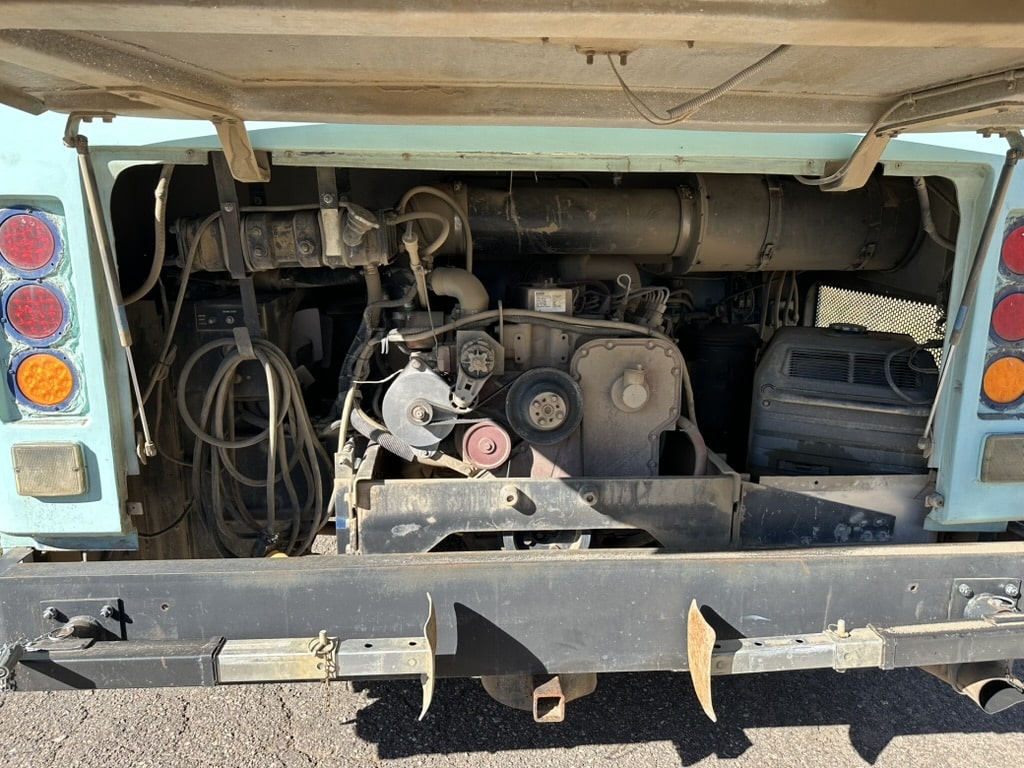
If you’re looking at buying a school bus to convert, you’ve probably stared at those massive fuel tanks and thought, “What’s it gonna cost me every time I pull into a station?” Fair question. I had the same one.
Filling up a full-size school bus costs between $200 and $700 depending on your tank size and fuel prices. Most full-size diesel buses have fuel tanks in the 60 to 100 gallon range, with some larger flat-nose buses carrying up to 100 gallons or more. At $3.50/gallon diesel, a 60-gallon tank costs about $210 to fill, while a 100-gallon tank runs around $350. Short buses with 30 to 40 gallon tanks cost $105-$140 to fill at the same price. The real question isn’t how much it costs to fill up — it’s how often you’re filling up.
How much Money per week do you spend in Gas a week?
I spent way too long trying to get a straight answer on this one, and the reason nobody gives you a clean number is because it completely depends on your lifestyle.

If you’re parked somewhere long-term and only driving to the grocery store or laundromat once a week, you might spend $20-$40 a week on fuel. That’s basically car-level spending because you’re only putting 15-30 miles on the bus at a time.
If you’re moving the bus once a week to a new spot — say 100-200 miles each move — you’re looking at $50-$100 per week on a full-size diesel getting 7-9 MPG. That’s $200-$400 a month just in fuel. (See our guide on Should You Buy a Gas or Diesel School Bus? for more on this.)
And then there are the people road-tripping constantly. I talked to one guy in a Facebook group who was doing 500+ miles a week crisscrossing the Southwest, and he said he was burning through $150-$200 a week easy. He had a Thomas flat-nose with a Cummins 8.3 and was getting about 7 MPG loaded. He didn’t seem too bothered by it though, said it was still cheaper than his old life paying rent in San Diego. Which, honestly, he’s probably right about that. (See our guide on Is a Skoolie Cheaper Than Buying an RV? for more on this.)
Here’s the thing most people don’t realize until they’re actually living in the bus — you don’t drive it every day. I kept making this mistake when I was first running the numbers. I was calculating fuel costs like I’d be commuting in the thing. Most full-timers move their bus a few times a month and then stay put. Some people barely move it at all for weeks.
How Much do you spend on gas? Thanks.
So here’s where I’ll break it down into scenarios, because “how much do you spend on gas” depends entirely on which category you fall into. (See our guide on Where Do You Buy a School Bus for Conversion? for more on this.)
The Homebody — parked at an RV park or on private land, drives the bus maybe twice a month for errands or dump station runs. Total monthly fuel cost: $40-$80. You’re barely touching the tank.
The Slow Traveler — moves to a new location every 2-3 weeks, does 100-300 mile moves. This is where a lot of full-timers land. Monthly fuel cost: $150-$350. Totally manageable.
The Wanderer — new spot every week, 200+ miles between stops, exploring regions actively. Monthly fuel cost: $400-$700. Starting to feel it now, but still less than rent plus a car payment in most cities.
The Cross-Country Road Tripper — driving long hauls, 1,000+ miles a month. Monthly fuel cost: $600-$1,200+. This is where fuel becomes your biggest expense and you really gotta budget for it.
I was surprised when I first laid these numbers out because the slow traveler scenario is where most skoolie people actually live, and $200-$300 a month in fuel is just not that scary when you’re not paying $1,500 in rent anymore.
How much does it cost for enough Fuel to fill it up?
Alright, let’s do actual math. I’ll use current diesel prices around $3.50-$4.00 per gallon since that’s roughly where things sit in most of the country, though it varies a lot by state and by the week.
| Bus Type | Tank Size | Cost at $3.50/gal | Cost at $4.00/gal | Approx. Range |
|---|---|---|---|---|
| Short bus (E-450/3500) | 30-40 gal | $105-$140 | $120-$160 | 300-500 miles |
| Full-size Type C | 60-80 gal | $210-$280 | $240-$320 | 420-720 miles |
| Full-size Type D (flat nose) | 80-100 gal | $280-$350 | $320-$400 | 480-800 miles |
| Coach/transit | 100-150 gal | $350-$525 | $400-$600 | 600-1,050 miles |
A few things worth noting here. Those range numbers assume you’re getting somewhere between 7-10 MPG on a diesel, which is realistic for a built-out bus. Gas engines will be worse — closer to 5-7 MPG on a full-size, so your range shrinks and your cost-per-mile goes up.
Also, you’re almost never filling from completely empty. Most people top off when they hit a quarter tank or so. So the actual amount you’re paying at any given stop is usually 60-75% of those numbers. I bring this up because the sticker shock of “it costs $350 to fill my bus” sounds worse than the reality of paying $200-$250 at a time when you top off regularly.
One more thing. Diesel prices vary wildly by state. I was looking at numbers the other day and the difference between filling up in Texas versus California can be over a dollar per gallon. If you’re traveling, that matters. A 100-gallon fill-up in a state with cheap diesel versus expensive diesel is a $100+ difference. Some people actually plan their routes around fuel prices, which sounds obsessive until you realize how fast it adds up over a year.
How much do you pay for gas and how often do you fill up?
This is the question that gets at the real cost of living, not just the one-time pump number. I dug through a bunch of forum posts and community conversations to piece together what real skoolie owners are actually spending.

Most full-timers with a full-size diesel bus fill up every 2-4 weeks. That’s assuming they’re doing a couple moves per month, covering 200-500 miles total. At 8 MPG with a 70-gallon tank, one fill-up gives them roughly 560 miles. So a lot of people can go an entire month or more on a single tank if they’re not driving much. (See our guide on How Much Does It Cost to Convert a Bus Into a Home? for more on this.)
Now here’s where I found it gets interesting. I was reading through this one thread where people were comparing their monthly fuel costs, and the range was unreal. One couple in a 40-foot Blue Bird said they spent $80 last month because they were parked at a friend’s ranch and only drove to town twice. Another guy in a similar bus said he spent $700 that month because he was moving from Oregon to Florida. Same bus, same MPG, wildly different fuel costs. It’s all about the miles.
For short bus owners, the math is a lot friendlier. Smaller tank means cheaper fill-ups, and they tend to get better mileage too. A short bus owner filling up every 2-3 weeks might spend $80-$150 per fill. Over a month of moderate traveling, you’re looking at maybe $150-$250. Not nothing, but pretty reasonable.
Something else I picked up on that I think is worth mentioning — gas engines cost more to feed than diesel per mile, even though gasoline itself is sometimes cheaper per gallon. The math works out that way because the MPG difference is so big. A gas bus getting 5 MPG at $3.25/gallon costs you about $0.65 per mile. A diesel bus getting 8 MPG at $3.75/gallon costs about $0.47 per mile. Over 5,000 miles a year, that’s $3,250 versus $2,350. Almost a thousand dollar difference annually, and it gets bigger the more you drive. I did that math on a napkin one night and it really solidified why most experienced bus people push diesel so hard.
Fuel Cost Per Mile — The Number That Actually Matters
Forget the total fill-up cost for a second. The number that actually matters for budgeting is your cost per mile, because that’s what lets you predict spending based on how you plan to live.
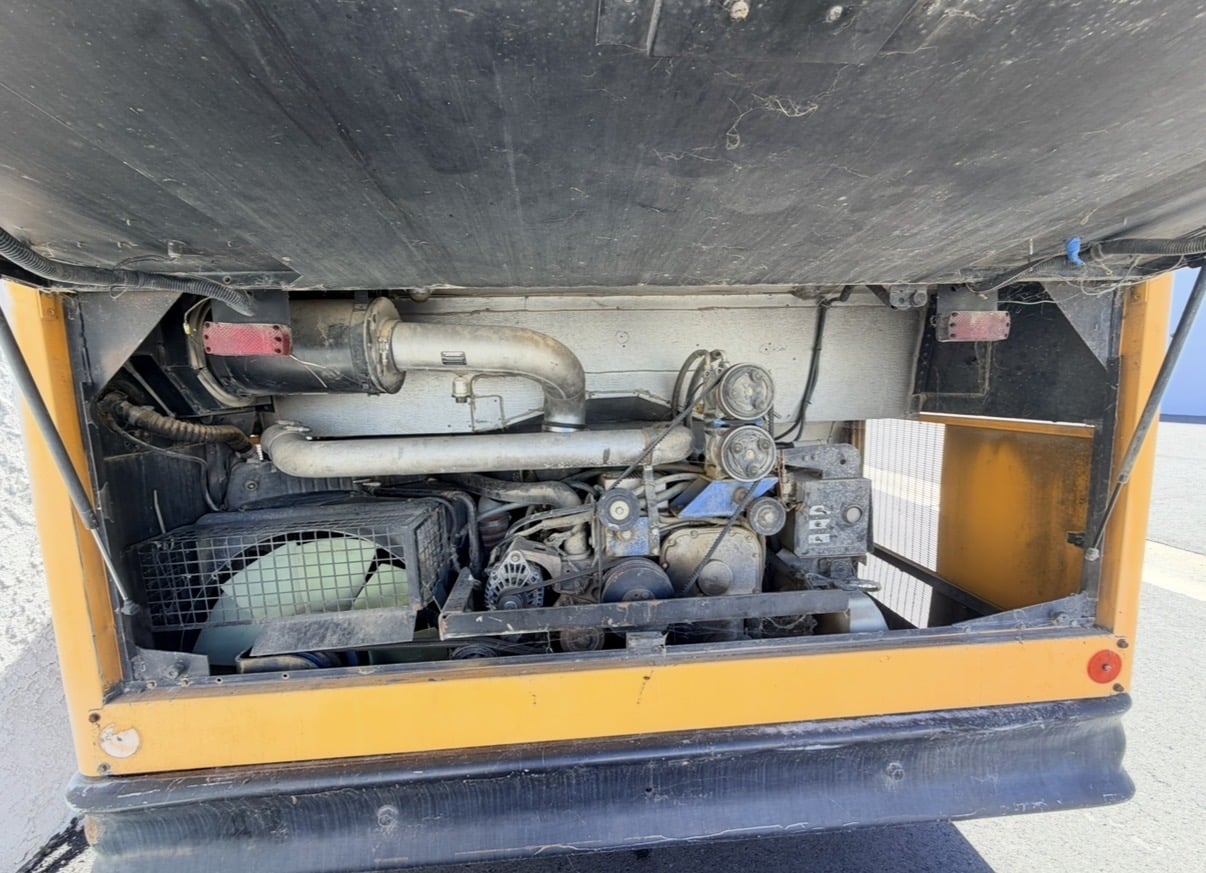
Here’s the quick breakdown:
- Diesel full-size (7-9 MPG): $0.39-$0.57 per mile at $4/gallon
- Diesel short bus (10-13 MPG): $0.31-$0.40 per mile at $4/gallon
- Gas full-size (5-7 MPG): $0.46-$0.65 per mile at $3.25/gallon
- Gas short bus (8-11 MPG): $0.30-$0.41 per mile at $3.25/gallon
When you know your cost per mile, you can plan any trip. Moving 150 miles in a diesel full-size? That’s about $60-$85. Planning a 2,000-mile cross-country drive? Budget $780-$1,140 in fuel. It takes the guesswork out of it, and I wish somebody had explained it to me this way when I was first trying to figure all this out.
How to Spend Less on Fuel
I won’t pretend there’s some magic trick to make a 30,000-pound vehicle sip fuel. But there are real things that make a real difference.
Slow down. Seriously. This is the biggest one and nobody wants to hear it. Going from 65 MPH to 55 MPH on the highway can improve your MPG by 15-20%. On a bus, that’s the difference between 7 MPG and 8.5 MPG. Doesn’t sound like much until you realize it saves you over $500 a year if you’re putting 5,000 miles on. I know driving 55 feels brutal on the interstate but your wallet notices.
Keep your tires properly inflated. Under-inflated tires create more rolling resistance and that eats fuel. Check them before every major drive.
Build light. Every 1,000 pounds you add to your build costs you roughly 0.5 MPG. That granite countertop might look incredible, but butcher block does the same job and weighs a fraction of what granite does.
Use fuel apps. GasBuddy and similar apps show you the cheapest diesel within range. I’ve seen price differences of $0.40-$0.60 per gallon between stations just 10 miles apart. On a 80-gallon fill, that’s $32-$48 saved by driving a few extra minutes. It’s one of those things that feels silly until you actually do it and realize how much prices vary.
And plan your route to avoid mountains when you can. Climbing grades absolutely destroys your fuel economy. A bus that gets 8 MPG on flat ground might drop to 4-5 MPG going through mountain passes. I read about one couple who changed their route through Colorado to avoid a particular mountain pass and estimated they saved $200 in fuel over that one stretch.
Related: Can You Finance a School Bus Conversion?
Putting It All Together
After digging into all the numbers, here’s what I came away with. Filling up a school bus isn’t cheap — nobody’s going to pretend otherwise. But the fill-up price is kind of a misleading number because it doesn’t tell you anything about how often you’re actually at the pump. A $300 fill-up that lasts you a month is $300 a month in fuel. That’s it. And for a lot of full-timers who are parked most of the time, their actual fuel spending is lower than what most people pay for a car payment.

The people who get surprised by fuel costs are the ones who plan to drive constantly without budgeting for it. If you know your cost per mile, know your driving patterns, and plan around it, fuel is just another line item. A big one, sure. But not the budget-breaker people make it out to be when they see that tank size for the first time. That initial shock of watching $350 go into your tank fades pretty quick when you realize that one fill lasts you three weeks.
vkhqmz
t3qge8