
This is one of those questions that kept showing up everywhere when I was researching bus life, and I think it’s because people want a number. They want someone to say “you can last exactly 14 days” or whatever. But it doesn’t work like that.
The real answer is that a well-built skoolie with a solid solar setup, decent battery bank, and properly sized water tanks can stay off-grid almost indefinitely — or at least weeks at a time without plugging in or filling up. The limiting factors are water (you’ll run through a typical 50-100 gallon tank in 3-7 days depending on usage), waste capacity, and food storage. Power is usually the easiest part to solve long-term thanks to solar. So the question isn’t really “how long CAN you” — it’s “how did you set up your systems.”
“How long do u think u can survive completely off grid?”
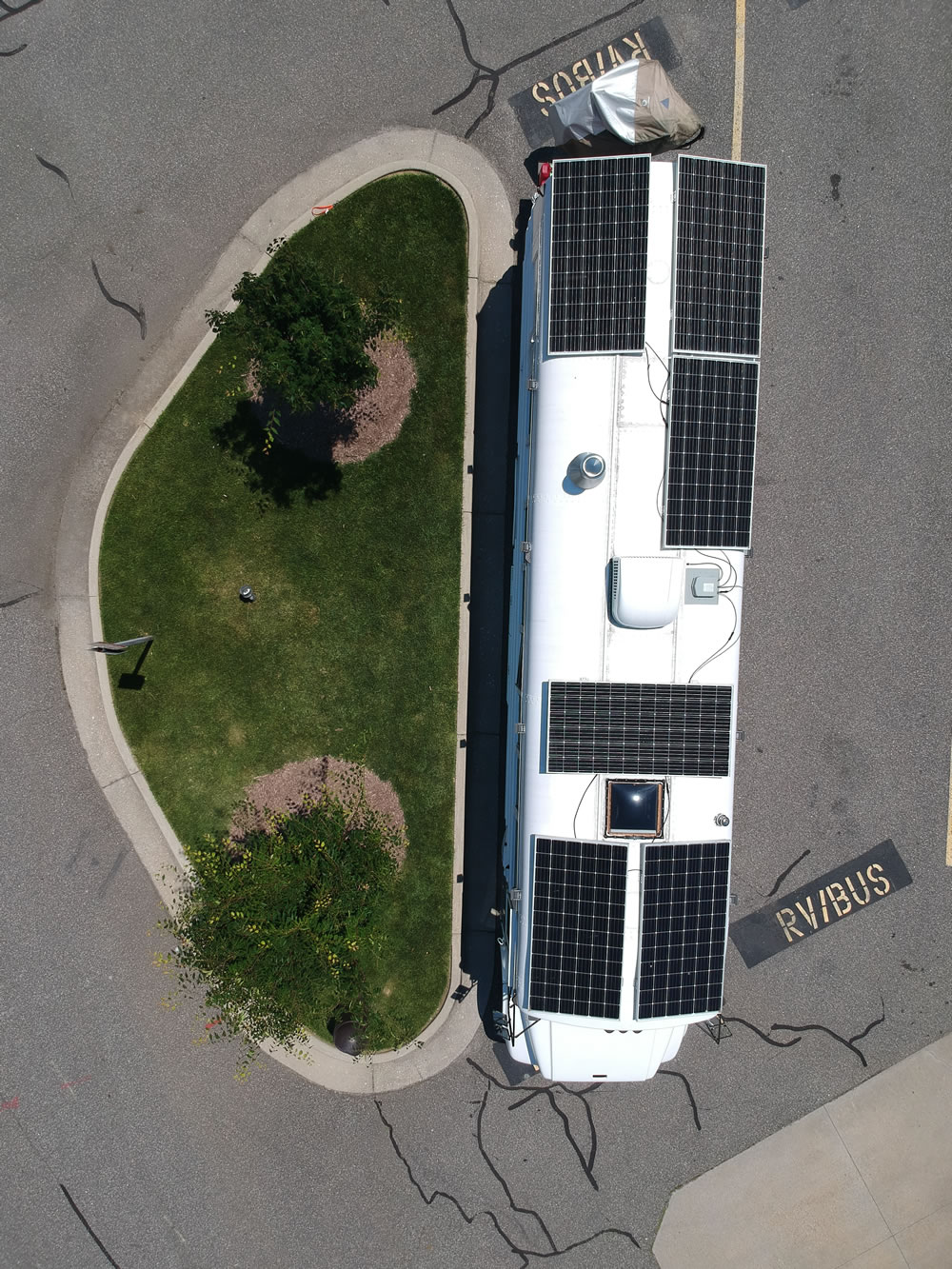
So I was reading through a thread about this a while back and a guy responded with “forever, if I wanted to.” And at first I thought he was being dramatic, but then he broke down his setup. 800 watts of solar on the roof, 400 amp-hours of lithium batteries, a composting toilet so no black tank to deal with, a grey water system that drained into a portable tank, and a 100-gallon fresh water tank. He said his routine was basically — drive to a water fill station once a week, dump the grey water, and that was it. Everything else ran on solar.
Now that’s a pretty dialed-in setup, and not everybody starts there. When I first started looking into this, I expected the answer to be way more complicated. But the principle is simple. You’re managing three things: power, water, and waste. If you’ve got a system for each of those, the clock basically stops ticking. You’re not “surviving” off-grid at that point. You’re just living. (See our guide on How Do You Get a Mailing Address Living in a Bus? for more on this.)
The people who struggle with off-grid time are usually the ones who didn’t plan their systems around it. Maybe they’ve got a 30-gallon water tank and they’re taking full showers every day. That gives you maybe two or three days before you’re dry. Or they’ve got a small battery bank and they’re running a microwave and a hair dryer and wondering why everything dies by 8pm. It’s not that off-grid living is hard, it’s that undersized systems make it hard. (See our guide on 11 Ways to Make Money While Living in a Bus for more on this.)
“I just started living in well a bus but how do i get energy?”
I love this question because it’s so honest. You’re already in the bus, you’re committed, and now you’re figuring out the power thing. Been there mentally, even if I wasn’t physically sitting in a bus yet when I was working through all this.
Here’s the breakdown. Most skoolies get their energy from one or a combination of these sources:
Solar panels are the backbone. Panels on the roof charge a battery bank during the day, and an inverter converts that stored energy into regular 120V power for your outlets. A setup with 400-600 watts of solar and 200-400 amp-hours of lithium batteries will run lights, a fridge, laptops, phone chargers, and fans without breaking a sweat. I’ve got a full breakdown on sizing a solar system in our solar setup guide if you want the actual math.
A generator is the backup plan. Lots of people carry a small portable generator — something like a Honda 2200 or equivalent — for cloudy stretches or when you need to run something heavy like an air conditioner. They’re noisy and they burn gas, so most people don’t love running them constantly. But for a few hours every couple of days when the sun isn’t cooperating, they’ll top off your batteries and keep things going.
Shore power is just plugging in at a campground or RV park. When you’ve got a hookup, your battery charger kicks in and everything runs off the grid. This is the easy mode version of power, and there’s nothing wrong with it. Plenty of people split time between off-grid and plugged in.
Your alternator charges your batteries while you drive, which is something I didn’t think about at first. If you’ve got a battery-to-battery charger (also called a DC-DC charger) wired between your engine batteries and your house batteries, a few hours of driving can put a solid charge back into your system. So even on overcast weeks, moving to a new spot doubles as a charging session.
The thing I kept finding when I researched this is that people overthink it. You don’t need some massive complicated electrical system to live in a bus. You need enough solar to cover your daily use, enough battery to get through the night, and a backup plan for bad weather. That’s it. (See our guide on Can You Legally Live in a Converted School Bus? for more on this.)
“How do you have electricity and water etc?”
Alright so I kind of covered electricity above, but let me talk about the water side because that’s actually what limits your off-grid time more than power does.
Most skoolies have a fresh water tank somewhere — under the bus, in a compartment, or built into the interior. Common sizes range from about 40 gallons on the small end up to 150 or more on bigger builds. I talked to one couple who had two 55-gallon drums plumbed together under their bus. Worked great, gave them about two weeks of water if they were careful.
You fill the tank at RV dump stations, campground spigots, friends’ houses, or sometimes from streams if you’ve got a good filtration system (though most people don’t go that route for drinking water). Some state parks and rest areas have potable water fill stations too. I found that once you start paying attention, water fill spots are everywhere. You just never noticed them before because you never needed to.
A 12V water pump moves the water from your tank to your faucets and shower, same as an RV. Hot water comes from either an on-demand propane water heater or an electric unit if your power system is beefy enough. Most people go propane for hot water because it doesn’t drain your batteries.
So how long does the water last? Here’s roughly what I found when I was doing the math on this. If you’re conservative — navy showers, washing dishes in a basin, not running the faucet while you brush your teeth — a couple can stretch 50 gallons to about 5-7 days. If you’re not conservative, maybe 3 days. A 100-gallon tank gives you roughly double that, obviously.
Grey water from sinks and showers either goes into a grey water tank that you dump periodically, or on some setups it just drains onto the ground through a filter (which is legal in some places and not others, so check your local rules). If you’re using a composting toilet, you don’t even have a black tank to worry about, which is one less thing tying you to a dump station.
Our plumbing and water guide goes deep on all of this if you want the full picture.
“Where does water, sewage, tv power in storms come from?”
This question is interesting to me because it lumps everything together, and honestly that’s how you should think about it. It’s all one system. Your bus is a self-contained unit, and everything has to work together, especially when conditions aren’t perfect.
Water in storms comes from the same place it always does — your tank. You filled it when conditions were good, and now you’ve got reserves. This is actually one of the advantages of bus life that people don’t talk about much. When a storm knocks out power to a neighborhood, those houses lose water pressure if they’re on a well with an electric pump. Your bus? The water’s sitting right there in the tank, gravity or a 12V pump moves it, and your battery bank keeps the pump running.
Sewage during a storm is a non-issue if you’ve got a composting toilet or even a cassette toilet. You’re not connected to a sewer line that can back up. You’re self-contained. The only time storm weather affects waste management is if you need to dump a black or grey tank and you can’t get to a dump station because roads are flooded or something. And even then, you’ve got a tank with capacity to hold it for days.
TV and entertainment run off your battery bank and inverter, same as always. If you’ve got Starlink or a cellular hotspot, your internet works as long as it’s powered up. Streaming, movies, music, whatever. We covered all the connectivity options in our internet and WiFi guide — that’s worth a read if you haven’t seen it.
Now, storms do bring real challenges. High winds are a thing when you’re parked in an open area, and I’ve read accounts from people who said their bus rocked enough in a strong storm to wake them up. Rain can find its way in through roof penetrations that weren’t sealed properly. And if you’re running your heater and all your lights during a dark, cold storm day, you’re going to draw down your batteries faster than the panels can charge them.
But here’s what I keep coming back to. A well-built skoolie handles storms better than a tent, better than most vans, and honestly better than some houses I’ve lived in. You’ve got a steel shell, your own power, your own water, and your own heat. The bus doesn’t care what the weather is doing outside as long as you built the systems right.
Related: 15 Things Nobody Tells You About Living in a School Bus
The Actual Limiting Factors
After digging into all of this for a while, I started keeping a mental list of what actually forces people back to civilization. It’s shorter than you’d think.
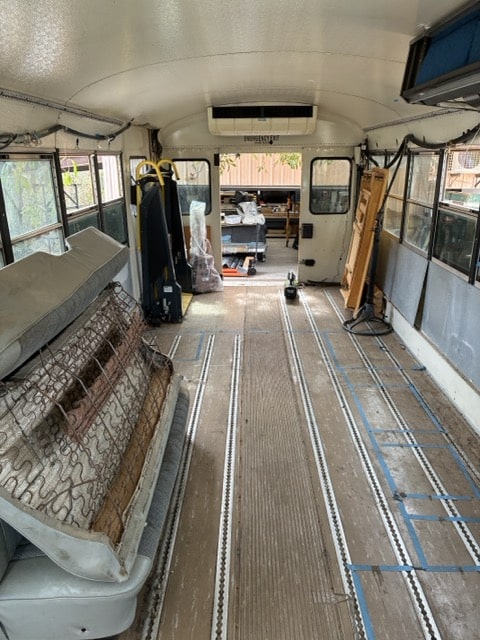
Water is number one. Unless you’ve got a massive tank or access to a natural water source with good filtration, you’re making a water run every week or two. That’s the single biggest tether.
Food storage is the other one nobody mentions. Your fridge runs on power, which solar handles, but the fridge itself is small. You’re not storing two weeks of groceries in a bus fridge. So even if your power and water are sorted, you still need to hit a grocery store regularly. Some people supplement with a chest freezer if they have the space and power budget for it, but most bus kitchens are set up for cooking fresh, which means more frequent shopping.
Propane runs out. If you’re using it for cooking, hot water, and heat, a standard pair of 20-lb tanks lasts maybe 2-3 weeks in mild weather. In winter, when you’re heating all day, you might burn through a tank in a week. Refilling is easy at most gas stations and hardware stores though, so this one’s more of a quick errand than a real limitation.
Boredom and routine — and I know that sounds weird, but I’ve read enough accounts from people who’ve done extended off-grid stretches to know this is real. After two or three weeks parked in the same spot without other people around, some folks start going a little stir crazy. The bus is great, but humans need other humans eventually.
So when you add it all up, most people land in a rhythm of going off-grid for a week or two, then pulling into town or a campground for a day to fill water, grab groceries, dump tanks, and maybe do some laundry. Then back out. That cycle can continue basically forever.
I’ve seen people do it for months at a stretch on BLM land out west, just rotating spots every couple weeks. Others park on a friend’s property with a water hookup and stay put for a whole season. There’s no single right answer because it depends entirely on how you built your bus and what kind of life you want to live in it.
After all my research on this one, here’s where I landed. The bus isn’t the limiting factor. Your systems are. Build a solid solar and battery setup, carry enough water, plan for waste, and the off-grid clock basically disappears. You’re not counting days at that point, you’re just living. And the people who’ve been doing this for years will tell you the same thing — once you figure out the rhythm, going back to grid-dependent living starts to feel like the weird option. That said, most people don’t go full hermit. They just like knowing they could if they wanted to.
w8fdzo