
You just built out this beautiful rolling home and something goes wrong mechanically. Now what? Who do you even call?
Finding a mechanic for a converted school bus isn’t as hard as people think, but it does take some homework. The engine, transmission, brakes, and drivetrain on your bus are commercial truck components — the same stuff that’s in delivery trucks, box trucks, and fleet vehicles all over the country. Any diesel mechanic or medium-duty truck shop can work on a skoolie. You don’t need a “bus specialist.” What you need is a mechanic who’s comfortable with diesel engines, air brakes, and Allison transmissions. And those mechanics are everywhere, because commercial trucks are everywhere. The tricky part isn’t finding someone who CAN work on your bus — it’s finding someone who WILL, since some shops turn away anything that looks like a DIY project.
“Who is going to fix your bus? Takes a special mechanic to work on a vehicle like that”
I heard this exact kind of comment when I first started getting into the skoolie world, and honestly it worried me for a while. The way people talk about it, you’d think you need some kind of wizard who only works on buses by appointment during a full moon.
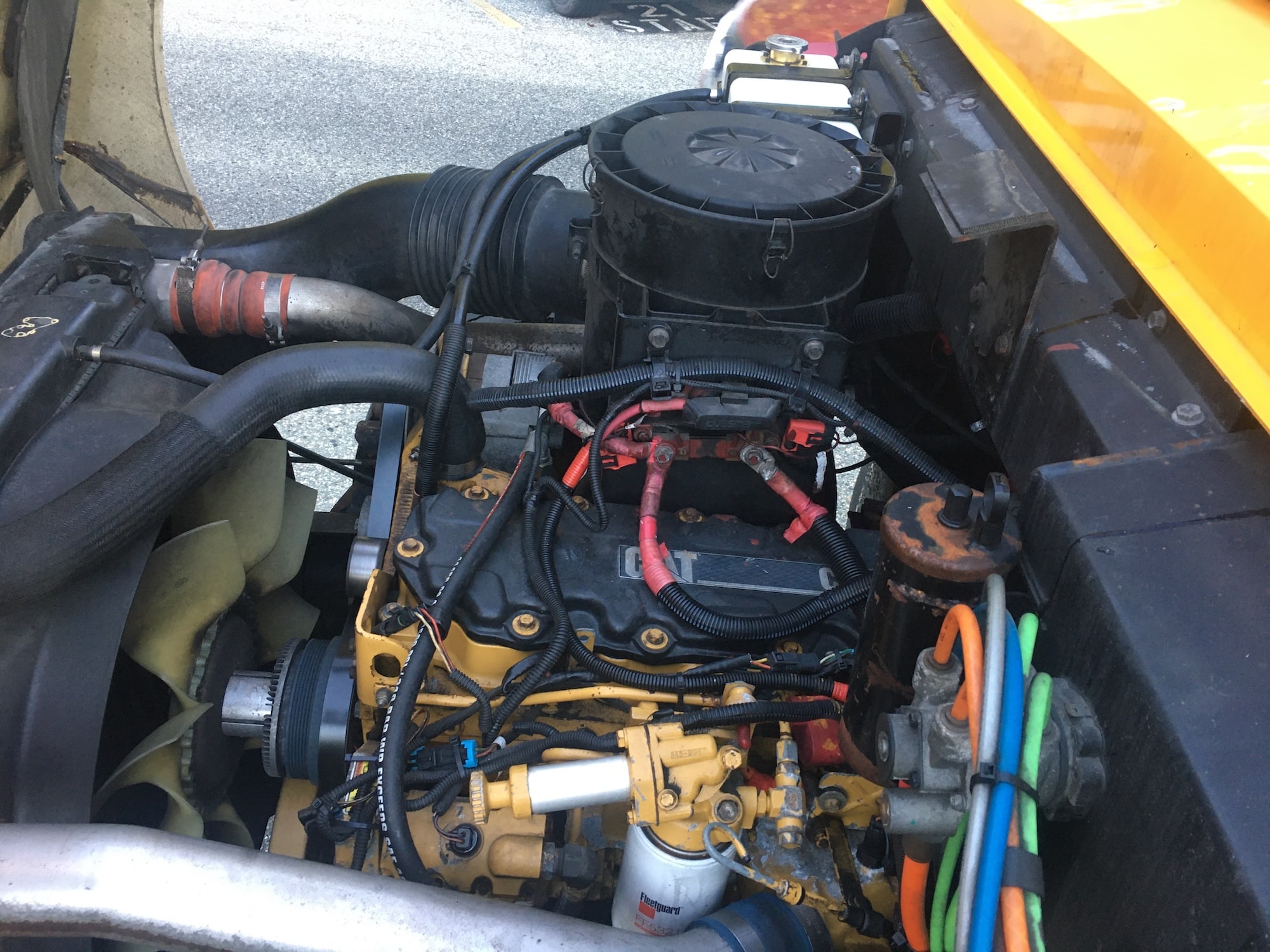
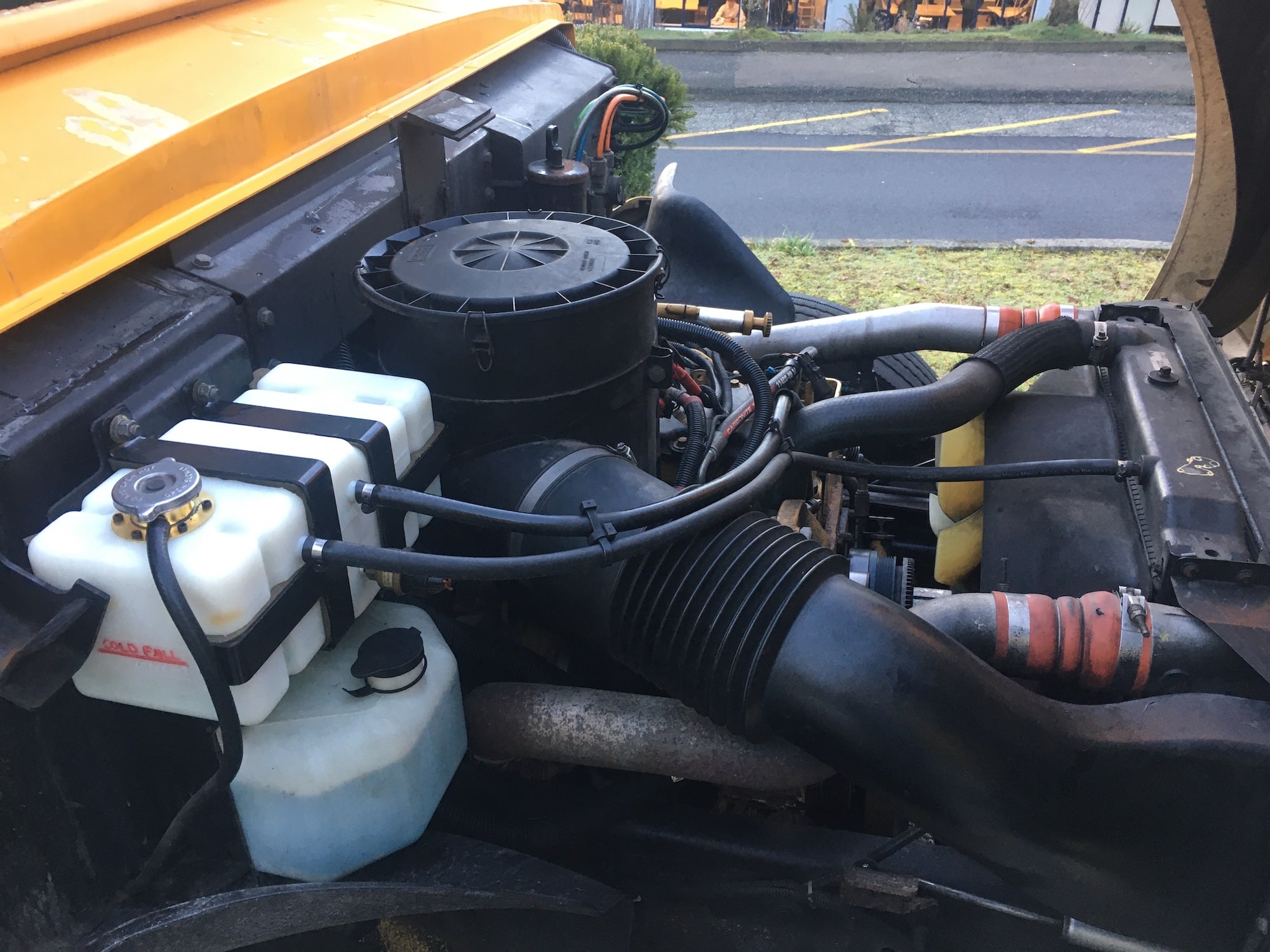
But here’s what I found out when I actually dug into it. School buses are built on commercial chassis. That means the mechanical bits — engine, transmission, differential, suspension, brakes — are the same components used in medium-duty trucks. A DT466 in a school bus is the same DT466 in an International box truck. A Cummins 5.9 is a Cummins 5.9 whether it’s in a bus or a delivery van. The Allison automatic is in everything from shuttle buses to garbage trucks.
So the “special mechanic” thing is mostly a myth. What you need is a mechanic who works on commercial vehicles or diesel trucks. That’s it. And there are a LOT of those out there. Pretty much every town of any size has at least one diesel shop or truck repair place.
I talked to a mechanic at a diesel shop once, just asking him straight up what he thought about working on a converted bus. He laughed and said “it’s the same stuff I work on all day, just with a kitchen in it.” That’s basically the reality. The engine doesn’t care that there’s a bed and a shower ten feet behind it. The transmission doesn’t know you’ve got solar panels on the roof.
Where things get slightly more specialized is if you have air brakes, which most full-size buses do. Not every small-town auto shop has experience with air brake systems. But any commercial truck shop does. And if your bus has hydraulic brakes, like many short buses on van or truck chassis, literally any brake shop can handle it.
“How do you pull into a mechanic workshop if you have a problem?”
This one’s a real practical concern that doesn’t get enough attention. You can’t just roll a 35-foot bus into the bay at Jiffy Lube. Well, you can try, but they’ll look at you like you just drove a house into their parking lot. Which, to be fair, you kind of did.
The answer is that you go where the big trucks go. Truck stops with service bays, commercial vehicle repair shops, fleet maintenance facilities, and heavy equipment mechanics. These places have bays built for vehicles way bigger than your bus. Semi trucks are 70+ feet with a trailer. Your 40-foot skoolie is nothing compared to that.
Here’s the thing though, and I wish someone had told me this earlier. You want to find these shops BEFORE you have a problem. When you’re traveling, keep a running list of diesel shops and truck repair places along your route. I started keeping notes on my phone — city, shop name, phone number, what they specialize in. Sounds a little obsessive but when you’re stuck somewhere with a problem, having a number to call beats scrolling through Google reviews in a panic.
Mobile mechanics are the other option, and honestly for a lot of skoolie owners they’re the better option. A mobile diesel mechanic will come to you. You don’t have to move the bus at all. They show up with their tools, diagnose the problem, and either fix it on the spot or tell you what you need. I’ve heard from multiple people in the community that mobile mechanics saved them when they were parked somewhere remote and couldn’t drive to a shop. The cost is usually comparable to a shop visit, sometimes a little more for the travel, but the convenience is hard to beat.
One more thing. If you’re a member of any roadside assistance program, make sure it covers your vehicle class. Some programs top out at a certain weight or length. Good Sam, Coach-Net, and some of the truck-specific roadside programs will cover a bus-sized vehicle. That’s worth looking into before you hit the road, not after you’re sitting on the shoulder of I-40 in the middle of New Mexico.
“I love how skoolies look, but I hear they’re a bear to maintain! Expensive, need special mechanics. Has that been your experience?”
So I want to push back on this a little bit because I think there’s a narrative out there that’s scarier than the reality.
Are skoolies more maintenance than a Honda Civic? Obviously yes. You’re maintaining a commercial vehicle. Oil changes take more oil. Tires cost more. Parts are bigger and heavier. But “expensive” and “special mechanics” are relative terms.
Let me put some real numbers on this. A diesel oil change on a school bus runs about $80-$150 depending on whether you do it yourself or have a shop do it. You’re changing oil every 5,000-10,000 miles depending on the engine. Fuel filters, air filters, coolant flush — all basic maintenance that any shop can do, and the parts aren’t outrageous. A fuel filter for a DT466 is like $15-$30. This isn’t exotic sports car territory.
Where it gets expensive is if you’ve ignored maintenance and something big fails. An injector replacement on a diesel can run $2,000-$4,000 for the set. A turbo replacement might be $1,500-$3,000. But these aren’t things that just randomly break on a well-maintained engine. They’re the result of years of deferred maintenance or high miles without service.
The “bear to maintain” thing usually comes from people who drove school buses professionally and watched the district mechanics deal with a fleet of 50 buses running hard every day. Yeah, in that context there’s always something breaking somewhere. But you’re not running a fleet. You’re maintaining one bus that you drive maybe 10,000-15,000 miles a year, which is nothing for a commercial diesel. The maintenance schedule on a lightly used skoolie is honestly pretty manageable compared to what these engines were designed for.
I’ll be honest, I was nervous about this too before I really got into the research. The perception is worse than the reality. Keep up with oil changes, watch your coolant, replace filters on schedule, and these engines just run. That’s why school districts kept them for 15-20 years.
“I was a bus driver too. Ours needed constant maintenance, there was always something going out. Was that your experience?”
This is a great point and it comes from someone who actually knows what they’re talking about, which I appreciate. School district buses DO need constant maintenance. But there’s context that matters.
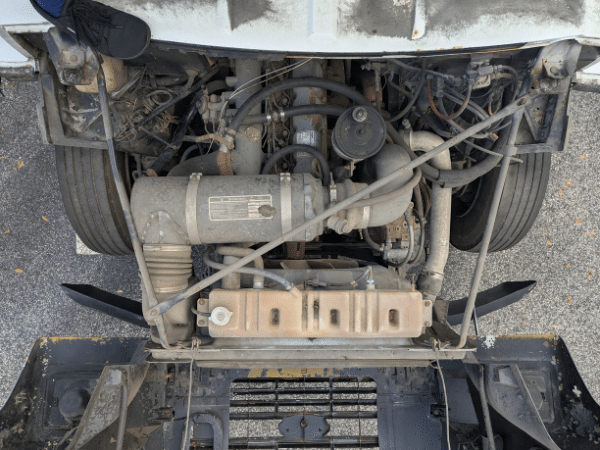
District buses run 50-100+ miles a day, five days a week, nine months a year. They’re stopping and starting dozens of times per route. Kids are beating up the interior. The driver isn’t the owner — they don’t baby it, they just drive it and report problems. The buses run in all weather. They sit on dirt lots in the summer. Districts have maintenance schedules that would make your head spin because they HAVE to, it’s a safety and liability issue when you’re hauling 70 children.
A skoolie in private use is a completely different use case. You’re driving it gently because it’s your home. You’re not making 40 stops per trip. You’re not running it hard five days a week in all conditions. And you’re paying attention to every little noise and vibration because you live in the thing and you notice everything.
The stuff that “always went out” on district buses — brake adjustments, steering components, body hardware, door mechanisms, the student seating, lighting systems — most of that either doesn’t apply to a conversion or was a result of the extreme duty cycle. The core mechanical systems — engine, transmission, axles — those are workhorses. They don’t just quit.
Now, that said. If you buy a bus that the district retired BECAUSE it was having constant problems, yeah, you’re going to have those same problems. That’s why the pre-buy inspection matters so much. But a bus that was retired on schedule, because it hit 15 years or 200,000 miles and the district policy said it was time, that bus probably has a lot of life left in it. The retirement is often about fleet policy and federal age guidelines, not because the bus was falling apart.
After looking into all of this and talking to people who’ve been doing the skoolie thing for years, here’s what I came away with. The mechanic situation is honestly one of the easier problems to solve in the whole bus life equation. Your bus engine is the same engine that’s in thousands of commercial trucks on the road right now, and the mechanics who work on those trucks can work on your bus. Build a relationship with a good diesel shop near wherever you spend the most time, keep a list of shops along your travel routes, and save the number of a mobile diesel mechanic or two. Learn the basic stuff yourself if you can — oil changes, filter swaps, checking belts and hoses — because that cuts your shop visits way down. And don’t let the maintenance reputation scare you off. These are tough, simple machines when you take care of them. People drive skoolies for years and hundreds of thousands of miles without anything catastrophic happening, and that’s not luck, it’s just what happens when you maintain a well-built commercial engine.