
You’re shopping for a bus and you’ve got a preference — or maybe just a question — about whether school buses ever came with a stick shift.
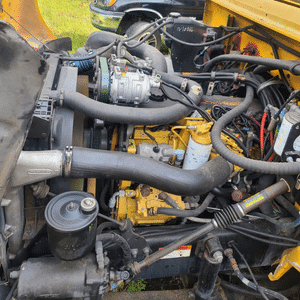
Yes, manual transmission school buses exist, but they’re rare and getting rarer every year. Most school buses built after the mid-1990s came with automatic transmissions, almost always an Allison automatic. Before that, manuals were more common, especially in the 1970s and 1980s. If you specifically want a manual school bus, you’ll be looking at older models, and you’ll have a much smaller pool to choose from. For a skoolie conversion, an automatic is almost always the better choice anyway — it’s easier to drive, easier for a second driver to learn on, and parts and service for Allison automatics are everywhere.
“Do any of these buses come with manual transmissions?”
Some do. But you have to go hunting for them.
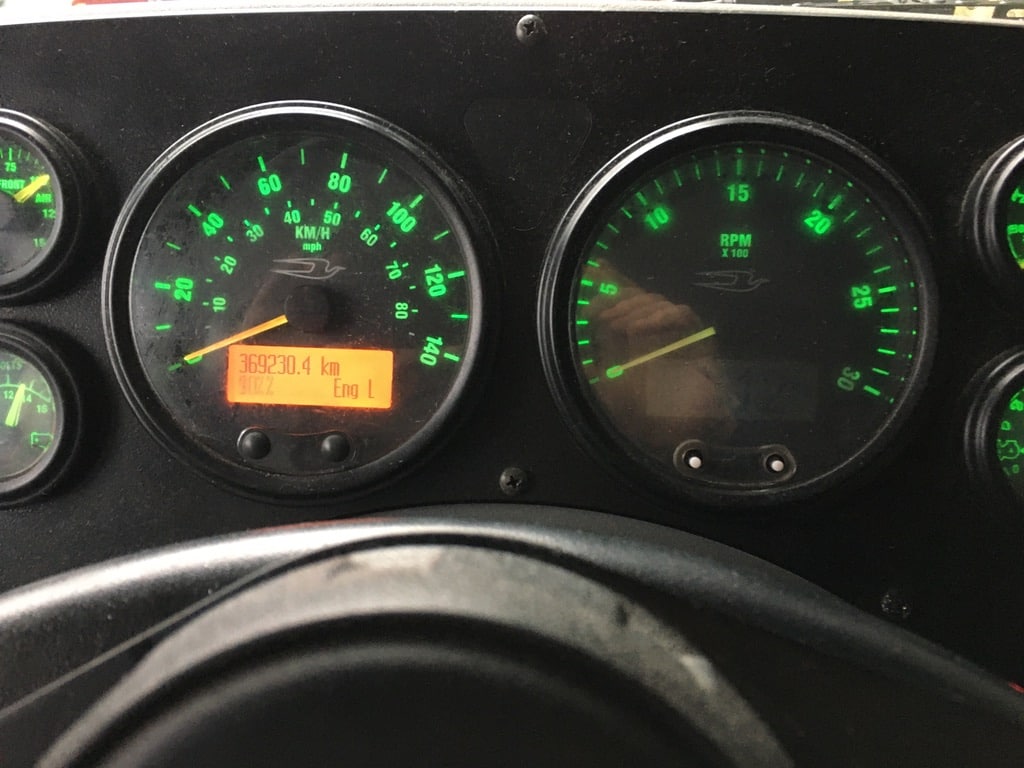
I started looking into this because I kept seeing the question pop up in forums and comment sections, and I honestly wasn’t sure of the answer myself. What I found is that manual transmissions in school buses were pretty standard up through the 1980s. A lot of the older International, Ford, and GMC chassis buses came with 4-speed or 5-speed manual gearboxes. Some of the transit-style buses had them too.
Then the Allison automatic happened. Allison makes transmissions specifically for medium and heavy-duty trucks and buses, and school districts started switching to automatics because, well, think about it from their perspective. You’re hiring bus drivers who might be 22 or might be 65, and you need every single one of them to be able to drive any bus in the fleet. Automatics made that simple. Training costs went down, driver complaints went down, and the reliability of the Allison units was just really hard to argue with.
By the mid-90s, the overwhelming majority of new school buses were rolling off the line with automatics. By the 2000s, it was basically all of them.
So if you find a manual school bus, it’s probably from the 70s or 80s. They exist on the used market, but they’re uncommon. And the ones that are out there tend to be in rougher shape just because of their age.
“I have a question……which way does a bus come automatic or stick to drive?”
Almost always automatic now. If you’re looking at buses from the last 25-30 years, you can pretty safely assume it’s an automatic unless the listing specifically says otherwise.
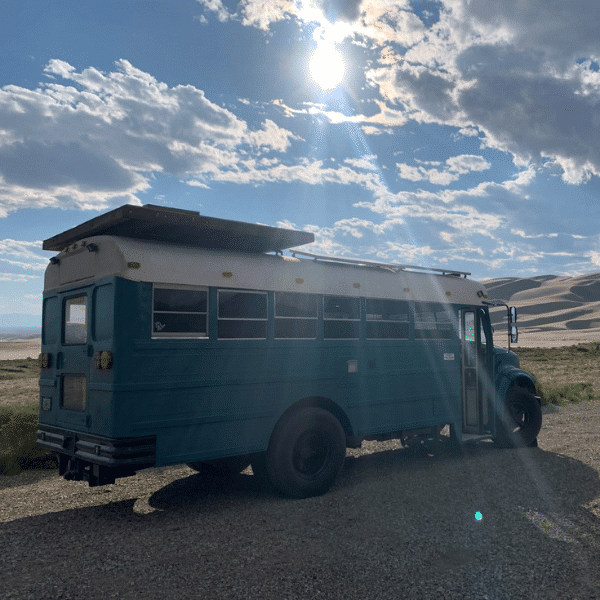
I talked to a guy selling buses at an auction once, and he said he hadn’t seen a manual school bus come through in years. He said the last one he remembered was an old flat-nose from the early 80s, and it sat on the lot for months because nobody wanted to deal with the clutch in a vehicle that size. That stuck with me.
The reason is practical. School bus transmissions take a beating. Stop, go, stop, go, all day long, through neighborhoods with speed bumps and hills and traffic. An automatic handles that abuse without the driver having to think about it. A manual in that scenario means a lot of clutch wear, a lot of shifting, and a lot more fatigue on the driver over a full route. (See our guide on How Long Does a School Bus Engine Last? for more on this.)
For the skoolie world, this is actually good news. Automatics are simpler to drive, and if your partner or a friend needs to take over driving on a long trip, they don’t need to know how to drive stick. That matters more than people think when you’re living on the road.
“What kind of bus is it? What gas does it take and is it automatic or stick?”
This is one of those questions that comes up a lot when people are first window shopping, and I get it because there are like fifteen different variables to keep straight when you’re new to this. Let me break down how the transmission piece connects to the rest.
The type of bus determines a lot. Type C buses — the conventional ones with the dog nose hood — are almost all automatic. Type D buses, the flat-front ones, same thing. Short buses (Type A) on a van chassis are automatic. The only real exceptions are some older specialty vehicles or buses that were custom-ordered by smaller school districts decades ago. (See our guide on What’s the Difference Between Front Engine and Rear Engine Buses? for more on this.)
As for fuel, that’s a separate question from the transmission, but they tend to go together in certain ways. Older manual buses were often paired with gas engines — the Ford 370 or 429 V8s were common. Diesel manuals existed too, but once the diesel engines started getting paired with Allison automatics in the late 80s and early 90s, the manual pretty much disappeared from the diesel bus world.
So if someone’s asking “what does it take and is it stick or automatic” about a bus they’re looking at from the 2000s or newer, the answer is almost certainly diesel and automatic. If it’s a short bus, it could be gas and automatic. If it’s something from the early 80s with a gas engine, there’s a chance — maybe — it’s a manual.
Related: What Kind of Gas Mileage Does a Skoolie Get?
“Are buses made that have a flat face and a stick trans?”
Now this is a specific question. Flat-face means a Type D bus, also called a flat-nose or transit-style bus. The driver sits right up at the front with no hood in front of them.
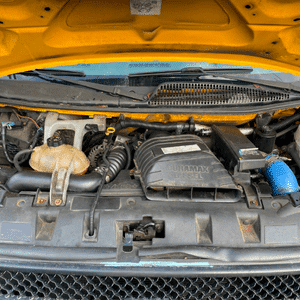
And yes, some of these were made with manual transmissions. But we’re talking decades ago. The old Crown Supercoach from the 1960s and 70s, for instance, some of those came with manuals. Some of the older Gillig transit buses had manual options. A few of the early Blue Bird All Americans and Wayne flat-noses from the 70s and early 80s had stick shifts too.
Here’s the thing though. I spent a while digging through old listings and forums trying to figure out how realistic it would be to actually find one of these, and the honest answer is it’s really hard. Most of the flat-nose manuals from that era are either long gone, rusted out, or sitting in someone’s field as a project that never happened. The ones that do surface at auction or on Craigslist tend to have serious mechanical needs because a 40-50 year old bus with a manual transmission has lived a hard life.
If you’re dead set on a flat-face manual, you’ll probably need to be patient and flexible on location. Check govdeals.com, Facebook Marketplace in rural areas, and keep an eye on bus enthusiast forums. But honestly, I’d ask yourself why you want the manual in the first place, because that answer might change your search.
Some people want it because they think manuals are more reliable or they prefer the driving feel. And I understand that. In a car or a truck, I get the appeal of a manual. But in a 20,000+ pound bus? It’s a different animal. The clutch pedal is heavy, the shifts are long, and you’re going to be rowing through gears at every single stop sign and red light and campground entrance for as long as you own it. In a skoolie that you’re driving across the country and parking in tight spots, that gets old fast.
Others want it because they’ve heard automatics are expensive to rebuild. And that’s fair, an Allison rebuild can run $2,000-$4,000. But Allison automatics are tanks. They regularly go 300,000-500,000 miles before needing major work. A manual transmission clutch in a heavy bus might need replacing every 100,000-150,000 miles depending on how it was driven, and that’s not cheap either when you factor in the labor to pull a transmission out of a bus. (See our guide on How Many Miles Is Too Many When Buying a School Bus? for more on this.)
The Allison is one of those things where, the more I researched it, the more impressed I got. There’s a reason every school district in America switched to them. They just work. And when they do eventually need service, every truck shop in the country knows how to work on them.
So here’s where I landed on all of this. Can you find a school bus with a manual transmission? Yes. Should you go out of your way to get one? Probably not, unless you have a very specific reason and you’re comfortable doing your own mechanical work on an older vehicle. For most people converting a bus to live in or travel in, the automatic is the right call. It’s easier to drive, easier to maintain long-term, and the infrastructure for parts and service is just massively better. If you find a killer deal on a manual bus and the rest of the bus checks out — good engine, solid body, reasonable miles — then sure, don’t pass it up just because of the transmission. But I wouldn’t make “manual transmission” a search filter. You’ll be looking for a long time, and when you find one, you might wish you hadn’t. (See our guide on Should You Buy a Gas or Diesel School Bus? for more on this.)