
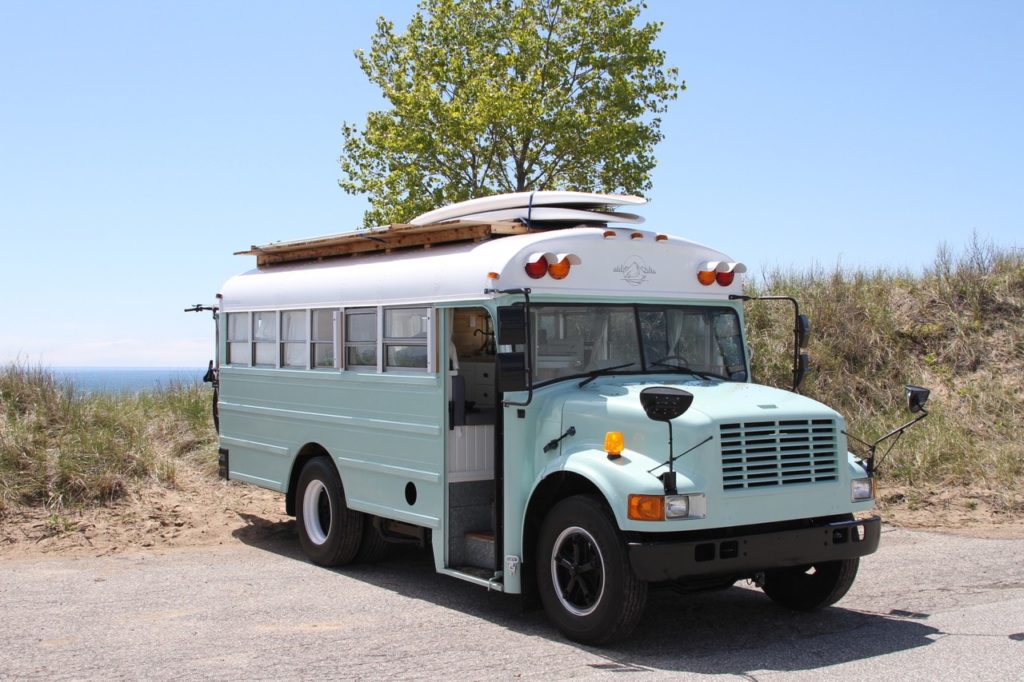
This is probably the most common debate in the bus life community, and honestly I’ve gone back and forth on it myself. You see a beautiful skoolie build on YouTube, you get excited, and then your spouse or your buddy says “why don’t you just buy an RV?” It’s a fair question. I’ve spent a lot of time digging into the actual numbers and talking to people who’ve done both, and the answer is more nuanced than either side wants to admit.
If you want something truly yours, built exactly the way you want it, and you’re willing to put in the work, a skoolie will give you more space, more durability, and more character for significantly less money. A comparable RV would cost two to four times more. But if you want something ready to go this weekend with a warranty and easy financing, an RV is the obvious choice. Neither answer is wrong. It depends entirely on what you value.
“It’s cool, I’ll admit that. But wouldn’t it have been way cheaper to just buy a used RV?”
Cheaper in dollars? Sometimes. Cheaper in total value? Almost never. (See our guide on Is a Skoolie Cheaper Than Buying an RV? for more on this.)
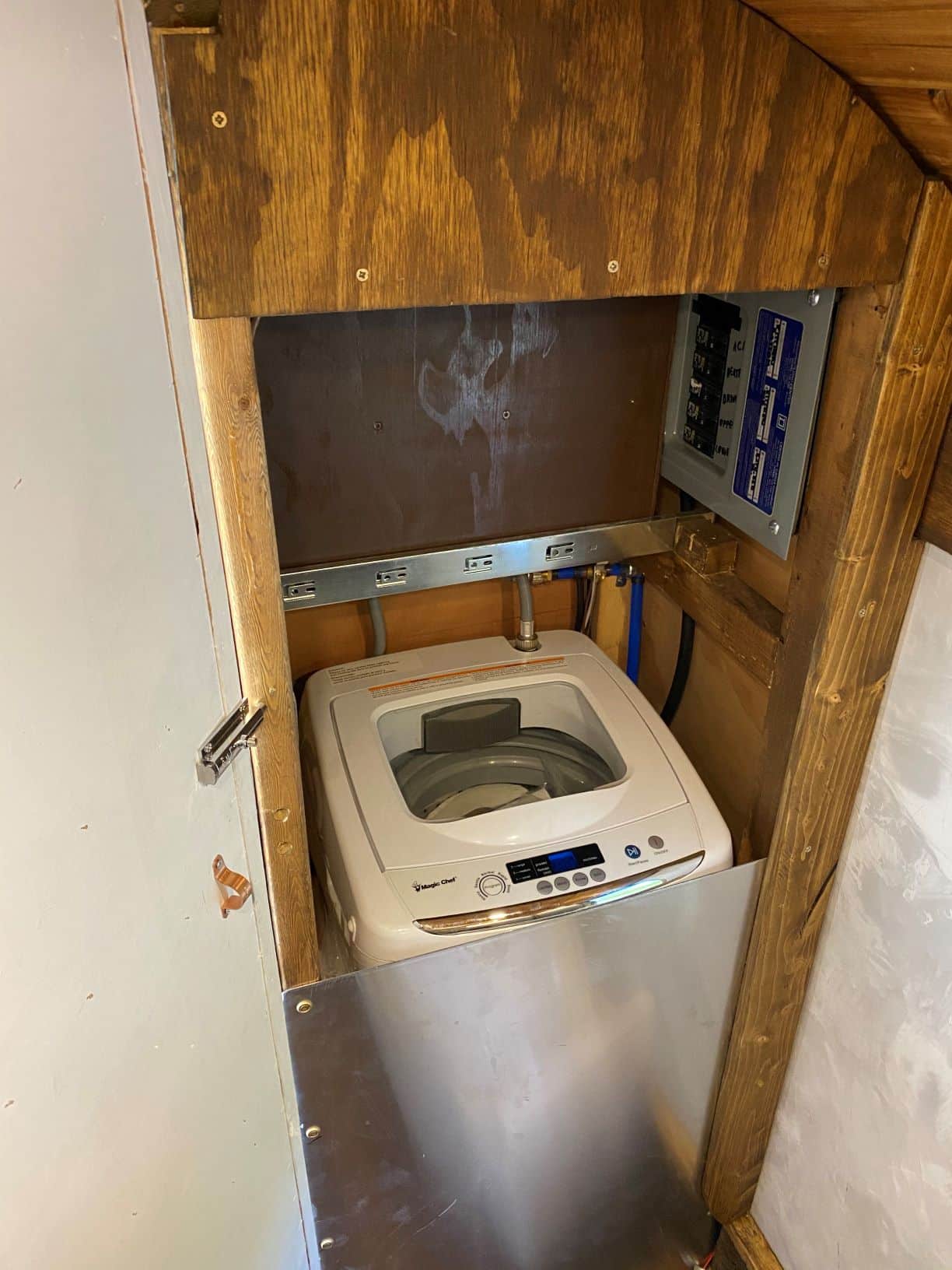
Here’s what I mean. A used Class A motorhome that gives you roughly the same living space as a converted 40-foot school bus is going to run you $40,000 to $80,000 for something in decent shape. And “decent shape” in the RV world is relative, because RV construction quality is, well, I’ll get into that in a minute.
A school bus costs $3,000 to $8,000. A solid DIY conversion runs $15,000 to $30,000 in materials. So you’re looking at maybe $20,000 to $35,000 all-in for a skoolie versus $40,000 to $80,000 for a used Class A. And the skoolie has a commercial-grade chassis, a diesel engine built to run for 300,000+ miles, and an interior that was designed and built by you, for you. (See our guide on Should You Buy a Gas or Diesel School Bus? for more on this.)
I was watching a video a while back where a guy walked through his RV and pointed out all the places where the manufacturer had cut corners. Stapled-on trim, particle board cabinets that were already swelling from humidity, a roof that was basically a sheet of rubber over thin plywood. He’d owned it for three years. Meanwhile the school bus chassis his neighbor had was originally built to haul 72 kids safely through Minnesota winters for 15 years. There’s a reason those buses last so long. (See our guide on Where Do You Buy a School Bus for Conversion? for more on this.)
But I want to be honest about this. A used RV is ready to go. You drive it off the lot, you have a kitchen, a bathroom, a bed, air conditioning, a generator, everything. A skoolie conversion takes months or years of work. That’s not nothing. Time has value.
“This looks very cool and very cool family experience. Why not get an RV? What’s the difference?”
The biggest differences come down to three things: build quality, customization, and cost per square foot.
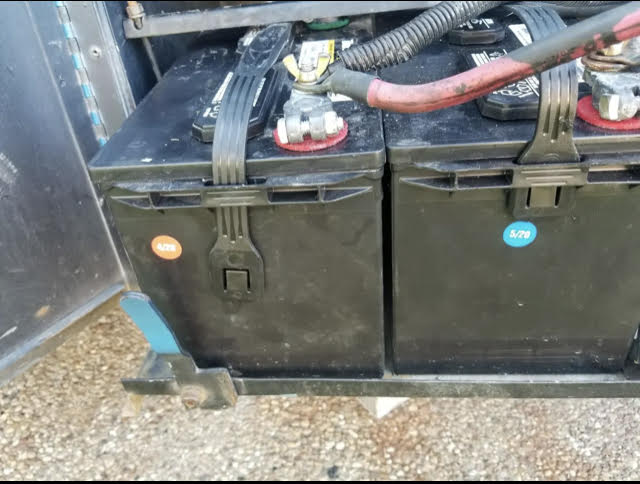
Build quality first. School buses are built to federal safety standards for transporting children. The steel in a bus body is thicker than what you’ll find in any RV. The frames are designed to handle rough roads, potholes, gravel, all of it. RVs are built to be lightweight because weight affects fuel economy and towing capacity, so manufacturers use the thinnest materials they can get away with. I’m not exaggerating when I say some RV walls are essentially two thin sheets of fiberglass with a piece of styrofoam between them.
Customization is the other huge one. With a skoolie, you decide everything. Where the kitchen goes, how big the bathroom is, whether you want a wood stove or a mini split, how much counter space you need, where the dog sleeps. With an RV, you get what the factory decided. And factory layouts are designed around what sells on a showroom floor, not necessarily what works best for actually living in. (See our guide on How Much Does It Cost to Convert a Bus Into a Home? for more on this.)
Cost per square foot, and this is where it gets interesting. A 40-foot school bus gives you roughly 245 square feet of usable interior space. A Class A motorhome of similar length gives you maybe 200-220 square feet because of the cab design and slide-out mechanisms. The skoolie gives you more raw space for less money.
For families specifically, I think the skoolie makes even more sense because you can design the layout around your family. Bunk beds where you want them, a homeschool area, storage for bikes and gear. Try finding an RV that has all that without spending $150K.
“Why not just buy a regular house since you’re spending lots of money buying all the supplies for the school bus?”
I actually love this question because it gets at something deeper than just money.
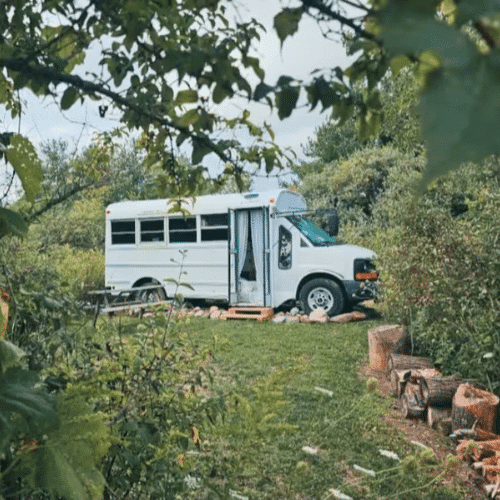
Yes, you could take the $25,000 you’d spend on a bus conversion and put it toward a down payment on a house. In some markets that’s enough for 5% down on a starter home. But then you have a mortgage, property taxes, homeowners insurance, maintenance, utilities, and you’re tied to one location. The monthly cost of homeownership in most of the US is $1,500 to $2,500 minimum when you add everything up.
A paid-off skoolie? Your monthly costs are fuel, insurance (which is surprisingly cheap, like $100-200/month), food, and maybe a campground fee here and there. People in the bus life community regularly report monthly expenses of $800 to $1,500 total. For everything.
I read a forum post from a couple who sold their house, built a skoolie for $28,000, and in the first year of full-timing they saved more money than they had in the previous three years of homeownership combined. That’s not because they were making more money. It’s because their expenses dropped by like 60%. (See our guide on Is a Short Bus or Full-Size Bus Better for a Conversion? for more on this.)
And there’s the freedom thing, which you can’t really put a number on. But people do it anyway and I get why. Waking up at a different lake or mountain or beach town whenever you want is not the same thing as waking up in the same house in the same neighborhood with the same commute. Some people love stability. Some people need to move. Neither is wrong.
“Really, though. How much money are we saving versus buying a new motorhome?”
Let me just lay out some real numbers because I think this is where the conversation gets useful.
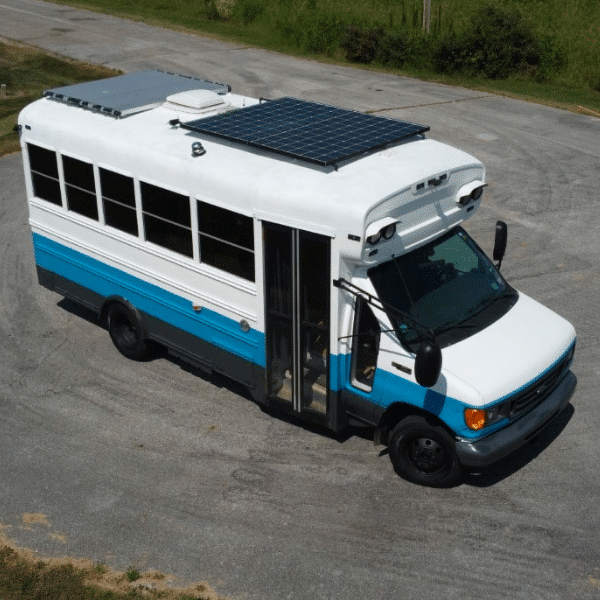
A new Class A motorhome, the kind that gives you comparable living space to a converted full-size school bus, starts around $80,000 for a basic model and goes up to $250,000+ for a nice one. A new Class C, which is smaller, starts around $60,000. A decent fifth wheel with a truck to pull it, you’re looking at $50,000 to $100,000 combined.
A skoolie conversion, all-in, for most DIY builders lands between $15,000 and $35,000. Let’s call it $25,000 for a nice build with solar, a full bathroom, good insulation, and quality finishes.
So the savings versus a new motorhome is somewhere between $35,000 and $200,000 depending on what you’re comparing against. Even versus a used RV, you’re saving $15,000 to $50,000 in most cases.
But here’s something people forget about. RVs depreciate like crazy. A new motorhome loses 20-30% of its value the moment you drive it off the lot. After five years you’ve lost 40-50%. A $100,000 motorhome is worth maybe $50,000 to $60,000 five years later. Skoolies, weirdly, tend to hold their value better because each one is unique and there’s steady demand in the community. I’ve seen people sell their skoolies for close to what they put into them, sometimes more if the build is really well done.
“Instead of all the time and effort of the tear down why not just build a tiny house?”
This one comes up a lot and it’s actually a reasonable comparison. Tiny houses and skoolies share a lot of DNA, they’re both small-space living, both involve custom builds, both attract people who want to simplify.
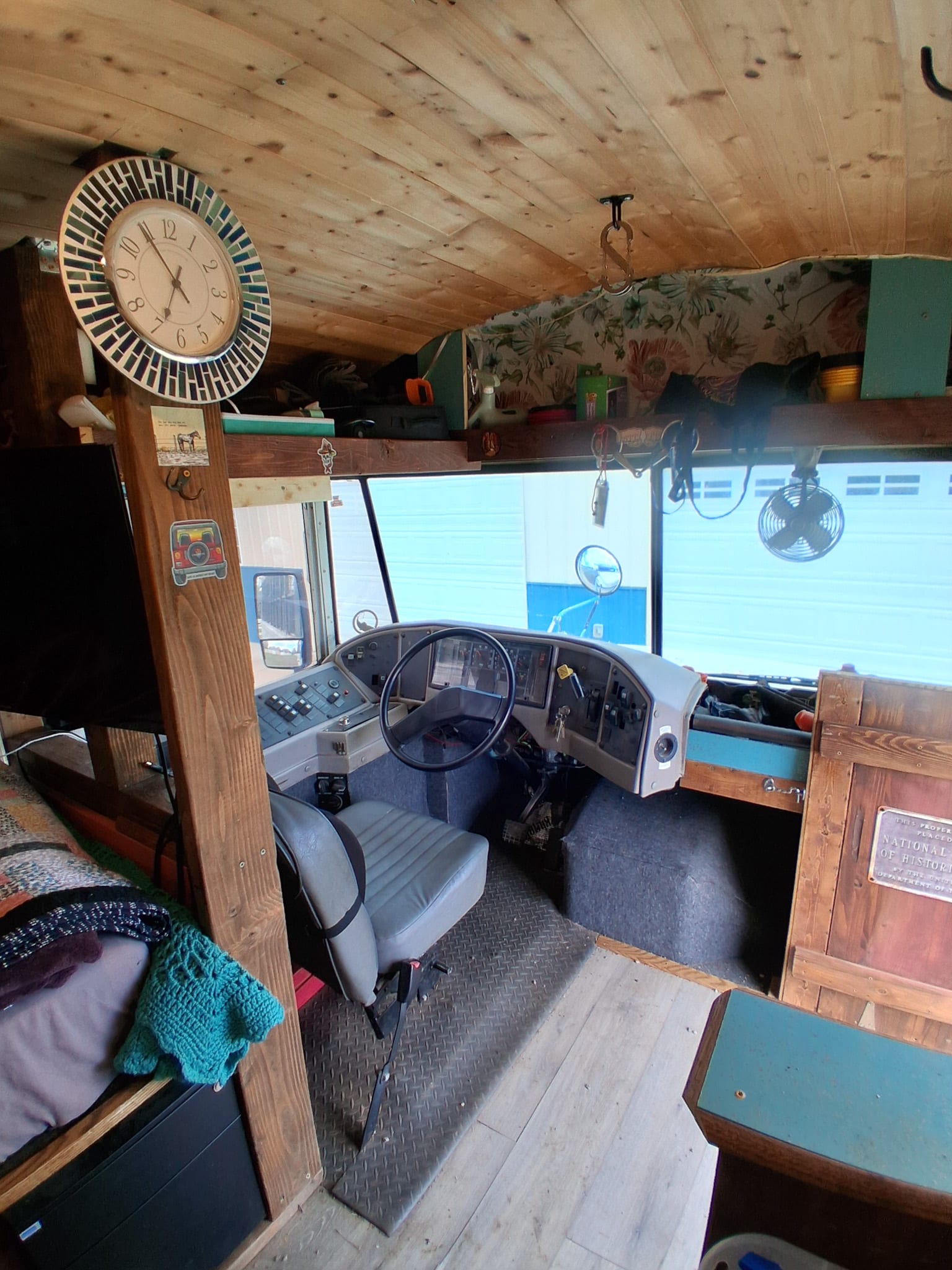
The big difference is mobility. A tiny house on a trailer can technically be moved but most people build them and then park them semi-permanently. A skoolie is designed to drive. It has an engine, it’s self-contained, you can wake up and go somewhere else tomorrow. If your plan is to travel and explore, a tiny house doesn’t really work for that.
Cost-wise they’re actually similar for a DIY build, maybe $20,000 to $40,000 for either one. But a tiny house has additional costs a skoolie doesn’t. You need land to park it on, or you need to rent a spot. You might need a septic hookup or utility connections. Zoning laws for tiny houses are a nightmare in most places, even worse than for buses honestly.
I was talking to someone who built a tiny house and they said the hardest part wasn’t the build, it was finding a legal place to put it. They ended up in an RV park anyway. At that point, why not have wheels and an engine?
“This is my goal. My family is getting either a 5th wheel or starting the conversion process on a bus this year.”
If you’re deciding between a fifth wheel and a bus conversion, that’s actually a tighter comparison than bus versus motorhome, and I think it’s worth thinking through carefully.
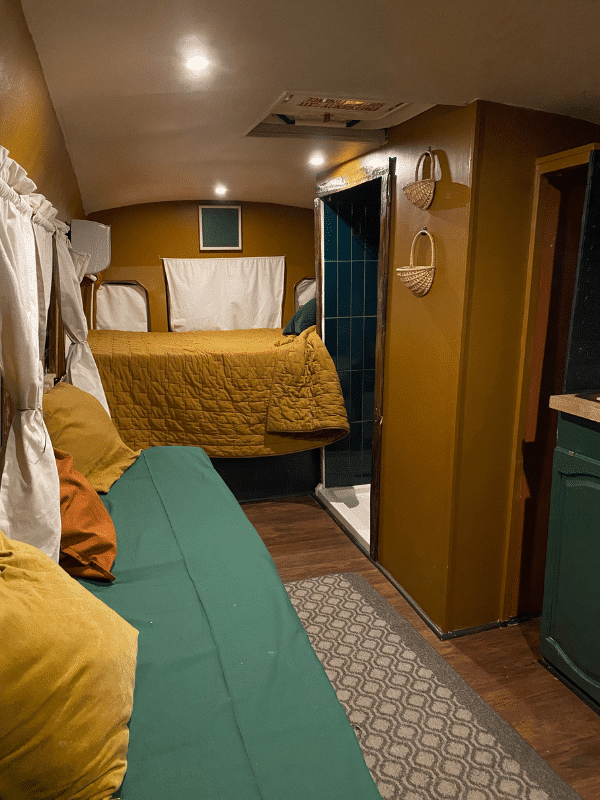
Fifth wheels are nice. Really nice, actually. Modern fifth wheels have more living space than most motorhomes because they use that over-cab area, and the construction quality on higher-end fifth wheels is better than most motorhomes. You can get into a decent used fifth wheel for $15,000 to $30,000, which puts it in the same budget range as a skoolie build.
The tradeoff is that you need a truck. A truck capable of towing a fifth wheel is going to run you $20,000 to $40,000 used for something reliable. So now your total cost is $35,000 to $70,000 versus $20,000 to $35,000 for a skoolie. You do get the advantage of having a separate vehicle for running errands and exploring once you’re parked, which is genuinely useful and something skoolie people solve by towing a car or buying a scooter.
For a family I think it comes down to this. Do you want a move-in ready situation where you can be on the road in a week? Fifth wheel. Do you want to build something together as a family project, save money, and end up with exactly the space you designed? Bus. Both are valid. I’ve seen families thrive in both setups.
One thing I will say, and this is purely from reading other people’s experiences, is that families who build a bus together seem to have a particular kind of bond with their rig that fifth wheel families don’t always describe. There’s something about having built the walls you sleep in. I don’t know. Maybe that’s sentimental. But I keep hearing it.
“For how much you paid for the bus. The time and money it takes to convert it into a RV would it not be cheaper to just buy a RV that’s already done and ready to travel?”
So let’s actually break this down honestly, because if you factor in the value of your time the math gets more complicated.
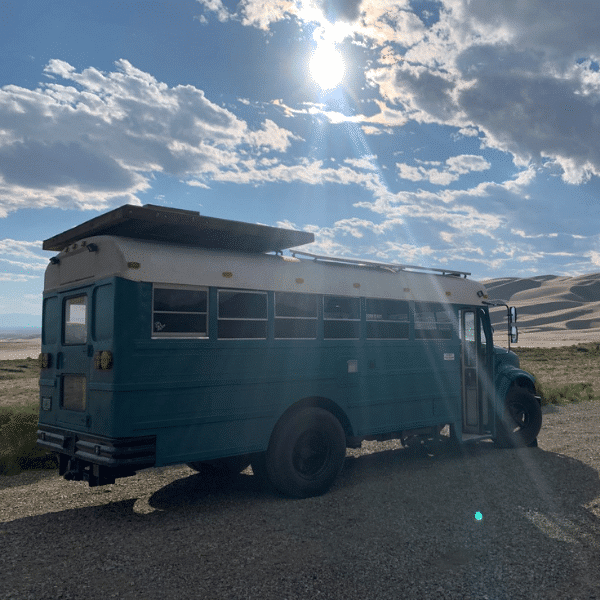
If your bus costs $5,000 and your build costs $25,000 in materials, you’re at $30,000. A comparable used RV is maybe $45,000 to $60,000. So you saved $15,000 to $30,000 in purchase price.
But a bus conversion takes, on average, 6 to 18 months of weekends and evenings. If you value your time at $25/hour and you put in 500 hours, that’s $12,500 in “labor” you donated to the project. Now the savings shrinks quite a bit.
Here’s the thing though, and I genuinely believe this. Most people who build a skoolie don’t look at those hours as a cost. They look at them as the whole point. It’s a project. It’s creative. You learn plumbing and electrical and carpentry and problem-solving. You end up with skills and confidence you didn’t have before. I talked to a builder once who said the six months he spent on his bus were the most fulfilling six months of his adult life, and he meant it.
If you just want a vehicle to travel in and you have the budget, buy an RV. Seriously. There’s nothing wrong with that and anybody who tells you otherwise is being weird about it. But if the building process appeals to you, if you watch those YouTube videos and think “I want to do that,” then the skoolie makes sense even if the pure math is closer than people think.
“What’s the cost benefits to just buying an RV or Air BnB vacations?”
This is a totally different angle and I’m glad someone asked it because not everyone is talking about full-time living. Some people just want to take better vacations.
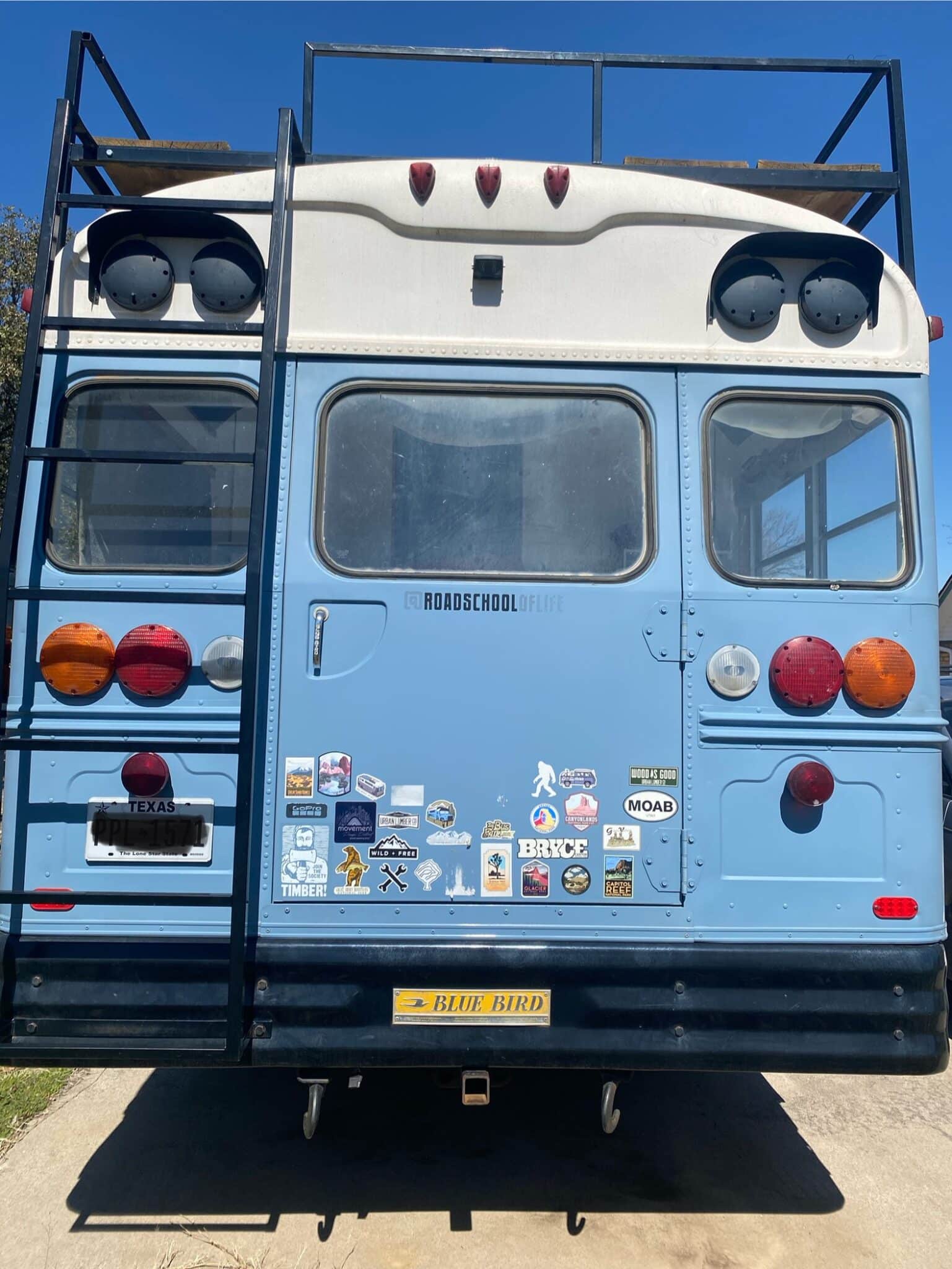
If you’re comparing a skoolie or RV against just doing Airbnb vacations, the math depends on how often you travel. An Airbnb averages maybe $100 to $200 a night in most vacation areas. If you take four weeks of vacation per year that’s $2,800 to $5,600 annually on lodging alone.
A paid-off skoolie or RV has campground costs of maybe $20 to $50 a night, or free if you’re boondocking on public land. Four weeks of vacation in your own rig might cost $500 to $1,400 in campground fees. Plus fuel obviously, but you’d be paying for gas to get to an Airbnb too.
Over five years, the Airbnb route costs $14,000 to $28,000 in lodging. A skoolie that cost $25,000 to build has paid for itself in 5-10 years on vacation savings alone. Plus you OWN it. You can sell it. You can use it whenever you want without checking availability or dealing with cleaning fees.
The real advantage of the bus or RV though isn’t financial, it’s spontaneity. You don’t have to plan. You don’t have to book. It’s Thursday night and you want to be at the beach tomorrow? Just go. That kind of freedom is hard to quantify but once people have it they rarely give it up.
Look, I started researching all this because I was genuinely curious which option made sense, and what I keep coming back to is that the “right” answer depends on what you’re optimizing for. If it’s money, the skoolie wins almost every time. If it’s convenience, the RV wins. If it’s flexibility, maybe the Airbnb route is actually fine for you. There’s no universal right answer here, which I know is annoying to hear but it’s the truth. Figure out what matters most to you and the decision gets a lot simpler.