

Insurance was the part of this whole bus conversion journey that made me want to throw my laptop across the room. Not because you can’t get it, but because finding a straight answer about who actually writes these policies feels like pulling teeth. Every forum thread contradicts the last one, and half the companies people recommend will tell you no before you even finish explaining what a skoolie is. (See our guide on Can You Get Insurance for a Converted School Bus? for more on this.)
The companies that actually insure bus conversions are National General (now under Allstate), Good Sam Insurance, Roamly, and sometimes State Farm or Progressive depending on the agent. National General is the most widely used in the skoolie community. Roamly was built specifically for DIY conversions and is the best option if you’ve got modifications like a wood stove. Good Sam gives you a discount with membership. State Farm and Progressive are hit or miss — it depends entirely on your local agent. Expect to pay $800-$2,000 per year for full coverage, and get at least three quotes because prices vary wildly between companies.
For a broader overview, check out our complete guide to insuring a converted bus. This article is specifically about the companies and what to expect from each one.
—
Why Regular Insurance Companies Say No
I called Geico once just to see what would happen. Told the agent I had a 2005 International 3800 that I’d converted into a motorhome. There was this long pause, and then she asked me to repeat what the vehicle was. I explained it again. Another pause. Then she said something like, “Sir, we don’t have a vehicle classification for that.” And that was the end of the conversation. She wasn’t rude about it, she genuinely couldn’t help me because the system literally didn’t have a box for what I was describing. (See our guide on How Do You Register a Converted School Bus as an RV? for more on this.)
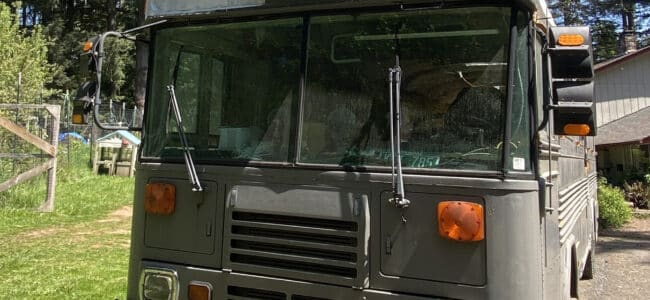
That’s the core issue. Geico, Liberty Mutual, Nationwide, Farmers — they insure standard vehicles. A school bus someone gutted and turned into a tiny home? Their dropdown menus don’t go there. The software that generates quotes cannot process a vehicle type that doesn’t exist in their system. It’s not personal, they just don’t have a product for it.
The other thing that trips people up is the title. If your bus is still titled as a school bus or commercial vehicle, even the specialty companies will have a hard time with it. You need that RV or motorhome title first. We cover the re-titling process in our registration guide, and honestly, getting the title changed should be step one before you even start shopping for insurance.
National General (The Most Popular Option)
If you spend any time in skoolie Facebook groups or forums asking about insurance, National General is the name you’ll see over and over. And there’s a good reason for that — they’ve been writing policies on converted vehicles for years and their system actually has a category for what we’re doing.

National General is now technically a subsidiary of Allstate, which confuses people. The important thing is that National General’s RV insurance division operates separately from Allstate’s regular auto side. So if you call Allstate, they might say no. Call National General’s RV line specifically, different story.
The process is straightforward. You’ll need your RV title, photos of the interior and exterior, and a declared value for the conversion. They’ll ask about your build — sleeping area, kitchen, bathroom. They want to see that it’s a living space, not just an empty bus. Then they generate a quote based on your declared value, driving record, state, and whether you’re living in it full-time. (See our guide on Do You Need a CDL to Drive a Skoolie? for more on this.)
I found that rates tend to run $800-$1,500 per year for full coverage on a typical conversion valued between $20,000 and $50,000. Liability only is cheaper, usually $400-$700. (See our guide on Is a Short Bus or Full-Size Bus Better for a Conversion? for more on this.)
One tip I picked up from a forum thread. If the first agent seems confused, hang up and call back. Not every agent on their team has insured a bus conversion before. People have reported being denied by one agent and approved by another at the same company on the same day.
Good Sam Insurance
Good Sam has been insuring RVs since before the skoolie movement was even a thing. They’re backed by Camping World and they cover everything from factory-built Class A motorhomes to tiny teardrop trailers, and yes, converted buses. If you’re a Good Sam member (around $30 a year), you get a discount on your premium. They also bundle well if you’re already in their ecosystem.

“What companies offer insurance for skoolies?”
Good Sam is one of the first I’d recommend calling after National General. Their coverage options are solid — liability, collision, comprehensive, full-timer coverage, and personal effects coverage that protects your stuff inside the bus if it’s damaged or stolen.
Here’s the catch though, and I want to be upfront about it. Their agents vary wildly in how much they know about bus conversions. Good Sam insures thousands of factory-built RVs, and that’s what most agents deal with day to day. I read about one couple who called Good Sam three times. First agent said no. Second agent said maybe and never called back. Third agent processed the whole thing in 30 minutes. Same company, three completely different experiences. If your first call doesn’t go well, try again.
Roamly
Roamly is the new kid compared to National General and Good Sam, but they’ve carved out a niche that really matters to us. They were built from the ground up to insure DIY conversions — vans, buses, trucks, whatever you’ve turned into a home.
“How do you get insurance on something like this?”
This is the company I’d point you to if you’re frustrated and just want someone who gets it. Roamly doesn’t need you to explain what a skoolie is. You can get a quote on their website without playing phone tag, which is refreshing after hours on hold with companies that ultimately say no.
The process is online-first. Fill out info about your vehicle, your build, your modifications, and they generate a quote. The whole thing can happen in one sitting without talking to anyone.
“Would love to know how you got insurance with a wood stove.”
This is where Roamly really shines. Wood stoves are the thing that makes most insurance companies run screaming. An open flame in a moving vehicle built mostly of wood and insulation? From an underwriter’s perspective, that’s about as risky as it gets. National General won’t touch it. Most Good Sam agents won’t either. But Roamly actually understands that the alternative living community uses wood stoves, and they’ve figured out how to underwrite the risk.
Your premium will be higher with a wood stove, sometimes significantly. But at least you’re actually covered. And that matters, because the alternative is lying about having a wood stove on your application, and if your bus ever has a fire, that lie means your entire policy is void. You’d get nothing. Roamly gives you a legit way to be honest about your setup and still have coverage.
The downside to Roamly is that they tend to be pricier than National General or Good Sam for the same coverage level. I’ve seen people report premiums that are 20-40% higher through Roamly compared to National General. You’re paying for the convenience, the understanding, and the willingness to cover modifications that other companies won’t. For some people that premium is absolutely worth it. For others who have a straightforward build with no unusual modifications, National General or Good Sam might be the better value.
State Farm and Progressive (Hit or Miss)
I’m lumping these two together because the experience with both of them follows the same frustrating pattern. The company itself doesn’t have a standard product for bus conversions. But individual agents sometimes figure out how to make it work anyway.

“Who is your ins company? Geico telling me no”
Here’s the thing with State Farm. They don’t have a skoolie policy. What they have is a network of independent agents who have some flexibility in how they classify and write policies. Some agents, maybe one in twenty, have figured out how to classify a converted bus in their system in a way that generates a legitimate policy. These agents usually have experience with custom vehicles or have dealt with the RV community before.
I talked to a guy online who said his State Farm agent insured his 40-foot skoolie in about 20 minutes. Full coverage, reasonable rate, no drama. He said his agent had already insured two other bus conversions in the area and knew exactly how to handle it. Meanwhile, in the same Facebook group thread, someone else said their State Farm agent laughed when they asked about it and said they’d never even heard of a skoolie. Same company. Totally different outcomes.
Progressive is similar but from a different angle. They’ve been expanding their RV division and have started covering some converted vehicles. Their online quote system might let you get pretty far before hitting a wall. But with amateur builds specifically, some agents get nervous. They’re more comfortable with professional conversions or builds with solid documentation.
My advice with both: try them, but don’t count on them. If State Farm says yes, great, their pricing tends to be competitive. If they say no, move on. Same with Progressive — get a quote, see what happens, but have National General or Roamly as your backup. The people who have the best luck with State Farm tend to be in smaller towns where the agent knows their community. If someone in the skoolie community can refer you to a specific agent who’s done it before, that’s gold.
What to Tell the Insurance Company
“Very nice work… I CAN NOT find anyone to insure it. Can you give me a few companies?”
When people tell me they can’t find anyone to insure their bus, the first thing I ask is what they’re saying when they call. Because how you describe your vehicle actually matters a lot. If you call up and say “I have a school bus I’ve been converting,” you’re already starting off on the wrong foot with most companies. The word “school bus” triggers a specific classification in their system that leads nowhere good.
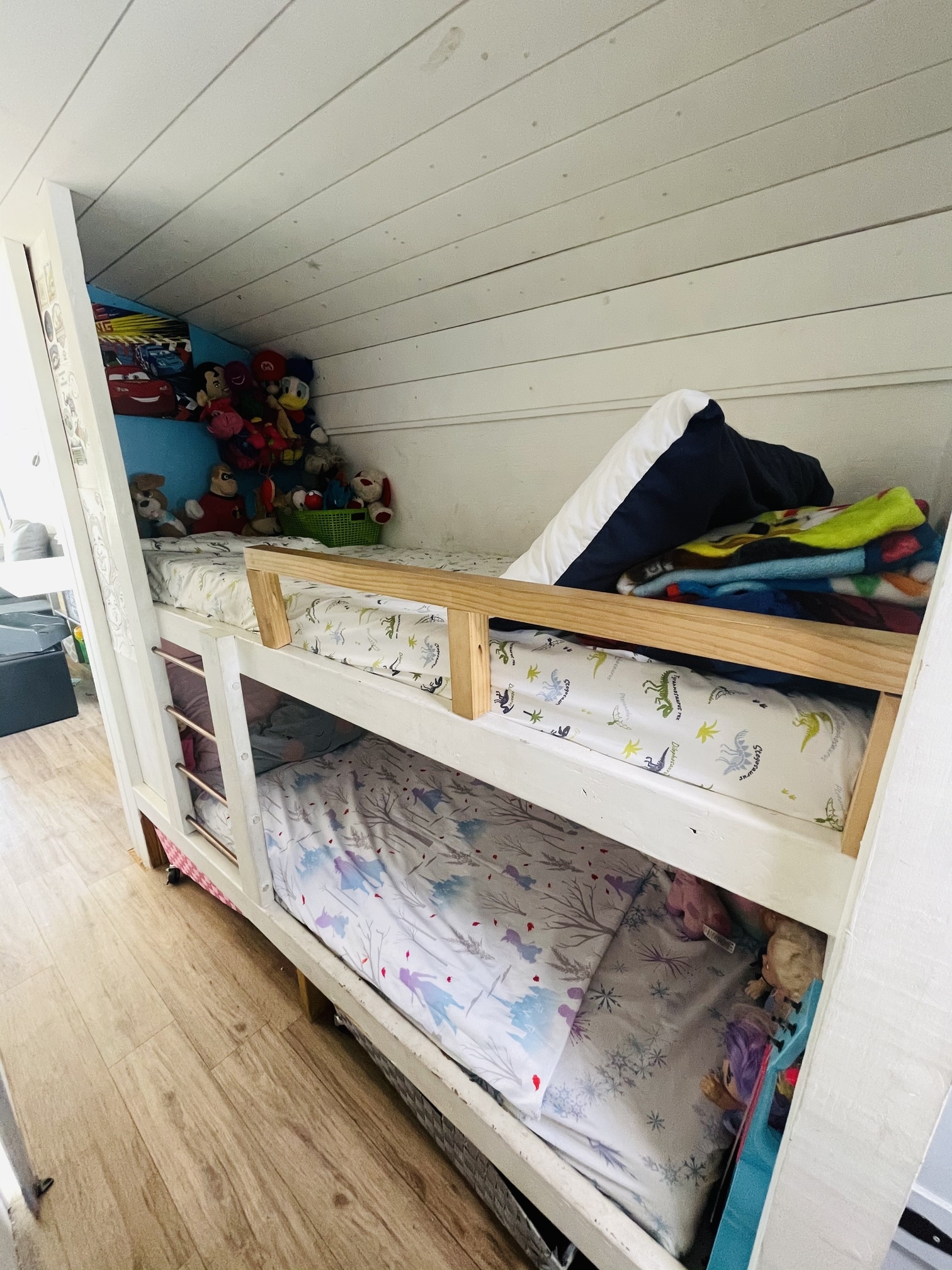
Here’s what to say instead. You have a motorhome. Or an RV. Because if you’ve re-titled it as an RV, that’s what it is. Legally, on paper, it’s a motorhome. So lead with that. “I have a custom-built motorhome that I’d like to insure.” Then when they ask for the VIN and it comes back as a bus chassis, you explain that it’s a bus that’s been converted and re-titled as a motorhome. (See our guide on Can You Legally Live in a Converted School Bus? for more on this.)
The order matters. Start with what it IS (a motorhome), not what it WAS (a school bus). This isn’t dishonest — it’s accurate. Your RV title says motorhome. You’re describing the vehicle as it currently exists.
Have your documentation ready before you call. Photos of the interior showing living amenities. Photos of the exterior. Your RV title. Receipts for materials. A declared value you’ve thought through. The more prepared you are, the smoother it goes.
One other thing. Don’t volunteer every quirky modification unless they ask. If they ask about modifications, be completely honest. But you don’t need to lead with “I’ve got a wood burning stove and two propane tanks and I wired the whole thing myself.” Answer their questions truthfully. Don’t hand them reasons to be nervous.
How to Get the Best Rate
A couple weeks ago I was digging through a thread in one of the bigger skoolie groups where someone asked what everyone was paying for insurance. The replies ranged from $55 a month to over $250 a month. That’s a massive spread. And when I started reading the details, the variation made total sense — it just comes down to a handful of factors.

The biggest factor is your declared build value. This is the number you tell the insurer your conversion is worth, and it directly drives your premium. A bus with a declared value of $15,000 is going to cost way less to insure than one declared at $60,000. But here’s where people make a mistake — they under-declare to save money. If your $50,000 build burns down and you only declared $25,000, you’re getting $25,000 and eating the rest. Declare honestly.
Full-time vs recreational use is the other big one. If you’re living in the bus full-time, the insurer sees that as more exposure and higher risk. Not all companies even offer a full-time living endorsement, and the ones that do charge more for it, sometimes $100-$400 extra per year.
Your state matters too. Insurance is regulated at the state level, so where you’re domiciled affects your rate. Michigan is notoriously expensive for any kind of vehicle insurance. South Dakota and Florida, which a lot of full-timers use as their domicile state, tend to be more reasonable. We’ve got info on choosing a domicile state in our article about getting a mailing address while living in a bus.
Then there’s the stuff you’d expect. Clean driving record helps. Higher deductible lowers your premium. Bundling with other policies can save you money. Good Sam membership gets you a discount on their insurance. Being over 25 helps, being under 25 hurts.
But honestly, the single best thing you can do is get multiple quotes. Call National General, Roamly, and Good Sam at minimum. The same bus, same coverage, same driver can get quoted prices that differ by hundreds of dollars. I’ve seen people report getting a $1,800 quote from one company and a $1,100 quote from another for the same policy. That 20 minutes of phone calls saved them $700 a year.
And here’s something people don’t realize — you can change companies anytime. If you start with whoever says yes first just to get coverage in place, that’s fine. Six months later, shop around again. The first policy you get doesn’t have to be the last one.
—
So that’s the landscape after digging through way too many forum threads and making more phone calls than I ever wanted to. National General is where most people end up, and for good reason. Good Sam is a solid second option. Roamly is the one to call when everyone else says no or when you’ve got modifications that make traditional insurers uncomfortable. State Farm and Progressive are worth a shot, but don’t build your plan around them.
Get your RV title first. That unlocks everything. Then call at least three companies and compare. The whole process takes maybe a week of back and forth, and then you don’t think about it again until the renewal comes. After everything else involved in building a bus, the insurance part is just a speed bump.