
When I was bus shopping, the mileage numbers freaked me out at first. I’m used to cars where 150,000 miles means you’re basically driving on borrowed time. So when I saw buses listed at 180,000, 200,000 miles, my gut reaction was to keep scrolling. Turns out that was completely wrong, and I almost missed out on some great buses because of it.
School bus diesel engines routinely last 300,000 to 500,000 miles with proper maintenance. The most common engines — the DT466, Cummins 5.9 and 8.3, and the Cat 3126/C7 — are commercial-grade powerplants built for heavy use. A bus with 150,000 miles is essentially middle-aged. Many skoolie owners have put another 100,000+ miles on their converted buses without major engine work. The key is maintenance history, not just mileage.
I’ve always wondered how much work the bus itself needs. Are the diesels in these bulletproof?
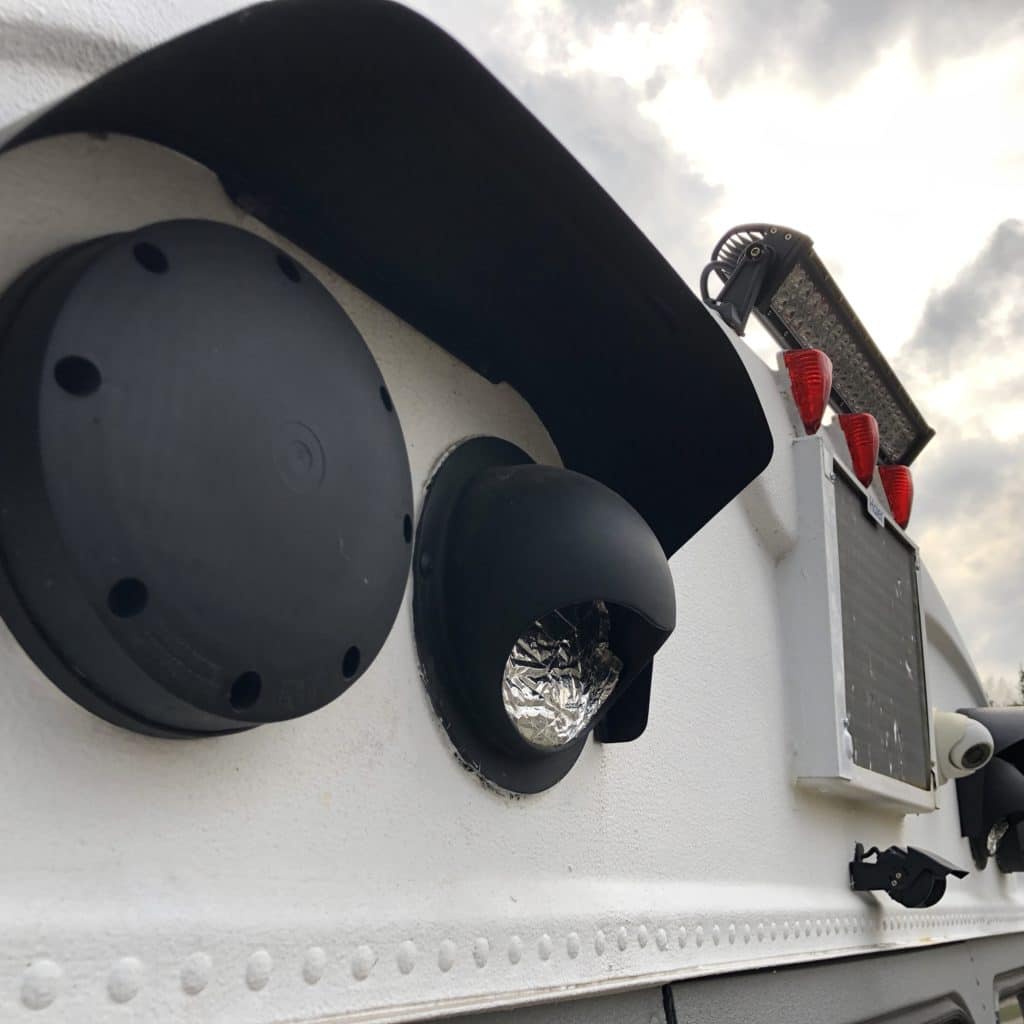
“Bulletproof” is a strong word, but school bus diesels are as close as you’ll get in the vehicle world. These engines were designed to run all day, every day, for 15+ years hauling kids. They idle for hours in school pickup lines. They run in extreme heat and extreme cold. And they just keep going.
The DT466 (International/Navistar) is legendary for reliability. It’s a mechanical or early-electronic diesel that runs forever with basic maintenance, oil changes, fuel filters, coolant flushes. I talked to a mechanic at a diesel shop who told me he’d seen DT466 engines go 400,000+ miles without a rebuild, and he wasn’t exaggerating. Parts are everywhere and any diesel shop in the country knows how to work on them.
The Cummins 5.9 and 8.3 are equally tough. The 5.9 is the same engine that made the Dodge Ram famous in the diesel truck world. The 8.3 is a bigger version with more torque, found in full-size buses. Both have a reputation for just not quitting.
The Cat 3126 and C7 are solid but have a reputation for injector problems, especially in the earlier years. Not a dealbreaker, but budget $2,000-$4,000 for injector replacement if you buy a Cat-powered bus. I’ve seen a few people in forums get caught off guard by that repair bill, so go in knowing it might be coming.
What condition is the motor in? How do you know before buying?
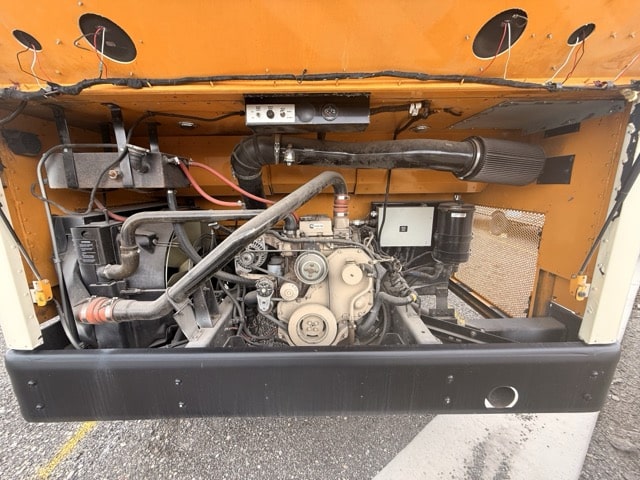
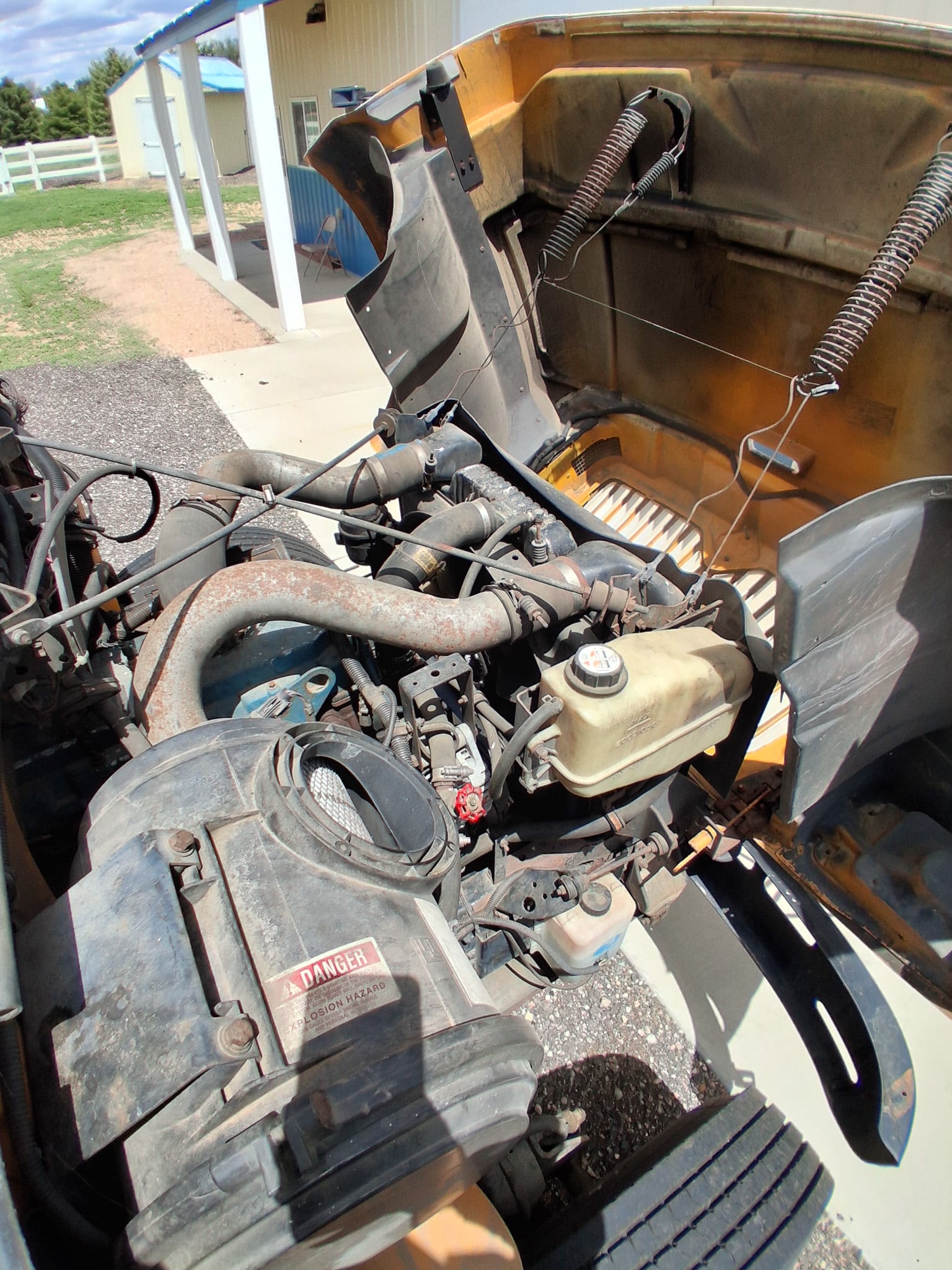
This is where I spent a lot of time learning because I’m not a mechanic and I didn’t want to get burned. Here’s what I figured out you need to check, and honestly most of this is stuff you can do yourself without any special tools.
Start it cold. This is the single most important thing. A healthy diesel will fire up within a few seconds. If it cranks for a long time or blows excessive white or blue smoke on startup, that’s telling you something is wrong internally. Walk away or negotiate hard. I showed up to look at one bus and the seller had it running and warmed up before I got there. That’s a red flag, they might be hiding a hard-start issue.
Check the oil. Pull the dipstick. If it’s black, that’s normal for diesel. If it’s milky or has a milky residue on the oil cap, coolant is mixing with oil and that’s a head gasket or worse. Major red flag. Also look at the coolant reservoir, if it looks oily or has an oily film on top, same problem from the other direction.
Get under the bus and look for leaks. Some seepage is normal on an older diesel, they all weep a little. Active dripping is a problem. And if you’re serious about a particular bus, spend $100-$200 on a mobile mechanic to do a compression test. This tells you the health of the engine’s internals better than anything else, and it’s the best money you can spend before committing. If you want a complete guide to the buying process, check out where to buy a school bus.
What about what to look out for mechanically? Best engine, transmission, and drivetrain?
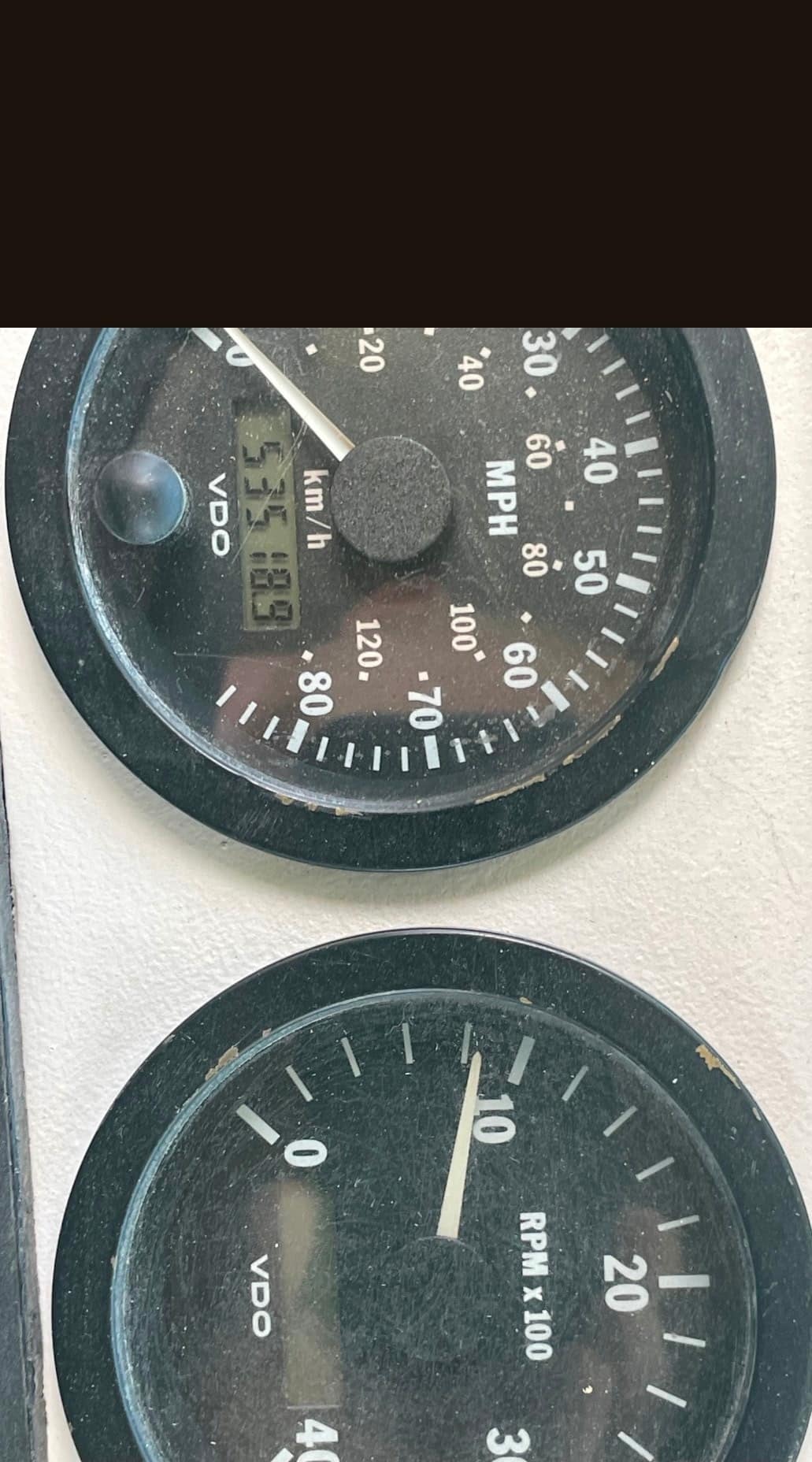
After reading probably a hundred forum threads and talking to people who’ve been through multiple bus purchases, here’s the engine hierarchy most experienced buyers follow.
DT466 (International) — the gold standard. Simple, reliable, parts are everywhere. Found in most 1990s-2000s International and IC buses. If you find one of these in decent shape, you’ve found a keeper.
Cummins 5.9/8.3 — excellent engines, slightly more expensive parts but equally reliable. Common in Blue Bird and some Thomas buses. The 5.9 is more common in shorter buses.
Cat 3126/C7 — good power, watch for injector issues on the 3126. The C7 is an improvement but still has known weak points. Not bad engines by any means, just know what you might be getting into.
7.3 Navistar (detuned Power Stroke) — found in some 90s Blue Birds. Great engine, similar to the famous Ford 7.3 Power Stroke that has its own cult following.
For transmissions, Allison automatics are the standard in school buses and they’re nearly indestructible. The Allison AT545 and MD3060 are the most common. I’ve honestly never heard of someone having a major Allison transmission failure in a school bus. They just work. The drivetrain is equally simple, rear axle, driveshaft, leaf springs. Check for excessive play in the U-joints, listen for whining from the rear differential, and look at the leaf springs for cracks or sagging.
A 2006 bus from a school district — how did you manage to get one?
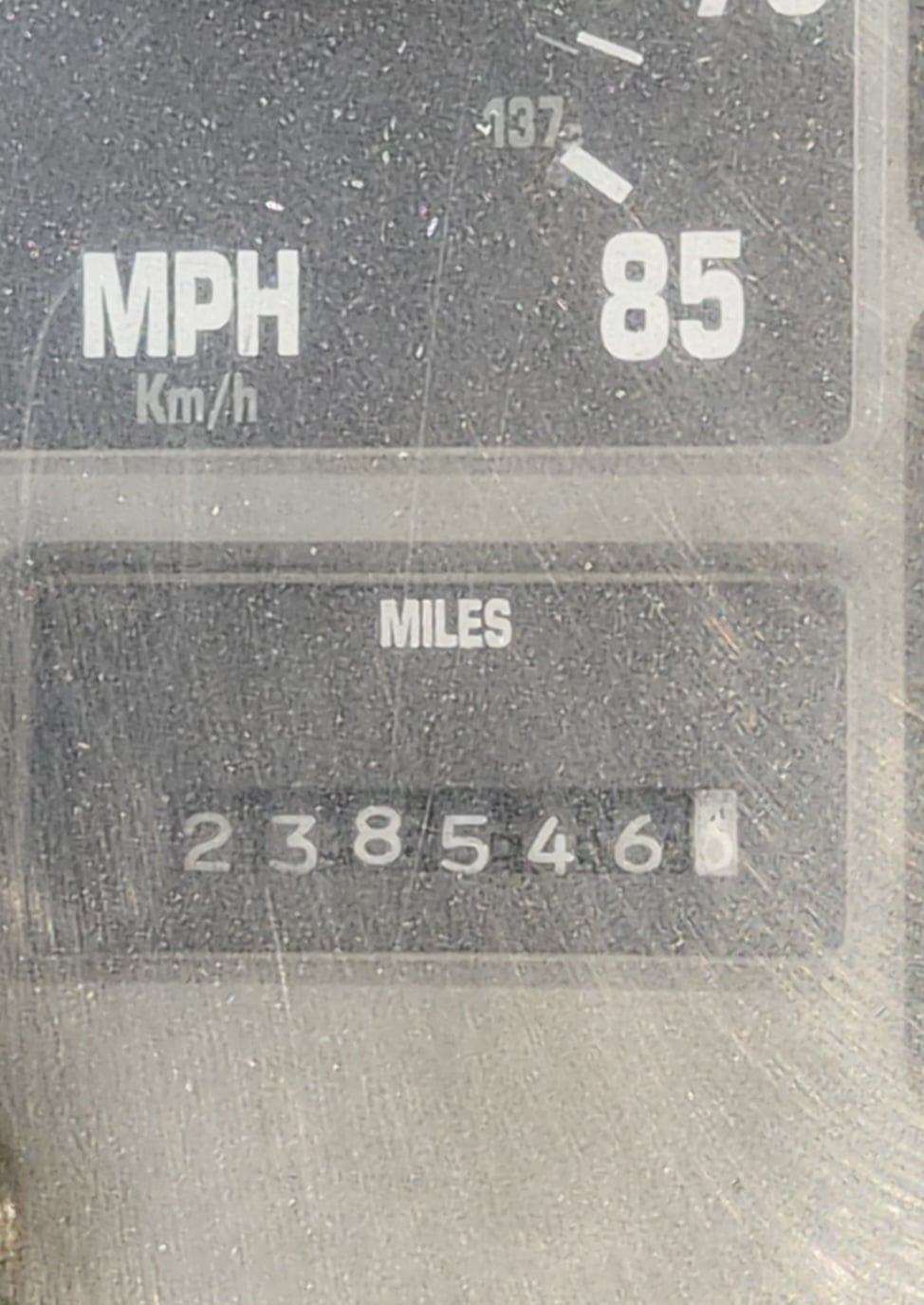
School districts retire buses on a schedule, typically after 12-15 years or 200,000+ miles. A 2006 bus was likely retired between 2018-2021, which puts it right in the sweet spot for skoolie buyers. Old enough to be affordable, new enough to have plenty of life left.
Districts sell retired buses through government auction sites like GovDeals and PublicSurplus, through local vehicle auctions, or directly to the public. Some districts have a surplus department you can call directly. I’ve found that the transportation office is usually the best first call, they know exactly what’s available and sometimes you can make a deal before anything hits the auction site.
The best time to buy is late spring through summer. That’s when districts retire buses from the outgoing school year. You’ll see the most inventory in June through August. If you can be patient and wait for that window, you’ll have way more options than shopping in the middle of winter. We’ve got a whole breakdown on how skoolie costs compare to RVs if you want to see how the bus purchase price fits into the bigger picture.
The Bottom Line
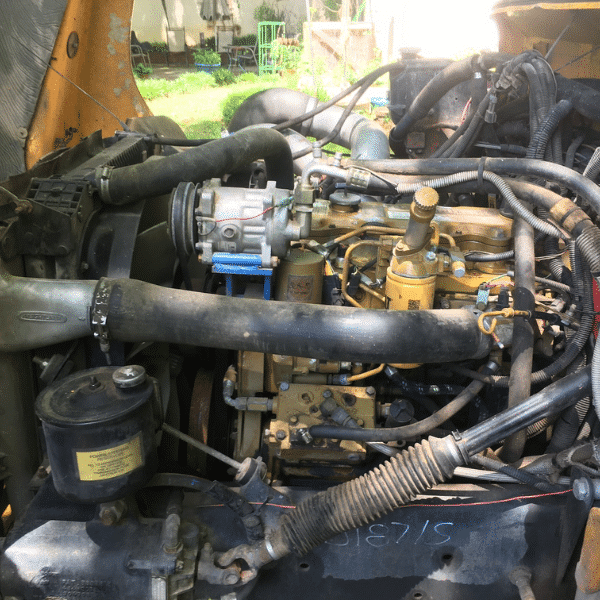
Here’s what it comes down to after all my research. A school bus diesel with 150,000 miles is barely broken in. These engines were built for 300,000-500,000 miles of daily commercial use, and the fact that school districts maintain them on strict schedules means most of them are in better mechanical shape than a passenger car with half the mileage.
If I had to buy a bus tomorrow, I’d look for a DT466 or Cummins with maintenance records from the district. I’d start it cold, check the oil, and pay a diesel mechanic $150 to do a compression test. That’s really it. The mileage number on the odometer matters way less than how the bus was maintained, and once I understood that, the whole bus shopping process got a lot less stressful.
ez5sof