
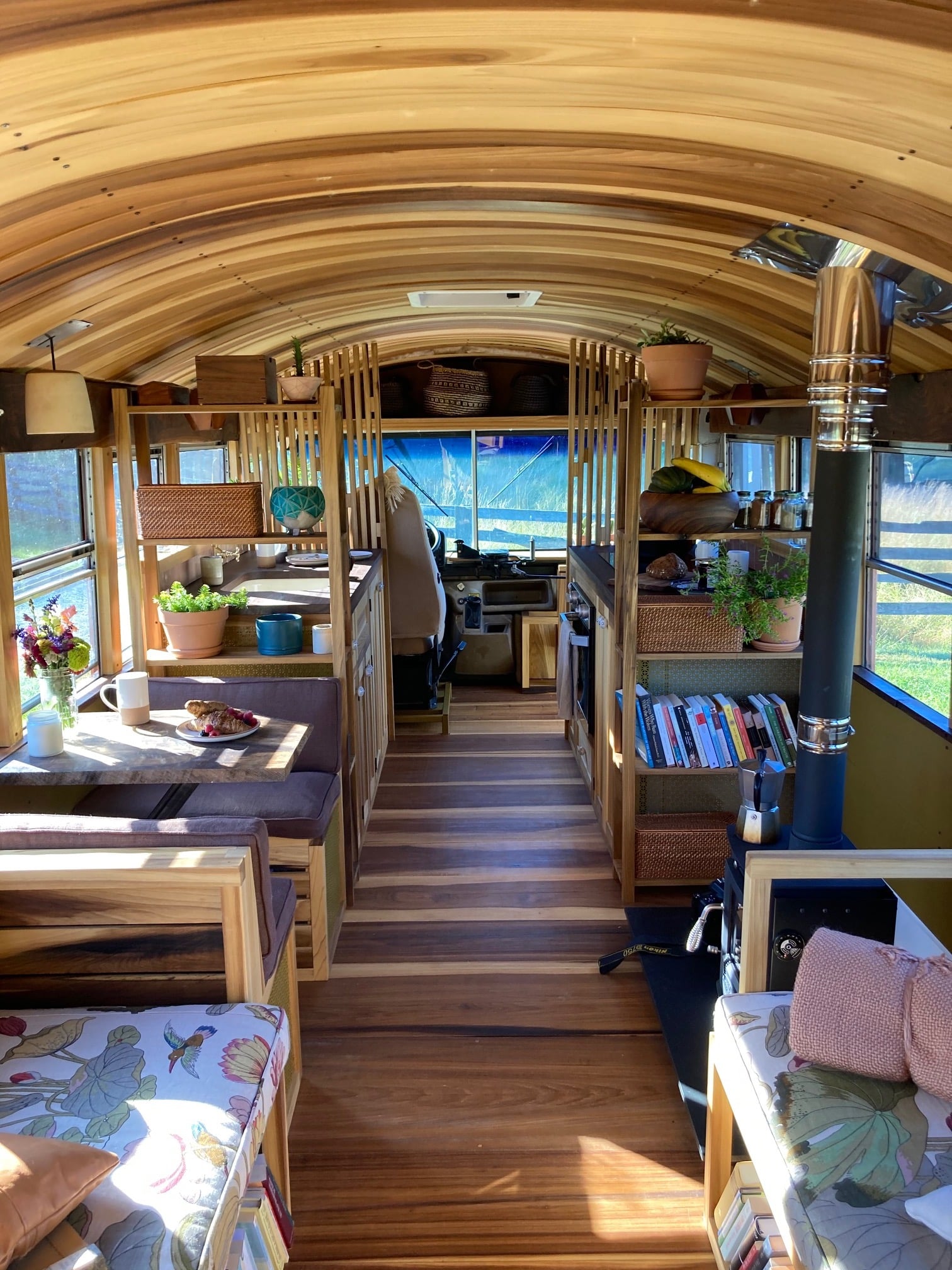
If you’ve been scrolling through Instagram looking at those gorgeous skoolie builds with the butcher block counters and the cedar ceilings, at some point you’ve probably asked yourself the same thing everyone else does. How do people actually pay for these things?
The short answer is yes, you can finance a bus conversion, but not the way you’d finance a car or a house. There’s no “skoolie loan” at your local bank. Most people use personal loans, credit union loans, or RV loans (once the bus is titled as an RV). Some builders offer their own financing. And a surprising number of people just save up and pay cash in stages as they build, which honestly might be the smartest route for most of us.
“Very nice. I can’t see spending $175k on it though. You can’t get a loan for that can you? So you have to have $175k in cash to drop?”
I see comments like this all the time and I think there’s a huge misconception about what bus conversions actually cost. The $175K builds you see on YouTube are the outliers. They’re the ones that get clicks because they look like rolling luxury apartments. Most people are not spending anywhere close to that.
A realistic DIY bus conversion, and I mean a nice one with solar and a real bathroom and good insulation, runs somewhere between $15,000 and $40,000 total. The bus itself is usually $3,000 to $8,000 if you buy from a school district auction or GovDeals. The build is where the money goes. I put together a full cost breakdown with real numbers if you want to see how those dollars actually split up.
Now can you get a loan for $175K on a bus? Technically yes, but you’d be looking at a personal loan or possibly an RV loan if the bus is already converted and titled as an RV. No bank is going to give you a traditional auto loan for a school bus. They don’t know what to do with it. I called a credit union once just to ask about it, kind of as an experiment, and the loan officer literally said “we don’t have a category for that.” Which pretty much sums up the whole financing situation.
But here’s what most people actually do. They buy the bus cheap with cash, and then they finance the build materials as they go. Some use a 0% intro APR credit card for big purchases like appliances and solar panels. Some take out a small personal loan of $5,000 to $15,000 to cover materials. And some just buy stuff paycheck to paycheck and the build takes longer but they end up debt-free at the end.
“Is there a way to put down a Good chunk of change and make a rent to buy agreement or financing? For the rest?”
So this is interesting because it depends on whether you’re buying a bus to convert yourself or buying one that’s already been converted by a builder.
If you’re buying from a professional builder, some of them do offer payment plans. It’s not super common but I’ve seen a few builders on Instagram who will take a deposit and let you make payments while they build. Usually it’s something like 30% down, then progress payments as they hit milestones. The terms are all over the place because it’s basically a private agreement between you and the builder. There’s no standard.
For a DIY conversion where you’re buying the bus and doing the work, rent-to-own isn’t really a thing. But personal loans from credit unions are probably the closest you’ll get. Credit unions tend to be way more flexible than big banks about unusual purchases. I’ve heard of people getting personal loans at 7-9% for bus builds, which isn’t amazing but it’s a lot better than putting everything on a credit card at 22%. I wrote a whole piece on ways to afford a bus conversion on a tight budget that gets into more of these strategies.
One thing I keep seeing people mention in forums is using a HELOC (a home equity line of credit) if they still own a house. The rates are usually pretty reasonable and you can draw on it as you need materials. The obvious downside is you’re putting your house on the line for a bus project, so that’s a personal risk decision.
“I want a bus conversion as an rv I’m not going to live in it but I need to know if there is a website that I can buy one on and finance it”
If you want to buy a pre-built conversion and finance it like you would an RV, your best bet is finding one that’s already been titled as an RV. That’s the key. Once a converted bus has an RV title, lenders treat it more like a normal recreational vehicle purchase. I have a full walkthrough of how to register and title a converted bus as an RV that explains what’s involved on the paperwork side.
There are a few places to look. Converted Bus Sales on Facebook is probably the biggest marketplace. There’s also listings on RVTrader occasionally, and Tiny House Listings sometimes has bus conversions. For financing, once the bus has that RV title, companies like LightStream, Good Sam Finance Center, and some credit unions will write RV loans on them.
The catch is that many lenders have minimum loan amounts ($10,000 or more) and they’ll want the bus to be titled and registered as an RV in whatever state it’s in. Some lenders also have age requirements. They won’t finance anything older than 15 or 20 years, and most school buses are already pretty old by the time someone converts them. So that narrows your options. You’ll also want to sort out insurance for your converted bus before any lender will finalize a loan.
I spent a while looking into this and honestly the financing landscape for converted buses is kind of the wild west. There’s no one clean path. You have to make phone calls and ask around.
“How much yall paid for that big bus I always wanted one so bad me and my husband getting old now. He 72 and im 67.”
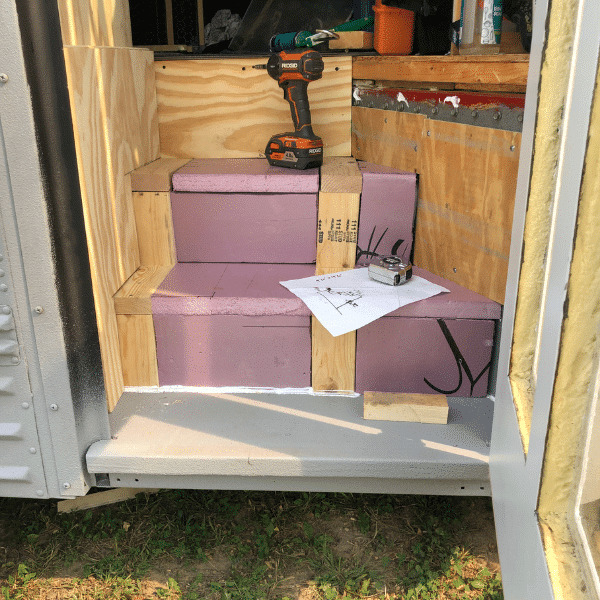
This question gets me every time because it’s so genuine. And the good news is that the bus itself is the cheap part of this whole equation. If you’re considering this later in life, I’d also recommend checking out our guide on bus life for retirees and seniors since it covers a lot of the practical stuff specific to that situation.
A full-size school bus, the classic flat-nose 40-footer, usually sells for $3,000 to $8,000 at auction. Sometimes less. I’ve seen running buses go for under $2,000 on GovDeals, though you’re rolling the dice a bit on mechanical condition at that price. Short buses and mid-size buses can be even cheaper, sometimes $1,500 to $4,000.
The conversion cost is where it varies wildly. A basic but comfortable conversion (think insulation, basic electrical, a simple kitchen, a bed platform, maybe a portable toilet setup) can be done for $5,000 to $10,000 if you’re handy and patient. A more full-featured build with solar, a real bathroom with plumbing, nice finishes, that’s more like $15,000 to $30,000. And then the high-end builds that look like magazine spreads can run $50,000 to $100,000 or more.
For someone using a bus as a vacation vehicle and not a full-time home, you could realistically get into a comfortable setup for $10,000 to $20,000 total. That includes the bus. Try buying an RV in decent condition for that price and see what you get.
“This is fantastic design but how in the world did you afford it?”
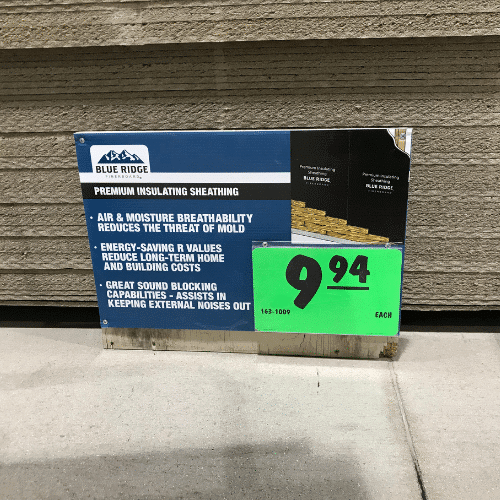
I think about this question a lot because the answer is almost never “I took out one big loan and did it all at once.” Almost every bus builder I’ve talked to or read about funded their build in stages.
The most common approach, and I think the smartest one, goes something like this. You save up enough to buy the bus outright, which might be $3,000 to $5,000. Then you start demo and prep work, which costs almost nothing except sweat. While you’re doing demo and framing and insulation, you’re saving for the next phase. Electrical and plumbing come next and that might be $2,000 to $5,000 depending on your solar setup. Then interior finishing, another few thousand.
Some people do this over six months. Some take two years. But the point is you’re not dropping $30,000 all at once.
I talked to one guy online who said he and his wife set aside $500 a month specifically for their bus build. Took them about 18 months of saving before they started, and then they kept saving during the build. They ended up spending around $22,000 total and never took out a single loan. He said the slow approach actually made the build better because they had time to think through decisions instead of rushing.
There are also people who use 401K loans to fund their builds. You’re essentially borrowing from yourself and paying yourself back with interest. It’s not ideal because you’re pulling money out of retirement, but the interest goes back to you instead of a bank. I’m not a financial advisor and I wouldn’t tell anyone to do this, but I’ve seen enough people mention it that it’s worth knowing about.
The reality is that a bus conversion is one of those projects where the people who pay cash and build slow tend to end up happier than the people who finance everything and try to do it all in one shot. There’s less financial pressure, fewer compromises made because of budget stress, and you actually enjoy the process instead of just trying to get it done. But everyone’s situation is different, and if a personal loan at a reasonable rate gets you into bus life a year sooner than saving would, that might be worth it to you. Just don’t put the whole thing on credit cards at 22% interest. I’ve seen that go badly more than once.
bvij0z