

You’ve decided to build a skoolie. Now you’re staring at listings for Blue Birds, Thomas Safeliners, IC buses, flat-nose pushers, short buses, and something called a “Type D transit” — and you have no idea which one is right for your build. Let’s fix that.
There are nine types of buses that work well for conversions, each with different tradeoffs in space, price, driveability, and build complexity. The best bus for most first-time builders is a Type C conventional (the classic “dog nose”) in the 30-35 foot range with a diesel engine — it’s affordable, easy to work on, and gives you plenty of living space. But depending on your budget, travel style, and how many people you’re building for, a short bus, coach, or flat-nose might be the better call.
Type C Conventional (The Classic Dog Nose)
This is the bus most people picture when they hear “skoolie.” It has a hood sticking out in front with the engine underneath, a flat rear wall, and it comes in lengths from 30 to 40 feet. It’s the most popular conversion platform for good reason.
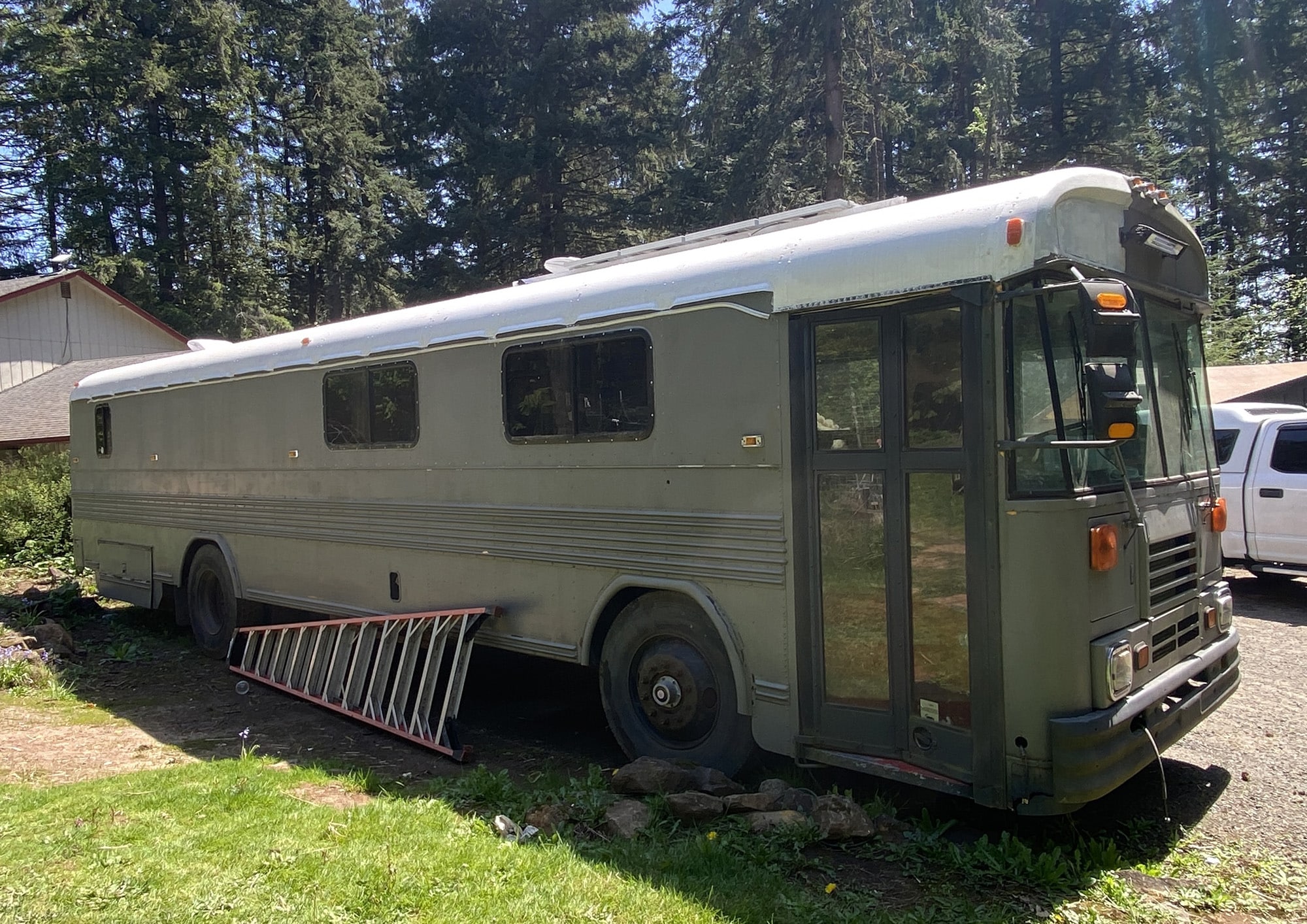
The big three manufacturers are Blue Bird, Thomas Built, and IC Bus. You’ll see them listed as Blue Bird All American, Thomas Saf-T-Liner C2, or IC Bus CE Series. So what makes these the go-to for first-time builders? Access. The engine is right there under a hood you can pop open in a parking lot. Parts are everywhere. Any diesel mechanic in the country has worked on one.
Price-wise, you’re looking at $3,000-$8,000 at government auctions for a 2000-2010 model with 100,000-180,000 miles. Private sellers ask $5,000-$15,000 depending on condition and whether the seats have been pulled.
I know this is an IC Bus, but are Blue Bird buses very different from IC Buses or are they similar?
They’re more similar than different. Both use the same handful of diesel engines — the DT466, Cummins ISB 6.7, or the older 7.3L Navistar. The frames, suspension, and drivetrains are nearly identical because they all meet the same federal school bus safety standards.
Where they differ is sheet metal, wiring layout, and window styles. Blue Bird tends to have slightly thicker body panels and a reputation for better rust resistance. IC Bus (International) is the most common bus on the road, which means parts are slightly easier to find. Thomas falls somewhere in between.
Honestly? Pick whichever one is in better condition at the right price. Brand loyalty doesn’t matter nearly as much as engine hours, rust, and maintenance history.
Thoughts on a 7.3 Navistar turbo diesel in a 1998 Blue Bird?
Now, this is a great engine. The 7.3L Navistar (also known as the detuned Power Stroke) is one of the most reliable diesels ever put in a school bus. It’s mechanically injected in the older models, which means fewer electronics to fail. Parts are cheap and everywhere because Ford used the same engine in their trucks.
The catch? A 1998 bus is getting old. At that age, you’re looking at 20+ years of salt, weather, and wear on the body and frame. The engine might run for another 200,000 miles, but if the frame is rotting or the body has holes, the engine doesn’t matter.
If the frame is solid and the body is clean, a 7.3 Navistar Blue Bird is a fantastic find. Just don’t fall in love with the engine and ignore everything it’s bolted to.
Type D Flat-Nose (Transit Style)
The flat-nose is the bus with no hood — the driver sits right at the front, almost over the front axle. These come in both front-engine and rear-engine (pusher) configurations. They’re longer than they look because there’s no hood eating up length, which means more interior space per foot of total vehicle.
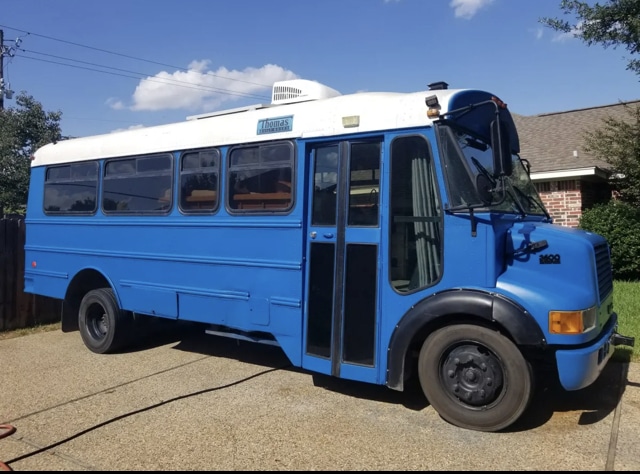
Rear-engine pushers are the premium option. The engine sits behind the rear axle, giving you a low, flat floor throughout the entire bus and a quieter cab. Front-engine flat-nose models have the engine between the front wheels, which creates a hump in the floor but keeps the engine accessible.
Expect to pay $4,000-$12,000 at auction for a Type D, and $8,000-$20,000 from private sellers. They’re less common on the secondary market, so prices tend to be higher.
What happened to the flat nose buses? That’s all I ever remember seeing.
They’re still around — they just aren’t as dominant as they used to be. In the 80s and 90s, flat-nose buses were everywhere. Then Type C conventionals got cheaper to manufacture and easier to maintain, so school districts started buying more of those. You’ll still see flat-nose buses in big urban school districts, but the conventional has become the standard in most areas.
For conversion purposes, a flat-nose gives you more usable interior length. A 40-foot flat-nose might give you 32-34 feet of interior space versus 28-30 feet in a 40-foot conventional. That extra 2-4 feet is a whole closet or pantry.
What about a bus with or without a hood — a conventional or a COE?
Alright, here’s the practical difference. A conventional (with a hood) gives you easy engine access and a more “normal” driving position set back from the front of the bus. A cab-over-engine (COE) or flat-nose puts you right at the front, which takes getting used to. Turns feel different. You’re making wider swings because the front axle is right under you, not six feet ahead.
For maintenance, the conventional wins. Pop the hood, there’s your engine. On a front-engine flat-nose, you’re lifting a panel inside the cab or crawling under the bus. On a rear-engine pusher, you’re working from the back of the bus, often on your back.
So which do you pick? If you want the easiest build and maintenance experience, go conventional. If you want maximum interior space and a quieter ride, go flat-nose pusher — just know you’ll pay more and work harder to wrench on it.
Short Bus (Type A)
The short bus is built on a van chassis — usually a Ford E-450 or Chevy Express 4500 — with a box body on the back. They run 20-26 feet and are perfect for solo travelers, couples, or anyone who wants a bus that drives more like a large truck than a commercial vehicle.
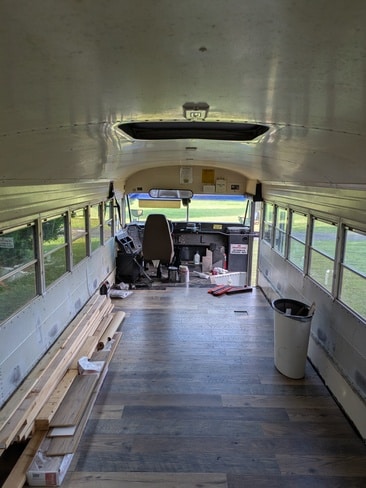
Prices are the lowest of any bus type. You’ll find running short buses for $2,000-$5,000 at auctions and $3,000-$8,000 from private sellers. They’re great starter buses because the build cost is lower too — less floor space means less insulation, fewer windows, less plumbing, and a smaller electrical system.
Where can I get a short school bus or shuttle bus? Is it true that shuttle buses are taller because they’re meant for grown-ups?
Well, sort of. Shuttle buses and short school buses are close cousins but not identical. A short school bus has a standard school bus body — low ceiling, emergency exits, the whole yellow package. Interior ceiling height is usually 6 feet to 6’2″.
Shuttle buses (like the ones at airports and hotels) often do have taller ceilings — 6’3″ to 6’8″ — because they were built for standing adults, not seated kids. They also tend to have larger windows, smoother interior walls, and sometimes luggage racks overhead.
For a conversion, shuttle buses are a nice upgrade over a standard short school bus if you can find one at the right price. The extra headroom makes a real difference when you’re living in the space daily. Check hotel and airport surplus — those buses get retired regularly and they’re usually well-maintained.
What price would you say for a mini bus should I spend?
For a running short bus or mini bus with a decent engine and clean body, aim for $2,500-$5,000. Under $2,500 and you’re probably looking at high miles or something that needs mechanical work. Over $6,000 for a short bus at auction, you’re overpaying unless it’s very low miles or very new.
The sweet spot is a 2002-2012 Ford E-450 with the 6.0L or 6.8L V10, 80,000-130,000 miles, from a government auction. These were workhorse engines, and at those miles, they’ve got a lot of life left.
Coach Bus (Retired Charter/Tour Bus)
This is the big leagues. Coach buses — the kind Greyhound and tour companies use — are fully enclosed, have luggage compartments underneath, higher ceilings, and they ride like a dream on the highway. They’re also the most expensive and most complex option.
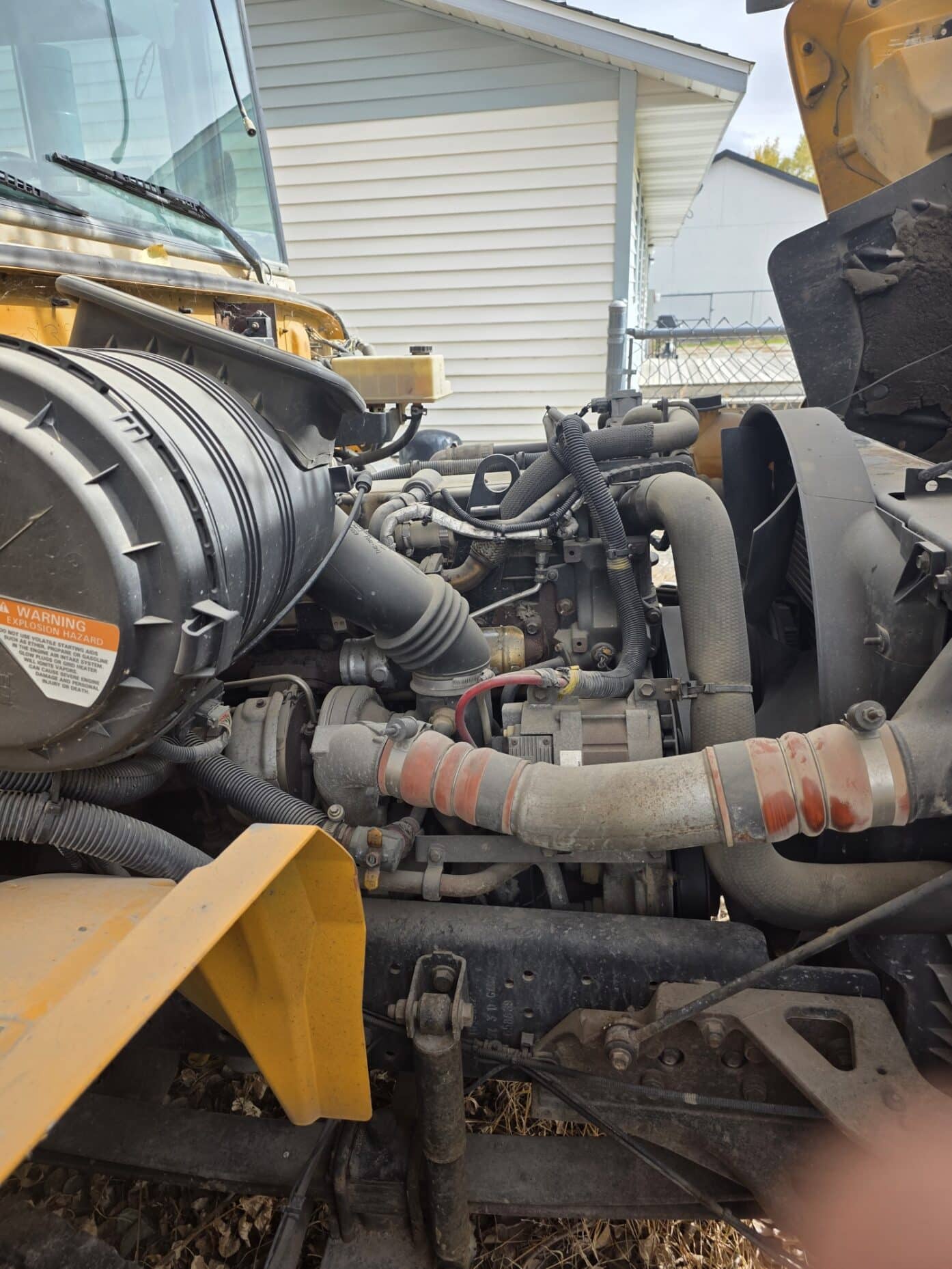
You’re looking at $8,000-$30,000 for a retired coach with 300,000-600,000 miles. Yeah, those mileage numbers sound wild, but coach bus engines (Detroit Diesel, Cummins ISX, Caterpillar C13) are built for over-the-road use and routinely go 750,000+ miles with proper maintenance.
Now my question is how much do you buy these tour buses for just to transform them?
Tour buses and coaches range wildly. A beat-up 1990s MCI or Prevost with high miles and cosmetic issues can go for $5,000-$15,000. A clean 2005+ model with under 500,000 miles from a reputable coach dealer will run $15,000-$40,000.
Here’s the thing — the purchase price is just the start. Coach conversions cost more because the systems are more complex. Air ride suspension, air brakes, tag axles, onboard generators, and commercial HVAC systems all need maintenance. Parts for a Prevost or MCI aren’t sitting on the shelf at AutoZone.
If you’ve got mechanical skills and a bigger budget, a coach conversion is incredible. You get a vehicle that was designed for cross-country travel, with luggage bays that become instant storage, and a ride quality no school bus can match. But it’s not a beginner build.
Would it have been cheaper in the long run to find a used Greyhound bus and convert it?
Maybe, maybe not. Greyhounds and over-the-road coaches are built to handle many more miles than school buses — that part’s true. But the conversion is harder, the parts are more expensive, and you need specialized tools and knowledge for things like air brake systems and air ride suspension.
A school bus is simple. Air brakes on some models, hydraulic on others. Standard diesel engine, standard transmission, parts available at any truck shop. A coach bus is a different animal entirely.
For most people, the school bus conversion ends up cheaper total — lower purchase price, cheaper parts, easier DIY. A coach makes sense if you plan to travel full-time for many years and want that highway comfort.
Shuttle Bus (Commercial/Airport Style)
Shuttle buses sit between short buses and full-size school buses. They’re typically 25-35 feet, built on commercial truck chassis (Ford F-550, Freightliner, or International), and they come with higher ceilings, wider aisles, and sometimes wheelchair lift cutouts that make for easy rear door installations.

Prices run $4,000-$12,000 for retired hotel, airport, or church shuttles. They’re often white, which means you don’t have the “paint over the school bus yellow” step.
I recently obtained a 30-passenger shuttle bus with the 5.9 Cummins and Allison 545. What fuel mileage are you getting?
A 5.9 Cummins paired with an Allison transmission is a solid combination. Before conversion weight, expect 10-12 MPG. After you’ve added insulation, walls, furniture, water tanks, and everything else, plan on 8-10 MPG on the highway and 6-8 around town.
So is that good? For a bus, yeah, that’s solid. You won’t beat it without going to a short bus or a van. The Cummins 5.9 is one of the most reliable and fuel-efficient engines you’ll find in this size range.
The Allison 545 automatic is a proven transmission too. It shifts smooth, handles the weight, and parts are available. You picked a good platform.
Double-Decker Bus
Ok, let’s talk about the wild card. Double-decker buses show up on the skoolie forums every now and then, and they’re exactly what you’d expect — massive interior space, incredible “wow factor,” and a whole pile of challenges that most other buses don’t have.
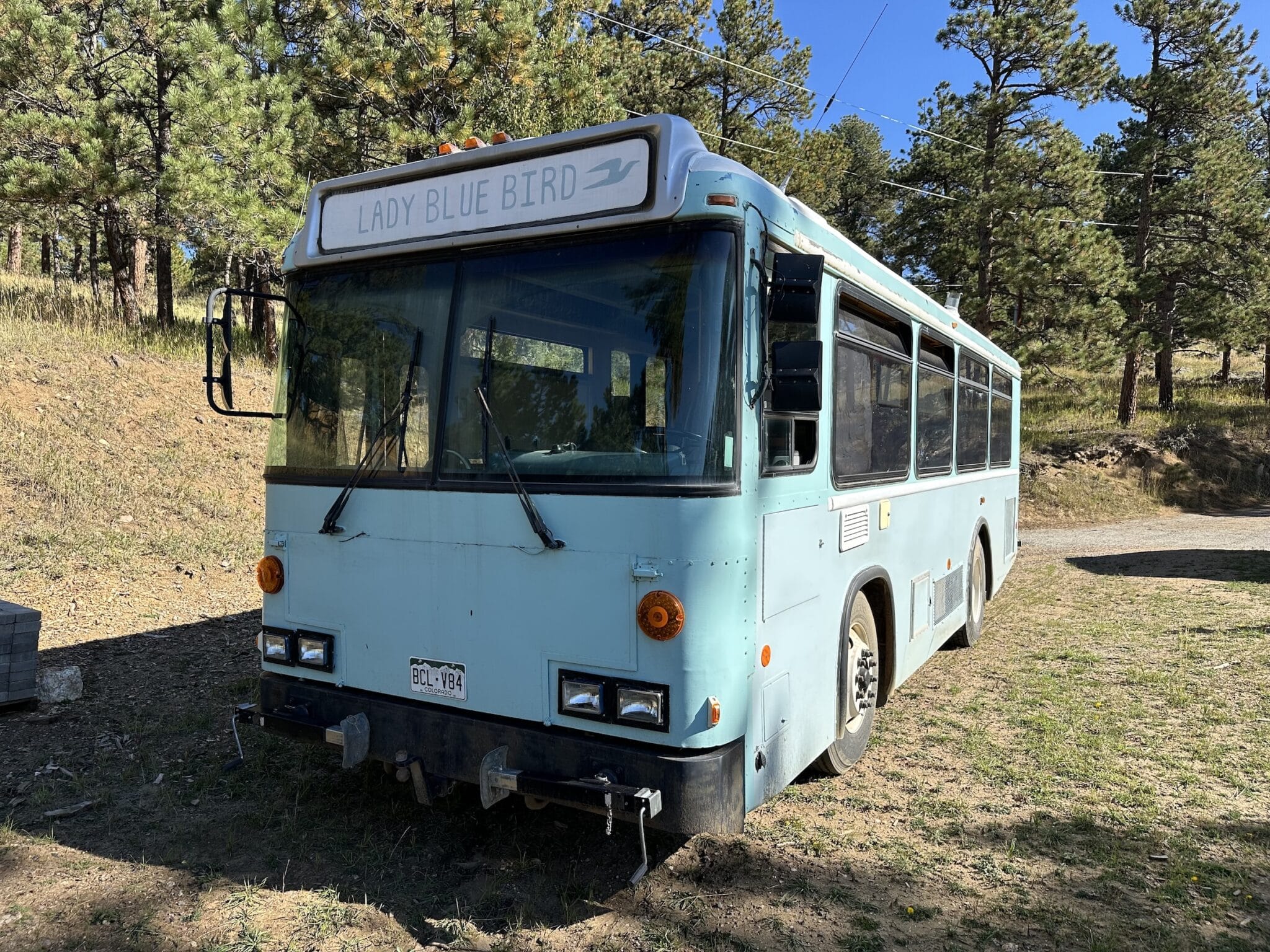
You’ll find retired double-deckers from tour companies and sightseeing operations for $10,000-$40,000. They’re rare on the secondary market, so prices vary wildly.
Why not start with a double-decker bus?
Because they’re a nightmare to convert, honestly. Here’s the reality: a double-decker is over 13 feet tall. That means you can’t fit under most bridges, overpasses, or drive-throughs. Many campgrounds and RV parks have height restrictions of 12 or 13 feet. Your route planning goes from “pick a road” to “study every bridge clearance between here and there.”
Did you have to add extra framing to support the addition on top of the bus?
Yes, and this is a critical point. The upper deck of a double-decker was designed for seated passengers — not cabinets, countertops, water tanks, and a bed. Any conversion that adds significant weight to the upper level needs structural reinforcement. That means welding, engineering calculations, and making sure you don’t make the bus top-heavy.
The height restrictions alone are a dealbreaker for most people. But if you’re planning a stationary build — parking the bus on land and living in it without moving much — a double-decker gives you 200+ square feet of living space across two floors, which is genuinely hard to beat.
How much has the height restricted you to drive being so tall?
A lot. Standard bridge clearance in the US is 14 feet, but plenty of older bridges, railroad crossings, and parking structures are 11-13 feet. A stock double-decker is 13-14 feet. Add a roof deck or any kind of AC unit and you’re pushing 14-15 feet. You’ll be checking every bridge clearance on your route and rerouting constantly.
For travelers, this gets old fast. For stationary builds, it doesn’t matter. Know which one you are before you buy.
Flat-Front Transit Bus (City Bus)
City transit buses — the kind you ride to work — pop up as conversion candidates too. They’re usually 35-40 feet, have low floors for accessibility, large windows, and rear-engine diesel setups. Retired transit buses sell for $3,000-$15,000 depending on age and condition.
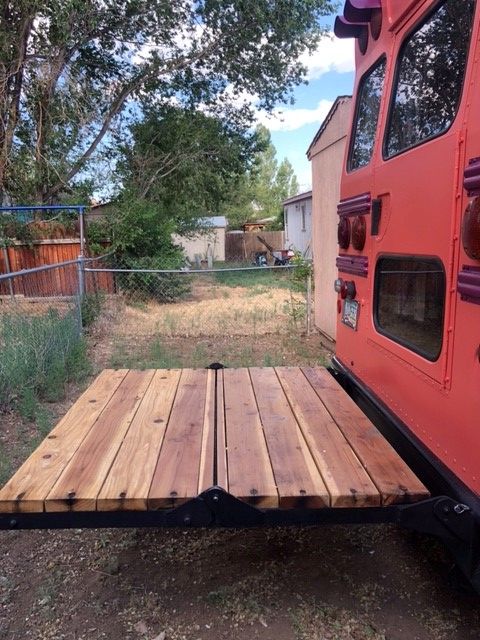
I’m really thinking about buying a bus. My question is — would you go school or city bus?
For most people, school bus. Here’s why. City transit buses were designed for stop-and-go routes at low speeds. They have air ride suspension tuned for city streets, not highway cruising. The engines and transmissions have a lot of idle hours from sitting at bus stops with the AC running.
The low floor is great for accessibility but terrible for under-floor storage — there’s nowhere to run plumbing or mount tanks without losing floor space. The large windows are nice for views but expensive to insulate or replace.
Where transit buses win is interior width and standing headroom. They’re wider than school buses (102 inches vs 96 inches) and have flat, high ceilings. If you want a spacious, open-plan build and don’t mind the mechanical complexity, a transit bus can work.
But school buses have cheaper parts, simpler systems, and a much bigger knowledge base in the skoolie community. When you get stuck at 11pm on a Sunday trying to fix something, you want the bus that 10,000 other builders have already figured out.
Specialty: The Handy Bus / Activity Bus
This one flies under the radar. Activity buses and handy buses are full-size bus bodies with upgraded interiors — higher ceilings, larger windows, luggage racks, and sometimes under-floor storage compartments. School districts used them for field trips, sports teams, and special education transport.
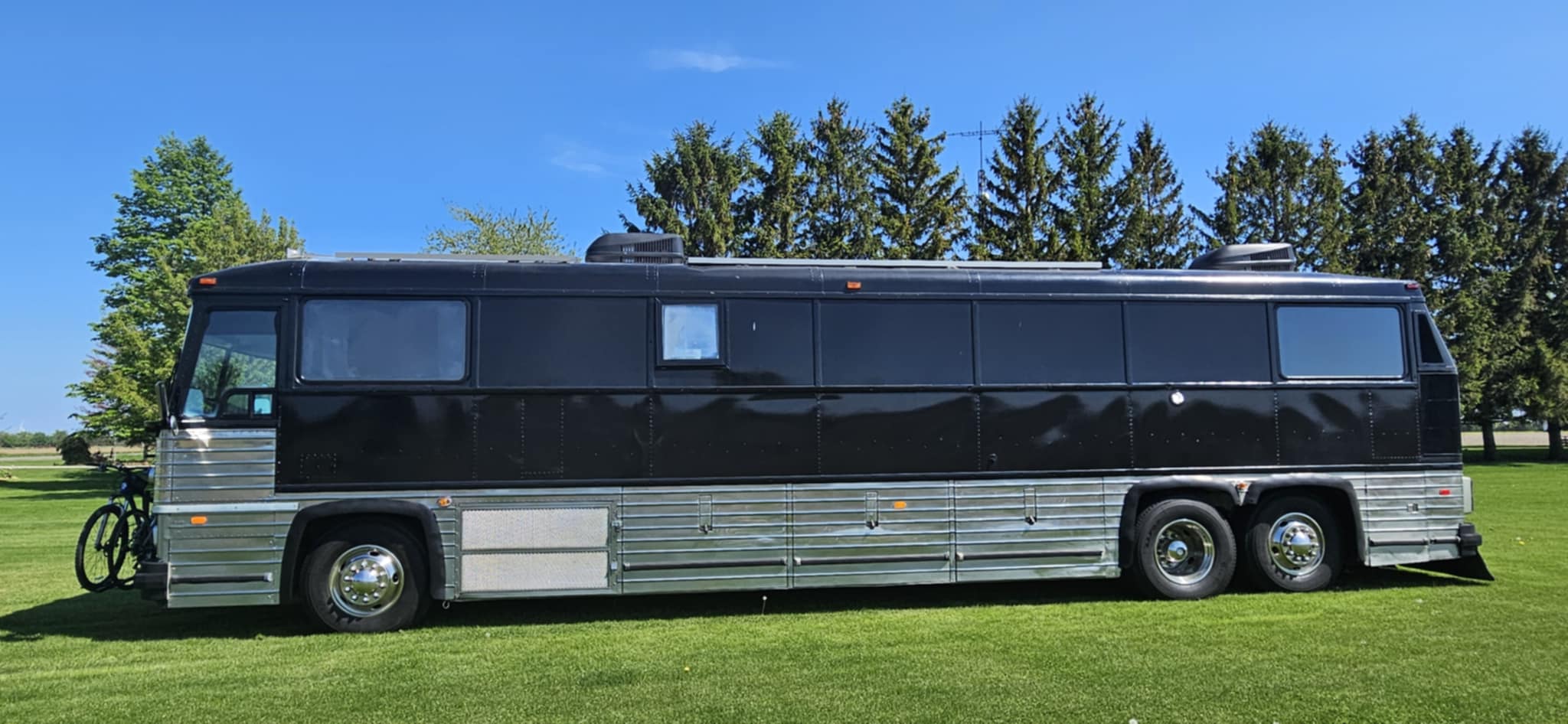
I have a 2006 Blue Bird Vision handy bus with twin AC units and an 8.3 Cummins. Looking for advice.
You’ve got a great bus. The 8.3 Cummins is a legendary engine — it’s the same engine used in medium-duty trucks and some marine applications. It’ll run for 500,000+ miles without major issues. Paired with an Allison transmission, that’s about as bulletproof as it gets.
The twin AC units are a bonus for living in hot climates, but keep in mind they add weight and draw on the engine. If you convert to a rooftop mini-split or portable AC system, you can remove the factory units and save several hundred pounds.
The Blue Bird Vision platform is one of the newest bus designs out there. It has a more modern cab, better visibility, and aerodynamics that actually help fuel economy compared to older flat-panel designs.
There were buses that had storage under the bus. Do they still have those?
Some do. Activity buses and certain coach-style school buses came with luggage compartments under the floor, similar to what you’d see on a Greyhound. These are gold for conversions — instant storage for tools, outdoor gear, fresh water tanks, or generator compartments without sacrificing interior space.
Standard school buses don’t have them. If under-floor storage is important to you, look specifically for activity buses, handy buses, or coach-style buses. It’s a feature worth seeking out.
The Stationary Build: Maximum Space, No Driving
Not every conversion needs to drive. Some people buy a bus, park it on their property, and build it out as a permanent or semi-permanent home. If that’s your plan, the rules change completely.
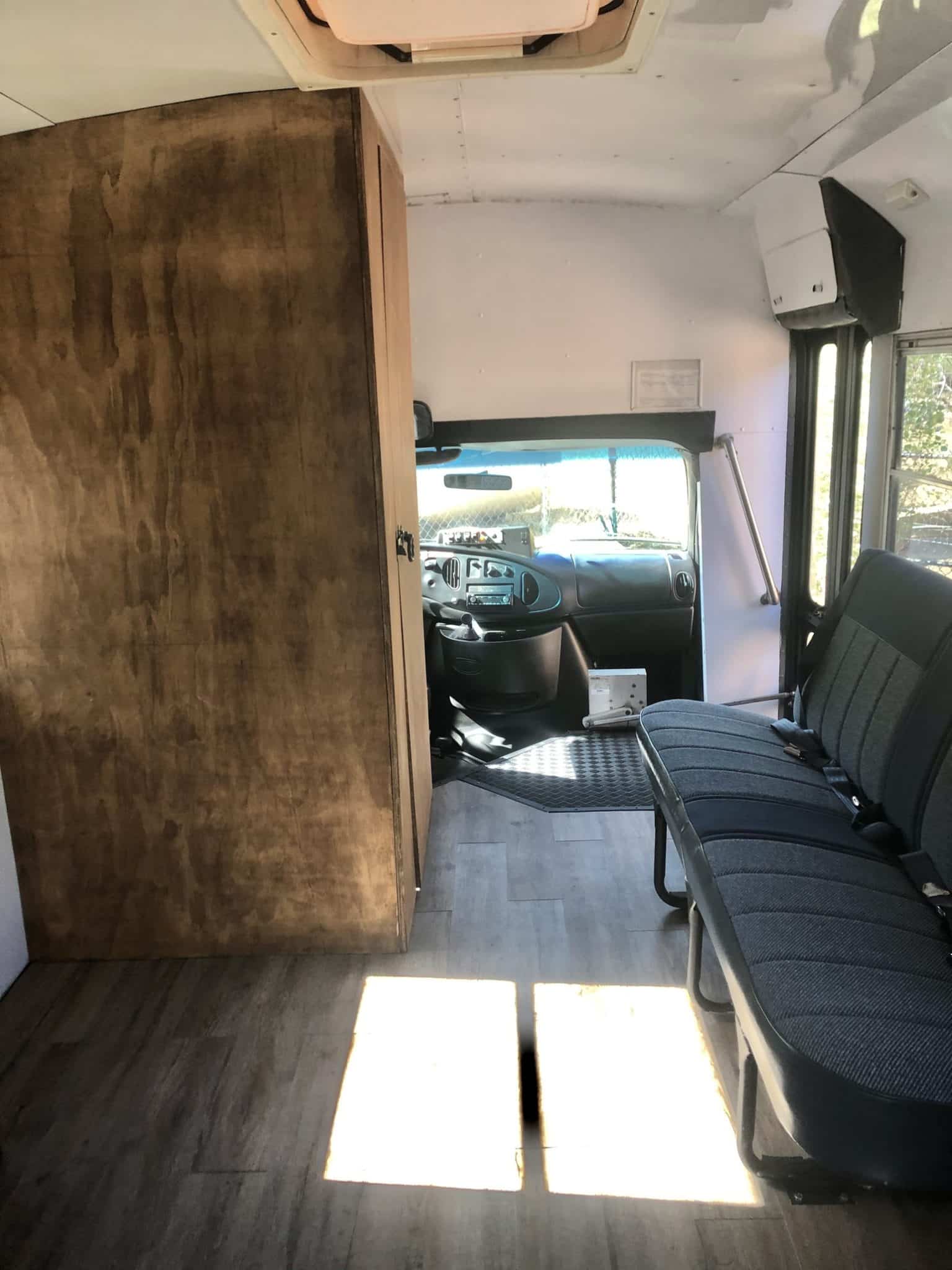
I just want headspace and the most interior space. Don’t care if it has a motor. Any thoughts?
Alright, this opens up your options a lot. If you don’t care about drivability, grab the biggest bus you can find for cheap. A 40-foot flat-nose Type D or a retired transit bus gives you 250-300 square feet of floor space. A double-decker doubles that.
Without worrying about engine condition, gear ratios, or fuel economy, you can buy buses that runners wouldn’t touch — dead engine, bad transmission, won’t pass inspection. These go for $500-$2,000 at auction.
You’re essentially buying a steel shell with a flat floor, tons of windows, and built-in wiring. That’s a better starting point than building a tiny house from scratch, and it’s a fraction of the cost.
Which Bus Is Right for You?
Here’s the quick breakdown:
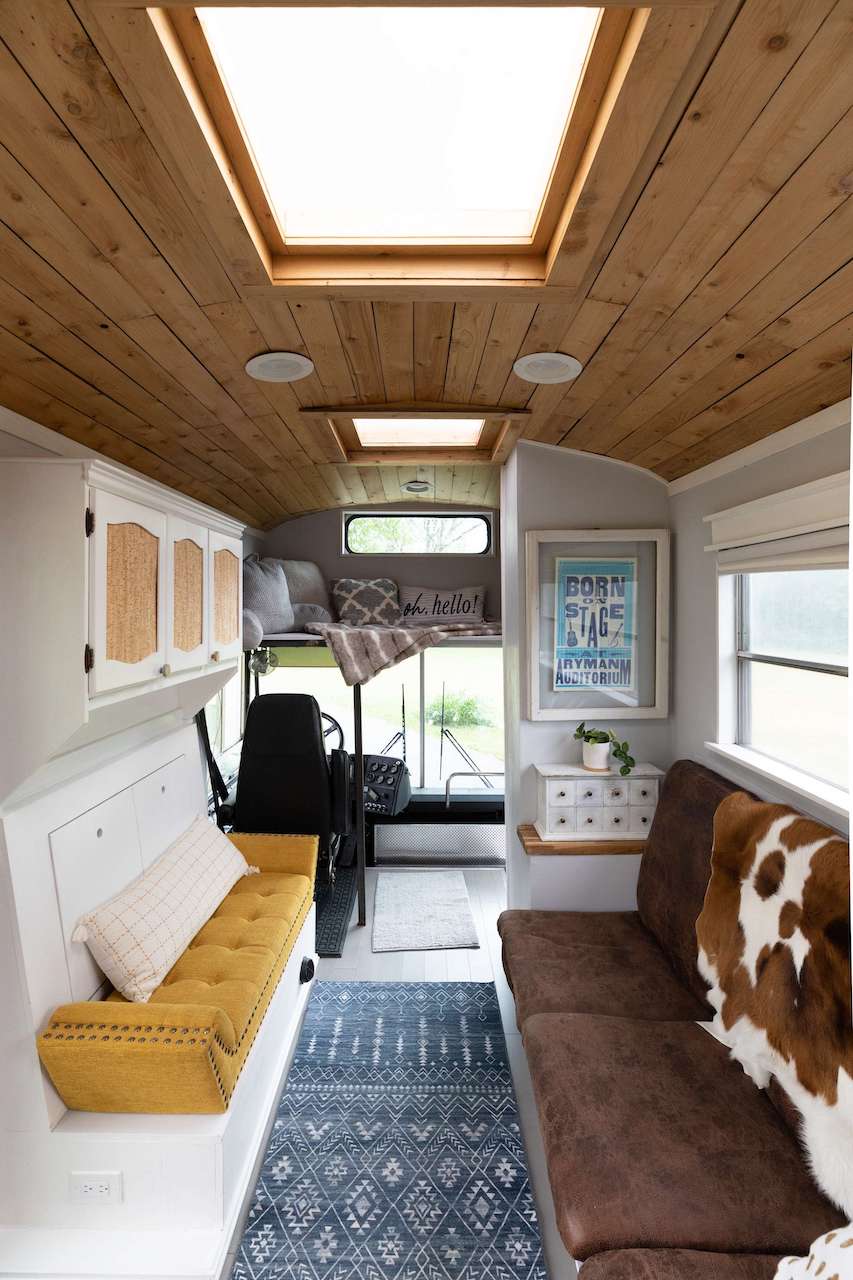
- First-time builder on a budget: Type C conventional, 30-35 feet, diesel, $3,000-$6,000
- Solo traveler or couple: Short bus (Type A), 22-26 feet, gas or diesel, $2,000-$5,000
- Full-time family: Type C conventional, 35-40 feet, diesel, $4,000-$10,000
- Highway cruiser who wants comfort: Coach/charter bus, 35-45 feet, $10,000-$30,000
- Maximum space, stationary build: Type D flat-nose or double-decker, $500-$5,000
- Middle ground with higher ceilings: Shuttle bus, 25-35 feet, $4,000-$12,000
Is this a lot to take in? Yeah, it is. But here’s what I’d tell anyone just starting out — don’t overthink the bus. Pick one that’s in your budget with a good engine, a clean frame, and enough space for what you need. The “perfect” bus doesn’t exist, but there are thousands of great ones out there waiting for someone to turn them into a home. You’re going to find the right one. Just start looking.
1jqlp0