
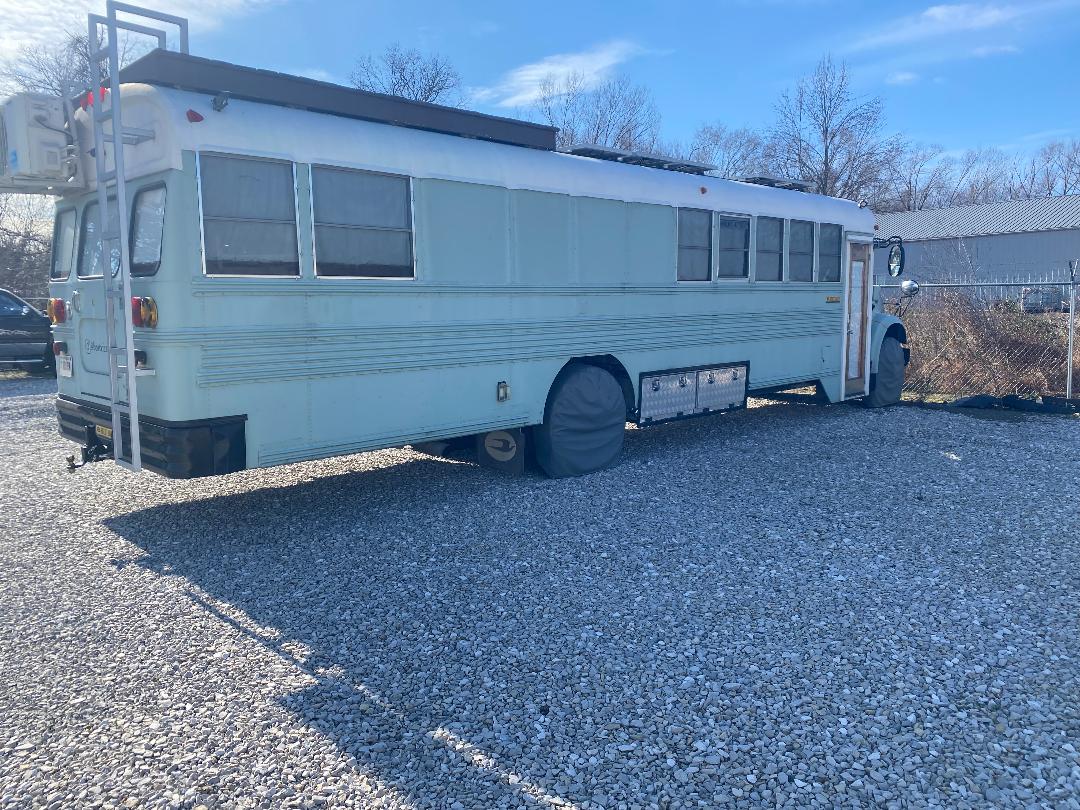
You’ve decided you want to convert a school bus into a home. That’s the easy part. Now you’re staring at listings with terms like “Type C,” “DT466,” “Allison transmission,” and “4.56 rear end” — and you have no idea what any of it means or why it matters.
This guide walks you through every decision you’ll need to make when buying a school bus for conversion. We’re covering bus types, engine options, transmissions, gearing, size, weight limits, where to buy, what to inspect, and how much you should expect to pay.
Choosing the right bus comes down to matching the vehicle to your lifestyle. A couple who wants to travel full-time across the country needs a very different bus than a family of five who plans to park on a piece of land. There’s no single “best bus” — but there is a best bus for you, and by the end of this guide, you’ll know exactly what to look for.
—
What Are the Different Types of School Buses?
If you’ve spent any time browsing bus listings, you’ve probably noticed the letters — Type A, Type B, Type C, Type D. So what do they actually mean, and which one should you care about?

International School Bus… What Is That Exactly?
This one trips people up. “International” isn’t a type of bus — it’s a manufacturer. International (now IC Bus) is one of the biggest school bus makers in North America. When someone says “International bus,” they’re usually talking about a bus built on an International chassis, often with a DT466 or T444E engine under the hood. They make Type C and Type D buses, among others.
Here’s the breakdown of the actual bus types:
Type A — These are the smallest. Built on a van-style cutaway chassis (think Ford E-450 or Chevy Express). They carry 10-25 passengers and are usually 20-25 feet long. If you want something compact that’s easy to park and drive, this is your starting point.
Type B — A step up from Type A. These are built on a stripped truck chassis with a wider body. You’ll see them as “transit-style” short buses. They give you a bit more interior width than a Type A, usually around 7-7.5 feet inside.
Type C — This is the one most people picture when they think “school bus.” It’s the conventional front-engine bus with the hood sticking out in front. These come in everything from 24 to 42 feet and are by far the most common choice for conversions. Why? They’re everywhere, parts are cheap, and mechanics know how to work on them.
Type D — The flat-nose, transit-style full-size bus. The engine is either in the front (below the floor) or pushed to the rear. These are wider than Type C buses and give you the most interior space. But they’re also heavier, thirstier on fuel, and a bigger commitment to drive.
What’s the Difference Between a Normal Bus and a School Bus?
Well, structurally, school buses are built like tanks. They’re designed to protect kids in a crash, which means heavy-gauge steel framing, roll-over protection, and a body that can take a beating. A transit bus (like a city bus or Greyhound) is built for a different purpose — high mileage, passenger comfort, highway cruising.
For conversions, school buses win on affordability and parts availability. Transit and coach buses win on ride quality, insulation, and under-floor storage. But you’ll pay significantly more upfront for a coach, and finding a mechanic who’ll work on one can be a headache.
Why Not Start With a Double Decker Bus?
Sounds cool, right? Twice the space. But here’s reality — double deckers are extremely rare in the US, parts are nearly impossible to source, they’re usually right-hand drive, and their height (13+ feet) means you can’t fit under most highway overpasses. Unless you’re planning a stationary build on private land and you’ve got deep pockets, skip the double decker.
—
What Engine Should You Look For?
This is where the conversation gets real. The engine in your bus determines how far it’ll go, how much it’ll cost to maintain, and whether you’re going to love or hate your life on the road. So what are your options?
Should You Buy a Gas or Diesel School Bus?
We’ve got a full breakdown of gas vs diesel, but here’s the short version: diesel wins for longevity, torque, and fuel availability on long trips. Gas wins on purchase price and ease of finding a mechanic.
Most full-size school buses (35+ feet) are diesel. Most short buses come in both gas and diesel options. If you’re going full-time and traveling regularly, diesel is the move. If you’re on a tight budget and mostly staying put, gas can work just fine.
What Are the Top Engines to Look For?
Alright, let’s talk specific engines, because this is where people get tripped up.
DT466 (International/Navistar) — This is the gold standard for skoolie conversions. It’s a mechanical diesel engine (pre-electronic, which means fewer things to break), it’s been in production for decades, and mechanics everywhere know it. You’ll find it in buses from the mid-80s through the early 2000s. Parts are cheap and abundant. If someone tells you to “get a DT466,” they’re not wrong.
Cummins 5.9L and 8.3L — Both are excellent engines. The 5.9 (also known as the 6BT) is a legend in the diesel world — simple, reliable, and it’ll run practically forever. The 8.3 is its bigger sibling, usually found in larger Type C and Type D buses. A Blue Bird with an 8.3 Cummins and an Allison transmission? That’s the combo people dream about.
Caterpillar 3116 and 3126 — The 3116 is a solid engine but it’s getting old now, and Cat stopped making on-highway engines in 2010, so parts availability is slowly shrinking. The 3126 had some issues with injectors and HEUI fuel systems. Not a dealbreaker, but something to be aware of. If you find one that’s been well maintained, it’ll still treat you right.
T444E (International) — This is essentially a 7.3 Powerstroke in a school bus. Reliable engine, lots of parts crossover with Ford trucks. You’ll find these in late 90s to early 2000s buses.
Ford gas engines (V10, 6.8L) — Common in short buses. The Ford V10 is a solid, proven engine. It drinks gas like it’s going out of style, but it’s dead reliable and any Ford dealer can work on it.
Now, here’s the thing — avoid anything with emissions systems from 2007 and later if you can. That’s when DPF filters and DEF fluid became mandatory on diesels. These systems add complexity, cost, and headaches. Pre-2007 diesel buses are simpler, cheaper to maintain, and easier to troubleshoot yourself.
What Size Engine Is Pulling All That Weight?
This depends entirely on the bus size. A short bus might have a 6.0L or 7.3L diesel. A full-size 40-footer could have a 8.3L Cummins or a DT466. The engine was matched to the bus at the factory, so you don’t usually need to worry about whether it’s “enough.” What you do need to worry about is how much weight you’re adding during the conversion. How long does a school bus engine last? — a lot longer than you’d think, if you don’t overload it.
—
Automatic or Manual Transmission?
Do Any of These Buses Come With Manual Transmissions?
Yes, but they’re getting rare. Most school buses from the mid-90s onward came with automatic transmissions — specifically Allison automatics. And honestly? That’s a good thing.
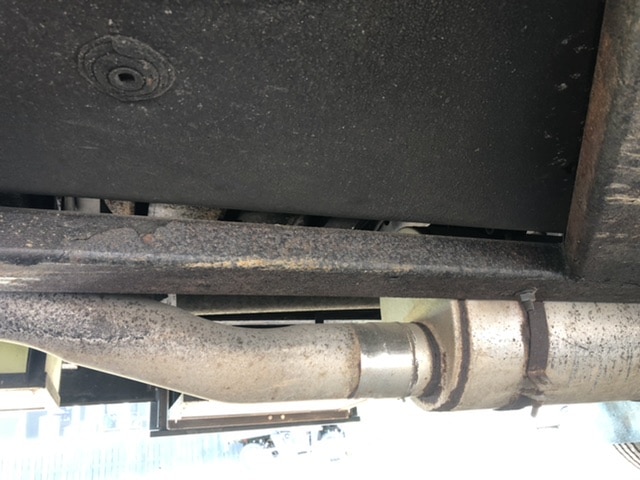
The Allison transmission is the standard for a reason. It’s incredibly durable, it shifts smooth, and it’s designed to handle heavy loads day in and day out. The most common models you’ll find are the Allison AT545, MD3060, and the 2000/3000 series. Any of these will serve you well.
Now, some older buses (80s and early 90s) came with manual transmissions — usually 5-speed Spicer or Fuller units. Are they fun? Sure, if you like rowing gears in a 30,000-pound vehicle through traffic. Are they practical? Not really. Do you see what I’m saying? Unless you have a specific reason for wanting a manual (like serious mountain driving where you want total gear control), go with the Allison automatic.
What About the Allison Transmission — Is It Really That Good?
In a word: yes. Allison transmissions are the industry standard for medium-duty trucks and buses. They’re built for heavy commercial use, which means your bus conversion — even fully loaded — is still within their design parameters. Parts are available at any truck shop, and rebuilds are straightforward for a qualified transmission specialist.
If a bus listing mentions “Allison transmission,” that’s a plus. Not a guarantee the transmission is healthy, but at least you know the platform is solid.
—
What About Gearing?
This is one of those topics that doesn’t come up until it’s too late, and then it becomes your whole life for a while. Let’s make sure you understand it before you buy.
For Example, What Are Good Highway Gears?
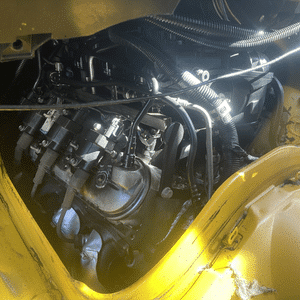
Alright, here’s the deal. The “gearing” everyone talks about refers to the rear axle ratio — a number like 4.11, 4.56, 5.13, or 5.29. That number tells you how many times the driveshaft spins for every one revolution of the rear wheels.
Lower numbers (3.70, 4.11, 4.33) = highway gears. The engine turns slower at highway speed, which means better fuel economy, quieter cruising, and less wear. But you give up pulling power on steep hills.
Higher numbers (4.88, 5.13, 5.29) = mountain gears. The engine spins faster, which gives you more torque for climbing hills and pulling heavy loads. But on flat highway? Your engine is screaming at 65 mph and drinking fuel.
If you’re planning to travel across the country on interstates, you want highway gears — something in the 4.11 to 4.56 range. If you’re living in the mountains of Colorado, mountain gears make more sense.
Can You Go Up the Rocky Mountains With a Highway-Geared Bus?
You can, but you’re going to be going slow. A highway-geared bus with a loaded conversion will struggle on steep grades. You might drop to 30-35 mph on long mountain passes, and you’ll be that vehicle everyone’s passing. It’s not dangerous — it’s just slow.
Is It Easier to Re-Gear a Mountain Bus for Highway Use or Add Brakes to a Highway Bus?
Good question, and the answer is neither is cheap. Re-gearing a rear axle runs $1,500-$3,000+ for parts and labor. It’s doable, but it’s a significant investment. Most people just buy the bus with the gears they need.
Here’s my advice: if you’re going to travel a lot, prioritize highway gears. You can always slow down on mountain passes. But you can’t escape the constant engine drone and fuel waste of mountain gears on flat highway — and that’s where you’ll spend most of your time.
What Gear Ratio Did You Have and What Did You Install?
You can find your bus’s rear axle ratio on the VIN sticker, the data plate (usually on the driver’s door or firewall), or the differential cover. On Blue Birds, there’s often a plate that lists the rear axle ratio, transmission, and engine. Some people decode the VIN to find this info — the manufacturer’s website or a dealer can help.
—
How Do You Pick the Right Size?
Size is one of those decisions that affects absolutely everything — where you can park, how hard it is to drive, how much living space you get, and what kind of gas mileage you’ll see. So how do you figure out what’s right for you?
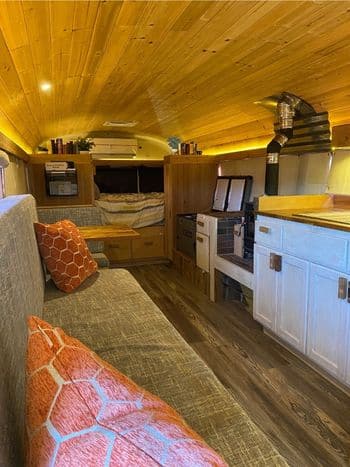
Is a Short Bus or Full-Size Better for a Conversion?
We’ve got a detailed comparison here, but the quick answer is: it depends on how many people are living in it and how you plan to use it.
Short buses (20-28 feet):
- Easier to drive and park
- Fit in regular parking spots (mostly)
- Better fuel economy
- Less living space — works for 1-2 people
- Easier to find stealth overnight parking
Full-size buses (35-42 feet):
- Way more living space
- Room for a full kitchen, bathroom, bedroom, and living area
- Harder to park and maneuver
- Worse fuel economy
- Some campgrounds and RV parks have length limits
For a solo person or a couple, a 24-28 foot bus gives you plenty of room. For a family with kids, you’ll probably want 35+ feet.
What Is the Interior Living Length?
This is the number that actually matters. A “40-foot bus” might only give you 32-34 feet of usable interior space once you account for the driver’s area and rear engine compartment (if it’s a rear-engine bus). Always measure the interior, not the exterior.
For reference:
- 20-foot short bus = roughly 12-14 feet of living space
- 28-foot bus = roughly 20-22 feet
- 35-foot bus = roughly 27-29 feet
- 40-foot bus = roughly 32-34 feet
How Wide Is a School Bus?
Standard school buses are about 7.5 feet wide on the inside (exterior is about 8 feet). Some Type D (flat-nose) buses are wider — up to 8.5 feet exterior. That extra width makes a real difference when you’re building cabinets and planning a floor layout.
How Tall Is a Standard School Bus Inside?
Most conventional school buses have about 6 feet of interior headroom, sometimes a little more. If you’re over 6 feet tall, you’ll want to look at raised-roof buses or plan a roof raise as part of your build. Raised-roof buses are out there — they were originally built for wheelchair accessibility — and they give you 6’3″ to 6’6″ of headroom.
—
What About Weight and GVWR?
Here’s where a lot of people get into trouble, and it’s not something you want to learn about the hard way.
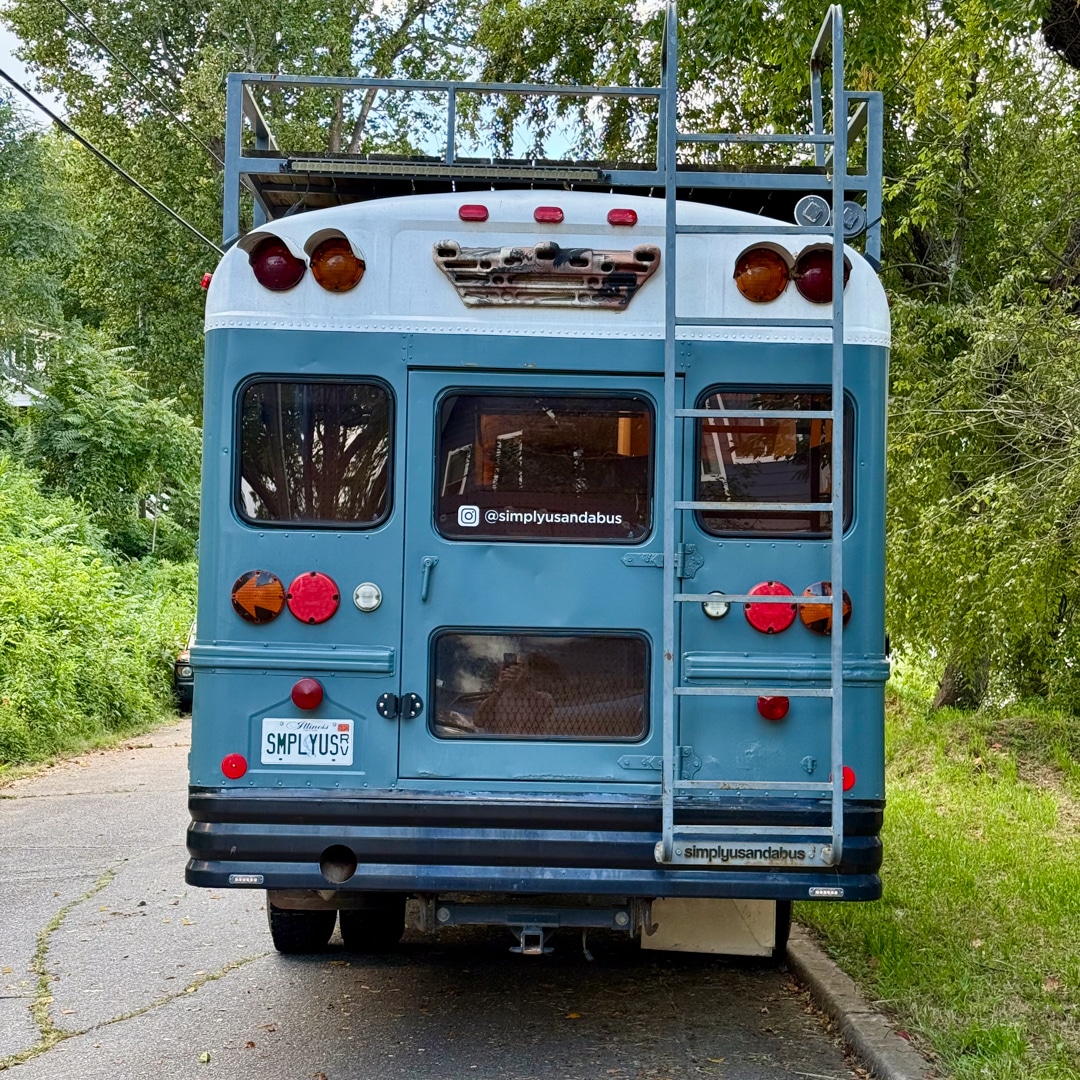
How Much Does the Engine and Transmission Hate You After the Build?
Well, they don’t love you. Every pound you add during conversion — wood, tile, water tanks, appliances, batteries, that cast iron wood stove you really want — puts more strain on the engine, transmission, brakes, suspension, and tires.
Your bus has a GVWR (Gross Vehicle Weight Rating) stamped on the data plate. That’s the maximum the bus is designed to weigh fully loaded. A typical Type C school bus has a GVWR of 25,000-36,000 pounds. The bus itself might weigh 15,000-23,000 pounds empty (after you pull the seats).
So where does that leave you? Do the math. If your bus weighs 17,000 pounds empty and has a GVWR of 25,000, you’ve got 8,000 pounds to work with. That sounds like a lot until you start adding up lumber, water (water weighs 8.3 pounds per gallon — a 100-gallon fresh water tank is 830 pounds just in water), tile flooring, batteries, and all your stuff.
Go to a truck scale (CAT scales at truck stops charge about $15) and weigh your bus before the build, then again after. Stay under your GVWR. Period.
Isn’t It Burning More Fuel Because It’s Heavier?
Yes. More weight means more fuel consumption. A fully converted bus typically gets 1-3 mpg worse than the same bus empty. This is another reason to be strategic about your build materials — use lightweight options where you can. Plywood instead of tile. Vinyl plank instead of real hardwood. Composite countertops instead of granite.
—
Front Engine vs Rear Engine
What’s the Benefit of a Front Engine Versus a Rear Engine?
This one comes up constantly, and there’s no single right answer. Both have real trade-offs.
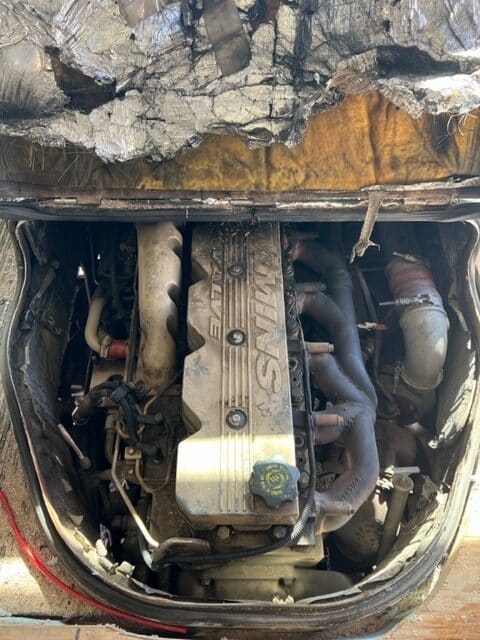
Front engine (conventional):
- The engine is under the hood in front, easy to access for maintenance
- The bus has a “dog nose” — that hood sticking out
- Engine noise and heat are up front with the driver
- Most common in Type C buses
- Leaves the entire rear of the bus open for your floor plan
- Cheaper and more widely available
Rear engine (pusher):
- Engine is in the back, under the floor
- Much quieter in the cab while driving
- Flat-nose design gives you better forward visibility
- You lose some space in the rear for the engine compartment
- Common in Type D buses and coaches
- Harder to access the engine for maintenance
- You can’t have a rear door if the engine is back there
So which should you pick? If you want the most interior space for the lowest cost, go front engine Type C. If you want a quieter ride and don’t mind paying more, a rear-engine Type D is the premium choice. Most first-time builders go with a front-engine Type C — and there’s a good reason for that.
How Do You Have a Door in the Back if the Engine Is There?
You don’t. If the engine is in the rear, that space is taken. Some people add an emergency exit on the side wall instead, or they put a door just forward of the engine compartment. But a true rear-engine bus means no rear door.
—
Where Do You Buy a School Bus?
This might be the most-asked question in the entire skoolie community. We’ve got a full guide on where to buy, but here’s the overview.
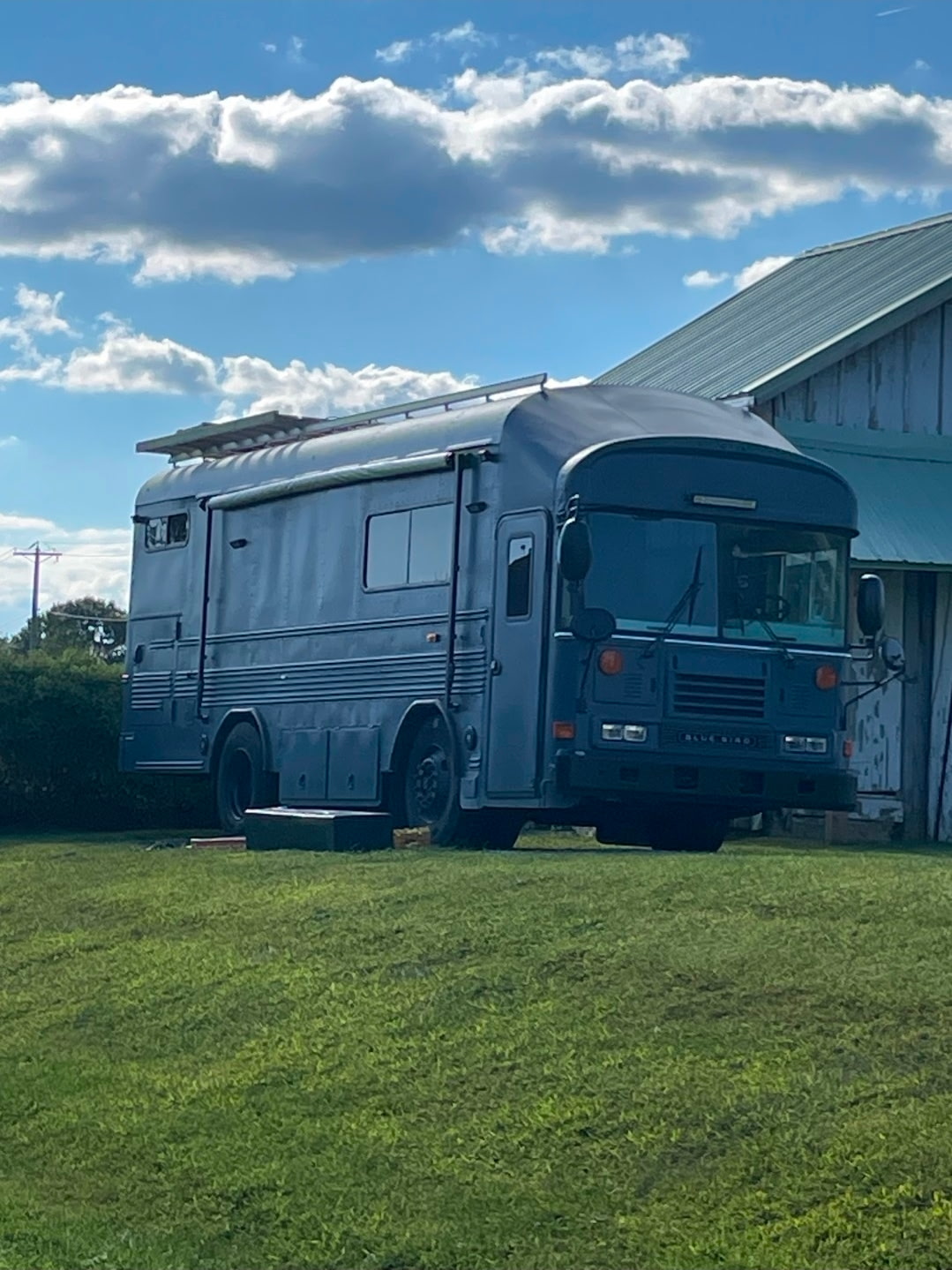
Where Do You Go to Buy Old School Buses?
You’ve got several options:
- Government auctions — GovPlanet, PublicSurplus, AuctionTime. School districts retire buses and sell them at auction. This is where you’ll find the best deals — sometimes $2,000-$5,000 for a running bus.
- Direct from school districts — Some districts sell their retired buses directly. Call your local school district transportation department and ask. You’d be surprised how many will work with you.
- Online marketplaces — Craigslist, Facebook Marketplace, BusesForSale.com. The selection is bigger, but so is the price markup. Dealers on these platforms know skoolies are trendy and price accordingly.
- Dealer lots — Companies that specialize in used school buses. You’ll pay more, but you often get some kind of warranty or at least a guarantee the bus runs.
- Salvage yards and bus graveyards — Risky, but occasionally you’ll find a gem. Just know that a bus sitting in a field for three years probably has issues you can’t see.
What State Sells Cheap Used Buses That Run Good?
Southern and midwestern states tend to have cheaper buses. Why? Less rust (no salt on the roads), larger school districts that cycle buses out more frequently, and fewer state inspection requirements. Texas, Florida, Georgia, and the Carolinas are popular hunting grounds. But don’t let geography limit you — sometimes the best deal is worth a plane ticket and a one-way drive home.
How Can I Find Auction Sites for School Buses?
Start with these:
- GovPlanet.com — government surplus equipment
- PublicSurplus.com — state and local government auctions
- AuctionTime.com — heavy equipment and commercial vehicles
- Municibid.com — municipal government auctions
Set alerts for “school bus” on each site. Auctions come and go, so consistency matters.
—
What Should You Inspect Before Buying?
Buying a school bus without inspecting it is like buying a house without a home inspection. Don’t do it.
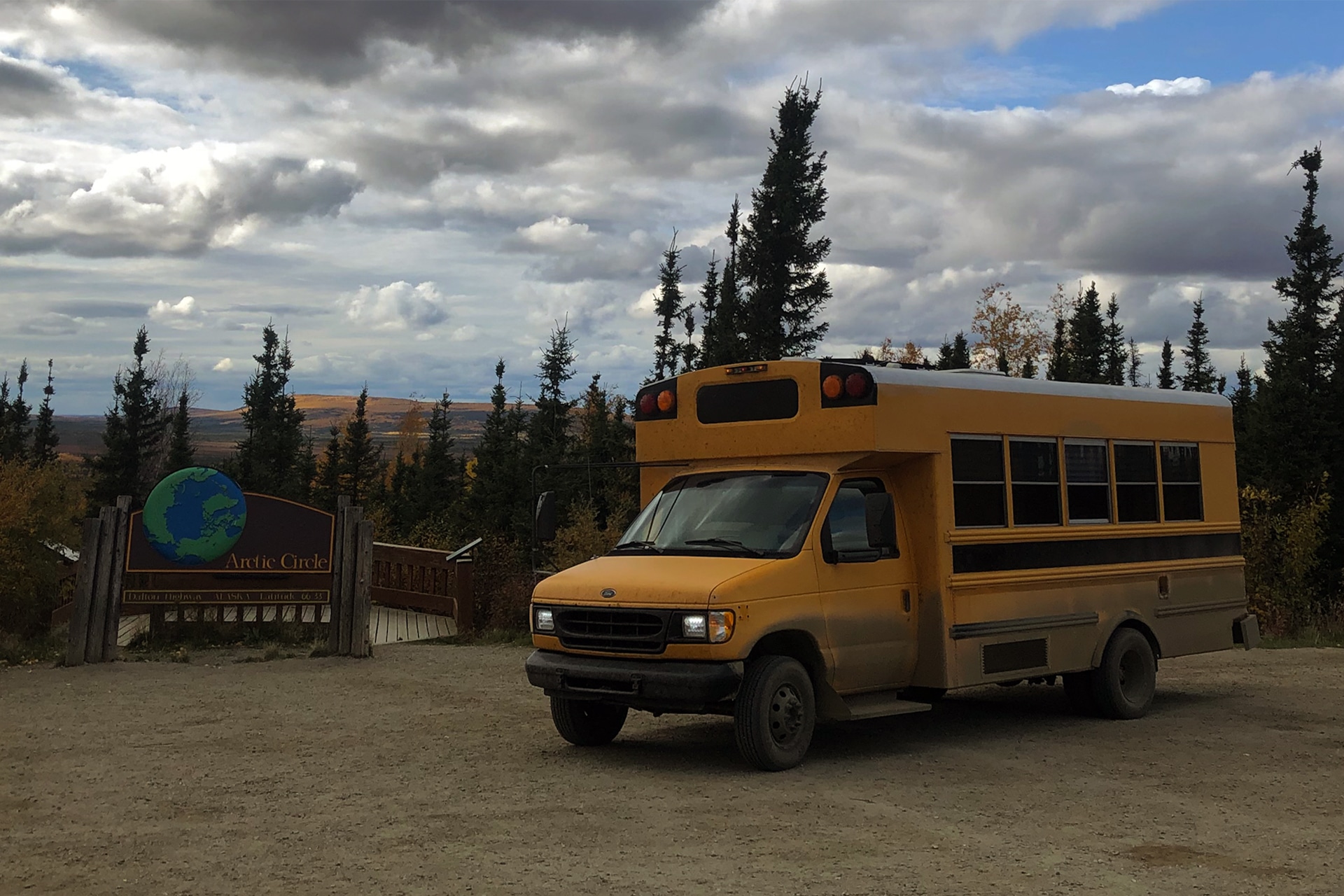
I’m Looking to Convert a Bus — Does Anyone Have Tips for How to Buy Without Looking Like a Complete Idiot?
Here’s the thing — you don’t need to be a mechanic. You just need to know what to look for and what to ask about. Here’s your inspection checklist:
Engine:
- Start it cold. A healthy diesel should fire up within a few seconds
- Check for excessive smoke — white smoke on startup is normal, but blue or black smoke means trouble
- Listen for knocking or unusual sounds
- Check oil condition (pull the dipstick) — milky oil means coolant is getting in
- Look for leaks under the bus
Transmission:
- Does it shift smooth through all gears?
- Any slipping or delayed engagement?
- Check the transmission fluid — it should be red or pink, not brown or burnt-smelling
Brakes:
- If it’s air brakes, listen for the compressor and check for leaks
- Do they stop the bus in a straight line?
- Check brake pad thickness if you can see them
Body and frame:
- Get under the bus and look at the frame rails. Surface rust is fine. Flaking, scaling, or holes are not
- Check the floor for soft spots — push hard in several places
- Look at the roof seams for signs of leaking
Tires:
- Check the date codes on the sidewalls. Tires older than 7 years should be replaced regardless of tread depth
- Look for cracking, uneven wear, or bulges
How Many Miles Were on the Bus When You Bought It?
Mileage on a school bus is tricky. A bus with 150,000 miles might have more life left than one with 80,000 miles, depending on how those miles were accumulated. School buses spend a lot of time idling, starting and stopping, and running at low speeds — which is actually harder on an engine than highway miles.
For diesel buses, anything under 150,000 miles is considered low. A DT466 or Cummins with 200,000 miles is still a young engine if it’s been maintained. Don’t automatically dismiss a higher-mileage bus — look at the maintenance records and the overall condition instead.
—
How Much Should You Expect to Pay?
How Much Does a School Bus Cost to Buy?
Prices vary wildly, but here are realistic ranges as of 2026:
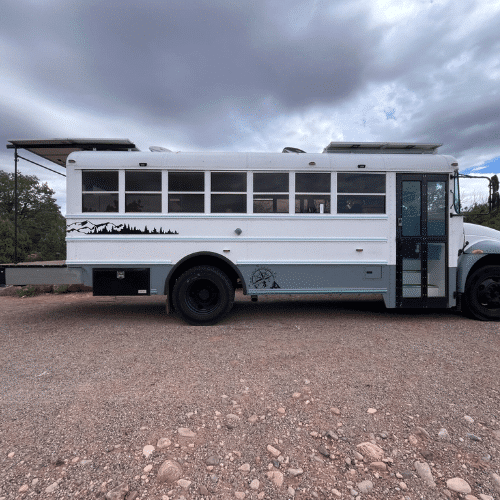
- Auction bus (needs work): $1,500 – $4,000
- Running short bus (Type A): $3,000 – $8,000
- Running full-size (Type C, 90s-2000s): $4,000 – $12,000
- Clean, low-mileage full-size: $8,000 – $20,000
- Pre-converted or partially converted: $15,000 – $50,000+
- Coach/transit bus: $10,000 – $40,000+
Now, I’m not saying you can’t find a deal outside these ranges. People find running buses at auction for $2,000 all the time. But they also buy $2,000 buses that need $5,000 in mechanical work before they’re road-worthy. Factor in potential repairs when calculating your real cost.
For How Much You Paid for the Bus and Time to Convert, Wouldn’t It Be Cheaper to Just Buy an RV?
Maybe. A used RV of comparable size might cost $15,000-$40,000 and it’s move-in ready. But RVs are built with lightweight materials that deteriorate fast. A 10-year-old RV often has delaminating walls, leaky roofs, and appliances that need replacing. A school bus is built on a commercial truck chassis that was designed to run for 20+ years and 250,000+ miles.
The skoolie advantage is that you get to build it exactly how you want it, with materials that are actually durable, on a platform that’ll outlast any RV on the market. Is it more work? Absolutely. But you end up with something that’s truly yours.
—
Putting It All Together
So what does the “right bus” actually look like? It depends on you, and that’s not a cop-out answer. Here’s a quick decision framework:
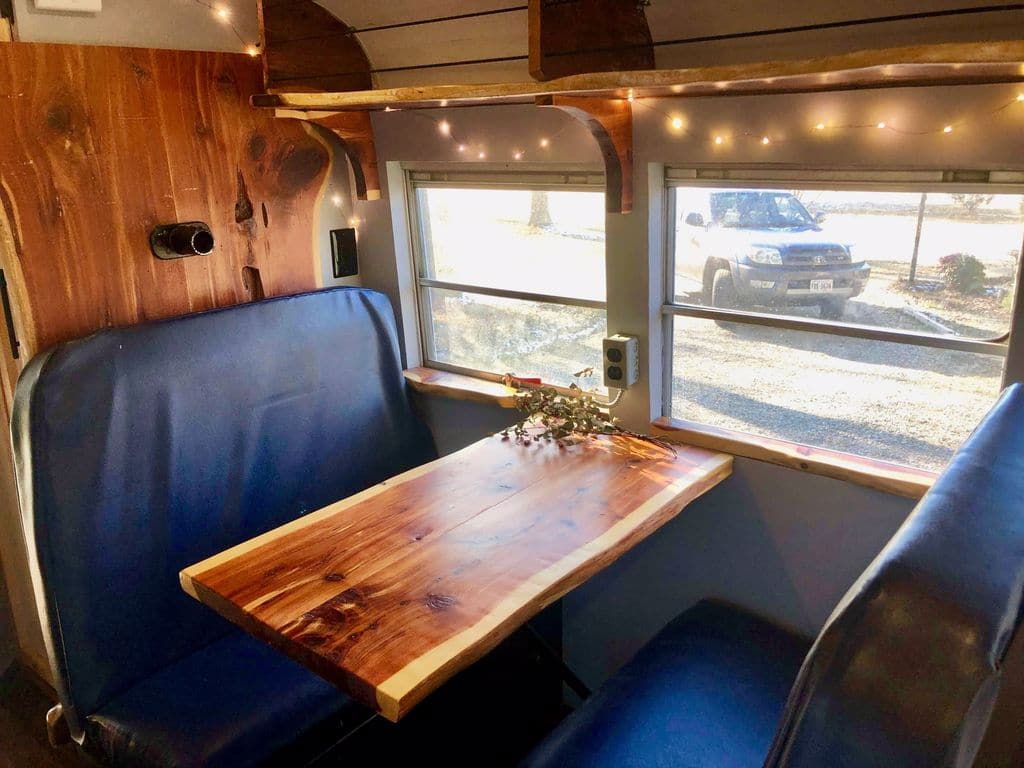
Solo or couple, traveling full-time:
- 24-30 foot Type A or short Type C
- Diesel with highway gears
- DT466, Cummins 5.9, or Ford V10 (gas)
- Allison automatic
- Budget: $3,000-$8,000
Family of 3-5, traveling:
- 35-40 foot Type C
- Diesel with highway gears
- DT466, Cummins 8.3, or Cat 3126
- Allison automatic
- Budget: $5,000-$15,000
Stationary build on land:
- Size and gearing matter less — prioritize interior space and condition
- Engine reliability is less critical (but it still needs to get there)
- Budget: whatever gets you the most space for the money
Is this a lot to take in? Yeah, it is. But you don’t have to figure it all out in one afternoon. Take your time, visit some buses in person, ask questions in the skoolie community, and don’t rush into a purchase because you’re excited. The right bus is out there, and when you find it, you’ll know.
You’ve got this. The fact that you’re doing your research now — before you hand someone money — puts you ahead of most people who jump in blind. Take what you’ve learned here, make a checklist of your non-negotiables, and go find your bus.
6oqr2c
ocr50k