
I remember the first time I sat behind the wheel of a bus and looked down the hood, or I guess the lack of a hood since it’s a flat nose. My brain kept telling me this thing was way too big for me to be driving. But I’d already bought it, so backing out wasn’t really an option at that point.
Driving a school bus is easier than most people expect. If you can drive a large pickup truck, you can drive a school bus. The steering is power-assisted, the automatic transmission handles shifting, and the mirrors give you better visibility than most cars. The learning curve is really about getting used to the width, the turning radius, and the fact that you need to think further ahead. Most new skoolie owners feel comfortable after a few hours of driving. It’s the parking that takes practice.
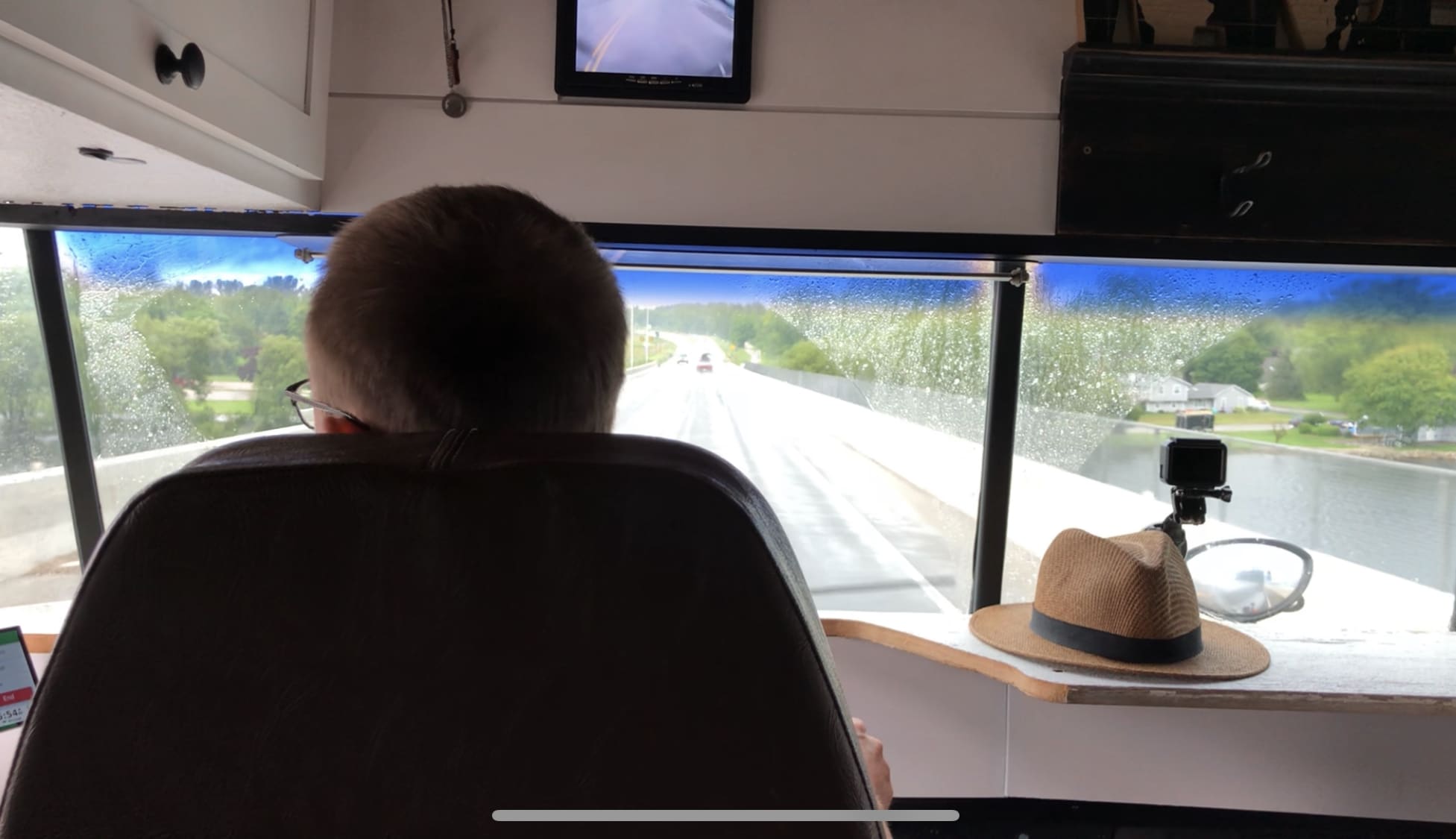
How is it to drive such a huge vehicle?
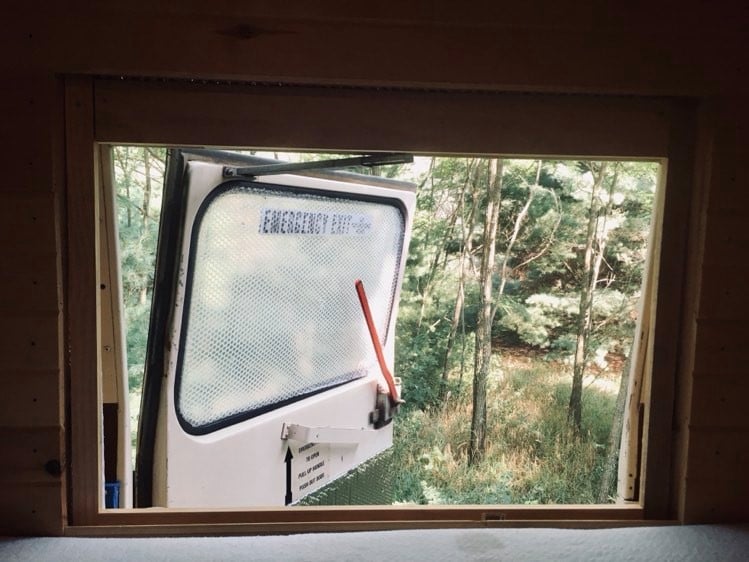
So I’d never driven anything bigger than a midsize SUV before this, and honestly I was expecting it to feel like wrestling a ship. It doesn’t. Here’s what caught me off guard in a good way.
The driving position is high. You’re sitting 4-5 feet above the road in a flat-nose bus, and you can see everything. Traffic ahead, alongside, behind. It’s actually easier to read traffic than from a car because you’re looking down at everyone else. I wasn’t expecting that at all.
The steering is light. Power steering on a bus is designed so a 120-pound school bus driver can turn it all day. It’s not heavy or stiff. And the automatic transmission, usually an Allison, shifts so smoothly you don’t even think about gears. Put it in D and go.
What IS different is the width. A school bus is about 8 feet wide, roughly the same as a full-size pickup with mirrors. But it feels wider because you’re sitting in the center. Lane position takes a few miles to calibrate. I kept drifting left for the first hour because my brain was trying to put me where a driver’s seat normally is.
Braking distance is longer too. You’re heavy, so leave more following distance than you would in a car. If your bus has air brakes there’s a slight delay before they grab. But once you get the feel for it, maybe 20-30 minutes of driving, it becomes second nature.
Is it hard taking corners?
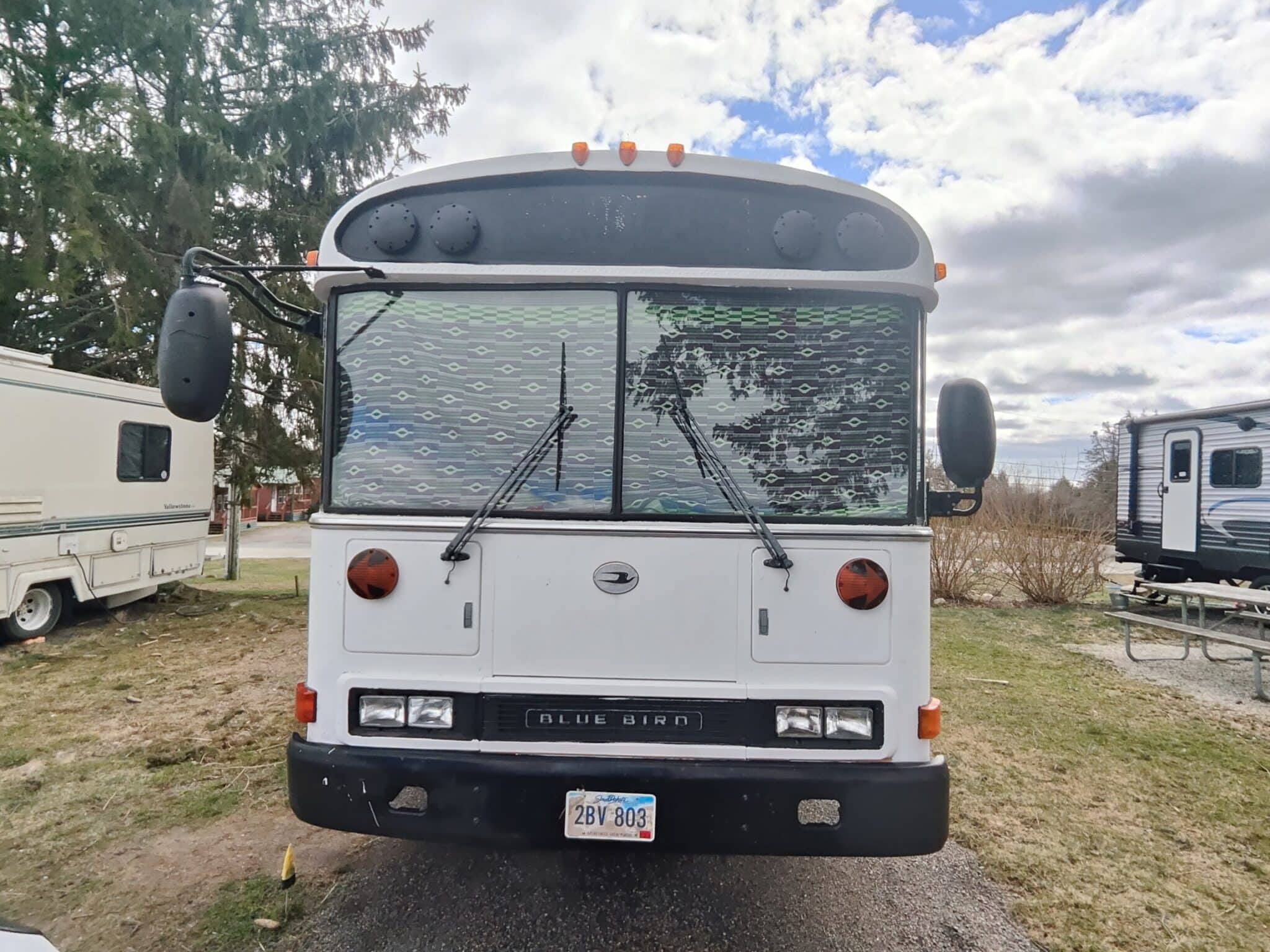
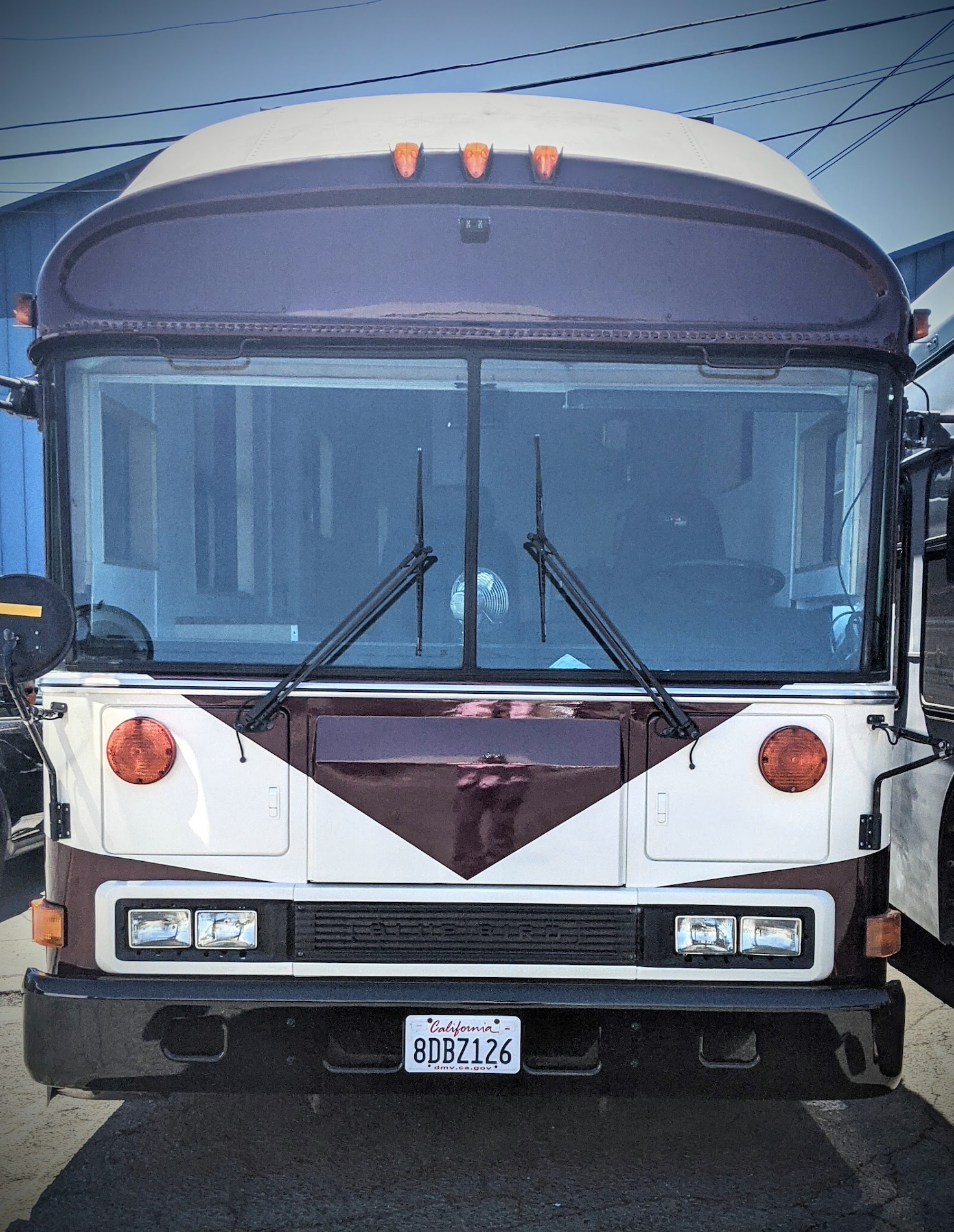
This is the one thing I’d actually say takes real practice. The back wheels don’t follow the front wheels, they cut the corner tighter. It’s called off-tracking and I learned about it the hard way when I nearly clipped a mailbox on my second day.
On a right turn, you need to swing wider than you would in a car. If you turn too tight, your rear wheels will hop the curb or clip whatever’s on the corner. The longer the bus, the worse it gets.
The trick that changed everything for me was watching my right mirror during right turns. You can see exactly where your rear wheels are tracking relative to the curb. After a few days of checking your mirror on turns, you’ll do it without thinking. Left turns are easier because you’re already on the inside of the turn and there’s usually more room. U-turns in a full-size bus? Just don’t. I tried once in a parking lot and it took a 47-point turn. Plan your route to avoid them.
Have you been restricted in places you’ve wanted to go due to the length?
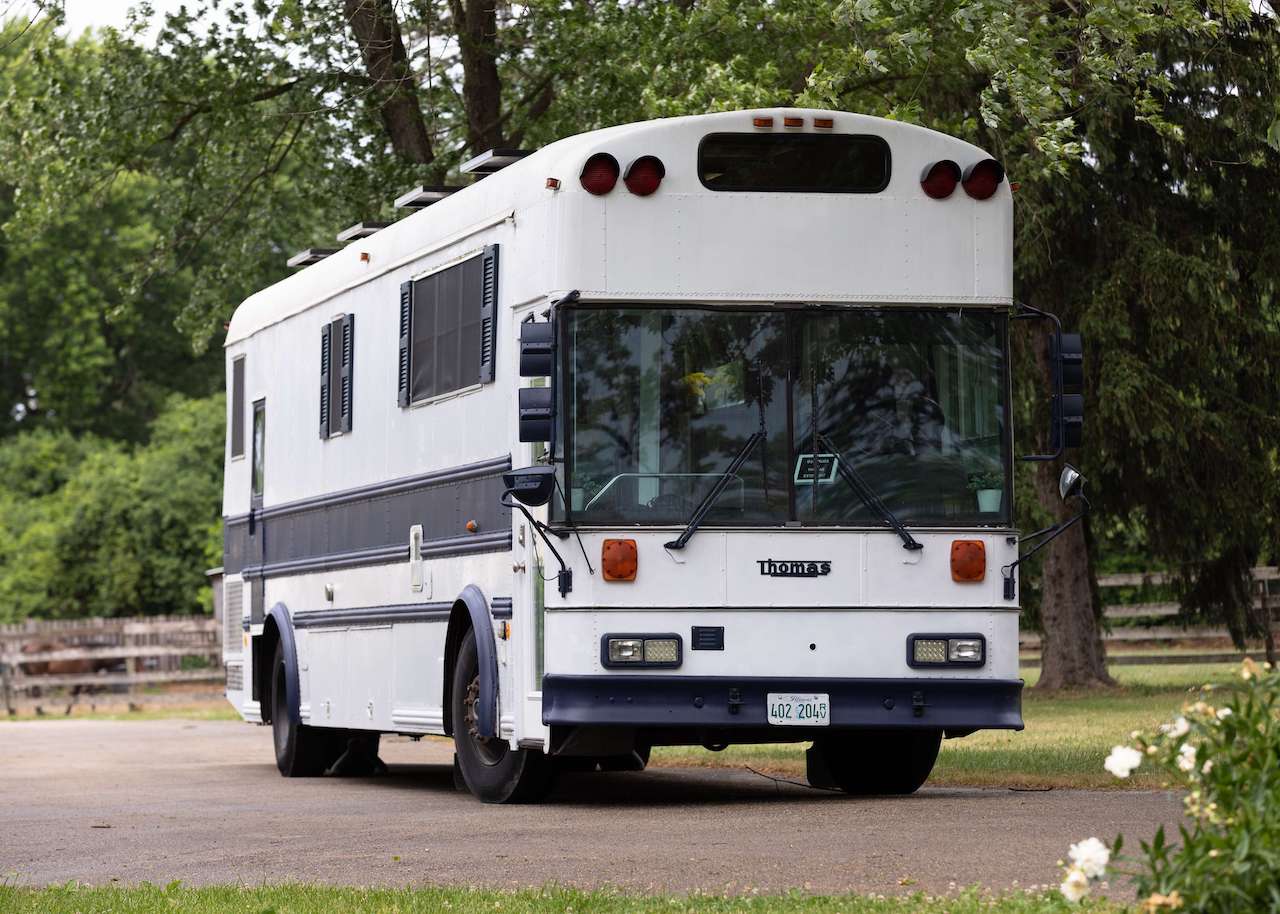
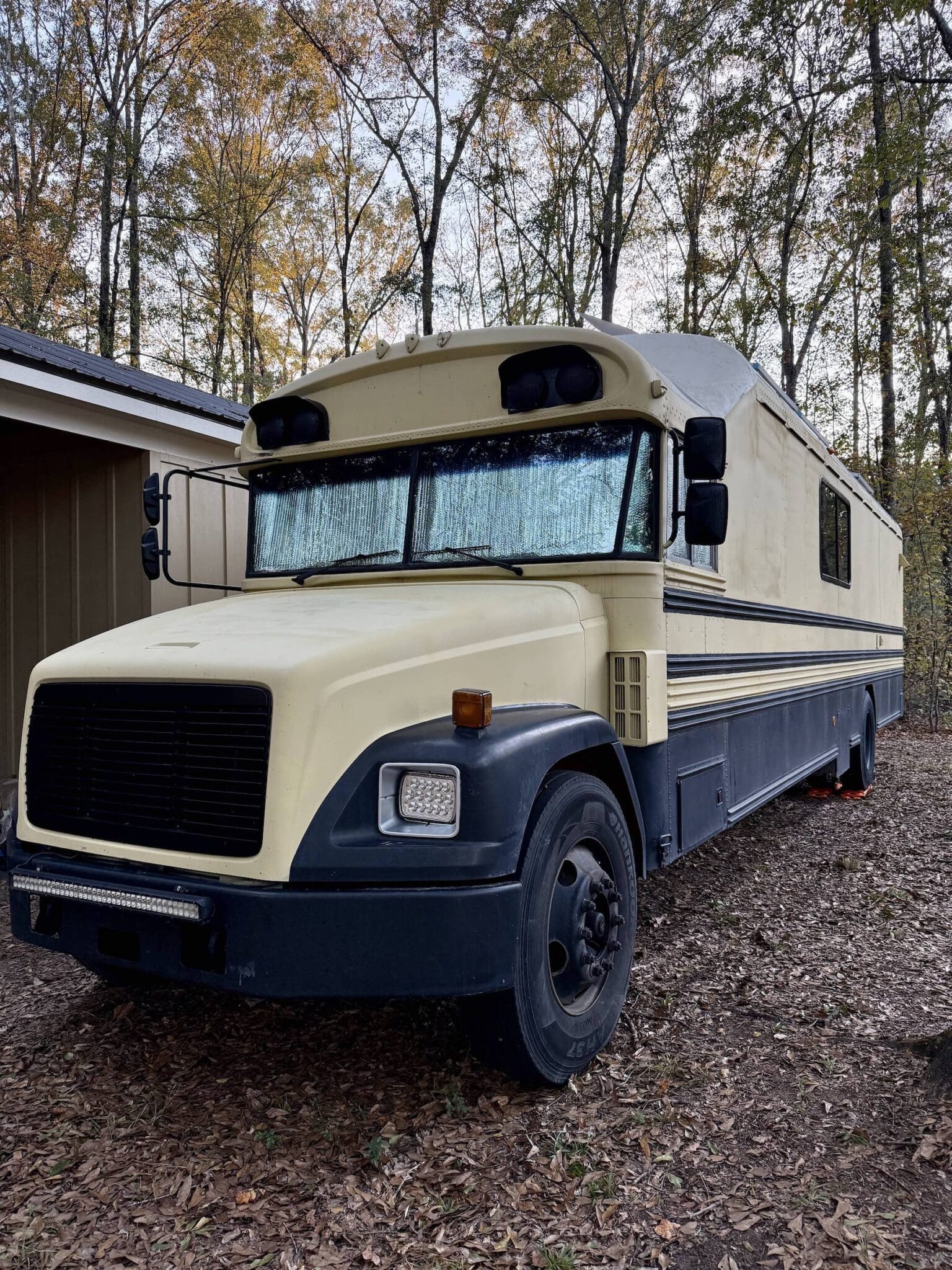
Yeah, length restrictions are real and this is something I wish more people talked about before buying. Here’s what I’ve run into with a full-size bus (35-40 feet).
Drive-throughs. Most fast food drive-throughs have a tight turn that a full-size bus can’t make. Just forget about it. Park and walk in. I tried once at a Chick-fil-A and got stuck halfway through the lane with cars behind me. Not my finest moment.
Gas stations. Some gas station canopies are too low for a bus. Truck stops are your best friend here, they’re built for big rigs and can handle your bus no problem. I actually wrote about finding gas stations that fit a school bus because it kept coming up.
Parking lots. You’re taking up 2-3 spaces in most parking lots. Back row, pull-through spots, or park on the street. It gets easier once you stop trying to park where cars park.
Mountain roads. Narrow mountain roads with tight switchbacks are stressful in a 40-footer. A 25-foot short bus handles them fine though. This is a genuine reason some people choose shorter buses, and I get it.
Low bridges. Know your height. A standard school bus is 10 to 10.5 feet tall. A raised roof adds more. Highway overpasses are fine at 13.5+ feet clearance, but side streets and old railway bridges can ruin your day. Use an app like Trucker Path to find low clearances on your route.
How much has it restricted you being so tall? What about bridges?

Height is the one thing that can genuinely wreck your day, and I mean that literally. A standard school bus is about 10 feet 6 inches. A raised roof can push that to 11-12 feet. Add a rooftop deck and you might be at 13+ feet.
Most highway overpasses in the US have a minimum clearance of 13.5-14 feet. You’re fine on interstates and most state highways. Where you get in trouble is older city bridges, drive-through canopies, parking garages, gas station canopies, and tree branches hanging low over back roads.
I talked to a guy online who peeled back his entire roof raise on a bridge he thought he’d clear. He measured his bus at 11 feet 8 inches, the bridge said 12 feet, but the road had been repaved so many times the actual clearance was under 11 feet. He was out thousands of dollars and weeks of work.
Solutions: measure your bus height exactly and write it on a sticky note on your dashboard. Use GPS apps designed for large vehicles like Trucker Path or CoPilot Truck. And never assume, if you can’t clearly see the clearance posted, stop and find another route. It’s not worth the gamble.
Any regret taking the passenger seat out? What’s it like to drive cross-country?
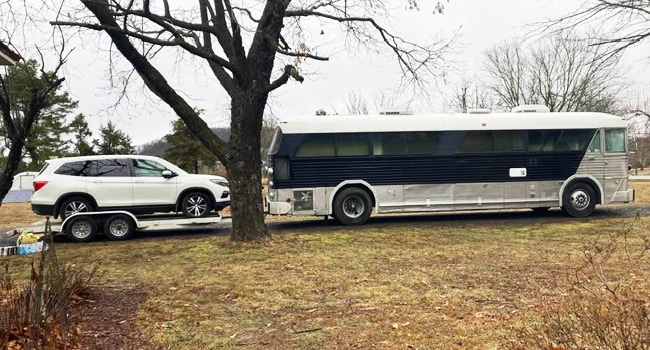
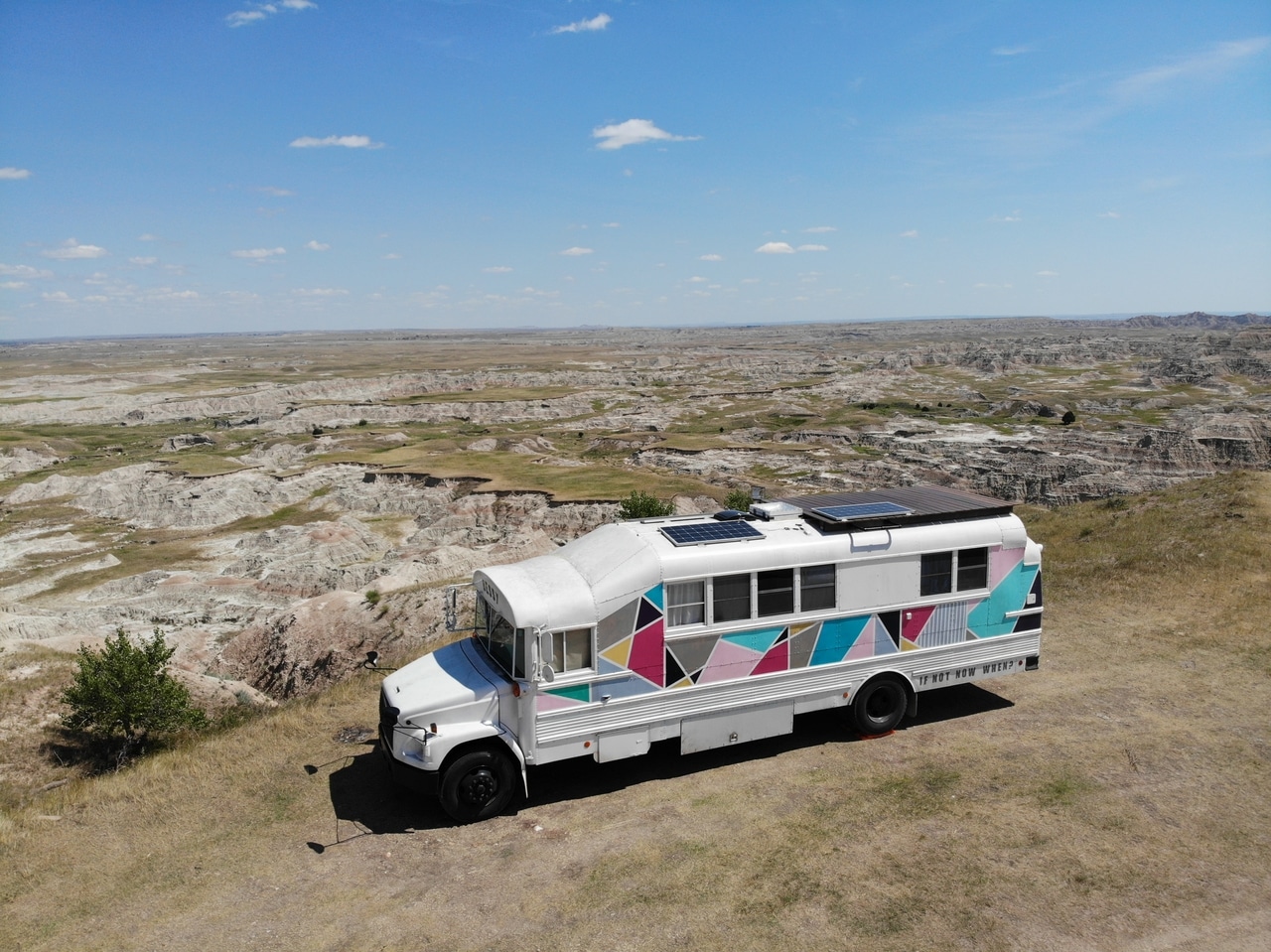
Removing the factory passenger seat next to the driver is common in builds to make room for a couch, entrance area, or cabinets. Some people regret it though, and I can see why. Having a co-pilot next to you on a 6-hour driving day is nice, both for company and for someone to help navigate tight spots.
A lot of builders keep the passenger seat or install an aftermarket captain’s chair. It gives your partner a comfortable seat with a seatbelt for riding up front, and it’s way safer than sitting on a couch while the bus is moving. If you’re still planning your layout, I’d think hard before ditching that seat. There’s some good floor plan ideas that work around keeping it.
Cross-country driving in a skoolie is slow and steady. You’re cruising at 55-65 MPH, not 80. I found that planning for 300-400 miles per driving day keeps it from feeling like a chore. The bus is louder than a car on the highway, that’s just the reality of a big diesel engine and thin walls. Earplugs or a good sound system help on long hauls. Some people add sound deadening material behind the dash and it makes a real difference.
The Bottom Line
So here’s what I’d tell anyone who’s nervous about driving a bus. It’s not nearly as hard as your brain is making it out to be. The power steering, automatic transmission, and high seating position actually make it feel pretty natural after the first couple hours. The parts that take real practice are parking, tight right turns, and knowing your height for bridges.
If you’re on the fence between a full-size and a short bus and the driving part is what’s scaring you, go sit in one first. If you know someone with a bus, ask if you can drive it around a parking lot for 20 minutes. That’s usually all it takes for the fear to go away. The bus is big, sure, but it’s not as unforgiving as it looks from the outside.
1 thought on “How Hard Is It to Drive a School Bus?”